Now Streaming On US Sports Radio!

US Sports Net Today!


Live Play-by-Play, Updates, Highlights and More! on US Sports Network!
[Chrome Users-You may have to click on the play button twice to listen]
US Sports Network Powered By Gorilla Sports!


US Sports Radio
The Las Vegas Raiders Play Here
Arena Football One Live Matchups Here
Fitness and Sports Performance Info You Can Use!
The Scoreboard Mall
The Rock Almighty Shaker Of Heaven And Earth!
The Coolest Links In The Universe!

Saturday, November 7, 2026

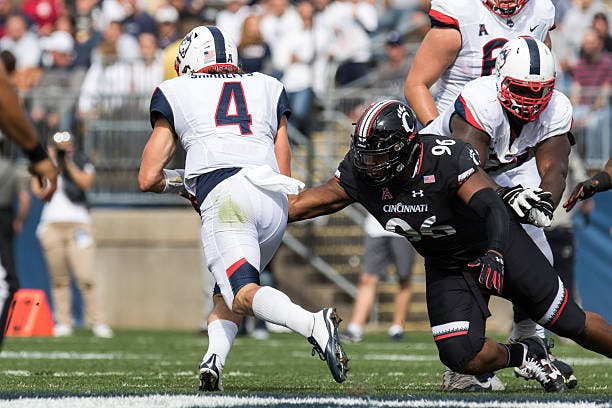
US Sports Football -How To Become The Most Feared Offensive Lineman In Your League And Nation's 2nd leading rusher Teo McPhatter GOES OFF


While there’s nothing glamorous about being an offensive lineman, it is a position that allows you to be aggressive and physical every single play.

There’s nothing better than dominating another player in a man-to-man matchup, driving him into the ground as your running back sprints untouched through the epic hole you just created.

This position isn’t easy. To be a great offensive lineman, you need strength. You need agility and finesse. And you need more tenacity than every other position combined.


Here are 4 ways to become the most feared offensive lineman in your league.

1. Improve Your Stance

The key to determining who wins the battle between the offensive and defensive lineman is the first step. To achieve the quickest first step, your stance needs to be constructed in a way that allows your body to quickly react.

Since the center is in charge of assessing the defense and snapping the ball, his stance requires feet shoulder width apart and even with each other.

Guards and tackles will have a stance where feet are still shoulder width apart, but slightly staggered, meaning the outside foot will be farther back than the inside foot. The outside foot should be positioned so that the toe is aligned with the heel of the inside foot. This allows for a quick reaction, either backwards for pass blocking or forward for run blocking.


MaxPreps: High School Sports Download on the App Store

In certain situations, depending on the coaches’ preference, one hand may be on the ground in a 3-point stance, which is used mainly for run blocking scenarios since it allows you to be the “lower man.”  In pass blocking situations, it is common for the inside hand to be on your thigh while your outside hand is in a “ready to strike” position.

Correct stance posture is essential to determine the strength of your base of support. No one will be able to push you around when your base is strong.

2. Master Your Footwork

A great lineman not only has a lot of power, he also has feet that are as delicate as a ballerina… albeit a very large ballerina.

As we mentioned before, the first step is often the key in determining who wins the battle. Quick feet are essential for getting your hands on the defense before they reach you, getting into an effective pass blocking position, and running out in front of your running backs and quarterback to clear those smaller defensive backs out of their way.

To improve the quickness of your feet, there are a variety of advanced linemen techniques that can be utilized, the most common being running footwork drills through a rope ladder. Setting up cones and running drills like the shuttle run also improve feet dexterity. Make your feet quicker and you become more dangerous.

3. Learn the Power of Leverage

Arguably one of the most important characteristics of a dominant offensive lineman is his ability to consistently gain leverage on his opponents.

Leverage gives even the smallest lineman the ability to put a large defender on his back. In a run-blocking situation, the lowest man always wins. When a lineman gets under the pads of his opponent, he has the leverage to move the defense in any direction, and 9 times out of 10, he’ll win the play.

Gaining leverage requires an offensive lineman to be able to fire out of his stance quickly AND with accuracy. It requires frequent repetition, which is why most offensive line coaches start each practice by having their players practice exploding from their stance into practice dummies.

To practice firing off low, coaches often have players practice under a chute, which is a contraption that does not allow the player to stand up. The more practice under the chute, the more accustomed you get to staying low on the field. With the proper usage of speed, power, and leverage, you will be an unstoppable force.

4. Gain Physical and Mental Toughness

The first thing that comes to mind when you think of an offensive lineman is toughness. To be completely dominant, it is essential that you be the toughest person on the field.

The offensive line is a violent position that requires physical and mental toughness every single play. A running back, quarterback, and wide receiver can get away with not touching a single defensive player on some plays, but an offensive lineman`s sole responsibility is to engage with the opponent play after play.

Being physically tough is the combination of strength and aggressiveness that translates into shear power on the field. Being physically tough is earned in the weight room and out on the practice field.

Being mentally tough is the ability to overcome fatigue play after play and to out-will your opponent over the course of the game. It's the ability to follow through on your assignment every single play. There is no limit on your mental toughness. You can be as tough as you want to be and there is no such thing as being “too mentally tough”.

They Will Fear You

For a player, the offensive line is one of the most exciting positions on the field. There is nothing more satisfying than being dominant on the O-line.

If you consistently improve your stance, master your footwork, utilize leverage, and increase your toughness, you WILL be feared on the gridiron this and every fall.

Never stop working. Never stop getting better.

Want to help kids find sports they love? Sign up to be a coach or volunteer in a local youth sports program. Learn more ways to support youth sports in the National Youth Sports Strategy: https://bit.ly/2lIHPUc

US Sports Partner Spotlight: Bookemon


Turn Your PDF or Word Document into a Professionally Printed Book
Upload a PDF, Word document, or start from scratch. We'll print it with professional quality you'll be proud to share.
-Create a book from uploading files, photo or PDF

US Sports Radio affiliate partner

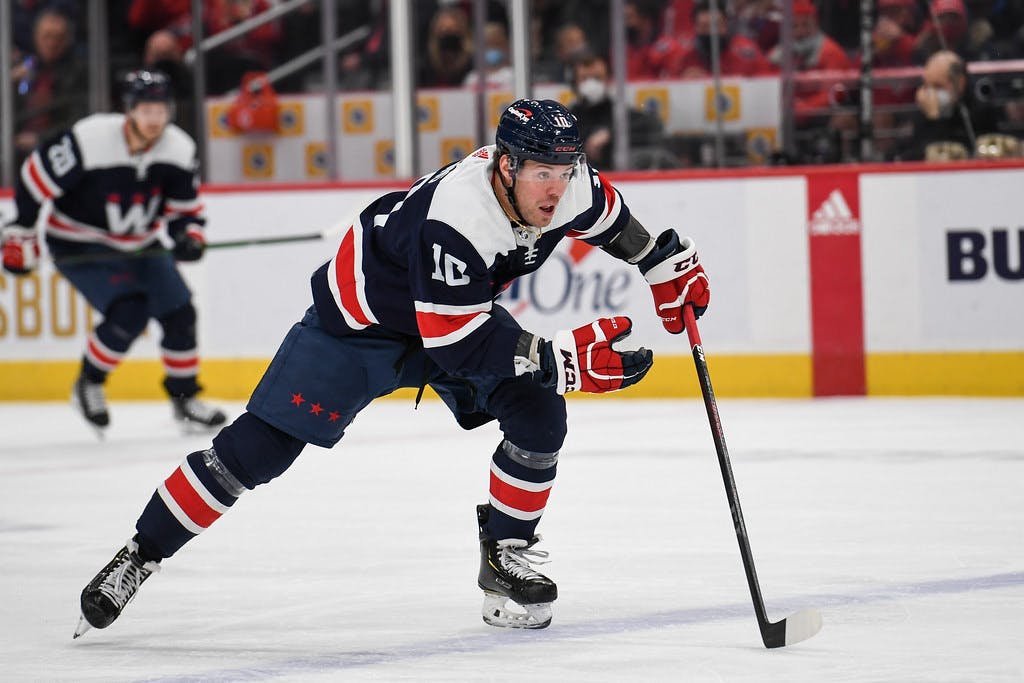
US Sports Hockey - 4 Hockey Skating Drills for Youth Players: Building Speed, Balance, and Agility And Predators vs. Avalanche NHL Highlights


Skating skills are the foundation for any good hockey player. Youth hockey players who develop good skating technique and habits at a young age will have a significant competitive advantage over their teammates and opponents. Mastering the hockey skating fundamentals early will give young players a head start in developing speed, agility, and edgework. Whether you are coaching complete beginners or a talented team of Peewee’s, practicing ice skating basics will help build an edge over the competition.

Basics of the Forward Stride: One Foot Push Drill – Nicole Uliasz

Coach Nicole Uliasz is a women’s varsity ice hockey coach for the Lawrenceville School, a prestigious prep school in New Jersey. She played women's hockey at a high level, starting her career in 2000 at the University of Wisconsin-Madison. In 2001, she left the team to play for her country on the US national team. In 2002, she played games on the pre-Olympic tour before joining the women's U-22 national team. She later returned to Wisconsin to finish her collegiate career, earning All-Big10 Honors.

Coach Uliasz teaches the basics of an efficient skating stride in her course ‘Hockey Fundamentals for Beginners’. Good skating starts with a strong, hockey-ready stance. In an athletic stance, a player's knees should be bent, shoulder width apart. Their chest should be up, facing the direction they want to skate. Some players will hunch over, tilting their chest down toward the ice. This is not ideal for skating as it puts the body in an awkward position, resulting in inefficient strides and wasted energy. It also makes it difficult for young players to keep their heads up, and aware of their surroundings. This is key for player safety, but also for game awareness.


NHL Download on the App Store

If a player skates their head down, they are less likely to be ready to receive or give a good pass and will miss opportunities to make plays. Keeping the head up is a crucial habit to develop at a young age. 

The key to an efficient and effective stride is a strong push. Emphasize the importance of digging the skates into the ice and getting a strong outward push before returning them all the way back under your body. This is key, as it allows for a longer, more powerful stride at minimal energy cost. Shorter, choppier strides that don’t return under the body are less energy efficient and don't allow the player to generate as much power and speed over space. These are good for getting a quick start, but not skating fast over longer distances.

The One-foot push drill is an easy way to get young players comfortable and familiar with the proper skating form and technique. It may be difficult for young players to consistently use proper mechanics, but by breaking it down they will become more aware and intentional about their stride. You must emphasize the long stride starting and returning from under the body.  Make the drill fun, and challenge players to see who can glide the farthest per stride. Turn it into a one-footed race, challenging players to skate as fast as they can with proper form.

Quick Feet Stop and Start Drill

Hockey is a game of inches. The ability to gain speed and change direction on a dime is essential for being a good skater. Learning quick stops and starts will help players be more effective skaters and will allow them to follow the puck/play more effectively. It is also a crucial skill in developing small space speed and acceleration, allowing players to win more puck battles or create separation from their opponents. 

The drill is simple. Line players up at the bottom of a faceoff circle, or in a line with 2 cones spread a few feet apart. On the coach's whistle, players will make a quick crossover start, getting 3 quick and powerful strides focusing on getting from stop to start as fast as they can. They will then stop at the top of the circle, and explode out of the stop back to the bottom of the circle, repeating this as many times as desired. You can incorporate puck carrying into this drill for more skilled players. Make sure you explain the importance of keeping their heads up with the puck on their stick and instructing them to protect the puck when they stop and start. 

Jump Sticks Drill – Coach Patrick Burke

null

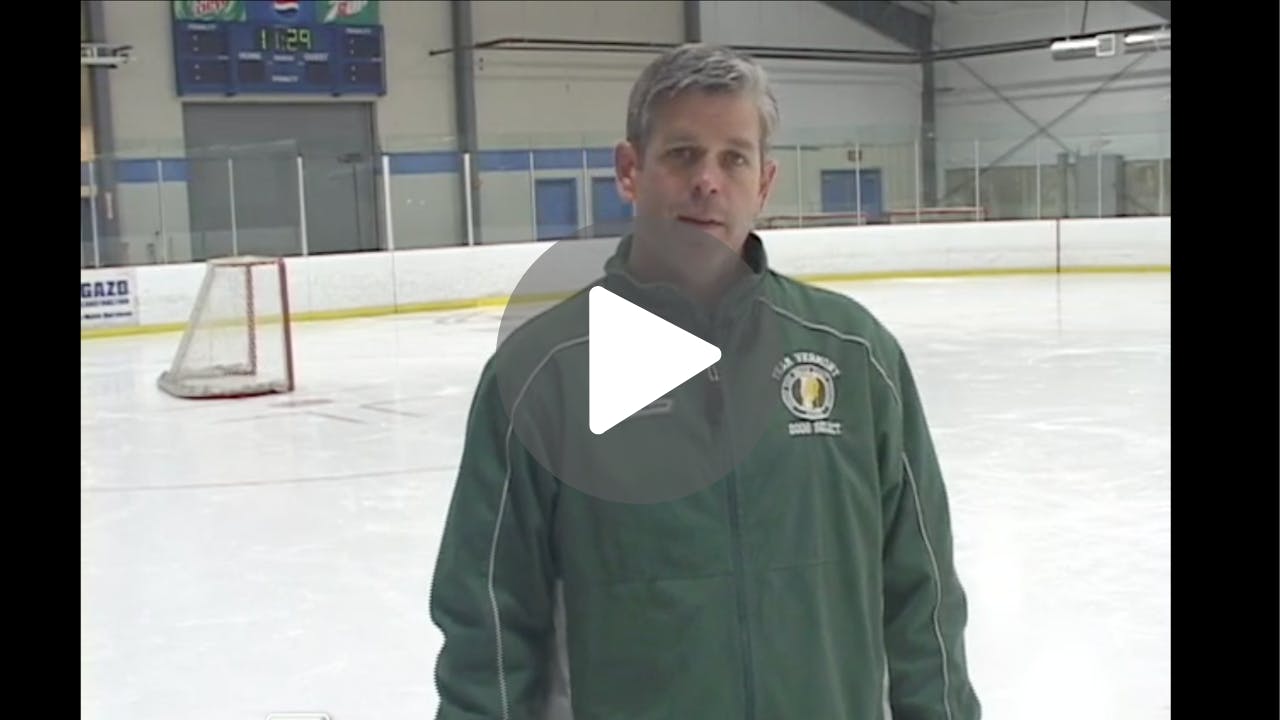
Coach Patrick Burke is a former collegiate and junior hockey player, playing for Connecticut College, the Ramapo Saints, and the New Jersey Rockets. He is now a USA Hockey Association coaching education director and certified USA hockey coach. Coach Burke has coaching experience at nearly every level of the game, from mites to elite high school hockey. He has now turned his attention to youth hockey, focusing on youth player development.

Coach Burke’s ‘Jump Sticks Drill’ from his ‘Coaching Youth Hockey: From Mites to PeeWees’ Course is a great way for young hockey players to practice their balance and agility on their skates. Have your players spread out and lay their sticks down on the ice. On the coach's go, the players will practice jumping over their sticks. Start with 2 feet jumps, emphasizing the importance of keeping their knees bent, and their chest and head up. This will help players keep balance and prevent them from falling. After they’ve gotten the hang of the 2-foot jump you can add fun wrinkles to the drill to keep the kids engaged. They can try 1-foot jumps, spinning jumps, or fast feet. If they really get the hang of the stick jumps, you can incorporate figure 8 skating. Have the players begin on one side of the stick, jumping over the stick and making a tight turn around the ends of their stick. This further stresses the importance of balance and that athletic stance while incorporating movement and skating. 

Circle Skating Drills

null

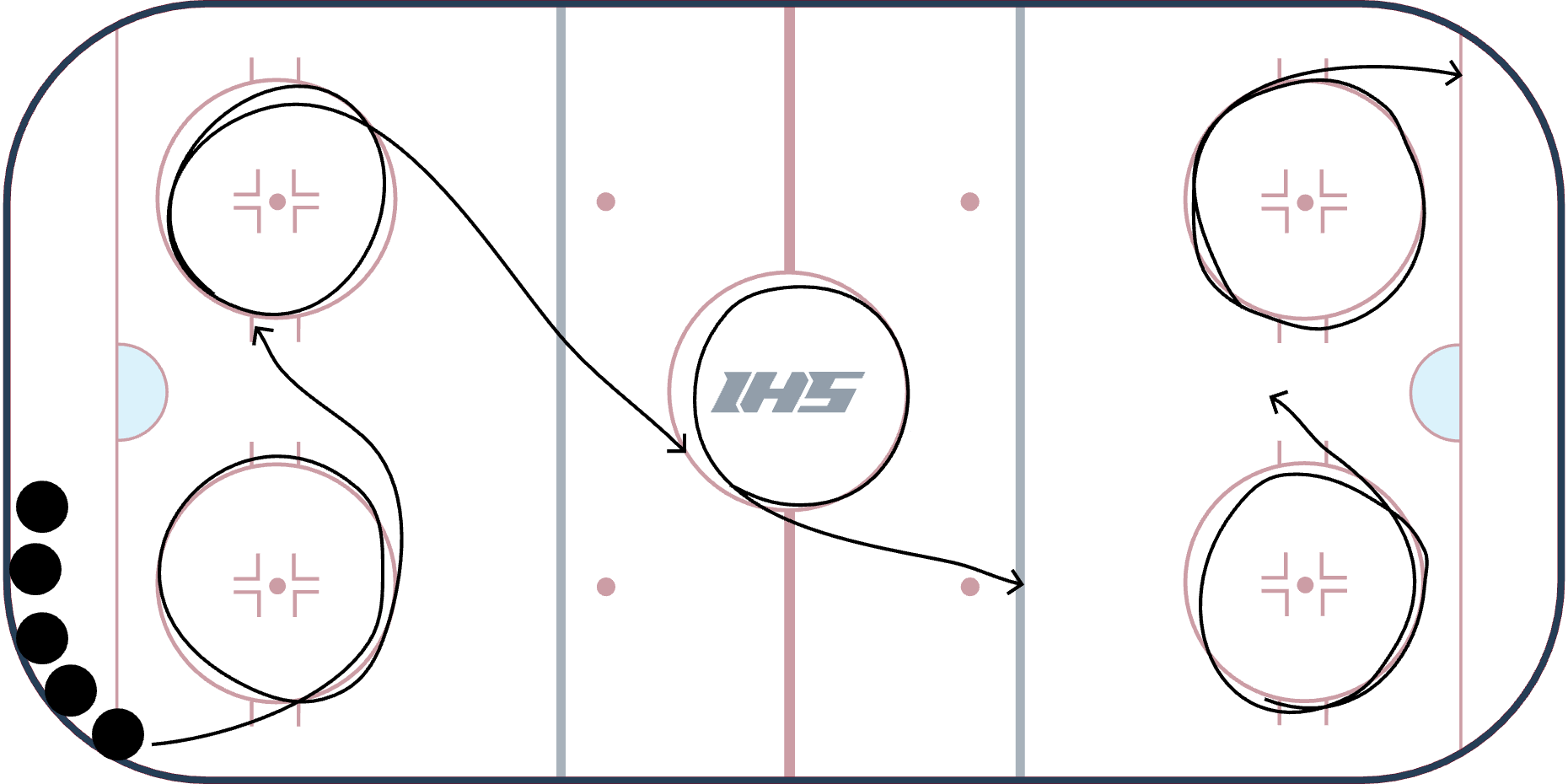
There are many different circle skating drills that are very effective in teaching good skating skills and habits. All of the variations follow one base drill. Line all of your players up in one corner, with the first player in line where the goal line meets the corner. Without a puck, have players practice skating on the circle all the way around. Teach players to use crossovers to keep and gain speed while staying on the circle as best they can. After the first player skates past the line, and around the top of the circle again, they will skate to the next circle (2nd corner). Players can be sent on the coach's whistle, or after the player in front passes the line.

After players have the hang of skating the circles, you can add edgework. One way to do this is by having players lift one leg, using only their inside or outside edge around the tops of the circles.

You can have players practice their transitions and backward skating. Tell players to keep their chest facing the far end of the ice at all times (or if there is a clock or scoreboard use those as landmarks to limit confusion). This will force players to incorporate both forward and backward skating while also working on smooth transitions as they reach the tops and bottoms of the circles. 

Adding pucks is also a good way to elevate this drill, forcing players to focus on puck control and making turns with the puck. 

Finally, you can turn this drill into a race, having players chase one another around the circles. If any player gets caught by their teammate they owe push-ups. The race adds stakes, creates competition, and keeps practice fun for young players.

Want to help kids find sports they love? Sign up to be a coach or volunteer in a local youth sports program. Learn more ways to support youth sports in the National Youth Sports Strategy: https://bit.ly/2lIHPUc


Thursday, November 5, 2026

US Sports Partner Spotlight. Yosuda (FED Fitness)

 In the name of “you’re the sun dame”, YOSUDA brand was created in April of 2018. Though we have the word “dame” in its name, our products are not just for women, but for all those who love to keep fit. YOSUDA keeps sticking to the principle of “family fitness and healthy life”. Besides, owning advanced equipment and technology, we attach great importance to ensure the quality of products in the case of continuous improvement of its aesthetics and strive to create a trustworthy fitness brand.

-Find all your Exercise Bike & Underdesk Bike needs at Yosudabikes. Free Shipping on all orders.


US Sports Soccer - Paul Riley's Soccer Moves, Skills & Drills and Portland Timbers vs. Houston Dynamo FC Match Highlights

 PaulRiley

Paul Riley's Soccer Moves, Skills & Drills

Looking to get the most out of your youth soccer team? In this course led by one of the top youth coaches in the country, Paul Riley demonstrates a wide variety of techniques designed to help you develop your players into successful athletes. 

Topics covered include:

  • Practice Tips
  • Coaching Tips
  • Soccer Moves
  • Trapping and Ball Control
  • Shooting
  • Passing
  • Defense

The Coach

PaulRiley

Paul Riley

A-League National Coach of the Year

Paul Riley has had a long and successful soccer career, both as a player and a coach. Signing for his hometown club Liverpool FC in the UK, he was the youth team's MVP. He played collegiately at Adelphi University. As a professional, he represented the Long Island Rough Riders (all-time leader in assists), the New Jersey Eagles (MVP 1990) and the Albany Capitals, and was named to the APSL All-Star team in 1989 and 1990. He won the NEPSL championship in 1991 and 1992 with different clubs (Glen Cove and Hercules) and was the league's MVP in 1991.

As a coach, he was at C.W. Post from 1986-97, including the last six years as head coach. He then took charge of the Long Island Rough Riders and was voted A-League National Coach of the Year in 1999 and the Umbro A-League All-Stars Coach in 2000. In 2006, the Long Island Fury formed and joined the WPSL, the second-ranked women's league in the world. As head coach, Riley led the Fury to the national championship and a world ranking of No. 8 in that first season. In 2007, he formed a senior's men side, the Long Island Academy, which plays in the NPSL Eastern Division.

When Riley is not coaching the Fury or the Academy or overseeing the 19 girls' teams and 19 boys' teams of the Albertson Soccer Club, he runs the Paul Riley Soccer School, which hosts regular training camps and skill sessions for players of all ages. Riley is one of the top youth coaches in the country and has seen several of his players called up to represent the U.S. national youth teams. Book this course....


MLS: The Official App Download on the App Store

The Rock Almighty Shaker Of Heaven And Earth on US Sports Radio - Worship Him 24/7/365 And Song Of The Day: Do You Still Believe In Love By Rage Of Angels

 The Rock Almighty. Now streaming on US Sports Radio

Wholehearted Worship

The Lord calls us to worship Him wholeheartedly every day of the week.

Malachi 1:6-14

The book of Malachi was written a century after Israel had returned from Babylonian captivity and rebuilt both Jerusalem and the temple. Although there’d been a revival under Nehemiah, by this point the nation had again lost its zeal and drifted into rote worship.

Instead of offering unblemished animals as prescribed in the Law, they were bringing God the undesirable animals from their flocks—the sick, blind, and lame. The people and the priests had become so accustomed to going through the motions that they’d stopped noticing anything was wrong. They were still showing up; they just weren’t truly present......Keep reading.......

Listen on Apple Music

Wednesday, November 4, 2026

US Sports Partner Spotlight: Iron Infidel


Iron Infidel was established in 2019 by a tight-knit group of SWAT Team Members united by a shared passion for fitness and preparedness. Frustrated by the constant need to replace other companies’ low-quality fitness products, we took matters into our own hands and developed gear capable of withstanding rigorous use.

-Lift heavy, train hard, live free. Calling all patriots to the Iron lifestyle. Lifting gear for strength and support, bottles for hydration and convenience, and apparel for that everyday style. Wear it well. Be Iron.
US Sports Radio Affiliate partner


US Sports Track & Field - Speed Training Workout Guidelines And Women's 200m USA vs Jamaica

Every coach and athlete wants to experience faster speeds, but that does not mean they are doing effective speed training workouts at their practices. Somewhere along the way, many coaches, at every level, began combining speed work and conditioning training as the foundation of their speed development. The result of this has been highly conditioned athletes who compete in sports where the demand of the sport does not require a significant percentage of the conditioning that has been developed.

That being said, the required changes likely only involve making minor modifications in your training philosophy. In this article I will cover acceleration development. Many programs neglect acceleration development even though it is the foundation of any program designed to improve speed. You can't run at your true top speed if don't have the ability to accelerate properly.


TrackThletics: Track & Field Download on the App Store

Success in most sports is based heavily on the ability to accelerate quickly and efficiently. This is because most sports primarily require short bursts of speed before the athlete stops, slows down or changes direction. The exception is track and field sprinters, where the acceleration portion of speed development is critical because it sets up the rest of the race. But even sports like soccer, traditionally trained using long slow runs and intervals, require a shift in emphasis to acceleration development.

Success in these 'endurance' sports still depend on short periods of acceleration in order to get to a loose ball, breakaway from an opponent and get back on defense.

So there's little point in doing speed training workouts if you haven't first mastered the ability to accelerate. Here are some basic speed training workouts that you can do in order to improve the ability to accelerate. For our purposes we are talking about runs from 0 ' 30 yards.

But before you begin, regardless of your sport or beliefs about training speed, there are some things you need to remember when it comes to acceleration development.

1). Full recovery between repetitions is required.

2). Full recovery means rest approximately one minute for every 10 yards that you run.

3). 'Don't train speed every day.

4). The more force you apply to the ground, the faster you'll pick up speed

5). Make sure that your feet land beneath the hips.

6). The heels should never touch the ground when doing speed work.

7). You run faster when you stay relaxed then when you strain.

I like to start the training season with short runs up hill because this forces athletes to really drive the foot down into the ground in order to gain momentum. The ability to apply force into the ground with each stride is the driving force (pun intended) behind getting faster. I like to use fairly steep hills, that way the requirements in steps 4-7 above really become more pronounced. When you don't follow those criteria, it becomes extremely difficult to accelerate quickly.

1). 10 x 20y uphill or on a flat surface from standing start. 2 minute rest.

2). 10 x 30y uphill or on a flat surface from (push up down position, 3 point stance or seated). 3 minutes rest.

As you can see, speed training workouts themselves aren't especially complicated or fancy. The results come from following the 7 rules I mentioned earlier, mastering technique by using speed drills and improving strength by lifting weights.

In all, the key is to follow a comprehensive and complete speed training program that will not only teach you the types of workouts that improve speed but also the many other elements of training that compliment your speed work and develop overall athletic ability. By looking for short cuts and quick answers, you'll see inconsistent and frustrating results.

But when your speed training workouts fit into a well designed training plan, you'll get results that you didn't realize could occur so quickly and easily.

Copyright (c) 2007 Patrick Beith

To learn more about Coach Beith and to discover the 7 secrets to developing speed and get cutting-edge speed, strength, and conditioning tips, for free, go to: Athletes Acceleration

Want to help kids stick with sports? Prioritize fun and #PhysicalActivity over competition in #YouthSports programs. Learn more in @HealthGov’s National Youth Sports Strategy: https://bit.ly/2lQ85f6