Monday, June 29, 2026
The Rock Almighty Monday Wake Up Call: Christ and the Roman Empire and A Fighting Church Is Becoming Unstoppable!
Mark Slaney
Rome was considered one of the largest empires of the ancient world, covering areas throughout the Mediterranean Sea, North Africa, and Asia Minor. Soon after the Punic Wars took place, Emperor Augustus expanded the empire across other regions such as Egypt, Spain, and certain parts of the Middle East, including the land of Judea. Once Judea had become part of the empire, it would lead to the coming of Christ to the beginning and spread of Christianity.
The reign of Augustus would eventually end with his death when Tiberius became the new Emperor of Rome. When he heard about him proclaiming to be the Messiah, the Emperor would respond with great discouragement and plot his arrest. After learning about his teachings, the Roman Empire and majority of its citizens refused to believe that he was the Messiah. Others who did oversaw and gave an account of his events; for example, his power to heal and to cast out demons, and the moments leading up to his crucifixion.
The twelve men who did follow Jesus were concerned that he would be taken captive by the Romans. They wanted to protect Jesus no matter where they were to follow him, but he was tempted by the devil at the Garden of Eden. His point was not to prove that he’s the Messiah on earth but to allow the world to believe that he is. He wasn’t going to save himself and restore an earthly empire but become a sacrifice to justify his people through his own blood.
Pontius Pilate
When Pilate questioned Jesus about being King of the Jews, he answered, “My servants would have fought if my kingdom were of this world,” but because it’s not of the world, he would not release himself, nor would Pilate except on his own terms. After they chose to free a robber named Barabbas instead, Pilate washed his hands clean to say he is innocent of him. Pilate did not sentence Jesus crucified by his own authority, in fact, he didn’t convict him of anything during the trial. By rendering Christ innocent, he claimed himself to be from what they were about to do to him under Roman law.
His position could not decide Jesus’ death by any means. Even if he were to say “live”, it would be in conjunction with Rome and denial that he’s God, who held his own power to lay down his life. Jesus put himself on trial under Roman law in order to fulfill the law of Moses. Since he did not break any law, Pilate had no say in what Jesus was to carry out. He did not understand the spiritual element of sin and what Christ had to do by giving into the demands of the world and the Roman system.
Although he may have tried to waiver off the accusations against Jesus, he didn’t know that his sin was still pushing the Lord, leaving the final verdict up to the crowd — a decision made by the Jews, one that doesn’t involve himself. Pilate’s motives not to crucify the Son of God were unjustified by an act of self-righteousness. You can only become righteous by what Christ had to do, so in effect, he acted upon the circumstance of his crucifixion, unaware that he was also a sinner.
The Romans who crucified Jesus wanted to prevent their emperor from falling inferior and the empire from being overruled. In fact, the Roman Empire still put forth its policies to stop Christianity after the death and resurrection of Christ. Anyone who would be found a Christian would be put to death or imprisoned. Almost all of the apostles were martyred for teaching God’s work of salvation and his power over all the earth.
I have written and published articles for numerous writing companies. I also write articles for my own website at biblicalperception.com.
All kids deserve a chance to play #YouthSports – regardless of their ability. Help expand inclusive programs as part of the National Youth Sports Strategy from @HealthGov: https://bit.ly/2lQ85f6
Sunday, June 28, 2026
Saturday, June 27, 2026
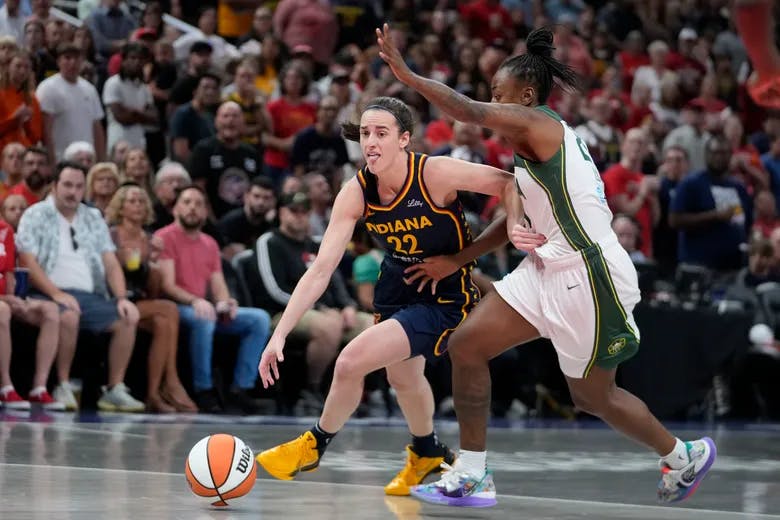
Fearless With Jason Whitlock on US Sports Radio: Presented by GRITR Sports. Caitlin Clark OUT! Alyssa Thomas SUSPENDED! As The WNBA Turns
Jason delves back into the Alyssa Thomas and Caitlin Clark incident, which led the WNBA to announce a one-game suspension for Thomas. Jason insists that the Thomas and Clark factions can’t co-exist. Charles Baker, Maurice Drake Jr., and Jon the Liquidator join the show to discuss whether Clark left the game because of injury or coach (Stephanie White) fatigue. Jay Skapinac joins to break down the Minnesota Timberwolves trade for LaMelo Ball. Coach Jason Brown anchors Friday with his “What Do I Know” segment. Now streaming on US Sports Radio.
Presented on US Sports by GritrSports (Formerly 1800Guns&Ammo)
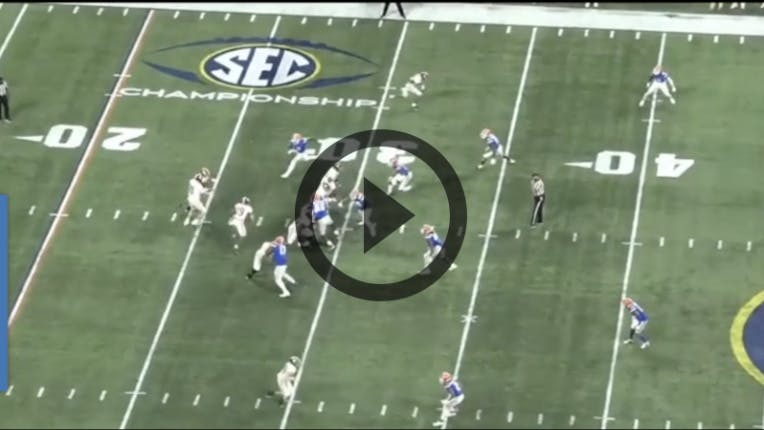
US Sports Football: Red Zone adjustments and D.C. DIVAS PLAYOFF FOOTBALL VS. TAMPA BAY INFERNO Live Stream.
Red Zone adjustments
Hopefully your team is finding success in the Red Zone. It can make a huge difference in any game.
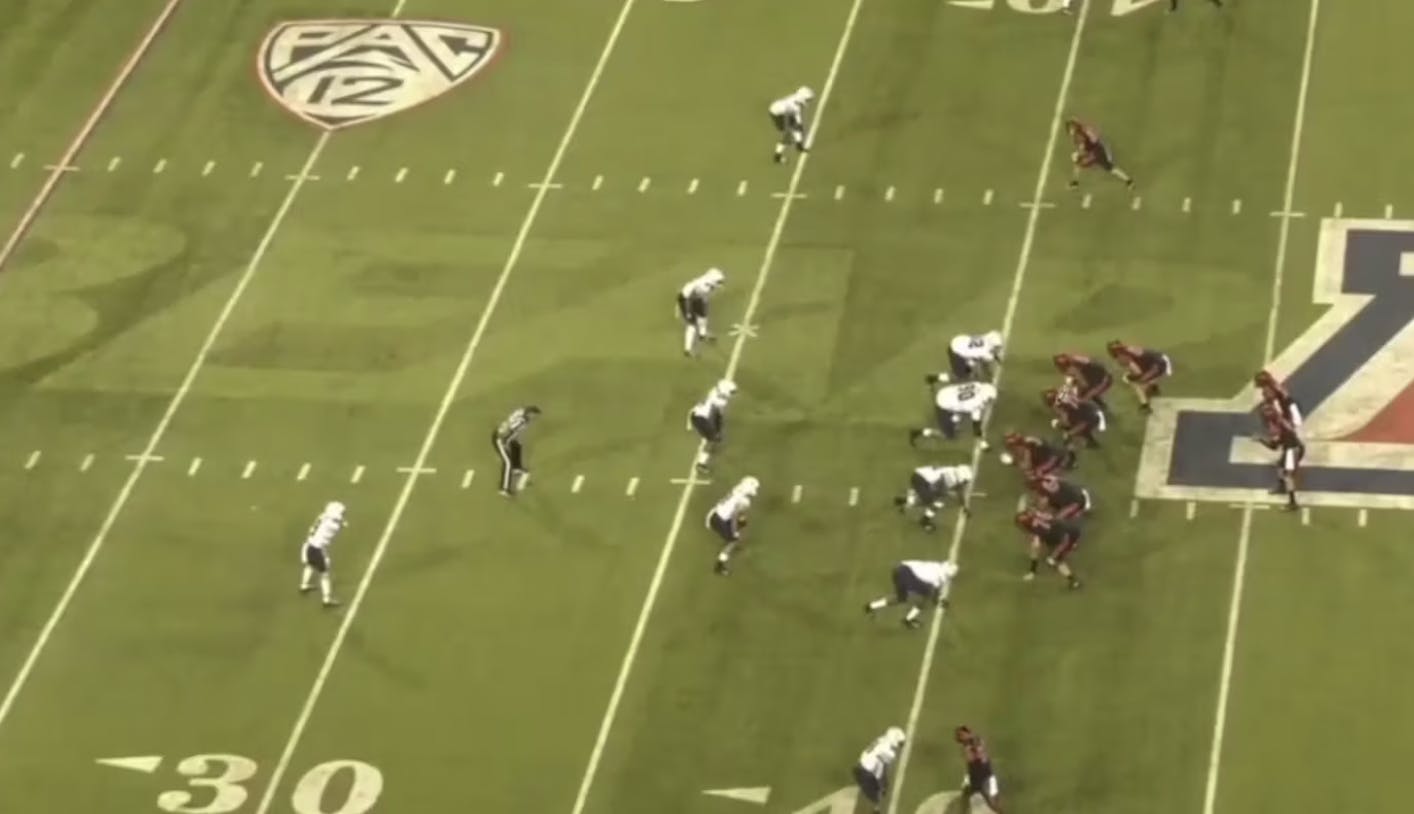
The red zone requires some thoughts and adjustments on both sides of the ball. For the offense, vertical space is decreasing and causes them to adjust their route concepts. They look for formations and routes that help them get free of tight coverage. In the run game they look to add hats especially as a defense commits more to the run.
The defense must adjust and stay out of situations where the offense is picking off defenders and getting a receiver wide open. The defense needs to be able to react quickly and commit to stopping the run.
Both sides of the call must have a plan and execute if they want to win on this part of the field. Today we share three adjustments for each side of the ball.
OFFENSE ADJUSTMENTS:
#1 Adjustment to aggressive apex player on screen
Many teams like to use the fast motion of the RB into a swing screen to the perimeter because it is a great red zone play to get the RB the ball in space with blockers.
What can cause some trouble is the apex outside linebacker who aggressively runs through the block of the receiver and blows up the swing to the running back. Tim Zetts, who previously coached with Joe Moorhead and is now an offensive assistant with the Green Bay Packers, has a great answer to this.
He adjusts to this defensive action by having the receiver stalk and then work into the void in the defense. It’s an answer that can score in the red zone. He explains and illustrates the concept on video here:
#2 Adjustment to Zero High Safety
At some point as your offense nears the goal line, most defenses will jump into a zero high (straight man) defense. It makes it tougher because they send pressure and have tight coverage. In this video, Joe Gerbino, offensive coordinator at Utica College explains his favorite adjustment to this defense:
#3) Easy “This of that Read” for the QB
Keeping things simple for the quarterback, especially in the red zone, is critical to putting points on the board. Monmouth offensive coordinator TJ Dimuzio likes to utilize action off of their speed sweep to give his QB a touchdown to check down simple read. He explains it here:
DEFENSE ADJUSTMENTS:
#1 Cover 2 with technique variation and pressure
It creates a 2 deep-4 under look bringing 5 men in pressure. He likes this adjustment from the 12 yard line and in. The corners play fade to flat as Western Michigan defensive backs coach Marvin Clecidor explains in his “Moose” adjustment here:
#2 Adjustments to Condensed Splits
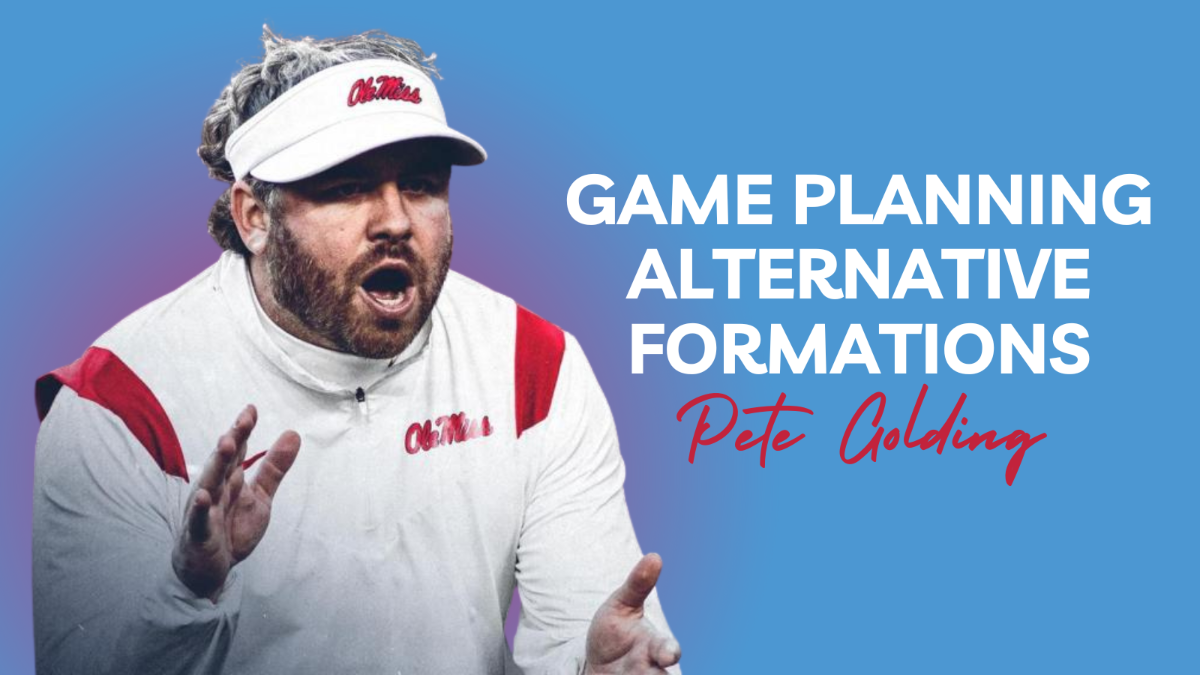
It is very common in the red zone for an offense to condense their splits in order to defeat tighter coverage. It creates space for routes to break into and it can create rubs which knock defenders off their receiver. Ole Miss defensive coordinator Chris Partridge likes to use bracket concepts against this and he explains it here:
#3 Sit Coverage tag
Hunter Hughes likes to implement a “Sit” tag to his coverages near the goal line to build a wall for his defense while playing match-up zone. The secondary makes these adjustments in their technique to stay square, jam, and carry a receiver to the next defender. He explains the tag in this video:
There are certainly ideas on both sides of the ball that were shared here that you should think about a plan for. Certainly, you will see these kinds of adjustments as the season progresses.
Good luck this week!
Always be growing!
Want to help kids find sports they love? Sign up to be a coach or volunteer in a local youth sports program. Learn more ways to support youth sports in the National Youth Sports Strategy: https://bit.ly/2lIHPUc
US Sports Lacrosse: Lacrosse Strength and Conditioning Academy and NLL FINALS GAME 2| ROCK VS. THUNDERBIRDS HIGHLIGHTS
Lacrosse Strength and Conditioning Academy
by Jamie MunroStep onto the field stronger, faster, and more resilient than ever with our Lacrosse Strength and Conditioning Academy. This meticulously designed program combines the essentials of athletic training with specialized lacrosse conditioning techniques. Starting with the fundamentals, each participant will master the core principles of strength and conditioning, progressing through structured belts and rigorous testing to ensure optimal development and understanding.
Our expert-led strength and conditioning phase is tailored specifically for lacrosse athletes, focusing on enhancing power, agility, and endurance to maximize performance during the most demanding moments of the game. Additionally, our comprehensive health resources provide ongoing support and guidance, ensuring athletes not only perform their best but also prioritize their long-term well-being.
Whether you're preparing for the season, aiming to elevate your game to the next level, or looking to build a solid foundation of athletic fitness, our Lacrosse Strength and Conditioning Academy is your gateway to peak performance. Enroll now and transform your athletic potential with the science of sport and the spirit of lacrosse. Learn more and book this course.....
The Coach
Jamie Munro
JM3 Sports, Founder 3d Lacrosse, DC Atlanta Blaze '17, Analyst ESPNU, HC Mt. Vista, AC TRHS Girls, HC Denver U, Boston Blazers '93, Wolfpack, Brown Lacrosse HOF
Jamie Munro, the Founder of JM3 Sports, is a pioneering figure in lacrosse, widely recognized for his groundbreaking approaches to coaching and entrepreneurship. With a diverse background that includes coaching professional and Division I lacrosse for two decades, founding and leading 3d Lacrosse, and guiding countless athletes through the recruitment process, Munro brings unparalleled expertise to the sport. He has also coached at the high school and youth levels, managed both boys' and girls' club teams, and navigated the recruitment journey with two of his own children—one an early recruit and the other a late bloomer. This comprehensive experience has equipped him with a unique perspective, enabling him to develop what he believes is the optimal model for enhancing players' skills and maximizing their exposure to recruiters. Book this course.....
Want to help kids find sports they love? Sign up to be a coach or volunteer in a local youth sports program. Learn more ways to support youth sports in the National Youth Sports Strategy: https://bit.ly/2lIHPUc
Thursday, June 25, 2026
The Rock Almighty Friday Wake Up Call: What does it mean when God says you are dead to the law? And What Do You Want Me To Do God?
You Are Dead to the Law
For some of us, in our early years, the church we attended stressed obeying what is called the ten commandments. Do you remember every one of them? I don’t. Well, here they are from the book of Exodus 20:3-8.
Thou shalt have no other gods before me.
Thou shalt not make unto thee any graven image, or any likeness of any thing that is in heaven above, or that is in the earth beneath, or that is in the water under the earth:
Thou shalt not take the name of the Lord thy God in vain; for the Lord will not hold him guiltless that taketh his name in vain.
Remember the sabbath day, to keep it holy.
Honour thy father and thy mother: that thy days may be long upon the land which the Lord thy God giveth thee.
Thou shalt not kill.
Thou shalt not commit adultery.
Thou shalt not steal.
Thou shalt not bear false witness against thy neighbour.
Thou shalt not covet thy neighbour's house, thou shalt not covet thy neighbour's wife, nor his manservant, nor his maidservant, nor his ox, nor his ass, nor any thing that is thy neighbour's.
So, you tried as best you could to obey them. And if you were successful, you were probably characterized as someone who was living a moral, godly life. Right? As for myself, when I reached my late teenage years and started hanging around with a peer group that didn’t go to church but rather enjoyed the pleasures of sin, it’s not surprising that I stopped going. I got involved as we’ve heard others quote this line, with sex, drugs, and rock n roll. By my mid-twenties, my life was out of control. I didn’t like anything about it.
As I mentioned earlier in this study, and will briefly, here again, I decided to attend the various faiths in my home town, hoping to find a God that would work with me in changing my life. What I found out was that most churches emphasized learning about the doctrines of their faith and the need to stop sinning. Certain sins were considered more egregious than others. I tried this approach, hoping that I’d draw closer to God, but He was nowhere to be found.
I kept on attending different faiths until one of them presented the gospel of grace to me. I responded to it and was immersed in God’s love, peace, and joy. Thoughts of sinning were gone, at least for a short period of time. While sinful desires did come back, I began to learn how to address them.
What I learned was that it wasn’t by obeying a command of the Mosaic Law that addressed my sinful tendencies. Even if I tried as hard as I could to stop doing this or that, this didn’t stop the sinful thoughts from coming back again and again and imprisoning me once more. But I was set free by changing my thoughts concerning whatever sinful area it was that was trying to resurface and urge me to engage in it again. Let me give you one example of what I mean.
What if you’re attracted to a fellow believer and begin entertaining thoughts of desiring to have a sexual relationship with them. How could this be addressed?
1 John 1:9 If we confess our sins, he is faithful and just to forgive us our sins, and to cleanse us from all unrighteousness.
New Testament Scripture says that we should confess known sin (mental, verbal, or overt) to God the Father. Under the Law of the Old Testament, we’d simply try not to commit this sin according to one of the commandments. But, in the New Testament addressing our thoughts is of paramount importance. What we need to do next is recall Scripture and reflect upon it that provides us with what our spiritual perspective should be in this area. A verse from the book of 1 Peter will enlighten us in this regard.
1 Peter 1:22 Seeing ye have purified your souls in obeying the truth through the Spirit unto unfeigned love of the brethren, see that ye love one another with a pure heart fervently:
We’re instructed to love one another with a pure heart. The word pure means not for the love of ourselves or to not use for our advantage. And the word heart means mind. Next, I’d recommend rewriting this verse, memorizing it, and applying it when needed.
1 Peter 1:22b … see that ye love one another with a pure (not for the love of ourselves; to not use for our advantage) heart (mind) fervently:
What we’re learning to do is think how God would have us think, which is according to His illumination of such in the Epistles. And guess what amazing thing happens? The book of 1 John will tell us so.
1 John 2:5 But whoso keepeth his word, in him verily is the love of God perfected: hereby know we that we are in him.
As we choose to continually keep God’s word (all that he has made known to us as His will in regard to our conduct), the love of God (love produced in us by the Holy Spirit) will be perfected (manifested; an experiential realization of divine affection; characterized, not by any representative trait or quality of [our personality], but merely as the subject of the work of divine love.141
We’re no longer trying to obey an Old Testament command but confess sin and change how we think under a new dispensation of thought. When we do this, the passions of the sin nature that would continue to reign under the Law will be replaced with the fruit or influences of the Holy Spirit. And as such, our thoughts and thus our responses toward fellow believers and unbelievers will be Christ-centered.
So, what does the Word of God say is the relationship between Christians and the Mosaic Law? Please go to the book of Romans.
Romans 7:4 Wherefore, my brethren, ye also are become dead to the law by the body of Christ; that ye should be married to another, even to him who is raised from the dead, that we should bring forth fruit unto God.
It says that you are dead to the law at salvation. You are completely delivered from its authority as a covenant of works, and more especially from its power to condemn142 because of Christ’s death on the cross. It’s no longer the regulatory system for spiritual growth. Does it have any usefulness? Yes, the Law still has its place, but not for us. If not for us, then who? A verse from the book of 1 Timothy will tell us so.
1 Timothy 1:8-9 But we know that the law is good, if a man use it lawfully; Knowing this, that the law is not made for a righteous man, but for the lawless and disobedient, for the ungodly and for sinners, for unholy and profane, for murderers of fathers and murderers of mothers, for manslayers,
The law is good (morally excellent), if a man use it lawfully (as it should be used). This begs the question; how should it be used? The Law is designed to show people their sinfulness. [Thus,] the Law is not for one who had already recognized his sin and turned to Christ. That person is no longer under the Law but should now walk in the Spirit ([Galatians] 5:13-26). The Law is intended for those who remain unconvinced of their sin.143
So, remember, you’re dead to the law, i.e., like a widow released from marital obligations, so [you’re] released from the Law and its arousal to sin. The purpose of this release “from the Law” is so that [you] may [serve in] the new way of the Spirit, and not in the old way of the written code.144
The spiritual blessing that we’ll take a look at next has to do with superpowers. Have you ever wanted to be a superhero? Did you know that you are one of them because you possess something that makes you such? Would you like to know what that is? You know the drill. Please turn the page.
Endnotes
141Vincent’s New Testament Word Studies.
142Barnes’ Notes.
143Bible Knowledge Commentary/New Testament.
144Bible Knowledge Commentary/New Testament.
My name is James Rondinone. I am a husband, father, and spiritual leader.
I grew up in Massachusetts and began my own spiritual journey early on in life.
I attended Bible college, having completed a two-year Christian Leadership Course of Study and graduated as valedictorian (Summa Cum Laude).
Studying and teaching the Word of God has been a passion of mine for over 20 years.
Sports help kids #GetActive and learn new skills – but don’t forget about fun! Learn about @HealthGov’s National Youth Sports Strategy and help make fun the top priority in #YouthSports: https://bit.ly/2lIHPUc
US Sports Basketball: Three Dribbling Drills For Non-Primary Ball Handlers and WNBA Phoenix Mercury Vs. Indiana Fever Highlights
- By Grant Young
It's crucial for non-primary ball handlers in basketball to practice dribbling for several important reasons.
- Having a well-rounded skill set enhances a player's overall value to the team. Even if a player isn’t the main ball handler, being able to dribble effectively allows them to contribute to the offense by creating their own shot or breaking through a defensive set. This versatility can be a game-changer, especially in tight situations where primary ball handlers may be closely guarded or in foul trouble.
- Improving dribbling skills helps to boost confidence on the court. Non-primary ball handlers often may hesitate to take the initiative due to a lack of practice in ball handling. When they develop their dribbling ability, they become more self-assured in their gameplay. This confidence can lead to better decision-making on the court, whether it’s driving to the hoop, passing to teammates, or executing plays.
- Practicing and drilling dribbling enables players to better understand spacing and movement. This knowledge helps non-primary ball handlers to read the game more effectively, allowing them to create opportunities not just for themselves but also for others. By dribbling well, they can draw defenders away from their teammates, opening up passing lanes and creating favorable situations for scoring.
- In today’s fast-paced game, the ability of any player to handle the ball is invaluable. Defenses are increasingly focusing on double-teaming primary ball handlers, so having multiple players capable of dribbling allows for better ball movement and offensive fluidity. This can keep the defense guessing and lead to easier scoring opportunities.
All of this is to say that it's essential for non-primary ball handlers to practice dribbling. This is why we’ve selected three dribbling drills that are perfect for developing players who haven’t acquired the same confidence in ball handling as the guards on your team.
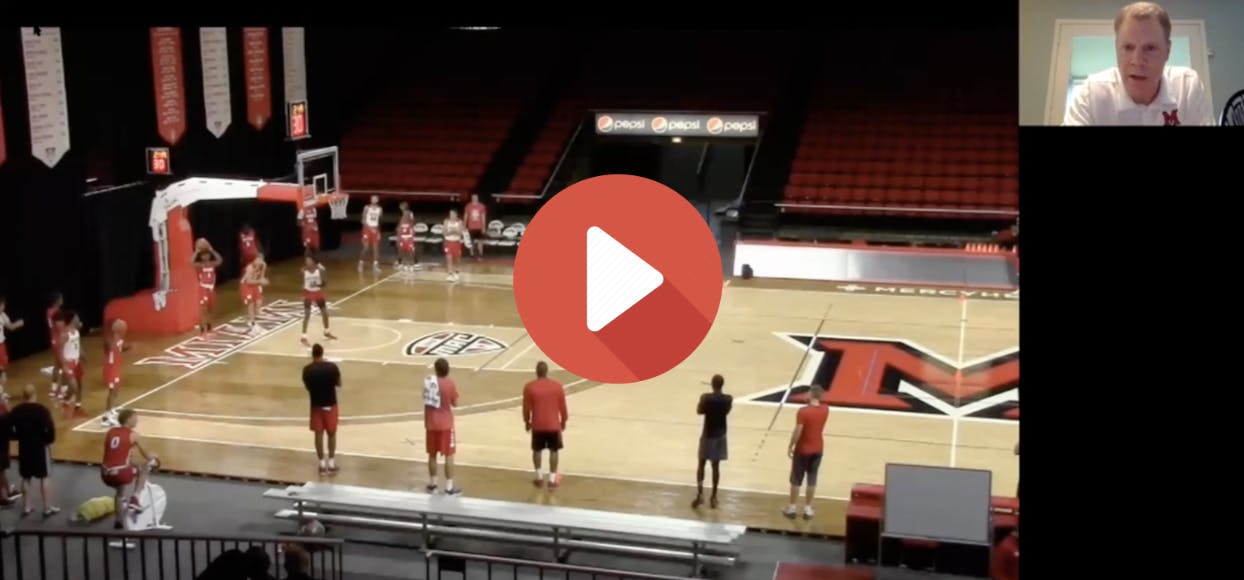
Rick Torbett - Three Ball Coordination Workout

Rick Torbett is the founder of Better Basketball and the creator of the Read and React offense. In 2001, he created a service that provided DVD and now a streaming service that consists of training and instructing basketball players and coaches.
TicketNetwork!
Banana Ball Tickets
In his ‘Better Ball Handling’ course, Coach Torbett conveys a series of three-ball dribbling drills as part of what he calls the Three Ball Coordination Workout that is perfect for non-primary ball handlers who are looking to improve their focus and efficiency with the ball in their hands.
The first part of the drill is a sort of juggling act between the three balls. While one ball is being dribbled from one hand to the other (let’s say the right hand to the left hand), one ball is being moved in the air from the left hand to the right hand while the third ball is being moved from the right hand back toward the ground.
The next phase of this drill requires all three balls placed in front of the player. The player will begin by dribbling the middle ball and one of the outside balls (one with each hand) at the same time. After two dribbles, the player will move so that the middle ball is being dribbled by the other hand while the ball that wasn’t being dribbled now is. The player will continue this way so that the middle ball is always getting dribbled by one hand.
From there, the player (who was standing stationary before) can do the same drill while slowly walking forward.
Dave Severns - 4 Square or Change Drill
Dave Severns is currently a basketball scout for the Indiana Pacers. Before that, he spent 14 years in the NBA as Director of Player Development for the LA Clippers from 2010-2016, Director of Player Development for the Chicago Bulls from 2008-2010, and Pro Personnel Scout for the LA Clippers from 2016-2021.
Coach Severns’ ‘Elite Ballhandling & Passing’ course details what he calls a 4 Square or Change Drill, which can be used by any basketball player who’s looking to improve their dribbling ability.
The drill begins with a line of players along the baseline, aligned with one block. The first player in line will start dribbling to the elbow with their right hand. Once he gets to the elbow, he makes some sort of dribble move (ideally between the legs or a simple crossover for non-primary ball handlers) and pivots the dribbling to the other elbow with the same hand.
They will then do the same thing at that next elbow (ideally a different move if it’s in their repertoire), then again at the baseline, and then they’ll come to a jump stop and pick up their dribble where the line begins. Then the next player will go in line.
After two or three reps of this, the line will move to the other block and players will do the same thing with their left hand.
Andy Cox - Stationary Dribble Floats
Andy Cox is in his fourth season as one of the assistant coaches for the Concordia University men's basketball program.
Andy was a four-year varsity player at Dana College (Neb.) from 2001-05. After graduating from Dana in 2006, he went on to take a job as an assistant coach at Dana. After a year at Dana, Andy took an assistant coach position at Shanley High School in Fargo where he served from 2006-08.
Sometimes it’s best to start with simple drills to build up a non-primary ball handler’s confidence. And in his ‘Daily Ball-Handling’ course, Coach Cox details how stationary dribble floats drill, which will be able to accomplish this.
This drill starts with the player executing a crossover while making a “float” step from side to side. After 30 reps of these, they’ll then move to doing the same thing between the legs. After 30 reps of that, they’ll do this same float step while dribbling the ball behind their back.
Want to help kids #GetActive through youth sports? Learn how parents, coaches, and volunteers can get involved in @HealthGov’s National #YouthSports Strategy: https://bit.ly/2lIHPUc
Subscribe to:
Posts (Atom)