Showing posts with label Tennis coaching tennis recruiting video NCAA tennis WTA International Tennis Association Tennis head coach Professional tennis instruction Racquetball. Show all posts
Showing posts with label Tennis coaching tennis recruiting video NCAA tennis WTA International Tennis Association Tennis head coach Professional tennis instruction Racquetball. Show all posts
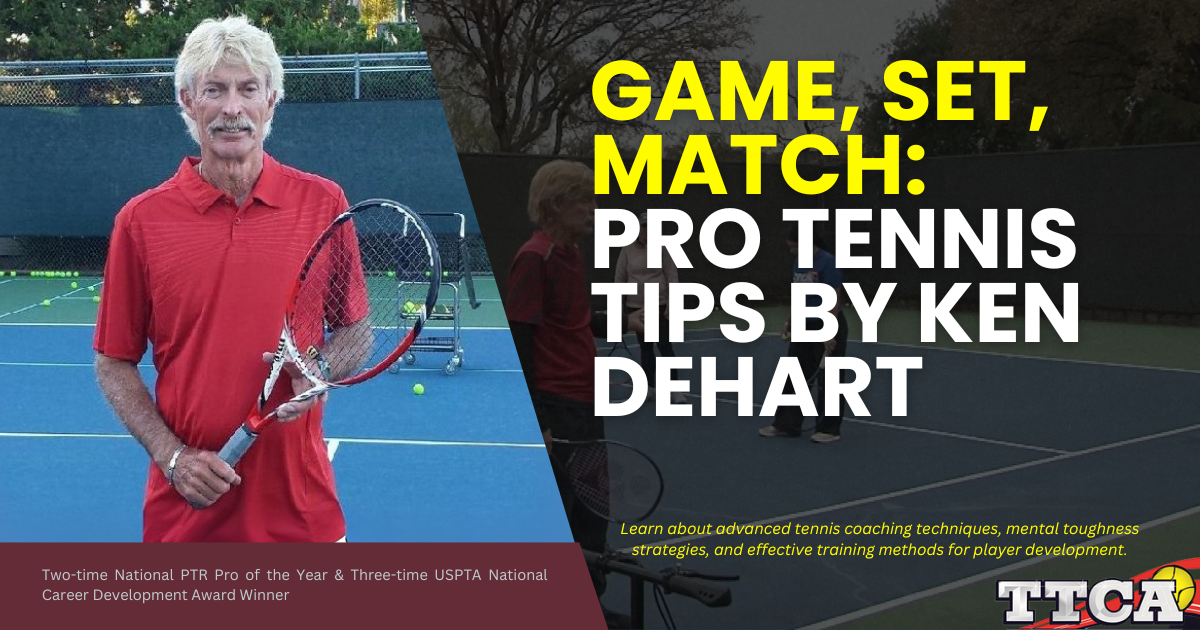
Dive into the world of tennis with Coach Ken DeHart, a seasoned expert who breaks down every aspect of the game in this comprehensive course. Learn the art of gripping your racket like a pro, mastering strokes for forehand, backhand, volleys, and serves. Improve your footwork and court positioning to outplay any opponent. Coach Ken shares essential strategies for singles and doubles play, teaching you how to anticipate your opponent's moves and adjust your tactics for success.
This course also emphasizes mental strength, offering tips to stay composed and focused during matches. From perfecting your serve to avoiding common mistakes, you'll gain practical drills to elevate your skills and take your game to the next level. Whether you're a beginner or an experienced player, Coach Ken DeHart's insights will help you unlock your full tennis potential. Game, set, match—get ready to win! Book this course....
Ken DeHart is a distinguished tennis coach with a career spanning over five decades. His credentials include:
USPTA Master Professional and PTR Master Professional: DeHart was the first in the world to achieve Master Professional status in both the United States Professional Tennis Association (USPTA) and the Professional Tennis Registry (PTR).
USA High Performance Coach: Recognized for his expertise in developing high-level tennis players.
Awards and Honors:
Three-time USPTA National Career Development Award Winner: Honored for his significant contributions to tennis education.
Two-time National PTR Pro of the Year: Acknowledged for excellence in professional tennis instruction.
Four-time USPTA Divisional Pro of the Year: Recognized for outstanding performance in regional tennis instruction.
USPTA Lifetime Achievement Award: Awarded for his enduring commitment to the sport of tennis.
Hall of Fame Induction:
Campbellsville University Hall of Fame: Inducted in recognition of his years of success and dedication to the sport of tennis. Book this course today!
Want to help kids stick with sports? Prioritize fun and #PhysicalActivity over competition in #YouthSports programs. Learn more in @HealthGov’s National Youth Sports Strategy: https://bit.ly/2lQ85f6
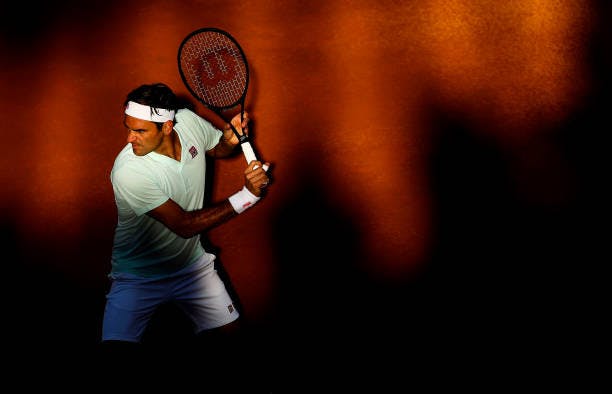
There is a signature move that brought Justine Henin and Roger Federer not just fame, but greatness. So delicate to play, so elegant to watch and so hard to master - a skill described by The Telegraph as "without a doubt, the most beautiful stroke in the game of tennis".
The one-handed backhand
Nowadays, it seems that players rarely decide to adopt this style of play, and we might witness it’s complete extinction in the next few years. If you’re up to the challenge, however, there are a few things that you need to consider. Not everyone has the ability to play like Henin or Federer, and you should understand what’s required to master this skill before embarking on the journey.
We could dig deep into the history of sport to figure where exactly things went from good to great, then bad for the one-handed backhand. But with the entire sport changing itself dramatically over the years and becoming more physically demanding and exhausting for the players, it’s really no surprise this graceful move has faded in popularity.
The focus of games today is almost always pointed towards long rallies from the baseline, requiring tons of power and leaving little space for the positioning needed to land the one-handed backhand.
Advantages and Disadvantages
As with every stroke, there are pros and cons to playing the one-handed backhand vs. the two-handed backhand.
Advantages:
The ability to apply more spin on the ball.
Better overall ball control.
Easy to disguise between a backhand slice and drop shot
Disadvantages:
Requires a higher level of focus and stroke preparation
Difficult to change single-hand grip between forehand and backhand grips
Requires a higher level of single-hand grip strength and control
It’s also interesting to note that Federer tends to hit the ball at waist height, while players in favor of the two-handed stroke hit it at shoulder height, at an earlier stage, and mostly right after the ball bounces.
The Technique
Watching videos on CoachTube can help you understand the technique. Assuming you already play tennis, you will learn more about posture, footwork, grip and swing.
You will find out that it’s a lot easier to learn from watching female players perform this stroke. Men often use way too much strength while playing, and tend to miss out on some important sections of the technique.
John McEnroe described Justine Henin’s backhand as the best single-handed backhand in the history of the game, and he’s not the type of person we’re looking to argue with. It’s important, however, that you learn the stroke as an entire motion rather than attempting to fragment it together.
How to Improve Your Backhandhand
Here are a few things to think about when performing a one-handed backhand:
1. Upper body position and preparation - try to rotate your upper body when the ball is coming your way. The back of your playing-hand shoulder should be facing the net. Put your chin on your shoulder, to make sure that your eyes are focused on the ball at all times.
2. Wrist control – the most important thing is to maintain the same wrist position while hitting the ball as you have before the contact. If you try to give more spin with your wrist, the ball is likely to go somewhere you don’t want. Once you practice the right grip, which should be doable after watching the slow motion videos, keep it consistent throughout the swing.
3. Position well and focus through the hit – bad positioning for the one-handed backhand makes you more vulnerable and leaves an entire side of the court unprotected. Players with a lack of focus won’t have time to position correctly for this stroke. Always maintain focus on the ball when playing a one-handed backhand, and once you improve your focus, you will get more confident with your shot and be able to properly position yourself for the return.
Final Tip Tip
Learning how to play tennis is a process that requires dedication and consistency.
Very few players decide to play the one-handed backhand, despite the benefits. Even if you decide to go with the two-handed backhand as your main weapon, you should learn the one-hander as a complement to the other.
A two-handed, top-spin backhand, along with a one-handed slice, makes for a winning combination.
Everyone has a role to play in the National #YouthSports Strategy! Learn more about the strategy and ways to get involved from @HealthGov: https://bit.ly/2lQ85f6
The coach of the best tennis players in the world, including Novak Djokovic, will present the most important elements of preparing your body for a tennis match.
The content presented in his course is attractive not only for tennis coaches but also for coaches of other sports due to their universality. Personal trainers around the world can draw on Marco's experience. Get started here.....
What you can learn from Marco Panichi while watching his ten-section course?
How to avoid common tennis injuries,
What exercises are necessary before a tennis match,
Which exercises will improve your game,
What you should pay attention to when performing popular exercises.
Start now and have unlimited access to your course for a lifetime!
Additionally, you will receive three very extensive training plans in PDF format, prepared especially by Marco Panichi himself! The training materials are prepared for two different levels: beginner and advanced. Choose a set of exercises that suits you!
Who isMarco Panichi? Italian high-level motor preparation trainer, currently working with Novak Djokovic (currently ranked world No. 1 in men's singles tennis by the ATP). They worked together in 2018 and in 2019 Marco joined Novak's team again. He’s a former athlete, 2-time Italian champion in the long jump. He worked with numerous tennis federations, including Italian, Chinese, Israeli, and German. He is a consultant at leading tennis academies such as Sanchez-Casal and IMG. He worked as a personal trainer with many tennis stars (e.g. Svetlana Kuznetsova, Francesca Schiavone, Li Na or Fabio Fognini).Let's Go!
Sports help kids build confidence and grow into healthy, active adults. Learn how organizations, communities, and policymakers can use @HealthGov’s National #YouthSports Strategy to support youth sports: https://bit.ly/2lQ85f6
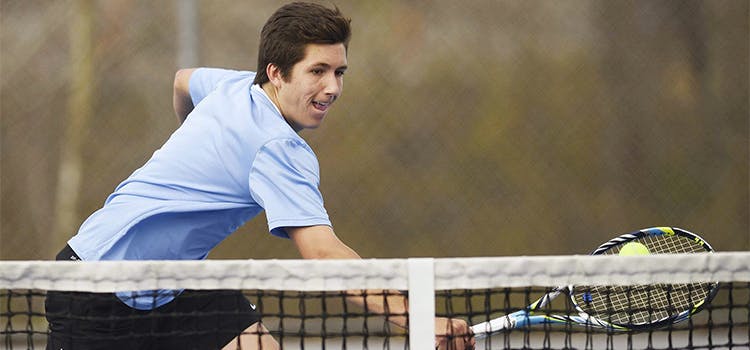
The net game was the key component of tennis gameplay a few decades ago, during the serve and volley era. While power play from the baseline has dominated in recent years, the net game is still an important part of any successful attack strategy.
With these proven tennis tips, you can improve your net game in a matter of weeks and make your collection of shots more versatile.
1. Choose The Right Grip
Your grip is the foundation for every shot you make in tennis.
Strokes in your net game are very delicate, so choosing the right grip becomes a very important thing to consider.
Forehand and backhand volleys, as well as overhead volleys, should be played with a continental grip. On the forehand volleys, you can slide your palm towards the eastern grip, but only after you become more comfortable with the shots.
2. Grip Solid But Not Tight
You will want to make strong and decisive shots during your net game, but try not to hold your racquet too tight. Your wrist needs to have freedom of movement at all times, especially during volleys, so make a fair trade between strength and precision.
An adaptable grip is also very important when you decide to have more spin on your volleys, which comes naturally as your game advances.
Here Coach Tom Avery explains the best forehand grips to use in your game.
3. Non-Dominant Hand Support
Always support the head of your racquet with your non-dominant hand positioned at the throat, even if you are a two-handed backhand player. It will loosen the pressure from the dominant hand before it needs to perform a shot.
The non-dominant hand will also help you make an adequate backswing.
4. Focus
During your net game, the wrist should be solid, yet flexible, as we already said. It’s important to focus on the ball the entire time, so preparation for the stroke is essential. Try to position your body horizontally to the ball path.
Prepare for the incoming ball with your legs flexed, because most of the time, the ball will not be served perfectly to your current position. Rather, you will have to move to one side. Push from your right foot for the backhand volley, and from your left foot for the forehand – vice versa if you are a left-handed player.
Net game is a very offense-based approach, and your body should reflect that. Confident shots are made when you go forward and use the right amount of power in every shot.
Even while you approach the net, you need to lean forward and commit to the shot. If you approach the net right after an amazing serve, you will also intimidate your opponent, so make fast and small steps to be ready for everything that may come your way on the return.
6. Strategy
Before deciding to use your net game against someone, try to analyze their game and form a strategy. Your net attack should be precise, practiced, and intentionally focused on attacking the opponent’s weaknesses.
You will not come out as a winner in every situation, but you put a lot of pressure on your opponent. With the right mental attitude,your net game can help you get the most out of tight situations.
7. Practice Against a Wall
There is an old quote by Mitch Hedberg saying that no matter how good you are in a game of tennis, you will never be as good as the wall. Funny, but also true, and you will also experience this while improving your volleys because the best way to practice them is by playing against a wall.
While practicing, you will figure out how many different angles can be targeted with your volleys.
Conclusion
If you want to improve your attacking strategy, we definitely encourage you to work on the volleys required for a good net game. You will be amazed at how much confidence it brings you.
Focus on the ball at all times, have an adequate grip prepared, and work on your footwork. With more and more training, your net game should improve significantly.
All kids deserve a chance to play #YouthSports – regardless of their ability. Help expand inclusive programs as part of the National Youth Sports Strategy from @HealthGov: https://bit.ly/2lQ85f6
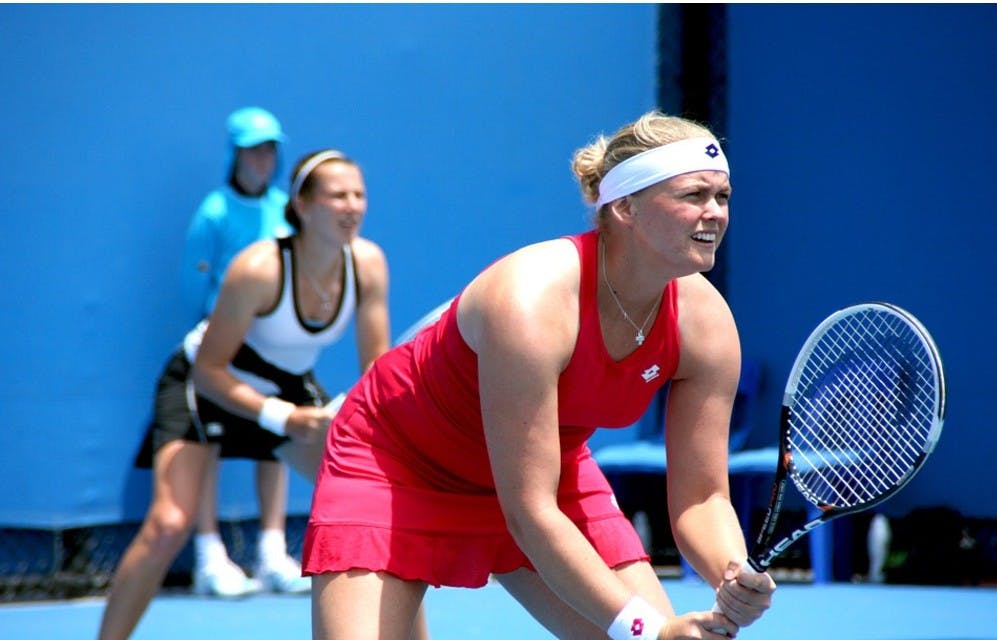
Ever heard the quote about sports being like a chess match? Well, the truth is that this statement holds true for both team and individual sports. Although tennis can be played with a teammate, it is a sport that is also commonly participated in through singles matches. Between playing strategies and handling the many ups and downs of a match, players looking to raise the level of their overall game need to be mentally strong. This article will discuss some of the elements that go into being an elite mental player.
True Mental + Physical Game
“Tennis is mostly mental. Of course, you must have a lot of physical skill, but you can’t play tennis well and not be a good thinker. You win or lose the match before you even go out there.” This observation comes from one of my favorite tennis players of all-time, Venus Williams. At one time, Venus was one of, if not the most, dominant female tennis players on the world. Unfortunately, health conditions have forced her to adjust her playing strategy. No longer can she keep overpowering her opponents for multiple sets in a row. She has been forced to adopt a more measured, strategic approach to her game. Tennis is mental and physical. You can’t have one without the other and expect to be effective. Numerous times I’ve seen players with incredible physical attributes get beat by less physically talented players that are more in tune with the mental aspects of the game. A good balance of mental and physical focus is vital to one’s success in Tennis.
Concentrated Effort
Tennis can be a difficult game to master depending on how interested you are in it. With this said, concentration can become a major road block depending on how immersed you are in the sport. First off, I’ll start with the matches. Depending on the age level, matches can vary from a couple of games to multiple sets. As a result, they can drag on for longer periods of time with little opportunity to relax. Along with this, momentum can easily change over the course of a match. You must retain concentration for the entirely of the match to prevent lapses. One thing I’ve found to be useful in this process is to treat every point like a new challenge. It’s easy to take a couple points off if you get ahead by two or three breaks of serve. However, this is where momentum changes hands.
The second area where concentration is critical is during practice sessions. Practice is the perfect time to repeatedly practice the shots you’ve been struggling with. If the backhand has been a weak spot, you don’t just hit it a couple of times until the swing looks good. You must find out the correct motion and hit it time-after-time. For some, this can be a boring process, but it is the only way to truly master the overall sport.
In-Game Tactics
As I mentioned in the introduction, tennis is a game of constant adjustments. Players carefully analyze their opponents in the early parts of a game to gauge their strengths and weaknesses. Unless you have the immense physical tools to just hit it past them time and time again, then you need to make careful adjustments from a mental side of things. One of the most important mental skills to achieving victory in tennis is learning to be a problem solver on the court. Every player has tendencies. Whether you recognize them or not, you have tendencies, just as your teammates and opponents do. Some of these may be easily exploited. It is your job as a mentally elite player to make your tendencies less noticeable and take advantage of those exhibited by your opponent.
Understand the Rules
If you truly want to improve your skills in a sport, it is crucial to be an expert on the rules. I understand this can be difficult for beginners, but it doesn’t take long to master them. If you have some free time, pick up a book to read the basics. This will help you understand some of the general terminology, as well as the difference between singles and doubles. To add to this knowledge, I suggest watching tennis on T.V. Here you’ll be able to carefully observe the scoring, player’s behaviors and the rules of the game in action. Of course, through the first hand experience you’ll gain as you play more matches, you’ll be able to rattle off the rules without even thinking twice!
Passion for the Game
One mental skill that doesn’t take a lot of thinking or mental intelligence is motivation, or a love for the game. If you’re going to put in the work to be a great tennis player, a passion for the sport is essential. Players with this passion are not only more likely to put in the extra work to get better, but won’t give up easily in games. They won’t let an early deficit discourage them and will continue to battle. This is the type of mental attitude that makes a strong opponent.
Picture this: you get up 4 games to 0 in a best of 3 set match. Obviously, this is an ideal situation for the leader as he or she has all but locked up the first set. However, the player on the other side of the net looks intrinsically motivated and not even rattled one bit. Although the first set may be nearing its end, the player trailing is going to give it their all to either come back on the first set or try to gain some momentum for the rest of the match. Isn’t it easy to see how this opponent would be tougher and more intimidating than one that would just phone it in after the early hole?
No Fear
There are so many different shots you can hit in a tennis match. From a slice to forehand to smash to so many others, the opportunities are almost endless. With this being the case, you can’t be hesitant to try new shots or even different playing styles as a whole. If you see someone else playing in a manner that intrigues you, don’t hesitate to incorporate that into your own game. From a different perspective on saying no to fear, you’ll most likely find yourself matched up with some opponents that are simply more talented. Whether it be having endless stamina or an elite serve, these players appear to be unbeatable. The best way to be resilient against them is by adjusting your playing style.
For example: I’ll take the player with the huge serve. Based on their style, it isn’t going to be wise to stand on or inside the baseline even if that is what you would typically do that against an opponent. Rather, take a step or two back and give yourself plenty of room. Generally, big servers aren’t the most fleet-of-foot. Under this assumption, the best strategy would be to get the first return over and then look to extend the match. It all comes down to breaking down your opponent’s game early on!
(Because I mentioned the variety of shots available in a tennis match, I’ve included a link to a video from CoachTube. It is taught by Oscar Wegner and essentially shot-by-shot goes through the most common shots. Check it out if you’re new to one!)
Decisive, yet Cautiousious
Players that aren’t decisive often get themselves into positions where their opponent can guess where the return is coming. The take-away message from this final section is to make a decision and go with it, but keep in mind the situation. If you’re in need of a winner and your opponent leaves the cross court side open, go for it! Sometimes the tougher shot is what is needed to alter the course of a match. On the other hand, there are also times where caution needs to be exercised. It all goes back to the idea of knowing the situation. If your opponent has been erratic time and time again, then doesn’t it make sense to take the safe approach and force them to beat you? Sometimes all you need to do is return the serve to give yourself a reasonable chance at the point.
Student of the Game
If you truly want to become a mentally strong tennis player, you need to become a student of the game. There are plenty of players that possess the excellent physical tools needed to excel on the tennis court. However, this is only half the game. Throughout this article, I’ve delved deeper into a few of the mental aspects of Tennis. Between passion, aggression, tennis intelligence, and concentration, there are many areas where a stronger mental approach can give you the upper hand!
Want to help kids find sports they love? Sign up to be a coach or volunteer in a local youth sports program. Learn more ways to support youth sports in the National Youth Sports Strategy: https://bit.ly/2lIHPUc
US Sports Network News! Having fun and helping the peeps'. Using Sports as a platform to Inform, Educate, Inspire, While Entertaining you with the best of sports, talk, music, and fun. Be on the lookout for our frequent 'Teachable Moments' This will be a sports and media experience like you never expected. We always welcome your feedback. If you like us or even if you don't, we are always going to love you! Thanks for stopping by!