Learn the fundamentals of Brazilian Jiu Jitsu from 4th degree black belt, Professor Roy Dean.
The clear and comprehensive curriculum includes protective fallings skills (ukemi), movements, sweeps, guard passes, armlocks, chokes, leg locks, and much more.
It's important to learn the basics right, from the moment you first step on the mat, or even beforehand.
Blue Belt Requirements 2.0 is your guide to focusing on a foundation that will serve you for years to come. Book this course......
Roy Dean is a 4th degree black belt in Brazilian Jiu Jitsu, with additional black belts in Judo, Aikido, and Japanese Jujutsu.
Roy Dean’s training began as exchange student in Japan, receiving his black belt in Kodokan Judo at age 17. Returning to the United States, he began training in Aikikai Aikido, and apprenticed under Japanese Jujutsu master Julio Toribio.
Under Soke Toribio, he earned a third degree black belt in Seibukan Jujutsu, a first degree black in Aikido, and a first degree black belt in Iaido. During this period, he also received his blue belt in Brazilian Jiu Jitsu under Brazilian and Pan American Champion Claudio Franca.
Moving to San Diego to continue his university education, Dean began training under JKD expert and American BJJ pioneer Roy Harris. Under Professor Harris, he received his purple, brown, and black belts.
He is currently an IBJJF certified fourth degree black belt in Brazilian Jiu Jitsu, with over 30 years of experience, and affiliated academies around the world.
It's his distinct pleasure to be an ambassador for the art of jiu jitsu, and expose others to this life changing, transformational discipline. Book this course today!
In recent years, football has seen an uptick in the awareness of injuries. Football is a difficult game and one that can quickly take a physical toll on players.
This isn’t just at the professional level. Coaches at all levels should be implementing game plans that are designed to protect the safety of all players. In reality, unless you’re a punter or kicker, you are susceptible to the taxing nature of football.
In this article, I’ll break down how a running back by committee scheme can lighten the load at one of the most difficult positions in football.
Bell-Cow Back
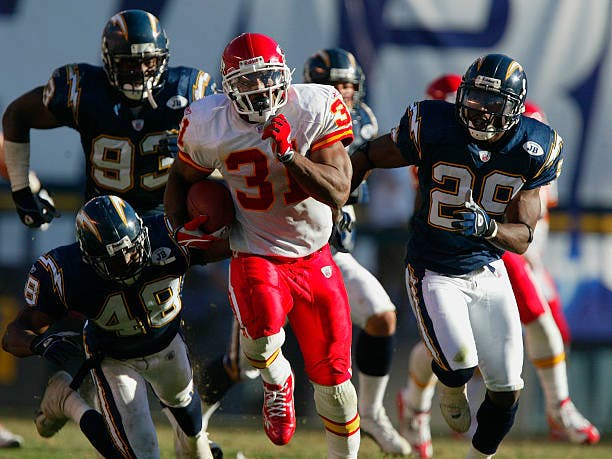
The term “bell-cow” is actually most often used in fantasy football circles, but it can be transferred over to actual football matters. In short, a bell-cow back is someone that handles all of the carries.
Obviously, in a committee, this guy won’t be a literal bell-cow as he’ll be splitting carries, but each team needs a guy at the top of the depth chart. Rather than handling the normal three downs, a bell-cow in a committee will take first and second downs.
For this spot, the priority is finding a consistent back who doesn’t fumble and is able to run between the tackles. While hands and big-play ability can help, they are not nearly as important as the capability to pick up tough yards in the trenches.
In terms of current bell-cows, the best professional example has to be DeMarco Murray during his past season with the Dallas Cowboys.
Scatback
Scatbacks are the smaller backs who possess superior speed and elusiveness.
They may not have the strength of the bell-cow, but what they do have is the ability to make big-time football plays.
Scatbacks are capable of serving in pass protection, as well as being yet another option in the passing game for the quarterback. While the bell-cow is going to traditionally run between the tackles, the scatback will take his carries outside the hashes. Their elusiveness allows them to consistently make tacklers miss in the open field.
Finally, scatbacks can also provide value on special teams to justify their spot on the roster. A perfect NFL example is Darren Sproles. Sproles has carved out a steady NFL career for his exceptional work on third-downs, in the passing game, and as a kick returner on special teams.
Goal-Line Back
The final type of back a coach can add to his committee is a goal-line back, which in most cases will simply be your full-back. The goal-line back can be thought of as a short-yardage specialist. His primary playing time will come on 3rd or 4th and short when the offense finds itself inside the five yard line.
The two most important qualities a goal-line back can have are massive strength, to avoid getting stopped on these short-yardage situations, and a sure-hand grip that never fumbles. A miscue by the goal-line back usually takes points off the board, so you want someone with reliable consistency.
Many players have held this role in recent years, including Mike Tolbert. Even though Tolbert was able to handle additional carries, his primary value came in his ability to convert short-yardage situations and put points on the board.
Running backs are inherently injury prone due to the nature of their football position. Handling 20 carries a game puts a significant toll on the body. Furthermore, expecting that same player to assist in pass protection and add a few more touches in the passing game is difficult. There’s no way of getting around the fact that injuries are a definite possibility.
Meanwhile, you can’t abandon the run game completely as a passing-dominant team is easy to plan for. It allows the opposing coach to add in more defensive backs and makes your offense one-dimensional.
The only way to overcome this massive injury risk associated with ball-carriers is to implement a committee scheme. It spreads out the touches amongst three or more players and prevents one player from taking all the punishment. It also allows you to utilize a wider number of strengths on your roster.
Maximizing Yards-Per-Carry For Your Team
YPC stands for yards per carry. It is a key barometer of success in football. While a significant deal of the YPC depends on the ability of an offensive line to open up holes, much depends on the running back’s ability to exploit openings and achieve big gains.
A player may be in top-notch physical condition, but if he is nicked up and has been carrying the rock for three quarters, isn’t it fair to say that he may be a little fatigued by the fourth? To combat this and achieve a higher YPC, the committee will keep players fresher.
The San Diego Chargers experimented with a committee back in 2011 that featured Ryan Mathews and Mike Tolbert. The duo combined for 1,582 rushing yards, 888 receiving yards, and 16 touchdowns. It is highly unlikely either of these two would have been able to put up those numbers on their own. However, a committee made it doable because they were able to maintain a steady YPC that encouraged the coach to put his faith in the running game.
Personnel Decisions
Before making any changes to one’s offensive or defensive game plan, coaches must have a clear understanding of their personnel.
In terms of committee, it’s going to be different for each team. If a team doesn’t have an elite, sturdy back that can handle a full load of carries, a committee is going to make sense. Conversely, if a team has an Adrian Peterson, then a true committee scheme makes no sense.
Certain players possess the durability to handle a full load and the type of talent that makes them difficult to remove from the field. In a similar fashion, if a team operates on a heavy passing attack, it might make sense to keep the scatback out there for some early downs to add another weapon. It all depends on the horses you have in your stable.
And be sure to run your stable of backs through these running back drills.
Successful Running Back By Committee Examples
As I previously mentioned, running back committees are becoming more and more common at all levels of football, largely due to the fact that awareness of injuries is finally coming to the forefront. Here are some successful examples that demonstrate what’s possible.
2014 New York Jets – While the 2014 season was a disaster for the Jets’ offense, I do believe they found some success when they implemented a committee. Despite playing behind an abysmal quarterback performance this year (though I don’t blame this entirely on Geno Smith), the duo of Chris Ivory and Chris Johnson managed to amass nearly 1,500 yards and 7 touchdowns, with both averaging over 4 yards per carry. These two guys complemented each other perfectly with Ivory’s tough between-the-tackles running style and Johnson’s home-run ability.
2014 Alabama Crimson Tide – On a college scale, you can never go wrong with an Alabama example. Here, offensive coordinator Lane Kiffin designed a committee that featured a powerful between-the-tackles runner in Derrick Henry and a jack-of-all-trades in T.J. Yeldon. Obviously, it helps to have the talent level of these two guys, but I believe the way Kiffin utilized their individual talents allowed them to flourish. Henry finished with 990 yards (5.8 YPC) and 11 touchdowns, while Yeldon racked up 979 yards (5.0 YPC) and 11 touchdowns.
Final Take
Some of the old-school football people may disagree with a committee scheme, but I believe it is the only way to ensure longevity for running backs, maximizing their career potential and preserving their health for life after football.
At any level, whether you're coaching high school kids or a youth football team, coaches need to do their best to protect players from serious injuries. Along with some of the protective equipment that has been hitting the market, I believe a committee scheme is one of the best possible tactical adjustments to lessen the risk of injury for your running backs while simultaneously maximizing their benefit to your team on the field.
Sports help kids #GetActive and learn new skills – but don’t forget about fun! Learn about @HealthGov’s National Youth Sports Strategy and help make fun the top priority in #YouthSports: https://bit.ly/2lIHPUc
In learning about the nature of jealousy, perhaps you realize you struggle a bit with this problem. If so, it’s important to address. Left unchecked, envy doesn’t just stay in our mind—it spills out and causes great damage (Prov. 14:30 NIV), such as ...
Broken relationships. Jealousy creates distance between us and the people we envy. We pull away, become critical, or struggle to celebrate their good news.
Constant dissatisfaction. When we’re focused on what others have, it’s hard to enjoy what is in front of us. Jealousy trains us to always look elsewhere for contentment, which we’ll never find. Keep reading......
16 Drills to do at your practice. I used them often with my players, and they gurantee player improvement.
It is 3 Part video
Part 1 (pre practice) 3 drills
Part 2 (Ball control) 12 drills
Part 3 (extra drill) basic offensive principles
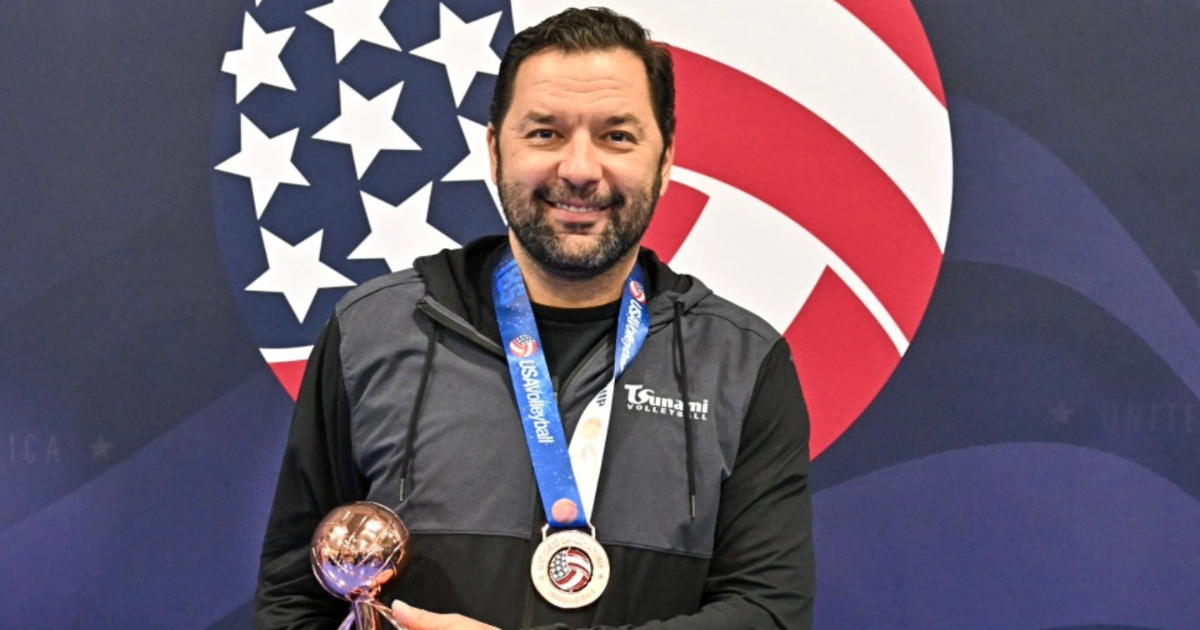
Coach Marko - award winning coach
AVCA club coach of the year, AVCA diversity winner, AVCA board member (diversity team) 4 time medalist at GJNC, 11 years of coaching at D1,international coaching expeience. Book this course.....
Jealousy is one of those emotions that can catch us off guard. We might not even realize we’re feeling envious until we notice ourselves comparing our circumstances to others’—their success, their relationships, their opportunities. It’s a common human struggle, but that doesn’t make it any less corrosive.
The answer to where jealousy comes from may be surprising; it springs from within, not from external circumstances. We might tell ourselves, Well, they just shouldn’t have that. They don’t deserve it, so I’m perfectly justified in feeling this way. But that reasoning reveals the real issue: Jealousy is rooted in our own sense of entitlement or insecurity. In Galatians, Paul lists jealousy among the works of the flesh—attitudes and actions that stand against the character and work of God in our life (5:17-21). Keep reading......
As we saw yesterday, John uses the imagery of darkness and light to describe a life of sin versus a life in Christ (1 John 1:5-7). God is pure and perfect light shining through an obedient person. However, when we invite the darkness of sin into our life, there is conflict.
The way to keep a pure spirit in this world is to confess sin (v. 9). We are made clean by Jesus’ work on the cross, and nothing can change a redeemed believer’s identity as God’s holy child. However, wrongdoing does interfere with the fellowship between us and the Lord (Isaiah 59:2). Keep reading......
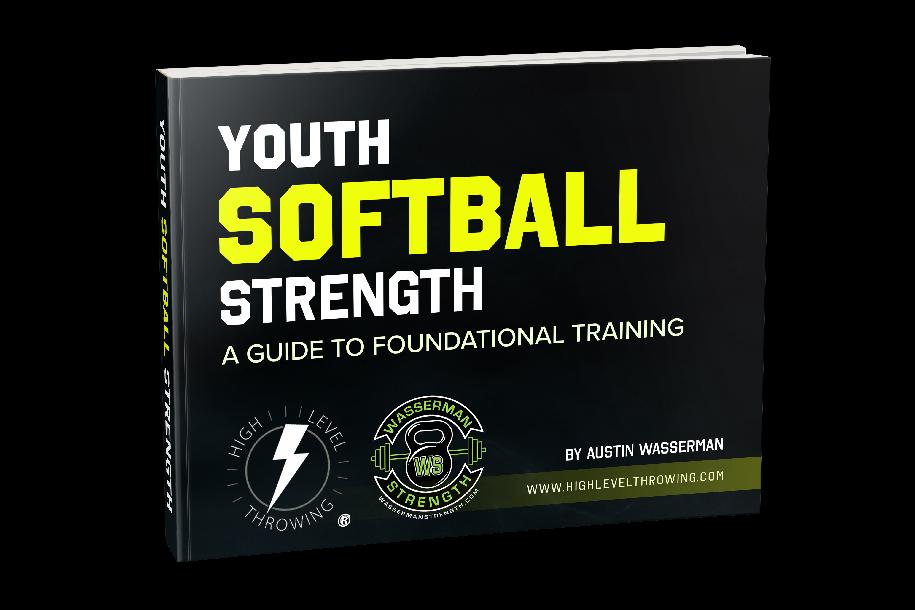
The Youth SOFTBALL Strength Book: A Guide to Foundational Training was created to help youth athletes (Ages 7-14), Master the Basics and learn the Foundational Blocks of Strength Training!
This simplified and easy to follow digital PDF download, otherwise known as an E-Book, will help parents and coaches teach their young athletes about safe and effective training, exercise technique, basic programming, on-field training options and much, much more!
This program is a 24-Week Youth Strength Training Program! It is separated into 3-Month Training Blocks. The Beginner/Intermediate Program is 12-Weeks and the Advanced Program is 12-Weeks. Once you finish the 24-Weeks (6-month program), you can cycle back through the program again, increasing the intensity (load or weight), to challenge yourself even more! Download the ebook......
Owner/Founder of High Level Throwing® & High Level Pitching®
Austin Wasserman is the Owner/Founder of Wasserman Strength, High Level Throwing® and High Level Pitching®. He’s a Strength Coach, Performance Coach and Author from Brooklyn, New York. He’s the Author of the High Level Throwing® Series E-Books!
Austin received his B.S. in Exercise Science with a concentration in Strength & Conditioning through the University of Connecticut Department of Kinesiology. He also received his Masters Degree in Human Nutrition through the University of Bridgeport.
He is a Certified Strength & Conditioning Specialist (CSCS) through the National Strength & Conditioning Association (NSCA) and has been training athletes for the past 15 years.
Austin is highly respected by coaches, parents and players for his approach and knowledge of the human body. He has worked in New York City alongside some of the top Physical Therapists and Motor Learning Specialists in the country.
Austin works with Youth, High School, College, MiLB & MLB Baseball Players as well as Softball Players of all ages. He has consulted for and currently consults for some of the top baseball and softball programs in the country such as Vanderbilt, Alabama, Arizona State, Minnesota, Duke, University of South Carolina, LSU, Ole Miss, University of Washington, UNCW, Coastal Carolina, Villanova, Texas Lutheran and Iowa State to name a few.
His books, High Level Throwing®, are some of the most used overhand throwing books in the country! These books teach baseball and softball players how to move efficiently, maximize throwing potential, improve accuracy and create intent based on position, through constraint training drills and progressions.
HighLevelThrowing.com is an educational website for Baseball and Softball players with information and training products for Movement, Arm Care, Injury Prevention, Rehabilitation, Throwing Development and Training Books! Learn more and get started today!
Want to help kids find sports they love? Sign up to be a coach or volunteer in a local youth sports program. Learn more ways to support youth sports in the National Youth Sports Strategy: https://bit.ly/2lIHPUc
US Sports Network News! Having fun and helping the peeps'. Using Sports as a platform to Inform, Educate, Inspire, While Entertaining you with the best of sports, talk, music, and fun. Be on the lookout for our frequent 'Teachable Moments' This will be a sports and media experience like you never expected. We always welcome your feedback. If you like us or even if you don't, we are always going to love you! Thanks for stopping by!