
Now Streaming On US Sports Radio!

US Sports Net Today!


Live Play-by-Play, Updates, Highlights and More! on US Sports Network!
[Chrome Users-You may have to click on the play button twice to listen]
US Sports Network Powered By Gorilla Sports!


US Sports Radio
The Las Vegas Raiders Play Here
Fitness and Sports Performance Info You Can Use!
The Scoreboard Mall
The Rock Almighty Shaker Of Heaven And Earth!
The Coolest Links In The Universe!

Tuesday, June 16, 2026

US Sports Ice Hockey: 5 Principles of a Successful Hockey Power Play and Hurricanes vs. Golden Knights NHL Playoff Highlights Game 6


5 Principles of a Successful Hockey Power Play


In the game of hockey, the Power Play can be a high-danger opportunity for your team to create scoring chances, shift momentum, and capitalize on your opponent's costly mistake. When one team has a player (or multiple players) in the penalty box, you are afforded a numerical advantage on the ice, typically for 2 minutes. An average power play typically scores at a 20% rate, meaning they will score on 1 of every 5 power plays.

You should prioritize teaching the basic principles of power play to give your team the best possible chance to capitalize on the man advantage. Practicing and perfecting your team's power play skills and habits will increase your power play effectiveness, and punish your opponents for their lack of discipline. 

What is a Power Play?


NHL Download on the App Store

As you know, a power play occurs when a player(s) of the opposing team commits a penalty, leaving their unit shorthanded. A standard power play is 5-on-4, but can also be 5-on-3, or 4-on-3, depending on the infractions. This odd-man advantage affords players more time and space on the ice and gives your team a greater chance to control possession of the puck and sustain offensive zone pressure. 

Core Principles of the Power Play – Coach Nathan Leslie

Coach Nathan Leslie, a former professional European hockey player and professional coach takes a deep dive into the principles of a good hockey power play, as well as in-depth explanations and demonstrations of special teams tactics in his course ‘How to Play Hockey Module 5: Special Teams (PP, PK)’. Coach Leslie is the owner and director of Leslie Global Sports and has a focus on player and coach development. He hosts a variety of camps for both coaches and players around the globe, teaching players important skills and sharing tactics and game strategies with coaches.

Outwork and Outnumber the PK

In Hockey Power Play systems often vary in structure, but they all follow the same core principles to create scoring chances and to keep pressure on your opponent. The first is that you must outwork your opponents, despite having a numeric advantage. While it may feel like the power play is a good opportunity to slow down, move the puck around, and get easy chances on goal, this is not the reality. While there is more time and space because of the man advantage, this can easily be taken away by your opponent with an aggressive penalty kill. Players may swarm the puck, looking to create turnovers and alleviate pressure from their defensive zone. It takes hard work to protect the puck, get set up in your O-zone structure, and create credible scoring threats.
null

The next core principle is to outnumber your opponents. This can be done by properly supporting the puck when your team is in possession. Because of the man advantage, there will be more space available on the ice for your offensive players to receive passes or to be in a strong position to win a footrace to the puck if you are dispossessed. If your players are entering the zone, and being pressured by multiple defenders, there has to be open ice available to dump or pass the puck to where a teammate can collect it. If the killing unit is going to be that aggressive, they are bound to leave holes and weaknesses. 

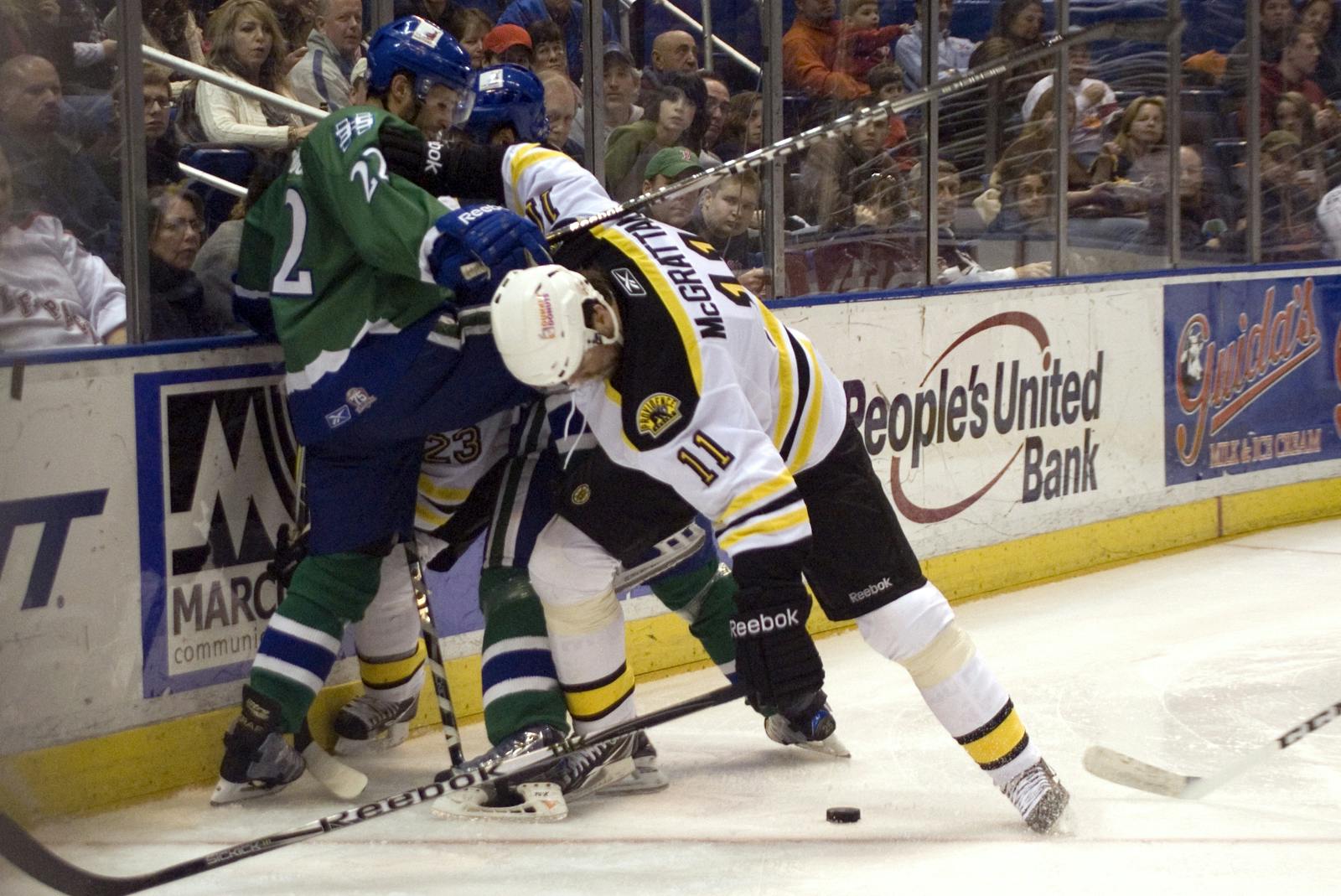
If your team has been dispossessed, or there is a loose puck somewhere on the ice it is crucial that your team outnumbers the defense and attempts to maintain possession. The golden rule for loose pucks on the power play is to always have 1 more player on the puck than your opponent. This gives you the best chance to maintain possession and eliminate a clearing attempt. If more than 1 Penalty killer is battling for the puck, your team should always have 1 more attacker than your opponent. If 2 defenders are battling for the puck in the corner, the power play should have 3 players battling and trying to collect the puck once it comes loose. Tying back into the first principle, your power players must outwork the killers to keep the pressure on and create scoring chances.

Create 2-on-1 and Oddman situations

Similarly to properly supporting the puck, you always want your team to look for 2-on-1 situations and opportunities. This can easily be done with player positioning. You want your players to position themselves in a way where all players and passing lanes can't be covered. You want to stretch your opponents as thin and far as possible to create pockets of space and clear passing lanes to dangerous areas of the ice. These pockets can also create quick passing opportunities where players can quickly work the puck into the slot, or to a one-time shot for an easy scoring chance.

Looking to create triangles on the ice is a good way to ensure your team is creating 2-on-1 situations once they’ve set up in the offensive zone. In an odd-man situation, it is very unlikely that the defenders are capable of covering all available passing lanes in the triangle. The triangle will force opponents to respect the puck carrier and make them choose what they are going to cover. If they attack the puck, there are 2 players available for a pass. If they take away one player/passing lane, the puck carrier has time and space to find a shot or a more dangerous pass. Breaking down the power play into small, mini-man-advantages can be an effective way to break through the defense and score more goals.

On the power play, it is likely your team will have fast break opportunities up the ice. Losing the puck on a fast break is an easy way for defenders to kill time off of the power play forcing your unit to reset and regroup. While it might be tempting to try to take on a defender 1-on-1 for a highlight reel goal, it is far more effective off the rush to get into the zone and try to set up the power play for a more dangerous chance if you don't have the numbers. Instruct your players to get the puck below the hash marks, and to a safe spot on the ice if your team doesn’t have the advantage. This is often the perimeter or along the wall. Cutting back along the wall will give your power play a chance to get down the ice, and put the puck carrier in a good playmaking position. 

Take Smart Shots 

One of the most common problems power players face is knowing when to shoot the puck. Some are too patient with the puck, looking for the perfect scoring opportunity, while others shoot it at will just to get it on the net. A successful power play requires a balance between patience and aggression with the puck. 

The best power plays shoot with a purpose. Putting the puck on the net for the sake of getting a shot on goal is not an effective way to score goals and capitalize on the man advantage. The power play should look to take high-percentage shots on goal for the best chance of cashing in on the power play. For the power play, a high-percentage shot is one where the goalie is screened (or there is traffic in front of the net), out of position, or reacting to an unexpected pass or deflection on goal.
null

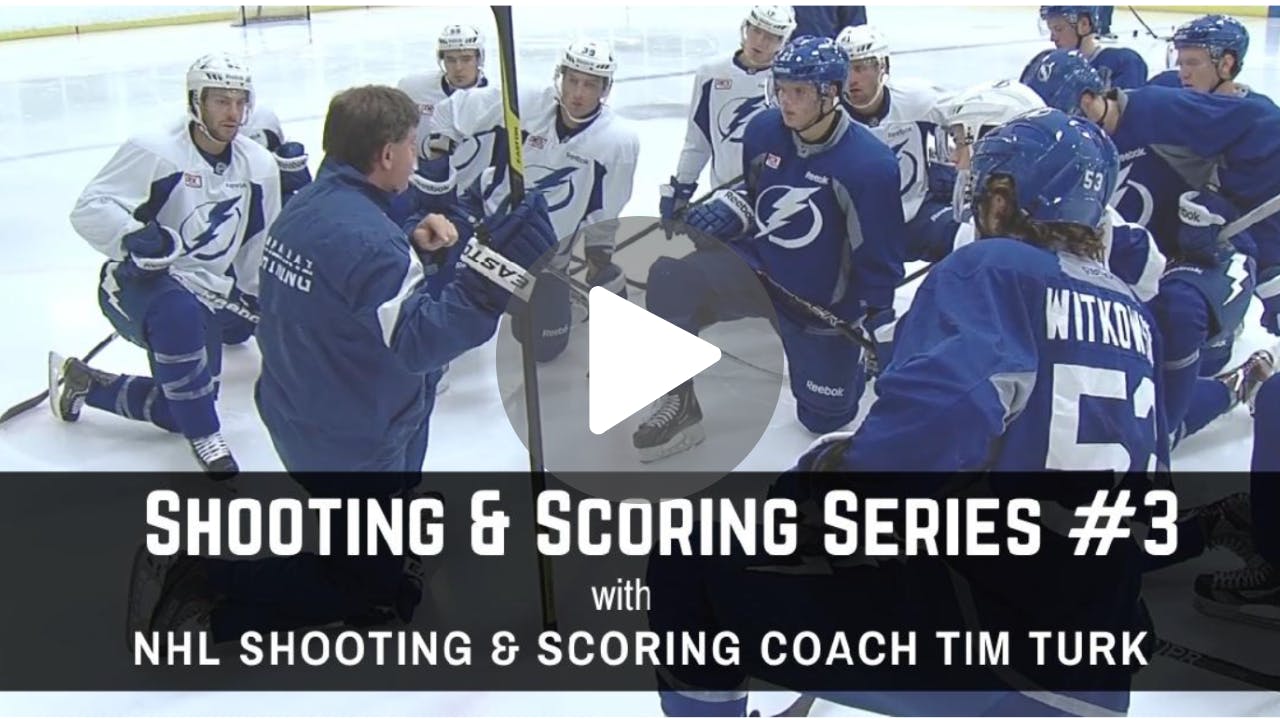
In this video from his course ‘Shooting & Scoring Series #3 with NHL Shooting Coach Tim Turk’,  Coach Tim Turk teaches players how to properly screen and shoot at a screened goaltender to score more goals. Coach Tim Turk is an NHL goal-scoring coach with 25 years of professional coaching experience. He has been a shooting, passing, and puck protection coach for the Montreal Canadiens, Tampa Bay Lighting, Arizona Coyotes (Now Utah Hockey Club), and the Carolina Hurricanes.  

One of the best hockey shots is a screened one. Traffic in front of the net is a good way for the power play to disrupt the goalie's vision and increase the likelihood of a deflection or redirection. If the goalie cannot see the puck, it is much harder for them to follow and track it as it is cycled around the zone. Not only is this a good way to wear down the goaltender, but it also creates panic and confusion, making it more difficult for the goalie to make a save and control their rebounds. 

Shooting for rebounds is a very effective way to create scoring chances on the power play, especially if there is traffic in front of the net. A low and powerful shot intentionally aimed at the goalie's pads can create a scrum in front of the net where the puck can easily be shoveled in. The traffic in front will make it more difficult for the goaltender to effectively redirect rebounds to low-danger areas of the ice, making it an easy way for the power play to jump on a loose puck for a high-danger chance.

null

One of the hardest to save shots for a power play to take is the one-timer. One-time shots are an easy way to capitalize on defensive lapses by the killers, as it leaves them little time to react to the pass and shot. If a defender has left a passing lane open, the one-timer leaves little to no chance for that defender to recover or make an effort to block the shot. 

It is key for the one-time pass to get the goaltender moving. It is much easier for a goaltender to make a save on a one-time shot when the pass does not cover much ground. If the goaltender doesn’t have to adjust their positioning to make the save, it will be a relatively easy shot to save. To create movement from the goaltender, try making cross-ice passes, or passing in quick succession to force the goaltender to make quick decisions and cover as much ground as possible. 

Possess the Puck

One of the most fundamental aspects of the power play is gaining possession and control of the puck. It seems obvious that you’d want your team to control possession as long as possible when on the man advantage, but in practice it often does not happen. The goal of the power play should be to control and possess the puck for the duration of the penalty. Cycling the puck and moving around the defenders in search of scoring opportunities is one way to maintain possession and create pressure, but what about when you aren't set up in the offensive zone?

Coach Leslie explains his power play zone entry tactics, among other offensive zone tactics and strategies in his course ‘How to Play Hockey Module 4: Offensive Zone Tactics’. In this video, he explains how to enter the zone and maintain possession to best get the power play set up and under control.

Zone entries and the transition game are crucial in setting up the power play and creating scoring chances. When looking to enter the offensive zone, many teams will dump and chase – forechecking the outnumbered defenders and regaining possession to get the power play set up. While this can work and could lead to scoring chances, it is far from the ideal power play zone entry. When possible, your team should look to get a clean zone entry with the defenders backpedaling off of the blue line. This can easily be done by slowing down your neutral zone approach, swinging, and passing the puck to create movement in the defender. You want to force the killers to react to your offensive play, rather than initiate play. Keeping the killers on the back foot will give your power play a better chance to set up in the zone, or force the defenders to play aggressively leaving them vulnerable.

Turnovers can be extremely costly for your power play as they not only allow the killers to dump the puck and kill precious time, but it allows the killers to get a much-needed line change. Players need to make smart decisions and be patient, controlling the puck and waiting for high-danger chances to present themselves.

Dynamic Skating and Positioning

Once your team has gotten set up in the offensive zone it is tempting for players to get to their positions and maintain that position for the duration of the power play. While players need to understand power play positioning (positioning varies by tactic) they must not get too attached to one position or role on the power play. A stagnant power play is increasingly easy for penalty killers to defend. When a power play is too rigid it allows the penalty kill to take shape and position themselves in the passing lanes.

Constant movement – both with and without the puck – makes it much more difficult for the penalty kill to stay with their coverage assignments. Players frequently rotate and cycle with their teammates, and make cuts to open ice to keep the killers on their toes. Similarly, passes should be made quickly and accurately to move the defensive players. Allow the killers to attack and pressure the puck carrier, only to pass it off to a safer area of the ice.

Players have to be ready and capable of receiving and handling passes at awkward angles as the pressure of the penalty kill can make it difficult for perfect passes to be made. This frequent and frantic movement of the puck and players from position to position will inevitably create confusion and chaos for the penalty killers, opening up scoring chances and tiring out the killers for future chances.

Sports help kids build confidence and grow into healthy, active adults. Learn how organizations, communities, and policymakers can use @HealthGov’s National #YouthSports Strategy to support youth sports: https://bit.ly/2lQ85f6


The Rock Almighty Tuesday Wake Up Call - Do You Know You're Already Designing Your Life without Knowing It? And The Love That Passes All Human Understanding


Let me tell you something I figured out the hard way. Last February, I spent a Tuesday evening sitting in my parked car for forty-five minutes. I wasn't listening to a podcast or avoiding rain. I just didn't want to go inside my own apartment.

I sat there with the engine off. My hands rested on the steering wheel. I stared at my building's ugly gray door. Inside was my perfectly fine life: a job that paid the bills, a girlfriend who was nice enough, a couch I'd saved for. And the thought of walking through that door felt like wet cement in my chest.

That's when it hit me. Not like a movie montage. More like a slow, uncomfortable realization while I watched my breath fog up the windshield.

I had designed this life, every piece of it and I hated it.

Here's what I wish someone had told me years ago. You're already designing your life right now, this second. You're not waiting to start. The design is happening whether you pay attention or not.

The only question is whether you're doing it on purpose or by accident. I'm going to tell you what I screwed up, what actually worked, and why most advice about redesigning your life is total garbage.


Listen on Apple Music

The Invisible Stuff You're Already Building

I used to think habits were no big deal. Then I tracked my mornings. I would wake up, grab my phone, and spend twenty-three minutes scrolling, every single day. That's nearly three hours a week of looking at other people's vacations before I'd even peed.

That habit wasn't neutral. It was a concrete pillar holding up my entire morning mood. And that pillar was made of garbage.

My friend Sarah does the opposite. She keeps her phone in the kitchen. She drinks water and writes down one thing she's looking forward to. Same amount of time, completely different result.

Which one do you think feels better by 9 AM?

Your surroundings are the ground you stand on

I tried to cook healthy meals for three years. I kept failing and thought I had no willpower.

Then I looked at my kitchen. The counter was piled with mail, old receipts, and three coffee mugs with dried residue. The cutting board was buried under a cookbook. The sink had last night's pasta pot.

No wonder I ordered takeout. My environment was screaming at me not to cook.

I cleaned the kitchen one Sunday. It took forty minutes. I put the cutting board on the counter, placed a single pan on the stove, and threw away the old mail.

The next day, I cooked dinner. Not because I got disciplined. The environment finally stopped fighting me.

So look around where you're sitting right now. Is that space helping you or fighting you? Don't overthink it. Just look.

The people closest to you are your walls

Ever notice how you feel after hanging out with certain people? Not the ones you see once a year but the ones you text every day.

I had a friend named Dave, a great guy, funny as hell. But every time we hung out, he'd complain for an hour. I'd leave feeling heavier. His complaints were legit, but the weight was real.

I didn't cut him off. That's dramatic. I just stopped seeing him three times a week and started seeing him once every two weeks. I filled the other nights with people who asked what good thing had happened.

My mood shifted in about ten days. I didn't change anything huge. I just changed who was standing next to me.

Your calendar doesn't lie. Go check it

Open your calendar app. Go back three months. Look at the actual hours, not the meetings.

How many went to things you chose because you wanted to? How many went to things you said yes to out of guilt? How many went to nothing?

Here's mine from last year. Thirty-two hours of a meeting that could have been an email. Fourteen hours driving to a volunteer thing I dreaded. A hundred plus hours of scrolling I didn't even enjoy.

I can say I value my family. My calendar showed less than two percent of my waking hours with them.

That hurt to see. At least I finally saw it.

Why Most of Us Live in Crummy Structures

  1. The "I'll fix it later" trap

I told myself for years that I'd get serious about my health when work calmed down or after the holidays or when I moved.

Work never calmed down. The holidays came and went. I moved three times. Each time, the magical later date turned into another Tuesday eating cold pizza over the sink.

The blank slate is a myth. There's no clean field waiting for you. Life is always half-built and messy.

Waiting for the perfect time to start is just deciding to never start.

  1. Whose blueprint are you following?

I went to law school because my uncle said I'd be good at it. He was a lawyer and seemed happy. I was twenty-two and had no better ideas.

Three years and a lot of debt later, I sat in a conference room at a firm I didn't like. I was looking at a contract for a client I didn't care about. Then it hit me: I had built my career on my uncle's suggestion, not my own decision.

That's not his fault. He was trying to help. But I never asked whether I actually wanted this.

A lot of us live someone else's blueprint: Our parents' definition of success, our industry's standard path. The right age to marry, buy a house or have kids.

None of those are bad. But if you never asked, you might be living a design you never chose.

  1. The Instagram house with rotten floors

I once dated someone who looked perfect on paper. Great job, good family, lots of likes on our trip photos.

And I was miserable. We barely talked about anything real. We never argued because we never disagreed. We just coexisted, like roommates who happened to sleep in the same bed.

I stayed eighteen months because I kept thinking this looked so good from the outside.

That's the aesthetic trap: designing a life that photographs well but feels like a coffin, a job title that impresses strangers but makes you sick on Sunday nights.

The outside view is for other people. You're the one who has to live inside it.

  1. Why we're afraid to tear down a wall

I knew my relationship was dead around month fourteen. But I stayed four more months because I was terrified. Would I be alone? Would I regret it? Would everyone think I was an idiot?

That's renovation paralysis. You keep patching cracks because you're scared of what's behind the wall.

It’s the same with jobs, cities and old friendships. You add cheap drywall, another vacation, another purchase, while the real structure rots.

I'm not saying burn everything down. I'm saying look at the cracks. Stop pretending they're not there.

How to See What You've Built

You can't fix what you won't look at.

A quick check on four things

Rate these 1 to 10. Be honest. No one's watching.

Energy and health: sleep, food, movement. Do you feel alive or just running on spite?

People you actually like. Not followers or colleagues. People you'd call at 2 AM.

Purpose: work, creativity, making something that matters, even a little.

Safety: money, housing, not being one emergency away from disaster.

My lowest score last year was a 3 in energy. I slept five hours a night and felt like garbage.

Your lowest score is your starting point.

The five-whys trick

Pick one thing that's wrong. Say "I'm always exhausted."

Why? Not sleeping enough. Why? Go to bed too late. Why? Scroll my phone for two hours. Why? No evening routine. Why? Deep down, I think resting is lazy. There it is. The real problem isn't the phone or the bedtime. It's the belief that rest is lazy.

That belief came from my dad. He worked sixty-hour weeks and bragged about never taking vacation. I inherited it without knowing.

You can't change a belief until you find it. The five whys finds it.

Your autopilot loops

Write down three things you do every day without thinking. Not big stuff, small stuff.

Mine were: open Instagram while brushing teeth, eat lunch at my desk, say "yeah, no problem" to every work request.

Each one is a tiny design choice I made years ago and never revisited. They're shaping my entire day.

Just noticing them is half the battle. The other half is deciding if they're working.

A weird week that changed me

I spent seven days carrying a little notebook. Every time I felt resentment or dread, I wrote down what I was doing as follows: Thursday 2 PM, status meeting, resentment. Sunday 8 PM, work email, dread. Tuesday 6:30 PM, that group chat, heaviness.

By day five, the pattern was obvious. I wasn't tired from some mystery problem. I was tired because I kept saying yes to things that drained me. No one had given me permission to stop.

I gave myself permission on day six. It felt illegal and also amazing.

Fixing Things without Burning it All Down

You don't need to quit your job and move to a farm. Real change is smaller and slower.

The one percent shift

Move one small thing. For me, it was fifteen minutes between 7:15 and 7:30 AM, no screens, just coffee and the window.

That's it. Everything else stayed the same. After two weeks, I stopped checking my phone first thing. I stopped rushing. I stopped starting every day already behind.

One small wall moved. Everything else shifted.

Find your one non-negotiable

What's the one thing that, if you do it, makes everything else easier?

For a friend, it's seven hours of sleep. For another, a twenty-minute walk. For me, it's making my bed. Stupid, I know. But when my bed is made, I feel like I can handle the next thing.

Pick one. Protect it. Let everything else flex around it.

Cut three tiny drains

Find three things that take more than they give.

I cut a book club I dreaded, a catch-up call with a complainer, and checking work email before brushing my teeth.

Each felt small. Together, they freed up six hours a week and a ton of mental space.

You can do this by Friday. Just pick three.

Add one thing that helps everywhere

A single habit that improves multiple areas is like a good investment.

Mine was walking thirty minutes after dinner. It improved my sleep, my mood, my digestion, and gave me time with my partner. One thing, four benefits.

What's yours? Stretching? Cooking one extra meal? Calling someone you love?

Pick one. Start tomorrow. Don't overcomplicate it.

Make the right thing easier

Want to read more? Put a book on your pillow. Not the nightstand, the pillow. You'll have to move it to sleep.

Want to stop scrolling in bed? Charge your phone in the bathroom.

This isn't about willpower. Willpower runs out by 3 PM. Good design is infinite. Set up your environment so the thing you want is the path of least resistance.

Three Real Stories

  1. The woman who said yes to everything

My friend Jenna's calendar looked like a Jackson Pollock painting. She got shingles at thirty-two. The doctor said stress. Jenna blocked off two hours every Wednesday as unscheduled time. Six months later, she was promoted and her skin cleared up. No one even noticed she was doing less.

  1. The guy with the perfect job and empty weekends

Mark had a corner office and a calendar full of work calls. His weekends were lonely empty. He said he had no time to date. I saw his calendar. Weekdays packed, weekends blank. He didn't have a time problem. He had a priority problem. He started a standing Tuesday dinner with three friends. Within a month, he felt less lonely. His work didn't suffer.

  1. The nurse who ran on empty

My cousin Rosa works twelve-hour ER shifts. She came home, scrolled for two hours, slept five, repeated. She felt like a ghost. She declared 8 PM to 6 AM as restoration time. No work texts, no scrolling, no chores. Just sleeping and lying on the couch. The first week felt selfish. The third week, her headaches stopped. By week four, she had more patience at work than in years.

So What Do You Do?

I'm not giving you a twenty-step plan. Those don't work.

Here's what worked for me. Steal what you want.

Week one: Just watch. Rate those four areas. Track resentment for seven days. Find your three autopilot loops. Change nothing yet.

Week two: Take out the trash. Cut three drains. Make two small environment changes. Clean one counter.

Week three: Add something good. Pick one small habit that helps everywhere. Do it every day for seven days.

Week four: Check in. Re-rate the four areas. Did anything move? If yes great, if no, adjust. Try a different habit.

Then do it again in three months. Put it on your calendar. The calendar doesn't lie.

One Last Thing

I still have days where I sit in my car for ten minutes before going inside. Not forty-five, but ten.

I still scroll when I'm tired. I still say yes to things I should decline. I still remind myself that resting isn't lazy.

The difference is that now I know I'm the one drawing the lines. Not my uncle, not my old habits, not some vague they.

I built this. I can rebuild this. So can you.

You're already designing your life right now. The only question is whether you'll do the next five minutes on purpose or on accident.

I know which one I'm choosing. But hey, I'm not your boss. You'll figure it out.

And if you don't, that's fine too. The car will still be there tomorrow.

Dickson Okorafor writes about self development, intentional life design, and why refreshing your approach beats clinging to old goals. Through personal experiments and honest failures, he shares how Life Architecture can turn stagnation into momentum. Find more real world strategies on Medium at @DyHez.

Sports help kids build confidence and grow into healthy, active adults. Learn how organizations, communities, and policymakers can use @HealthGov’s National #YouthSports Strategy to support youth sports: https://bit.ly/2lQ85f6


Monday, June 15, 2026

The Rock Almighty Monday Wake Up Call: Do You Know How God Sees You? Do You Know Who You Are in Christ? And Pride Faltering?


PART 3 TESTIMONY

Do You Know How God Sees You? Do You Know Who You Are in Christ?

Now that we have become a Christian, what should we be thinking about ourselves? Do you continue to think of yourself according to a particular pattern of behavior, or are you learning how to think about yourself in light of God’s new perspective concerning you?

Let’s begin by answering the following question.

How did God think about us before we were saved?

Let’s find out by going to the book of Ephesians.

Ephesians 2:2-3

Wherein in time past ye walked according to the course of this world, according to the prince of the power of the air, the spirit that now worketh in the children of disobedience: Among whom also we all had our conversation in times past in the lusts of our flesh, fulfilling the desires of the flesh and of the mind; and were by nature the children of wrath, even as others.

Since we were born, our condition was that of spiritual death, being separated from God, and as such, we regulated our life within the sphere of trespasses and sins12 in this moral and immoral atmosphere in accordance with the ruler of the demons. It is the spirit (the evil tendency; the disposition) of such that influences the children of disobedience (those who are disobedient in their nature; the unregenerate). The apostle Paul further stated to the saints at Ephesus that at one time, their way of life was like the unrighteous, the unregenerate, who were habitually [performing acts] that satisfy the passions of the evil nature and of the evil thoughts, thus a fulfilling of those desires.13


Listen on Apple Music

So, before we were saved, we were known by God as being the children of disobedience, the children of wrath, i.e., as those who were unregenerate.

How else were we characterized before we were saved?

Please go to the book of 1 Corinthians.


1 Corinthians 6:9

Know ye not that the unrighteous shall not inherit the kingdom of God? Be not deceived: neither fornicators, nor idolaters, nor adulterers, nor effeminate, nor abusers of themselves with mankind,

We are told that the unrighteous (the unsaved; those not related to Christ; those who did INJUSTICE to others and attempted to do it under the sanction of the courts14) will not enter into the Kingdom of God (a heavenly newness of life; God’s kingdom within; formed anew by the Spirit). And neither will the rest of those mentioned, not because of their sin, but because they were not saved. There were some sexual tendencies or inclinations mentioned here that some, who didn’t know God, could be engaged in, such as those who are fornicators (those who have sex outside of marriage), adulterers (sex with someone who is not your husband or wife), effeminate (a male prostitute; the passive … partners in a homosexual relationship15), and abusers of themselves with mankind (active partners in a homosexual relationship16). What I wanted you to notice was that the ones who were not saved were addressed as being unrighteous and/or by the sexual tendency or inclination in which they were engaged.

So, now that we are Christians, how does God see us or talk about us differently?

Stay in 1 Corinthians.      


1 Corinthians 6:11

And such were some of you: but ye are washed, but ye are sanctified, but ye are justified in the name of the Lord Jesus, and by the Spirit of our God.   

Before we become aware of the words God uses when He talks about us, we need to know the basis for His divine name-calling of us; the basis of which is founded on our new condition that took place at salvation. The apostle Paul told the converts at the church of Corinth that some of them used to practice some of the overt sins mentioned. However, at salvation, three things happened to them as to their spiritual condition.

First, they were washed.

They were baptized by the Spirit into the Christian faith, being identified with Christ in His death and burial, thus being separated from sin’s power. Likewise, they were identified with Him in His resurrection and became a new creation in order to be able to walk in newness of life by the same power that raised Him from the dead.

Second, they were sanctified.

They were separated from common, earthly, or sinful uses, to be wholly employed in the service of the true God.17                         

Third, they were justified.

They were accepted as righteous, having entered into a new relationship with God.

What we can deduce is that before salvation, such were some of us in the sense of committing sinful actions. However, all things have now become new. Whom we used to be in the sight of God is no longer. This doesn’t mean that we are not susceptible to committing sins, but we have a new standing with God, a new nature, the indwelling Spirit, and the Word of God to help us learn how to be an overcomer in these or any areas of weakness.

Now that our condition in the sight of God has changed, what words does He use when He talks about us?

Please go to 2 Corinthians.      

2 Corinthians 5:17

Therefore if any man be in Christ, he is a new creature: old things are passed away; behold, all things are become new.                                                                                                                       

We are described as being a new creature, a new [creation,] a new being, a new person on the inside.18 And as such, those things that characterized the pre-Christian life19 have disappeared, and our whole sphere of being has become new, whom God the Father owns as his workmanship, and which He can look on and pronounce very good.20

How else are we looked upon by God? The next stop will be the book of Galatians.


Galatians 4:7

Wherefore thou art no more a servant, but a son; and if a son, then an heir of God through Christ.

This tells us that we are no longer servants to sin or owe servitude to obey the tenets of the Mosaic Law. At salvation, we have become sons, adopted sons, adult sons positionally – as God declares it; a member of His family. And because we are His sons, we are heirs who possess God Himself, who can partake of His nature, and who possess every spiritual blessing to which we are entitled. Beautiful isn’t it. Do you think of yourself in this manner?

Go forward to the book of Ephesians.


Ephesians 2:19

Now therefore ye are no more strangers and foreigners, but fellowcitizens with the saints, and of the household of God;

Who are we, as this verse so beautifully puts it? We are no longer those who had no kind of rights like the unconverted Gentiles when they left their country and entered the territory of the Jews, but when our conversion took place, we are not only as those who belong to the same community with the same heavenly citizenship of the Christianized Jews, but we are also of the household of God, i.e., of the same family having all equal rights, privileges, and advantages; as all, through one Spirit.21

Is this helping you with respect to how you should see yourself and thus expect the same perception by your fellow believers?

The final question is, when we operate in sin, does the sin characterize us, i.e., as being a fornicating Christian, an adulterous Christian, a lying Christian, a gay Christian, etc.?

Let’s begin by going to the book of 1 Corinthians.


1 Corinthians 3:1

And I, brethren, could not speak unto you as unto spiritual, but as unto carnal, even as unto babes in Christ.   

The apostle Paul is informing us that a Christian can be characterized by the nature in which they are operating, which would essentially signify the level of their spiritual growth or walk with God. He said to the Christians at Corinth that he could not speak unto them as unto spiritual, i.e., spiritually mature, as those who allow the Spirit to teach him [them] and direct him [them] by feeding on the Word.22 Unfortunately, he had to speak to them as those who were carnal, i.e., characterized as spiritually immature as evidenced by being wholly under the influence of his [their] sensual …nature.23 The reason given for them being in this state was that they had a want of capacity to digest and assimilate good strong food of truth.24 And as such, they were considered to be like children as relates to their understanding of Christian teachings,25 i.e., they lived on "Bible stories" and not Bible doctrines.26           

What else do the Scriptures have to say about us when we are operating in sin?

Please go to the book of 1 Corinthians.


1 Corinthians 5:11

But now I have written unto you not to keep company, if any man that is called a brother be a fornicator, or covetous, or an idolater, or a railer, or a drunkard, or an extortioner; with such an one no not to eat.

Romans 6:3-4 Know ye not, that so many of us as were baptized into Jesus Christ were baptized into his death? Therefore we are buried with him by baptism into death: that like as Christ was raised up from the dead by the glory of the Father, even so we also should walk in newness of life.

It’s possible for a Christian to habitually engage in certain sins such as those committed by a fornicator (a male prostitute; a man who indulges in unlawful sexual intercourse27), or covetous (greedy), or an idolater (one who eats things offered to idols), or railer (slanderer; someone who speaks insultingly or abusively of others28), or a drunkard (addicted to alcoholic consumption), or an extortioner (one who carries off the possessions of another by force29).

If a Christian commits any of these sins, could they be called by others as being a fornicator, covetous, etc.?

The answer is yes. However, who they are in Christ and the sin they are committing is to remain separable. I hope that you understand what was just said. A verse that supports this perspective is found in the book of 1 John.


1 John 3:9

Whosoever is born of God doth not commit sin; for his seed remaineth in him: and he cannot sin, because he is born of God.

This is a very interesting verse pertaining to the committing of sin by a Christian. It says that whosoever is born of God (is permanently spiritually alive) does not continually choose to commit sin because God’s seed (divine life) abides in him/her. And furthermore, the child of God cannot sin because sin can never spring from whom a Christian truly is. So, this is telling us that a Christian can’t sin, whether habitually or not, in terms of who they have become at salvation because this spiritual reality separates the sin from the believer’s position in Christ.      

After reading this, a Christian might think they can never sin. This is indeed not the case. Another way of saying this is, when a Christian is walking in the Spirit, he/she cannot sin. Sin can never spring from the divine life or nature received when we are operating in it. Remember, at salvation, we receive a new nature, but this doesn’t remove the old sin nature. As to our identity, there is a clear difference between saying that a Christian is committing fornication than saying that he/she is a fornicating Christian. I hope that this helps in better understanding this distinction.

There is another verse that tells us that if a Christian commits criminal behavior, then he/she could be charged as and being so.30

The final verse to be looked at is found in the book of 1 Peter.


1 Peter 4:15

But let none of you suffer as a murderer, or as a thief, or as an evildoer, or as a busybody in other men's matters.

The apostle Peter is imploring fellow believers that hopefully none of them would be charged and as being so31 a murderer (homicide), a thief (confiscation of property was not to be compensated for by theft32), an evildoer (some other kind of criminal action toward others), or as a busybody in other men's matters (breach of confidence, perpetrated for profit or to gain some unfair or dishonest advantage;33 one who pries into the affairs of another; one who attempts to control or direct them as if they were his own;34 "bishop" … of other men's matters - of things that do not concern him35). 

If we commit certain criminal offenses, we will be charged and determined as being someone who commits such. If we steal, we will be referred to as being a thief, but there is no such thing as a thieving Christian. In Christ, all things are new. Regrettably, we still have a sin nature, and at times we will operate in it. This doesn’t change who we are in Christ, and neither does it describe who we are in Christ. I hope you get the point. So, start changing the way you think about yourself.

God doesn’t consider you or me as being a fornicating Christian, an adulterous Christian, a lying Christian, a gay Christian even when we are engaged in such behavior. So, stop thinking about yourself in this way. Learn how God thinks about you and reflect upon it. Learn about who you are in Christ and begin to appropriate this divine perspective for yourself. Learn how to replace a false perception of yourself according to the passions and inclinations of the sin nature and replace it with the true perception of yourself according to God’s Word.

This brings us to the place of addressing the final comment made by a believer in the evangelical church, which was, “… people don’t recognize that any relationship that I have with a man is part of God’s plan and that it would be full of love, equal to any other.”36

There are two things to consider in attempting to address this comment. What is God’s plan for my life, and what kind of sexual relationships does the Word of God condone? We will begin by attempting to answer the first question, and that is, what is God’s plan for my life?

Amazon: https://amzn.to/2ITJ1wj

Website: http://bit.ly/1RQnYJ8          

New Covenant Ministries - Ministerios NuevoPacto - Harbor Church, Block Island                                                                                                                                                                                                            

Sunday & Thursday Worship - Domingo & Jueves 7:00PM                   


Endnotes

12 Weust Word Studies from the Greek New Testament.

13 Weust Word Studies from the Greek New Testament.

14 Barnes’ Notes.

15 The Bible Exposition Commentary/New Testament 1989. BIBLESOFT. WEB. 10 January 2019 ˂http://www.biblesoft.com>.

16 The Bible Exposition Commentary/New Testament.

17 Adam Clarke’s Commentary Pc Study Bible version 5, 2004. BIBLESOFT. WEB. 15 January 2019 ˂http://www.biblesoft.com>.

18 IVP Bible Background Commentary Pc Study Bible version 5, 2005. BIBLESOFT. WEB. 20 January 2019 ˂http://www.biblesoft.com>.

19 UBS New Testament Handbook Series Pc Study Bible version 5, 2005. BIBLESOFT. WEB. 25 January 2019 ˂http://www.biblesoft.com>.

20 Adam Clarke’s Commentary.  

21 Adam Clarke’s Commentary. 

22 The Bible Exposition Commentary/New Testament.

23 Barnes’ Notes. 

24 The Pulpit Commentary.

25 UBS New Testament.

26 The Bible Exposition Commentary/New Testament.

27 Thayer’s Greek Lexicon Pc Study Bible version 5, 2006. BIBLESOFT. WEB. 01 February 2019 ˂http://www.biblesoft.com>.

28 UBS New Testament.

29 Greek-English Lexicon Pc Study Bible version 5, 2005. BIBLESOFT. WEB. 10 February 2019   ˂http://www.biblesoft.com>.

30 Robertson’s New Testament Word Pictures Pc Study Bible version 5, 2005. BIBLESOFT. WEB. 15 February 2019 ˂http://www.biblesoft.com>.

31 Robertson’s New Testament.

32 Bible Knowledge Commentary/New Testament.

33 Dictionary.com.

34 Barnes’ Notes. 

35 The Pulpit Commentary.

36 Sex Abuse & Gay Conversion Therapy.


My name is James Rondinone. I am a husband, father, and spiritual leader.

I grew up in Massachusetts and began my own spiritual journey early on in life.

I attended Bible college, having completed a two-year Christian Leadership Course of Study and graduated as valedictorian (Summa Cum Laude).

Studying and teaching the Word of God has been a passion of mine for over 20 years.

All kids deserve a chance to play #YouthSports – regardless of their ability. Help expand inclusive programs as part of the National Youth Sports Strategy from @HealthGov: https://bit.ly/2lQ85f6


Sunday, June 14, 2026

Flashpoint on US Sports Radio - Live From Patriot Academy


Now streaming on US Sports Radio

The FlashPoint App hosts news posts, media content for towns, and allows the town managers to manage their content. The app is managed by Streamstation and uses the native iOS players for streaming technology.


FlashPoint App Download on the App Store