Now Streaming On US Sports Radio!

US Sports Net Today!


Live Play-by-Play, Updates, Highlights and More! on US Sports Network!
[Chrome Users-You may have to click on the play button twice to listen]
US Sports Network Powered By Gorilla Sports!


US Sports Radio
The Las Vegas Raiders Play Here
Arena Football One Live Matchups Here
Fitness and Sports Performance Info You Can Use!
The Scoreboard Mall
The Rock Almighty Shaker Of Heaven And Earth!
The Coolest Links In The Universe!
Showing posts with label golf NCAA Golf High School golf Golf coach Golf prospect how to play golf golf beginner PGA Golf Pro. Show all posts

Thursday, October 8, 2026

US Sports Golf - Two Main Principles For Improving Your Golf Short Game and PGA Tour Highlights Round 4 Bank of Utah Championship. Presented by Hanes


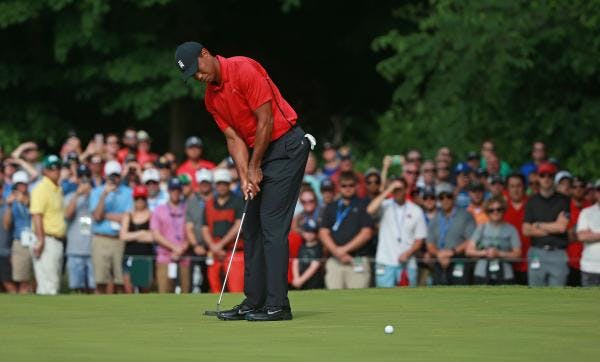
The short game in golf can be the most challenging aspect of the sport for many players. While hitting long drives off the tee may seem impressive, it's the finesse and precision required for chipping and putting that can truly make or break a golfer's game. Mastering the short game demands a great deal of skill, touch, and concentration. 

Unlike the full swing, which allows for some margin of error, the short game requires a high level of consistency and control. Ultimately, success in golf often comes down to proficiency in the short game, and those who can excel in this area are likely to see significant improvements in their overall performance on the course.

And when done well, the short game can be golf’s most satisfying aspect. Successfully executing a delicate chip shot to get the ball close to the pin or sinking a long putt can bring about a sense of achievement that is hard to replicate in other aspects of the game. The short game also offers opportunities for creativity, as players can employ various techniques and strategies to navigate around hazards and onto the green. 

Presented on US Sports by: Hanes.
Limited time! Get an Extra 20% off your order plus free shipping with code SURPRISE20. Discount shown at checkout. Standard Shipping to US Delivery addresses only.


Additionally, the short game often plays a crucial role in determining a player's overall score, making every successful chip, pitch, or putt feel like a significant accomplishment.

All of which is to say that it’s worthwhile to try and improve your short game. And online golfing coach legend Gary Wiren is here to help you do so. 

Coach Wiren is a member of six Golf Halls of Fame, including the PGA Hall of Fame and the World Golf Teachers Hall of Fame, and has honorary memberships or distinguished service recognition from Sweden, Italy, New Zealand, and Japan. Wiren was a collegiate conference champion, won the South Florida Seniors PGA title, and the South Florida long-driving championship, played in the USGA Senior Open and the PGA Senior Championship and has won the World Hickory Championship. 


PGA Tour Download on the App Store

Coach Wiren’s ‘Great Golf Drills Vol. 2 - The Short Game featuring Dr. Gary Wiren’ course will teach you which shots to play in different situations, how to develop the touch necessary for a great short game, and will help you to learn the correct principles of practicing the short game and dramatically lower your scoring average.

Dialing For Distance

The first (and most crucial) point when deciding which clubs to use when attempting to land a shot on the green is knowing how far away you are from the hole. 

The best way to do this is with experience. The more you’re out on the golf course, the better you’ll be at gauging distance. But if you’re relatively new to golf, a great way to know is by using the yardage markers placed along the length of the hole. Better yet, if you have access to a yardage book for a template for the gold course you’re at, this can be an incredibly useful tool. 

Once you calculate an estimated range from your ball to the hole, you’ll want to have a good understanding of how far back you want to take your swing. For example, if you’re ten yards away from the hole, you’ll want to swing so that your club head goes about parallel to your knee during your backswing. If you’re about 20 yards away, your backswing will be around parallel to your hip. A 35-yard chip shot will make your backswing go about to your bicep, and so on. 

Again, repetition is paramount when it comes to deciding which club to use. This is where getting reps in on the driving range is vital because you can test shots and distances with each club to see which best suits you at each distance. It would also be wise to keep a notebook, telling you which clubs you like at certain distances. 

The Right Direction in Chipping

One drill that Coach Wiren loves to utilize when helping students with their chipping direction is placing a club on the ground next to their ball that can help them line their shot up, so they can see where the club of their swing goes through to the target. 

After doing this for enough repetitions, students should be able to envision that imaginary club on the ground while they’re playing, which will be useful in lining up a straight shot. 

Coach Wiren suggests that, when it comes to knowing where the ball should be positioned between your legs when taking a shot, what you can do is stick a tee in the tops of your club’s grip, place it in front of your sternum, and look downwards. The tee should be about ½ inch in front of where you see the ball on the ground beneath it. If that’s where it is, your ball is in the correct position. 

Principles For Putting
null

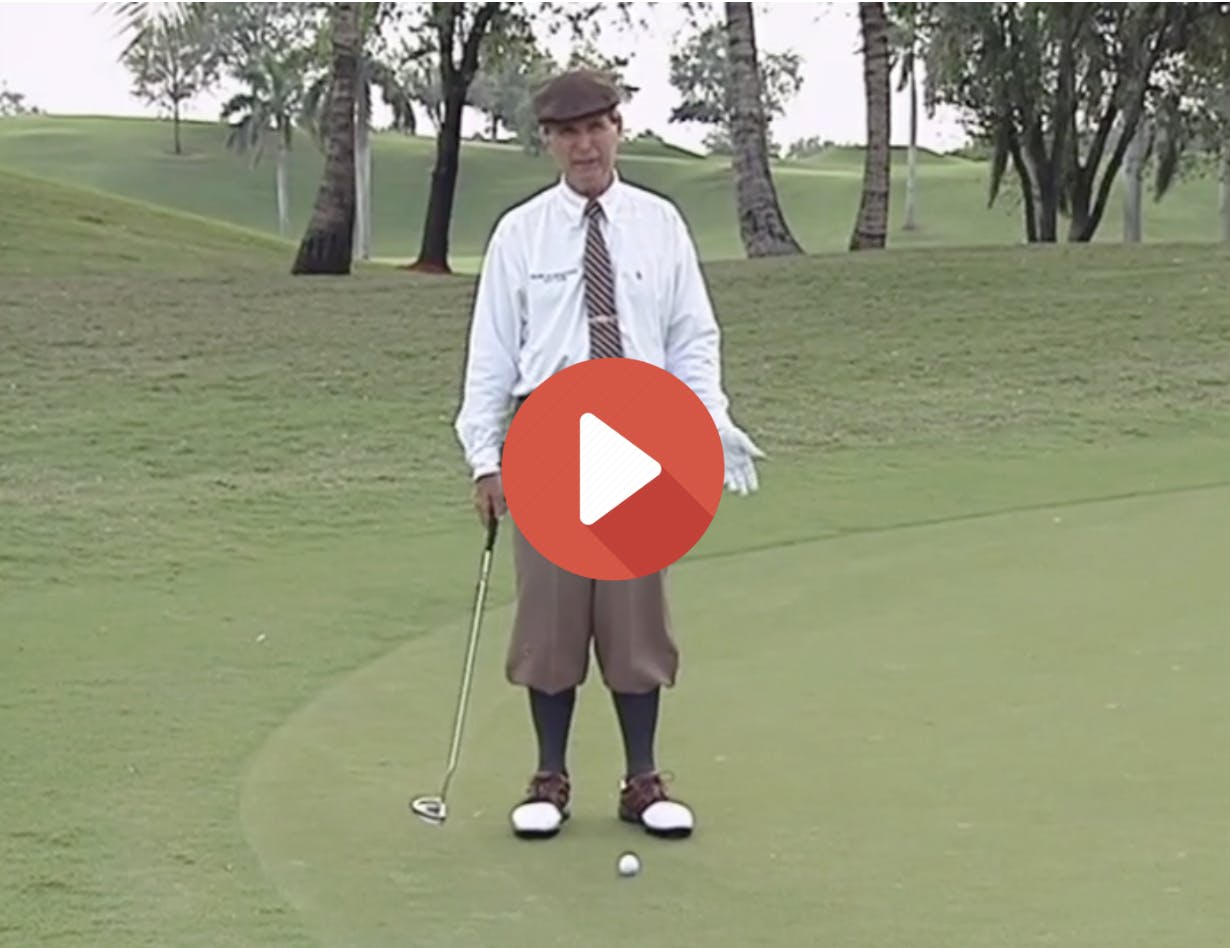
Coach Wiren explains how there are main principles for putting success:

1. Stroke Mechanics 

This is essentially learning to swing the putter smoothly, like a pendulum swing. This can be learned in a week.

2. Reading the green

Learning how to accurately read a green can take a lifetime, but some tips Coach Wiren is to imagine that every putt is a straight putt in your mind. In other words, if the green has a slope, you should be still executing a straight putt that accounts for the slope and any other factors that will affect how the ball travels. 

He also goes on to note that reading the green is also about pace, which means gauging how hard to hit the ball. While this will take time and experience, imagining a straight line in your head can improve how well you’re able to read the green.

Want to help kids #GetActive through youth sports? Learn how parents, coaches, and volunteers can get involved in @HealthGov’s National #YouthSports Strategy: https://bit.ly/2lIHPUc


Thursday, September 10, 2026

US Sports Golf - Three Priceless Tips From a Golf Legend And Best shots from the 2026 PGA TOUR FedExCup Playoffs Presented on US Sports by Footlocker!


Getting into golf can be quite daunting for several reasons. First, mastering the sport demands unwavering dedication and a willingness to invest time and effort in honing your skills. Secondly, navigating the multitude of equipment options can be overwhelming for beginners.

Plus, the cost of golfing (particularly when factoring in green fees and equipment expenses) can be a deterrent for many. Understanding the intricate rules and etiquette of the game (and getting into a proper golf mindset) might also be difficult for newcomers to comprehend. 

Despite these obstacles, the gratification and enjoyment that golf offers make overcoming these challenges well worth the effort, proven by golf becoming the preferred hobby for countless people worldwide. It's a sport that can be enjoyed at any age, making it a lifelong pursuit that offers opportunities for continued growth and improvement. And the beauty of golf courses and the sense of accomplishment that comes with mastering a difficult shot all make the experience incredibly fulfilling.

All of this is to say that overcoming the initial struggles of getting into golf is incredibly worthwhile if you decide to stick with it. And with a few fundamental golfing tips, you can get over your rookie woes and fall in love with this magical sport even sooner. 

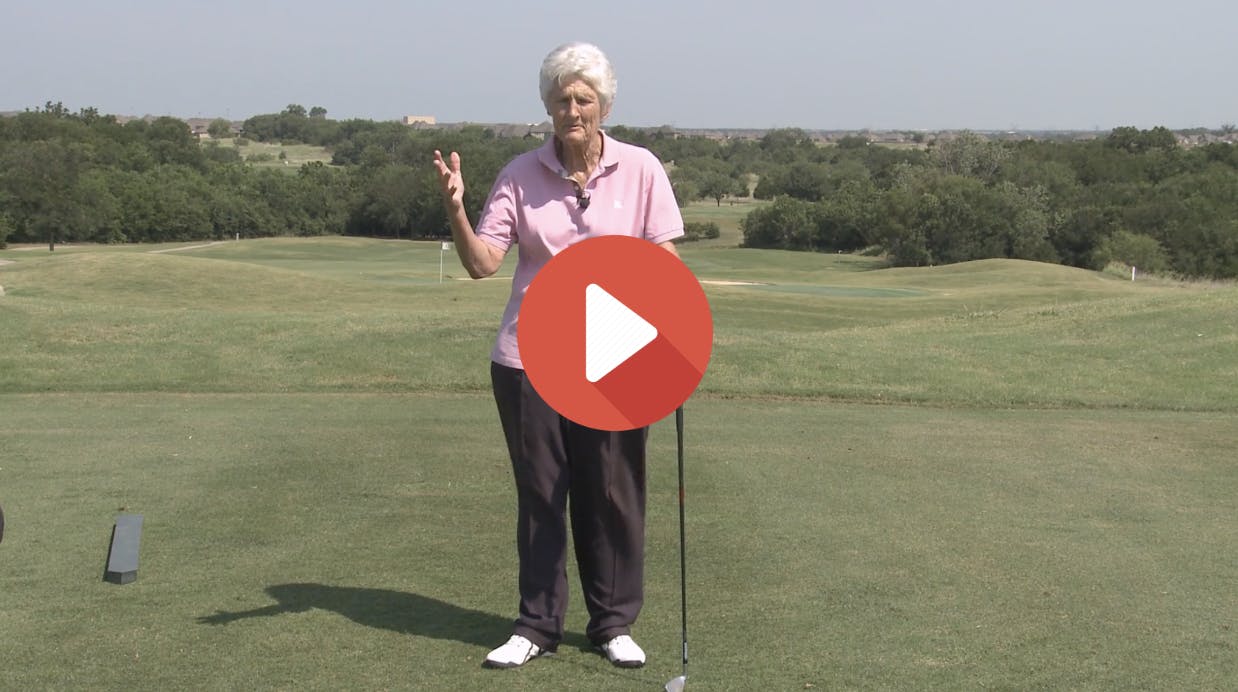
And Kathy Whitworth has a few tips that will speed up your path to golfing expertise. 

With 88 career wins, Kathy Whitworth holds the all-time record for both men's and women's U.S. Golf Tours. She also finished in second place in 95 tournaments. Kathy's professional golfing career spanned 32 years, from 1959 to 1991. She is the first woman to earn a million dollars in LPGA tournament play. Kathy Whitworth is a seven-time LPGA Player of the Year and has won six Major Championships. She was the Associated Press Athlete of the Year in 1965 and 1967 and was inducted into the LPGA's Hall of Fame in 1975.

With her professional career now behind her, Coach Whitworth now spends her time passing her decades of elite gold knowledge on to future generations of players. And her ‘Golf Tips and Techniques Featuring Kathy Whitworth’ course is a gold mine of information about how you can boost your golf skills.

How to Aim


PGA TOUR Download on the App Store

Coach Whitworth has a few great tips on how to improve your aiming so that your golf shot is more accurate. 

She notes that a common mistake many beginner golfers make is that, while they’re looking at a target before shooting, they’re not actually aiming at that target. 

Once you do decide on a target to aim for, Coach Whitworth notes that you should then line your club’s blade up with the ball then square your body off to an imaginary straight line to where you are aiming. 

Another important lesson Coach Whitworth imparts is that the habit of aiming must begin on the driving range. Often golfers will just be focused on their swing while at the driving range and won’t care about where the ball goes. While it’s important to be feeling attuned to your swing, you should also be aiming for specific targets while shooting. If you don’t do this, you are going to get on to the golf course and not be used to aiming for a specific target, which will make your accuracy suffer. 

When trying to decide where to aim, it’s best to stand behind the ball (like you’ll often see professional golfers doing on TV) to get a clear, straight-on view of the course in front of you, and how you should approach it. 

Pre Shot Routine

null

Having a pre-shot routine is integral to any golfer’s success. As Coach Whitworth mentioned previously, the first part of any golfer’s pre-shot routine is standing behind the ball and taking a look at the course before them, which will help forecast where the golfers should aim their next shot. 

On approaching the ball, the golfer will want to square themselves up to the target they are aiming at. 

From there, the golfer should have enough of a basic pre-shot routine to get themselves ready to shoot. But golf is also a superstitious game, and many golfers have habits or other things they will want to do before lining up for a shot. This could be establishing a steady breathing pattern, stepping up to the shot a certain way, adjusting their hat, or anything else. 


These types of rituals are going to be different for any golfer and certainly aren’t necessary for succeeding. But because golf is such a mental game, anything that a golfer can do to make themselves confident in themselves and their next shot is worth doing — even if it may look like a silly habit from the outside looking in. 

For higher-level and professional golfers, being able to make a long putt can often be the difference between winning and losing a tournament. And for beginners, all it takes is one made long putt for a whole afternoon at the golf course to feel worthwhile. 

One of Coach Whitworth’s tips when approaching longer putts is to trust her eyes when it comes to what the shot’s distance is and how hard she should hit the shot.

In addition, Coach Whitworth explains that a major key is to have one’s eyes over the ball while they’re putting to have a perpendicular stroke. 

At that point, the golfer will want to take a good look at their club to ensure that the blade is square, and is going to connect with the ball straight on. 

Reading the green is also important because it will help you figure out how to adjust your putt. Just like when gauging distance, your best bet in doing this is by trusting your eyes. 

Want to help kids stick with sports? Prioritize fun and #PhysicalActivity over competition in #YouthSports programs. Learn more in @HealthGov’s National Youth Sports Strategy: https://bit.ly/2lQ85f6

Thursday, August 13, 2026

US Sports Golf - Game-Improvement vs Player Irons: What Golfers Need to Know And HIGHLIGHTS LIV Golf New York Round 4

Reading Greens and Making Putts featuring Coach Geoff Mangum


When golfers begin researching irons, two categories appear time and time again: game-improvement irons and player irons. While they may look relatively similar at first glance, they are built with very different goals in mind. Understanding these differences is important for any golfer, but especially for beginners, because the wrong choice can make the game feel far more difficult than it needs to be.

At its core, the difference comes down to how much help the club gives you.

Game-improvement irons are specifically designed to make golf easier and more forgiving. They typically feature larger clubheads, wider soles, and a design that distributes weight around the perimeter of the club. This added stability helps maintain ball speed and direction even when contact isn’t perfect. For newer golfers, who are still developing consistency, this forgiveness can make a significant difference from shot to shot.

Another key feature of game-improvement irons is their ability to launch the ball higher with less effort. By positioning the centre of gravity lower in the clubhead, these irons help players get the ball airborne more easily — something that can otherwise be a challenge for beginners or those with slower swing speeds. The result is more carry distance, softer landings, and an overall more playable ball flight.


LIV Golf Download on the App Store

Confidence also plays a major role. Game-improvement irons tend to look more substantial behind the ball, which can help golfers feel more comfortable at address. When you combine that visual confidence with the added forgiveness, it creates a much more supportive experience, particularly for those still learning the game.

Player irons, by contrast, are designed with a different type of golfer in mind. These irons are typically more compact, with thinner toplines and narrower soles, giving them a cleaner, more traditional look. Instead of prioritising forgiveness, they focus on control, precision, and feedback.

Skilled golfers often prefer player irons because they allow for greater shot shaping and more predictable distance control. The feedback from these clubs is also more immediate, a well-struck shot feels noticeably different from a mishit. This level of responsiveness can be valuable for players who are fine-tuning their technique and want to make subtle adjustments.

However, this precision comes with less margin for error. Player irons are less forgiving on off-centre strikes, which means mishits tend to lose more distance and accuracy. For beginners or inconsistent ball strikers, this can lead to frustration, as the clubs do little to mask common mistakes.

The real distinction between the two categories lies in how they support the golfer. Game-improvement irons are built to reduce the negative effects of imperfect swings, helping players achieve more consistent results even when contact isn’t ideal. Player irons, on the other hand, reward consistency and precision, but offer less assistance when things go wrong.

For most beginners, high handicappers, or golfers returning to the game, game-improvement irons are generally the better choice. They provide the kind of forgiveness and launch assistance that makes the game more accessible and enjoyable. Common issues such as hitting the ground before the ball — often referred to as “chunking” — are also less punishing with these irons, as the wider soles help the club move through the turf more smoothly.


Presented on US Sports by: TicketNetwork!

Get Your 2026 NCAA Football Tickets Here


As golfers develop their skills and begin to strike the ball more consistently, their needs may start to change. At that point, some players consider transitioning into player irons or more compact designs to gain additional control. But it’s important not to rush this process. Using equipment that is too demanding too early can slow down progress and take enjoyment out of the game.

There are also options that sit between these two categories, often referred to as “players distance” irons. These clubs attempt to blend elements of both forgiveness and control, offering a middle ground for golfers who are improving but not yet ready for a full player iron. For many, this can be a natural progression as their game evolves.

In today’s market, there is no shortage of well-designed iron sets aimed at helping golfers play better. Major manufacturers such as Callaway, TaylorMade, Ping, and Cobra all produce models that cater to a wide range of abilities. Importantly, golfers don’t always need to buy brand new equipment to benefit from these technologies. High-quality used irons can often deliver the same performance at a much more accessible price point, making them a smart option for many players.

Ultimately, choosing the right irons comes down to being honest about your current ability. While it can be tempting to opt for clubs used by low-handicap or professional players, those designs are not always suited to developing golfers. Equipment should work with your game, not against it.

By selecting irons that offer the right balance of forgiveness, launch, and control for your skill level, you give yourself the best chance to improve while also enjoying the process. And in a game like golf, that combination is what keeps players coming back.

Luke Carrington is a golf enthusiast and equipment specialist at ARC Golf, where he helps everyday Kiwi golfers find quality used clubs that suit their game and budget. With a strong focus on performance and value, Luke works closely with players of all skill levels, from beginners looking for their first set to experienced golfers upgrading their gear.

https://www.arcgolf.co.nz/

https://www.arcgolf.co.nz/collections/golf-iron-sets

Want to help kids #GetActive through youth sports? Learn how parents, coaches, and volunteers can get involved in @HealthGov’s National #YouthSports Strategy: https://bit.ly/2lIHPUc


Thursday, July 23, 2026

US Sports Golf: Yoga For Golfers E-Book And PGA Tour Highlights: The Open Championship 2026, Final Round

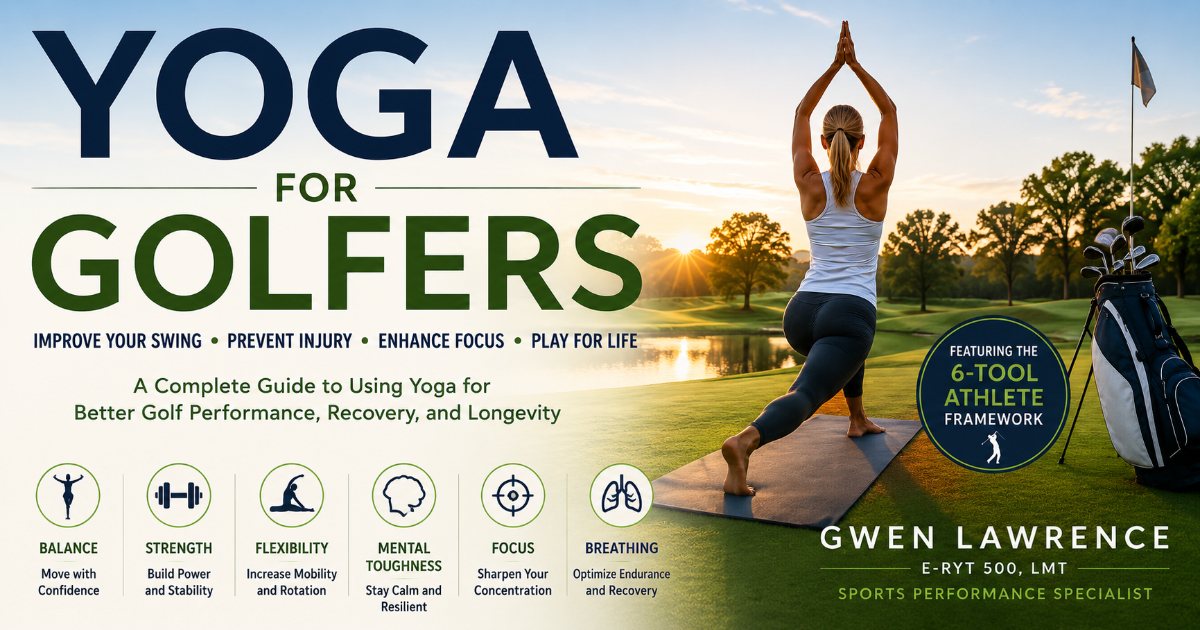
 Yoga For Golfers E-Book

Transform Your Game from the Inside Out

What if the key to a more powerful, consistent golf swing wasn't a new club or a swing overhaul—but a better-functioning body and a calmer, more focused mind? Yoga for Golfers is more than a stretching book. It is a complete guide to improving the way you move, recover, breathe, and perform on and off the course. Whether you're looking to gain distance, improve rotation, reduce pain, increase balance, or stay competitive for years to come, this book provides practical, golf-specific strategies that deliver real results.

Drawing on decades of experience working with elite athletes and everyday performers, Gwen Lawrence combines proven yoga techniques with sports performance principles to help golfers of all ages and abilities play their best. Inside, you'll discover targeted poses, easy-to-follow programs, mental performance tools, injury-prevention strategies, and the powerful 6-Tool Athlete Framework that has helped thousands of athletes unlock their potential. If you're ready to move better, swing more efficiently, recover faster, and enjoy the game for a lifetime, Yoga for Golfers will become an indispensable part of your golf journey. Click here to improve your game today!


Golf Channel
Download on the App Store