Shop now @ https://bit.ly/SimplyWholesale1025
US Sports Radio affiliate partner
http://www.USSportsRadio.net

Shop now @ https://bit.ly/SimplyWholesale1025
US Sports Radio affiliate partner
http://www.USSportsRadio.net
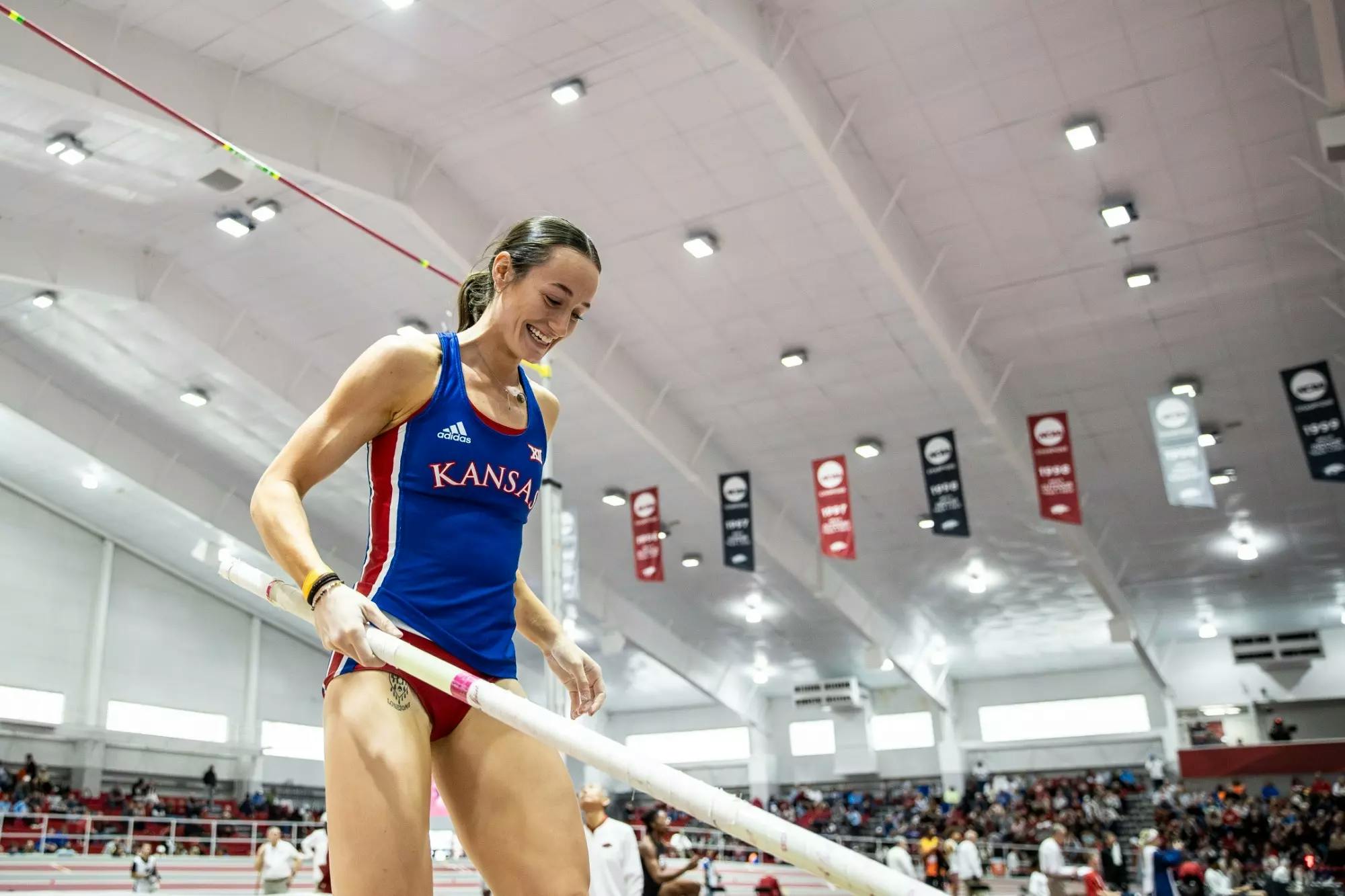

For nearly four decades, Tom Hays has been the quiet architect behind the University of Kansas's remarkable pole vault coaching dynasty. His journey from promising athlete to legendary coach embodies the perfect marriage of technical precision and psychological insight that defines elite coaching.
Hays's approach begins with fundamentals. Early in his career, he recognized that the pole vault isn't merely about raw athleticism but requires a methodical building of skills. He developed a progressive teaching system that breaks down the complex movement into learnable segments—grip positioning, approach rhythm, plant technique, swing mechanics, and finally, the commitment to inversion.
What distinguishes Hays is his embrace of both science and artistry. In the 1990s, when biomechanical analysis was still emerging, he was already filming his vaulters, analyzing frame-by-frame movements to identify inefficiencies invisible to the naked eye. Yet he balances this analytical rigor with an intuitive understanding of how each athlete learns differently.
"The pole vault is physics in motion," Hays often tells his athletes, "but the vaulter is human." This philosophy informs his individualized coaching style. For some athletes, he focuses on technical cues; for others, he cultivates the psychological fortitude needed to hurl oneself nearly twenty feet into the air.
His training facilities at Kansas have evolved from basic pits to high-tech laboratories featuring specialty equipment and computer modeling. But Hays maintains that the most valuable coaching tool remains attentive observation—watching how an athlete responds to instruction, adapts to challenges, and demonstrates readiness for progression.
The results speak volumes: dozens of All-Americans, multiple national champions, and Olympic qualifiers, along with his securing the nation’s No. 1 men’s pole vault recruit for three consecutive years at one point in his career, ensuring continued excellence in Kansas’ jumps program. More impressively, many of his former athletes have become successful coaches themselves, spreading his methodology throughout the sport.
Coach Hays’ ‘Tom Hays - The Art of Coaching the Pole Vault’ clinic explains the art of coaching this challenging sport and offers insights into athlete evaluation, coaching technique improvement, and simplifying complex movements. He emphasizes the importance of self-evaluation, clear communication, and eliminating unnecessary elements.
We have pulled some lessons from Coach Hays’ clinic and included them for you below.
3 Check Points to Look For
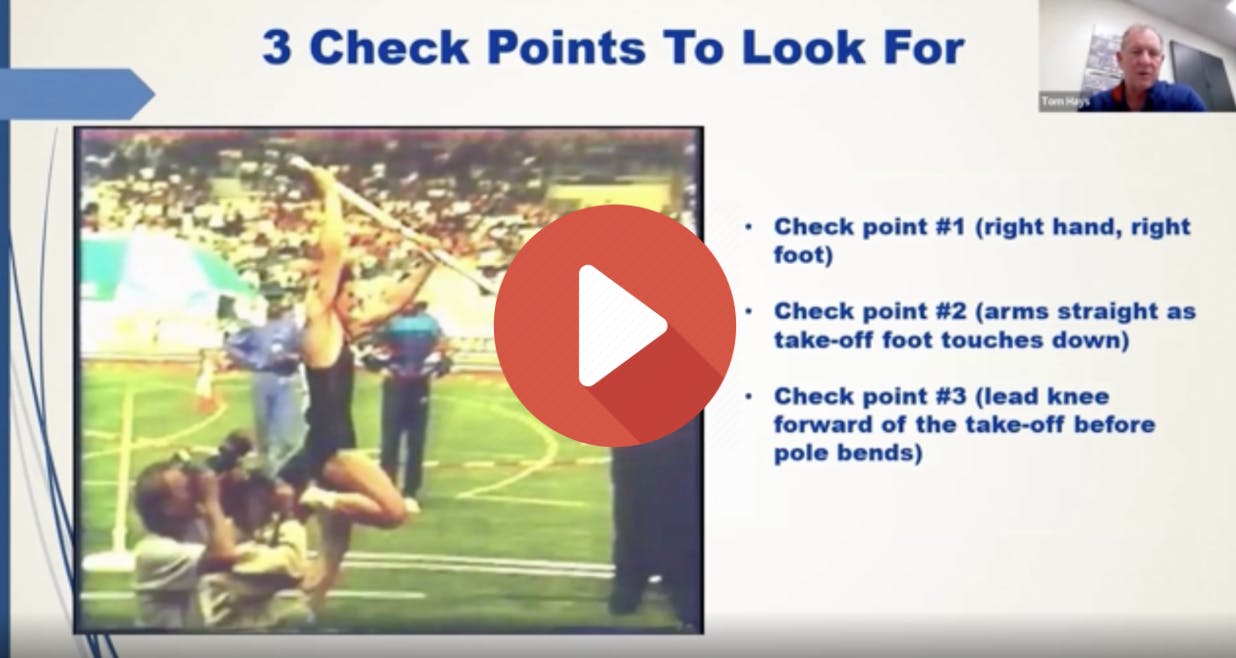
At one point in his clinic, Coach Hays discusses three check points to look for what an athlete is executing their pole vault.
Check point number one is that if the athlete is right-handed, when they land on their right foot in the step before takeoff, the hand is going to be somewhere around the runner’s forehead.
Most athletes have a tendency to have their hand closer to neck height, which is about eight inches away from where they should be and which will make them late in their plant.
Thankfully, this is a very easy thing to spot when watching film as it will be extremely apparent. But there are other nuances, such as the speed and rhythm are also important to diagnose and get right.
The second check point is when the runner lands on their takeoff foot, their top arm is extended close to straight. While many runners have a completely straight arm (which is okay and which Coach Hays teaches his athletes), Coach Hays explains that it’s also all right to have a slight bend if that’s what the athlete feels most comfortable doing.
The top arm should be up over the runner’s head in a high position, regardless of how bent the arm is.
The third and final check point is that the lead knee (or the drive knee) is before the takeoff foot leg before there’s pressure or bending in the pull phase. Coach Hays then discusses how, while some people don’t drive their knee correctly at this point, their hips are rising enough where it does the same mechanical work instead.
“The more pole speed you have, the more potential fly-away speed you’ll have,” Coach Hays said. He then quoted a coach who said, “Energy in, energy out.” In other words, the more energy and speed you can put into the takeoff, the more energy you’re going to get out of the pole.
Coaching Athleticism

When it comes to coaching the pole vault, Coach Hays says that it’s important for an athlete to only have one voice they need to listen to, instead of multiple coaches telling them what to do. In order to ensure this, a coach will want to be very direct and specific about what they want their athlete to be working on on any given day.
He also said that stress can be a good thing when it comes to an athlete learning. However, it’s important to understand the difference between good stress and bad stress. Good stress is competition between peers or opponents, or working hard in the weight room or on the track. Bad stress can be external pressures that a coach puts on their athlete.
He also discusses that if a coach puts a camera on their athletes while training so that they know there will be film of them, they’ll be more inclined to focus on their mechanics and develop good habits. This is another good type of stress.
Finally, a tired athlete doesn’t learn very fast, so fitness needs to always be a focal point. And Coach Hays adds that rhythm (or a lack of rhythm) always overcomes effort.

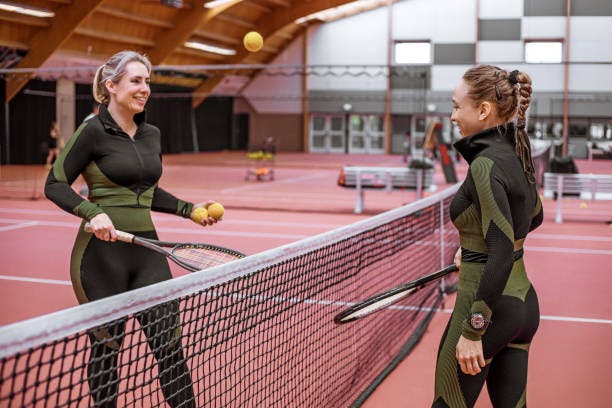

When it comes to tennis, a sport that requires intense concentration and a high level of athletic abilities, it’s important for coaches to know what to practice and work on with their players. Listed below are tennis drills that every coach should exercise with their players to help maximize their tennis play.
Warm Up
Before playing tennis, or any sport for that matter, it’s a good idea to have some form of cardio as a warm-up. Running is an excellent way to get the blood flowing and ready yourself for the battle ahead. I suggest taking a few laps around the court before moving on to arm exercises or practicing technique.
For this drill, you should have at least three tennis players. Keep in mind, the more players the better. Spread out in a circle, the further away the better. One player starts with the ball and randomly hits it to another player. The goal is to only let the ball bounce once before being hit again. Try adding objectives like having players call out the name of the person they are passing to before the pass. To make it more competitive, have anyone that fails an objective sit down for the remainder of the drill. Last player standing is the winner.
Improve Ball Control with the Bouncing Ball Drill
This is a simple drill that will require teams. If you have less than ten players, then get into groups of two. If you have more than ten players, get into two teams. Once the teams are set, have them spread out along the baseline so they are facing the net. Mark a cone that faces each team and place it near the net. The goal of this drill is to dribble the ball with your racket from the baseline to the cone near the net without losing control of it. Once players circle the cone and make it back to baseline, they will tag the next person on their team. Repeat until each team member has gone. The first team to finish is the winner.
Increase Accuracy with the Crosscourt Drill
This drill will require players to pair up and have a court to themselves. One player will start as the “server” and the other one will do the hitting. The server will hit the ball accurately to the other player’s forehand or backhand side. That player will then attempt to hit the tennis ball crosscourt. Repeat this for a set amount of turns with the server counting how many shots are successful. Once the first player has finished, switch positions. Try to beat your opponent and also try to beat your own high score each time you attempt it.
Incorporate “Simon Says” into your Drills
This drill is simple to perform and also very beneficial to a tennis player’s backhand and forehand strokes. To start, have your players line up horizontally along the service line, with the coach on the opposite side of the court. The coach’s job is to feed the balls to the players. Before the ball reaches the player, he must yell out whether the player should volley it or groundstroke it. By doing this, tennis players will build a better reaction time and will also improve their stroke techniques.
Improve your Serving Technique and Accuracy
With this simple serving drill, tennis players will gain the ability to pinpoint where they would like to serve it. This will become very handy during a match. This drill can be done with or without a partner, but if you decide to do this drill alone you better make sure you have a good amount of balls with you! To set this drill up, draw a good-sized circle in each of the four service boxes. These will be your targets when you serve so put them in different spots. The goal is to serve the ball into the circle you created. If you serve it outside of the circle, count it as a fault. If more than one person is included, make it a competition by seeing who can hit the circle the most.
Mini-Games of Tennis Help Simulate Real Match Play
This drill is simple and will help you be more accurate when playing a match. You will need either two or four people to do this drill. The game will be played like a regular tennis match, except the double match line won’t count. If the ball enters anything but the service box, then it’s a point to the opposing team. Try to keep the ball in the service line as long as possible to try and defeat your opponent.
Hand-Eye Coordination is Key to Tennis
For starting this exercise, have one player stand on the end of the service box and another player positioned on the baseline. Begin by throwing the ball to your partner, letting the ball bounce only once. Try to stand in the same spot while doing this to improve accuracy. After that, throw the ball to your partner, but have him hit the ball back to you. Try to catch it after he hits. After a few rounds, switch positions and do it vice versa. Finish up by hitting it back and forth, letting the ball bounce only once.
Become More Agile and Quick on the Court
To begin here, have your players get into pairs. Have one player stand in the center of the court on the service line. Have the other player stand opposite of him. Your partner will start by hitting the ball to the far side of the court (they choose the side). You must then chase after the ball and hit it back to your partner. As soon as you hit it back, return to the middle. Repeat this back and forth, switching positions every now and then.
The Serving Game
This next drill is a serving game. It’s very easy, but also a good way to improve your serving. Split your team up into two teams. Have them stand on opposite sides of the court ready to serve. Have one team serve one by one, counting how many are successful and how many are not. Next, have the other team serve. Whichever team has the most successful serves, wins.
Serve and Volley Style
Despite the serve and volley approach becoming less common, many of the elite players still have it in their arsenal, including the great Roger Federer. I’m not stressing to use it 100%, but it can help develop a more well-rounded player. For the drill, you need one player on each side of the court. Have one player serve the ball and then the other player can return it with a number of different shots. No matter whether it’s a crosscourt forehand or a lob, the serving player should rush the net and look to hit the ball before it bounces. After the server receives around 10 reps, then switch roles. As a side note, remember the surface you’re playing on. For games on clay, you might want to play out longer rallies, as opposed to hard or grass.
DON’T BE AFRAID TO TRY SOMETHING NEW NEW
All of these drills listed here serve a purpose of improving one’s tennis abilities. However, it is important to continuously be working on different exercises that focus on what your team needs. If your team is consistently getting double faults, then serving drills increase in importance. At the same time, don’t be hesitant to do a little research on your own.
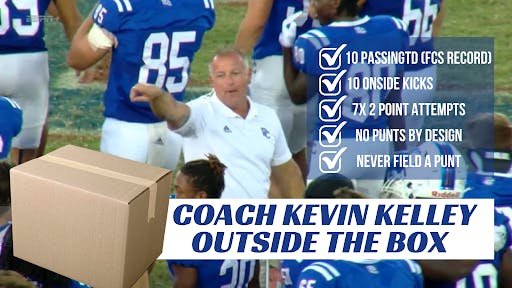

I am sure you watched plenty of football this weekend beyond the countless hours of film grading and breakdowns.
In a weekend full of shake-ups and upsets in college football, one game that many people may have missed was Presbyrterian College Blue Hose vs. St. Andrew’s Knights.
WHO?
Presbyterian is in their first season as an FCS team, and St. Andrew’s is an NAIA team. Presbyterian is coached by Kevin Kelley, the 9x state champion head coach of Pulaski Academy also known as “the coach who never punts.”
This was Coach Kelley’s first game as a college head coach and the test of his high powered offensive system and his outside-the-box strategies. As a reminder of those strategies:
Never punt
Go for two on most tries after touchdowns.
Onside kick after most touchdowns
Never field a punt
So let’s get right to it. How well did his strategies translate to the college level?
Offensively, the Blue Hose set an FCS record passing for 10TD. The craziest part is QB Ren Hefley threw his tenth TD early in the fourth quarter and could have easily thrown more. He finished the game 38/50 for 538 yards and 10 touchdowns.
Coach Kelley explains that what they do is unique. He describes it as “a defender read passing game with a few progressions in it.” Watch his overview of the passing game here (click on image for video):
We will review some film this week and confirm how much of this is the same as he’s done, but knowing Coach Kelley’s convictions, we expect most of it to be. In watching the highlights it looks to be with plenty of the touchdowns coming from empty and quads.
When asked about his offense post game, Coach Kelley had this to say:
“We do a lot of things on offense and I was really worried that in that amount of time, in 25 NCAA practices we could put all that stuff in and be able to do it effectively with minimal amount of mistakes on the field, and the good thing is, it’s designed to be so much that you can make mistakes and still be successful because if you give them more things to look at on defense then they’re going to make more mistakes too.So even if you make some it counter acts and you have a chance to be successful.”
Here is Coach Kelley explaining their high percentage clearing concept from his quads attack. They certainly used this one last Saturday:
Special teams is where Coach Kelley breaks from traditional strategy and he continues what he did at Pulaski:
Presbyterian attempted a 2-point conversion after six of its first seven TDs (converting three of them). Coach
The Blue Hose tried an onside kick after its first 10 TDs (going 1-for-10). Coach Kelley explained exactly why he believes in this strategy in the following video:
When asked post game what he was going to do to increase the onside kick recovery, Kelly replied “Well I am going to add some more onside kicks. I only had three in, so we are going to add some.”
This is an area that Coach Kelley studied and researched. He explains exactly why they like the onside strategy here. It is the single most factor in whether they will win or lose:
The Blue Hose never punted. In fact, Presbyterian didn’t even list a punter on the two deep.
In addition, PC didn’t field a punt.
The sample, is small, one game, but I don’t expect Coach Kelley to change. He’s made a career on doing what he believes, doing it his way, and most importantly getting his team to believe in it.
There’s always plenty to learn from and we hope you takeaway something that can help you this season.
Here’s to his and your continued success!


When I started my podcast, I based my decision of who to invite on my show often by a book I read. Such was the case with Carolyn Custis James. I was thrilled when she agreed to be my first featured expert. I became a fan when I read her book, Half the Church: Recapturing God’s Global Vision for Women.
A Must-Read for Women and Men Alike
Carolyn Custis James' Half the Church is a powerful and thought-provoking exploration of God’s vision for women within the church and the world. With a deeply motivational and scholarly approach, James challenges long-held beliefs about women’s roles, arguing that they extend far beyond marriage and motherhood. Her examination of the Hebrew term ezer redefines the role of women—not as mere helpers to men, but as essential contributors to God’s kingdom.
Breaking Free from Traditional Constraints
One of the most striking aspects of this book is how it encourages single women to find purpose in serving God outside of marriage and motherhood. James boldly addresses the ways in which the church has often limited women’s worth to their familial roles, leaving many feeling sidelined once they are no longer raising children or if they never marry at all. She calls readers to embrace their full potential, reminding them that women are half the church and should be fully engaged in its mission.
A Call to Address Global Injustice
Beyond individual purpose, Half the Church highlights the suffering of women worldwide, from oppression and discrimination to violence and injustice. James critiques the church’s passive stance on these issues, urging believers to take an active role in fighting for women’s rights and dignity across the globe. Her message is clear: the church cannot afford to ignore these pressing concerns, as women’s struggles are central to God’s mission of justice and restoration.
A Fresh Theological Perspective
Rather than taking a firm stance on the complementarian vs. egalitarian debate, James instead focuses on God’s original design for men and women to work in unity. She draws parallels between this oneness and the Trinitarian relationship, offering a compelling argument for mutual partnership rather than hierarchy. This approach makes her book accessible and relevant to readers on both sides of the theological spectrum.
Transformational and Inspiring
James’ writing is both scholarly and deeply personal, making this book a transformative read. It challenges outdated perspectives, calls for action, and equips women to step into their God-given purpose with confidence. As someone who has read many books on women in the church, I can confidently say that this one stands out as a must-read for both women and men.
Final Thoughts: Read, Be Inspired, and Act
Half the Church is more than just a book—it is a call to action. Whether single, married, young, or old, women will find encouragement and purpose within its pages. Men, too, will benefit from reading it, gaining a deeper understanding of the value and role of women in God’s kingdom. If you are looking for a book that will challenge, inspire, and equip you, this is the one. Read it. Be inspired. Love. Act.
To enjoy the episode on the Your Radical Truth Podcast, go to https://yourradicaltruth.com/001-carolyn-custis-james/
Margaret Mary O’Connor has been called, “The Modern Day David” on many occasions. On a mission to reveal carefully guarded secrets of the Catholic Church, she unveils the truth through her well-researched writings. Learn more at https://www.yourradicaltruth.com

The NordVPN
service allows you to connect to 5600+ servers in 60+ countries. It
secures your Internet data with military-grade encryption, ensures your
web activity remains private and helps bypass geographic content
restrictions online
Get protected today @ https://tinyurl.com/NordVPN0925
US Sports Radio affiliate partner
http://www.USSportsRadio.net


When I look back on my 29 years of coaching the women’s lacrosse team at Johns Hopkins University – I can’t help but smile. That smile has less to do with the wins we were fortunate to experience, and more to do with the immense pride I feel in the growth and development of the athletes I had the pleasure of working with. Coaching is a journey that intertwines the development of athletes with the art of leadership and inspiration. Each new season is like a fresh canvas for coaches. Every season is filled with opportunities to mold players into a confident, cohesive unit.
Effective coaching demands tremendous time, effort, energy, and dedication to nurture each player’s talents and strengths. It is not easy – but I feel coaching is an incredibly fulfilling profession that can leave a lasting impression on you.
The Excitement of the New Season
The arrival of a new season is always invigorating. It’s a time to reflect on each player’s potential and identify specific areas for improvement.
Setting Goals
Whether it’s refining footwork, perfecting a split dodge, or experimenting with a new shot, helping your athletes set individual goals serves as a powerful motivator.
This approach reassures players that their coach is invested in their personal development, emphasizing their important role within the team.
Coaches can assist players in documenting these goals and attaching timelines for accountability by encouraging their athletes to keep a “goals journal” and write their goals and timelines down. I would tell my players that “writing things down makes them more real” whether it is in a journal or on a piece of paper they posted in their room – and that definitely applies to the goals we set for ourselves. Help your players craft their goals, inspire them to write them down and help them identify a timeframe to achieve their goals. Regular check-ins and impromptu chats with your athletes about their progress helps them stay accountable.
Create a Partnership Culture
By cultivating individual growth, coaches can foster a culture built on support and collaboration.
John Wooden wisely stated, “Make sure that team members know they are working with you, not for you.”
This sentiment is crucial for creating an environment where players feel empowered and valued.
Similarly, Paul “Bear” Bryant highlighted that the knowledge of players is what truly counts in coaching success. How well you can teach the game and have those lessons resonate with your players is crucial.
Coaches Must Embrace Challenges as Opportunities
Every sports season comes with its own set of challenges for coaches and their athletes. For passionate coaches, these hurdles can serve as invaluable learning tools. It’s essential to evaluate past performances, set robust goals, and identify necessary adjustments.
Establishing clear objectives—both for oneself as a coach and for the program—creates a roadmap for success.
Remind your athletes and yourself,
“You grow through what you go through.”
Keeping this growth mindset allows you to turn mistakes into teachable moments.
How to Build Confidence Through Belief
As coaches encourage athletes to reach for higher aspirations, it’s crucial to instill a sense of belief in their abilities. When athletes know their coaches have confidence in them, they are more likely to meet challenges head-on and embrace the coaching they receive.
Eddie Robinson, a legendary college football coach, succinctly captured his take on the essence of coaching:
“Coaching is a profession of love. You can’t coach people unless you love them.”
When your players know you love them they will work that much harder for the good of the team, the coaching staff and themselves. That emotional investment in athletes is part of the “secret sauce” that coaches can bring to their teams to inspire them to have the courage to take risks, try harder and play with joy. Building confidence in your athletes is not just giving them positive, constructive feedback – it includes holding them accountable to learn and grow while they are in your care.
Inspire Your Players Through Creativity
Great coaches look to set the bar high for their players and can inspire them in many different ways. Inspiration is a key coaching skill that can be woven into the fabric of any team in many creative ways. One engaging method is the creation of an “Inspiration Jar.”
This jar can be filled with motivational quotes—one for each week of the season. Each week, a player can draw a quote, read it to the team, and facilitate a discussion about its meaning and relevance. This ritual not only fosters reflection, but also builds confidence, camaraderie and uplifts team spirits, making the quote a focal point for the week. The quote can serve as a springboard for the energy the team can bring each day. Having your players read the quote out loud to their teammates gets them comfortable speaking in front of a group and actively listening to each other – important skill sets to develop for practice, on game day and in life.
Learning from Peers
Collaboration with coaching staffs from other programs can be one of the most enriching experiences for a coach. Engaging in discussions about sports, leadership, and the challenges of coaching fosters a culture of continuous learning. Sharing drills, practice plans, and strategies creates a vibrant exchange of ideas and insights. If you are a college coach, inviting club or high school coaching staffs to your practices is a great way to give back and grow the game. It is a way to mentor and guide others in the profession.
These interactions often provide a renewed sense of energy and inspiration, reminding coaches of the larger community they are part of. Diane Geppi-Aikens, a mentor of mine, always emphasized the importance of giving back to the game and maintaining a broader perspective beyond wins and losses. Each interaction with another coaching staff can be a rewarding opportunity for growth—both for the coach and the team they lead. Diane would encourage us to have the confidence to share openly the things we were doing with our team. She felt it would keep us on our toes and committed to ever evolving and growing to ensure we stayed one step ahead of our competition. It is important for the future of the game to uplift, inspire and influence newer coaches. Go ahead and share the things you are doing with your team with other aspiring coaches. If their team gets better at a particular skill or set – that in turn will motivate you to grow, improve and better teach and coach your team.
A Coach’s Journey
The journey of a coach is one of dedication, learning, and growth. Coaching is not just a seasonal endeavor; it is an evergreen commitment to fostering talent, instilling values, inspiring others and building relationships that last a lifetime.
By setting clear goals, fostering belief in player capabilities, and encouraging collaboration with peers, coaches can create an environment where both players and themselves thrive. Embrace each opportunity with passion and purpose, knowing that the impact of coaching extends far beyond the game.
To learn more about the art of coaching, check out the ISNation app where we post new lessons weekly, aimed at helping you become a better coach.
The app also features free mental wellness tips for athletes, coaches and parents.

Midseason adjustments are vital for keeping the pick and roll offense effective as the basketball season unfolds.
While teams may find initial success with this strategy, opponents will quickly analyze and adapt to it. To counter these defenses, coaches need to make strategic adjustments.
One approach is to rotate different players into the roles of the ball handler and screener, creating mismatches and preventing defenses from settling into predictable patterns. Tweaking screen angles and timing can also disrupt defensive schemes.
Simple variations, like faking a screen or changing the roll angle, can create confusion for defenders. Recognizing defensive coverages is also essential—if opponents begin to switch or trap, exploiting rotation gaps through ball movement or off-ball screens becomes crucial.
Developing players’ decision-making abilities will be key. Practicing various scenarios allows them to read defenses quickly and react effectively. By continuously evaluating and adjusting strategies, teams can ensure the pick and roll remains a dynamic and potent offensive weapon throughout the season.
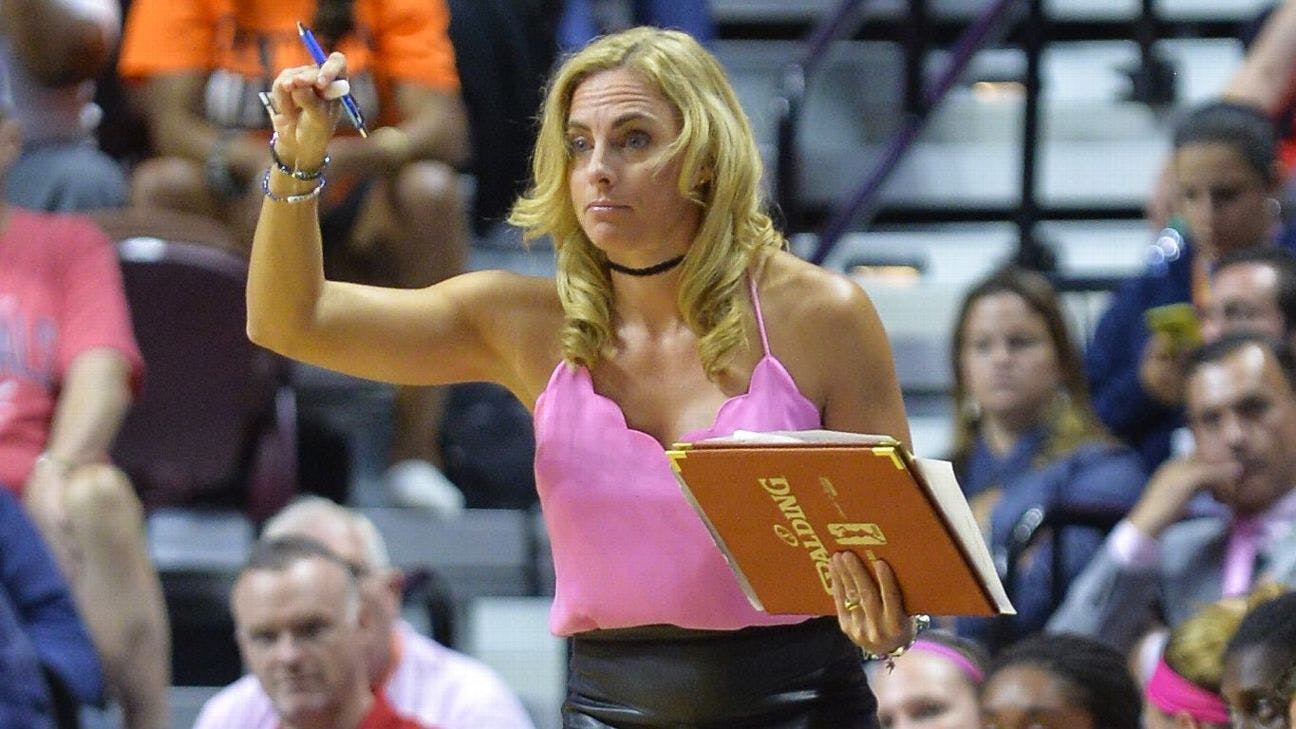
But these are all basic solutions to what can be a complex issue. This is why we’ve left the real analysis to Baylor University head women’s basketball coach Nicki Collen.
Nicki Collen became the Baylor women’s basketball head coach in 2021. She enters her fourth season at the helm in 2024-25, and has started the season with a 16-3 record. Collen came to Baylor from the WNBA’s Atlanta Dream franchise, where she spent the last three seasons as head coach. She earned WNBA Coach of the Year honors in her first season there and helped the franchise to the WNBA Playoff Semifinals.
Coach Collen’s ‘Nicki Collen - Pick and Roll Offense’ clinic contains a ton of fantastic insights that will help you understand what midseason adjustment you can make to the pick and roll to ensure it remains a high-level and efficient offense for the remainder of your season.
Ball Handling
Coach Collen discusses how one way that she tried to minimize turnovers within the pick-and-roll offense is by having all of her players practice ball handling for 5-10 minutes at the start of every practice.
The reason for this is that sloppy ball handling by either the guard who’s dribbling or the post player who could be receiving the pass on a roll can be a common cause for turnovers, which all basketball coaches know can be a death sentence.
Outside Hand Passing

In addition to focusing on ball handling, Coach Collen notes that it’s crucial players practice passing the ball with their outside and non-dominant hand in a pick and roll scenario.
This is because in many dribble drive situations off of the pick and roll, the only way a player can get a pass off in the correct location is by utilizing the off-hand. This might be to the roller or it might to be a wing player who gets open because their defender has to help defend the paint.
Also important in practice is that players are starting their pick and roll offense at free throw line extended rather than closer to the top of the key. Free throw line extended should always be the priority when it comes to beginning these offensive sets because it spaces the floor and provides optimal angles for the drive, roll, and kick.
Work Your Feet
Given the fatigue that inevitably sets in for any basketball player in the middle of a season, it’s common to see that players get lazy with their footwork in the pick and roll at this point in the year. This is why Coach Collen stresses footwork during the pick and roll segments of her practice.
To do this, Coach Collen has her guards stutter their feet when moving part of the screen set for them. Once this stutter occurs, they will be able to make a read on whether to pass to the roller, continue driving to the basket, or kick out to a player along the wing.
Another vital aspect of the pick and roll’s success is that the post player who sets the pick separates from the screen as quickly as possible and gets to their correct position. This is because the guard will depend on that player being an option to pass to while also keeping the lane uncongested.
In order to separate as efficiently as possible, the post player needs to have their pivots perfected regardless of where they’re rolling to after the screen. Clumsy footwork in this separation phase can ruin any execution the offense has brewing.
Twist the Screen
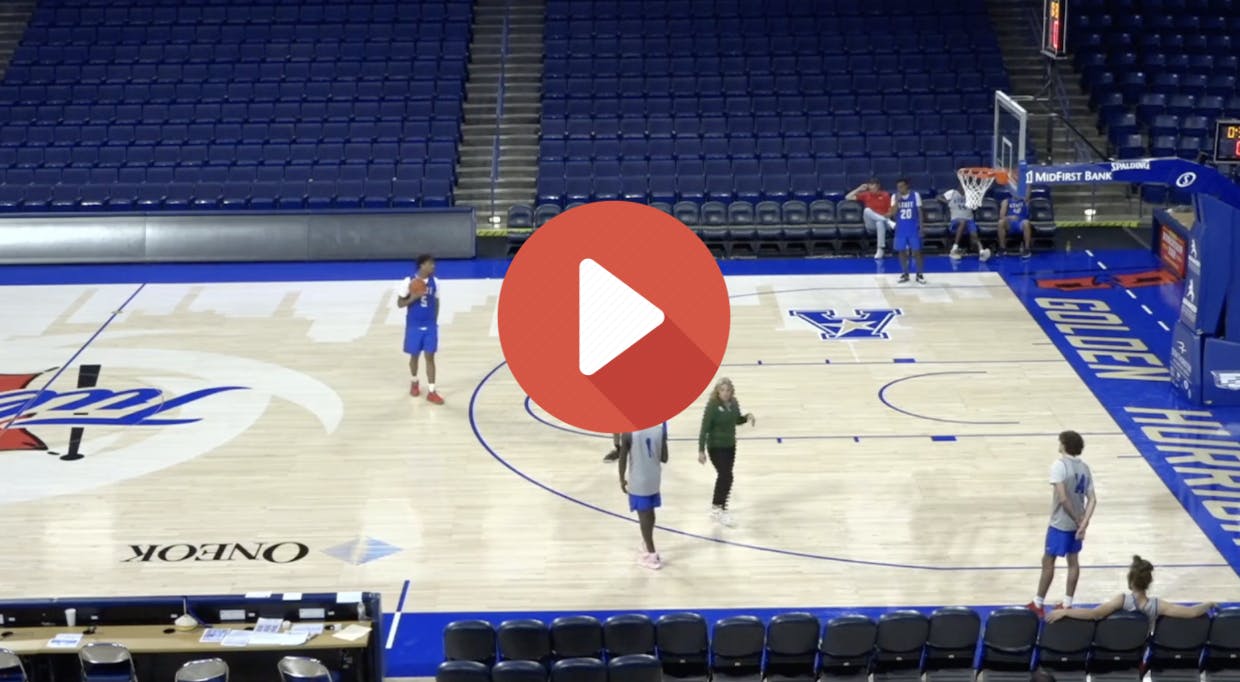
Another important concept that can add crucial layers to a basic pick and roll offense is what Coach Collen calls “twisting the screen”.
This essentially means that after the additional pick and roll (that should be around the free throw line extended) an extra wrinkle an offense can add is that the post player who sets the pick can pivot back around and set another screen for the same guard, which essentially serves as a misdirection that can throw the defender off guard.
The benefits to this are that it will open up for a baseline drive, a kick out to either corner, and/or set the post player up to roll into the paint or to get the upper hand on an offensive rebound.
This extra screen twist is perfect to institute into an offense in the middle of the season to throw defenses off balance and give them something else to prepare for.

Is your 3 deep zone always in the best rotation? Or is the offense getting ready to target your static 3 deep zone?
This is something that Chris Lachney, defensive coordinator at Southeast Louisiana feels is important to putting your defenders in an optimal situation.
Sitting in a single version of Cover 3 against every formation or personnel group makes your defenders sitting ducks that the offense can now pick on.
Coach Lachney likes using 3 Deep Zone because of its ability to get 8 players into the run fit quickly. He certainly understands the weaknesses and how the coverage will be attacked, but they’ve added a concept they refer to as “Zone Alert” to get them into the best rotation against the formations and/or the personnel they are facing.
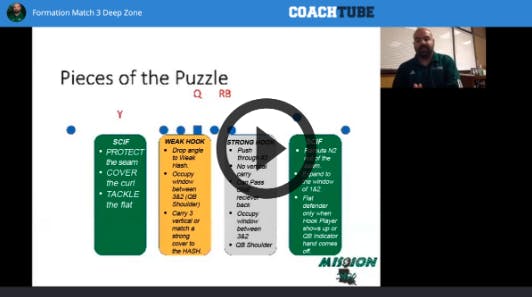
For Lachney it starts with well defined pieces of the puzzle. The SCIF player has an important job. Lachney explained exactly why they added verbs for better learning if the SCIF assignment. Instead of teaching just “Seam-Curl-Flat,” Lachney’s players are taught and understand it this way:
Protect the Seam
Cover the Curl
Tackle the Flat
Lachney gives the details of how they coach the SCIF in this video:
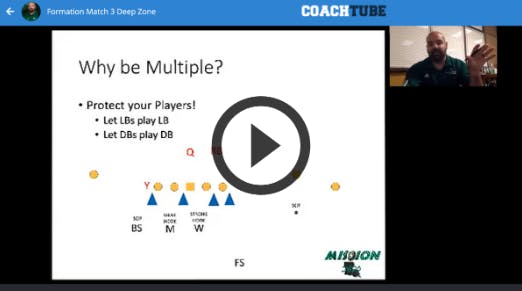
Why be Multiple?
For Lachney it goes back to putting his personnel in the best position for their skill sets. Having multiple options for rotation for the different formations and personnel groups allows them to do that.
Lachney explains it here:
Lachney covers their rotations for the following situations with instructionals and game film:
2x2 Formations
3x1 Formations
Y-off Formations
Formation into Boundary
Here is an example with Mike in the 4-man rush:

Having these in their toolbox for their Cover 3 allows them to keep their players in the best position possible to take away what the offense will try to do. Instead of letting the defense target your static 3 deep coverage, make it more dynamic with the Zone Alert Concept.
Coach Lachney’s explains it all in his clinic, “The Zone Alert Concept for a More Dynamic Formation Match 3 Deep Zone.”

 " "
" "