Competing in the 400m track and field race
presents a multitude of challenges. Runners must master the delicate
balance of speed and endurance, strategically pacing themselves while
maintaining a strong, consistent pace. This race is not just a physical
test but also a mental battle, requiring unwavering determination and
focus. Excelling in the 400m race also requires having a comprehensive
and specific 400m training program.
There
are some basic tips that most track and field coaches know to teach to
their 400m runners. For example, when running the 400m race, it's
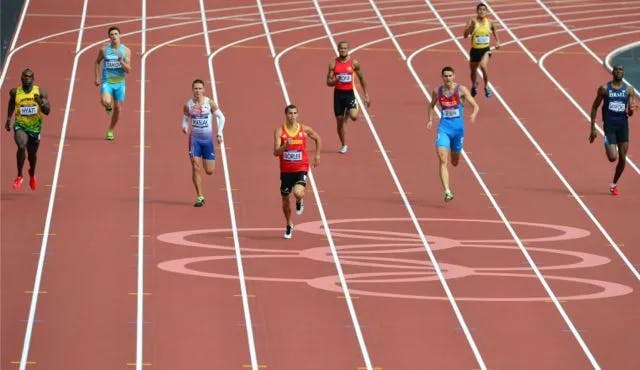
crucial to start with a powerful but controlled sprint to establish a
strong position. As you approach the curve, focus on maintaining speed
and form, using the momentum to your advantage. Effective pacing and a
strong finish are essential for a successful 400m race.
But
because anybody who has been around track and field should be aware of
these tips by now, these strategies alone aren’t going to win any races.
Yet, the advanced insights of a 400m guru like Ernie Clark might.
Ernie
Clark is in his second year as an Assistant Coach in charge of sprints,
hurdles, and jumps after joining the NAU Track & Field coaching
staff in the fall of 2023.
In the 2024 outdoor season,
Coach Clark sent six athletes in eight events to the NCAA West Regional,
with the women’s 4x400-meter relay team earning a spot at the national
meet. Clark joins the team from San José State, where he was an
assistant coach for two years and coached 11 Mountain West Conference
Champions, with eight of those champion titles coming in the 2022-23
season.
Prior to his time with San José State, Coach Clark
was an associate head track & field coach at Ashland for six years,
where he was a four-time USTFCCCA National Assistant Coach of the Year
recipient. The Eagles earned three NCAA 4x400-meter relay national
titles under Clark’s guidance.
Coach Clark’s ‘Maximizing Potential in the 400m’
course provides some of the insights there is to find about maximizing
an athlete’s potential in the 400m. We’ve pulled some of his best
lessons to give you a taste of how he can help the 400m runner in your
life start winning with ease.
Best Way to Increase Speed
Coach Clark stresses that no time should be wasted when there’s an opportunity to engage and teach your athletes. This starts during warmups, which is a great opportunity to make people faster.
If
a coach is engaged with a track team’s warmup, it will not only help
ensure that their team isn’t slacking off and getting their bodies
prepared properly, but it will also help so that they’re facilitating good habits rather than bad ones. For
example, if a player is being lazy with their arm mechanics while doing
their warmup, that can create a bad habit that will rear its ugly head
when the actual training (or, even worse, the actual competition)
begins.
During these warmup sessions, a coach should be
looking to improve their team’s posture, coordination (especially with
younger athletes), Dorsi flexion (the movement of the hand or foot
upward and away from the body), improved arm drive, and leg movement
patterns, specifically as it pertains to their leg strike.
“You can help all those things get better in warm-up,” Coach Clark says. “Just doing that, if you end the day with that, and then you go to races, [athletes] will actually be faster.”
400m Training Keys Part 1
Going off of the previous points, Coach Clark
notes that every warm-up should end with an acceleration or a sprint
that is coached.
Coach Clark also notes that all of his speed workouts will be between 30m to 150m in length, with the occasional 200m run.
Of course, he also employs training sessions with runs that are longer
for his 400m runners, but the focus for those won’t be on speed, and
instead will center around slow twitch or aerobic development.
The
shortest rest that Coach Clark ever has with speed workouts is four
minutes, but they’re usually even longer than that in order to keep
quality and technique high among his athletes.
“It’s not how fast you run, it’s how you run fast,”
is a quote that Coach Clark lives by early on in the season. What he
means by this is that he isn’t worrying too much about his athletes’
times, but instead about how their habits and running mechanics are
developing. Once their mechanics are in a good place, they will be
conserving more energy and therefore will produce better times from
there.
Finally, coaches should not try to coach their runners on a meet day. Any
coaching should have already taken place before that point, and the
meet day should just be encouraging athletes to run as fast as possible
without overthinking.
400m Racing Strategies
Coach Clark stresses that 400m race strategy won’t change depending on whether the race is indoors or outdoors. The
reason for that is the runner has got to get to a breaking point
indoors to make sure that they don’t get stuck behind somebody. Because everybody is in their lanes outdoors, this same issue isn’t prevalent.
He
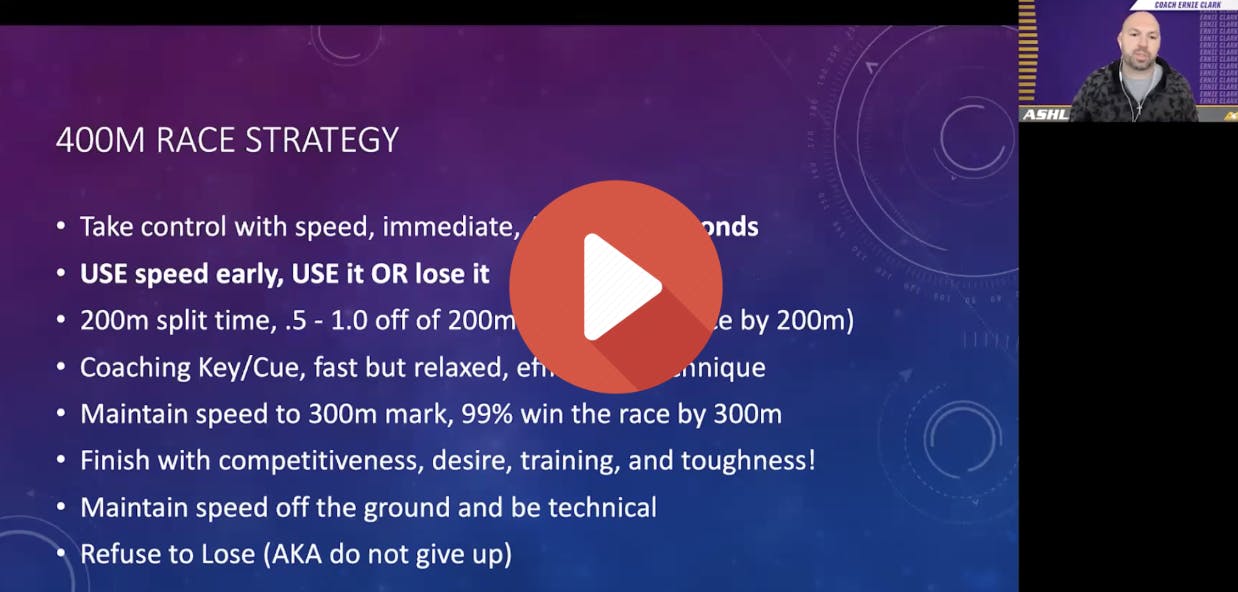
also suggests that runner should be taking control through their speed
immediately in the race; ideally within the first four seconds. He
also explains how 95% of 400m races are won within the first 200
meters, so there’s no reason a runner should be pacing themselves in the
first half of the race.








%20Basketball%20Coach.jpg)