Showing posts with label Lacrosse coach lacrosse recruiting lacrosse goalie midfielder forward center high school lacrosse youth lacrosse NCAA Lacrosse hitting lacrosse. Show all posts
Showing posts with label Lacrosse coach lacrosse recruiting lacrosse goalie midfielder forward center high school lacrosse youth lacrosse NCAA Lacrosse hitting lacrosse. Show all posts
In this course, "Motion Offense: Developing Decision Makers" with coach John Crawley focuses on empowering lacrosse players to enhance their decision-making abilities within the context of gameplay. Throughout the series, Coach Crawley emphasizes collaborative learning and individual empowerment, stressing the importance of players taking ownership of their decisions on the field.
The course delves into various strategic elements of lacrosse, illustrating how players can adapt and innovate within a structured framework. It highlights mentorship and the role of experienced coaches in nurturing players' intelligence quotient (IQ) for the game, fostering both personal and team development through shared experiences and feedback sessions. Overall, the course provides a comprehensive approach to cultivating versatile and confident lacrosse players capable of making effective decisions under pressure. Learn more....
JM3 Sports, Founder 3d Lacrosse, DC Atlanta Blaze '17, Analyst ESPNU, HC Mt. Vista, AC TRHS Girls, HC Denver U, Boston Blazers '93, Wolfpack, Brown Lacrosse HOF
Appointment and Roles:
Offensive coordinator and recruiting coordinator for Johns Hopkins men’s lacrosse team since June 2, 2022.
2023 Offensive Resurgence:
Average of 12.56 goals per game
Shooting percentage of 32.9%
Second-highest goals per game since 2004
Highest shooting percentage since 2015
Coaching at Lehigh University:
Assistant coach and offensive coordinator for three years
Offensive achievements:
Ranked 15th in scoring offense during COVID-shortened 2020 season (14.00)
Ranked in the top 10 in 2021 (14.08)
NCAA Tournament appearance in 2021 for the first time since 2013
Three highest single-season scoring averages at Lehigh in the last 20 years
Coaching Career Start:
Began coaching at Notre Dame in 2018
Contributed to ACC Tournament title and NCAA Tournament appearance
Coached at Colgate for one season (2019)
Playing Career at Johns Hopkins:
Two-time captain and Honorable Mention USILA All-American
Played all 64 games, totaling 70 goals and 30 assists
Career highs in 2015: 21 goals, 11 assists
Helped team reach 2015 NCAA Semifinals and win Big Ten Tournament
Earned spot on 2015 NCAA All-Tournament team
Professional Lacrosse:
Played in Major League Lacrosse (MLL) and Premier Lacrosse League (PLL)
Drafted 33rd overall by the Charlotte Hounds in 2017 MLL Draft
Played two seasons with the Hounds
Joined Atlas LC in the PLL, playing for four seasons
Want to help kids #GetActive through youth sports? Learn how parents, coaches, and volunteers can get involved in @HealthGov’s National #YouthSports Strategy: https://bit.ly/2lIHPUc
Welcome to the JM3 Women's Lacrosse Academy. Like everything in life, you will get out of this program what you put into it, but the great news is you are about to embark on a journey of getting really freakin' good at lacrosse! In this ten week program you will learn every variation of every skill as well as the most effective and cutting edge ways to practice these skills. Your talents will be immensely elevated after fully practicing everything faithfully and after spending lots of time to improve.
Here you will learn about the power of body language and movement; using video presentations I will train you similarly to the way I train coaches. You will learn about the power of Hesitation, Changing Directions, and Insider Intelligence about Dodging.When you add in our strength training, agility, and speed development, you have the resources to be an elite lacrosse player.
Equipment needed to fully take Advantage of the Master Class:
3.5' x 3.5' goal for pick up games (call Stephen the lax net guy at 315-439-9956)
A goalie stick (for pick up game box lacrosse style goaltending in small net)
A crease for pick up games (use chalk on the street, paint on grass, "Bownet" products for turn)
Bounce back
Wall
6x6 goal
A player to do 1v1's against
A goalie to shoot on (this can be Mom/Dad with a small net and a tennis ball!)
JM3 Sports, Founder 3d Lacrosse, DC Atlanta Blaze '17, Analyst ESPNU, HC Mt. Vista, AC TRHS Girls, HC Denver U, Boston Blazers '93, Wolfpack, Brown Lacrosse HOF
Jamie has trained hundreds if not thousands of players over the years from youth to high school, DI to Pro, boys/girls and club. He has served as a former Assistant Lacrosse Coach at Yale, a Head Coach at Denver University for 11 years, an ESPNU Analyst for D1 College Lacrosse, a Founder and CEO of 3D Lacrosse and he now runs JM3 Lacrosse providing even more high quality educational content for Lacrosse players.Book this course.
Want to help kids stick with sports? Prioritize fun and #PhysicalActivity over competition in #YouthSports programs. Learn more in @HealthGov’s National Youth Sports Strategy: https://bit.ly/2lQ85f6
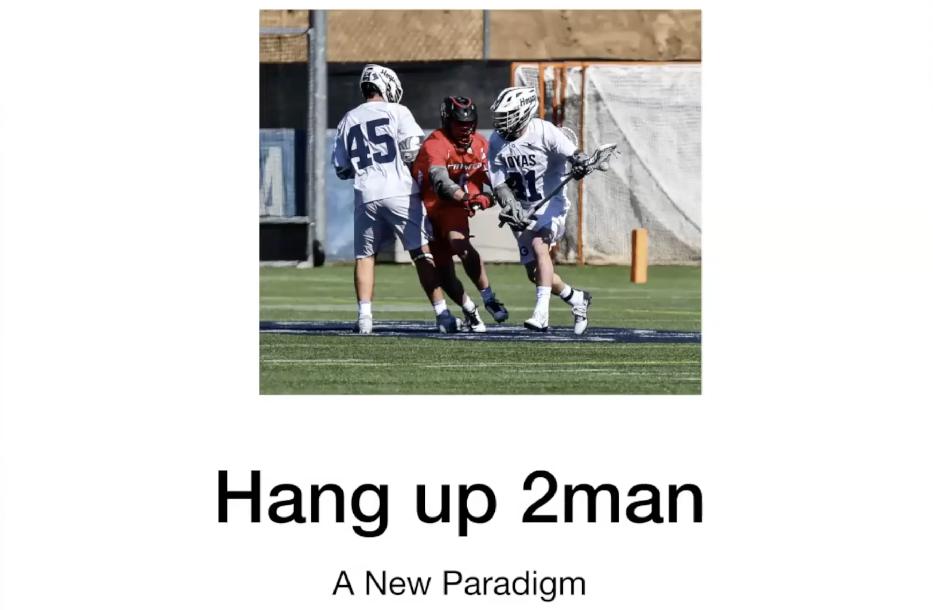
Everyone learned about the 2-man game when they were younger, but you were doing it WRONG. Until Jamie Munro came along and shared his unique insights on how to properly use it. Here he provides compelling reasons for it with supporting analytics and he breaks down multiple concepts in great detail. Jamie emphasizes the power of body language and how to best take advantage of a given situation. Here one can learn about how powerful and effective a pick or slip really can be. He shares multiple game-changing techniques and proves how invaluable his insights are in elevating your team's game.
Included in this package:
- The power of body language and how to properly use it
JM3 Sports, Founder 3d Lacrosse, DC Atlanta Blaze '17, Analyst ESPNU, HC Mt. Vista, AC TRHS Girls, HC Denver U, Boston Blazers '93, Wolfpack, Brown Lacrosse HOF
- 5th on the All-time leading scorers list for Brown Lacrosse (and member of HOF)
- Former Head Coach for Denver University Lacrosse (1998-2009)
Want to help kids stick with sports? Prioritize fun and #PhysicalActivity over competition in #YouthSports programs. Learn more in @HealthGov’s National Youth Sports Strategy: https://bit.ly/2lQ85f6
Step onto the field stronger, faster, and more resilient than ever with our Lacrosse Strength and Conditioning Academy. This meticulously designed program combines the essentials of athletic training with specialized lacrosse conditioning techniques. Starting with the fundamentals, each participant will master the core principles of strength and conditioning, progressing through structured belts and rigorous testing to ensure optimal development and understanding.
Our expert-led strength and conditioning phase is tailored specifically for lacrosse athletes, focusing on enhancing power, agility, and endurance to maximize performance during the most demanding moments of the game. Additionally, our comprehensive health resources provide ongoing support and guidance, ensuring athletes not only perform their best but also prioritize their long-term well-being.
Whether you're preparing for the season, aiming to elevate your game to the next level, or looking to build a solid foundation of athletic fitness, our Lacrosse Strength and Conditioning Academy is your gateway to peak performance. Enroll now and transform your athletic potential with the science of sport and the spirit of lacrosse.
JM3 Sports, Founder 3d Lacrosse, DC Atlanta Blaze '17, Analyst ESPNU, HC Mt. Vista, AC TRHS Girls, HC Denver U, Boston Blazers '93, Wolfpack, Brown Lacrosse HOF
Jamie Munro, the Founder of JM3 Sports, is a pioneering figure in lacrosse, widely recognized for his groundbreaking approaches to coaching and entrepreneurship. With a diverse background that includes coaching professional and Division I lacrosse for two decades, founding and leading 3d Lacrosse, and guiding countless athletes through the recruitment process, Munro brings unparalleled expertise to the sport. He has also coached at the high school and youth levels, managed both boys' and girls' club teams, and navigated the recruitment journey with two of his own children—one an early recruit and the other a late bloomer. This comprehensive experience has equipped him with a unique perspective, enabling him to develop what he believes is the optimal model for enhancing players' skills and maximizing their exposure to recruiters.
Want to help kids find sports they love? Sign up to be a coach or volunteer in a local youth sports program. Learn more ways to support youth sports in the National Youth Sports Strategy: https://bit.ly/2lIHPUc
When I want to improve my golf game and I want a workout routine that is specific to the sport of golf, why can't I find any? The Internet is completely inundated with general workout plans and body building workouts, but finding an excellent workout plan that you can trust for each of the different sports is more than difficult, it's almost impossible! It's amazing to me, but in today's health conscience society, in a health industry full of specialists, why is physical fitness training still back in the stone age? Why is it so hard to find workout programs designed for each individual sport? If you have a bad back you don't go to a general M.D., you go see an orthopedic doctor. If you have an impacted wisdom tooth you don't go to a general dentist, you see an oral surgeon. If you suddenly develop double vision you don't go to your local eye glass store, you see an ophthalmologist.
Workout Plans And Programs For Different Sports
Workouts need to be tailored to fit each sport differently because not all sports require the same muscle groups to be strengthened the same. Workouts should be divided into types depending on their tasks in that way workouts can properly focus on speed, technique, strength and endurance. I understand that professional and college sports teams have workout routines designed for their athletes, but I'm talking about the aspiring athlete. Where does he find a workout plan specific to the sport he is interested in. Where are baseball player workouts? Where are football player workouts? Where are hockey player workouts or basketball player workouts? Workouts for these and other different athletic sports are not general fitness or bodybuilding workouts. Although they may incorporate general and bodybuilding workouts. Workouts for these sports reflect the rigorous and physically demanding aspects of each specific sport.
A List Of Workout Routines For Popular Sports
Golfers Workouts- A good golfers workout program will help you to hit the ball harder and straighter! If you want to crush your drive straight down the fairway and have accurate stronger shots then you need a golf workout routine that is devoted half to improving flexibility and half to strength training. The best golf workouts will focus on developing the body's strength and stamina, golfing posture, the rotational flexibility, range of motion and ability to turn smoothly. Areas to focus on include the important forearm muscles, core strength /stability and flexibility exercises. The core exercises work the muscles of the abdominals, back and hips. So, if you are ready to increase your golf swing speed and distance then join a good golf workout program.
Build strength to be a better athlete with Peak Strength—your professional strength coach in your pocket. Whether you're a beginner or an experienced lifter, our app delivers athlete-tested training plans tailored to your sport and goals.
Baseball Player Workouts- Your baseball specific workout routines will have you hitting harder, running faster and swinging quicker. Just having good baseball skills is no longer enough. Today's baseball players are getting bigger and stronger - and you need a solid strength and conditioning program just to keep up! If you want to compete at the next level, you need the total workout package: strength, power, speed, and coordination.
Basketball Players Workouts- You will need an overpowering combination of strength, agility, quickness, conditioning and power. Your workout routines need to get you jumping higher, cutting faster and overpowering your opponents. If you’re not at top condition, you will get out played by your opponent.
Golden Glove Boxing Workouts- If you want to join the ranks of the top-ranked boxers in the world, you are going to need a serious training program. Your workout routines need to build blinding speed, explosive punching power and endless endurance. You'll need a lethal combination of devastating hand speed, bone-crushing power, blinding foot speed and endless stamina. Hand speed, strength training, quickness and endurance workouts are what is needed.
100 Meters Sprinters Workouts- If you want to explode out of the blocks and blaze to the finish line than you will need to do 100 meter sprinters workouts! There’s a reason why the winner of the Olympic 100 Meter Dash is always called “The World’s Fastest Human” It’s a race of 100% pure speed. Just you, the starting blocks, and a finish line. And if you want to continue to improve your personal best, you need to do the right strength workouts. Just sprinting on the track is not enough. Elite college and Olympic-level sprinters have full time strength coaches creating strength workouts for them. Workouts to transform them into powerful explosive sprinters (and it’s NOT doing time-wasting exercises like bicep curls!)
Ice Hockey Player Workouts- Your workout routines should consist of off-ice strength and conditioning programs just for hockey players. That means a workout plan consisting of strength training, plyo-metrics plus speed and agility drills. As a result you will get benefits of lightning speed and bone crushing strength to name a few.
Soccer Players Workouts- Your workout routines need a combination of lightning quick agility, incredible leg strength, blinding speed, massive power and never ending endurance. Serious soccer players who want to take their game to the next level need to workout on strength training, plyo-metrics and lightning fast foot speed.
Tennis Players Workouts- Tennis is a game of strength, speed, agility and power. Your workout routines should produce a unique combination of super endurance, explosive serving power, crushing ground strokes, blinding quickness, and finesse. Serious tennis players who want to become champions should workout on their strength training along with quickness, power and agility workouts.
Lacrosse Workouts- Lacrosse workouts requires lacrosse-specific strength and conditioning programs. Do you love to play lacrosse? If you’re serious about your lax game and are ready to take it to the next level – you need to train like the pros. You need knock out power, jaw-dropping strength, jackrabbit speed and agility plus never ending endurance. To keep up with the competition you need a strength and conditioning program that delivers results. That means strength training, plyometrics, and speed/agility drills.
This is only a partial list of the different workout plans for athletes.
General Workout Routines Aren't Always Enough
Although I'm a young 49, I consider myself to be physically fit with part of my general workout routine consists of a great deal of walking. When I went bike riding with my grandson the other day it completely changed my mind of what my total fitness was. About ten minutes into our ride my leg muscles began to burn fiercely and it wasn't much longer until I had to stop and rest. Although part of my general workouts consisted of a lot of walking which worked some of my leg muscles, it didn't workout the muscle groups that were needed for bike riding. I guess Lance Armstrong's Tour De France record is safe for now. If I were an amateur cyclist interested in turning pro, where would I find a good cycling workout plan?
Every Athlete Should Have Tailored Workout Routines
No matter what physical shape you are in or what bodily conditions you are working with, your workout plan needs to have exercise routines tailored for you. Once you find an excellent workout plan for your sport that you feel you can trust, you then have to hope that the workout routines are good for all levels of fitness whether you are at a basic, intermediate or advanced level. What good is your workout plan if all it has are workout routines designed for advanced level athletes. It shouldn't matter if the only exercise you get is running to the fridge before the game starts, or if you've been training for years, you want a workout program for each level of fitness. Hopefully, the workout programs are designed for athletes by coaches that know about something about making high quality workouts for different levels of expertise. Lets face it, if you can't perform the workout routines then you aren't going to do them. The people who see the best results from their workouts are often the people who enjoy their workouts the most. Probably the best way to get results is by joining a workout website with a members' forum which provides a great area for social networking, where you can meet other athletes and sports trainers, exchange tips and find training buddies to workout with.
Be Wary The Workout Plan That Does Everything
Be extra wary of the workout plan that claims they will make all athletes better at every sport. It can't happen! As I've already shown you, every different sport requires strength, speed, agility and endurance from different muscle groups. Therefore, no single workout plan is going to allow you to excel at every sport. I have reviewed literally hundreds of websites in search of the best one to meet the criteria that I previously mentioned in this article. You know how many I found? "46" That's right! 46 fantastic workout programs for athletes. 46 superb websites that are all part of a network. A network of 46 workout sites created by the world's elite fitness experts, and it's growing weekly!
The Specialized Fitness Workout Plans Is Here!
Each site is devoted to a different sport or part of the body or piece of fitness equipment. That is "46 Workout Plans" with over "10,000 Workout Routines" designed by some of the worlds foremost experts in the field of fitness and personal training. Just pick the workout routine you want and it pops right up. You can either view it online or print it out in print ready format. All of the workout routines are broken down into weekly scheduled exercises which include how many sets of exercises for each workout and how much rest between exercises you should take. Plus, each workout routine shows you animated exercises making sure you are using the correct form. I can't stress it to you enough just how important it is for you to use the correct form while working out. For each workout routine you get a complete description of each exercise. Now for the best part. For just a small membership fee you not only become a member of the site you joined but, you become a member of each and every workout program in the network plus all the new workout programs that are added to the network in the future. Your membership includes free access to the exclusive members-only forums which are visited daily by the world's best fitness experts and coaches who are standing by ready to answer all your fitness and workout questions. Whether you have a specific training question for our experts, are looking for a workout partner, or just want to meet kindred spirits, I have no doubt that you will feel right at home. If you want more information on the network of specialized workout programs visit The Health Nut. There are even specialized workouts for pregnant women. As always, before you engage in any sport or workout routine you should check with your doctor to make sure it is safe for you.
Neil Gerstein writes informative articles on various subjects when he isn't busy building and promoting his own websites. He currently have two websites that are great for content. At Movies, Music, Games & More he reviews the best unlimited free download sites for movies, music, games and more. At The Health Nut Health and Fitness News & More
There are so many skills that can be learned from “Keep Away”. Understanding how defenders try to attack ball handlers and how they position themselves to cut off passing options. Putting oneself into as many different lacrosse situations as possible is the ultimate key to success. Better understanding how different defenders operate in different scenarios is yet another crucial piece in the puzzle to empowering player development.
Beyond learning more about how defenders behave in “Keep Away” situations, there is a lot that can be learned from the offensive side of the ball as well. Players can see different off-ball offensive tendencies, learn the techniques to deceive defenders of where passes are aimed, and much more. Book this course.....
JM3 Sports, Founder 3d Lacrosse, DC Atlanta Blaze '17, Analyst ESPNU, HC Mt. Vista, AC TRHS Girls, HC Denver U, Boston Blazers '93, Wolfpack, Brown Lacrosse HOF
- 5th on the All-time leading scorers list for Brown Lacrosse (and member of HOF)
- Former Head Coach for Denver University Lacrosse (1998-2009)
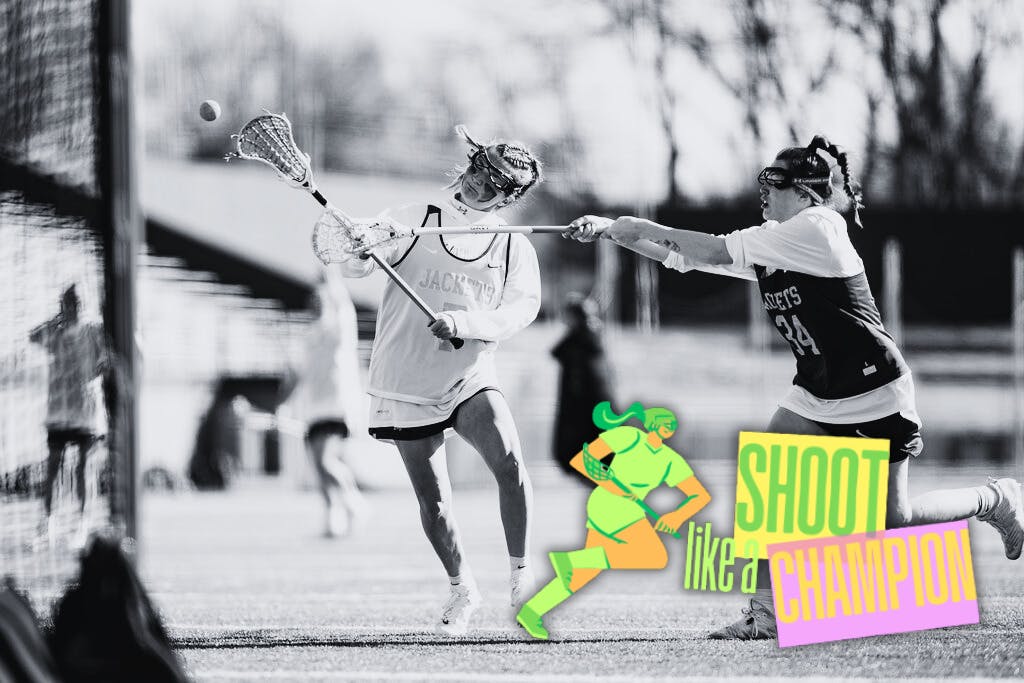
If you’re coaching girls' or women’s lacrosse and want your offense to start putting more points on the board, it all starts with smarter shooting. These unique strategies taught by seasoned professionals will give even the best players a better chance at improving their shooting skills. These strategies are easy to integrate into practice and effective at every level of play. Whether you're working with players who are seasoned shooters but want unique skills, or elite players just entering the attacking scene, new shooting techniques can give your players the tools to score with confidence. These shooting methods are game changers for players looking to step their game up to the next level.
The best way to improve specific skill sets is to learn from a seasoned professional, and Coach Jamie Munro is surely an expert in the field of lacrosse shots. In his time playing for Brown University, Munro used his shooting skills to score a whopping 152 points. Additionally, he coached a D1 women’s lacrosse team and started his own lacrosse company.
Coach Munro shares a treasure trove of women’s lacrosse skills in his ‘Women’s Lacrosse Skills Master Classer Class’ program, ranging from, but not limited to footwork drills, cradling tactics, defensive strategies and elite-level shooting techniques. Listed below are the two of the most foolproof lacrosse shots that will leave defenders and goalies stunned.
Fade Shot
Firstly, the fade shot is mainly characterized by the backwards step sequence following the shot on goal. However, it is much more than that. Coach Munro describes this shot in a few simple steps when broken down. These are “dodge in, step back, and hammer the shot.”
Dodge In
The first step, dodging, is by far the most complicated step of this shot. The clip above shows a simple split dodge, where the player starts off running away from the goal, then plants a foot towards the goal, split dodges, and pivots to where they are facing the goal. The reason this step is so complicated is that the dodge must be executed dramatically and effectively to successfully gain space from your defender. To improve the effectiveness of a split dodge, the planting of the foot needs to be quick and sharp. Once this quick step is complete, the next focus is the shot itself.
Step Back
Before you can rip the shot, the split dodge must be completed with the actual “fade” of the shot. After you have successfully pivoted towards the goal and dodged, you begin to jog or “fade” backwards as you wind up the shot. A complication to this step is the possibility of gaining a “shooting space” call according to women’s lacrosse rules. If a defender is within a stick’s length of the shooter when the shot is released between the shooter and the goal, the referee can call “shooting space” which results in an 8 meter shot for the offensive player. This can either be a good thing or a bad thing depending on the outcome of the original shot. This complication is a large factor to keep in mind during the “Step Back” step.
Hammer the Shot
The final step is the most fun and the most important. Once you have separated from your defender and executed the dodge, it’s time to execute your shooting skills and deliver a precise shot to the goal. Obviously the shot won’t always be perfectly placed, but practice and repetition of the fade shot can ensure higher accuracy with every attempt.
Face Dodge Finish
The face dodge is a simple concept that every offensive player should know, but many overlook due to its simplicity. The face dodge is when a player dodges a defender by planting their foot and stepping to their offhand side while simultaneously cradling their stick dramatically over to the offhand side, mimicking a hand switch or a direction change, and then swiftly switching back to the leading foot and dominant hand. This dodge effectively fakes out a defender, but Coach Munro’s example specifically explains how this dodge fakes out goalies. The dramatic offhand switch causes the goalie to reach over to the opposite side to block the shot, which opens up the other side for a shot. Here are some of Coach Munro’s key tips while executing the face dodge finish.
The Reach
The part of this dodge that makes it so successful against goalies is utilizing the open side of the goal when the goalies inevitably steps to protect the side that you dodge towards. To have the best chance at making it into this crucial space, you need to reach your stick to the open side before releasing the shot. While releasing the shot, you should be positioned in a sidearm-style way, which creates more angle and more reach. This ensures that you have the highest probability of beating the goalie and placing your shot correctly.
Twister Method
The method of “twistering” the shot is basically the opposite of the reach. This method is where after switching back to your dominant hand following the face dodge, you bring your stick back over to your nondominant side and fire off the shot almost above your head, dunking it between the goalie and the pipe of the goal above their vision level. This approach is more complicated than the reach, but can be more advanced and more undetected by goalies.
US Sports Network News! Having fun and helping the peeps'. Using Sports as a platform to Inform, Educate, Inspire, While Entertaining you with the best of sports, talk, music, and fun. Be on the lookout for our frequent 'Teachable Moments' This will be a sports and media experience like you never expected. We always welcome your feedback. If you like us or even if you don't, we are always going to love you! Thanks for stopping by!