Now Streaming On US Sports Radio!

US Sports Net Today!


Live Play-by-Play, Updates, Highlights and More! on US Sports Network!
[Chrome Users-You may have to click on the play button twice to listen]
US Sports Network Powered By Gorilla Sports!


US Sports Radio
The Las Vegas Raiders Play Here
Fitness and Sports Performance Info You Can Use!
The Scoreboard Mall
The Rock Almighty Shaker Of Heaven And Earth!
The Coolest Links In The Universe!
Showing posts with label Tennis coaching tennis recruiting video NCAA tennis WTA International Tennis Association Tennis head coach Professional tennis instruction. Show all posts

Tuesday, November 18, 2025

US Sports Tennis: CHATTING WITH TENNIS PRO BRUCE CONNORS and Alcaraz Magic, De Minaur CRAZY Marathon Point & More!


Tennis great Billie Jean King once said, “Tennis is a perfect combination of violent action taking place in an atmosphere of total tranquility.” Despite the game’s evolution, this quote from King is still valid. Tennis is an ever-changing contest with consistent principles. In recent years, the game of tennis has not only changed in terms of style of play, but the complete globalization of the sport. Increasingly, players are popping up from all around the world looking to prove they’re an elite player.

Student of the Game

Learning from the Best: One of the concepts that stuck out to me during the interview with Bruce was his time training under Harry Hopman. While not every young player can receive the guidance of an individual like Mr. Hopman, it is important to have a knowledgeable coach. Hopman would go on to coach many other tennis greats, including John McEnroe. Even the greatest players in the game are humble enough to employ former greats as their personal coaches, as evidenced by Novak Djokovic hiring Boris Becker.

Paying It Forward: Many of the attributes Bruce learned from Hopman have been passed on to Bruce’s students. As the Director of Tennis at Westward Look, Bruce is looking to make both young and older players aware of the trends in the game. Even though you can learn a lot about tennis from game-practice, being around other players and hearing tips from veterans can go a long way towards developing one’s game. Mr. Connors’ actions have effectively passed on the legacy of Harry Hopman.

Cardio Tennis

Another area that Bruce is extremely passionate about is cardio tennis. Described as “a high energy fitness activity that combines the best features of the sport of tennis with cardiovascular exercise, delivering the ultimate, full body, calorie burning aerobic workout,” cardio tennis is one of the focal points of Mr. Connors’ new position at Westward Look. The importance of endurance in tennis can’t be understated. If a player isn’t able to keep their energy up for an entire match, chances are they’ll start to struggle after the first set. The unique thing about cardio tennis is it can be utilized for anyone looking to improve their overall fitness and fine-tune the technical aspects of tennis.

The Interview

I recently caught up with Bruce Connors to break down some of these trends.

Brandon Ogle: First off, would you mind telling us a little about your new position as Director of Tennis at Westward Look?

Bruce Connors: I am privileged to be working in such beautiful surroundings at Tucson’s first resort. My goal is to improve on programming and to promote all that Westward Look has to offer as a resort and members’ club.

BO: Could you briefly discuss the cardio tennis trend and the benefits it could provide to young tennis players? Who would you recommend to take on cardio tennis?

BC: Cardio tennis describes a type of clinic in which the participants achieve an aerobic workout as well as a focus on the fundamentals of tennis. Every instructor has his or her unique style and lesson plan; therefore, each class has its own distinctive feel. The key to a successful class is when the participants feel as though they have had a physical workout while they worked on the basics of their game. Cardio tennis is beneficial to all players – both young and old. It helps young players increase their endurance.

BO: Would you say cardio tennis should be used in addition to playing regular tennis or do you see cardio tennis becoming much more popular than playing standard singles/doubles matches for practice?

BC: Cardio tennis is to tennis as, for example, spinning is to cycling – it’s a workout as well as a way to improve one’s game. It does not replace match play. Competing in matches verses training in a clinic is very different. Simply put, a player tends to be more relaxed in a drill situation when the results are not as big of a factor.

BO: After watching some of the majors in recent years, do you notice any trends in styles of play that juniors should take note of?

BC: The physicality of the game has escalated along with the racquet and string technology, thus making tennis more powerful than ever. Perhaps the reintroduction of the serve and volley should be a trend to which juniors should take note.

BO: As of this current moment, American tennis is struggling on a national level, particularly on the men’s side. What do you think needs to be done to help even out this separation? Is it just a result of not enough Americans being interested in tennis in their youth or something else?

BC: Unfortunately American tennis has lost some ground as far as the world ranks are concerned. The European countries have invested a lot in their tennis development programming, geared toward aspiring young talent. On the other hand, American youth have so many other sports and recreation choices, not to mention non-athletic entertainment options, leading to a lack of drive for tennis in some circumstances.

BO: Since grass and clay courts aren’t as common in the United States, how would you recommend players prepare themselves for these surfaces in case they do get placed in a tournament on clay or grass?

BC: In order to prepare for softer playing surfaces when those surfaces are not readily available in practice situations, the shots that are utilized more effectively on those surfaces can be modified for the hard court. Putting spins on the ball, thereby mixing up play, would be an example of a technique that is useful on clay and grass, but that can also be incorporated into hard court play.

BO: What was your favorite surface to play on and why did it intrigue you?

BC: The answer to that question depends on the match and on the opponent. I enjoy clay surface due to the variety of shot-making options. Angles, drop shots, and lobs make use of more on the clay court. On the other hand, hard surfaces tend to be more linear, complimenting more aggressive serve and volley play.

BO: While other sports like basketball have programs such as AAU to showcase talents, what is there available for young tennis players to do the same and gain attention of college recruiters?

BC: The junior ranking system still gives college coaches a good amount of information on players and tournament results, giving insight to recognize rising talent.

BO: Having played collegiately at the University of Arizona in the 1980s, do you think the collegiate tennis world has changed much since then?

BC: I would say, as the game itself has evolved, inevitably so has collegiate tennis. A college match has always consisted of six singles and three doubles matches. In order to quicken play and make matches more spectator-friendly, the playing of let serves and the eight-game pro-set for doubles were introduced in the mid-90s.

BO: From watching younger players compete, I’ve noticed one thing they often have difficulty with is mastering the serve. Do you have a few pieces of advice to simplify the process of learning to serve?

BC: The serve hasn’t changed much in form. Keeping the motions smooth and tossing to the swing are key, as well as working on timing and racquet speed. The classic figure of eight motion will help any player understand fluidity of motion. A consistent toss is a must.

(For some additional information on learning how to serve, CoachTube offers some terrific courses for serving tips. One great resource is Serve in 30! by Lisa Dodson.)

BO: In today’s game, it seems like there is a dying breed of pure serve and volley players. Why do you think this trend has occurred; and, as an instructor, would you still encourage players to add this approach to their arsenal?

BC: Every player’s goal should be to have a well-rounded game. Serve and volley is one aspect of this; and, it can be very useful to change the pace in a match. One reason it may not be used as often now is there is so much power in the game that it is harder to approach the net.

BO: Have you ever dealt with an injury or seen a teammate rehab from a major injury? How would you describe the overall process and the struggle to get back on the court?

BC: I have been fortunate to not have had any serious injuries. Prevention of injury by proper strength training and stretching routines is beneficial. Knee problems are a common issue among club players. Rehabbing can take time and requires dedication, so primary prevention is paramount. Getting back on the court after an injury can be as much of a mental struggle as it is physical.

BO: Having trained with the great Harry Hopman as a junior, could you briefly discuss the importance that a quality coach brings to a player’s development? What would you say to parents who are looking for coaches available for their son or daughter?

BC: The method that Mr. Hopman utilized emphasized fitness over stroke production. What works for one player may not work for another player. I do remember one piece of advice he routinely gave in training drills. He would say, “If you can get to the ball that is out, you should be able to get to the one that is in.” We all have different personalities, so finding the right coach who knows how to motivate the inner drive of a player is the goal.

BO: As a player who has gone through the ranks of the tennis world, what would you say is the most difficult thing you’ve had to deal with as a tennis player?

BC: To be completely honest, the thought of not having reached my potential as a player due to circumstances in my life beyond my control at certain times still tortures me.

BO: Lastly, do you think we’re witnessing the greatest male (Roger Federer) and female (Serena Williams) players of all time?

BC: My opinion is that Roger Federer exemplifies the model to which a tennis player should strive – as a player and as a person. Serena Williams has developed such an outstanding persona both on and off the court. Surely they both merit a place in history as players at the top of their sport.

Thank you to Mr. Connors for participating in this interview and feel free to check out Westward Look for more information on the resort.


Friday, October 31, 2025

US Sports Tennis: Play & Think Like a Multiple Grand Slam Winner Boris Becker and Sinner Faces Cerundolo; Shelton, Medvedev & Bublik Feature

by Top Level Tennis

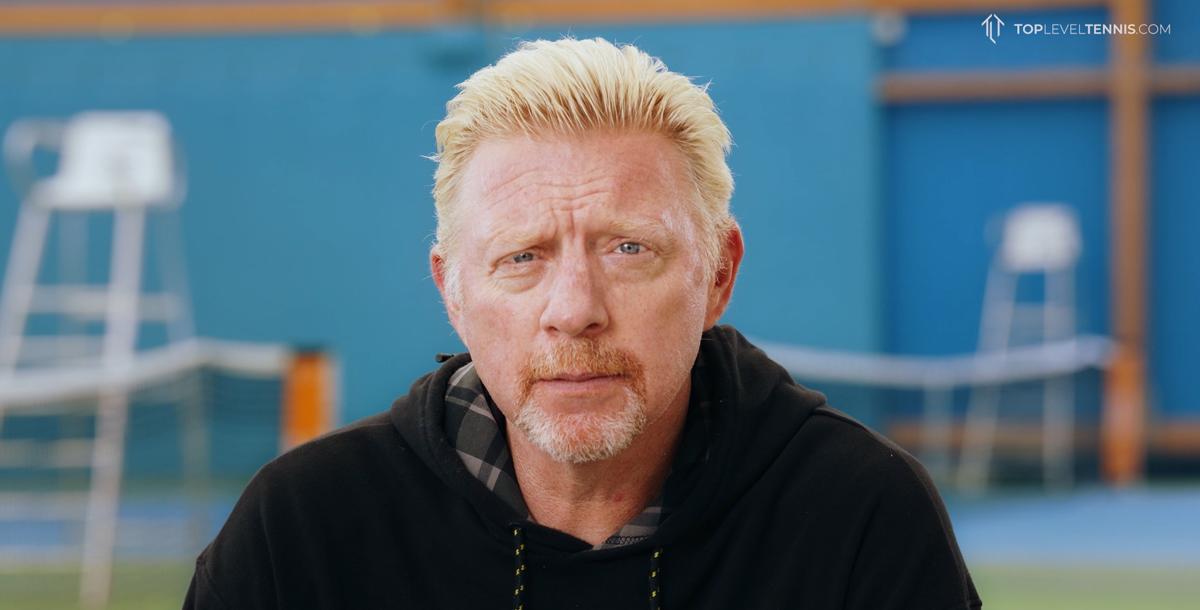
Play & Think Like a Multiple Grand Slam Winner Boris Becker

Description

The basics of tennis play a crucial role not only for amateurs but also for advanced players. Learn from the tennis legend how to fulfill your potential!

What you can learn from Boris Becker while watching his ten-section course?

  • Drills and technical aspects of tennis (forehand, backhand, serve and 2nd serve, return, smash, volley)

  • How to properly think on the court to distract your opponent?

  • What exercises should be performed to prepare for the match as the best (eg Novak Djoković)?

  • What are the differences in the game between old and new tennis?

  • Tennis as a lifestyle - how to arrange all the elements (training, coach, tournaments) to make it effective

  • Who of the current tennis players are the best and worst at which aspect of the game of tennis?

  • What is a tennis strategy and how to create it?

  • How to take care of good tennis equipment?

Start now and have unlimited access to your course for a lifetime!

Additionally, you will receive three very extensive training plans in PDF format, prepared especially by Boris Becker himself! The training materials are prepared for three different levels: beginner, intermediate and advanced. Choose a set of exercises that suits you!

Start your private lesson with Boris now and improve your tennis skills with a legend.

The Coach

TopLevelTennis

Top Level Tennis

Online tennis courses with the stars

Who is Boris Becker? The winner of 6 Grand Slam tournaments and 49 ATP tournaments in total. Multiple world-ranking leader in single. The winner of 15 professional tournaments in doubles, including The 1992 Summer Olympics held in Barcelona. One of the most successful and world-renowned tennis players of all time. In a nutshell – a living legend.

His undisputed professional knowledge strongly contributed to the successes achieved by his former mentee – Novak Djokovic. He remained Novak’s coach between 2013 and 2016. Under his supervision, Djokovic won 6 Grand Slam tournaments, became the ATP World Tour Finals champion twice, and won 13 titles of the ATP World Tour Masters 1000. Needless to say, he remained the uncompetitive ranking leader in singles between 2014 and 2015.

According to the experts, he is one of the 20 top tennis players of all time. Book this course.....


Thursday, October 16, 2025

US Sports Tennis: Two of Legendary Tennis Coach Paul Annacone’s Crucial Player Development Tips and Mirra Andreeva vs. Lin Zhu 2025 Ningbo Round of 16


  • By Grant Young
  •  

In today's digital age, finding trustworthy online tennis coaching courses and instruction can be quite a challenge. 

The internet is flooded with a vast amount of resources, tutorials, and coaching advice, which can be overwhelming for both beginners and seasoned players looking to improve their game. With countless videos, articles, and social media posts from various coaches, it's often difficult to discern credible information from less reliable sources. 

One major issue is the diversity of teaching styles and philosophies. What works for one player might not work for another, leading to confusion about which technique to adopt. Not to mention how many online instructors may lack relevant qualifications or experience, making it hard to gauge their expertise. This can result in players following flawed advice that could hinder their progress instead of enhancing it. 

Ultimately, while the wealth of information online can be a resource, it requires careful discernment to find truly valuable tennis guidance. This is why when players and coaches find clinics from world-renowned coaches, they should hold them in high esteem. 

And who’s more world-renowned than Paul Annacone? 

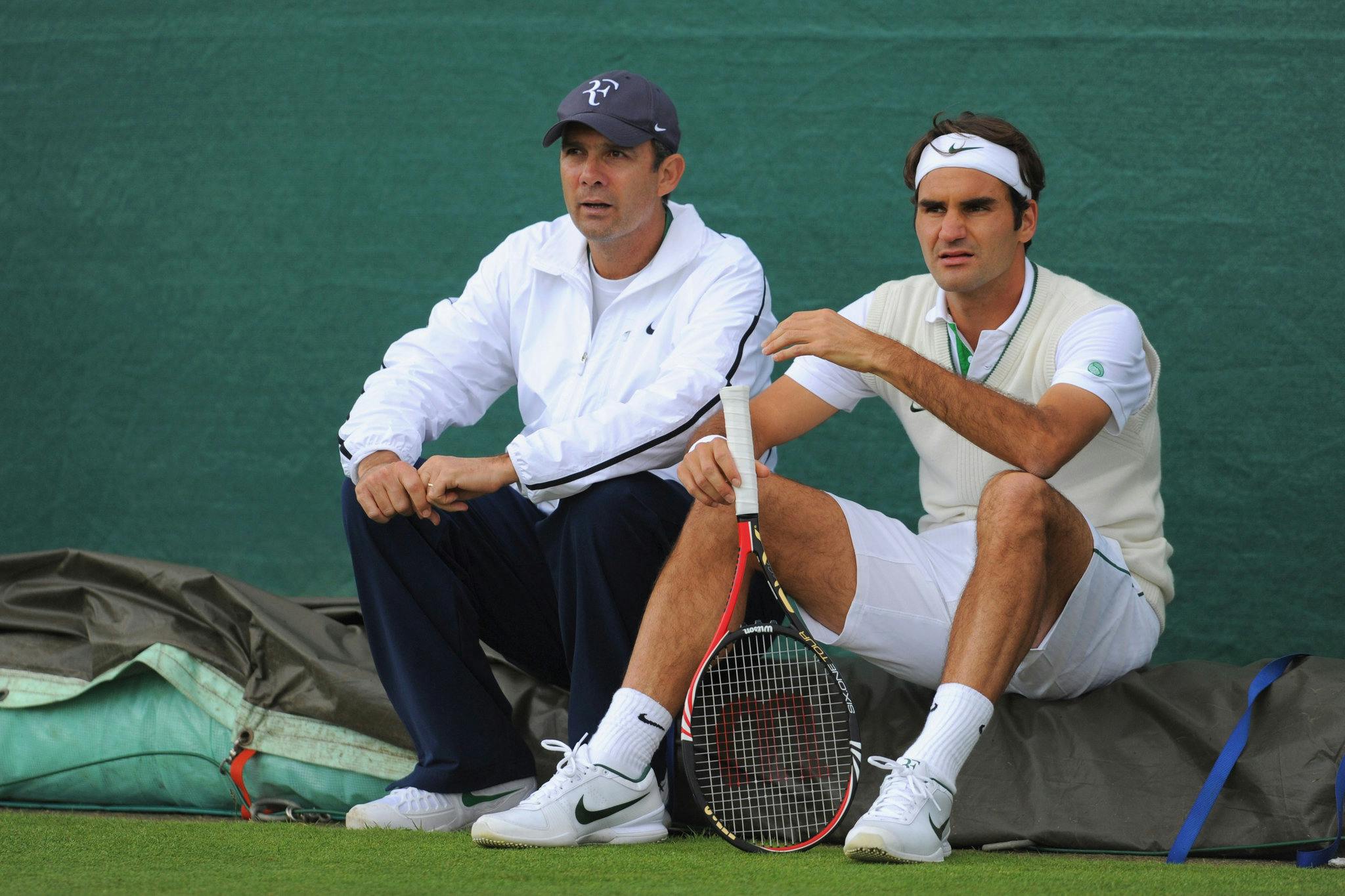
Paul Annacone has coached 2 of the greatest players of all time (Roger Federer and Pete Sampras), and he has also worked extensively with Taylor Fritz and Sloane Stephens.  This came after Paul reached #12 in the world as a player.

He is widely recognized as one of the brightest minds in the game of tennis and has become a celebrity of sorts as a TV personality on The Tennis Channel. Some consider Coach Annacone to be the greatest tennis coach of all time. 

Part of what makes Annacone so effective is his deep understanding of the game, and his ability to articulate complex ideas in an incredibly simple way, which is why it's no wonder his players seem to maximize their potential.

And these skill sets also translate when Coach Annacone conducts online clinics. This is why his ‘Paul Annacone - The Key Aspects to Development’ clinic is highly-regarded within the coaching world and should be a first stop for any coach looking to better develop their tennis players. We’ve pulled two of his insights below so you can get a glimpse at Coach Annacone’s excellent insights.  

Attributes in Tennis and Being Good on Your Bad Days


Coach Annacone asserts that for a tennis player, the questions about their mental state (what he calls the “head part”) can be limited to: How well do you think under pressure? How well can you problem-solve? How well can you figure things out, no matter what’s going on on the court? 

“The heart part is about the ability to be an unconditional competitor,” Coach Annacone added. He then listed how the last part of the equation in being successful in tennis is the physical attributes, which are all things tennis coaches know contribute to physical success on the court. 

Coach Annacone then relayed a story about how when he started coaching Pete Sampras, he was struggling to win practice sets while on tour. Yet, despite the outcomes, Sampras always exuded a composure and pragmatism that was hard for Coach Annacone to understand. 

When Coach Annacone asked Sampras about this one night, he responded, “The reason that I’m able to be successful is not because of a great serve, or I’m unbelievably talented. It’s because I know how to manage the other parts of my game.” 

“When things are good, and I’m playing well, I know I’m going to beat everybody,” Sampras continued. “That’s not my best attribute. My best attribute is if I keep my head in it, I keep my heart going, and regardless of my physical talent on the day, I’m probably going to beat 85% of the people on tour. And that’s when I’ll get to the semis or finals, and that’s when I’ll play well.” 

This ended up being the staple of how Coach Annacone built his coaching philosophy. He focuses not on how good a player is on their good days, but how they are on their average and bad days. 

Learning to be Malleable in Your Coaching

null

Coach Annacone discusses how in many player/coach relationships in the world of team sports, most of the athletes conform to their head coaches’ philosophy. 

But in an individual sport like tennis, coaches have to be a bit more malleable. For example, Coach Annacone noted how Pete Sampras wanted his messages delivered much differently than Roger Federer. 

Therefore, it’s the coach’s job to figure out how to get each athlete to buy in to what he’s teaching, because that is going to take something different from each athlete depending on various factors like their personality, playing style, and upbringing. 

“Because if you don’t have buy-in, the players aren’t going to maximize their potential,” Coach Annacone says. 

However, he also added that coaches can be more dictatorial in the early stages of a tennis player’s development. But as they become teenagers and have proven promise, the more one’s coaching philosophy should become, “a collaboration and a conversation.” 

Coach Annacone later adds, “A good coach in tennis is not someone that knows a lot of tennis. A good coach in tennis is someone that can deliver their message to many different kinds of personalities.” 

In understanding the sort of player a coach has, Coach Annacone employs what he calls the Mechanic vs. the Magician linear scale. The magician is someone who does things by feeling and instinct, whereas a mechanic relies more on fundamentals and is more by the book. Understanding where your players lie on this scale is crucial for maximizing a player’s potential.


Tuesday, September 30, 2025

US Sports Tennis: 10 Essential Tennis Drills Every Coach Should Know and Sinner Faces De Minaur & Medvedev vs Tien 🤩 | Beijing 2025


  • By Krsto Arsenijevic

When it comes to tennis, a sport that requires intense concentration and a high level of athletic abilities, it’s important for coaches to know what to practice and work on with their players. Listed below are tennis drills that every coach should exercise with their players to help maximize their tennis play.

Warm Up

Before playing tennis, or any sport for that matter, it’s a good idea to have some form of cardio as a warm-up. Running is an excellent way to get the blood flowing and ready yourself for the battle ahead. I suggest taking a few laps around the court before moving on to arm exercises or practicing technique.  

 For this drill, you should have at least three tennis players. Keep in mind, the more players the better. Spread out in a circle, the further away the better. One player starts with the ball and randomly hits it to another player. The goal is to only let the ball bounce once before being hit again. Try adding objectives like having players call out the name of the person they are passing to before the pass. To make it more competitive, have anyone that fails an objective sit down for the remainder of the drill. Last player standing is the winner.

Improve Ball Control with the Bouncing Ball Drill

This is a simple drill that will require teams. If you have less than ten players, then get into groups of two. If you have more than ten players, get into two teams. Once the teams are set, have them spread out along the baseline so they are facing the net. Mark a cone that faces each team and place it near the net. The goal of this drill is to dribble the ball with your racket from the baseline to the cone near the net without losing control of it. Once players circle the cone and make it back to baseline, they will tag the next person on their team. Repeat until each team member has gone. The first team to finish is the winner.

Increase Accuracy with the Crosscourt Drill

This drill will require players to pair up and have a court to themselves. One player will start as the “server” and the other one will do the hitting. The server will hit the ball accurately to the other player’s forehand or backhand side. That player will then attempt to hit the tennis ball crosscourt. Repeat this for a set amount of turns with the server counting how many shots are successful. Once the first player has finished, switch positions. Try to beat your opponent and also try to beat your own high score each time you attempt it.

Incorporate “Simon Says” into your Drills

This drill is simple to perform and also very beneficial to a tennis player’s backhand and forehand strokes. To start, have your players line up horizontally along the service line, with the coach on the opposite side of the court. The coach’s job is to feed the balls to the players. Before the ball reaches the player, he must yell out whether the player should volley it or groundstroke it. By doing this, tennis players will build a better reaction time and will also improve their stroke techniques. 

Improve your Serving Technique and Accuracy

With this simple serving drill, tennis players will gain the ability to pinpoint where they would like to serve it. This will become very handy during a match. This drill can be done with or without a partner, but if you decide to do this drill alone you better make sure you have a good amount of balls with you! To set this drill up, draw a good-sized circle in each of the four service boxes. These will be your targets when you serve so put them in different spots. The goal is to serve the ball into the circle you created. If you serve it outside of the circle, count it as a fault. If more than one person is included, make it a competition by seeing who can hit the circle the most. 

Mini-Games of Tennis Help Simulate Real Match Play

This drill is simple and will help you be more accurate when playing a match. You will need either two or four people to do this drill. The game will be played like a regular tennis match, except the double match line won’t count. If the ball enters anything but the service box, then it’s a point to the opposing team. Try to keep the ball in the service line as long as possible to try and defeat your opponent.

Hand-Eye Coordination is Key to Tennis

For starting this exercise, have one player stand on the end of the service box and another player positioned on the baseline. Begin by throwing the ball to your partner, letting the ball bounce only once. Try to stand in the same spot while doing this to improve accuracy. After that, throw the ball to your partner, but have him hit the ball back to you. Try to catch it after he hits. After a few rounds, switch positions and do it vice versa. Finish up by hitting it back and forth, letting the ball bounce only once. 

Become More Agile and Quick on the Court

To begin here, have your players get into pairs. Have one player stand in the center of the court on the service line. Have the other player stand opposite of him. Your partner will start by hitting the ball to the far side of the court (they choose the side). You must then chase after the ball and hit it back to your partner. As soon as you hit it back, return to the middle. Repeat this back and forth, switching positions every now and then.

The Serving Game

This next drill is a serving game. It’s very easy, but also a good way to improve your serving. Split your team up into two teams. Have them stand on opposite sides of the court ready to serve. Have one team serve one by one, counting how many are successful and how many are not. Next, have the other team serve. Whichever team has the most successful serves, wins.  

Serve and Volley Style

Despite the serve and volley approach becoming less common, many of the elite players still have it in their arsenal, including the great Roger Federer. I’m not stressing to use it 100%, but it can help develop a more well-rounded player. For the drill, you need one player on each side of the court. Have one player serve the ball and then the other player can return it with a number of different shots. No matter whether it’s a crosscourt forehand or a lob, the serving player should rush the net and look to hit the ball before it bounces. After the server receives around 10 reps, then switch roles. As a side note, remember the surface you’re playing on. For games on clay, you might want to play out longer rallies, as opposed to hard or grass.

DON’T BE AFRAID TO TRY SOMETHING NEW NEW

All of these drills listed here serve a purpose of improving one’s tennis abilities. However, it is important to continuously be working on different exercises that focus on what your team needs. If your team is consistently getting double faults, then serving drills increase in importance. At the same time, don’t be hesitant to do a little research on your own.

NYSS Find Their Strengths

Friday, September 5, 2025

US Sports Tennis: New Tennis Injury Findings Linked to Neutral & Closed Stances and Insane Alcaraz Defence; Medjedovic Tweener Lob & More! Top 20 Shots


  • By Oscar Wegner

null

Recent finding and reports from chiropractic doctors specializing in tennis medicine has revealed the damaging effects of using neutral and closed stances versus open stance. The results being discovered in these reports have been astounding! 

Here is one doctor's opinion on the subject in an interview with Oscar Wegner, Founder of Modern Tennis Methodology:

"From a chiropractic perspective, the neutral stance is an inferior way of hitting groundstrokes.

For a right-handed player, when he braces to hit a forehand by placing his right leg behind his left leg while shifting his body weight from his back leg to his front bent knee, the fatigue of repetition or an extreme stretch is likely to subluxate (slip slightly out of joint) the right sacro-iliac joint causing a series of normal but painful bio-mechanical compensations.

In a typical situation, one can expect the right ilium to shift posterior, the right hamstring to tighten, the fifth lumbar vertebrae to rotate, and the paravertebral and gluteal muscles on the right side to spasm.

In due time, the player may expect a right hamstring pull, lower back pain, and possible involvement of the lumbo-sacral plexus on the left side of the pelvis with radiating nerve pain into the left leg.

Additionally, the continual transference of weight to a bent front knee, especially when placing the knee into a deep bend or when the front foot is not directly in line with the force vectors generated by the forehand swing, is likely to cause knee pain and eventual knee injury.

Again, imagine doing this for about 100 times in the course of an hour, or 100 times in an hour of tennis. No wonder so few adults are still playing tennis. Tennis is a wonderful game and should provide a lifetime of fun when played with bio-mechanical correctness. My most serious advice is: listen to Oscar." 

–Dr. Carl Barniak, Chiropractor

null

Learn tennis the way it's meant to be played! INJURY-FREE.

Oscar's Modern Tennis Methodology is the same, exact techniques used for decades by some of the best players ever.

Now available streaming, on-demand for the first time on CoachTube! Over 14 hours of tennis drills, techniques and everything players need to play better and safer than they ever have!

Watch these consecutive 11 video clips taken from Oscar's course "MTM Volume III: Tennis Into The Future " Chapter 2: Part 2 of Modern Footwork as he discusses with Dr. Bruce Harris why open stance and natural bio-mechanics are so important!

How Movement Affects the Body  

SPECIAL OFFER:

Own Oscar's complete Modern Tennis Methodology collection today 33% off!off! This offer includes over 14 hours of incredible tennis coaching content streaming, on-demand to all your devices.

Buy NOW for $79

Send comments tennisoscar@aol.com

NYSS Twitter Focus on Fun

Friday, August 22, 2025

US Sports Tennis: How to Beat a Serve-and-Volley Player and Mpetshi Perricard vs Medjedovic; Korda Seeks SF Spot Winston-Salem Highlights


  • By Krsto Arsenijevic

Pete Sampras dominated the entire world of tennis through a dominant use of the serve-and-volley strategy. He consistently forced his opponents to make unforced errors through his excellence in this type of play. However, just as in other sports, tennis has gone through a change of play. No longer is the serve-and-volley approach recommended by tennis experts. This doesn’t mean it’s completely extinct though. Here, I’ll show you how to beat it when you see it!

Basic Meaning of Serve-and-Volley

The goal of a serve-and-volley player isn’t complex. Simply put, they’re looking to get in a strong first serve that doesn’t allow a strong groundstroke in the return. Then, immediately after serving, they’ll rush the net and look to volley the ball back before it hits the ground. The two primary qualities needed are a big serve and quickness off the line. As for the returner, it puts them in immediate pressure. Even though it’s tough to get a strong return on a big serve, you can’t hit a light shot that allows the server plenty of time to set up a winner.

The Fastest Miles Ever Run

Typically, serve-and-volley players are going to experience more success on hardcourt and grass court surfaces. It can be a daunting task for the opponent, but there are still plenty of ways to get by these serve-and-volley players with a victory.

Look for Your Chances

Cautious or Reckless?

There are two ways you can attack a serve-and-volley player: cautiously or recklessly. The cautious approach will lead to you just returning the first serve and not attempting any type of passing shots. Essentially, you’re not going to let your own shots lose the point, but rather make the opponent win the point. Conversely, a reckless strategy will attempt a high-degree of passing shots. This player will try to hit a big shot with every swing and go for a winner often. There are glaring negatives with each approach. A cautious approach can result in an experienced player making quick work of you. Meanwhile, a reckless approach will lead to a high number of unforced errors.

A Little of Both

My best solution is to play a mixture of cautious and reckless. With a serve-and-volley player, you’re not going to have a chance for a point on every shot. This requires patience. If they make a strong serve, just get a return in and wait for the opportunity to hit a winner. Sometimes, you’ll even luck out and they’ll miss on an open shot. The key is to wait for your chances. Don’t give your opponent free points, make them earn it!

Play to Their Weaknesses

Unless you’re playing someone like Roger Federer or Novak Djokovic, chances are your opponent will have some holes in their game. As a player, it is your job to find these weaknesses and take advantage of them. Even if this requires you to alter your approach slightly, it is still likely going to be worth it. If you don’t have the opportunity to watch them in a previous match, check out how they play warming up and in the early stages of your match. Do they struggle running back if a lob was hit over their head? Is their backhand or forehand stronger? Finding answers to these questions will help greatly as the match carries on.

Get the First Return In

As I mentioned earlier, a big serve is a critical part of the serve-and-volley approach. If they can’t force you to stay back behind the baseline, then the serve-and-volley strategy won’t be effective. Assuming they do have a strong serve, the only way to stay in the point is to get the first return over the net. While it would be ideal to get a decent return in, I recommend making sure you get the first return in for the early stages of the match. This will not only make the games closer, but it will increase your own confidence. If they’re serving up aces on multiple serves each game, then chances are your confidence would start to drop and your own game would suffer. However, getting the returns early in the match will make you believe that you can start trying different and stronger returns as the game progresses.

Try to Keep Them Back

At the core of serve-and-volley player’s games is the idea that they want to get to the net. They want to put pressure on you. On the opposite end, you will want to keep them back closer to the baseline. Once they get to the net, it will be tougher to win the point. There are two methods for this. First, you can work on blocking the initial serve back so it goes deeper on your opponent’s court. This shot takes a lot of work due to the speed this serve may be coming in at. However, it will keep them closer to the baseline. The second approach is for when the server is able to get to the net. In these situations, you can hit a lob. A lob goes over their head and forces them retreat on their court. If you’re able to successfully hit a few good lobs, it could also force them to hang back longer on some points due to tentativeness.

Hold Serve

Serve-and-volley players are going to be tough to break on most occasions. In these matches, you may only have a few break opportunities. With this being the case, it is vital to hold your own service games. By doing so, it will not only put you in a better position to win, but also apply more pressure to them on their service games. While learning how to effectively serve is a long concept in its own, the best advice I can give here is to be aware of them coming to the net when you’re serving. After one or two shots, they’ll look to charge the net and put pressure on you. They will want to prevent any long rallies, so don’t be worried when they do come in.

Control Momentum

In nearly every sport, the word ‘momentum’ gets tossed around frequently. A team can be rolling along and then one play can change the entire outlook of the game. The same idea is present in tennis. Your opponent can be controlling the match, but one break could certainly change the tides. Be aware of this and try to grab the momentum early in the match. Players aren’t always completely ready when the game starts, so take advantage of this and come out ready to play. This will not only ensure momentum is on your side, but can also set a tone for the rest of the match.

Practice!

Since serve-and-volley is a rarity in today’s game, it is tougher to be prepared for it when a player pulls it out. As a result, practice the concepts utilized by it during practice. For example, have a teammate serve and then rush the net against you even if they’re not a serve-and-volley player. They don’t have to possess a huge serve. Just practicing against the basic concepts will put you in a better mental mindset for moments when you’re faced with it in an actual match.

NYSS Twitter Focus on Fun