Now Streaming On US Sports Radio!

US Sports Net Today!


Live Play-by-Play, Updates, Highlights and More! on US Sports Network!
[Chrome Users-You may have to click on the play button twice to listen]
US Sports Network Powered By Gorilla Sports!


US Sports Radio
The Las Vegas Raiders Play Here
Fitness and Sports Performance Info You Can Use!
The Scoreboard Mall
The Rock Almighty Shaker Of Heaven And Earth!
The Coolest Links In The Universe!

Tuesday, May 27, 2025

US Sports Track and Field: How TCU Coach Khadevis Robinson Builds Mental Toughness for Big 12 Track and Men's 400M Highlights | 2025 Big 12 Championship


  • By William Markey

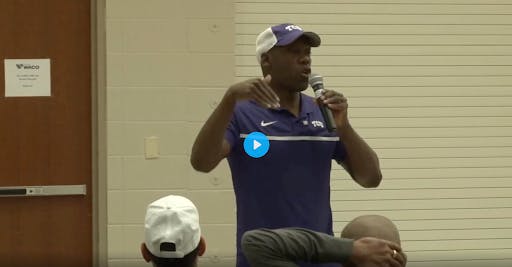
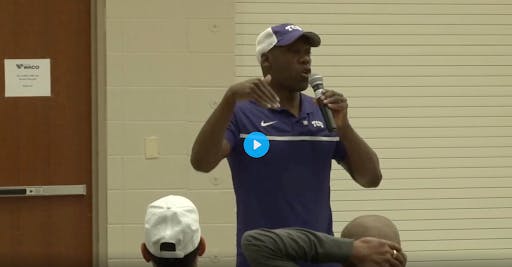
Khadevis Robinson is a two-time Olympian and TCU Hall of Famer, currently serving as TCU’s Director of Track and Field, as well as primary coach for middle distance events.

As the team prepares for the upcoming Big 12 Outdoor Track & Field Championships in Kansas, Robinson’s approach goes far beyond workouts and splits.

What he's building isn’t just physical readiness — it’s mental resilience. It’s a belief developed through tailored training, where athletes learn not to chase someone else’s mileage, but to master their thresholds.

At this level, it’s not about doing more — it’s about doing what works. His athletes have already lived the discomfort. They’ve pushed through the doubt. And now, when the lights are bright and the stakes are high, they’ll know exactly what to do — because they’ve already done it.

Train the Mind, Not the Body

null

He doesn't just condition the body — he conditions belief. Khedevis trains athletes to break through their perceived physical limits. 

And he does it by engineering chaos in a controlled practice environment. Why? Because racing is never neat. It's not rehearsed. It's unpredictable. 

He deliberately compresses rest. He films the workouts. He alters pacing instructions without telling the athlete, not to deceive, but to disrupt their limiting beliefs. Because when a 2:15 girl unknowingly runs a 2:11, she’s no longer the same athlete. Her ceiling has been raised. Her future just changed.

Chaos becomes the coach. Pressure becomes the plan. And belief becomes the fuel.

High Performance Isn’t One Size Fits All

null

What starts as a conversation about middle-distance training quickly becomes a profound lesson in individualized performance

Robinson shares how, instead of following standard mileage numbers, he listened to his athletes, diagnosed the real issue, and made one key adjustment: Don’t push past 50 miles if that’s the injury threshold.

It wasn’t about doing more—it was about doing what works for that person.

Robinson reminds us that copying someone else’s “high-performance formula” without knowing your limits is a recipe for burnout, not guaranteed success. 

When you take both of these insights—training beneath injury thresholds with precision, and simulating chaos to build race-day confidence—you get a powerful preparation model for the Big 12 Championship. 

No surprises on race day—because they’ve already lived the chaos, felt the pain, and proven to themselves that they can run through it. 

For the Big 12 stage, where the environment is loud, the stakes are high, and the competition is fierce, Robinson’s athletes won’t just be ready physically—they’ll be mentally armed to deliver their best when it counts most.

Thank you, Coach, and the TTFCA for sharing these clips from the clinic Race Strategy.

NYSS Find Their Strengths

Monday, May 26, 2025

US Sports Tennis: Avoid Injuries with Marco Panichi - Tennis Fitness Coach #1 and Novak Djokovic Wins His 100th Career Title! Geneva 2025 Final Highlights


Avoid Injuries with Marco Panichi - Tennis Fitness Coach #1

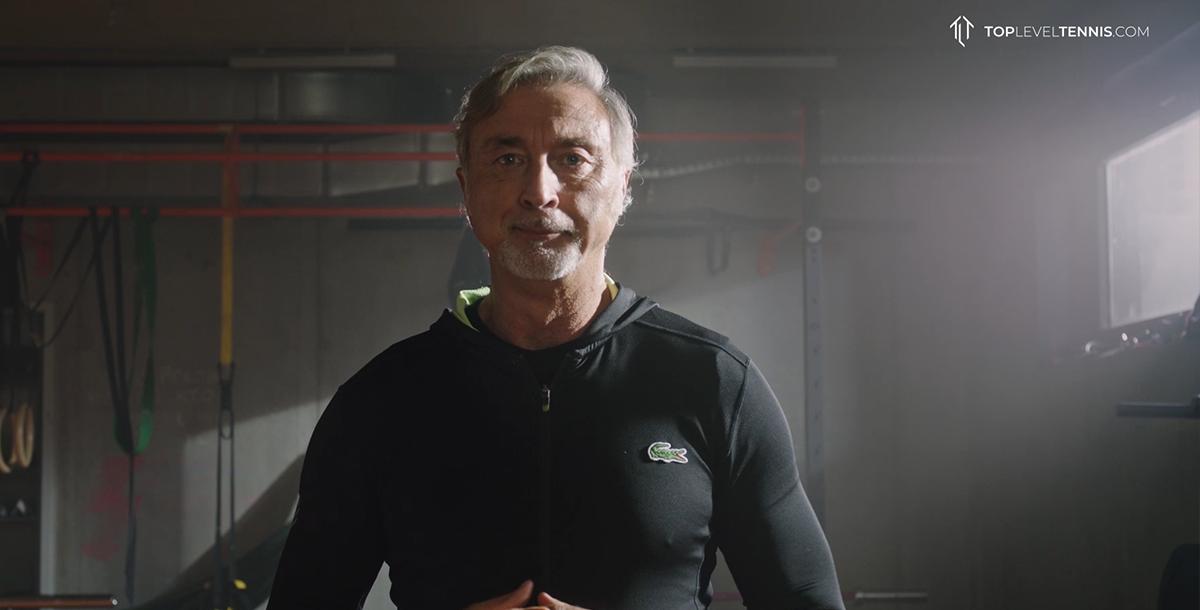
The coach of the best tennis players in the world, including Novak Djokovic, will present the most important elements of preparing your body for a tennis match.

The content presented in his course is attractive not only for tennis coaches but also for coaches of other sports due to their universality. Personal trainers around the world can draw on Marco's experience.

What you can learn from Marco Panichi while watching his ten-section course?

  • How to avoid common tennis injuries,

  • What exercises are necessary before a tennis match,

  • Which exercises will improve your game,

  • What you should pay attention to when performing popular exercises.

Start now and have unlimited access to your course for a lifetime!

Additionally, you will receive three very extensive training plans in PDF format, prepared especially by Marco Panichi himself! The training materials are prepared for two different levels: beginner and advanced. Choose a set of exercises that suits you!

Start your private lesson with Marco now and avoid injuries in your tennis (or other sports) game!

NYSS Every Kid In the Game


Sunday, May 25, 2025

The Rock Almighty: Confusion and Anxiety: Lincoln and the Days Before the Civil War and We Honor Our Soldiers!


  • Author Allen Cornwell

Confusion and Anxiety: Lincoln and the Days Before the Civil War

As Abraham Lincoln prepared for office in 1861, the United States teetered on the edge of chaos. Sentiments regarding slavery were sharp and divided and not always aligned with geography. Tensions and anxiety grew like a burning fire, and the conversation moved from slavery to states’ rights. 

The ‘antagonists’, primarily the pro-slavery advocates, spun the evolved new argument to paint a picture that secession was a 'good thing,' and even if it wasn't, slavery was supported by the Constitution and by God. On the other hand, the 'protagonists', the staunch abolitionists, believed that slavery was a horrible evil and needed to be destroyed. They also thought that the Union needed to be preserved and by all means. These two opposing groups and their beliefs were at the heart of the tensions leading up to the Civil War. 

In the quiet of the nation's capital, a buzz was also undermining the rise of Abraham Lincoln. The capital itself was home to over 7000 enslaved people. The city encompassed a strong following of Confederate sympathizers—and the tensions of the election laid bare the raw and emotional feelings of many. In some respects, the city was hostile to the enormous changes underway.

The Swirl of Various Personalities That Generated Conflict

Mary Chestnut

Individuals like Mary Chestnut, a Southern diarist, demonstrated remarkable courage in her critical views on slavery. Despite being part of the Southern elite, she described slavery as a 'monstrous system' and condemned its inherent injustices. Her outspokenness, especially on the sexual exploitation of enslaved women, was a beacon of hope amid societal hypocrisy, inspiring others to speak out against the prevailing norms. 

Reverend Thornton Stringfellow

Some Southerner pastors, however,  preached weekly to their congregations that slavery was a "good and right thing" and that it was "ordained by God."  Reverend Thornton Stringfellow of Virginia said to his congregations, "It was the law of God that established slavery."

Edmund Ruffin

Edmund Ruffin was in complete agreement with Stringfellow's opinion.  A wealthy planter, agricultural author, and state’s rights activist, Ruffin found himself somewhat of a hero in South Carolina because of his pro-slavery writings. Before the 1860 election, he had argued for years for the South to secede from the Union. Known for his long, white hair, which added to his striking and somewhat eccentric appearance, it became a visual signature of his fiery personality and radical views. Ruffin was disappointed that his home state of Virginia was the last to leave the Union.

William Lloyd Garrison 

For years, abolitionist propaganda flowed from the North and strengthened the voices against slavery while inciting Southern hatred.  Some Virginians felt that slave propaganda ignited the deadly four-day insurrection in 1831, led by Nat Turner, an enslaved person. Turner's group of both free and enslaved people murdered 55 white men, women, and children. 

Many Southerners blamed William Lloyd Garrison and other Yankee journalists for the rise of abolitionism. His newspaper, The Liberator, was one of many influential abolitionist papers circulated in the South.  

Garrison was a modest and unassuming man. With his clean-shaven face and close-cropped hair, he stood out in an age of beards. However, his demeanor was anything but ordinary—his fiery speeches and unwavering commitment to abolition made him a towering figure in the fight against slavery. 

Sojourner Truth and Frederick Douglass

There were others like Sojourner Truth and Frederick Douglass. They were both formerly enslaved people and now black activists on a mission to expose the horrors of slavery.  Their words and actions, born out of their own experiences, were powerful examples of the wrongness of the horrible institution. It also expressed how oppressive the evil institution was and how change would only occur if extreme measures occurred. 

"I have borne thirteen children and seen most all sold off to slavery, and when I cried out with my mother's grief, none but Jesus heard me!" Her words were not just about slavery but also about justice, equality, and the strength of women. She believed in the power of truth and often said,  "Truth is powerful, and it prevails."

*Frederick Douglass’ words were not just a call to action, but a declaration of urgency. He understood the gravity of the situation, saying, 'It is not light that we need, but fire; it is not the gentle shower, but thunder. We need the storm, the whirlwind, and the earthquake.' His words, filled with determination, stirred the emotions of Americans and underscored the need for immediate change, making the audience feel the pressing need for reform. 

Abraham Lincoln

Lincoln had campaigned on maintaining slavery in the current slave states but not allowing further development elsewhere. The 1860 election, a pivotal moment in American history, triggered the start of several southern states leaving the Union. This election, which saw Lincoln's victory, was a major catalyst for the secession of southern states. In December 1860, South Carolina became the first state to secede, marking a significant turning point in the lead-up to the Civil War. 

Lincoln, however, made clear his thinking about secession in his Inaugural address in March 1861, saying:

"We cannot separate; the Union … will constitutionally defend and maintain itself." 

The period leading up to the Civil War was a time of profound confusion and anxiety. During this moment, individuals—each with unique motivations and personalities—played pivotal roles in shaping the nation's destiny. The chorus of opinions, ranging from fervent pro-slavery advocates to staunch abolitionists, became louder, and the deepening divide in the country was one of darkness and peril.  


Pre-War Violence - In Congress

Many politicians were hesitant to speak out against slavery, fearing a backlash from their constituents or even bodily harm.  In 1856, after delivering a fiery anti-slavery speech, Senator Charles Sumner of Massachusetts was brutally attacked in the Senate chamber by Representative Preston Brooks of South Carolina. Brooks used a cane to beat Sumner, leaving him severely injured. This incident shocked the nation and highlighted the deep divisions over slavery.

The Fort Sumter Crisis: Duty and Doubt

As South Carolina announced its exit from the Union, Major Robert Anderson found himself in the eye of the storm. A loyal yet conflicted Union officer, Anderson commanded Fort Sumter, Charleston, South Carolina. His decisions and actions during the Fort Sumter Crisis would profoundly impact the course of the Civil War, carrying with them a heavy emotional burden.  

He was deeply committed to his duty as a Union soldier, and Anderson wrestled with feelings of isolation and uncertainty. Washington gave him few specific orders, leaving him to navigate the delicate balance between defense and provocation. His calm demeanor belied the inner turmoil of a man tasked with holding the line in a rapidly unraveling nation.

Leadership Challenges: A Nation Adrift

President James Buchanan's indecision during the secession crisis left a legacy of confusion. Known for his reserved manner, Buchanan avoided taking any decisive action. The outgoing president's reluctance to address the growing threat of secession reflected his desire to maintain peace but ultimately left the Union vulnerable. This created a void of leadership that Abraham Lincoln would inherit.

Anxious Trip to Washington

Abraham Lincoln was a thoughtful and pragmatic leader who approached the presidency with resolve and trepidation. Known for his wit and self-deprecating humor, he used his intellect to navigate the political minefield, even as doubts about his capabilities loomed large. His journey to Washington was marked by genuine fear. 

With his election, there were many Southerners who made it known they would rather kill Lincoln than suffer under his leadership. To begin his presidency, he traveled by train to the nation's capital without his family.  He cautiously changed trains and traveled in secrecy, trying to avoid any violence along the way. During the trip, Lincoln became aware of an assassination conspiracy against him and disguised his appearance. The trip took several days, with Lincoln stopping at small towns for the night. This trip embodied the anxiety of a nation clearly on the brink.

Cabinet Challenges

Lincoln's Cabinet included strong personalities and political rivals who seriously doubted his abilities. Many publicly and privately expressed that Lincoln was woefully unprepared to tackle the nation's challenges. 

William Seward, Lincoln's Secretary of State, initially believed he could steer Lincoln's presidency, even drafting a controversial memo suggesting he take control of the administration's policies early on. Lincoln ignored Seward's efforts and firmly yet diplomatically asserted his leadership.

The Secession of South Carolina - Beginning of the Confederacy

South Carolina's secession, led by fiery and resolute politicians like James Hammond, set the stage for a domino effect. Hammond, known for his controversial views and sharp tongue, spoke confidently about the South's power, coining the phrase "King Cotton" as a rallying cry for Southern independence. His brazen attitude contrasted sharply with Major Anderson's quieter and more contemplative demeanor.

On the ground, the fierce Southern secessionist Edmund Ruffin channeled his unyielding passion into action. Ruffin, deeply invested in the Confederacy's cause, reportedly fired one of the first shots at Fort Sumter—a symbolic act that epitomized his fervor. His zeal was matched only by his uncompromising belief in his side's righteousness.

William Lloyd Garrison reacted sharply to South Carolina's secession from the Union.  While many opponents of slavery viewed the act as unconstitutional, Garrison and other staunch abolitionists welcomed it. They saw the secession as an opportunity to highlight the moral and political divide over slavery. 

Mary Todd Lincoln 

A cast of characters brought support and challenge within Lincoln's inner circle. Mary Todd Lincoln, his wife, was a profoundly complex figure. Accused of being a Confederate sympathizer, Mary Todd Lincoln had Southern roots and family connections; her outspoken nature and emotional struggles added layers of tension to their marriage. Mary had a reputation for being opinionated and sharp-tongued, which made her unpopular among the capital's social circles. 

Her feuds with staff and political wives further isolated her. The celebrated London Times correspondent William Russell was particularly unflattering towards Mrs. Lincoln. He found her to be "plain" and "unpleasant."

While deeply devoted to her, Lincoln feared her strong opinions might lead to public embarrassment. Despite their challenges, Mary's unwavering belief in her husband's potential was a source of strength.  

Chaos and Confusion at Fort Sumter - The War Begins

By April 1861, tensions between the Union and South Carolina's Confederacy reached a boiling point. Confederate forces surrounded the fort with heavy cannon and offensive weapons.  Major Anderson kept his small army busy maintaining the fort and preparing for an assault without explicit orders from Washington.

The situation was fraught with uncertainty. President Abraham Lincoln faced a dilemma: resupply the fort, risk war, or withdraw and appear weak. Ultimately, Lincoln decided to send supplies, but before they could arrive, Confederate forces opened fire on April 12, 1861. The bombardment lasted 34 hours, leading to the Union's surrender of the fort.

This event symbolized the deep divisions within the nation and set the stage for the bloody conflict that would follow. The confusion and chaos were emblematic of the more considerable turmoil engulfing the United States.

The Flag and Its Legacy

When Major Anderson, surrendered Fort Sumter in April 1861, he carried the fort's flag—a symbol of Union’s resilience.

Four years later, the same flag was raised to mark the Union's victory. It was a fitting tribute that Brigadier General Robert Sullivan, a man of quiet dignity, was assigned to preside over the ceremony.

The flag-raising at Fort Sumter on April 14, 1865, symbolized the Union's triumph after years of bitter conflict. Sullivan had envisioned a solemn religious service. Still, the occasion became a grand celebration, reflecting the contrasting emotions of triumph and reflection. 

That evening, Robert Sullivan raised a toast to Abraham Lincoln. Sadly, at approximately the exact moment as the toast, President Lincoln was gravely wounded by an assassin's bullet at Ford's Theatre—a tragic irony marking the end of the Civil War and the beginning of national mourning.

This juxtaposition of victory and loss is a stark reminder of the horrendous sacrifices made during the war. Nearly seven hundred thousand Americans had been killed during the 4-year war. It's a reminder of the lives lost, the families torn apart, and the communities devastated. It's a reminder of the profound impact of war on a nation. It's also a reminder of Lincoln's profound influence on preserving the Union, a legacy that should be remembered and respected.

Conclusion

The days leading up to the Civil War were as much about individuals as they were about ideologies, from Anderson's quiet resolve at Fort Sumter to the fiery rhetoric of Southern secessionists like Edmund Ruffin. The elite Southerners faced financial ruin as well as the end of a way of life. Ruffin, rather than accept defeat and be under "Yankee rule," ended his own life on his farm in Virginia.

Mary Chestnut and General Chestnut returned to their South Carolina plantation, finding it burned. In frustration, she wrote, "Did we lose by imbecility or because one man could not fight ten for more than four years?" 

For many, their actions, choices, and struggles reveal the human side of a nation on the precipice of war—a poignant reminder of the confusion and anxiety that defined this tumultuous period. It is a reminder that war is not just about nations but people.


Library of Congress

Demon of Unrest, by Erik Larson

The Team of Rivals: The Political Genius of Abraham lincoln, by Doris Kearns Goodwin

National Youth Sports Strategy

Saturday, May 24, 2025

US Sports Lacrosse: Girls Lacrosse: Goalie Basics and Northwestern vs. Boston College: 2025 NCAA women's lacrosse semifinal highlights


Bob Henderson is a defensive specialist that prides himself on giving the opposing offense headaches. The common thread among all winning teams is they have a great defense, with the anchor of that defense being the goalie. Give your team a significant advantage as Coach Henderson shows you what it takes to make your own goalie feared amongst the entire league. 

This course covers:

- Goalie Warmup Drills
- Goalie Stance
- Position in Crease
- Hand, Body & Foot Drills
- Defending Techniques
... and more!

Learn more here 


The Coach

BobHenderson

Bob Henderson

Goalkeeping/Defense Coach for Lacrosse

With a defensive mindset, veteran lacrosse coach Bob Henderson’s job is to make opposing teams miserable. A former three-year starter and record-setting goalkeeper at Stevens Institute of Technology, Henderson has coached with numerous South Jersey and Central Jersey select teams, camps and clinics, and players ranging from the elementary and middle school levels to his work as an assistant coach with the West Windsor-Plainsboro South High School program in New Jersey. His specializes in goalkeeping and defense.  Book this course today!

  NYSS FB Be A Role Model

Friday, May 23, 2025

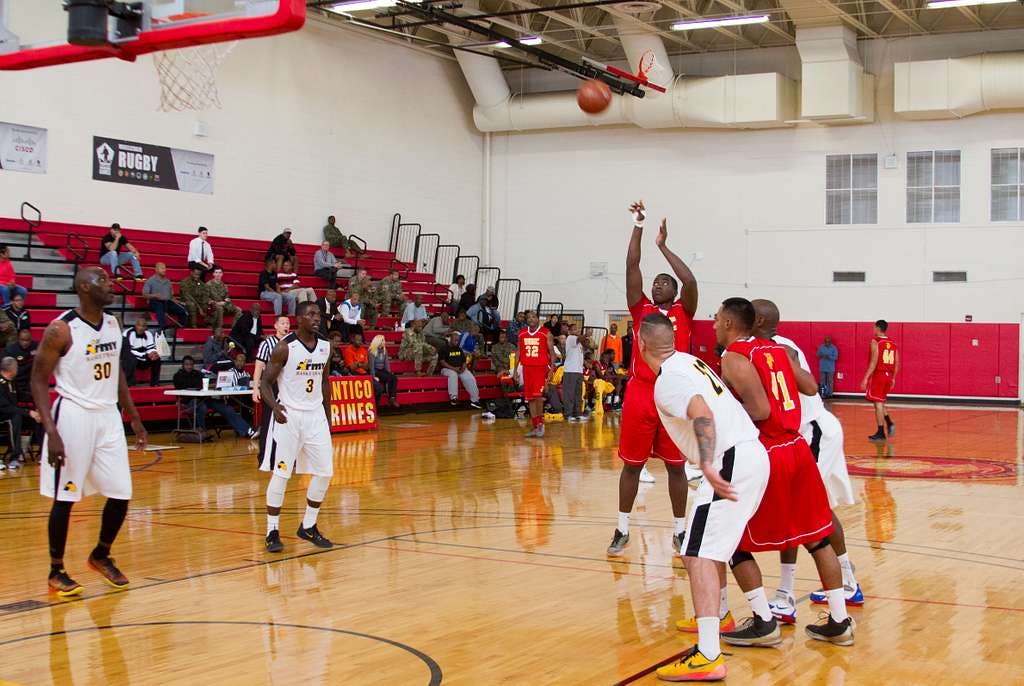
US Sports Basketball: 4 Tips To Instantly Improve Your Free Throw Shooting and #4 PACERS at #3 KNICKS | FULL GAME 1 HIGHLIGHTS |


  • By Tyler Linderman

Improving your free throw shooting is one of the easiest ways to increase your scoring output as a basketball player.  The higher percentage of free throws you are able to make, the more often your coach will find opportunities to have you on the court, especially late in close game situations. Here are 4 tips you can start using today that will help immediately improve your free throw shooting.


1. Establish A Routine


Humans are creatures of habit. This is true for baseball players at the plate, golfers preparing to putt and basketball players preparing to shoot free throws. As a creature of habit, it is helpful to find a routine that you can repeat every time you shoot a free throw. This routine can consist of whatever is comfortable to you, whether it is two dribbles and a spin or swinging the ball around your waist three times.


The key here is to repeat this routine every time you shoot a free throw, whether you are in the gym alone after practice or at the free throw line with the game on the line. Repeating this routine will make you feel comfortable at the free throw line and confident that you will sink each shot as you do in practice.


2. Visualize Success


One of the best tips my high school coach gave me when shooting free throws was to visualize the ball going into the basket. I encourage you to make this part of your routine. Basketball is both a physical AND mental game, and simply visualizing the ball going through the cylinder will increase your confidence and help your body replicate what your mind is seeing.


When shooting free throws, I like to focus on the back of the rim and visualize the ball lightly tapping the back of the rim as it drops perfectly through the arc and bounces straight back to me. Confidence goes a long way in basketball and having the confidence to step up to the free throw line late in a game is half the battle. T


3. Use Your Legs


The majority of shots taken in a basketball game are jump shots, in fact, the free throw is one of the only shots that is a set shot. With a jump shot, a shooter uses his or her legs to provide power for the shot. A good free throw shooter will also use his or her legs to power the shot.

A good basketball shot begins with a bend in the knees, followed by a fluid release, and finishing with a follow-through to the basket. It is important to use your legs when shooting a free throw, because it forces you to maintain the same form as a jump shot and helps provide a repeatable motion.


If you are shooting free throws without using your legs, you will often see your shots come up short or off to the side as the motion is different than any other shot you take. You will also notice that as you get tired, it becomes harder and harder to shoot free throws using only your arms, which brings us to our final tip.


4. Practice When Tired


Consistently shooting free throws in practice is key to becoming a better free throw shooter. However, how often do you find yourself shooting free throws when you are completely rested? Most free throws are shot when you are tired, so you need to be sure to practice free throws when tired. This strategy forces you to use your legs and maintain good form in order to consistently make free throws.


Be sure to practice shooting free throws throughout practice, not just at the beginning or end. Use breaks throughout practice to shoot a few free throws before grabbing your sip of water. After a round of conditioning at the end of practice, shoot 25 free throws. More often than not, the most crucial free throws occur at the end of the game, after you’ve been sprinting up and down the court for 30 minutes.


Practicing free throws while you are tired allows you to be confident and maintain the same form at the end of the game (when you’re exhausted) as you had with fresh legs at the beginning.


You can start putting these 4 tips into practice the next time you step onto the court. Be sure to focus on establishing a routine, visualizing success, using your legs, and shooting free throws throughout practice, even when you are exhausted.

Your just 4 steps away from improving your free throw percentage.

NYSS Twitter Focus on Fun

Thursday, May 22, 2025

US Sports Football: Unlocking the Power of Gap Manipulation to Limit Explosive Plays


  • By Keith Grabowski

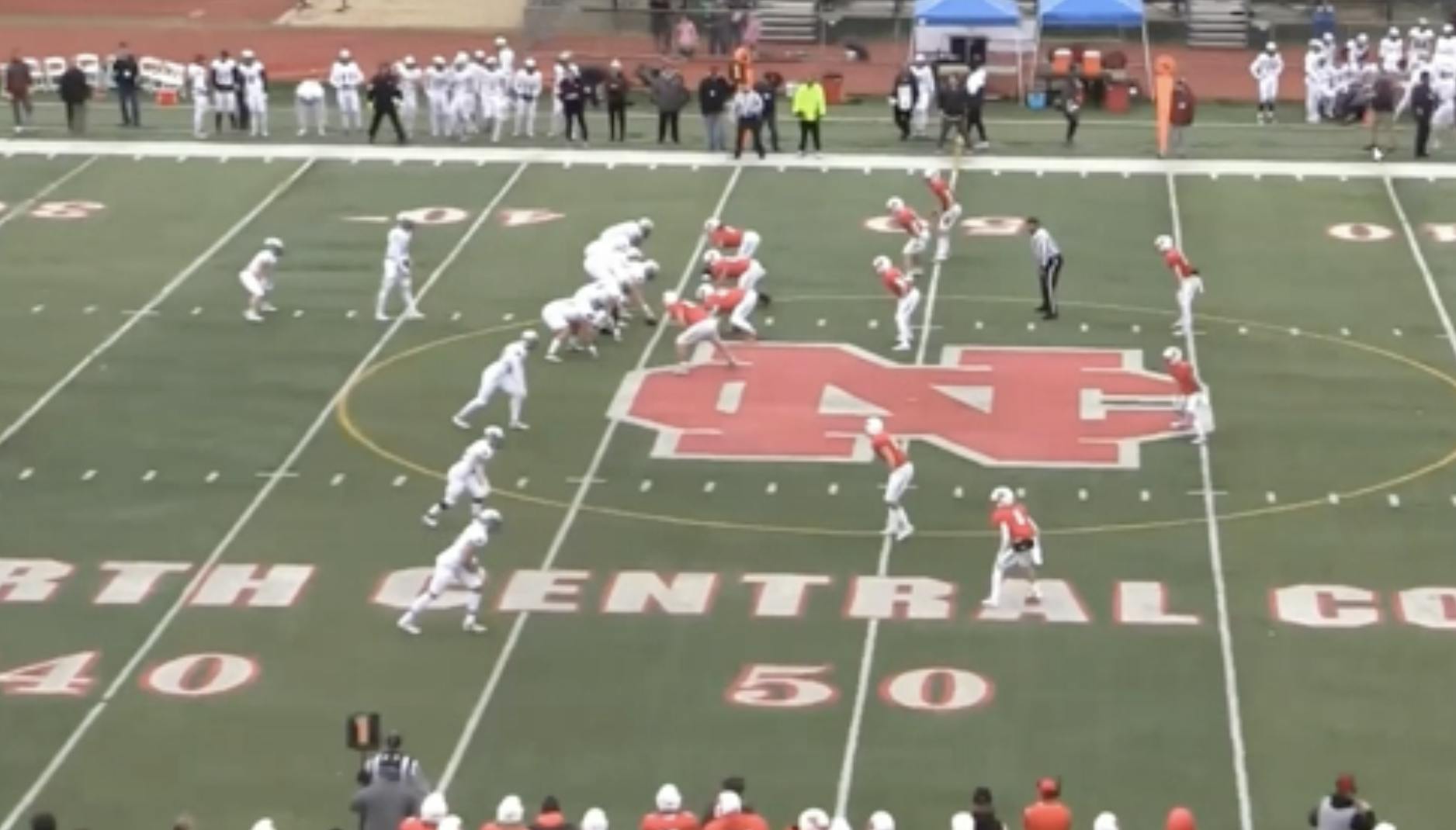
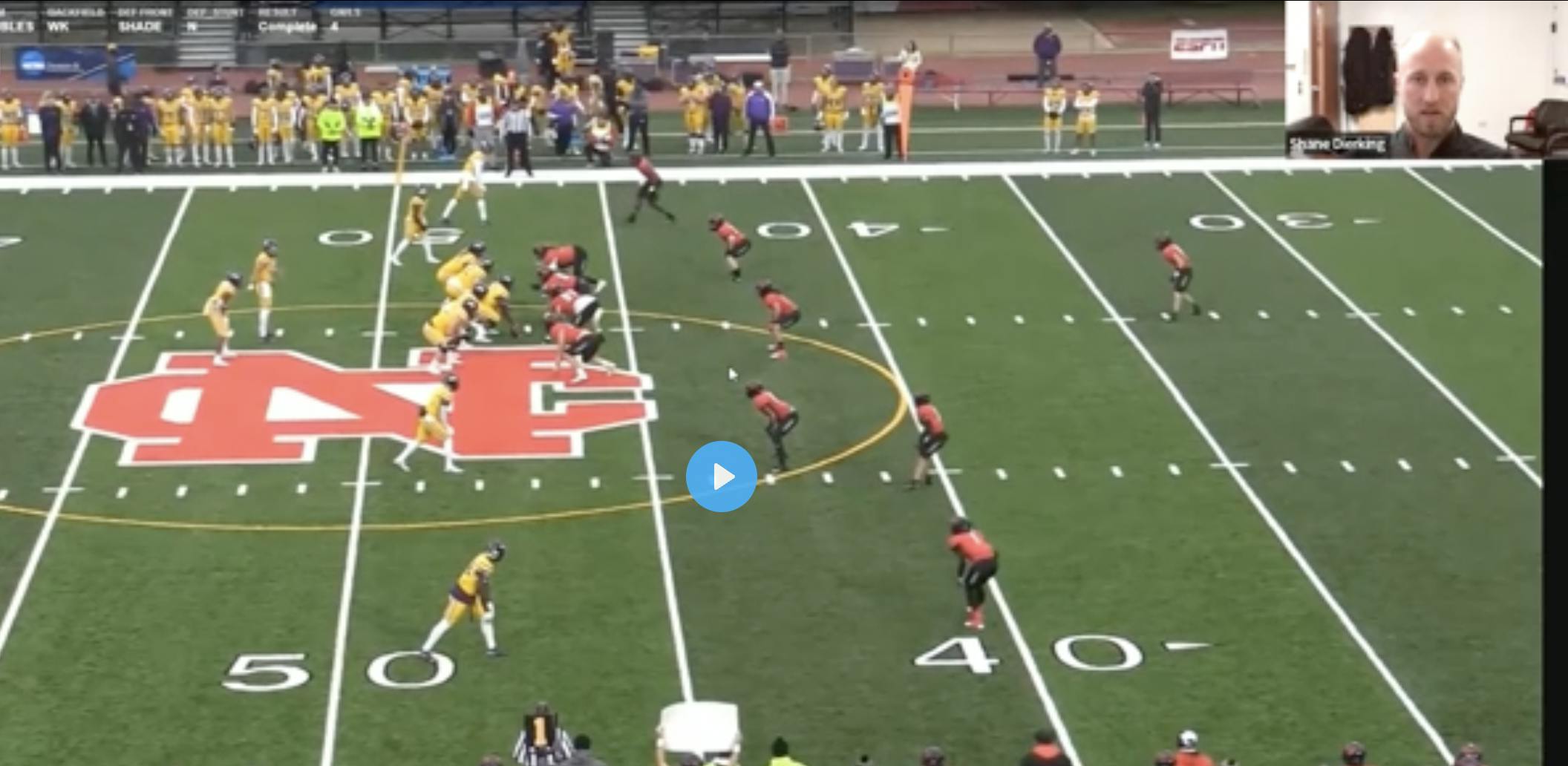
Are offense having their way with your defenders they put in conflict? At the 3rd Annual Lauren’s First and Goal Clinicusers/johnloose"> Lauren’s First and Goal Clinic Shane Direking, Defensive Coordinator at D3 National Champion North Central College, shared his insight on gap manipulation and limiting explosive plays as well as the knowledge and strategies to elevate the performance of your defense. He covered everything from understanding the importance of a tight top-down defense to mastering the art of manipulating gaps.

Defensive Structure and the 30% Rule

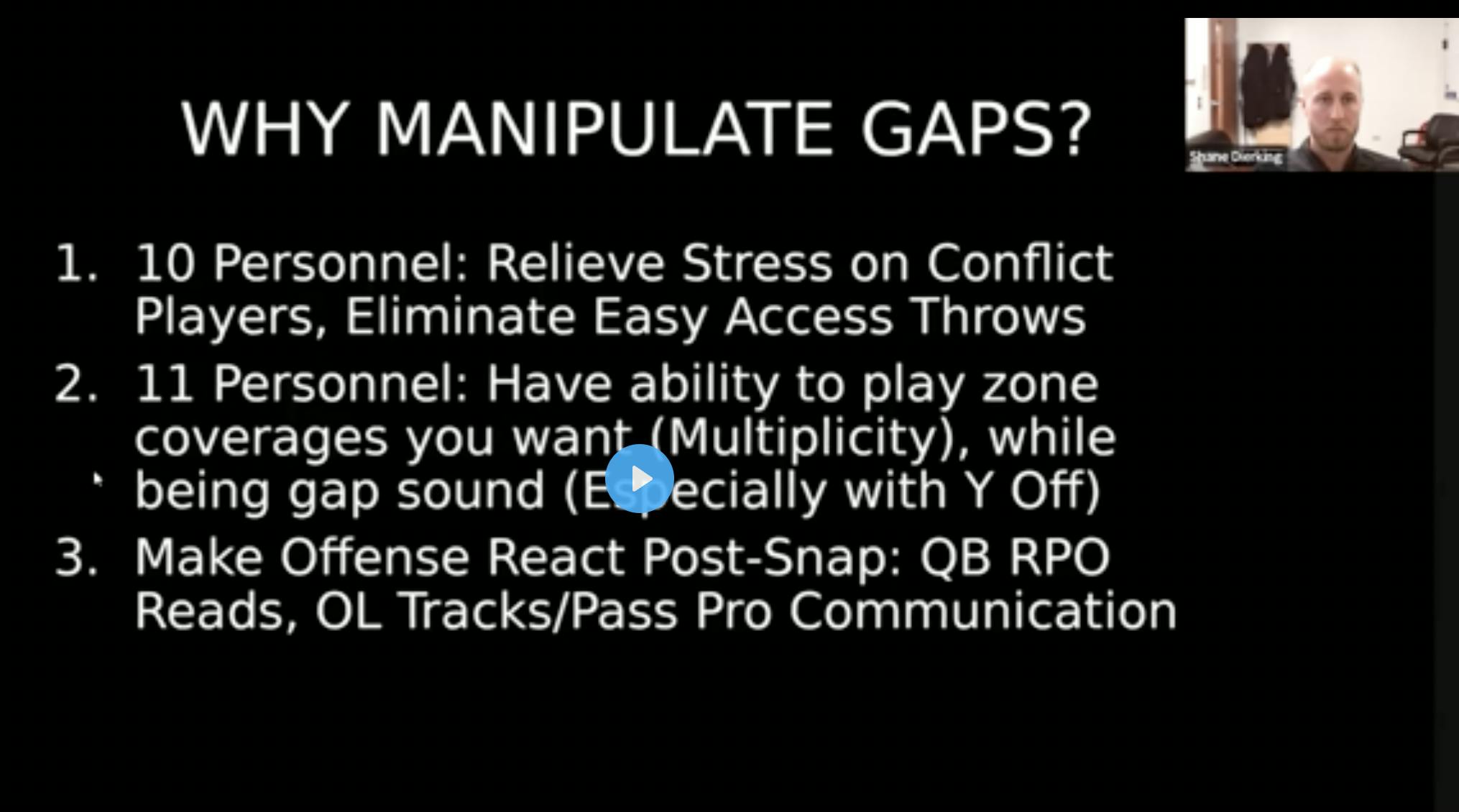
Coach Dierking believes the aim of the defense is to make the offense earn their yards by implementing a tight top-down defense while ensuring it never gives up explosive plays. By manipulating gaps, the defense can confuse the quarterback with stems in the secondary, forcing the O-line to adjust tracks, and throw off pass pro communication.

Coach Dierking als wants to avoid giving the quarterback easy access throwsl. By constantly self-scouting throughout a season and implementing a 30% rule. His 30% rule is, when they have an offensive formation and thy’re higher than 30% with a coverage variation against that offensive formation, they look to break the tendency. The 30% rule ensures that they remain multiple in coverage and keep the quarterback guessing.

Gap Manipulation in Football

Coach Dierking utilizes four main techniques to manipulate gaps: gap cancellation, gap call, stunts, and bumping. These tools are crucial for linebackers, Nickel, Mike, and Qill to communicate with the defensive line, and can be based on offense tendencies or game plan by formation.

By mastering these techniques, a defense can effectively manipulate gap fits in the run game and gap cancel tools, allowing them to be more multiple in coverage and keep the offense on their toes.

Here’s Coach Dierking discussing “Why Gap Manipulation?” in his clinic talk:

null

The Power of Limiting Explosive Plays

Explosive plays can be a game-changer in football. The chances of scoring in any single drive increase significantly with a single explosive play. By ensuring that the defense never gives up explosive plays, it forces the offense to work harder and increases the chances of the defense creating havoc plays like TFLs, tackles, interceptions, and fumble recoveries.

By making the offense earn every yard, the defense can increase the team’s win-loss percentage and maintain a strong defensive presence on the field.

Let’s take a look at some of the gap manipulations that Coach Dierking explained in his clinic.

2x2 Gap Cancellation

Coach Dierking gives his Will “gap cancelling tools” which allow him to give a call to the defensive line in order to keep himself out of conflict.  These tools are critical in today’s RPO world where the obejective is to put a defender in conflict.  He shares an example of this in this game clip:

null

Bump

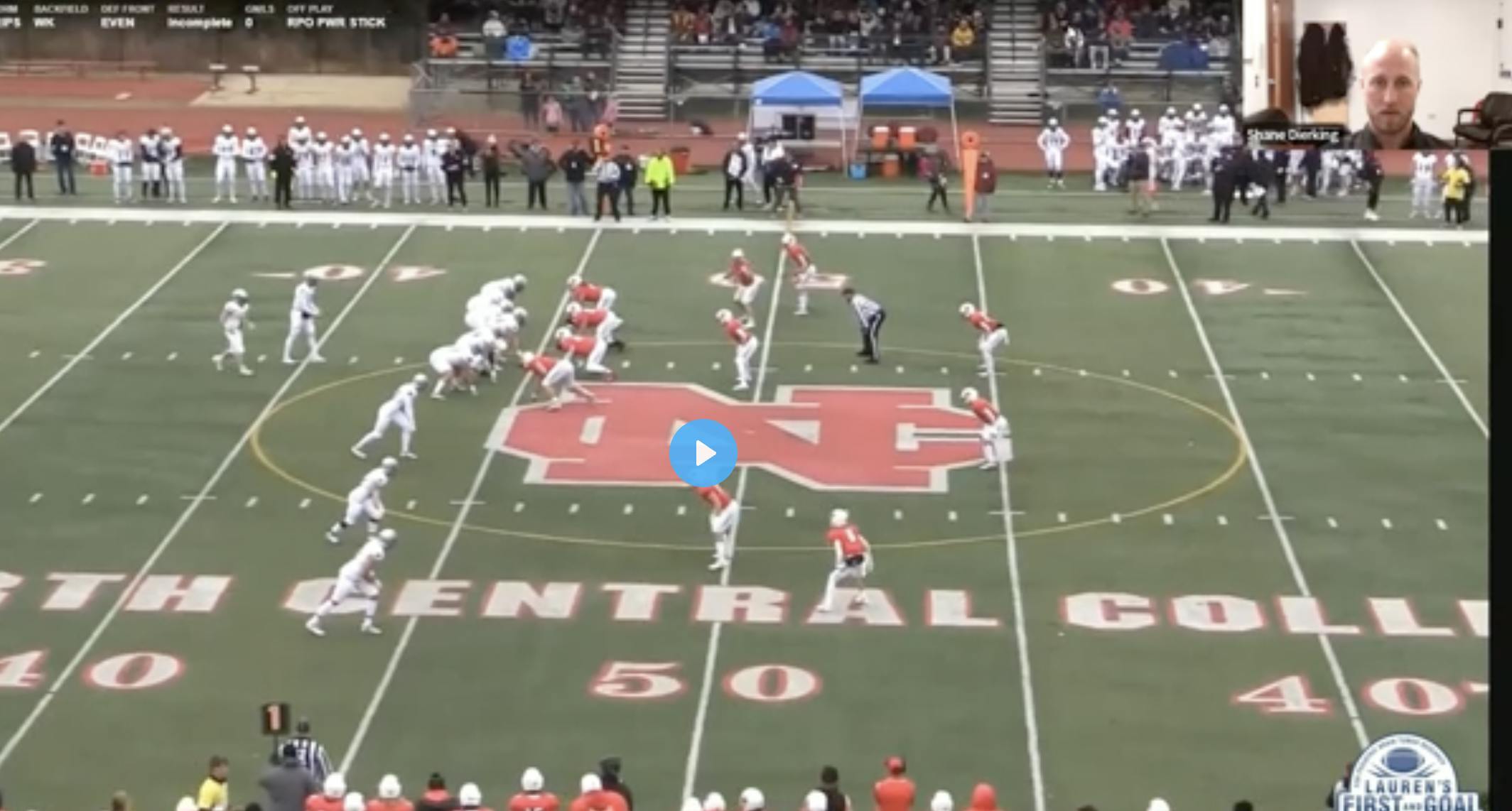
Come formations can give a defense issues. Bumping gaps can allow a defense to keep players out of conflict and create better run fits.  Here Coach Dierking shares an example of “Bump” on game film and how they are able to take away the run and defend the stick and almost take it the other way by giving an appearance of a void in the defense.

null

Conclusion

Coach Direking’s clinic provided invaluable insights into putting defenders in a better position through the power of gap manipulation. This is a tremendous resource to gain the insight and examples to evolve your own defense to optimize your run fits and remove conflict.

NYSS Stay In The Game

Tuesday, May 20, 2025

US Sports Baseball: Two Drills to Improve Outfield Movement and Communication and #18 Alabama vs #23 Florida (Rubber Match) 2025 College Baseball Highlights


  • By Grant Young

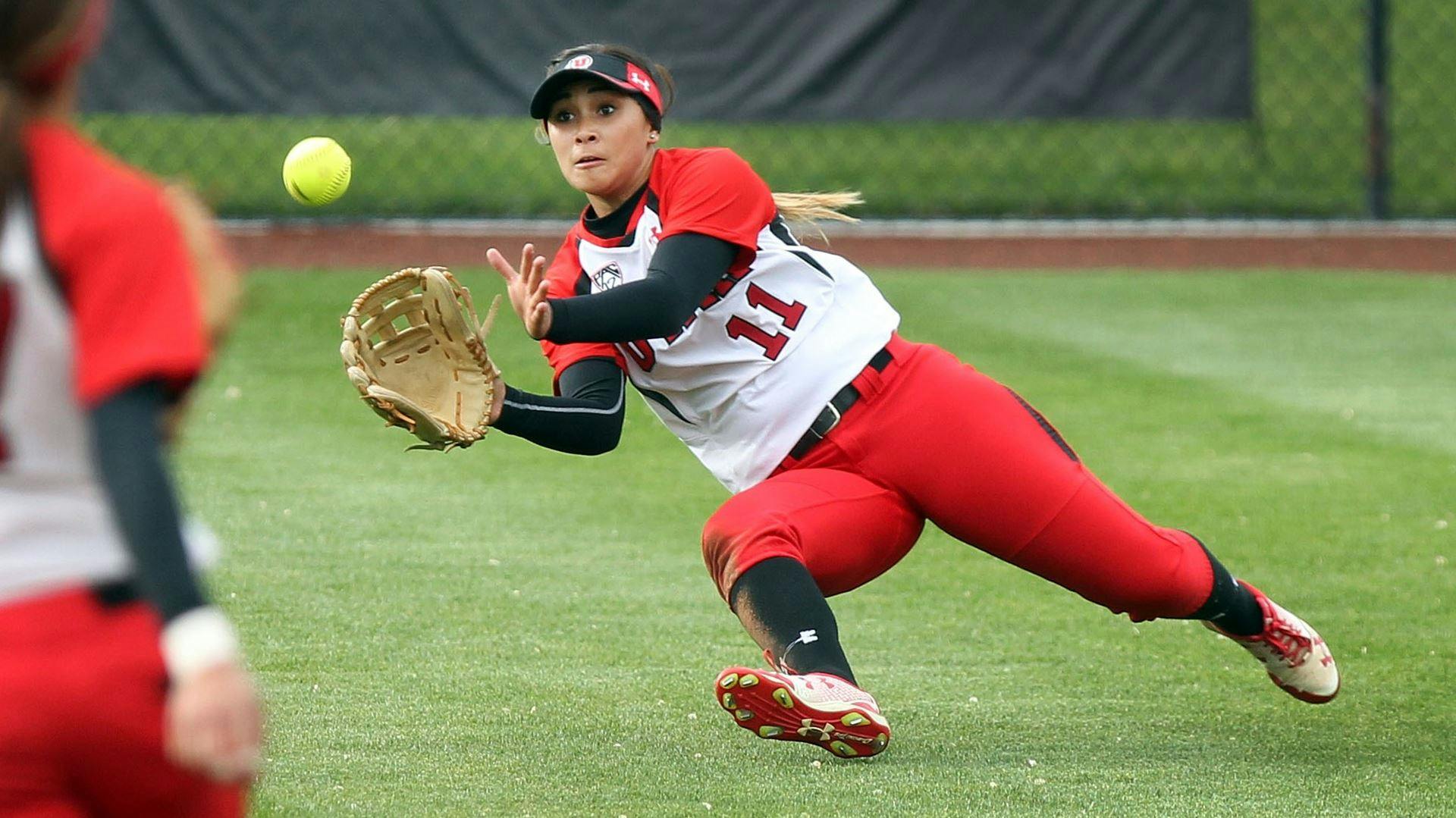
While it may seem that playing in the outfield is one of the most relaxed positions in baseball, coaches know the truth is that the outfield demands a high level of communication, precise movement, and acute awareness. This is why outfield drills are so important. 

One of the main challenges for outfielders is the need to effectively communicate with each other. In many situations, multiple outfielders can converge on a fly ball, and without clear communication, collisions can occur. This risk not only poses a danger to the players involved but can also lead to missed plays that could change the outcome of a game. 

Establishing a system of verbal and non-verbal cues is essential for ensuring that each player knows who is responsible for making the catch. Drills that focus on improving vocal communication and instilling confidence in one another can transform a group of individuals into a cohesive unit.

Additionally, the movement required in the outfield is far from straightforward. It involves not only running but also quick direction changes, timing jumps for catches, and assessing batted balls’ trajectories. Outfielders need to have a keen sense of positioning, understanding the hitters’ tendencies, and knowing when to take aggressive routes to the ball. 

Practicing shifts, angles, and the art of the jump can give a team a significant advantage. Drills designed to simulate different game scenarios can help players develop these critical skills, allowing them to react instinctively during actual games. 

By implementing targeted drills that enhance these skills, teams can minimize the risk of errors and elevate their overall performance, turning what is perceived as an easy position into one of the greatest strengths of the team.

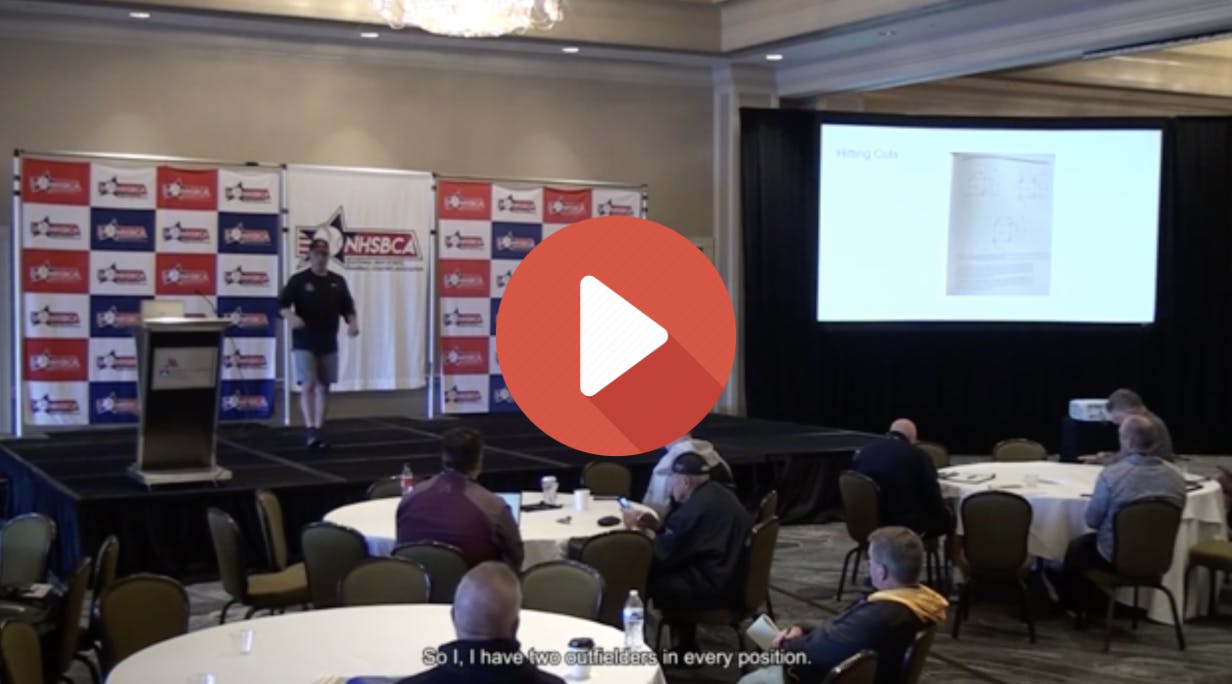
While there are plenty of effective outfield drills out there, few focus on developing the communication and movement patterns necessary to ensure safety and success for players of all ages and skill levels. But coach Todd Dulin, Head Coach at North Andover High School (Massachusetts), provides an in-depth, structured approach to mastering defensive excellence in baseball, specifically in the outfield with his ‘Outfield Play with Todd Dulin’ clinic. 

Whether you're an aspiring outfielder or a coach seeking expert drills and strategies, this course provides the knowledge and structure to elevate defensive skills and build a championship-caliber mentality.

We have pulled two drills from Coach Dulin’s clinic and included them below. 

The Rhythm Drill

null

One of Coach Dulin’s drills is called the Rhythm Drill, a fundamental exercise to develop smooth, controlled, and accurate outfield throws while preserving arm strength. 

The movement and footwork involved in fielding a grounder in the outfield and then executing a strong and accurate throw to a specific base may sound easy, but coaches know that it can often be much more difficult than initially conceived. 

This is why this simple rhythm drill is perfect, which starts with a coach having a bucket of balls, a fungo, and standing at home plate. The players will line up in two lines in the outfield, and the coach will just hit balls to each line. 

Each player will then take turns fielding the ground ball while ensuring they remain on the balls of their feet so they don’t get off balance. From there, they will stay in an athletic stance, execute a crop hop, and deliver a throw to the assigned base, which will have a screen behind it. 

By repeating this drill with a steady rhythm, outfielders enhance their throwing mechanics, reinforce good habits, and prepare for game-like situations with precision and efficiency. 

Another way to improve this drill is by hitting the ball between the two lines and forcing them to communicate on who is going to field the ball and which base they should throw to. 

The Sprinkler Drill

null

The next drill that Coach Dulin discusses in his clinic is what he calls the sprinker drill, which is a dynamic outfield exercise designed to improve tracking, catching on the move, and communication. 

The drill begins with all the outfielders along the right field like, and the coach has a bucket and a fungo. The player who’s first in line will then start jogging across the outfield while fielding multiple fly balls, progressively moving toward left field with each ball hit.

A great way to enhance communication with this drill is to make two different lines and hit the ball either between them or behind them, so that they have to run near the fence. This will force the two players in line to communicate about who is catching the ball and where the ball is while also tracking down the fly ball. 

This drill is especially effective early in the season, when players haven’t learned each other’s communication preferences and are still acclimating to tracking balls down on the fly. 

This drill is also fun and engaging, while also working as a conditioning exercise because of all the running that players will need to do.

NYSS Find Their Strengths

Monday, May 19, 2025

US Sports Martial Arts: Grappling v.s. Striking: Which is Better? And Muay Thai Chaos 😤 Aliff vs. Walter Goncalves | Full Fight


  • By Owen Reilly

The UFC was originally created to determine the most effective martial art in combat. Since then, the sport of Mixed Martial Arts (MMA) has evolved with nearly every fighter involved in the sport incorporating techniques of multiple fighting disciplines and styles. However, most fighters specialize in a specific martial art or prefer the techniques of one discipline to the other. For example, Khabib Nurmagomedov specializes in sambo and wrestling while someone such as Alex Pereira prefers to keep the fight standing and strike with his opponent. These two differing styles represent an age-old debate of whether striking or grappling is more effective both in the cage and in real life. In this blog, we will review the arguments for each style and determine which is more important when starting your MMA journey.

The Case for Grappling

The term grappling encompasses multiple martial arts, including Jiu-jitsu, Judo, Wrestling, and Sambo, with each art focusing on taking down, controlling, and submitting or pinning your opponent. In MMA, a strong proficiency in one of these arts allows you to dictate the pace of the fight and choose where the fight takes place. Furthermore, the level of control, submission threats, and cardio that the grappling arts offer allow you to wear down your opponent through consistent pressure. Understanding how to properly close the distance, however, is a crucial skill that all grapplers must learn. Without it, grapplers will run the risk of getting knocked out when initiating takedowns or scrambles. Fighters utilizing a grappling-heavy style include Khabib Nurmagomedov, Islam Makhachev, Merab Dvalishvili, Colby Covington, and Kamaru Usman. For grappling classes taught by top coaches and fighters, check out the link below. 

null

The Case for Striking

The term striking also refers to numerous fighting styles including boxing, muay thai, kickboxing, karate, tae-kwon-doe, and karate with each discipline incorporating some form of punches, kicks, or knee and elbow strikes. The striking arts have a distinct advantage over the grappling arts in one major respect; the ability to end a fight decisively at nearly any moment. A singular well-placed strike can stop any opponent dead in their tracks. The unpredictability and the ability for a worse fighter to land a single strike and win the fights is an alluring thought that makes the striking arts incredibly appealing. The control of range that striking also teaches coupled with the fact that numerous strikes over time can wear down your opponent also make the striking arts effective. Learning takedown defense, however, is crucial to being an effective striker as you are unable to use the vast majority of striking techniques while on your back. Examples of strikers in MMA include Israel Adesanya, Alex Pereira, Anderson Silva, Sean O’Malley, and Connor McGregor. To look at online striking courses taught by some of the best in the world, click the link below.

null

Historically speaking, grapplers have tended to dominate the MMA landscape with the original UFC events featuring winners such as Royce Gracie and Ken Shamrock. Grappling has continued to dominate the MMA scene with the above-mentioned fighters reaching the pinnacle of the sport through their grappling abilities. Recently, however, fighters including Leon Edwards, Israel Adesanya, and Alex Pereira have proved that elite striking coupled with strong takedown defense can win fights against elite grapplers. Truthfully, to be successful at the professional level, being well-rounded is absolutely necessary. Relying on one specific style too much can expose holes in your game that opponents can exploit. But which is better? Especially at the amateur level, grappling still proves to be the most effective path to victory. When fighting a ‘pure’ striker, grappling offers a relatively easy path to victory assuming one can properly close the distance to clinch with or takedown the opponent. The unpredictability of striking makes grappling a safer and more secure route to neutralize your opponent. Strikers have more opportunities to end the fight faster but become vulnerable when put on their backs. As a grappler, you can negate a striker's game plan completely with a single takedown. Despite this, a striker with very strong takedown defense can be an absolute nightmare for a ‘pure’ grappler.