Now Streaming On US Sports Radio!

US Sports Net Today!


Live Play-by-Play, Updates, Highlights and More! on US Sports Network!
[Chrome Users-You may have to click on the play button twice to listen]
US Sports Network Powered By Gorilla Sports!


US Sports Radio
The Las Vegas Raiders Play Here
Fitness and Sports Performance Info You Can Use!
The Scoreboard Mall
The Rock Almighty Shaker Of Heaven And Earth!
The Coolest Links In The Universe!

Monday, April 14, 2025

US Sports Soccer: How to Structure Practice Sessions: A Complete Guide for Youth Soccer Coaches and HIGHLIGHTS: St. Louis CITY SC vs. Columbus Crew

 Men Still Competing In Women's Sports? Now Streaming On US Sports Radio
  • By Chaz

Great practices don’t happen by accident—they’re the result of thoughtful planning, clear objectives, and an understanding of how players develop over time.

As a youth soccer coach, your job is to create an environment where players can improve technically, grow in confidence, and have fun. Structuring your training sessions with a proven framework ensures you're meeting your players where they are developmentally and helping them build up their skills progressively.

Why Practice Structure Matters

The best youth soccer sessions follow a logical progression—from learning a technique, to applying it under pressure, to executing it in a game-like setting. This structure mirrors how players naturally learn and adapt. When practice is organized with intention, players are more engaged, better prepared for game situations, and ultimately, more successful.

The 3-Part Practice Framework

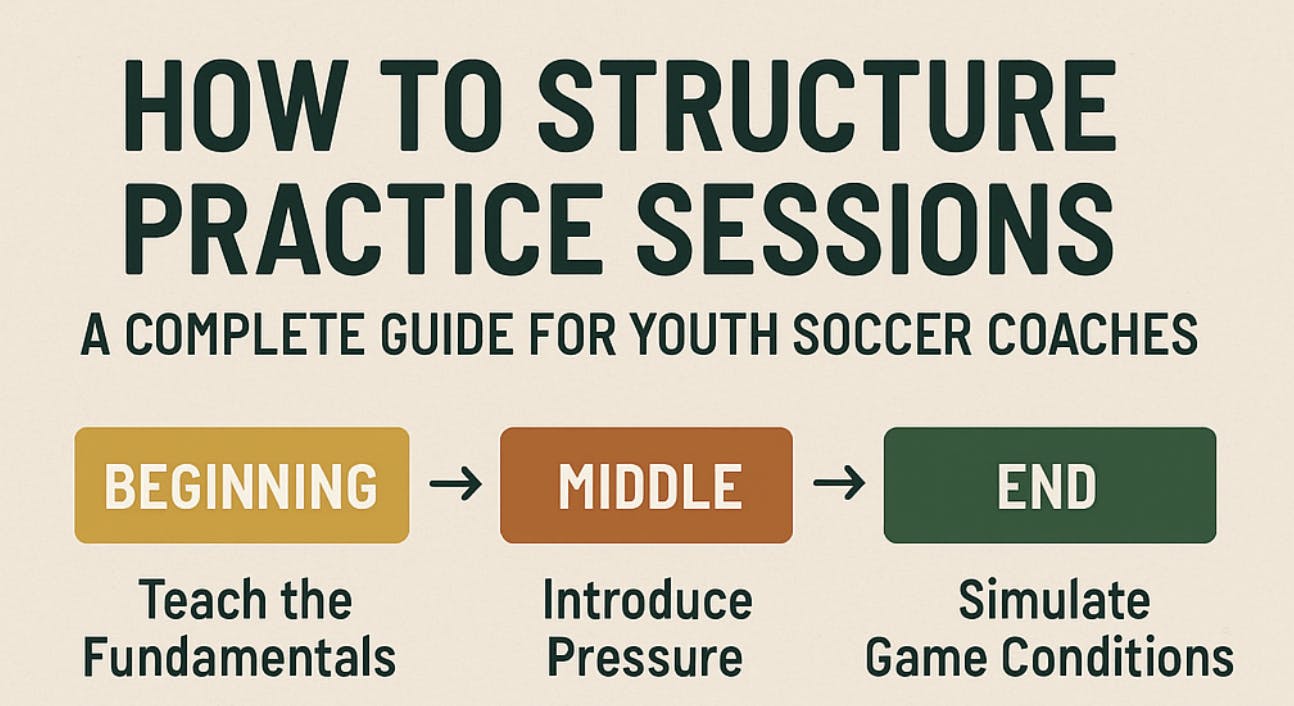
Let’s break down a typical session into three phases: Beginning (Individual Technique), Middle (Small-Sided Pressure), and End (Game Conditions). This model gives you the flexibility to focus on different skills while creating consistency and flow in your coaching style.

1. Beginning: Teach the Fundamentals (Individual Work)

This is where players are introduced to the technical focus of the session—whether it’s passing, dribbling, shooting, or defending. There should be no defensive pressure, allowing players to gain confidence and proper technique at their own pace.

Introduce the concept or skill with a clear demo.

Have players perform the skill individually.

Set individual targets (e.g., 10 successful passes with both feet).

Progress to performing the technique at game speed.

By the end of this phase, every player should understand what the skill looks like and feel comfortable executing it in a controlled environment.


2. Middle: Introduce Pressure (Game-Related Skills)

Now it’s time to challenge players by adding a layer of passive or active pressure. Think 1v1, 2v2, or 3v3 scenarios where players must apply the skill in a competitive setting. This builds decision-making and reinforces the technique in more realistic conditions.

Start with passive pressure (defenders give light resistance).

Gradually increase to full pressure (defenders try to win the ball).

Encourage creativity, quick decision-making, and spatial awareness.

Rotate roles so every player experiences offense and defense.

This phase transitions the skill from isolated practice to situational awareness and reaction—critical for real-game success.

3. End: Simulate Game Conditions

The final portion of practice should look and feel like the actual game. Use small-sided games (e.g., 4v4, 5v5) with coaching conditions that reinforce your technical focus. This allows players to apply what they’ve learned in an open environment.

Use short-sided or odd-numbered games to increase touches and decisions.

Add specific rules to emphasize your focus skill (e.g., 2-touch max, must complete 3 passes before shooting).

Encourage communication and team play.

Give players feedback, but let the game teach too.

Game-like drills bring intensity, excitement, and real pressure to your session. This is also the phase where fun and competition can truly shine.

Free Practice Session Planning Template

Use this simple template to prepare every session with confidence and structure:

Warm-Up (10 mins) Objective: Get players moving, increase heart rate, light technical work Examples: Dynamic stretches, dribbling relays, rondo keep-away

Beginning Phase (15–20 mins) Objective: Introduce technical focus in isolation Examples: Passing pairs, cone dribbles, shooting on open net

Middle Phase (20 mins) Objective: Apply technique under pressure Examples: 1v1 challenges, 2v2 games, transition drills

End Phase (20 mins) Objective: Simulate game conditions with constraints Examples: 4v4 games, small-sided scrimmages with touch/pass rules

Cool Down & Recap (5 mins) Objective: Stretch, reflect, give feedback Examples: Static stretching, quick Q&A, positive reinforcement

Final Thoughts

There’s no single “right” way to coach—but having a clear, structured approach to every practice will elevate your players’ development and make your job as a coach more rewarding. Build your sessions around a purpose, adapt to your group’s needs, and never forget to keep it fun.

Remember: when players are learning and enjoying the game, everyone wins.

Further Learning

For coaches working with players ages 10 and up, Nick Harrison offers a valuable course on CoachTube that expands on the ideas shared here. It covers session planning, skill development, and age-specific coaching strategies.

Explore the course here: Coaching Youth Soccer: Ages 10 and Up0 and Up

Thanks to Nick Harrison for sharing his insights and helping coaches continue to grow.

Sunday, April 13, 2025

The Rock Almighty: The Equality of the Fallen and Turn Up For Who?


 You Know It! Christ-Centered Rock 'n' Roll For Your Soul. The Rock Almighty Shaker Of Heaven And Earth. Now Streaming On US Sports Radio!

  • Author Justin Patton

My friend Jason recently shared a great excerpt from Kierkegaard’s “Practice in Christianity,” in which S.K. identifies an important truth. Though the means through which we are drawn to God are many, Kierkegaard says they converge at the consciousness (i.e. awareness) of sin. Don’t let the word “sin” scare you off. Feel free to exchange it with “wrongness” or “evil” (people have all sorts of things they think of as wrong or evil).

Humans have always been keenly aware of the bad behavior of the other guy. Take me, for instance. I’m aware of how self-assured many people around me seem to be. What is it that they are so sure of? Mostly how bad the people are who differ from them politically. But it hardly requires a difference in politics to reveal our ungracious natures. When even the smallest of inconveniences come my way, I tend to assume the worst of others as well. “The mailman didn’t bring the package up to the house? I was waiting for that delivery! What a lazy, no good…” Sometimes I wonder if our entire existence doesn’t revolve around a constant, exhausting moral examination of ourselves and others, and not very often are we impressed with anyone.

I wrote my first story, The Battle of the Windy Isle, with this ethos in mind. I wanted to tell a tale about a curse that afflicted people in different ways. Those who were cursed remained largely unaware of it, having slipped into the malady more deeply over time. However, simple things, such as gratitude, joy, or forgiveness, could sneak in and undo the damage with surprising speed.

Early on in the story otherworldly curses are foreshadowed by the more familiar, earthly variety. This occurs in a conversation between a grandfather and grandson when the grandfather responds gracefully to a difficulty. However others, like his grandson Aisen, find that graciousness difficult to understand. As the story progresses Aisen begins to recognize the value of forgiveness, and eventually demonstrates some very grandfather-like responses of his own.

The Windy Isle is a children’s story, but sometimes it is parents (even Christian parents) who struggle to prioritize forgiveness. Society doesn’t always help us maintain a gracious mindset, either. While we do see some moments of grace celebrated, too often forgiveness seems to be confused with weakness. We are tempted to believe that finger-pointing and condemnation are the virtuous things—regardless of (or maybe because of?) our political or religious persuasions. But if we must err, in which direction should it be? I submit (and I think the Bible teaches) that we should err on the side of forgiveness. Such a choice is costly, to be sure, and our pride makes it all the more difficult.

C.S. Lewis explained the issue this way: “How is it that people who are quite obviously eaten up with pride can say they believe in God and appear to themselves very religious? I am afraid it means they are worshiping an imaginary God.” The curse of imagining a God in one’s own image—repulsed only by the evil of other people—slips in bit by bit and remains mostly undetected by the one afflicted. Yet the awareness of sin that Kierkegaard spoke of remains, albeit in a hobbled form.

However, if that handicap begins to heal, the consciousness of sin can still be a means through which we may yet be drawn to God. We must come to see the flaw in ourselves as well as in others. My hope is that readers of The Windy Isle will grow in the awareness of the “equality of the fallen”—and we all fit that bill. It is for this reason that we should view ourselves as better than no one. It is a choice that presents itself often.

As Lewis said elsewhere, choices are significant things: “Every time you make a choice you are turning the central part of you, the part of you that chooses, into something a little different than it was before. And taking your life as a whole, with all your innumerable choices, all your life long you are slowly turning this central thing into a heavenly creature or a hellish creature: either into a creature that is in harmony with God, and with other creatures, and with itself, or else into one that is in a state of war and hatred with God, and with its fellow creatures, and with itself. To be the one kind of creature is heaven: that is, it is joy and peace and knowledge and power. To be the other means madness, horror, idiocy, rage, impotence, and eternal loneliness. Each of us at each moment is progressing to the one state or the other.”

Or, if you recognize the connection between graciousness and gratefulness, perhaps a more condensed way of putting it is this:

“The distance between being ungrateful for something and cursing it is not as great as one might imagine.” — Virgil, Battle Chief of Linraw (from The Wizard’s Rebellion)

Justin Patton is an instructor at Murray State University because audio professors don't need PhDs and have just enough free time to write fantasy stories. His books and blogs can be found here https://www.amazon.com/dp/B08PDR6FMS and here https://justinpatton.wordpress.com/

Saturday, April 12, 2025

US Sports Track and Field: Olympic Medalist Jasmine Moore’s Triple Jump Approach Technique Keys and Women's triple jump final World Athletics Indoor Championships


  • By Grant Young

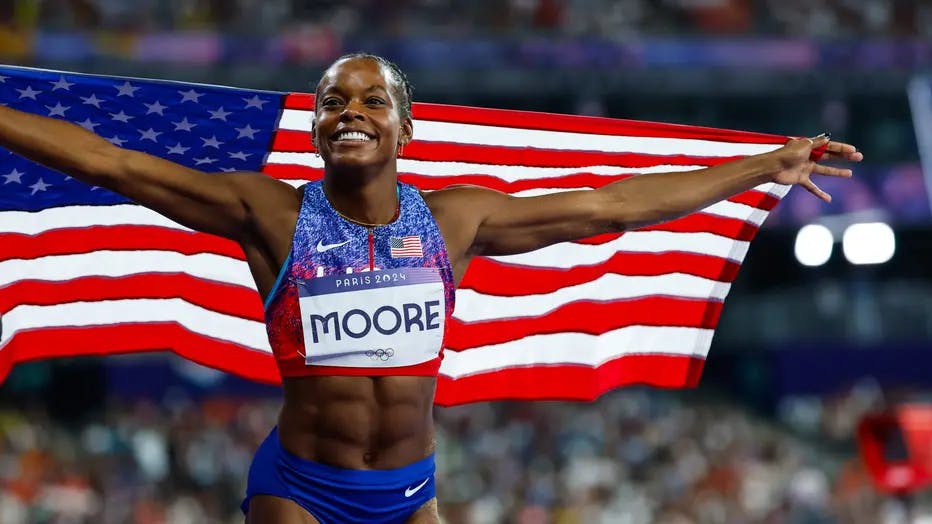
Triple jump coaching is a highly technical art, where the best coaches understand how much success hinges on perfecting the approach run. While many spectators focus on the explosive phases after takeoff, elite jumpers know that a consistent, powerful approach makes all the difference—and few understand this better than Jasmine Moore, the Paris Olympics bronze medalist.

The approach in the triple jump isn't merely a run-up; it's the foundation for everything that follows. A well-executed approach:

- Builds the optimal horizontal velocity that converts to distance

- Establishes rhythm and consistency for the technical phases

- Creates the momentum that carries through all three jumps

- Positions the athlete perfectly for takeoff

Moore's approach technique has become her signature strength. Her bronze medal performance in Paris demonstrated how a precisely calibrated approach can elevate an athlete to the Olympic podium.

Moore's approach technique stands out for several reasons:

1. Her approach features remarkable consistency—she hits the takeoff board within centimeters nearly every attempt. This precision comes from countless repetitions and her methodical step-marking system.

2. Unlike many competitors who sacrifice control for speed, Moore maintains perfect posture throughout acceleration. She stays tall, avoiding the common mistake of leaning forward too early, which preserves energy for the explosive phases.

3. Moore's final three strides show a subtle but crucial lowering of her center of gravity—what coaches call "active touchdown"—preparing her body for the powerful conversion from horizontal to vertical movement.


Perhaps most importantly, Moore has mastered the psychological aspect of the approach. She remains composed under pressure, executing her runway pattern identically whether in practice or Olympic competition.

For triple jumpers looking to improve, studying Moore's approach technique offers invaluable lessons in the blend of speed, rhythm, and technical precision that creates championship performances. Her bronze medal in Paris was built on this foundation, proving that in the triple jump, mastering the approach truly is the key to success.

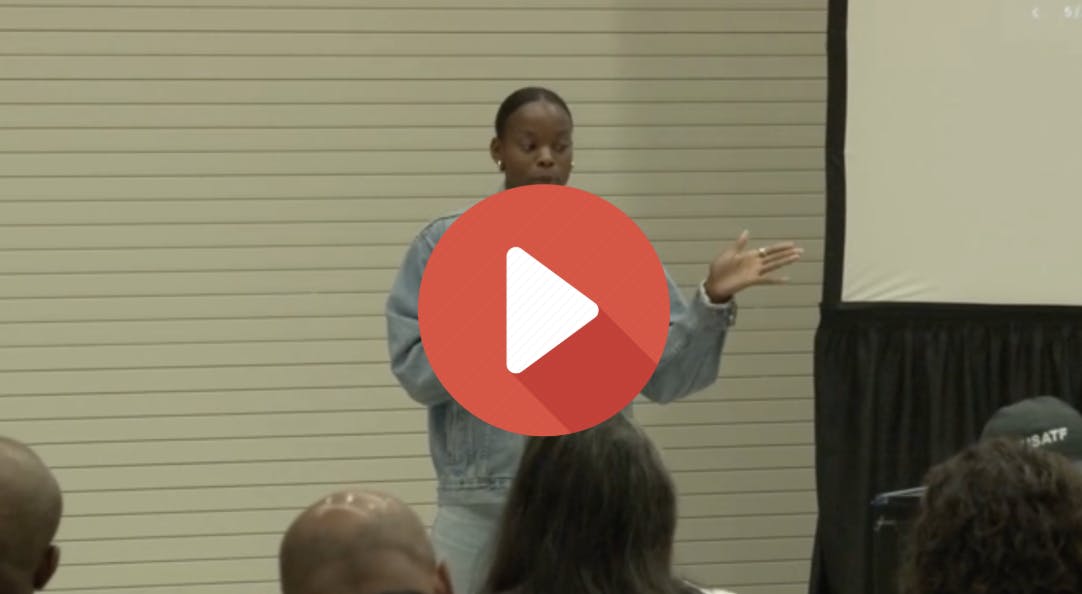
Of course, there’s more to Moore’s triple jump mastery than these basic fundamental components. But nobody is better equipped to explain the nuances of triple jump success than her. That’s why we’ve pulled several pertinent pieces of Moore’s wisdom from her ‘Triple Jump Mastery: Power, Precision, and Technique with Jasmine Moore’ clinic from the Texas Track and Field Coaches Association and are sharing them below for you. 

Drive Phase Approach

null

Coach Moore explains that the drive phase of the triple jump is the first third of the approach. Here, the focus needs to be on powerful pushes, which is extremely different than bounding out the back. 

The difference is that purposeless bounding is going to take away from momentum rather than increase it into the next phases of the jump. Therefore, each push needs to have a clear intent. 

Coach Moore also emphasizes the importance of the very first step because of how it creates consistency and helps solidify the rest of the approach. She also suggests using some type of physical marker on the ground to ensure that the first step is in the right position.

When training this phase of the triple jump, Coach Moore notes that she always focuses on keeping her chest up, because having the chest down typically causes the body to have more of a bounding approach, which isn’t ideal. 

Continuation Phase Approach

The next phase Coach Moore discusses is the continuation phase, which follows the drive phase and is focused on covering ground. Her main goal during this phase is to keep running aggressively, which means standing up, being in the correct body posture, nailing the running mechanics, and being keenly aware of where she is on the track. 

While mechanics are crucial for every phase in the triple jump approach, Coach Moore seems to think they’re most important during this continuation phase because this is when a lot of fouls and penalties happen, which can derail an entire jump.

Transition Phase Approach

null

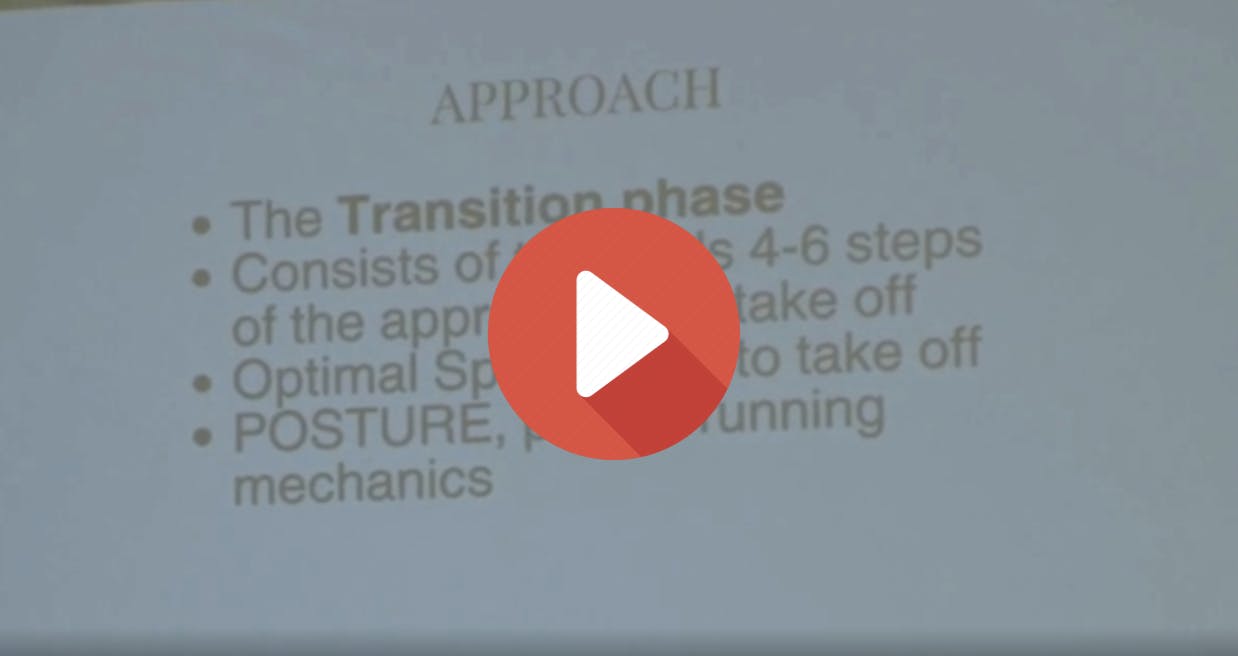
Coach Moore then goes on to discuss the final phase of the triple jump approach, which is the transition phase. 

She explains how this phase consists of the last 4 to 6 steps of the approach. The main goal of this phase is to create and maintain the maximum speed possible as one gets to the board and begins the eventual jump.

Coach Moore is a big proponent of having what she calls a “mid mark” during this phase, which is a way to gauge where the runner is in their approach. It should be positioned about five steps out from the jump for each runner, which is about 28 feet for Coach Moore. 

If an athlete is on their mid mark perfectly and on the board perfectly, they did their job. But if they end up a foot or so in front of the mid mark but on the board perfectly, the athlete was probably stuttering in their lead-up. 

If the athlete is behind the mid mark, then they’re probably reaching, which would also require a mechanical adjustment from the coach.

Coach Moore also reiterates that the athlete’s posture and hips must remain upright as they enter the board, because the chest or hips being down will not lead to an optimal take off.


https://odphp.health.gov/sites/default/files/2019-11/role-model.png
Want to help kids #GetActive through youth sports? 
Learn how parents, coaches, and volunteers can get involved in 
@HealthGov’s National #YouthSports Strategy: https://bit.ly/2lIHPUc

Friday, April 11, 2025

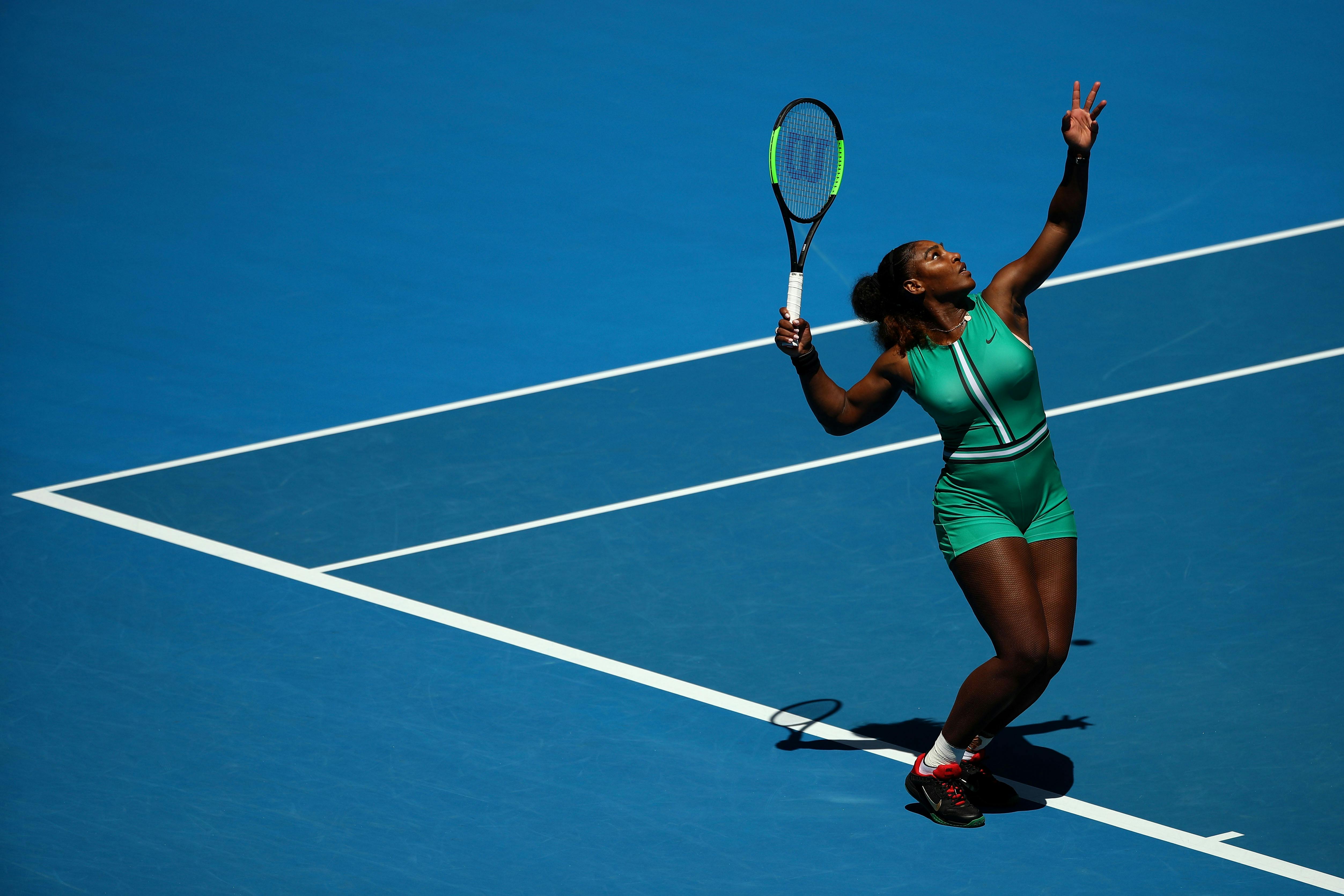
US Sports Tennis: Three of Tennis Whiz Lisa Dodson’s Tips to Improve Serves and Alejandro Davidovich Fokina vs Alexei Popyrin Quarter-Final Highlights

 Torpedo Bats, Great Hitting, Or Bad Pitching? Now Streaming On US Sports Radio!


  • By Grant Young

The journey from having a good tennis serve to achieving greatness often hinges on the subtle nuances introduced by effective coaching. 

While many players may possess the raw talent and basic mechanics necessary for a solid serve, it is the refined details, often highlighted by a knowledgeable coach, that can truly transform performance. 

Coaches can offer insights that transcend mere technique, helping players develop a deeper understanding of their own bodies and how they move during a serve. This understanding fosters a greater sense of confidence, encouraging players to trust their instincts and abilities under pressure. 

Additionally, the relationship between a coach and player allows for personalized adjustments, as coaches observe and identify specific areas for improvement. This tailored approach not only enhances a player’s technical skill but also builds a foundation of mental resilience. 

Coaches often emphasize the importance of consistency, focus, and strategic thinking, encouraging players to visualize success and embrace a winning mindset. Moreover, a coach’s experience can illuminate the importance of practice—underlining how even the smallest changes can lead to significant improvements. 

Through consistent guidance, players learn to embrace the process rather than solely focusing on the outcomes, fostering a mindset for growth. 

Ultimately, the small, subtle interventions of a coach can bridge the gap between potential and performance. Their ability to instill confidence, promote understanding, and encourage adaptability allows players to elevate their serves, resulting in a game that isn’t just good, but truly great. In tennis, as in many sports, it’s often the fine details that make all the difference.

This is why tennis coaches must have the right information when it comes to teaching their players how to serve correctly. This is where Lisa Dodson comes in. 

Coach Dodson is a certified USPTA Elite Professional with 45+ years of tennis teaching experience. She’s also a former WTA world-ranked player in singles and doubles with broad experience in multiple sports at high levels.

Dodson is the inventor of ServeMaster, an accelerated learning tool that allows tennis players to feel what the serve should feel like without hitting a tennis ball. It can be used anywhere and is easily portable. It is also a multi-sport tool that helps players improve their technique both on and off the courts or playing field. 

Coach Dodson’s ‘Serve in 30!’ clinic conveys several valuable tips on how to improve a tennis player’s serve. We’ve pulled three tips and included them for your use below. 

Get a Grip on the Serve

The first lesson that Coach Dodson conveys in her clinic is how to properly grip the tennis racket during the serve. 

She notes how there’s a left-side bevel and a right-side bevel on the tennis racket’s handle. A right-handed player will want to put their hand a little bit below halfway down the racket, and the right thumb on the left side level and the right index finger on the right-side bevel.

This will create a sort of checkmark between the thumb and index finger, which is ideal for gripping the racket during a serve. It’s important to note that the hand should be left of center on the racket, and not held horizontally, as this will take away from flexibility and strength when executing the serve. 

Another important point is that the pinky finger is going to be right above the flared end of the racket. The grip should also be loose and low. 

Toss it UP!

Coach Dodson asserts that there are four important things to remember when it comes to the toss. 

1. Players want to keep a very light grip on the ball with flat fingers. They should be placed across the first joints of your fingers.  

2. They want to keep their wrist pointed downwards. 

3. They want to keep a straight elbow throughout the toss.

4. The toss should come completely from the shoulder.

Once these are all nailed down, the player should ensure that their toss is going straight up and down with no spin with no arc, so that it’s sitting there, waiting for the player to hit it at its highest point. 

One potentially difficult aspect of the serve is that while the serving arm is going to be rigid, the racket arm should remain as loose and floppy as can be. 

A great drill that Coach Dodson recommends is to place a racket’s end right at the edge of where a front foot will be positioned during the serve. Then the ball will be tossed in the air, and if it comes down on the racket head, that’s the perfect height and length for your serve. 

Set Your Feet For Power & Rotation

null

For the platform stance, Coach Dodson suggests a player place their feet a little closer than shoulder width. The left toe goes in the direction of the right net post while the left foot is essentially parallel to the baseline (although this is flipped for left-handed hitters). 

From there, a player can get an idea of where their serve will likely be headed by placing their racket down in a straight line with the tips of their shoes. Whatever this line is pointed to is likely where your serve will end up. 

Despite this, Coach Dodson asserts that the stance is very personal, and no two players stand the exact same way. That’s why players need to experiment with different stances and see what feels most comfortable. But this is a good baseline from which to experiment.

Thursday, April 10, 2025

US Sports Lacrosse: How To Perfect Your Skill In Playing Lacrosse and Game Highlights Toronto Rock vs Las Vegas Desert Dogs

 
 Author Noel Guntan

Lacrosse is a fast moving sport, and it is also fast growing. If you or someone you know yearns to learn how to play lacrosse, the following procedures briefs you on the basics of this sport. But first, let us take a good short look about lacrosse.

Each opposing teams on a lacrosse field is composed of 10 players, so a field has a total of 20 players. Each team is composed of 3 attackmen, 3 middies, 3 defensemen and 1 goalie.

A game is divided into 4 quarters like basketball, and like all other games, the team scoring the most points at the end of the game emerge as winner.

A player earns a score by shooting the ball from their stick’s pocket into the opponent team’s goal.

The lacrosse ball is a solid rubber ball about the size of a baseball.

An opponent team can dispossess you of your ball either by hitting you with their stick or with their body. A player has to cradle to prevent the ball from falling out.

It is important that a middie make an outside shooting. The defense can shift their game completely if threatened by a good outside shooting.

A player who has the ball can get past the defenseman by using different dodges such as face doge, split dodge, and bull dodge.

The procedures below outlines step by step the proper way of playing lacrosse.


CHOOSING YOUR STICK. A branded lacrosse stick is quite expensive. If you just want to learn how to play, go to your local sports store, where a basic stick won’t cost you as much as a branded stick. There are three main components of a stick. The Head- this is the piece at the top of the stick used for controlling the ball. The Mesh- this is the rope suff inside the head, also known as the stringing. Finally, The Shaft- it was traditionally made out of wood, but nowadays they are made of strong metal alloys and have varying weights and strength. If your right hand is your good hand, put your left hand on the bottom and right hand on top. Switch for your left hand.

LEARN HOW TO CRADLE. A necessary skill that is important to lacrosse is cradling, which is the equivalent of dribbling in basketball. Cradling is the technique of getting past the defense man without him taking the ball out of your stick. Use centripetal force to keep your ball in place by a curling motion with your wrist. This is best done in front of a mirror while starting. Place the ball in your pocket (the area where the ball sits in your mesh) and hold your dominant hand a few inches below the head. Begin with the head facing the mirror so you can see the ball. Now bring the head across your face while curling the wrist. Keep practicing until you are get used to it. If you find it hard to get the hang of it, try watching some lacrosse dvds until you are familiar with all the game’s moves and techniques.

LEARN TO PASS. In lacrosse, passing is one of the most critical skills to succeed in the game. Passing is used to move the ball up field, catch your opponent out of position while hitting your teammate for an assist, or get yourself out of pressure. Make the head next to your ear and ruffle your wrist of your top while pulling your bottom hand towards you. Don't let it hook around your neck. Be sure to go through with the motion. Eventually, you will get used to how your stick throws and can then adjust the way you throw to be more accurate. You can imp[rove your skills in lacrosse by is getting to a brick wall and playing "wall ball." stand a few feet from the wall and throw the ball against it. Practice catching as the ball bounces back towards you.

BE A GOOD CATCHER. Catching is about hand-eye coordination. Catch the ball in your stick and make sure you don't cradle as it enters your stick. This is called cradle catching and is done by beginners. Instead of cradling, just release your grip on your top hand and as the ball enters the stick give and ease the ball into the stick. Again, wall ball practice is recommended.

GAMES ARE WON AND LOST IN GROUND BALLS, that's a fact. While approaching the ball step to it place your foot near the ball. Sink your hips and put your head parallel to the ground. The butt of your stick have to get down low as well. Scoop through and bring the head to your face. Immediately look for an outlet to a team mate.

PASS, CATCH. AND CRADLE USING BOTH HANDS. Using both hands requires patience, and you have to practice over and over again to learn this skill. A good way to improve your off-hand skills is to look at what your dominant hand is doing. Mirror the way you are passing. Go through the same motions. After doing this, spend a week of practice using nothing but your non-dominant hand. During line drills, 6v6, fast break, only use your off-hand. This will be very frustrating, but keep doing it. It will go a long way in improving your skills.

Noel Guntan is a write for Mondex Professionals US. His current area of interest is in sports supplies and sporting goods

Wednesday, April 9, 2025

US Sports Basketball: McNeese State Basketball Coach Will Wade’s 4 Core Pillars and Houston/Florida NCAA March Madness Final Two Minutes

Congratulations Gators! Now Streaming On US Sports Radio

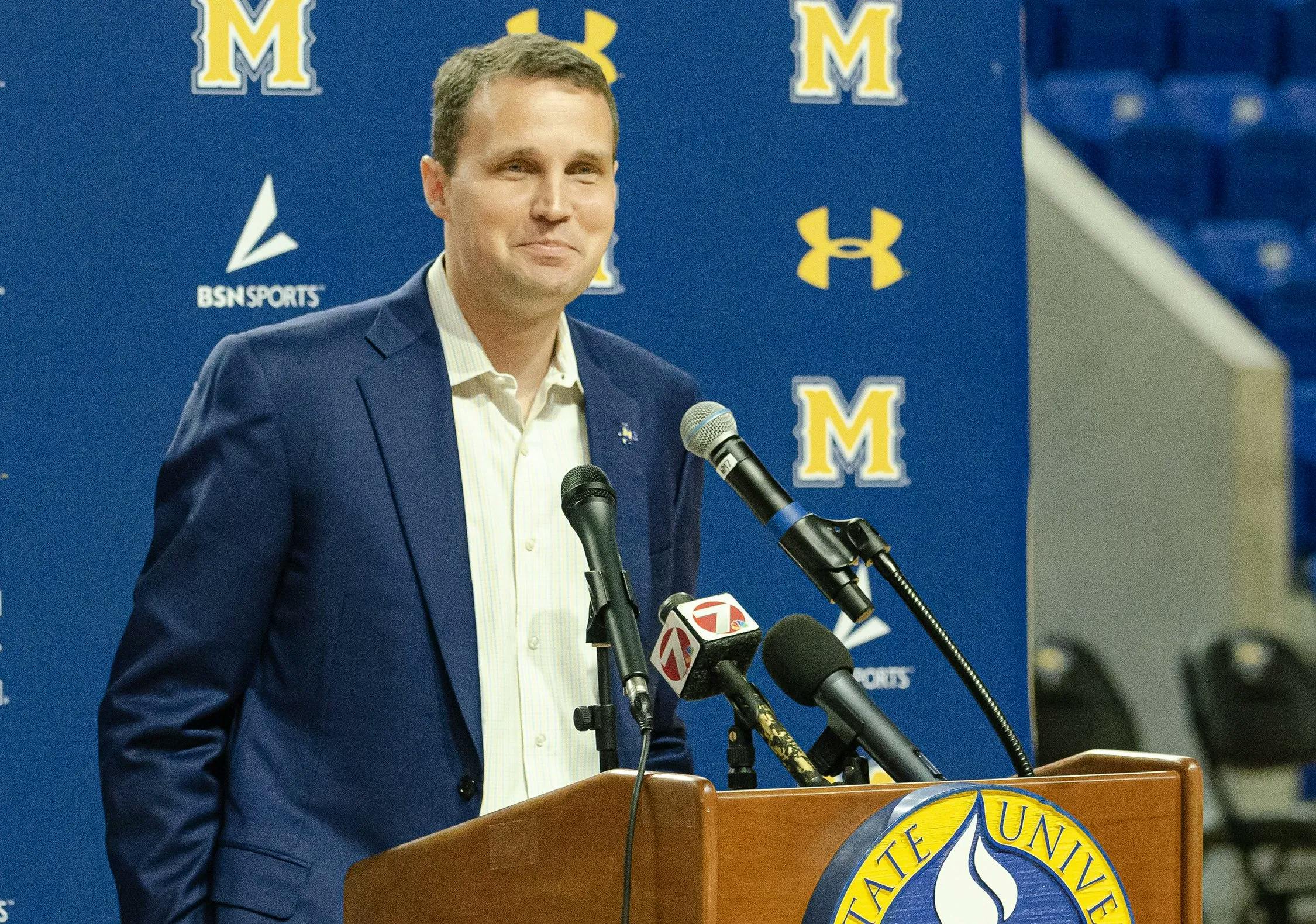
McNeese State Basketball Coach Will Wade’s 4 Core Pillars

  • By Grant Young

In a stunning display of basketball prowess and resilience, the No. 12-seeded McNeese State Cowboys delivered a performance for the ages, toppling the heavily favored Clemson Tigers in one of the most memorable upsets of the 2025 NCAA Tournament.

The victory was more than just a game—it was a testament to the transformative culture and basketball development program cultivated by head coach Will Wade. Since his arrival, Wade has instilled a unique blend of tactical innovation, psychological toughness, and unwavering belief that turned McNeese State from a mid-major afterthought into a giant-killing machine.

Wade's approach goes beyond traditional coaching. He has created an environment where players understand that their potential isn't defined by their recruiting stars or conference reputation, but by their collective hunger and strategic preparation. This upset wasn't a fluke—it was the result of meticulous film study, adaptive game planning, and a team that believed it could compete with anyone.

One key to their success was their ability to stay composed under pressure. While Clemson's players looked increasingly frustrated, the McNeese State players remained locked in, treating each possession like a championship moment. Their composure spoke volumes about Wade's leadership and mental conditioning.

This wasn't just a basketball victory—it was a statement. McNeese State proved that with the right culture, strategic preparation, and unbreakable team spirit, David can indeed topple Goliath on the biggest stage of college basketball.

Developing a team culture that can culminate in seismic upsets like these has always been a big part of how Wade runs his programs. And in his ‘Will Wade - McNeese State - Creating a Standard’ clinic, Coach Wade provides actionable insights on setting and maintaining team standards that drive success both on and off the field.

One key component to this clinic is Coach Wade’s ‘Four Pillars’, which are detailed at length and what Coach Wade leans on to help guide his team culture in a continuously positive direction. We have pulled these four pillars and are sharing them with you below.

Pillar 1: Respect

null

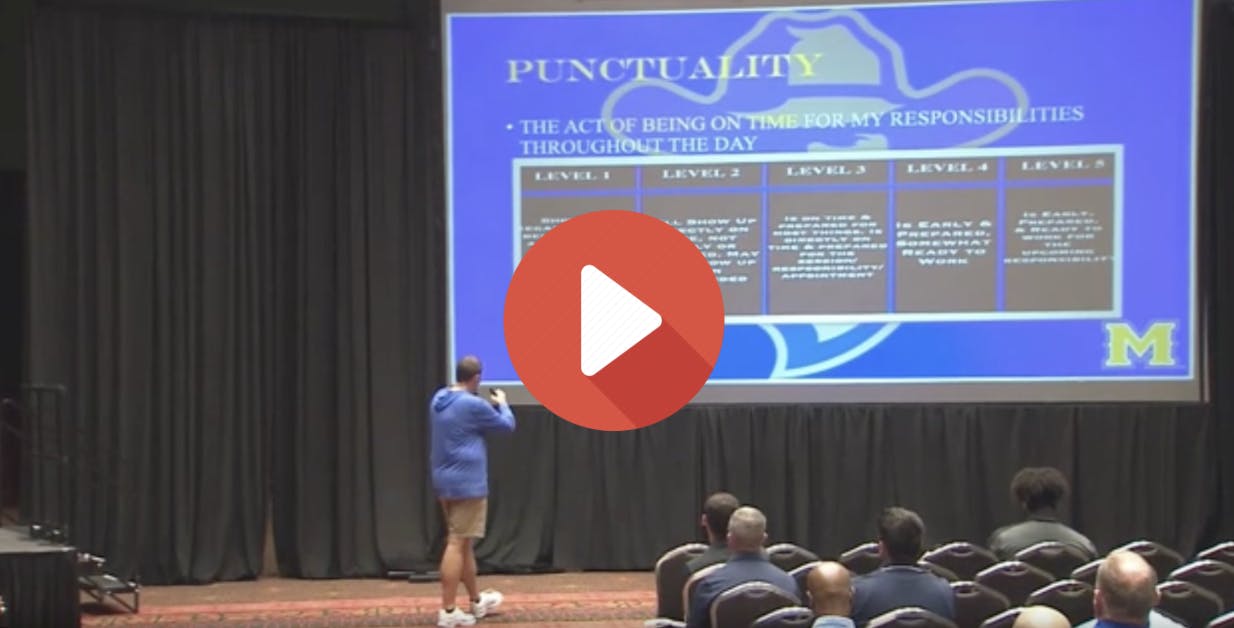
Coach Wade asserts that one of the core components of respect of punctuality, which he phrases as, “The act of being on time for my responsibilities throughout the day.” 

 Coach Wade has a way of quantifying punctuality, as he has a created google sheet that tracks and ranks how punctual every player on the roster is to every responsibility they have each week. They can either be ranked my teammates, coaches, or other members of the program, and they will then be assessed from a level one (the lowest) to a level five (the highest) at the end of the week. 

The next step of this pillar is effort, which means giving 100% effort daily. He’ll also have players ranked on this from level one to level five, although level five is above and beyond in this category. And while this has to do with the basketball court, it also pertains to every other aspect of a student athlete’s life. 

Third within the respect pillar is appreciation, which is being thankful for the opportunity they’ve been presented and showing it via attitude and gratitude. This means making the effort to say please and thank you, addressing people by name, and understanding how everyone within the program is playing their role in the team’s success. This is also graded and ranked from levels one to five. 

Pillar 2: Mind, Body, and Nutrition

Coach Wade goes on to explain how important keeping the mind and body healthy is equally important, and matters greatly as a core pillar. 

An important aspect of this pillar is that it’s on each player individually to keep these in good standing. While they can have access to all the resources, the bottom line is that each player has the final say on what they’re putting into their bodies, both in terms of nutrition and the content they’re consuming that could impact their mind. 

While this not to say that a player has to be perfect with every meal or can’t unwind by watching TV, they need to be sure to at least find balance and make a genuine effort to put their best foot forward in optimizing their physical and mental health before, during, and after the season. 

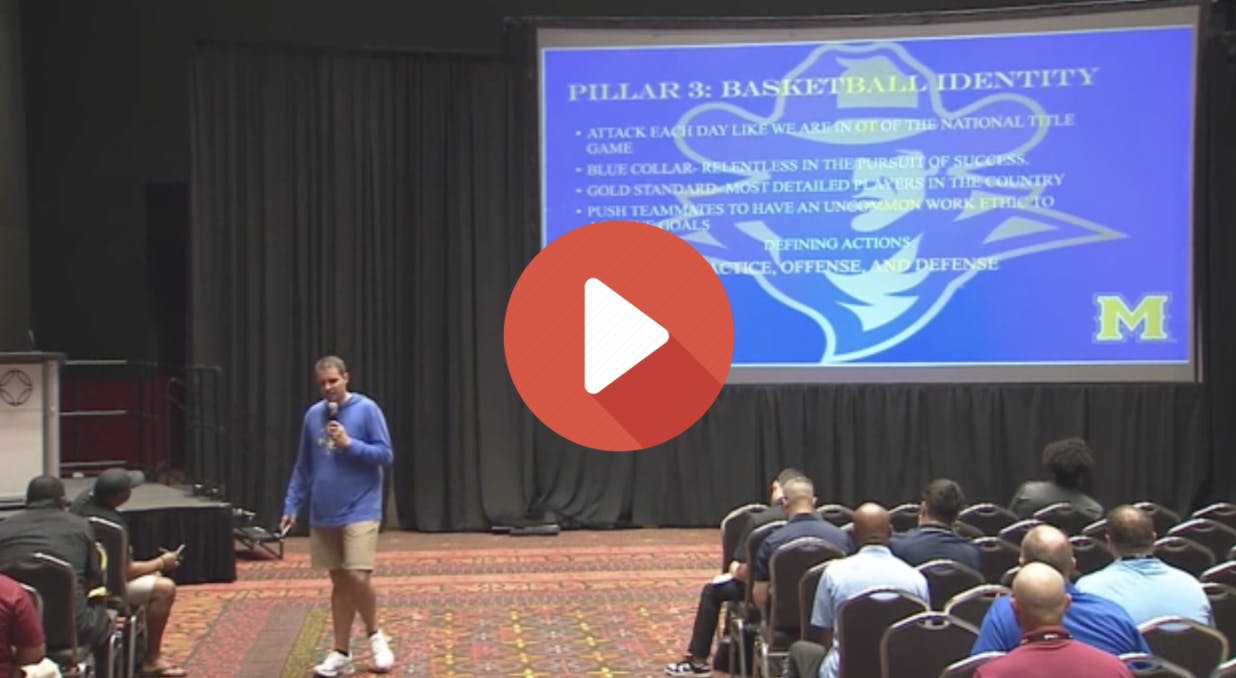
Pillar 3: Basketball Identity

null

The next part of Coach Wade’s core pillars is basketball identity, which to him is about being a gritty, blue-collar team that has earned everything they’ve received. 

He also discusses how he wants to make the most detail-oriented players in the country both on and off the court, and that teammates and members of the coaching staff should be working to all hold each other accountable on a daily basis so that the best version of them, both individuals and collectively, presents itself. 

All of these things are graded so that there are clear metrics that a player can use to gauge their improvement. 

Pillar 4: WE > ME 

The fourth and final pillar for Coach Wade’s McNeese State squad is We > Me, which he terms as whatever is necessary for the team to be successful, even if it comes at the cost of individual acclaim and accolades. 

One rule Coach Wade has is that he doesn’t allow players to wear the gear of another school or program inside the facility, because that isn’t a visual representation of togetherness and build pride in what the team is doing. 

What’s more, team gear should always remain clean and orderly because how a player presents and conducts themselves both inside and outside of the facility is a reflection of the entire program, whether they like it or not.


NYSS Every Kid In the Game
All kids deserve a chance to play #YouthSports – 
regardless of their ability. Help expand inclusive programs as part of 
the National Youth Sports Strategy from @HealthGov: https://bit.ly/2lQ85f6

Tuesday, April 8, 2025

US Sports Football Feat. 7 RPO’s for your playbook and UFL Top 10 Plays From Week 2

 2025 March Madness Blockbuster Or Dud? Now Streaming On US Sports Radio

 
By Coach Keith

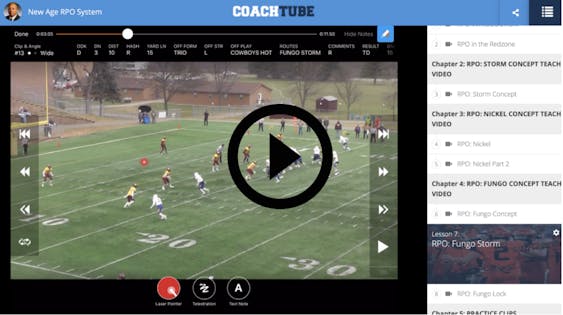
The RPO continues to evolve and find its way into every type of offense at every level.  These seven plays are from top coaches at every level who have utilized RPO to bring their offense to the top. For some, the RPO has even helped propel their climb up the coaching ranks.  

Check out these videos, and I am sure it will spark some thought and interest into how you can do more in your offense with the RPO.

Play 1: Bobby Acosta, Head Coach, IMG Academy  

Coach Acosta has experience at every level of the game from FBS to HS and his knowledge of offense is part of his ability to be able to lead top programs.  In this video, Acosta shares his Fungo Storm RPO  which clearly leaves linebackers confused.

null

Play 2: Jason McManus, Offensive Coordinator, Chapman HS  

Coach McManus has been a part of four state championship in South Carolina and also served as the OC in the Under Armour All-American Game.  In this video, McManus shares his Outside Zone/FB Wheel RPO which puts extreme stress on the linebacker to fit the run or cover downfield.

Play 3: Brent Dearmon, Offensive Coordinator, Kansas  

Coach Dearmon has had a meteoric rise to the top of the profession and his RPO offense has fueled it.  In this video, Dearmon shares his C-Gap Triple Option RPO.

Play 4: Matt Drinkall, Tight Ends Coach, Army 

Coach Drinkall made the jump from being a head coach at the NAIA level where he led Kansas Wesleyan to a top 10 program to Army West Point.

Play 5: Lucas Lueders, Offensive Coordinator, Central Missouri 

After leading Morningside College’s offense to back-to-back NAIA National Championships in 2018-19, and a nod as the Football Scoop NAIA Coordinator of the Year, Lueders has moved on to Central Missouri bringing his high power offense with him.  In this video he shares his 3rd level RPO designed to give the offense explosive plays.

Play 6: Alan Hensell, Head Coach, Franklin College 

Coach Hensell returns to his alma mater Franklin College after spending the last five seasons on staff at the University at Buffalo as the Tight End Coach. He assisted in turning around the Buffalo football program by helping guide the Bulls to three straight bowl appearances from 2017 to 2019. The Bulls offense utilized the tight end position to create dynamic weapons for their offense.  Hensell shares his InsideZone/Stick Concept RPO in this video.

Play 7: John Pennington, Head Coach, West Virginia State 

John Pennington enters his fourth year as the Head Football Coach at West Virginia State University in 2020.  In 2017, his first year he led the Yellow Jackets to their first winning season in over a decade.  The Yellow Jacket offense is one of the top offenses in NCAA DII.  In this video Pennington illustrates his A-Gap Zone RPO.


National Youth Sports Strategy
Everyone has a role to play in the National 
#YouthSports Strategy! Learn more about the strategy and ways to get 
involved from @HealthGov: https://bit.ly/2lQ85f6

Monday, April 7, 2025

US Sports Baseball Feat. Four Quotes to Hit Better With Two-Strikes and Cardinals vs. Red Sox Game 2 Highlights

 The Radio Home Of Champions. US Sports Radio

  • By Grant Young

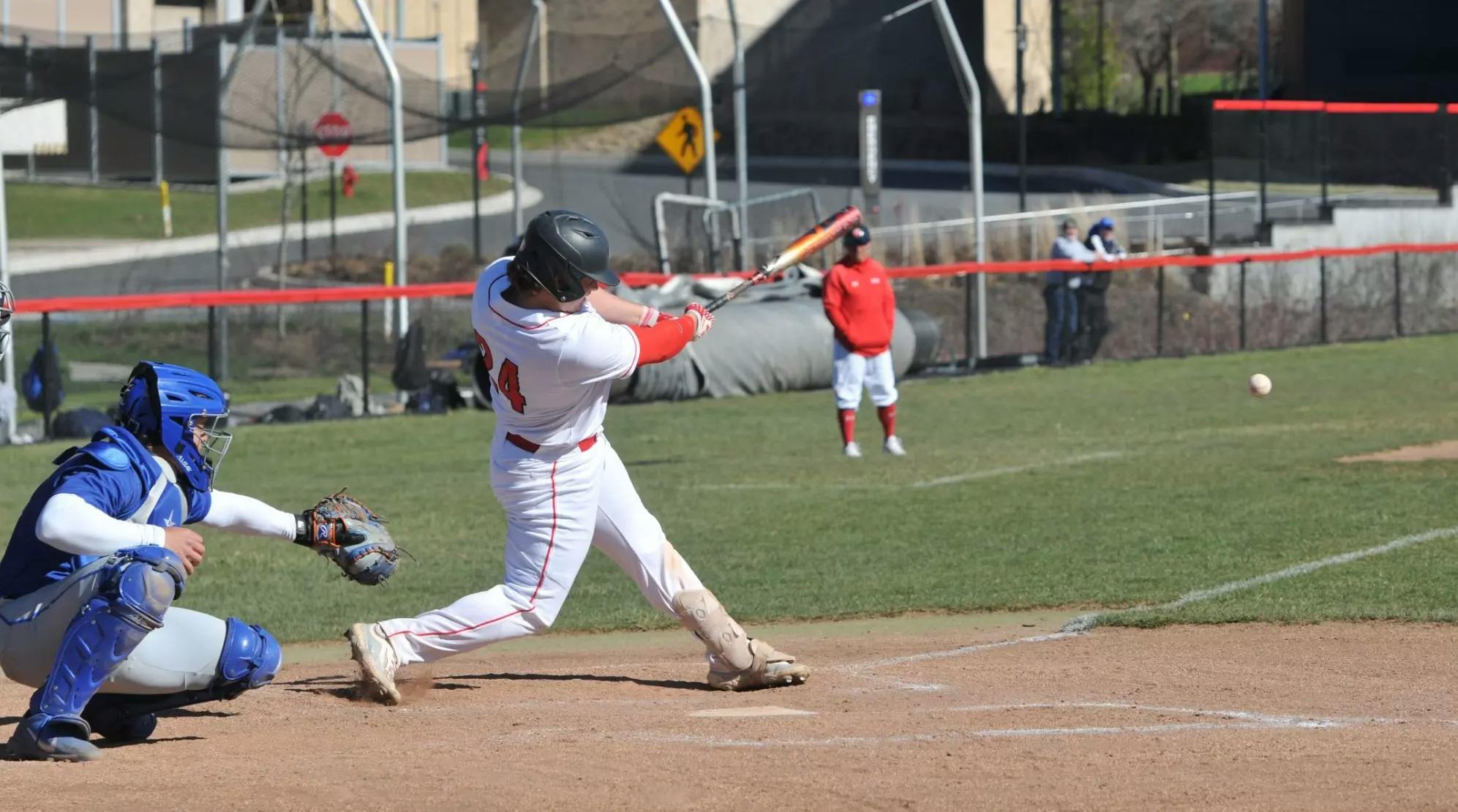
Any baseball hitting approach coach can empathize with the fact that hitting with two strikes is exceedingly difficult for several reasons:

1. Psychological Pressure: When a batter has two strikes against them, the pressure intensifies. They know that one more mistake could lead to an automatic out, which can lead to anxiety and affect their focus and decision-making. 

2. Pitcher’s Advantage: With two strikes, the pitcher has a greater advantage since they can throw a wider variety of pitches to try to induce a swing-and-miss. They often employ breaking balls or off-speed pitches that can catch hitters off guard. 

3. Swing Adjustments: Batters may feel compelled to shorten their swing or alter their approach to make contact, which can compromise their usual mechanics. This can lead to hitting the ball poorly or missing it altogether. 

4. Zone Awareness: With two strikes, batters have to be more discerning about the pitches they swing at. This heightened sense of caution can lead to hesitant swings or missed opportunities on pitches that are in the strike zone but not necessarily ideal for hitting. 

5. Increased Focus: The need to focus intensifies with two strikes, as batters must anticipate the pitcher's next move while also adjusting to the potential of getting struck out. This heightened focus can be a double-edged sword; while it can help in making better decisions, it can also lead to tension. 

These factors combine to make hitting with two strikes a difficult task, requiring not just skill but also mental resilience and adaptability. However, while nothing will keep hitters from being at a disadvantage with two strikes, having a solid hitting approach in these situations can help balance the odds. 

Brandon Matthews is a professional hitting instructor in North Carolina. Coach Matthews has almost 20 years of coaching experience at all levels from youth to professional baseball. In 2017, he started Swing Angry LLC for baseball and softball hitting instruction. Since then, Coach Matthews has performed thousands of lessons with youth to professional hitters.

In his ‘2 Strike Hitting: Approach, Philosophy, & Strategy’ course, Coach Matthews will teach you some unique strategies and game plans for handling 2 strike situations, such as controlling the at-bat before there are two strikes, how to remain aggressive, and diving deeper inside the data of pitch counts to help hitters better understand when the odds are more in their favor. We’ve pulled some of Coach Matthews’ best wisdom and included it for you below. 

Hunt In The Zone

Coach Matthews asserts that most coaches will say that they want their hitters to expand the strike zone with two strikes so that there’s less of a chance that they’ll strike out. 

To dispute this, he drops a quote from baseball legend Ted Williams, who said, “Giving the pitcher an extra two inches around the strike zone makes it 35% larger. Make sure you get a good ball to hit.” 

Coach Matthews backs this point up by conveying that trying to avoid the strikeout isn’t the be-all-end-all when it comes to a two-strike approach. This is because if you swing at a bad pitch that’s not in the strike zone just so you aren’t called out on strikes, you’re still almost certainly going to be out. Not to mention that umpires (less skilled ones) are typically hesitant to call someone on strikes anyway.

“Everything in life happens twice: the first time in your mind and the second time in reality,” Coach Matthews goes on to say. What he means by this is that if a hitter’s approach is to expand the zone with two strikes, they’re already telling themselves that they’re going to chase something out of the strike zone and be content with weak contact. 


Plus, this is going to make it much harder for a hitter to shut down their swing and not trigger to chase a breaking ball in the dirt or some other two-strike pitch that a hitter might see. 

The bottom line is that if the hitter doesn’t chase with two strikes, the pitcher will still need to make a quality pitch in the strike zone to get the hitter out. Understanding this will increase the chances a hitter makes hard contact with a two-strike pitch. 

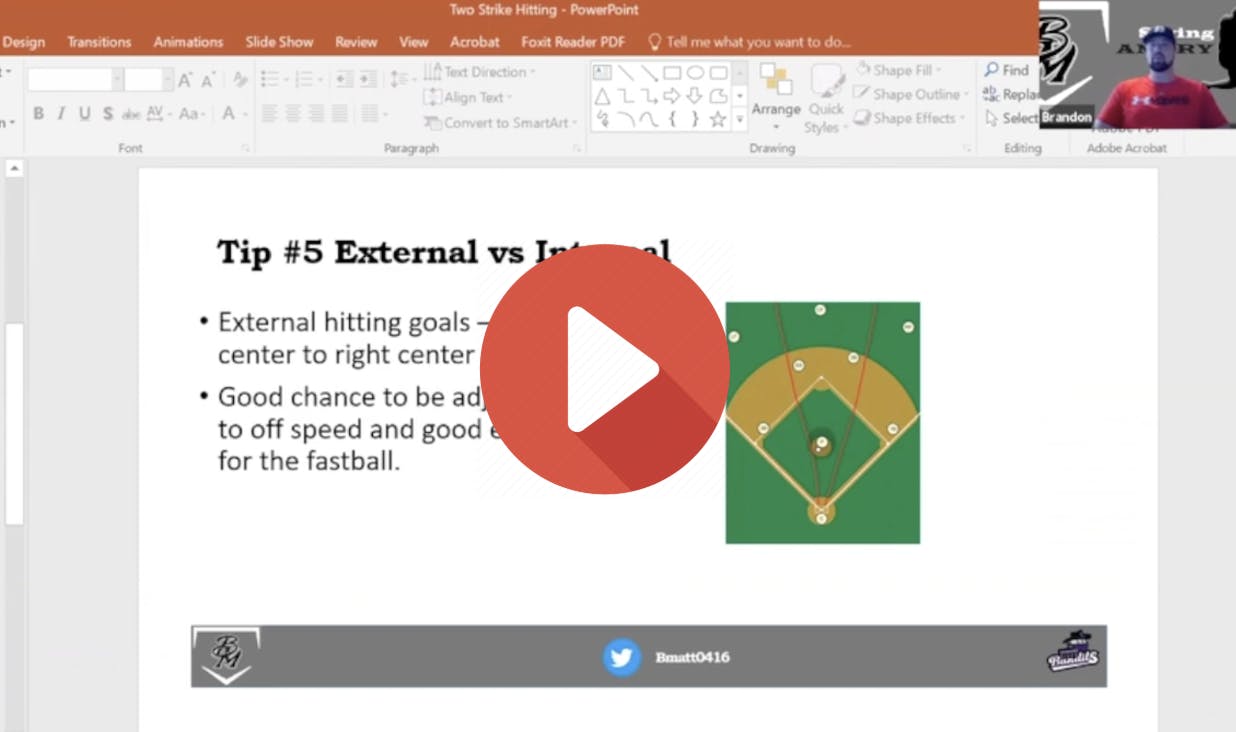
External vs Internal

null

“When we get to a two-strike situation, if you can pick out an area of the field… if you can have an external goal to hit the ball hard somewhere on that [opposite field] area, it gives you some adjustable timing,” Coach Matthews said. 

What he means by this is that preparing to hit the ball up the middle or to the opposite field will naturally make the hitter stay back on the ball more. This will not only make them less susceptible to chasing breaking balls in the dirt, but it will give them a bit more time to react and try to foul off a fastball or another pitch they weren’t expecting. 

Coach Matthews also adds that if a team has enough data on what an opposing pitcher likes to do with two strikes, they can hunt specific zones and sometimes hunt specific pitches if a pitcher is disposed toward one pitch with two strikes. 

“We can be adjustable in the hitting zone, and we can be adjustable in the strike zone.” 

In other words, a hitter doesn’t have to tighten up or be prepared to chase as soon as they get to two strikes. They can relax, prepare to wait on the ball, and hit it the other way.