Now Streaming On US Sports Radio!

US Sports Net Today!


Live Play-by-Play, Updates, Highlights and More! on US Sports Network!
[Chrome Users-You may have to click on the play button twice to listen]
US Sports Network Powered By Gorilla Sports!


US Sports Radio
The Las Vegas Raiders Play Here
Fitness and Sports Performance Info You Can Use!
The Scoreboard Mall
The Rock Almighty Shaker Of Heaven And Earth!
The Coolest Links In The Universe!

Saturday, July 26, 2025

The Las Vegas Raiders Show on US Sports Radio


Can the Raiders with the west with Pete, Chip, Geno, and Maxx?
Las Vegas Raiders Training Camp Report:
Raiders Training Camp Is Underway, Plus Geno Smith Joins The Show
Now streaming on US Sports Radio
https://bit.ly/USSportsRadioToday
http://www.USSportsRadio.net

US Sports Soccer: Modern Ways To Find The Child's Natural Talents and San Diego FC vs. Nashville SC Highlights


 MLS: The Official App

  • Author Amy W.

It does a lot of good if parents can recognize the talents of their kids at a very tender age. This way, the parents can guide them right from their young age to help the kids to attain the height of their career as early as possible. For all you know, the little child of yours may be the next American Idol or the next United States’ president. The earlier the telltale traits are recognized by parents, the better it is to nurture your child to achieve his goals and fulfill his talents. Be that as it may, parents need knowledge on how to recognize the talents of their kids at an early age. And that is the essence of this piece - to enlighten the parent about how to identify hidden talents in their kids.

Accept the kid as he is

Many parents have dreams for their kids, but it is better to allow the kids to choose their own paths. The path chosen by the kid may differ from what you desire or expect as a parent. No matter how different the kid’s plans and opinion are about the future, you must be ready to accept him as he is and help him to nurture his positive dreams and goals. At times, it is not about what the society tells you or what you think that matters, but what the child wants to do or become. Do not compare your kid to another kid next door or your friends’ child. For all you know, the kid next door became what he has become because his parents allowed him to be himself instead of forcing their own perceived ideas on his poor, naïve and helpless mind.

Take time to observe

At times, the best way to identify the hidden talent in that kid is to watch him closely and allow events to unfold. Do not be too quick to sign him up for a football coaching class. Why not allow him to show traces of love for football first? Because you failed in your bid to win a gold medal at the Olympics does not mean you must force your daughter to get involved in sports and feature at the Olympics.

Instead of forcing the kid to tow your desired line, just sit back and be alert to possible signs of a career choice in him.

If your kid is always in the backyard kicking or playing with balls, or frequently drawing Craypas, this may indicate a possible interest in soccer. If your son loves to always bury his head in books or in the habit of building roads and castles with blocks, then you may have a building engineer on your hands. Do you find the child always counting objects, testing his math skills or finding patterns, then you may be grooming a mathematician or even another Albert Einstein right there in your home!

When you notice any of the behaviors above, you should buy supplies and materials that can help the child to groom his dreams and explore his interests further. You can go a step further by registering the child in an institution, class or organization that can help him to develop his dreams and goals in life. Membership of these organizations or attendance in such related classes can help determine if the child is interested in that particular area and also help him to get better at what he does.

Set him free

Allow your child to explore freely, and this can indicate what the child wants to do. Do not engage any trial and error method in discovering the interest of the child. Instead, set him free and let his behaviors determine what his talent is. Your kid will stumble upon his interests during exploration. Give the child ample downtime, and he can successfully develop a sense of wonder. It will leave him to decide for himself what he wants to do.

Do not expect too much

Not every child can start playing the violin like an expert from age four. Maybe the boy next door could pull off that stunt, it gives no excuse to expect the same from your kid. Research shows that kids only start reflecting developmentally on their future when they are in the middle school year. So expecting too much from your kid at a very tender age may yield no good fruit. Before the kid attains middle school years, allow him to explore all possible options, which will help him to make informed decisions about what he wants to do in the future. He can pick out his interest among the various activities you allowed him to engage in.

Foster a growth mindset

Your kids are more likely to try new things and take risks when they have a growth mindset. As a result, they can open themselves up to various possibilities of discovering that particular thing they are passionate about.

Conclusion

Parents should allow their kids to explore and discover their interests by themselves, but there are times the parent may have to give the child a push. A parent needs the discretion to know what to do at any particular time. The parent may have to give a push when the child seems to be giving up on a dream he had earlier developed a genuine passion for. Parents will be better guides for their kids if they are knowledgeable about what to do and when to do it.

If you are interested in coloring pages for children and adults then feel free to comment or contact us anytime you want.

NYSS FB Be A Role Model

Friday, July 25, 2025

US Sports Track and Field: Four Tips for Teaching the Javelin Throw and The Only World Record That Was Too Good To Count


  • By Grant Young

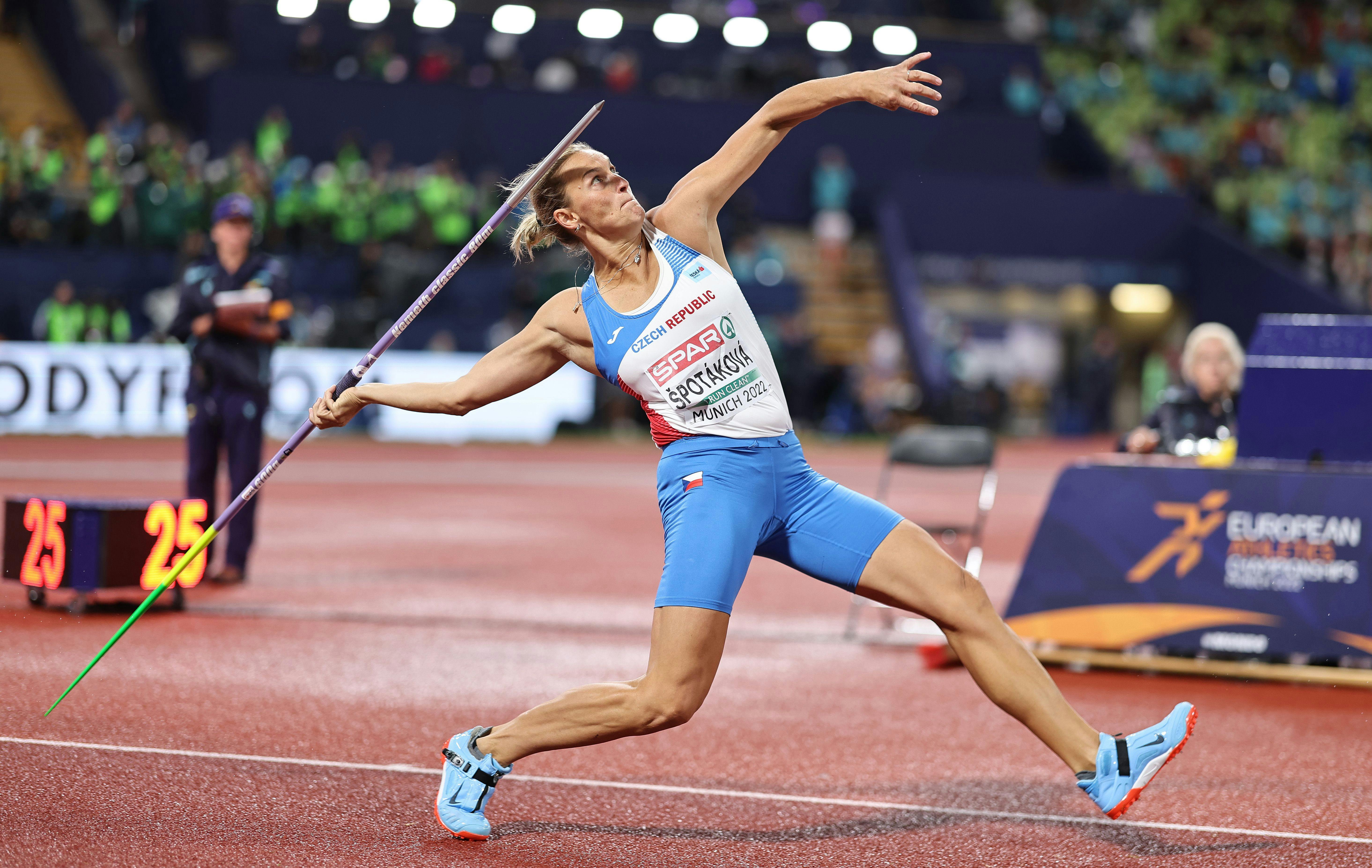
Teaching the javelin throw can present several challenges for javelin coaches, primarily due to the technical complexity of the event. 

Unlike some other track and field disciplines, the javelin throw requires a unique combination of strength, technique, and timing. Coaches must convey the intricate mechanics involved in the proper grip, stance, and release angles, which can be difficult for athletes to grasp without consistent practice and feedback. 

Not to mention that the javelin's physics—its aerodynamics and the way it reacts based on force and angle—adds another layer of complexity. Each athlete's physical attributes, such as height, arm length, and strength, affect how effectively they can perform the throw, requiring coaches to tailor their teaching strategies to individual needs. 

Safety is also a significant concern, as the javelin is a projectile that can pose risks to both the thrower and others in the vicinity. Coaches must emphasize safety protocols and proper warm-ups to prevent injuries. 

Lastly, there is often a lack of resources and equipment for proper training, making it challenging to provide adequate practice opportunities. 

The combination of technical demands, individual differences, safety issues, and resource limitations makes teaching the javelin throw a complex task for coaches. This is why it’s crucial to have the right resources and knowledge when teaching the javelin throw to your athletes. 

For that reason, we’ve compiled four crucial tips from proven javelin coaches that you can use right away when looking to correct technique and improve performance for your athletes. 

Mark Mirabelli - Throw Breakdown

During his 45 years as a track and field coach, Mark Mirabelli has presented at many national clinics in the USA and trained thousands of athletes over the US. Mirabelli's method and expertise in the Shot Put, Discus, and Javelin. 

Some of his most notable accolades are producing a 164-0 National Record at the prestigious Willingboro High School, coaching 16 All-American throwers in the Javelin, being selected by the NJISSA as “Outstanding Coaching Award for Dedication in NJ Track & Field” 2006, being selected to participate in the 2006 Gill/OTE Javelin Symposium in Chicago for Javelin Research among the best in the USA and Finland, and coaching 100’s of student-athletes in the Shot, Discus, and Javelin to full and part scholarships.

In his ‘Javelin II: The Ultimate Throwing Course Beginning to End’ clinic, Coach Mirabelli discusses what he wants to see in terms of javelin throw technique.

Among the most important parts of this is that the athlete keeps a nice backward lean, maintains a strong float (the stable flight path of the javelin where it appears to hang in the air, seemingly frozen) with the wrist above the shoulder throughout the throw, and that they keep the javelin point close to the cheek. 

This last point is important because it’s natural for an athlete (or any human, for that matter) to want to keep a sharp point like a javelin tip away from their eyes and cheek. But an athlete can’t have this in mind when executing their throw, or their mechanics will fall apart. 

Mark Mirabelli - Dynamic Warm Up Without Partner

Of course, warming up is crucial for any athlete. But especially javelin throwers, where such a specific and repetitive movement can easily lead to muscle strain and overuse.

This is why Coach Mirabelli swears by a dynamic warm-up that’s included in his clinic. Among the exercises he recommends is the side-to-side groin stretch for 20 yards. Because the javelin throw requires hip and groin mobility, it’s important to get these muscles stretched out. He also suggests implementing a toe touch with each stretch, which will increase flexibility. 

Of course, shoulder mobility is also of paramount importance. Therefore, Coach Mirabelli also suggests lateral snow angels while skipping for 20 yards, which will open up the scapula and get the upper body muscles firing. 

Sean Furey - Bungee Drill

null

Coach Sean Furey has been coaching and consulting with athletes at the high school, college and Olympic level since 2017. Prior to that, he had a 20-year post collegiate javelin throwing career, that saw him compete in two Olympic Games, two IAAF World Championships, and two Pan American Games. Sean also competed in the USA national championships for 14 straight years, winning three times. 

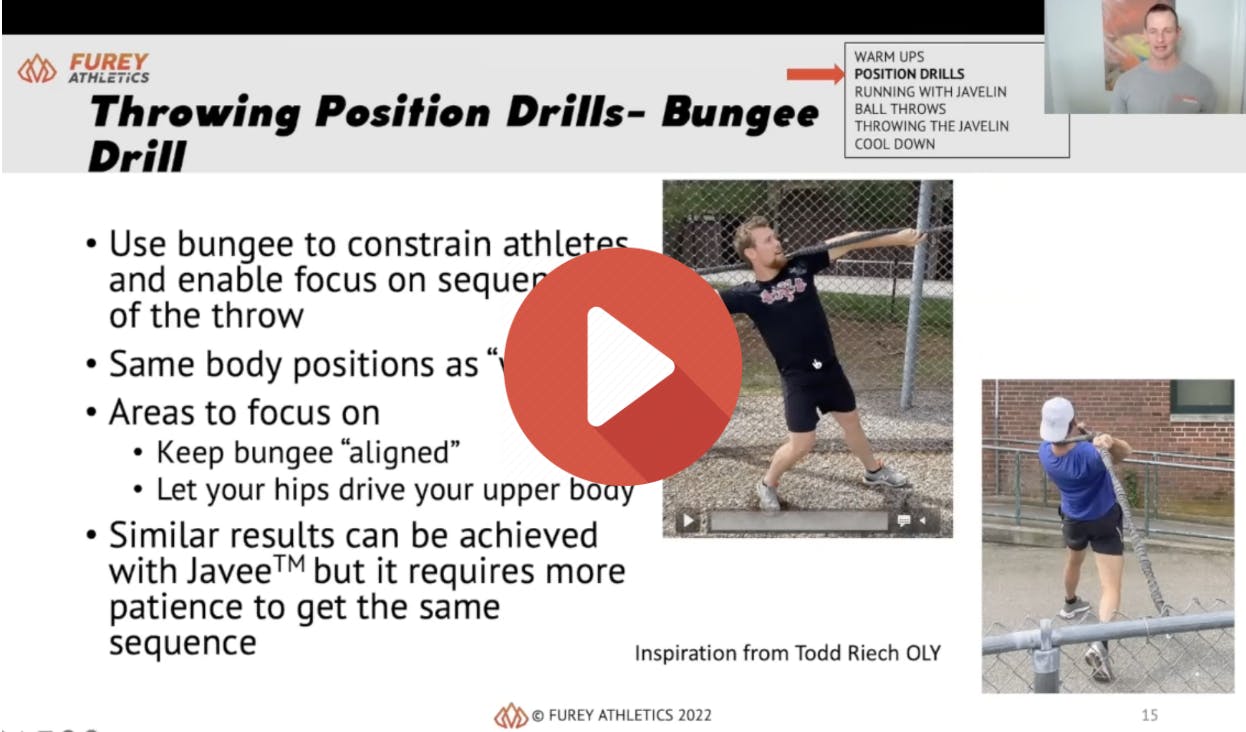
In his ‘Javelin Fundamentals: Guidelines for Setting Up An Effective Throwing Session’ clinic, Coach Furey discusses what he calls a bungee drill, which requires a bungee cord. 

Athletes are going to set the bungee cord up to a chain link fence and hold it like they would a javelin (while facing away from the fence). From there, they will mimic their javelin throw while focusing on driving the back knee, hip, and foot and then feeling the pressure of the throw going up the chain. 

This drill focuses on the hips, so athletes don’t need to mimic the actual throw. They can focus solely on replicating the hip movement required for a javelin throw and stopping the action there. 

Sean Furey - Take Away Messages

Through his time as both a player and a coach, Coach Furey has found that using vivid imagery and prioritizing objective assessment over subjective (which can evoke more negative emotions) are among the most effective techniques a javelin coach can use to instill knowledge into their athletes. 

In addition, Coach Furey stresses the importance of adding external cues. Seemingly trivial details like a team’s culture and demeanor during warm-ups do a lot as both a cause and effect of a team’s success (or lack thereof). Coaches should always be acutely aware of these small matters, because they’re great indicators of how well a job a coach is doing with their team.  

NYSS Twitter Focus on Fun

Thursday, July 24, 2025

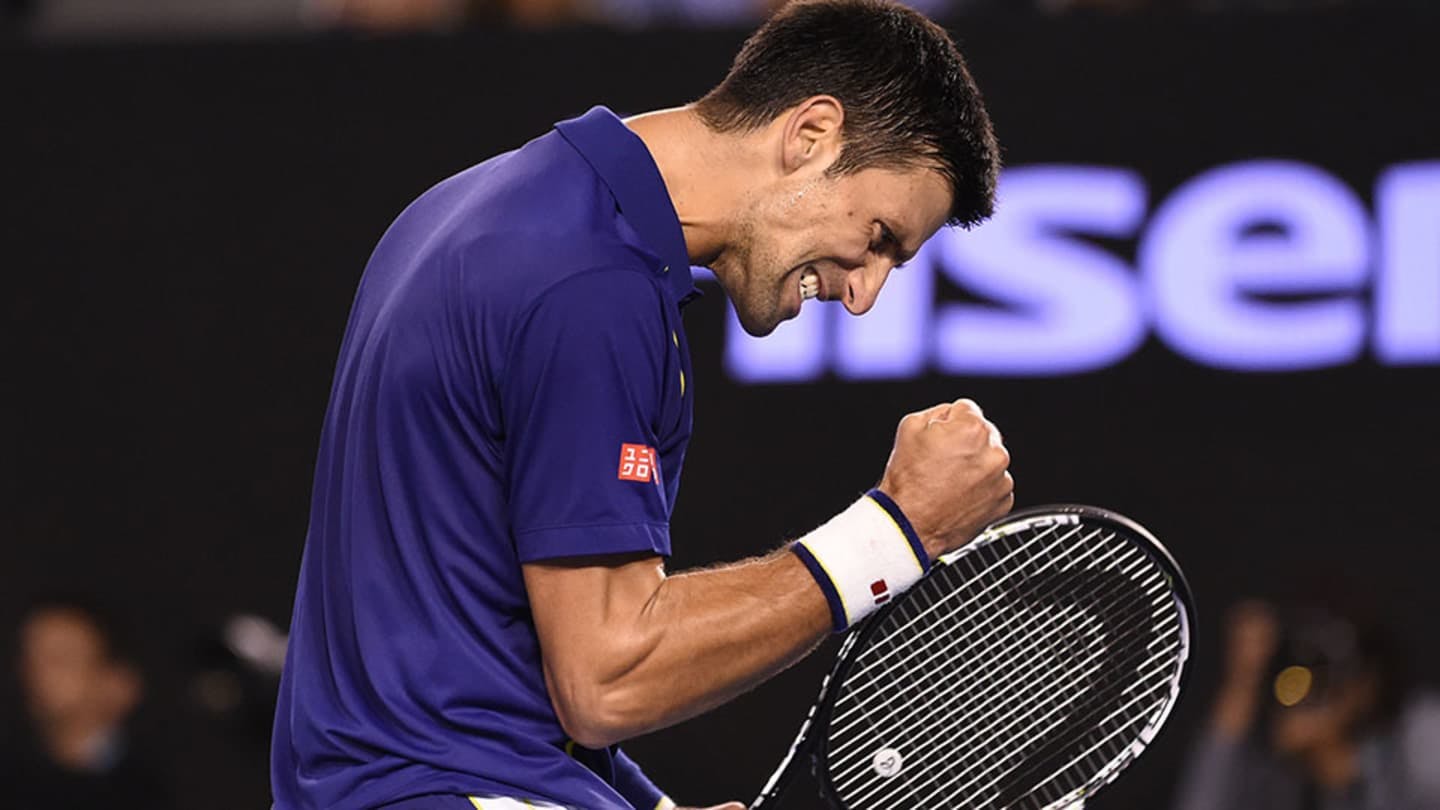
US Sports Tennis: Five Tactical Tips to Win More Tennis Matches and Fritz, Medvedev, Tiafoe & More Open Campaigns Washington 2025


  • By Grant Young

In the world of building tennis strategies, it’s easy to assume that skill and mental fortitude alone guarantee victory. However, even the most talented players can find themselves on the losing end of a match due to poor tactical planning. This phenomenon highlights the importance of strategy in the high-stakes environment of professional tennis, where fine details can make or break a game.

Here are some key points illustrating how inadequate tactical planning can lead to unexpected losses: 

- Failure to Analyze Opponent: A player may overlook the importance of studying their opponent’s previous matches and tendencies, missing crucial weaknesses that could be exploited. 

- Rigid Strategy: Sticking to a pre-determined game plan without adapting to the ongoing dynamics of the match can make a player predictable and vulnerable. 

- Ignoring Court Conditions: Not adjusting tactics for specific court surfaces or weather conditions can hinder a player's performance and lead to poor shot selection. 

- Overconfidence in Skill: Relying solely on their natural talent may cause a player to neglect strategic adjustments, creating holes in their game that an opponent can exploit. 

- Poor Shot Selection: Choosing aggressive shots instead of playing defensively at critical moments can lead to unforced errors, shifting momentum in favor of the opponent. 

- Mental Frustration: When a player encounters unexpected challenges, failing to adjust their tactics can lead to frustration and a decline in mental focus, further compromising their performance. 

Thankfully, grasping just a few key technical tips can set any player up for success in whatever matches they find themselves in. And few tennis coaches are better suited to dish these tips out than Marcin Bieniek.

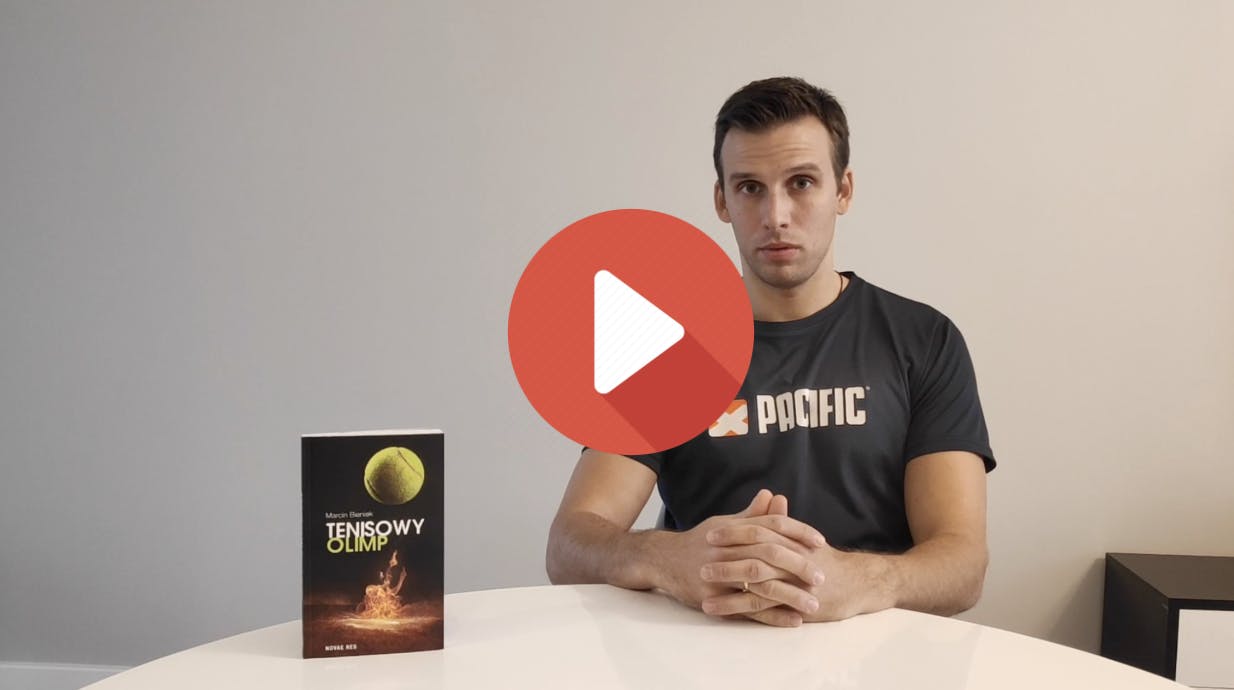
Coach Bieniek is a professional tennis coach and an author of tennis instructional book "Tenisowy Olimp". He started tennis at the age of 7 and continued his career to achieve a Top 10 rank in U12, U14, U16, U18 in Poland. He was competing on the international level and managed to get the highest ITF rank #475. As a coach, Marcin is certified by Polish Tennis Association, Professional Tennis Registry (Professional degree) and by International Tennis Performance Association (CTPS level). 

In his ‘Tactical plan to win a tennis match’ clinic, Coach Bieniek details tennis match tactics such as baseline game, net game, serving, and returning that will teach you how to think tactically and discover options that will give you advantages in a match against any opponent. We have pulled five of his tactics and included them below.  

Introduction

Coach Bieniek conveys five of his most pressing tactical tips to help players win tennis matches.

1. Cross-Court Power: He believes that a player should focus their practice and game energy on hitting cross court shots. Coach Bieniek asserts this is a great tactic because it’s more difficult to defend and will get an opponent more tired than straight line shots. As a result, the opponent will get more tired and make more mistakes as the match progresses. 

2. The Key of Positioning: Coach Bieniek explains that just knowing the correct positioning during a match can often be the difference between winning and losing, given that so many players have improper positioning. Some of his tips in this regard include not listening to the common adage “recover to the middle of the court” at all times. Instead, Coach Bieniek says that the only time you should do this is after you hit it to the center of the court.

Instead, players should use the tactic of following their shot so that they’re always in the middle of whichever angle their opponent can hit their shot back from.

3. Power of Tactical Basics: In this section, Coach Bieniek stresses the importance of getting back to the basics when a tennis player is struggling in a match. For example, this could be using and leaning in to your individual strengths as a player, whatever those may be. In addition to that, understanding and recognizing your weaknesses is a great basic tactic that can help you realize what your opponent might be trying to do against you or how you might be susceptible. 

4. Variety of Serving Pressure

null

Another tactic that Coach Bieniek swears by is having a variety of different pressures and speeds when executing a serve. This will keep your opponent guessing and unable to fall into a rhythm when your serve. In addition, using a variety of different serves will help you to identify what the opponent’s weaknesses are, which will allow you to exploit them and gain the upper hand. 

5. Returning With Plan: For his fifth and final tactic, Coach Bieniek conveys that a player should always have a plan in mind for how they want to return the serve so that they’re not merely reactionary to whatever their opponent’s serve plan is, which is when the most amount of mistakes arrive. 

While this is true, Coach Bieniek also conveys that a player must be able to adapt if their plan doesn’t work out in the way they had imagined, because this is a key aspect of having mental strength and being able to persevere enough to win a match. 

NYSS Twitter Be a Role Model

Wednesday, July 23, 2025

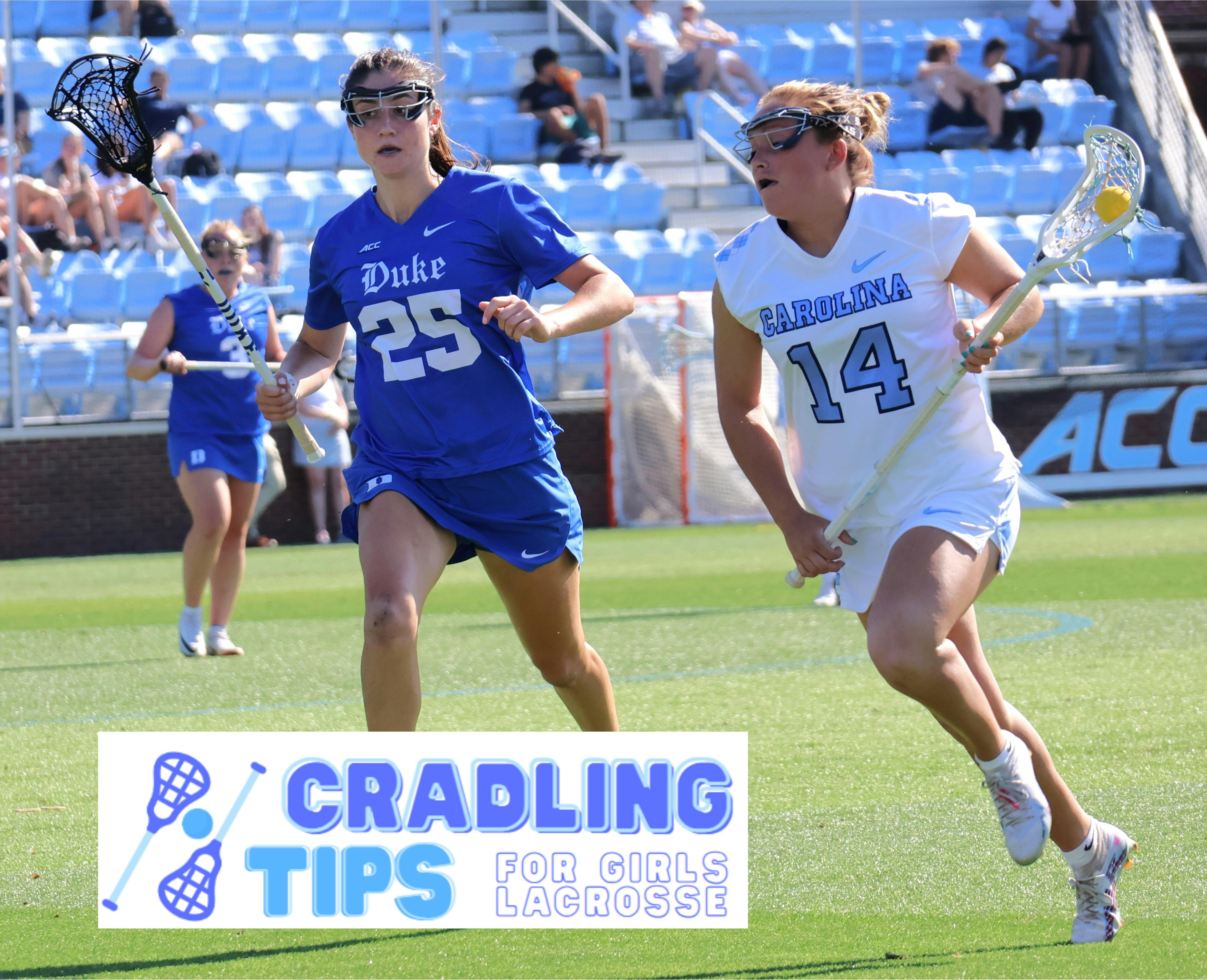
US Sports Lacrosse: From Beginner to Game-Changer: Cradling Tips for Girls’ Lacrosse and Top 20 Plays of the 2025 College Lacrosse Season


  • By Avery Hixson

When coaching girls lacrosse, it is crucial to understand that confidence on the lacrosse field starts with mastering the basics—and cradling is one of the most essential. It’s not just about keeping the ball in the stick; it’s about giving young players the control, rhythm, and poise they need to move with purpose. A strong cradle allows athletes to protect the ball under pressure, transition smoothly, and set up every play with confidence.

The right mix of instruction, repetition, and encouragement can turn hesitant hands into high-impact players. These practical tips and easy-to-teach strategies work for any kind of young player. Give your team the tools they need to develop, compete with confidence, and truly enjoy the game.

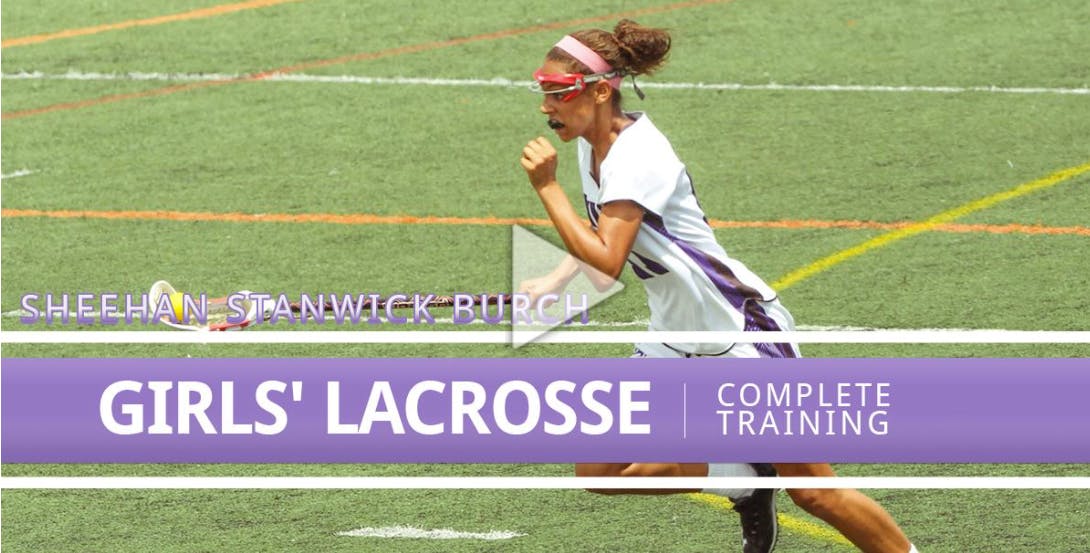
All lacrosse players know that solid stick skills set a great player apart from a decent player. Sheehan Stanwick Burch, a four-time All American women's lacrosse player and US Lacrosse Hall of Famer specializes in taking decent players and making them into great players. Burch has mastered teaching new players how to cradle with a few simple points and reminders that she covers in her course, Girls Lacrosse Drills & Tips Video Library, as well as many other key lacrosse concepts. Anybody can learn to cradle effectively, so let's dive in!

Tips to Know

Before picking up the stick and just going for it, it’s important to have some rules to reference. To cradle, you must know how to hold the stick, placement of the stick, and the motion of the cradle.

Hand Placement

Your dominant hand should be about two thirds up the stick, wherever it feels most comfortable to hold, with a strong grip. Your nondominant hand should be at the very bottom of the stick, also known as the butt of the stick, lightly holding the stick in place. Your bottom hand shouldn’t be doing much of the work, it is “just a guide.”

Position of the Stick

Coach Burch describes that the stick should be tilted enough to balance the ball upright, but not so tilted that it has the chance to roll out the back. The starting position of the cradle should be tilted on your dominant side shoulder. You should “always be a threat to score,” meaning your stick position should be comfortable and versatile enough to pass or shoot.

Motion of the Cradle

The motion of the cradling itself should be “very quick, and very tight.” Simplicity is key when it comes to an effective cradle, it is important to be able to make quick decisions while cradling, like passing, shooting, dodging, or even faking.

How and Where to Cradle

null

Once the process is understood, it’s time to cradle! The cradle should be between your shoulder and your ear. This means that the full range of motion that the cradle covers shouldn’t go any farther away from your body than your shoulder. The cradle should begin with the stick out at your shoulder, then quickly curls in towards your ear, then repeat. This ensures that the ball is protected from other players. This position also maintains the “threat to score” ability. This simple, short-range cradle saves time and energy compared to wider, more dramatic or advanced cradling methods.

Cradle with Either Hand

null

The next step after learning to cradle is to be able to do so with both hands. Coach Rachel Lenzo covers how to do this in her course, Catching, Shooting & Dodging for Girls Lacrosse. Here’s how she describes it.

To learn to switch hands, you should begin in the “triple threat position,” similar to what Coach Burch describes as being a “threat to score.” If you are switching from your right hand to your left hand, you first need to bring your bottom hand to your left side. Then, you lower your stick to your bottom hand, and switch hand positions to a left-dominant position. Coach Benzo clarifies that at no point in this switch should you only have one hand on the stick, it should be both at all times. She emphasizes the two most important steps: cross over your body, and switch your hands. Being able to cradle with both hands and protect the stick is a surefire way to become a better player.

NYSS Stay In The Game

Tuesday, July 22, 2025

US Sports Partner Spotlight: Fundrise

 Fundrise logo

We're on a mission to build a better financial system by empowering the individual.
Founded in 2012 and headquartered in Washington, DC, Fundrise is one of the leading real estate investment platforms.
Get started @ https://tinyurl.com/FundriseToday

US Sports Radio affiliate partner
http://www.USSportsRadio.net

US Sports Basketball: Assemble a Championship-Caliber Basketball Rotation and KINGS vs HORNETS NBA SUMMER LEAGUE CHAMPIONSHIP Highlights


  • By Brandon Ogle

No coach, at least in recent memory, has exemplified the set-up of rotations better than the San Antonio Spurs’ Gregg Popovich. The legendary coach once said, “It’s not about any one person. You’ve got to get over yourself and realize that it takes a group to get this thing done.” Having a star player definitely helps a lot in the campaign towards winning basketball games, but it doesn’t ensure victories. With this said, every player on the roster can provide positive dividends, whether that be at practice pushing the starters or contributing in the games!

Starting Five

Simply put, the starting five are the players that get the lion’s share of the attention. These five players need to constantly be on the same page. Likewise, it is urgent to possess the ability to be quick starters. When you can get ahead early, the rest of the players become more comfortable and you play better. However, I urge all players to not hold the starting five recognition to the utmost importance. Yes, it’s easy to see why all players want to be starters, but the starting five is not always the five most talented players on the roster. Normally, it is just the five players that complement each other the best. So, the best advice I can give is to not get discouraged if you don’t start. Rather, keep your mental fortitude up and play at maximum effort.

 Sixth Man

The title “Sixth Man” is typically given to the player that is first off the bench. He or she’s game can fall under a number of different categories, but the key is that the sixth man understands his or her role on the team. As I just mentioned, not all players serving as the sixth man have the same styles of play. Many teams opt to go with dynamite scorers as the sixth man. These players can come in right away and aren’t afraid to take action and put some shots up. Meanwhile, other teams use a three-point marksmen. Here, you’re looking for a player that is deadly from deep and not hesitant to come in with the purpose of cleaning up an early deficit. Conversely, there are coaches that look for a defensive stopper or rebounding specialist. All of these different types of players are above-average in at least one skillset. If you’re working to be a sixth man, take this philosophy to heart. I recommend checking out this video from CoachTube ttp://coachtube.com/course/basketball/dribble-pass-shooting-practice">CoachTube by high school coach, Bob Schurtz, as he breaks down the critical aspects of ball-handling, passing and shooting. Each of these are attributes capable of being perfected by sixth man players. While all of these are different skillsets, the core idea is personality. The sixth man needs a mindset where he understands his job and doesn’t need a couple minutes on the court to start making plays.

Second Unit

Just as every team has a starting five, they also have a second unit. This back-up group of players likely won’t be as talented as the starting five. However, they will have experience practicing as a unit, thus preparing them to play together. While the starting five will usually have specified roles, this will be exactly the case with the second unit. Any players on the second unit need to understand they have limited time to make an impact on the coach. If you’re not getting the job done, then an early hook is a definite possibility.

Stamina

When coaches are evaluating their rotations, they always take into mind the stamina of their team. This concept sort of goes hand-in-hand with the next section, but the key is to not ignore conditioning. Like any sport, you need to be in great shape to play basketball. Even though the coach is largely in charge of ensuring proper conditioning during the season, I urge you to not ignore offseason work. The offseason is where you start seeing the differences between players. Whether it be putting in work in the weight room, getting up shots in the gym or doing cardio, you need to prepare yourself for the season. This will help ensure stamina is an after-thought come regular season time.

8, 9 or 10 Players?

Depending on the roster size, you can see anywhere from 7-10 man rotations. Since 7 is not very wise, I’ll take a deeper look at 8, 9 and 10 player lineups. First off, a 10 player rotation is essentially a coach’s dream. It allows them to give everyone adequate rest and basically, implement a platoon system like the University of Kentucky did during the 2014-15 season. Stamina shouldn’t be a question here, thanks to the large number of quality players. Meanwhile, 9 still ensures stamina shouldn’t be a question. However, it also means there is probably going to be a player or two in the starting lineup that is capable of playing more minutes than the rest. Finally, an 8 player rotation is utilized when you’re a little thin on the bench. This doesn’t mean the team isn’t talented. Instead, it just proves that either the starting five is significantly better and can play longer stretches or there are one or two elite players on the roster.

Garbage Time

No matter what level you’re at, there are going to be games where either your team is up by a lot or you’re getting run out of the gym. In these cases, coaches need players capable of playing the late minutes. If you’re still at the youth level, chances are starters could still be in there late in blowouts. With this said, these situations provide the opportunity to showcase our skills to the coach and develop chemistry with your teammates to ensure you’re successful next time out. In the end, it is important to take advantage of every minute you get on the hardwood and never consider a moment meaningless!

Back-to-Backs

When I hear the term “back-to-backs,” I always think of the San Antonio Spurs and Gregg Popovich. While coaching aging veterans like Manu Ginobili and Tim Duncan, Coach Pop elected to rest these guys as often as possible to ensure they were ready for the postseason. Though this situation largely is in effect for older leagues, it is important to understand how to handle back-to-backs, which are when you have games on consecutive games. While some of this depends on maturity level, you need to develop an understanding of how you can pace yourself in these scenarios. Even if you might be in great shape, it is vital to have complete knowledge of your body and how to prepare yourself to handle these strenuous situations.

Examples of Solid Rotations

It isn’t difficult to find quality rotations. However, it is also important to remember that complete rotations don’t form overnight, as coaches are consistently tinkering with them. For an example, I’ll give the 2013-14 NBA Champion San Antonio Spurs:

-       PG: Tony Parker, Patty Mills – At the point guard spot, the Spurs had a quality veteran in Parker, who had loads of playoff experience. As a backup, Mills possessed the ability to come in and have an instant impact, even if that was only 10-15 minutes a game.

-       SG: Danny Green, Manu Ginobili, Cory Joseph – Shooting guard was similar to the point guard position, but switched. The veteran, Ginobili, came off the bench, but provided a calming influence on the second unit and even mixed in with the starting five later on in the games. Meanwhile, Danny Green was a deadly outside shooter that was a perfect fit in the starting unit.

-       SF: Kawhi Leonard, Marco Belinelli – At small forward, we see a rising star in Leonard and an immediate scoring threat in Belinelli. Leonard also served as the defensive stopper in the starting five. This is important as he was able to face up with the opponent’s top scorer and attempt to shut them down.

-       PF: Boris Diaw, Jeff Ayres, Matt Bonner – The starting power forward, Boris Diaw, is a unique player in his ability to space the floor. His versatility opens up the paint for penetration. For backups, Popovich had two options with a rebounding force in Ayres and scoring option in Bonner.

-       C: Tim Duncan, Tiago Splitter – Depth is once again witnessed at the center position. Although an aging superstar, Duncan was still able to be effective in his minutes. However, the presence of Splitter allowed Duncan to rest in garbage time and occasional back-to-backs.

Depth!

Every coach loves to have depth on their team. While I’ve mentioned the various aspects of a quality rotation, if you don’t have capable back-ups, it’s going to be hard to put together a great rotation. As witnessed with the Spurs’ championship team, you need quality back-ups that can give the starters a rest. However, these are not guys just in there to give players a breather, but rather players understanding the opportunity at hand of being on the court!

NYSS Find Their Strengths

Monday, July 21, 2025

US Sports Partner Spotlight: Zulay Kitchen

Save 15% with code ZULAY15
https://tinyurl.com/ZulayKitchen25
At Zulay Kitchen, we believe cooking should be simple, fun, and joyful. Born from a passion for home-cooked meals and family connection, we create affordable, thoughtfully-designed kitchen tools that make your time in the kitchen easier and more enjoyable.

US Sports Radio affiliate partner  http://www.USSportsRadio.net

US Sports Football: Attack Defenses with The Versatile Y-Cross Concept and CFL 2025 Recap: Hamilton @ Ottawa - Week 7


  • By Keith Grabowski

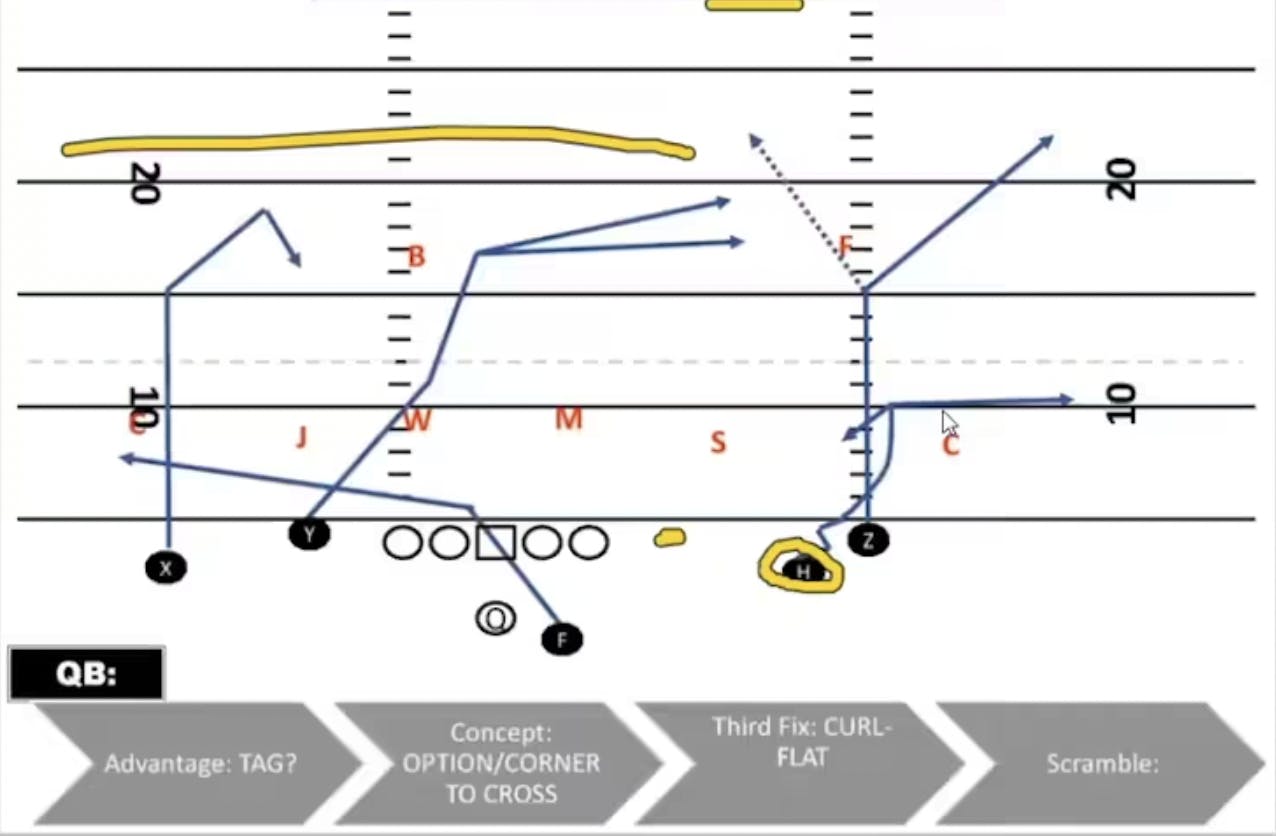
The Y-Cross concept is a staple of the Air Raid offenses, dating back to the days of LaVell Edwards at BYU and refined over the years by coaches such as Hal Mumme and Mike Leach.ed over the years by coaches such as Hal Mumme and Mike Leach. This concept involves a deep route or routes to occupy the safeties, and a crossing or over route from either a tight end or a slot receiver. The QB takes a quick look first at the deep route (or combination to the side the cross is being run to,  to find an easy throw or a rhythm shot, then works to the primary route, which is the crossing route. 

While it has its roots in the Air Raid offense, the Y-Cross can be found in all styles of offense playbooks.  

Its versatility in application from a variety of formations allows it to be dressed up in a number of different ways while also being an effective play-action concept.

What it does is create an oblique stretch of the defense with what becomes a three-level flood concept. 

While many early iterations had the tight end or “Y” running the cross, it has application for speedy receivers and has become a favorite of the Kansas City Chiefs-skills">receivers and has become a favorite of the Kansas City Chiefs with the different dynamic slot receivers who were or are a part of their offense.

In addition, the ability to utilize the personnel available makes this a multi-purpose concept that can attack a number of coverages. Packaged correctly with other route combinations, it can be designed and utilized to beat any coverage.

Let’s take a look at both the basics of the route as well as how coaches are utilizing the Y-Cross in different ways within their offenses.

History of the Y Cross

It’s always good to understand how a concept came into use as well as how it has evolved and adapted to attack the defense. Loren Endsley does a great job sharing the history of the play and how it has evolved in this video:

Benefits of the Y Cross

Three receivers attacking a weakside zone

A horizontal and vertical stretch of the defense

Can attack any coverage

Simple read for QB and allows for a scan across the defense which puts his eyes ahead of windows to see defenders and danger

Can be used with a variety of formations and personnel

Easily tagged to create multiple looks and issues for a defense

Basics 

This concept gets some of your best-skill players on the move looking to create big plays down the football field. The core of this concept is the post, crosser, and running back or receiver stretching the flat to the boundary. On the frontside, teams are able to tag a variety of routes/combinations that give the QB decision-making power within his progression, such as the smash concept

This is another great horizontal pass concept that gets skilled players on the move across the middle of the field and adds another layer to the passing attack, similar to the Shallow Cross concept.

Why it Does Well Against Various Coverages

Man Coverage- Man coverage is beaten primarily by routes running away from defenders. The post or mandatory outside release Go route to the weak side provide good man-beating options, and the crosser runs away from the defender as well. When that crosser is a receiver like Tyreek Hill, it’s even better!

Cover 4 - Against quarters with play action, the safety is usually responsible for a boundary run fit. The Post can be run from the boundary to attack that are over the safety who is reacting down toward the line of scrimmage

Defenses tend to include their boundary-free safety in the fun fit in cover 4. This creates the potential for the post-route runner to win over the top of the defense

Cover 3 - The three-level stretch makes this difficult for the flat defender. Essentially a high-low stretch is created on him. 

Applications and Ideas 

Lincoln Riley, Head Coach, USC

Y-Cross is versatile because of the numerous ways that the play can be designed. For instance, Riley illustrates a version in which the front side of the progression can be any quick game concept that clears out space for the Y-Cross. 

The base install for Oklahoma is vertical by #1 and a speed out by #2. In his clinic talk, Riley shows multiple examples of different quick game concepts that OU has used. Because the play is versatile by design, it lends itself to be effective in many formations and personnel groupings to fit the players that are on the field. Although its base install is from 10 personnel, Coach Riley has utilized 20 and 21 personnel groupings with this concept and loves play-action for an extra element of explosion.

Coaching Points

It is vital that the receivers, no matter the formation or personnel, understand their role within the progression. 

Read #1- The quick game concept with Y-Cross has to know that they cannot work their release for too long. They are the first read, and they must clear out for the Cross. If they take too long working a release, they will take themselves and the Cross out of the play. If the QB likes a matchup to the quick game concept, he can take the throw now.

Read #2- The Y must have the most “feel” of any receiver to run this route. He has to be able to feel the defense and find open grass. This could mean stair-stepping more vertically against underneath coverage, snapping flat across the field in front of deeper coverage, or sitting down the crossing route to avoid running into coverage. 

Read #3- The curl route on the backside of the play must also understand the progression. However, this time, it is because this route can be patient and work a release since it is the final option. Getting open too quickly can be just as bad as not getting open at all. 

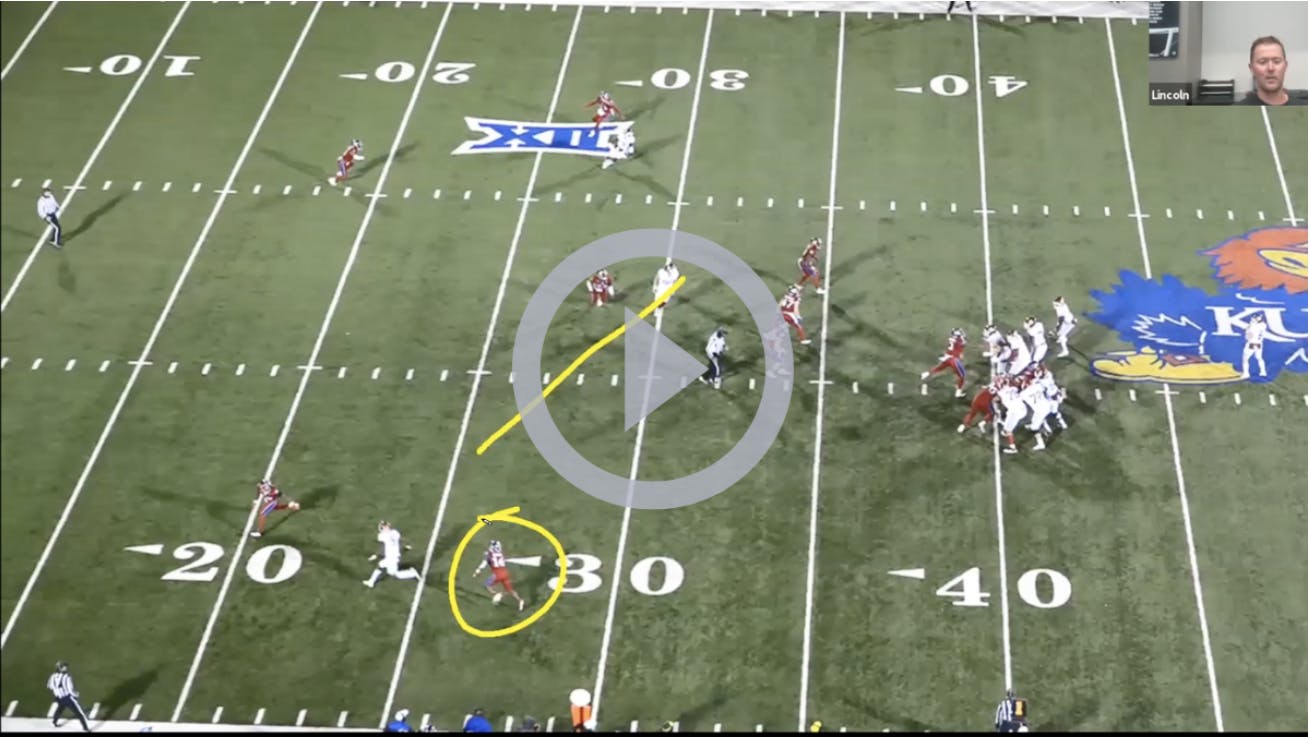
Here is Coach Riley explaining the basics of the Y-Cross as he applies it.

The Y-Cross is a great all-purpose route for any offense. It allows for versatility in how it is utilized and in doing so can create the opportunity for both easy throws as well as built-in pressure or hot throws while still giving the offense the opportunity to hit an intermediate route and take a chunk out of the defense.  In this example, Lincoln Riley shows how the Y runs the route in order to protect the throw:

null

Jason Mohns - TE Coach, Arizona State

For Jason Mohns, 7x state champion at Saguaro HS(AZ) and now the TE Coach at Arizona State, the Y-Cross is a play-action concept installed out of 2x2, but they have 3x1 versions as well.  In his variation of Y-Cross he utilizes a “back out bubble” with a mandatory outside release go by the X receiver on the boundary. The play action draws the linebackers down allowing space for the crosser to be open.  The QB progresses from the Go and Bubble to the Cross as he explains in the video:

Josh Herring - Offensive Coordinator, Jones County HS (GA)

Josh Herring likes Y Cross as a backside tag. For example, it can be paired with a dropback like the Smash route.  In his concept which he calls “Goofy,” the smash is utilized from sa compressed set with the Crosser coming into a void if the corner and flat get covered.

Whether it’s Y-Cross or another route concept, finding those routes that can have multiple uses in personnel, formations, and play action as well as drop back give you an advantage in getting the concept better and better over the course of the install and the season because it gets a lot of reps for the quarterback and receivers.

NYSS Every Kid In the Game