Now Streaming On US Sports Radio!

US Sports Net Today!


Live Play-by-Play, Updates, Highlights and More! on US Sports Network!
[Chrome Users-You may have to click on the play button twice to listen]
US Sports Network Powered By Gorilla Sports!


US Sports Radio
The Las Vegas Raiders Play Here
Fitness and Sports Performance Info You Can Use!
The Scoreboard Mall
The Rock Almighty Shaker Of Heaven And Earth!
The Coolest Links In The Universe!

Saturday, August 23, 2025

US Sports Track and Field: How to Coach Weightlifting For Increased Speed and Acceleration and The Women's 400mH did not disappoint! Diamond League


  • By Grant Young

Regardless of the sport they play, strength training and conditioning is an absolute must for any high-level athlete’s training regimen.

And while most coaches and players know their way around a weight room — at least at a barebone, simplistic level — increasing functional strength safely from weightlifting is a nuanced subject that takes years of study to master. 

But when one considers the increased risk of injury that can come from weightlifting improperly, which can impede an entire season’s worth of hard work, it’s best that coaches receive their weight room knowledge from experts. 

Especially because these experts have dedicated their lives to finding the most effective weightlifting regimens to increase explosion, speed, acceleration, and every other aspect of athleticism. Luckily for coaches, these gurus want to share the insights they’ve gleaned with the rest of the sports world, to maximize every athlete's potential. 

We've compiled some of the best online courses about how to increase speed and acceleration in the weight room; all while minimizing risk of injury.

JT Ayers - Lifting for Speed Made Easy

Coach JT Ayers is a three-time Orange County Track Coach of the Year (2013, 2016, 2019) and has been coaching Track and Field for 14 years. Since 2014, his athletes have broken 35 grade level and 8 school records, 3 All-Time Orange County Records, and the team has been ranked #1 in Orange County in 4 different years (2015, 2016, 2018, 2020).

Coach Kula has 22 years of experience in the athletic development of athletes at all levels from youth to professional. He has worked with Division 1 athletes from over 25 universities across the country including notable local athletes Christian McCaffrey (San Francisco 49ers running back), Anna Hall (US Record Heptathlon/Pentathlon holder in 2019), MaryBeth Sant (NCAA #1 ranked 100m sprinter in 2013 (Oregon/CSU), among many other professional athletes.

Coach Ayers and Coach Kula’s ‘Lifting for Sprre Made Easy’ course is an approachable and effective way for any coach to learn the necessary steps in making their athletes faster through the weight room. 

In their course, Coach Ayers and Coach Kula discuss the three components of speed: 

1. How often you contact the ground

2. How much muscular force you can deliver during ground contact

3. How much ground contact time is available to deliver that force

That might sound difficult to decipher at first. Thankfully, the coaches explain an in-season workout plan that will allow you to train and improve upon all three of these aspects, all with minimal risk of producing injury.

But before that, Coach Ayers discusses about a common misconception of many coaches: that their athletes should not be lifting weights during the season.

This is inaccurate. Athletes should certainly be lifting weights and aiming to improve (or at least maintain) their strength during the season, or else everything they did in the offseason would be for naught. But the important part is that they’re lifting weights thoughtfully, not lifting as heavy as possible every day, and utilizing a balanced training program that accounts for rest and recovery.

Here’s a weekly in-season workout plan that Coach Ayers would suggest for a track athlete: 

Monday - Run, Weight room (warm-up, deadlift, hurdle hops)

Tuesday - Run, Pre-Meet

Wednesday - Dual Meet

Thursday - Recovery, Weight room

Friday - Run, Pre-Meet

Saturday - Invitational Meet

Sunday - Rest, Recovery

As you can see, this is a balanced weekly schedule that will not have a track athlete too burnt out on any specific aspect of their program, and will also minimize physical overuse and injury.

Amanda Rego - Stronger Core for Faster Running
null

Amando Rego has 5+ years of coaching experience at the NCAA level, experience with coaching at the professional level, as well as the USATF Junior Olympic youth level. As a runner, Coach Rego was a 7x All-American & NCAA Runner-Up for Florida State and has run a 4:26 indoor mile. 

In her ‘Stronger Core For Faster Running’ course, Coach Rego details why core workouts are more than about obtaining washboard abs for athletes. 

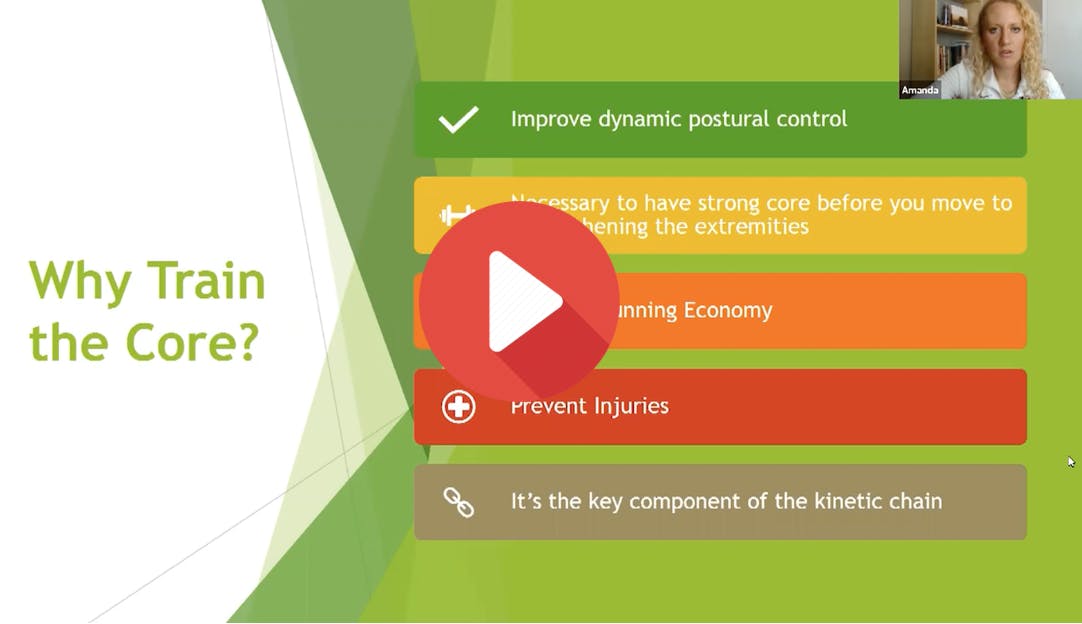
Coach Rego has five reasons why core workouts are a must for every athlete to train in the weight room:

1. Improve dynamic postural control

2. Necessary to have a strong core before you move to strengthen the extremities

3. Improve running economy

4. Prevent injuries

5. It’s the key component of the kinetic chain

The core is, well, just that; our body's core. Its foundation. Without a strong core, athletes not only put themselves at risk of increased injury everywhere else across their bodies but also aren’t maximizing the strength of other body parts. Every athletic movement utilizes the core, so it’s crucial not to neglect this part of your body during weight training sessions. 

It’s also important to diversify your core workouts. While crunches and planks are great, they need to be complemented by other exercises that target separate areas of the core (such as the obliques). 

DeShawn Fontleroy - Hip Mobility & Hip Stability

Coach DeShawn Fontleroy specializes in problems of training — including the role of strength training, sprinting, and explosive plyometrics in the athlete’s physical preparation. Coach Lontleroy has helped professional, collegiate, and high school athletes develop explosive power and jumping ability.

Increasing speed and acceleration isn’t all about weightlifting. It’s also about flexibility. In his 'Hip Mobility and Hip Stability’ course, Coach Fontleroy explains why hip mobility is paramount to maximizing one’s speed. 

“Hip stability is your ability to maintain your center of gravity and produce strength and coordination in the hips and trunk,” Coach Lontleroy explains. Some ways that he recommends increasing hip mobility and stability is by foam rolling over one’s hips before the weight room session, by the body weight Romanian deadlift exercise, and by trying a barbell hip bridge exercise. 

These tools and techniques can all be utilized together, helping your athletes achieve their maximum speed and acceleration injury-free so that they can chase their goals. 
NYSS FB Be A Role Model

Friday, August 22, 2025

US Sports Tennis: How to Beat a Serve-and-Volley Player and Mpetshi Perricard vs Medjedovic; Korda Seeks SF Spot Winston-Salem Highlights


  • By Krsto Arsenijevic

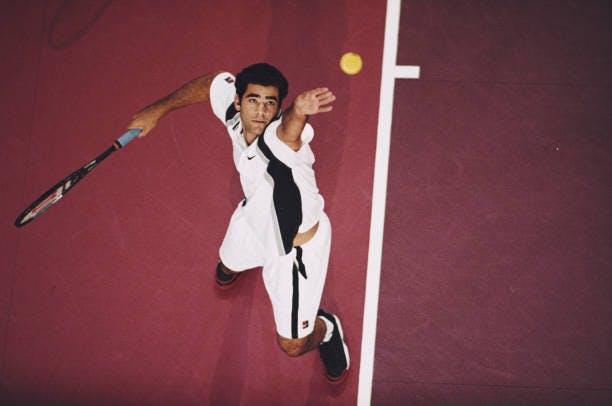
Pete Sampras dominated the entire world of tennis through a dominant use of the serve-and-volley strategy. He consistently forced his opponents to make unforced errors through his excellence in this type of play. However, just as in other sports, tennis has gone through a change of play. No longer is the serve-and-volley approach recommended by tennis experts. This doesn’t mean it’s completely extinct though. Here, I’ll show you how to beat it when you see it!

Basic Meaning of Serve-and-Volley

The goal of a serve-and-volley player isn’t complex. Simply put, they’re looking to get in a strong first serve that doesn’t allow a strong groundstroke in the return. Then, immediately after serving, they’ll rush the net and look to volley the ball back before it hits the ground. The two primary qualities needed are a big serve and quickness off the line. As for the returner, it puts them in immediate pressure. Even though it’s tough to get a strong return on a big serve, you can’t hit a light shot that allows the server plenty of time to set up a winner.

The Fastest Miles Ever Run

Typically, serve-and-volley players are going to experience more success on hardcourt and grass court surfaces. It can be a daunting task for the opponent, but there are still plenty of ways to get by these serve-and-volley players with a victory.

Look for Your Chances

Cautious or Reckless?

There are two ways you can attack a serve-and-volley player: cautiously or recklessly. The cautious approach will lead to you just returning the first serve and not attempting any type of passing shots. Essentially, you’re not going to let your own shots lose the point, but rather make the opponent win the point. Conversely, a reckless strategy will attempt a high-degree of passing shots. This player will try to hit a big shot with every swing and go for a winner often. There are glaring negatives with each approach. A cautious approach can result in an experienced player making quick work of you. Meanwhile, a reckless approach will lead to a high number of unforced errors.

A Little of Both

My best solution is to play a mixture of cautious and reckless. With a serve-and-volley player, you’re not going to have a chance for a point on every shot. This requires patience. If they make a strong serve, just get a return in and wait for the opportunity to hit a winner. Sometimes, you’ll even luck out and they’ll miss on an open shot. The key is to wait for your chances. Don’t give your opponent free points, make them earn it!

Play to Their Weaknesses

Unless you’re playing someone like Roger Federer or Novak Djokovic, chances are your opponent will have some holes in their game. As a player, it is your job to find these weaknesses and take advantage of them. Even if this requires you to alter your approach slightly, it is still likely going to be worth it. If you don’t have the opportunity to watch them in a previous match, check out how they play warming up and in the early stages of your match. Do they struggle running back if a lob was hit over their head? Is their backhand or forehand stronger? Finding answers to these questions will help greatly as the match carries on.

Get the First Return In

As I mentioned earlier, a big serve is a critical part of the serve-and-volley approach. If they can’t force you to stay back behind the baseline, then the serve-and-volley strategy won’t be effective. Assuming they do have a strong serve, the only way to stay in the point is to get the first return over the net. While it would be ideal to get a decent return in, I recommend making sure you get the first return in for the early stages of the match. This will not only make the games closer, but it will increase your own confidence. If they’re serving up aces on multiple serves each game, then chances are your confidence would start to drop and your own game would suffer. However, getting the returns early in the match will make you believe that you can start trying different and stronger returns as the game progresses.

Try to Keep Them Back

At the core of serve-and-volley player’s games is the idea that they want to get to the net. They want to put pressure on you. On the opposite end, you will want to keep them back closer to the baseline. Once they get to the net, it will be tougher to win the point. There are two methods for this. First, you can work on blocking the initial serve back so it goes deeper on your opponent’s court. This shot takes a lot of work due to the speed this serve may be coming in at. However, it will keep them closer to the baseline. The second approach is for when the server is able to get to the net. In these situations, you can hit a lob. A lob goes over their head and forces them retreat on their court. If you’re able to successfully hit a few good lobs, it could also force them to hang back longer on some points due to tentativeness.

Hold Serve

Serve-and-volley players are going to be tough to break on most occasions. In these matches, you may only have a few break opportunities. With this being the case, it is vital to hold your own service games. By doing so, it will not only put you in a better position to win, but also apply more pressure to them on their service games. While learning how to effectively serve is a long concept in its own, the best advice I can give here is to be aware of them coming to the net when you’re serving. After one or two shots, they’ll look to charge the net and put pressure on you. They will want to prevent any long rallies, so don’t be worried when they do come in.

Control Momentum

In nearly every sport, the word ‘momentum’ gets tossed around frequently. A team can be rolling along and then one play can change the entire outlook of the game. The same idea is present in tennis. Your opponent can be controlling the match, but one break could certainly change the tides. Be aware of this and try to grab the momentum early in the match. Players aren’t always completely ready when the game starts, so take advantage of this and come out ready to play. This will not only ensure momentum is on your side, but can also set a tone for the rest of the match.

Practice!

Since serve-and-volley is a rarity in today’s game, it is tougher to be prepared for it when a player pulls it out. As a result, practice the concepts utilized by it during practice. For example, have a teammate serve and then rush the net against you even if they’re not a serve-and-volley player. They don’t have to possess a huge serve. Just practicing against the basic concepts will put you in a better mental mindset for moments when you’re faced with it in an actual match.

NYSS Twitter Focus on Fun

Thursday, August 21, 2025

US Sports Partner Spotlight: REI

Since 1938, we have been your local outdoor co-op, working to help all experience the transformational power of nature. We bring consumers top-quality gear and apparel, expert advice, rental equipment, inspiring stories of life outside.
Up to 40% Off Camping & Hiking Gear
https://brandcycle.shop/86dei
Up to 30% off Run & Fitness Footwear
https://brandcycle.shop/h6tm3

US Sports Radio affiliate partner
http://www.USSportsRadio.net

US Sports Lacrosse: Where Legends Train: Why Wall Ball Matters in Lacrosse and Maryland Whipsnakes vs Boston Cannons Full Game Highlights


  • By Avery Hixson

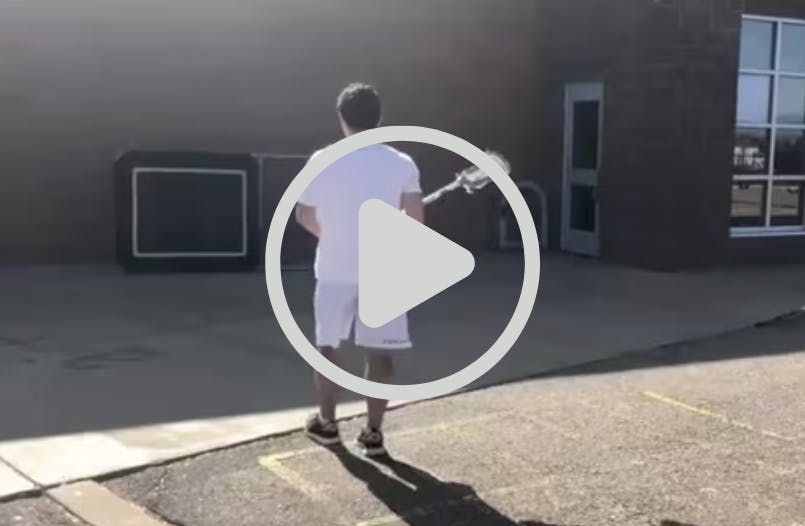
“Hit the wall!” - an annoying but true phrase burned into the minds of every lacrosse player. Wallball is the simplest but most effective way to take your stick skills to a higher level. Wallball can help you consistently catch passes, dodge while passing, try unique shooting methods, and more. It might seem mundane, but once you start seeing results from wallball, you won’t want to stop. Here are some important steps to perfect your skills with wallball.

Coach Jamie Munro is a former lacrosse player for Brown University and has collegiate coaching experience for both men's and women's lacrosse teams. One thing in common between men's and women's lacrosse is the importance and accessibility of wallball. Coach Munro’s Lacrosse Wall-Ball Drills course expresses the need for wallball for developing players and shows how to do it effectively.

Big-Picture Ways to Improve with Wallball

1. Fluidity of Switching Hands

Every style of passing used while playing wallball can be done with both hands, which will significantly improve your fluidity between hands so that you can be more versatile of a player on the field.

2. Throwing at Different Angles

Once you’ve nailed the basics of catching and throwing in wallball, the next step is to push yourself beyond routine play. Experiment with different angles, speeds, and passing styles to challenge your reflexes and accuracy. Wallball offers endless ways to keep your game sharp.

Improves Two-Handedness: Switch Hand Quick Sticks

null

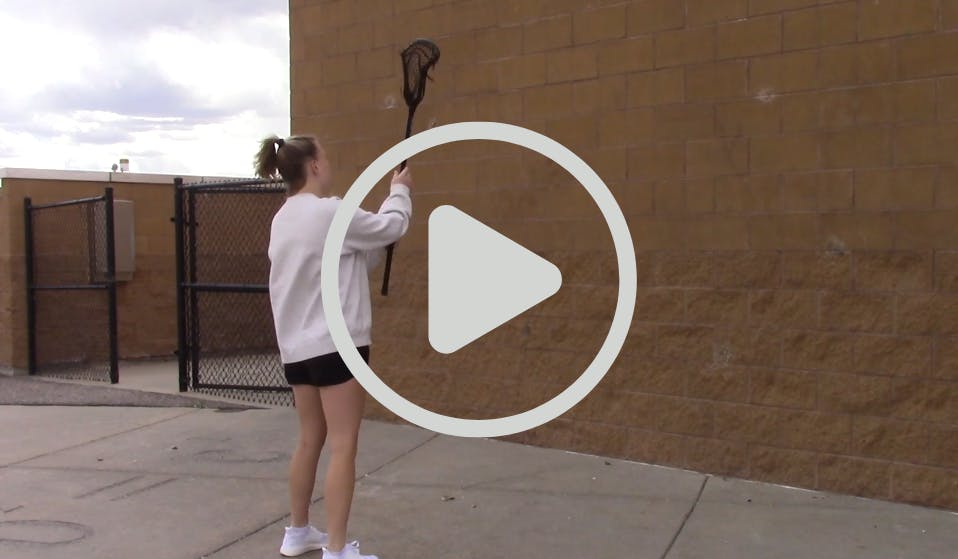
As previously mentioned, varying your passing style is a crucial way to become more of an asset as a player. One way to improve your reflexes is by practicing quick sticks. Coach Munro’s course has several segments about conquering quick sticks. Here’s what one of them covers.

Quick sticking is a style of passing characterized by quick, powerful passes without a full follow through. The pass allows the ball to bounce quickly back off the wall and helps with receiving short yet powerful passes; a crucial skill for high-pressure moments on the field. Switch hand quick sticks are where you switch the hand your stick is in between passes, which merges the benefits of quick passes with switching hands.

The player featured by Coach Munro in the course displays the usefulness of quick sticks for “two-handedness” and switching hands.  

Throwing at Different Angles with Wristers

null

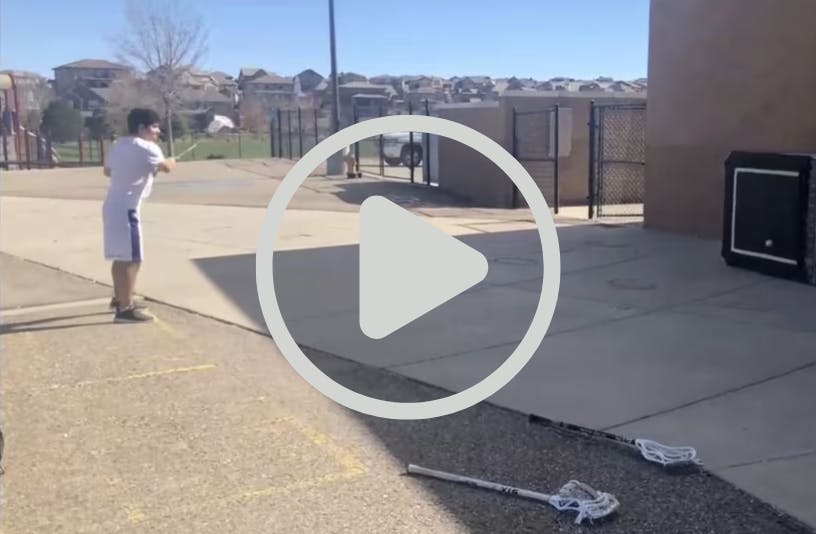
Wristers are a passing style often mentioned by Coach Munro that is characterized by hard, powerful passes towards the bottom of a wall from a farther distance away. Coach Munro explains in his wallball course how these implement a different passing style and are a great practice for improving players.

With wristers you can practice a variety of different passing styles such as overhand, three quarters, sidearm, and underhand. All of these different angles of throwing have real-world value on the field and are a great way to improve your skillset using wallball.

Taking Wallball to the Next Level: Implementing the Face Dodge

null

Once you master the basics of wallball, it can be difficult to progress further. However, by practicing dodges while doing wallball you can improve at a more advanced level. Coach Munro's wallball course teaches one example of this. The extra steps of the pass increase the difficulty which will up a player's game to the next level.

The face dodge is a well known lacrosse concept best described as when a player dodges a defender by planting their foot and stepping to their offhand side while simultaneously cradling their stick over to the offhand side, mimicking a hand switch or a direction change, and then swiftly switching back to the leading foot and dominant hand.

Bringing the face dodge to wallball is somewhat simple. Facing the wall, players should do a full face dodge and as they finish the motion, release the ball and pass it to the wall. This mimics real game situations like passing under pressure of a defender, and can be a real game changer for more advanced players.

Hit the Wall!

Ultimately, wallball isn’t just a warm-up drill, it’s one of the most powerful tools for sharpening your lacrosse game. From building two-handed confidence with quick sticks to mastering wristers at multiple angles, the skills you develop translate directly to better performance on the field. The beauty of wallball lies in its simplicity and accessibility. Any player, anywhere, can pick up a stick, find a wall, and get better. So the next time you “hit the wall,” remember that every rep is an investment in your speed, accuracy, and versatility. Keep at it, and you’ll see your game reach new heights.

NYSS Twitter Be a Role Model

Wednesday, August 20, 2025

US Sports Partner Spotlight: Quince


Quince is a company that challenges the notion that high-quality products have to come with a high price tag. They aim to create items that are equal or better in quality than luxury brands, but at a much lower price.
"Buy 2: Save $20 – get two pairs of sunglasses for $80"
https://brandcycle.shop/qw7wc

US Sports Radio Affiliate Partner.
http://www.USSportsRadio.net

US Sports Basketball: Three Tips to Sharpen Your Post Player’s Footwork in Basketball and The Gold Standard (Ch. 6): 2025 FIBA U19 Men's World Cup


  • By Grant Young

Having good footwork is pivotal for post players in basketball for several reasons: 

1. It allows post players to establish their position close to the basket, making it easier for them to receive entry passes and score efficiently. 

2. It enables post players to make quick and decisive moves, allowing them to create scoring opportunities and outmaneuver defenders.

3. It also helps post players maintain balance and stability, which is essential when facing physical defense in the low post. 

These are just three of the reasons why mastering footwork should be an essential part of every post player’s practice program, which will allow them to excel in the paint and become more effective scorers and playmakers for their team.

But it can be challenging to find effective basketball footwork workouts. Firstly, there is a wide range of drills available, and it can be difficult to determine which ones are truly effective for improving footwork. Plus, the effectiveness of a footwork drill can vary depending on the skill level and playing style of the individual player. Some drills that are utilized may not adequately simulate game-like situations, making it harder for players to transfer their improved footwork from practice to actual games. 

Thankfully there are trustworthy coaches out there who have proven time and time again through the success of their teams and individual post players that their drills and techniques are effective. We have pulled post player footwork drills and instructions from three highly respected basketball coaches, that are guaranteed to help improve your big men’s skills when navigating the paint.

Dave Severns - Positioning Target Feet

Dave Severns is currently a basketball scout for the Indiana Pacers. Before that, he spent 14 years in the NBA as Director of Player Development for the LA Clippers from 2010-2016, Director of Player Development for the Chicago Bulls from 2008-2010, and Pro Personnel Scout for the LA Clippers from 2016-2021. 

While Coach Severns’ ‘Elite Post Play’ course doesn’t detail a specific footwork drill, he goes into depth about where and how post players should be catching the ball in the paint, which is crucial when deciding which post moves and footwork to implement. 

Coach Severns explains that the block is the measure is where post players will want to post up. They never want to be below the block because there isn’t enough space there to receive a pass and execute a post move. Instead, they should always be at or somewhere in front of the block. 

Another important aspect of paint positioning is that the big man always wants to have their chest squared up to the passer. 

One thing that Coach Severns hates seeing is a lazy post player who isn’t working hard to position themselves correctly to receive the ball and/or execute offense when they do get a pass. This is why he says all post players must keep a firm, wide stance and their hand in the air at all times, in order to assert their positioning and prepare to execute. 

Christian Mueller - Shot Fake Mikans

Former volunteer assistant coach Christian Mueller rejoined the UIW women’s basketball staff after a one year hiatus as the top assistant coach during the summer of 2013.

Mueller was a volunteer assistant for the Cardinals during the 2011-12 season when the team went 16-13 and advanced to the Lone Star Conference title game. Previously, he has been a women’s basketball college coach for eight years working at the NCAA Division I, Division II and NAIA levels.

Mueller’s specialty is coaching post play. And in his ‘No Moves Needed’ course, he discusses why the Shot Fake Mikans drill is crucial for post players looking to improve their footwork when shooting in the paint. 

When executing a shot fake, players want to be careful to not use too much of their body to exaggerate the fake, because that won’t look like their actual shot and therefore won’t fool defenders. Instead, they’ll want to only move their upper half like keeping their knees in an athletic position. 

While there are many reasons why the mikans drill should be used by every post player, a main one is because it reinforces proper footwork in the paint if the player isn’t being lazy with their feet. Because each shot demands a slightly different set of footwork, a coach should always be looking at their player’s feet when doing this drill rather than looking at their shot. 

Ido Singer - Drop Step, Top Foot

null

Ido Singer is a former professional basketball player and a college coach with 10+ years of experience at the High School, Division 3, NAIA, and Division 1 levels. Ido has served in many roles, most recently serving as an assistant coach at the University of North Carolina Greensboro for the past 3 years.

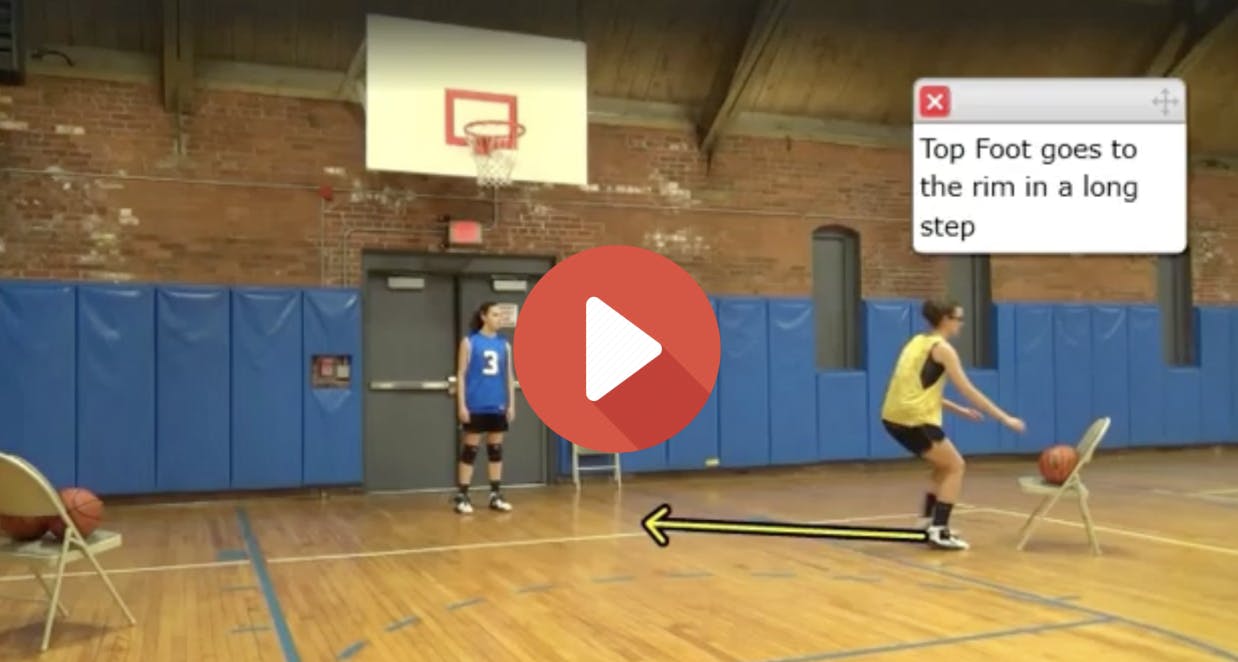
Coach Singer’s ‘30+ Footwork Drills Every Player Should Master’ course details a drill that starts with a player in the middle of the paint, with a ball positioned about halfway between the block and the elbow and a few feet outside of the paint. 

Once the player goes and grabs the ball, they’ll want to be sure their top foot is the first foot that moves, and it’s going directly toward the basket. The important part here is that the player isn’t making any false steps with their back leg, nor should they be taking their front foot anywhere other than straight at the basket. 

In addition, there should be no dribbling in this drill. The post player should keep the ball at shoulder length or higher as soon as they pick it up from the chair. 

 NYSS Stay In The Game

Tuesday, August 19, 2025

US Sports Partner Spotlight: PUMA


Do more with PUMA US. With iconic shoes that run the streets, fresh collabs that define culture and innovative running and training gear, we're all about being faster, better and bolder every day. Because same old thing isn’t really our thing.
Up to 40% Off Sale Styles at PUMA!
https://brandcycle.shop/7fx0p

US Sports Radio affiliate partner
http://www.USSportsRadio.net

US Sports Football: Adjustments - Attach Screens to your best plays, defend star receivers, & movement to stop the run and CFL & NFL Twin Bill Highlight Reels!


  • By Keith Grabowski

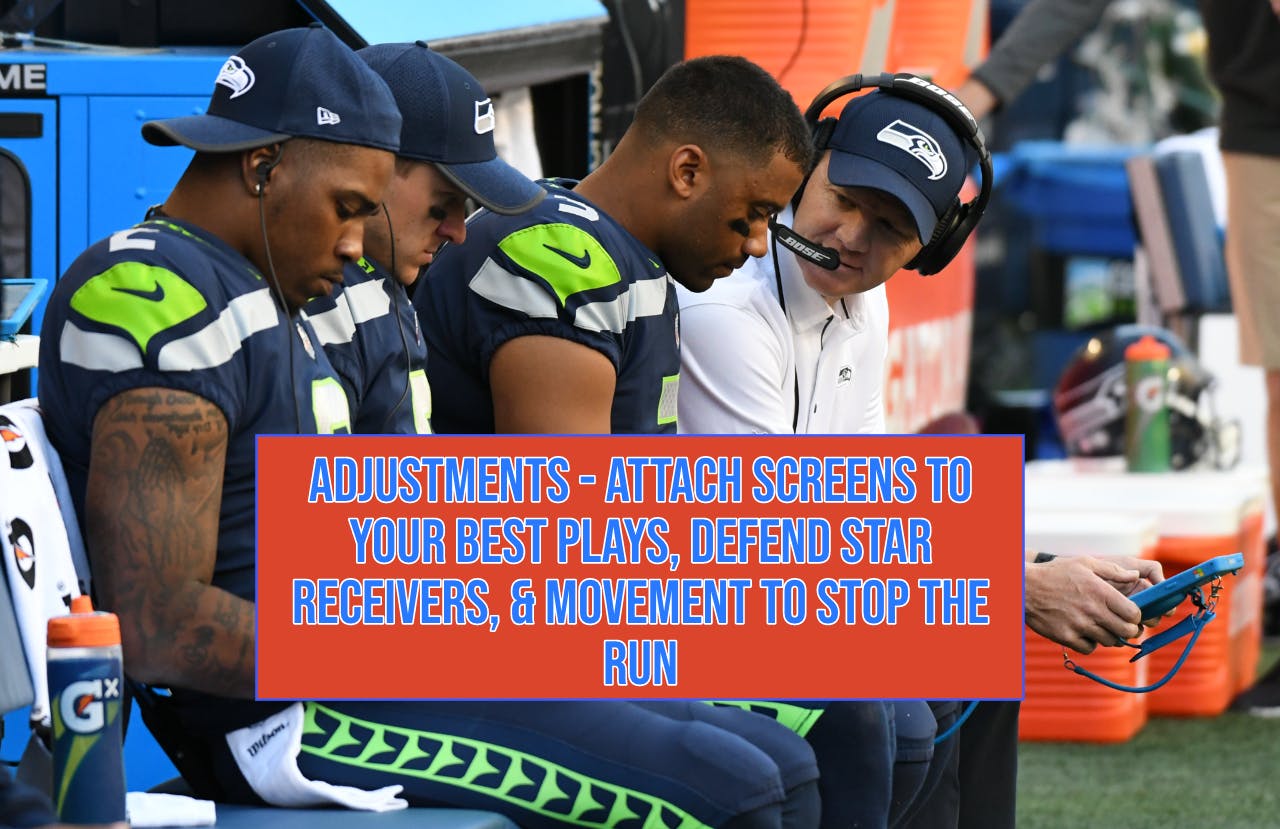
It’s another week of looking at some possible adjustments, tweaks, and wrinkles to keep your offense and defense rolling.

Offense

We are hitting mid-season and teams have gotten a chance to see what you do. They are studying you on film and trying to hone in on your tendencies. The last thing you want is your offense to bog down. 

Finding a way to pick up a chunk of yardage or even a touchdown at a critical time can help propel your team towards its goals.

Adding a screen to what you already do can be a great way to get an explosive play and break a tendency. If you already run screens, you can make your screen game more multiple or add a screen to some of your best runs, passes, or even add to a wrinkle that you have already added.

In all of football, I believe that the Cleveland Browns are the best executing their screen game, and also the most creative. What makes their screen game so good beyond the execution is that they run their screens off of runs, passes, play actions, and even gadget plays that they have run before.

The purpose of any screen is to get the defense focused on one thing, chasing that down, and then getting your blockers on to level 2 and level 3.

We will share some ideas for exactly how to do that.

Joe Davis, the offensive coordinator at the University of Albany, has a solution that can make the screen game an explosive part of any offense. 

Davis has Albany’s offense rolling as they have seen significant improvement in just about every offensive statistical category.  For Davis, designing an offense for player success is a priority.  He’s applied that to the screen game.

Davis likes the screen game for several reasons:

 It creates an extension of the running game

It provides the quarterback confidence with easy completions

It creates momentum and rhythm for the offense while getting the ball to playmakers quickly and without downfield reads for the QB

Touches!  Any player can get a touch in the screen game with Davis’s concept

Consistency for the offensive line - multiple screens with the same rules for OL 

Davis talks about what he looks to accomplish in the screen game in this video (click on image fo video):

Davis incorporates screens to every skill position on the field.  They utilize some of their best offensive plays to create a defensive reaction to stop that play while allowing space to be created for the screen runner.  

An example of that is the tight end throwback screen off of their sprint-out look shown in this video (click on image for video):

Finding a way to get the most out of every concept you install into your offense this year can create a distinct advantage for your team.  The creativity is on you as the coach.  Think about how you can tag this into your best plays whether they are run or pass. 

But I don’t have a screen installed

Don’t have a screen concept in?  Not a problem.  The shallow screen can provide huge benefits without having to involve your offensive line.

Josh Herring, the offensive coordinator at Jones County High School in Georgia (2019 state semifinalist), utilizes is the shallow screen which they call “Police.”  It’s a concept that was popularized by Oklahoma State about a decade ago and is based on a basic shallow utilized in the air raid offense.  

The Benefits of Shallow Screen

It’s a throw that is short and requires no read.  That means it’s good for the experienced quarterback as well as the backup who might have to come into a game unexpectedly

To a defense everything initially shows that it is a drop-back pass. There are no linemen releasing to get downfield, so there isn’t a key to defeat a block to beat the screen so it doesn’t even matter that the defense is yelling “watch the screen.”. 

For the quarterback, the thinking is out of his hands. He needs to get eyes downfield first and then throw underneath. The complicated reads are removed, allowing for a dynamic player to have the ball in space with blockers.

This is an effective strategy when facing teams who get into their drops well, even teams that play drop eight.

Key Coaching Points

The wide receiver should aim at the feet of the defensive line and come straight down the line.  He will “flush” at the center going behind the line of scrimmage.  The key to any variation of this is that the blocks are legal because the ball is thrown to a shallow runner behind the line of scrimmage.

The quarterback is looking at routes downfield to be sure defenders are moving, then he can come down to the shallow runner for the throw.

Three of the receivers have specific blocking points and assignments which springs the shallow runner into space where he can make plays. The assignments are explained by Herring in the video.

Defense

On the defensive side of the ball, let’s look at two simple concepts that can help you neutralize an offense.  Let’s start with the secondary.

Steve Specht is one of America’s top high school coaches and his ability as a teacher of the game shines through.  He utilizes a strategy that can be applied in every defense to take away a star receiver regardless of where he may be aligned.

The first step in the process is to identify the key receiver.  In this video, Coach Specht explains how it is done with them using two types of ID, “snake” and “mouse.” (Click on image for Video):

From there Coach Specht has different rules for how they will defend a single receiver, a #1, #2, or #3.  He notes that this concept can be utilized with any type of defense.  Here he explains how they will defend the single receiver (Click on image for Video):

For more on how to defend #1, #2, and  #3 go here.

The next aspect of causing havoc for an offense, especially the line is to move.  

Dave Cohen at Wake Forest has to face some very tough offensive linemen on his schedule. His years of experience have taught him how to beat those bigger, more physical offensive lines. He teaches two simple movements and techniques that allow his defensive linemen to win the line of scrimmage.

The other effective way he likes to cancel gaps is with a stunt which he calls Tex.  It allows them to solve issues with corner force and allows for a cut-back player. 

The problem is that with a normal stunt you will lose the corner force vs. a Gap Scheme.  This provides an answer.  He explains the concept here (Click on Image for Video):

Maybe these weren’t the exact answer you needed right now, but hopefully, it provides some food for thought on how you can make some adjustments to keep your units performing at a high level. 

In addition, you can be thinking ahead about what your answers would be to these adjustments if you ended up facing them.

Good luck with your preparations this week.

NYSS Find Their Strengths

Monday, August 18, 2025

US Sports Partner Spotlight: Omaha Steaks


Omaha Steaks is a fifth generation family-owned company that has been delivering premium steaks and gourmet foods since 1917. With a rich history of innovation in the meat industry, they offer a wide range of products including beef, pork, poultry, seafood, side dishes, appetizers, and desserts. Their commitment to quality and service has made them a trusted name in the food industry, providing exceptional experiences that bring people together through great food.
New to Omaha Steaks - Get 50% off Smash Burgers
https://brandcycle.shop/sn3hk
Subscribe today and get an extra 10% off today and every shipment.
https://brandcycle.shop/ydsnf

US Sports Radio affiliate partner
http://www.USSportsRadio.net


US Sports Baseball Four of Former MLB Pitcher Juan Nieves’ Movement-Based Pitching Drills and Illinois Vs. Hawaii Little League Baseball World Series Highlights


  • By Grant Young

Even the most naturally talented pitchers can fall short of their potential when mechanical flaws undermine their performance. 

The relationship between pitching mechanics and that pitcher’s success on the mound is both complex and fundamental to the art of pitching. Elite pitchers possess an integrated system where body movements work in perfect harmony.

When mechanical issues arise, they create a cascade of problems that can limit velocity, reduce command, increase injury risk, and diminish pitch effectiveness.

The kinetic chain in pitching requires precise sequencing—energy transfers from the ground through the legs, hips, torso, shoulder, elbow, and finally to the fingertips. Any disruption in this sequence compromises performance. Common mechanical issues include:

- Inconsistent release points leading to command problems

- Improper weight transfer, reducing velocity potential

- Flying open with the front shoulder, causing arm drag


- Insufficient hip-shoulder separation, limiting rotational power

- Timing discrepancies between lower and upper body movements

Movement on the mound is particularly critical. A pitcher's delivery begins with their stance and initial movements toward home plate. The stride, direction, timing, and body position during this phase establish the foundation for everything that follows. Inefficient movement patterns force the arm to compensate, often leading to decreased performance and increased injury risk.

The most successful pitchers in baseball history have combined natural talent with mechanically sound deliveries. Their movements appear effortless despite generating tremendous force because they've mastered the biomechanical principles that optimize performance.

Ultimately, mechanical refinement represents the bridge that allows raw talent to manifest as consistent excellence on the mound. Regardless of natural ability, pitchers who fail to address mechanical flaws will always perform below their true potential.

Of course, MLB pitchers have come closer to mechanical mastery than anybody else — except perhaps those MLB pitchers who have gone on to become pitching coaches at the highest level, who have both learned and taught pitching mechanics to the world’s best baseball players. 

And that’s exactly what Juan Nieves has done. Nieves played for the Milwaukee Brewers from 1986 to 1988 and threw the first no-hitter in Milwaukee Brewers history. After his playing career ended, he helped lead the 2013 Boston Red Sox to a World Series title as pitching coach.

Coach Nieves’ ‘Movement Based Pitching Techniques’ clinic is designed to break down the pitching delivery into focused, trainable movement patterns using a full progression of over 60 specialized drills, grouped by key areas of development and meant to train the body to move efficiently, explosively, and athletically—the way elite pitchers are built.

We have pulled four of Coach Nieves’ drills and included them as a snippet of what his full clinic can offer you. 

Figure 8 Drill

null

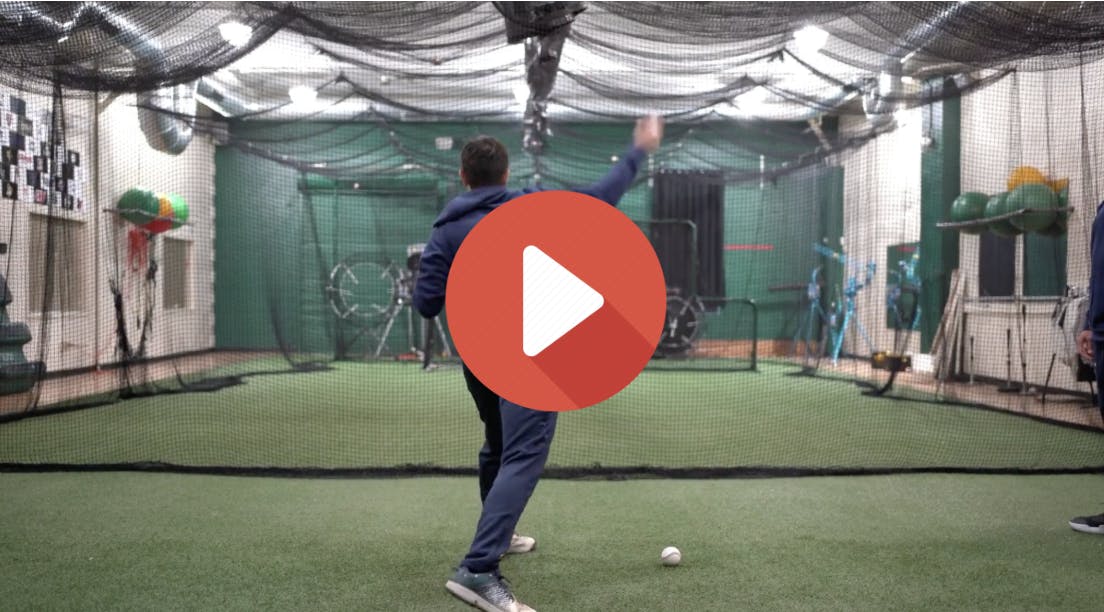
The first of Coach Nieves’ drills is an arm path drill called the figure 8, which is for pitchers to create less than a 90-degree elbow lead. 

The drill begins with the pitcher in their separation position, which simulates when their hands separate during their delivery. They’ll then mimic throwing to the plate, but instead of releasing the ball, they’ll do a figure eight motion with their throwing arm once before getting into their throw (which can be into a net or a fence). 

It’s also important that the pitcher find their rhythm with their lower body while going through their motion.

This is a great pattern for them to be more loose, fluid, and whippy with their arm action and overall delivery. 

Hinge Slide Drill

null

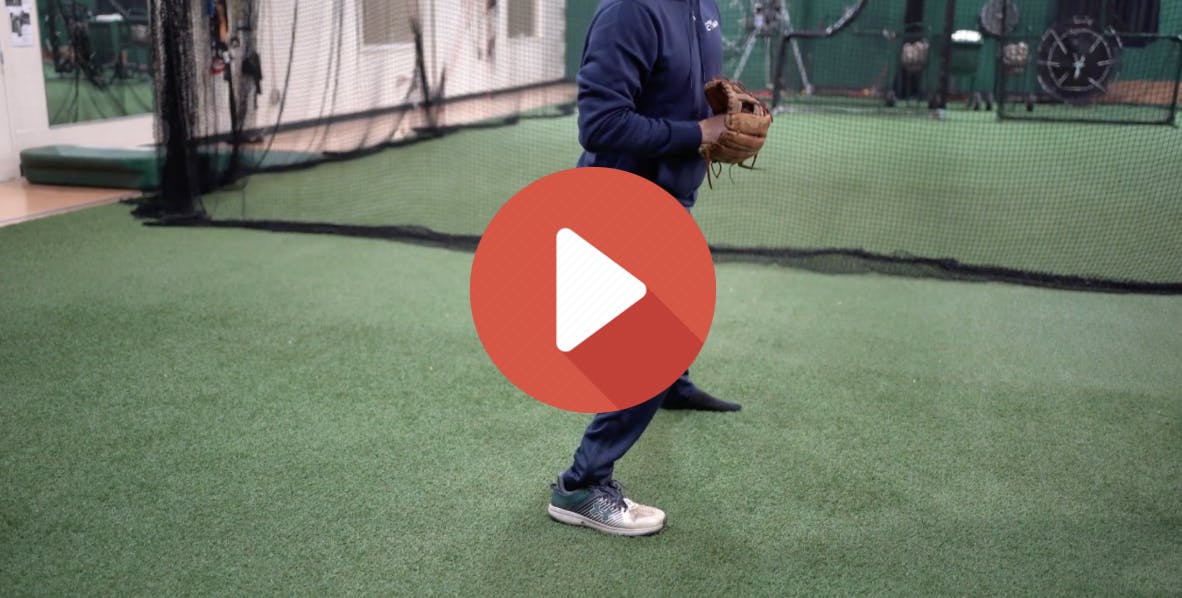
The next drill of Coach Nieves that we’re sharing is the Hinge Slide drill, which requires that a pitcher remove their front shoe (they also need to be on turf, grass, or another surface that will allow their foot to slide) and start in their set position.  

From there, the pitcher will slowly slide forward with their front foot while keeping their body weight on the back foot. They will do this until they reach their separation position, at which they’ll come back to their set and begin again.

The goal here is to feel that hinge slide with the back foot, which will help a pitcher better understand how to generate and sustain force (and thus velocity) with their back leg through their delivery. 

Front Shoulder Closed One-Legged Throws

The next of Coach Nieves’ pitching movement-based drills focuses on coordination and hip movement, ensuring that a pitcher isn’t over- or under-rotating during their delivery.

To address this, the pitcher will be in a set throwing position with their glove arm facing a net (meaning they’re looking to the side). They’ll then lift this leg off the ground and let it swing (while still maintaining their balance) as they make a throw into the leg, which will require them to rotate their hips. 

Scap Retraction Drill

null

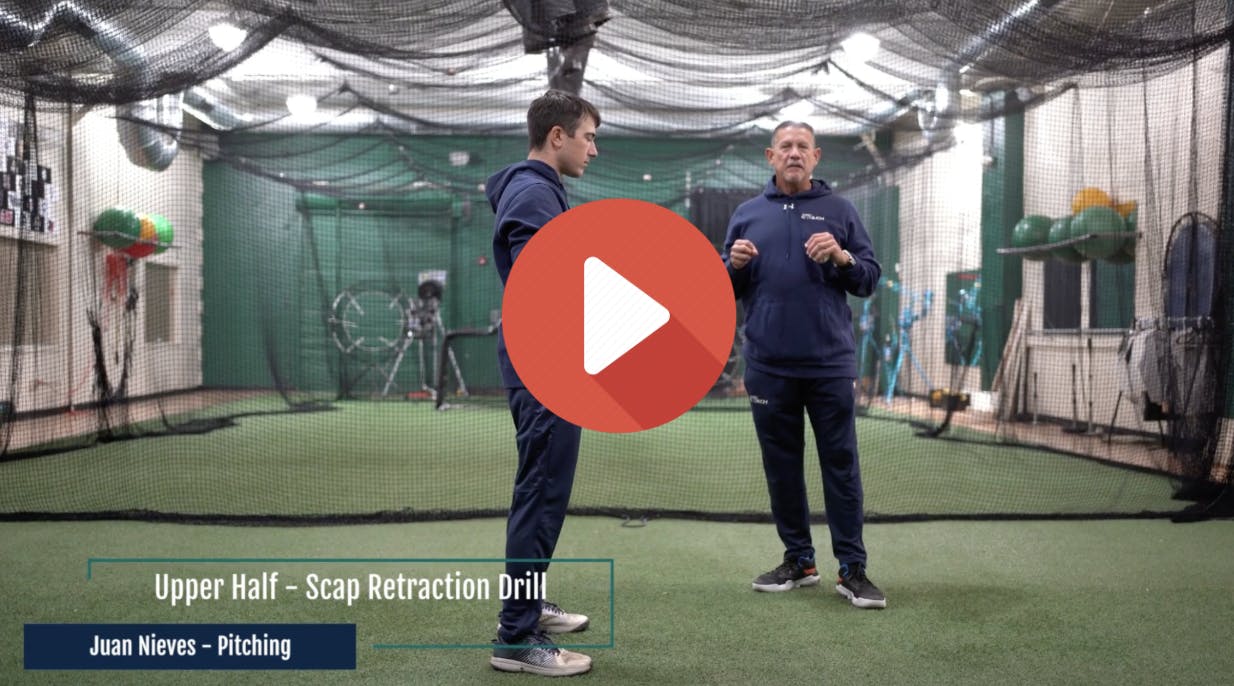
Lastly, Coach Nieves’ scap retraction drill is great for pitchers who, in his words, “put the pinball back” in their throwing motion, which is another way of saying a pitcher who isn’t activating their scaps properly during their delivery.

For this drill, the pitcher will be in their set position, with their glove hand facing the net, with their throwing arm fully extended in front of them. From there, they will bring their throwing arm back as far as possible without losing their natural elbow bend, then rotate and throw into the net. 

NYSS Every Kid In the Game