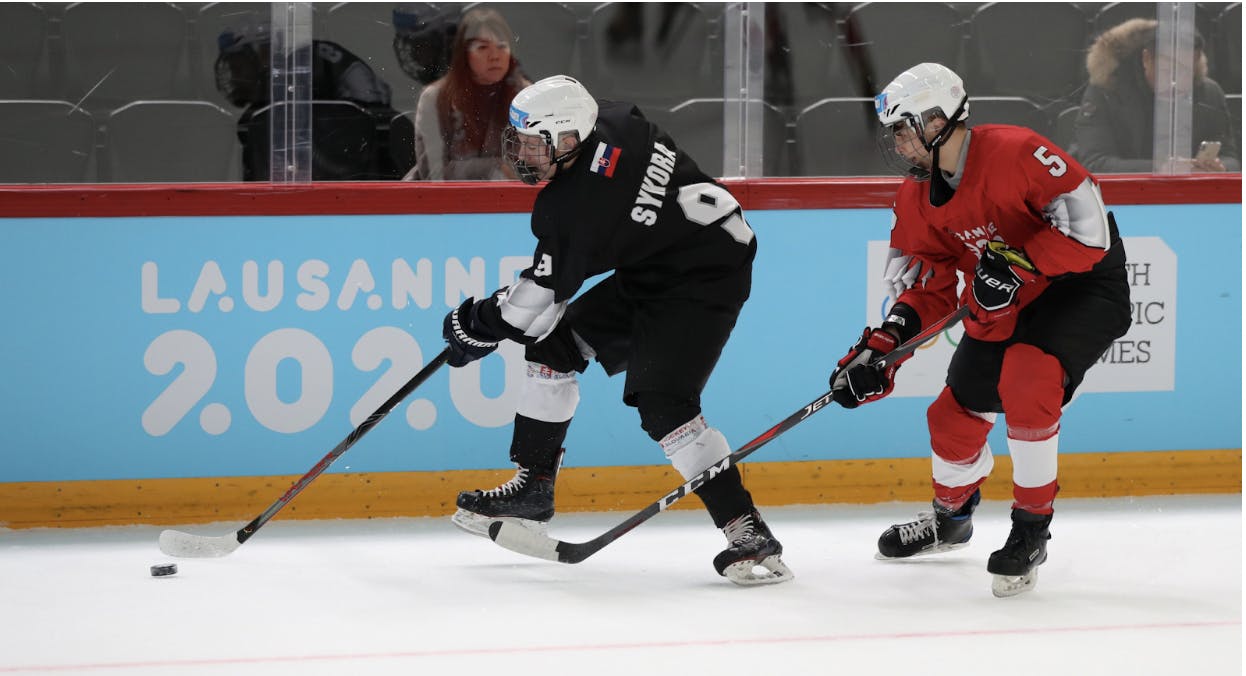
In order to shine as a hockey defenseman,
mastering puck protection is crucial for both defensive and offensive
success. This course details various drills and skills necessary for a
defenseman to thrive when protecting the puck in both zones, generating
scoring chances for their teams.
Here are some essential drills for defensemen to become puck-protecting beasts.
Small Area Games:
2 v 2 or 3 v 3 Picket Fences:
Picket fences are great small-area games for defensive players enforcing puck protection in a limited amount of space.
Offensive
players get two points for scoring a goal and defensemen receive one
point for skating the puck out or through the two cones set up at the
blue line.
How the drill is set up is defenseman and offense are
lined up on a preferred side of the zone (the picket fence) and two
cones are positioned on the opposite side next to each other at the blue
line.
The offensive players try to create chances and passing
lanes by being diligent with the puck and try to score some goals. While
defenseman try to cover offensive players and protect the puck in
fashions that don’t result in turnovers or chances for the other team.
Picket fences enforce quick decisions in tight spaces preparing players for game-like circumstances.
FCG:
Four Corners teaches players how to effectively make decisions with the puck with limited time and space.
The drill can be either 2 v 2 or 3 v 3 in the middle of the four corners.
Cones
are set up in four separate corners on a preferred side of the ice with
one player staying in each corner, and four players in the center.
With
two distinct teams, two from each are in the middle of the zone, and
teammates for either team are in the corners diagonal from each other. A
puck is dumped into the middle of the zone where players from either
team gain possession and protect the puck from the other two players.
The players in the middle then try to achieve passing to one of their players in the corner to gain points.
Where one point is gained for each pass made to a teammate in a corner.
2 v 1 Puck Protection Help:
This drill employs defensemen with abilities to escape forecheckers and learn how to move without the puck.
Two
extra players are standing at the tops of the circles, the coach dumps a
puck into the corner where the defenseman gets a head start and two
forwards forecheck the defensemen.
The defenseman tries to
protect the puck from the forwards and can use the two extras as outlets
for passes to create space and time.
The two forwards try to take the puck from the defenseman and score on the net.
If
the offensive players score they get one point, but if the defenseman
is able to protect the puck and escape the forecheckers he gets two
points.
Two-on-One Battle:
While one-on-one drills are very common for
developing defenseman skills, this drill enables hockey defensemen to
make decisions under pressure.
A puck is dumped into the corner
where the defenseman goes first, and the two offensive players chase but
do not actually take the puck.
The forecheckers flip their sticks around and chase the puck handler building comfortably for the defenseman with forecheckers.
For the defenseman to win the drill, they must skate the puck out or the coach blows the whistle.
Simple yet effective in establishing puck protection skills in the most vital part of the ice for a defenseman.
Basic Puck Protection Around the Net:
Variation #1:
These two variations are very basic drills, but
without a doubt essential to master for a defenseman building
comfortably with pressure.
Coach dumps a puck into the corner from a preferred side of the blue line.
Defensemen
are lined up behind the blue line, where one player starts the drill
from the hash marks on the same side of the zone as the coach.
The
player begins skating backward portraying an actual dump-in,
transitions to forwards, picks up the puck, but observes and surrounds
the puck.
Takes the puck around the net protecting the biscuit
from an imaginary or actual forechecker and proceeds to make a crisp
pass to the line of defenseman at the blue line.
Enabling the next player in line to go.
Variation #2:
The coach and defenseman are in same spot as
Variation #1, the puck is dumped into the corner, the defenseman starts
skating backward, transitions to forward, and observes where to take
space.
Protects the puck from the forechecker and takes the puck
to the back of the net, stops, wheels out the same side he/she started
from, and makes a firm pass to the line of players at the blue line.
To
make the drill more game-like and possibly more enticing, the coach
could throw an actual forechecker in there and tell the defenseman to
make a decision around the net in any matter the player wishes.
Hopefully getting around the forechecker and making a pass to the line of players in one fashion or another.
Building very essential game-like skills to protect the puck from forecheckers.
Longtail Puck Protection Drill
Longtail is a drill that promotes offensive
skills but teaches players how to protect the puck and keep moving to
create a scoring chance in the offensive zone.
Two lines of
players are positioned on opposite sides of the blueline facing the net,
two players on both sides are positioned stationary at the top and
bottom of the circles.
Where two cones on both sides of the ice are set up about three to four feet from the tops of the circle.
The
first player in line starts the drill on one side, does a figure eight
around both stationary players while protecting the puck from their
stick checks.
Finishes the figure eight at the top of the circle,
comes around the cone, and takes a quick shot on net following their
rebound.
The next player in line can go once the player finishes his/her figure eight.
After the player takes their shot, they take the place of the stationary player at the bottom of the circle.
Rotating
from taking their shot, moving to the lower stationary player,
advancing to the higher stationary player, and back into line, forming
an effective drill system.
An excellent drill when stations are set up in different areas of the ice.