Now Streaming On US Sports Radio!

US Sports Net Today!


Live Play-by-Play, Updates, Highlights and More! on US Sports Network!
[Chrome Users-You may have to click on the play button twice to listen]
US Sports Network Powered By Gorilla Sports!


US Sports Radio
The Las Vegas Raiders Play Here
Fitness and Sports Performance Info You Can Use!
The Scoreboard Mall
The Rock Almighty Shaker Of Heaven And Earth!
The Coolest Links In The Universe!
Showing posts with label Volleyball coaching volleyball recruiting video 2026 volleyball recruiting video NCAA Volleyball Volleyball prospect Volleyball coach. Show all posts

Saturday, November 29, 2025

US Sports Coachlab Volleyball: Strength and Conditioning for Female Athletes - Missy Mitchell-McBeth


Tuesday, November 11, 2025

US Sports Volleyball: VOLLEYBALL LIVE DEMO - Drill Building 101


Coach Scott Mattera

Lecture delivered at the Texas High School Coaches Association 90th annual Coaching School and Convention - July 2022
Get it now @ https://tinyurl.com/DrillBuildingVB

The Coolest Sports, Talk, Music, And Fun.
News you can use.
US Sports Radio.
http://www.USSportsRadio.net

US Sports Volleyball: Nikolov clashes with Darlan | Lube vs. Verona


Presented on US Sports by CoachTube.

Featured course:
Scott Mattera - VOLLEYBALL LIVE DEMO - Drill Building 101
Lecture delivered at the Texas High School Coaches Association 90th annual Coaching School and Convention - July 2022
Watch now @ https://tinyurl.com/DrillBuildingVB

Video credit:
Nikolov clashes with Darlan | Lube vs. Verona | Superlega 25/26 - Full Volleyball Match
VBTV is the world's most popular Volleyball live streaming app with official livestreams of the biggest tournaments and leagues across Indoor and Beach Volleyball.
@ Apple - https://apple.co/47IRQFQ
@ Amazon - https://amzn.to/4qSBtxl

The Coolest Sports, Talk, Music, and Fun.
News you can use.
US Sports Radio
http://www.USSportsRadio.net

Friday, October 24, 2025

US Sports Volleyball: The Next Level - Jump Setting, Spin Setting, and Short vs. Long String.

 by Madison Lilley

The Next Level - Jump Setting, Spin Setting, and Short vs. Long String

If you are looking to become a more consistent and accurate setter, you’re in the right place. No matter your age or level of play, throughout my course, you will be able to fine tune skills from hand positioning, to mastering the spin set. 

As a setter, having a wide skill set and understanding of the game can take you to the next level. 

In my course you will discover:

  • Hand positioning and posture
  • Fool-proof footwork 
  • Step-by-step tutorials on jump-setting 
  • How to perfect the setter dump
  • How to understand and break down the offense
  • Drills to take home

Additionally, I have answered some of the most commonly received questions that I get, in hopes of inspiring players of all skill and age groups.

If you are eager to take your game to the next level, follow broken down techniques, this is the perfect course for you. Learn more here

The Coach

MadisonLilley

Madison Lilley

University of Kentucky | Setter #3

Madison Lilley | Setter #3

In high school, Madison Lilley was awarded the Andi Collins Award from PrepVolleyball, an award only received by the best high school setter in the entire nation. Throughout her high school career, Lilley was already separating herself from being a great athlete to being an elite athlete. Before attending Kentucky University, Lilley already had multiple awards just from her career in high school. Some of these awards include: Under-Armour All-American, National Junior Player of the Year, Two-time Kansas 6A state champion, Kansas Gatorade Player of the Year, Won a 2015 state championship and 2017 club national championship, Four-time member of the USA Volleyball All-Tournament Team, and won MVP at Nationals. Book this course.......

Awards & Honors:
2020-2021

  • NCAA National Champion
  • AVCA National Player of the Year
  • ESPY Finalist for Best Female NCAA Athlete
  • NCAA Tournament Most Outstanding Player
  • 2020-21 SEC Roy F. Kramer Female Athlete of the Year
  • HONDA Award Winner for Volleyball
  • AVCA First Team All-America
  • SEC Player of the Year
  • AVCA All-Region Player of the Year
  • All-SEC
  • AVCA First Team All-Region
  • First Team CoSIDA Academic All-American

2019

  • AVCA Second Team All-American
  • All-SEC
  • AVCA First Team All-Region

2018

  • AVCA Second-Team All-America selection
  • AVCA All-Southeast Region Player of the Year
  • AVCA All-Region Team member
  • All-SEC honoree

2017

  • AVCA Second Team All-America
  • AVCA All-Southeast Region
  • AVCA Southeast Region Freshman of the Year
  • SEC Freshman of the Year
  • All-SEC
  • SEC All-Freshman Team


Thursday, September 18, 2025

US Sports Volleyball: Serving - Learn to Play Volleyball Skill #5 and Andressa/Tainá vs. Loreen/Quiggle - Qualification Highlights


Serving - Learn to Play Volleyball Skill #5

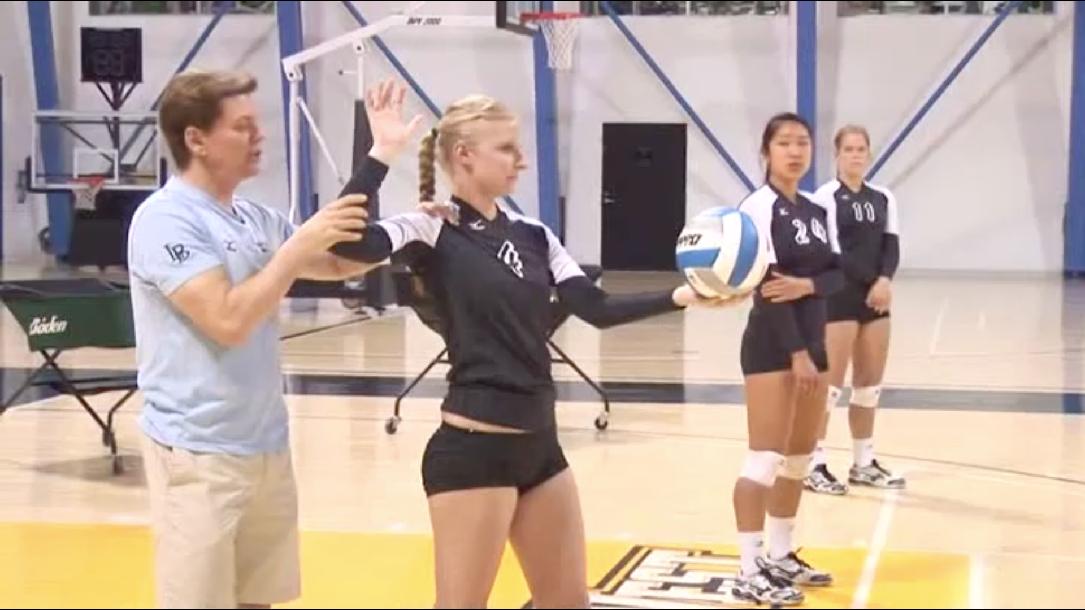
In today’s game with the effectiveness of most teams offense the volleyball skill of serving has never been more important. In this 42 minute video Brian Gimmillaro will explain all aspects of the volleyball serve. This video was filmed so that it could be used by both players and coaches. Book this course......


The Coach

BrianGimmillaro

Brian Gimmillaro

Head Coach of Women's Volleyball at Long Beach State

"Regarded as one of the top volleyball minds in the country, Brian Gimmillaro will have administrative oversight of both the beach and indoor volleyball programs at Long Beach State.  Honored in 2008 with induction into the AVCA Hall of Fame, Gimmillaro has led his Alma Mater to three NCAA Championships and eight Final Four appearances in women's volleyball, and will help usher in a new era as the leader of an emerging sport in sand volleyball. 

Long Beach State has a tremendous tradition of producing fine beach volleyball players that have found great success worldwide. That list would certainly include Misty May-Treanor, arguably the greatest women's beach volleyball player in the world. May-Treanor is the all-time tournament wins leader in both professional and international competition, and with her partner Kerri Walsh, will be attempting to win a third straight Olympic Gold medal in London in 2012 after reaching the sport's pinnacle at both the Athens Olympics in 2004 and the Beijing Olympics in 2008. May-Treanor's journey started at Long Beach State, where as a two-time National Player of the Year, she led the 49ers to the first perfect record in NCAA history on the way to a National Championship in 1998, Gimmillaro's third title. 

Many other players have starred in beach volleyball after working under Gimmillaro's tutelage as well. Jenn Snyder and Brittany Hochevar are both among the nation's top money winners in professional beach volleyball. Alicia (Mills) Polzin was a member of Gimmillaro's first NCAA championship team in 1989, and has competed in beach volleyball for over 20 years. Gimmillaro has been consistently one of the best coaches in the indoor game as well. He ranks 14th in Division I history with 789 career wins, and ranks in the Top 10 among active coaches in both total wins and winning percentage at the Division I level. Gimmillaro graduated from Long Beach State in 1970 with a Bachelor of Arts degree in Economics. Gimmillaro has two children, a son, Stefan, and daughter, Lauren."

NYSS Twitter Be a Role Model

Saturday, August 30, 2025

US Sports Volleyball: Volleyball Serving Made Simple: Drills for Coaches and Athletes and Kansas vs. Penn State Highlights


  • By Jackson Chlebowy

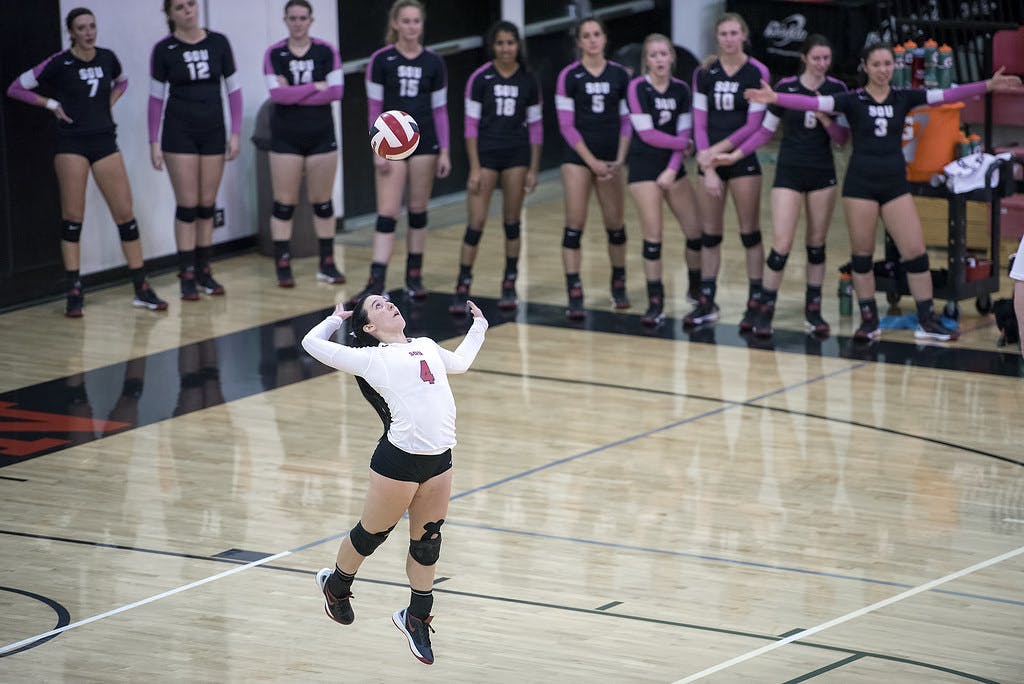
Serving is one of the most powerful weapons in volleyball. A great serve can shift momentum and start long scoring runs. Building up your own, or your young athletes', serving skills is essential for building a winning volleyball team and developing future volleyball stars.

This guide covers everything from basic technique to advanced serving drills. You’ll learn how to perform an overhand serve, how to progress into a jump serve, and how to build serving accuracy, power, and confidence.

________________________________________________________________________________________________________________

How to Serve a Volleyball: Fundamentals for Beginners

Before we get into the drills, let’s break down what makes a good volleyball serve according to Olympian Charlene Johnson-Tangaloa:

- Consistent toss in front of your hitting shoulder

- Elbow above the shoulder

- Step with your opposite foot

- Contact with the heel of the hand

- Finish with your palm facing the target

An aggressive mindset is the best to have when it is your turn to serve. “We don’t serve just to get the ball over the net. We serve to score a point." says Johnson-Tangaloa. Serving with a purpose is crucial to scoring more points and winning more matches.

Drill 1: Pre-Serve Routine

- Develop a personal routine (e.g., bounce, spin, breathe)

- Keep the toss consistent every time

- Breathe to relax and focus

- Be aggressive, pick your spot and attack it

Drill 2: Wall Contact Drill

- Stand one arm’s length from a wall

- Do full serve routine (toss, step, swing)

- Contact the wall with the heel of the hand

- Reinforces clean mechanics and follow-through

To learn more from former US Olympian Charlene Johnson-Tangaloa, check out her course ‘Indoor Volleyball Essentials’. 

________________________________________________________________________________________________________________

Volleyball Overhand Serve Drills

The following drills come from a live session with Santiago Restrepo, a Division I collegiate women’s volleyball coach. These are his go-to methods for teaching serving technique that scale from beginners to advanced players.

Drill 1: Toss–Step–Hit Fundamentals

Keys from Coach Restrepo:

- Start with the elbow higher than the shoulder

- Toss the ball slightly in front of your hitting shoulder

- Step with your left foot (if right-handed)

- Hit with the heel of the hand

- Finish with your palm facing the target

Progress from 10-foot line to the baseline, increasing power with arm speed as you move back.

Drill 2: Short vs. Deep Serve Control

Short serve: Contact slightly lower, lift higher

Deep serve: Contact higher with faster arm swing

Emphasizes control and adjustment

Drill 3: Zone Serving – Positions 1 to 6

- Maintain consistent mechanics

- Serve to all court positions, both short and deep

- Improves directional accuracy and mental focus

Drill 4: Jump Serve Progression

- Toss the ball high and slightly forward

- Use left–right–left approach

- Jump and strike with elbow high and fast arm swing

- Contact with heel of hand, finish with palm to target

These are D1 collegiate women’s volleyball coach Santiago Restrepo’s favorite serving drills. You can find more passing and serve drills in his course ‘Play Better Volleyball Passing and Serving’.

________________________________________________________________________________________________________________

Beginner Serving Drills for Accuracy

Drill 1: Partner Serve Progression

This warm-up drill builds form and control.

- Players face each other at the 10-foot line

- Serve to each other using full motion: toss, step, hit

- Move two steps back after every few successful serves

- Reinforces posture, contact, and follow-through

Drill 2: Serve and Sprint Conditioning (Coach Allison Lebar)

This drill adds cardio pressure to serving form.

- Player serves a ball with full technique

- Immediately sprints to the net, touches tape, then backpedals to baseline

- Grabs next ball and repeats

- Focuses on serving under fatigue and keeping consistent mechanics

You can find more drills and fundamental volleyball skills videos in Coach Allison Lebar's course ‘Volleyball Tips & Drills Video Library’

________________________________________________________________________________________________________________

Final Thoughts On Serving 

Learning how to serve a volleyball isn’t just about technique — it’s about mindset, repetition, and variety. Whether you’re focusing on overhand serve fundamentals or developing a powerful jump serve, these drills will help you build confidence and consistency.

Use these progressions to develop:

- A repeatable serve routine

- Clean mechanics (toss, step, hit)

- Directional control

- Power under pressure

Why stop at the serve? Check out CoachTubes' catalog of expert-led volleyball training videos today!

NYSS FB Be A Role Model

Friday, August 15, 2025

US Sports Volleyball: The Rules of Volleyball Explained: Basics & Common Misconceptions and Poland 🇵🇱 vs. Puerto Rico 🇵🇷 - Women's U21 World Championships Highlights


  • Author Lucy Grenda

Developed in 1895 by American educator William G. Morgan, volleyball was created as an alternative to basketball. Designed to be played by businessmen, the sport was originally called ‘mintonette,’ which was later renamed to suit its ‘volley’ play style.

Now more popular than ever, volleyball has become more global since its conception in the late 19th century, with a steady increase in participation. Second only to track and field, the number of female athletes in volleyball totaled over 470,000 in the US between 2022 and 2023, making it one of the nation’s fastest-growing female sports.

Amidst growing popularity, avid enthusiasts must understand the basic rules of play to become successful at the sport. This article will answer fundamental questions about what the rules of volleyball are, and debunk common misconceptions.

What are the Rules in Volleyball?

Volleyball has several core conventions, varying depending on the level of play; let’s start with team composition and volleyball court dimensions.

The Court

A standard volleyball court is 18m long and 9m wide. The court is split in two by a net, each side having a front and backcourt – distinguished by an “attack line” or 3-meter line.

Players and Positions

Each side has six players – three positioned on the front of the court and three behind the 3-meter line. Upon determining which side is serving (usually decided by a coin toss), a server looks to initiate a rally by hitting the ball over the net from the baseline to the opposing team’s side of the court.

The Setter

Normally, each time will have a designated “setter” who is most skilled at setting the ball to players for an ideal spike or hit over the net to the opposing team.

The Libero

Likewise, teams will often designate a libero, who is the player most skilled at receiving the opposing team’s spikes or hits over the net. They are often the first player to touch the ball after receiving it from the opposing team.

Rallies

Once received, players will attempt a bump (pass) using their forearm to direct the ball to a teammate – strategic timing is key here, with only three passes available per side before the ball must be returned to the opposite team – starting a rally of defense and attack.

Points and Scoring

When a team scores, they get to serve. Points are awarded if an opposing team cannot return the ball after a legal shot or if they fault, for example, with an out-of-bounds play or if they touch the net.

Every time a service is won, players must rotate clockwise around the court, with each player only being able to score from their respective side of the 3-meter line and executing a single nonsuccessive hit to pass.

Faults

During a serve, the serving player must hit the ball behind the service line and cannot step over it

Players cannot catch the ball

There is a legal “set” move which looks as though a players hold the ball momentarily before pushing the ball forward with their hands

Players cannot throw the ball

When a player hits a ball out of bounds, the opposing team is awarded a point and the service

However, stepping out of bounds to hit the ball is allowed

Players cannot touch the net with any part of their body

The ball, however, may touch the net

Referees may also fault a player for unsportsmanlike conduct such as swearing during a match, taunting the other team, etc.

To learn more about volleyball, explore our video courses on the ISNation app, by volleyball coach Lucy Grenda.

How Many Sets are in Olympic Volleyball?

At the Olympics, matches consist of the best of five sets, each with a 25-point total. If both teams are tied at two sets each, a fifth and final set is played, with teams contesting for 15 points. In this conclusive set, teams must have a two-point lead over their opponents to win the match.

Due to there being no maximum score a team can achieve in the fifth set, games can be lengthy, taking up to a couple of hours of play. The longest-recorded volleyball game in history stands at 85 hours, with 338 sets and 14,635 points played by the SVU Volleyball team members in the Netherlands.

Can You Touch the Net in Volleyball?

Touching the net is an automatic fault and a rule violation when a rally has started, leading to an opposing point being awarded.

However, there are exceptions: a player’s hair brushes the net, the net is touched outside the antenna, and a point is won before the net is touched – for instance, a powerful hit causes a player to land into the net just after a score.

It is also legal to touch the net when not in play, such as when changing positions on the court.

Can You Use Your Feet in Volleyball?

Commonly misinterpreted as a foul, players can return the ball utilizing their entire body, including their feet, as long as the ball does not rest upon impact.

Feet can be used to pass to a teammate or return fast shots that require quick reaction times.

While using a foot in volleyball can be opportunistic, these shots are not for the faint-hearted, requiring players to have skill, precision, and control. A poorly controlled footshot could lead to a point for the opposing team if handled incorrectly.

Learning More About Volleyball Rules and Tips

The rules of volleyball can often be confusing, especially for beginners wanting to get into the sport. For novices and experienced players, this article has provided a useful guide to the fundamentals of volleyball, shedding light on its origins, crucial rules to follow and disproving some common conceptions about the rules of play.

If you want to learn more about volleyball, check out our courses on the ISNation App.

You can learn about:

How to Balance Life and Volleyball with Assistant Varsity Coach for Westfield High School, Lucy Grenda

The Power of Words by Shedrick Elliott III, Head Coach at Rowan University.

Developing strength and conditioning with the owner of Resistance Fitness and three-time US Lacrosse gold medalist Kelly Berger.

That’s not all; the app also provides free mental wellness content for athletes, coaches, and parents to help you be the best you can be, in and out of your sport.

NYSS Twitter Focus on Fun

Thursday, July 31, 2025

US Sports Volleyball: How to Make Your Volleyball Practices More Game-Like and Italy 🇮🇹 vs. Brazil 🇧🇷 - Gold Match Women's VNL 2025 - Highlights


  • By Grant Young

Given volleyball’s nature, it can be difficult to construct a practice plan that doesn’t feel monotonous. 

But finding a way to do so is crucial when it comes to keeping your players feeling both engaged and excited about showing up and improving each day. 

Not to mention that if your players aren’t focused during their practices, it will be that much more difficult for them to flip a switch and become prepared for the pressure that comes when the lights are bright and the games begin to count in the season. 

Yet, what part of playing volleyball do players find the most fun? Playing in games, of course. And remembering this allows coaches to kill two birds with one stone (so to speak), by making their practices as game-like as possible. 

And Genny Volpe is the perfect person to teach you how to do so. 

2024 was Coach Volpe’s 21st season as the head women’s volleyball coach at Rice University in Texas. Genny Volpe has established the Owl volleyball program as a power in the Southwest, having taken them to eight NCAA tournaments (2004, 2008, 2009, 2018, 2019, spring 2021, fall 2021, 2022), the only eight appearances in Rice's history.

Volpe was inducted into the Rice Athletics Hall of Fame on October 27, 2023. The sixth head coach in Rice volleyball history, Volpe holds the program record for both career wins (394-210 overall) and highest career winning percentage (.652). The 2020-21 AVCA Southwest Region Coach of the Year and also a two-time C-USA Coach of the Year (2008 and 2018), Volpe has led the Owls to five conference championships under her watch (Conference USA: 2009, 2018, 2020-21, 2021, 2022), and has coached 16 All-Americans and 64 all-conference selections. 

Coach Volpe’s ‘Game Ready! Implementing Game Situation in Daily Practice’ course is a masterclass when it comes to getting your players excited for each practice while preparing them for actual games. Her practice plans and drills are exactly what you need to not only set your team apart, but have them winning endless sets this season. 

General Principles for Planning Practice

One of the most important principles for Coach Volpe when it comes to planning for practice is understanding how much practice time you’ll be allotted. 

This is going to vary depending on what level of team you’re coaching at. Regardless of that, knowing how much practice time you have per week will allow you to prioritize the drills that you know your team needs most in order to improve. 

One somewhat unconventional aspect of Coach Volpe’s practices is what she calls “practicing ugly”. This is her way of acknowledging that much of what happens in a volleyball game can look ugly, and involves improvisation that occurs outside of whatever system the coach and team are trying to implement. Therefore, Coach Volpe believes it’s important to ensure players are getting these “ugly” reps (perhaps just by scrimmaging without any set plays, and just trying to keep a rally alive by any means necessary) during practice so that they’re prepared for them inevitably occurring in-game. 

In addition, Coach Volpe likes to drill game situations that might occur in a game, such as a team running out of rubs or pivoting to an offensive-focused formation. Therefore, if these scenarios occur in the game, a team won’t be hapless to deal with them.

Finally, Coach Volpe notes that she wants to ensure her practices are fun so that her players remain engaged and get what they started playing the sport for in the first place.

The 3 C’s

Coach Volpe’s practice philosophy centers around her “Three C’s: Collaborative, Competitive, and Challenging.

Collaborative: Coach Volpe wants to be asking a lot of questions to her players during practice. She wants to get their opinions on whether they feel like they’re optimizing their time, she asks them to set goals for each practice, and asks them to make sure they understand all of the different strategic aspects she discusses throughout a practice. 

Keeping players engaged and getting problems and confusion solved before they become something bigger is a major part of running an efficient, effective practice in Coach Volpe’s eyes. 

Competitive: Making practices competitive both enhances focus and the overall performance of practice. Regardless of what a team is doing in their practice, there’s almost certainly a way to make it competitive. 

Challenging: Coach Volpe is a big believer in what she calls setting stretch goals. What she means by this is that she wants to set goals for her team (and wants her players to set these goals for themselves) that might be too lofty for them to achieve. This will not only help players to improve and get closer to achieving these goals, but it will also get them acclimated to failing; which will come in handy when they inevitably fail at some point during a game. 

Non-Traditional Plays, Reaction Drills

null

Coach Volpe has several what she calls “non-traditional” plays that happen all the time in volleyball games but aren’t necessarily practiced, because they aren’t part of a set play or formation.

Among these are when the block has to turn and play a ball that’s coming right at their face. Others are creative coverages, getting touches off of the block, playing balls that come off the net in a strange way, jousting, and handling overpasses. 

Teams are bound to across multiple of these scenarios in games. And while it may seem difficult to simulate a scenario in practice where it occurs, all you need to do it make it as barebones as possible or mimic the brief reaction time a player will need in order to execute one of these split-second plays.

NYSS Twitter Be a Role Model

Thursday, July 17, 2025

US Sports Volleyball: Dominate the Net – 5 Must-Try Drills for Pin Hitters and Canada 🇨🇦 vs. Slovenia 🇸🇮 - Highlights Week 3 Men's VNL 2025


  • By Sam DeJoseph

Swing to Deep Corners 

What You’ll Need: 

A regulation volleyball court, net, volleyballs, and a partner to toss or set for you. Get ready to bring the heat! 

Let’s Get Into It: 

Mark off each deep corner of the court using tape, cones, hula-hoops—whatever you’ve got!  These are your target zones, your bullseye. 

Start at one pin and crush the ball into the opposite deep corner. Then move to the other pin and do it again—back and forth, like a machine. As you get comfortable, ramp up the power with every swing. Your goal? Precision and power, from both sides of the court. 

Want to spice it up? 

Set a personal challenge—maybe 10 perfect hits in a row. Or better yet, go head-to-head with a teammate and race to see who can nail the most hits into the corners first. Winner gets bragging rights (and maybe the loser does pushups). 

This drill will sharpen your control, boost your accuracy, and build your confidence on both pins—so you can become a more balanced, dangerous, and unstoppable player. 

Game on.  

________________________________________________________________________________________________________________

High Ball Out of System Hitting 

One of the main things that pin hitters are tasked with is getting kills in bad situations and ending long rallies! This drill caters to that need by giving players a chance to gain the ability to hit high out-of-system sets to gain ball control and power to be a terminal player. 

What You’ll Need: 

A regulation volleyball court, net, volleyballs, and a partner to toss or set for you. Let’s Get Into It: 

Time to turn tough situations into point-scoring opportunities! Your setter starts in the middle back, launching a high ball out to the pin. As the hitter, your job is to wait it out, close to the set with control, and then bring the heat with a high, powerful swing—even when it’s not the perfect setup. 

This drill is all about making something out of nothing. Master your timing, adjust your footwork, and become the kind of hitter who scores when it really counts. DON’T HIT TO  ZONE 6!!! 

 Level Up the Challenge: 

Dial in your accuracy—pick a zone before you swing and hit it with purpose! Want even more of a test? Throw a blocker in your face and learn to tool the block, hit around it, or go high hands to make your shot count.

Being great isn’t about perfect sets—it’s about what you do when things get tough. This drill builds your confidence, your vision, and your ability to deliver under pressure. Become your team’s go-to in the chaos.

________________________________________________________________________________________________________________

Transition Hitting 

Every hitter will need to be able to be effective in transition to be great, This fast-paced drill will prepare you for in-game action! 

What You’ll Need: 

A regulation volleyball court, net, volleyballs, and a partner to toss or set for you.  

Let’s Get Into It: 

Start up at the net like you're about to shut down a hitter—hands up, eyes locked in. The moment you hear the smack of the ball on the other side, explode off the net with three quick,  powerful steps backward—this is your backwards approach into attack mode. 

Your setter is waiting. As you plant, they’ll toss or set the ball—then it’s go time. Swing hard,  swing smart, and keep moving. The drill is fast-paced—reps come one after another, so stay light on your feet and ready to fly!

This drill sharpens your transition footwork and builds your ability to hit effectively off the net, just like in a real game. 

Level Up the Challenge: 

Aim to hit every zone on the court—line, cross, deep corner, and short tip. Make it a game: 

- 3 clean kills in a row 

- Hit all 6 zones before you stop 

- Race a teammate to complete the challenge first 

Push your speed, precision, and power. Become the transition hitter no defense wants to face.

________________________________________________________________________________________________________________

3 Shot Sequence 

All hitters need to have a deep bag of tricks that they can go into throughout a game. Whether this is crushing a ball, tipping it short over the block, or having a super good roll shot, there are many ways that great pin hitters will score. The aim of this drill is to develop your ability to score in many ways. 

What You’ll Need:

A regulation volleyball court, net, volleyballs, and a partner to toss or set for you. 

Let’s Get Into It: 

Start in your normal attacking position, locked in and ready to strike. Your setter will toss or set you a ball—go off! Choose any attack you want: a full-power swing, a sneaky tip, a crafty roll shot, or even a bold opposite-hand smack. Once you land, don’t stop—the next two balls are coming fast! 

You’ll get three attacks in a row, and each one should be a different shot. Mix it up, keep it unpredictable, and work on being the kind of hitter defenders hate to read.

 Level Up the Challenge:

Make it tougher (and more fun!) by setting up target zones on the court—cones, hoops, tape,  whatever works. Try to land each of your three attacks in a different target. This pushes your accuracy, creativity, and court awareness to the next level. 

This drill trains you to get your feet to the ball and build a killer arsenal of shots, so you can score from anywhere, at any time. Get versatile, get dangerous, and get ready to dominate the net! 

________________________________________________________________________________________________________________

Pass/Dig to Swing 

One of the BIGGEST keys to being an elite all-around pin attacker is mastering the art of transitioning from passer to powerful hitter — and this drill is your ticket to leveling up!

What You’ll Need: 

A regulation volleyball court, net, a few volleyballs, court tape, and a partner to toss or set to you. Bonus points if you’ve got a block or full defense to test your skills! 

Drill Breakdown: Let’s Get Moving! 

Start by taping out your transition pathway on the court:


- Straight line for your shuffle after the pass. 

- Slanted line for your explosive approach into the hit. 

Think of it like a runway for your attack!

After each pass, explode off the line, plant, and attack with INTENT — whether it’s a high-powered swing, a deceptive tip, or a cheeky roll shot. Gradually increase the tempo of both your approach and the set to simulate real game speed! 

 Crank Up the Challenge: 

- Pick your target zones and try to nail them consistently — don’t just hit, place with purpose

- Add a blocker and practice hitting around or tooling the block like a boss. • Have extra players?

Run it live with a defense and test your decision-making under pressure! 

Why It Matters: 

This drill is your game-changer. It trains your body to react quickly and efficiently, helping you become a lethal threat on the pin. With clean footwork and killer shot selection, you’ll be unstoppable from both serve, receive, and defense. 

Now go own that court and turn every pass into a point!

If you want to level up your game as a hitter or want more volleyball drills, check out Play Better Volleyball Hitting featuring Coach Santiago Restrepo! This is a great clinic that will allow any player or coach to up their game to the next level!

NYSS Twitter Be a Role Model