Now Streaming On US Sports Radio!

US Sports Net Today!


Live Play-by-Play, Updates, Highlights and More! on US Sports Network!
[Chrome Users-You may have to click on the play button twice to listen]
US Sports Network Powered By Gorilla Sports!


US Sports Radio
The Las Vegas Raiders Play Here
Fitness and Sports Performance Info You Can Use!
The Scoreboard Mall
The Rock Almighty Shaker Of Heaven And Earth!
The Coolest Links In The Universe!

Saturday, June 28, 2025

US Sports Soccer: Soccer Passing Drills Suitable for Beginners and Advanced Players and Colorado Rapids vs. LA Galaxy | Full Match Highlights


  • Author Val Texeira

Passing is a fundamental skill in soccer. Whether you’re playing in the midfield, defense, or even when striking, mastering passing techniques and drills is key to maintaining possession, controlling the game, and creating scoring opportunities. In this article, we outline some of the best passing drills for soccer that develop precision, ball control, and technique.

When progressing from beginner to more advanced soccer drills, it’s important to introduce fundamental skills first, then build on these skills with increasingly complex scenarios. The drills should target different aspects of technique, control, and decision-making, gradually enhancing a player’s understanding and execution of the game.

Basic Inside of the Foot Drill

How to do the drill

To begin the inside of the foot drill, stand 10-15 yards apart from your partner, ensuring both of you are in a relaxed stance with knees slightly bent.

A second pair lines up 10-15 yards to the side of you, so that the 4 of you make a square formation. One side acts as the “feeders” who are simply staying in place feeding you the ball. The other side executes the pass and then shuffles across each other to switch sides and receive a pass from the other side.

Both pairs start by passing the ball using the inside of your foot, which offers more control and accuracy.

Focus on hitting your partner’s feet directly. When receiving the ball, trap it with the inside of your foot by cushioning the ball’s impact, keeping it close and under control. This control is key to maintaining possession and avoiding turnovers during a game.

After trapping, look up, locate your partner, and return the pass using the same technique.

Shuffle to the other side at the same time as your teammate so that you cross each other without bumping into one another and repeat the pass.

Continue until the coach blows the whistle

Once you’re comfortable, progress to one-touch passing. In this variation, you skip the trapping step and instead redirect the ball immediately using the inside of your foot. This increases the speed of play, forcing you to make quicker decisions and improve your ball control under pressure.

Sole of the Foot Drill

In this passing drill for soccer, players focus on trapping and controlling the ball using the sole of their foot, a technique often necessary in wet or slippery conditions.

How to do the drill

As before, position yourself about 10-15 yards from your partner. A second pair lines up 10-15 yards to the side of you, so that the 4 of you make a square formation. One side acts as the “feeders” who are simply staying in place feeding you the ball. The other side executes the pass and then shuffles across each other to switch sides and receive a pass from the other side.

When the ball is passed to you, use the sole of your foot to stop it by stepping on the ball gently.

This technique locks the ball into place, preventing it from rolling away and giving you more time to make your next move. Once the ball is under control, roll it slightly in front of you, then pass it back to your partner using the inside of your foot.

Continue moving left or right between passes to stay agile and simulate game-like movement. This passing drill helps develop a smoother transition from trapping to passing, which is especially useful when playing in quick-paced, tight spaces.

For an additional challenge, try reducing the time between trapping and passing, improving your ability to handle fast, unexpected passes under pressure, much like in a real match.

Quad and Laces Drill

The quad and laces trap soccer passing drill helps improve your ability to control high balls using your quad (thigh) or laces, two key techniques for handling passes that arrive in the air.

How to do the drill

Begin by standing 10-15 yards from your partner, who will serve a high ball toward you. This is the same setup as the previous 2 drills above.

As the ball approaches, raise your quad to meet it and absorb the impact.

Let the ball drop softly using your laces for control as it lands to the ground. Curl your toes slightly upward, trapping the ball with a controlled touch that keeps it close.

The goal here is to cushion the ball’s fall without allowing it to bounce too far away. This is especially helpful when dealing with high balls from goal kicks or long passes.

After settling the ball, pass it back using the inside of your foot. Shuffle across to the other side and repeat.

This drill enhances your ability to adapt to different ball heights and types of delivery, helping you keep the ball under control in various game situations.

To watch any of these drills in action, and better understand their setup, check out my full video course titled “Ball Control” on the ISnation app.

Chest Trap and Pass Drill

This soccer passing drill focuses on using your chest to control high passes, a skill that’s often required in competitive matches.

How to do the drill

Start by positioning yourself 10-15 yards from your partner, who will serve the ball at chest height. This is the same setup as the previous 3 drills.

As the ball approaches, lean back slightly, allowing your chest to absorb the ball’s impact.

The key is to cushion the ball’s momentum and drop it down to your feet, avoiding any excessive bounce that could cause you to lose control. Once the ball is by your feet, quickly pass it back to your, using the inside of your foot.

Shuffle over to the other side and repeat until the coach blows the whistle.

This simulates receiving the ball under pressure from a defender, forcing you to control it, reposition yourself, and then make a pass.

By learning this technique, you can handle high balls more effectively and transition into passes or shots quickly, which is crucial for maintaining possession and creating scoring opportunities during games.

Game Situation Drill: Trapping and Shooting

Game Situation Drills combine various trapping techniques with shooting, helping players develop the ability to transition from control to attack.

How to do the drill

Start by having your partner pass the ball to you from 10-15 yards away.

Depending on how the ball is delivered, trap it using one of the soccer passing drills previously practiced in the drills above—inside of the foot, sole of the foot, quad, or chest.

Once you’ve trapped the ball, position it slightly in front of you to set up a shot. Focus on a clean, controlled first touch that prepares you for a precise shot on goal.

Alternate between different trapping methods to handle various types of passes, such as low ground balls or high crosses.

After trapping, take a shot using your laces for power or the inside of your foot for more accuracy, depending on the situation.

This drill replicates real-game scenarios where quick ball control and decisive shooting are essential for converting opportunities into goals. Practice varying the pace and angles of the pass to simulate different match situations and incorporating dribbling soccer drills.

Use These Drills in Your Regimen

These passing drills for soccer emphasize different aspects of passing and trapping, teaching players to control the ball with various parts of their body in different scenarios.

By practicing each drill, players will develop a more refined first touch, better passing accuracy, and more effective control under pressure, all of which are essential in real-game situations. As they progress through the drills, they will gain the ability to adapt quickly, making fast, controlled passes and setting themselves up for success on the pitch.

To watch this drills in action, and better understand their setup, check out my full video course titled “Ball Control” on the ISnation app.

Friday, June 27, 2025

US Sports Track And Field: Build Strong Triple Jump Foundations with 3 Key Drills and Giorgia Erika SARACENI Italian Champion 2025 Women's Triple Jump


  • By William Markey

Looking to help your athletes build a solid foundation in triple jump? These three introductory drills are perfect for focusing on the key fundamentals—timing, foot placement, and body control. 

Designed to guide athletes through the basics, these exercises help ensure they’re developing a good jump technique from the start. Check out the drills below and start incorporating them into your training sessions for improved performance.

These drills come from Coaches Nic Petersen and Coach Kelly Hass. Coach Nic Petersen enters his 12th year with the University of Florida, third as Assistant Head Coach, he has been a part of nine National Championship teams and seven SEC Championship teams since his arrival to the program.

Coach Hass Kelly has been coaching track and field for the past 30 years and is the head coach at Glenbard West High School for the girls team. Prior to coaching, Kelly was a member of the women’s track and field team at the University of Illinois where she was the Big Ten triple jump champion four times.

STANDING TRIPLE JUMP DRILL

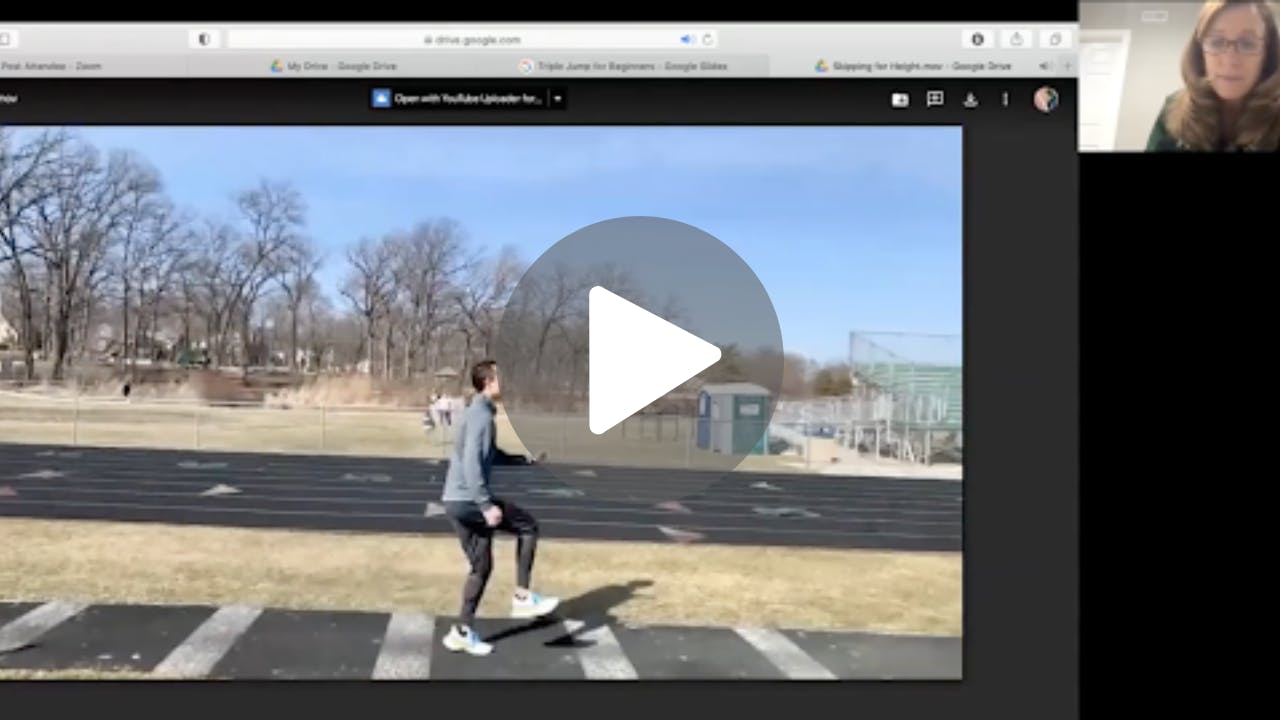
The drill from Coach Hass involves performing a standing triple jump, broken down into three phases: hop, step, and jump. In the hop phase, the athlete focuses on lifting one leg up as they land on it, essential that the foot positions correctly rather than swinging through. 

The goal is to refine the motion so that the athlete maintains proper form, especially during the transition between the hop and the step, as well as highlight apparent weaknesses in foot placement, body alignment, and leg swing.

PENTA DRILL

This drill from Coach Petersen involves performing a series of hops, steps, and jumps in a specific sequence, focusing on switching the takeoff leg to build balance and versatility. 

The purpose is to work on timing, speed, and efficiency across multiple phases of movement, ensuring the athlete maintains control and fluidity throughout. 

By practicing five phases of movement, the goal is to make the actual triple jump feel smoother and easier, improving the athlete's ability to sustain speed and form during the two critical phases of the jump.

JUMPING FOR HEIGHT DRILL

null

This drill from Coach Hass involves skipping for height, focusing on proper foot placement and maintaining a tall, bouncy posture during the jump. 

The main goal is to reinforce the correct shin angle and avoid collapsing or squatting during the movement, which helps improve the athlete's ability to stay light and efficient on their feet.

By practicing this drill, athletes can develop better control and strength in their jump, making them more effective in events like hurdles and high jumps.

Check out the full courses here! Click here to watch Coach Nic Petersen’s and Here for Coach Kelly Hass!

NYSS Twitter Focus on Fun

Thursday, June 26, 2025

The CFL On US Sports Radio Plays Of The Week 3


The CFL
Plays of the Week - Week 3, 2025
Now streaming on US Sports Radio!
https://bit.ly/USSportsRadioToday
http://www.USSportsRadio.net

US Sports Tennis: Four Effective Backhand Tennis Drills and Fonseca Takes On Fritz, Paul, Mensik & More In Action | Eastbourne 2025


  • By Grant Young

Improving the tennis backhand stroke is often considered one of the biggest challenges for players and for several reasons. 

1. Natural Dominance: For many players, the forehand feels more natural due to being stronger on their dominant side, making the backhand stroke more awkward to develop. 

2. Technical Complexity: The backhand involves different mechanics than the forehand, requiring focus on grip, footwork, and timing, which can be overwhelming for players learning the stroke.  

3. One-Handed vs. Two-Handed: Choosing between a one-handed and two-handed backhand adds complexity, as each style has its own advantages, and players must determine which suits them best. 

4. Physical Demands: The backhand often requires good footwork and positioning, which can be physically demanding to maintain, particularly when reacting to fast-moving balls from opponents.  

5. Individual Variability: Each player has unique physical attributes and styles of play, making it necessary to personalize backhand drills and techniques, complicating the improvement process.

Despite these challenges, the process of improving and developing the backhand is one of the most important things a tennis player can do because they’ll undoubtedly need to employ it effectively in a match. Players who are able to overcome these hurdles often find significant improvements in their overall game.

This is why we’ve pulled four drills from two high-level tennis coaches who have used these drills to help develop the backhand aptitude of countless athletes over the years and are sharing them with you below. 

Oscar Wegner - Closed Raqcuet Backhand Drill

Oscar Wegner was light-years ahead of the tennis industry when he was coaching open stance, stalking the ball in front, hitting up and across, lifting the body, heavy topspin and more at Spain's Tennis Federation School in Barcelona in 1973 and in Florianopolis, Brazil in the 1980's. 

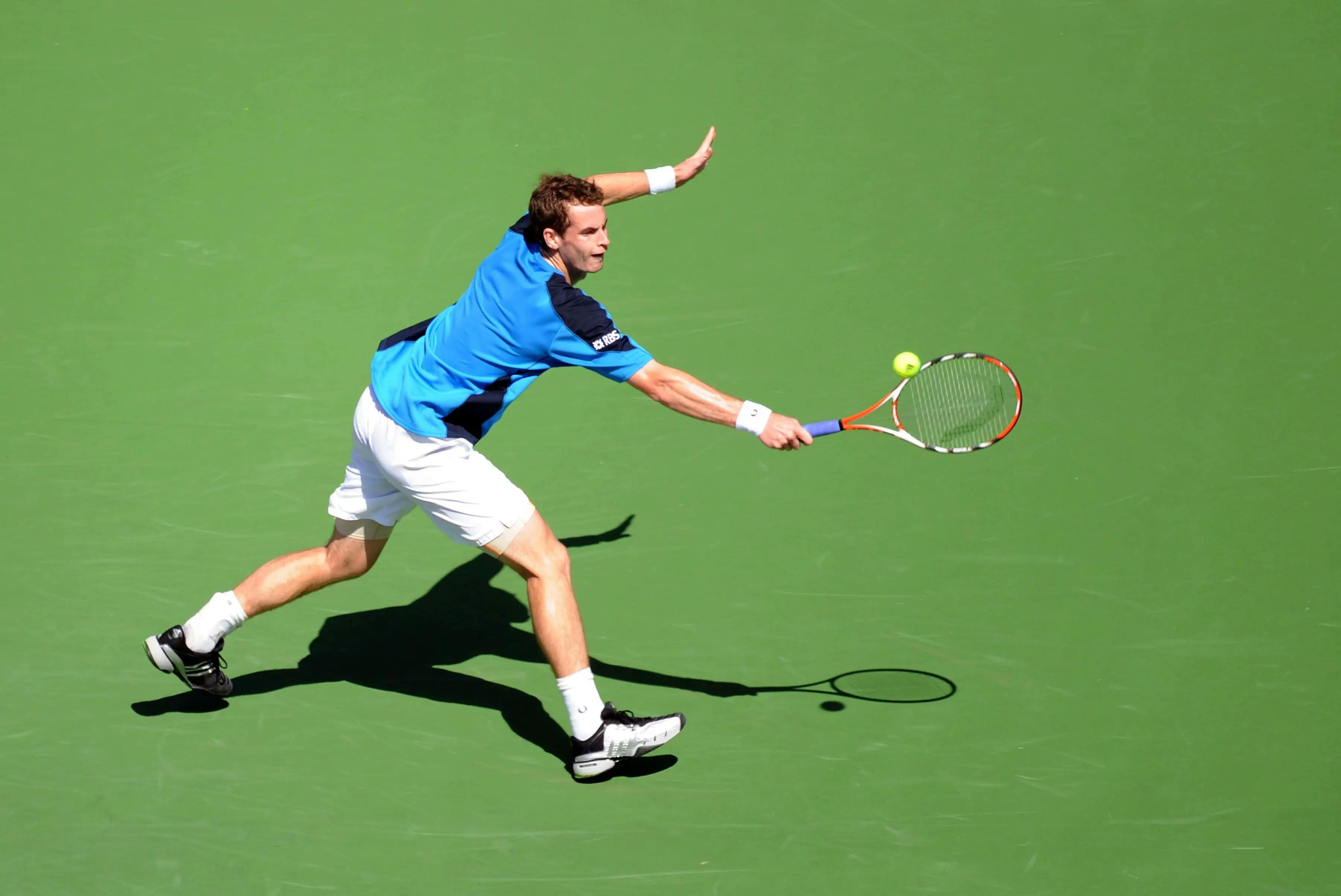
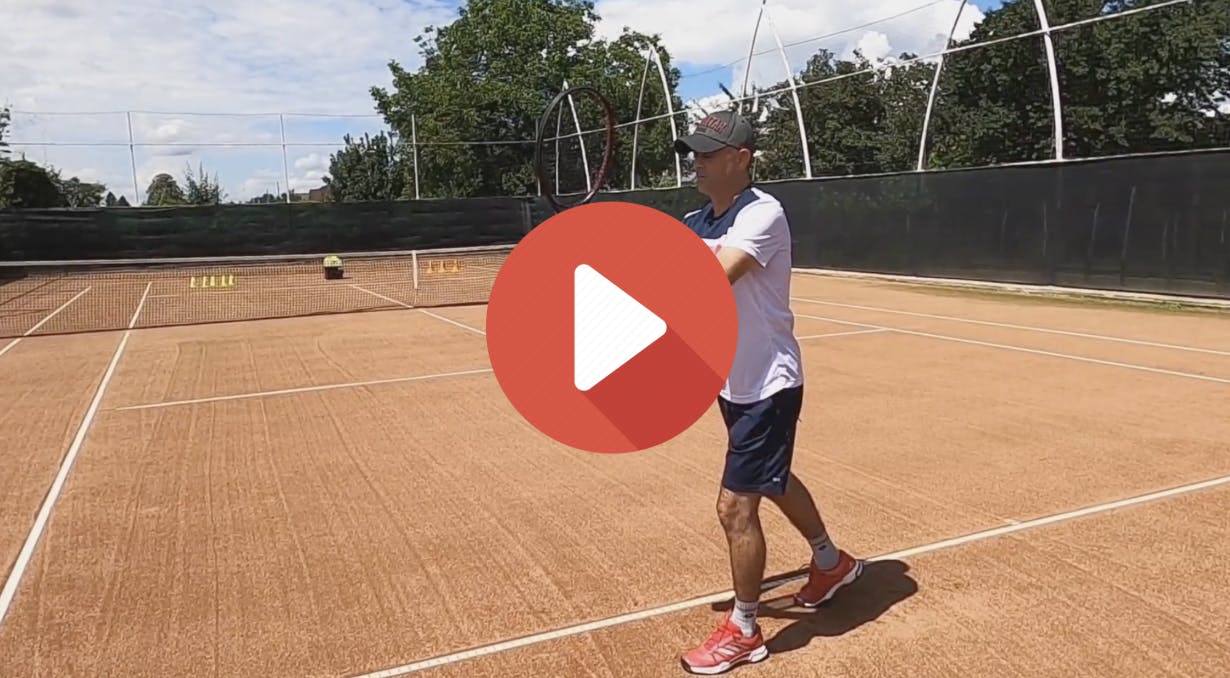
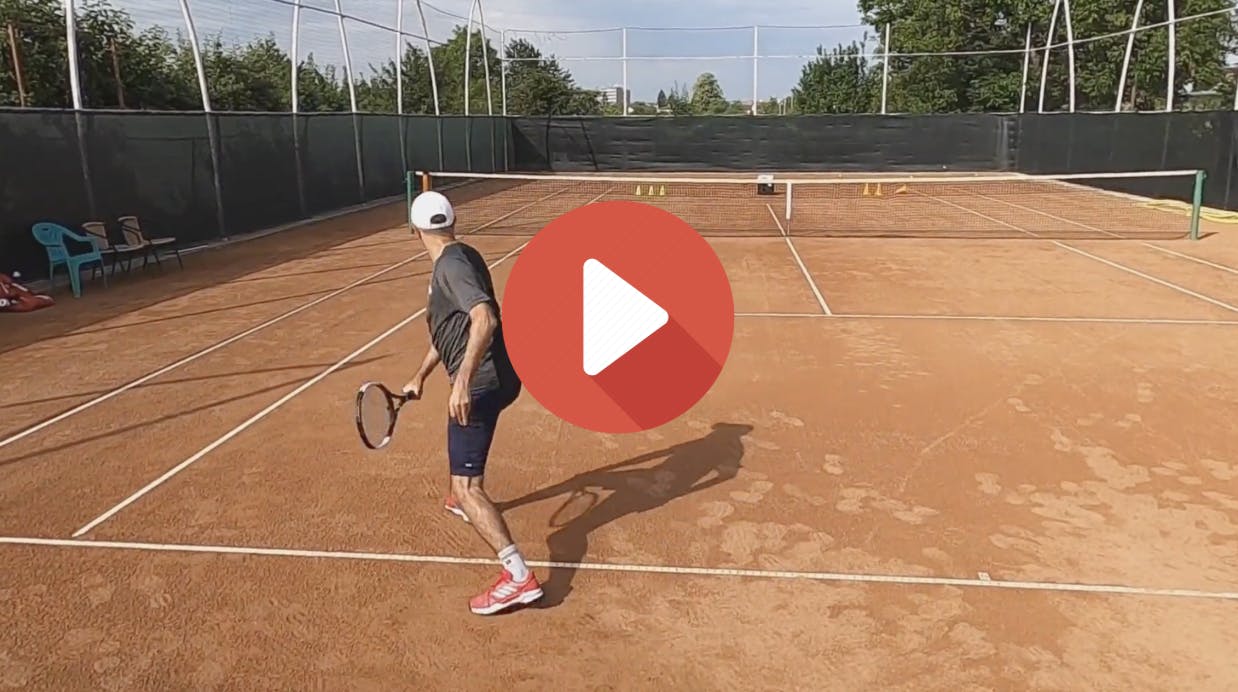
In Coach Wegner’s ‘53 Drills for Better Tennis’ clinic, he details a couple of great backhand drills. One of these is what he calls the closed racquet backhand drill, which starts with the tennis player on their knees and facing parallel with the net (meaning sideways). 

From there, a coach will bounce a ball to the player’s backhand and they will hit it. The drill’s simplicity is so the athlete can focus on keeping their shoulders completely closed to the net while finding the ball with the racquet’s butt cap and lifting up and across when executing the stroke.

Coach Wegner notes how this is the only stroke where the athlete doesn’t want to find the ball with the hand. Instead, they want to find it with the butt cap. 

Oscar Wegner - The Backhand Slice Drill

Another one of Coach Wegner’s backhand-focused drills is what he calls the Backhand Slice Drill.

The sliced backhand is typically seen as one of the more challenging shots to master due to its precision and technique requirements. Players must consistently generate proper spin while maintaining balance and timing. Additionally, the shot demands acute angle awareness and adaptability to varied ball heights, making consistent execution difficult, especially under pressure during matches. 

This is why Wegner’s Backhand Slice Drill keeps it simple, with the player receiving backhanded shots from their coach, who is bouncing the ball a little bit in front of them.

The key with this drill is for the athlete to act as if their hands are touching behind them with each shot because that’s what the top tennis players will think when learning the form of the sliced backhanded shot. 

Cosmin Miholca - Backhand Groundstroke | Topspin and Slice

null

Cosmin Miholca is a certified tennis coach that has been playing tennis for over 30 years and teaching it for more than 20 years, both in Southern California and more recently in Europe.

Coach Miholca has developed many online tennis courses to share his knowledge with anyone who wants to enjoy tennis, regardless of whether they're a coach or player, or whether they want to play recreationally or competitively.

In Coach Miholca’s ‘Best BALL MACHINE Tennis DRILLS and GAMES’ clinic, he shared a few backhand drills that he has used to great success over the years. 

One drill requires a ball machine, where the machine is set up to deliver balls to the athlete’s left side (or right side for a left-handed hitter) to focus on the backhand. There will be two sets of cones set up in small circles at about 10 feet on either side of the ball machine, which will serve as targets.

Once the first ball is delivered, the athlete will focus on hitting it with top spin to one of the two targets. With the next shot, they will focus on slicing the ball. They will then continue alternating between these two shots as the drill progresses. 

For the top spin shot, the athlete will want to focus on loading with their back foot to deliver the shot with power. For the slice, the focus should be on bringing the racquet from high to low while employing the same hands together behind the athlete idea that was mentioned previously. 

Cosmin Miholca - Backhand Groundstroke | Consistency 9 Drill

null

Another backhand drill that Coach Miholca swears by is what he calls the consistency 9 drill. With this drill, the cones are still set up in the same position as they were in the previous drill.

Once the ball machine delivers the balls, the athlete will attempt to hit nine consecutive shots in one set of cones, nine consecutive shots in the other set of cones, and then alternate between each set of cones with every shot for the next nine shots. 

This drill is all about consistency under pressure, which is a crucial component of success when it comes to competing on the tennis court. 

NYSS Twitter Be a Role Model

Wednesday, June 25, 2025

US Sports Partner Spotlight. Sideline Swap


SidelineSwap makes it easy for athletes and sports families to buy and sell their gear.
We were founded by former college athletes who found it hard to shop for quality used sports gear online. Since launching the marketplace in 2015, millions of athletes have joined our community to buy and sell more than $200M worth of gear.
Shop now @ https://tinyurl.com/ShopSidelineSwap

US Sports Radio affiliate partner
http://www.USSportsRadio.net

Crain & Company on US Sports Radio


Crain and Company
College Football ACC Power Rankings w/ESPN’s Tom Luginbill
Now streaming on US Sports Radio
https://bit.ly/USSportsRadioToday
http://www.USSportsRadio.net


US Sports Lacrosse: Feed the Cats: Sprints-Based Lacrosse by Tony Holler and PLL Top 10 Plays Of Week 4


Feed the Cats: Sprints-Based Lacrosse

by Tony Holler
Feed the Cats: Sprints-Based Lacrosse

Description

“SPRINT BASED LACROSSE” is the ninth course of an ambitious “Feed the Cats certification program created by Tony Holler.

Feed the Cats is a revolutionary way of training, coaching, and teaching that values specificity, essentialism, performance, and love. After gaining a world-wide following in Track & Field, FTC has now gained a strong foothold in American football.

This presentation rocked the lacrosse world at the IMLCA National Clinic held in December of 2020. Tony Holler is the first presenter at IMLCA to never hold a lacrosse stick… yet the presentation got rave reviews. 

“Sprint Based Lacrosse” takes an overview of the traditional approach to sport training (lift weights and get tired every day), and turns it upside down. Feed the Cats is the name of the new model and speed is the priority. The foundation of that speed is rest, recovery, and sleep. 

More courses are on the way!

Follow Tony Holler on Twitter… @pntrack


The Coach

TonyHoller

Tony Holler

Head track coach at Plainfield North High School. 42 years experience coaching football, basketball, and track. Member of Illinois Track & Field Hall of Fame and Co-director of Track Football Consortium with Chris Korfist

  • Head Boy's Track & Field at Plainfield North High School (IL)
  • Retired Chemistry Teacher
  • Public Speaker
  • Writer for FreelapUSA, SimpliFaster, & ITCCCA
  • Creator and Owner of "Feed the Cats"
  • Co-Owner of Track Football Consortium
  • Certified Teacher of Reflexive Performance Reset
NYSS Stay In The Game

Tuesday, June 24, 2025

US Sports Partner Spotlight: The National Lacrosse League


Buffalo Bandits Champs!
Get The Gear:
https://tinyurl.com/BuffaloBanditGear

US Sports Radio affiliate partner
http://www.USSportsRadio.net

US Sports Basketball: Three Dribble Drive Motion Drills to Teach Your Basketball Team and #4 PACERS at #1 THUNDER | NBA FINALS GAME 7 HIGHLIGHTS


  • By Grant Young

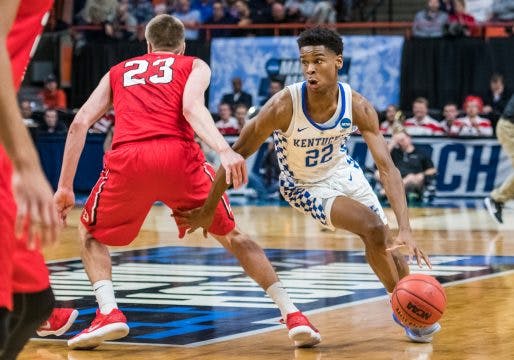
The dribble drive motion offense in basketball is effective for several reasons: 

1. It emphasizes aggressive dribble penetration, quick ball movement, and spacing on the floor. 

2. This constant attacking mindset puts a lot of pressure on the defense and creates scoring opportunities for the offensive team. 

3. It also allows players to use their individual skills and athleticism to beat their defenders off the dribble, leading to open shots or driving lanes to the basket. 

4. The ceaseless, unrelenting movement and spacing make it difficult for defenders to help and recover, often leading to defensive breakdowns and open looks for the offense.

Despite these clear advantages the dribble drive motion offense can present a team, some coaches are hesitant into their team because players need to make quick decisions based on the movements of their teammates and the defense, which can be challenging to grasp for younger or less experienced players. Additionally, teaching players to read and react to the defense within the flow of the offense can also be a complex task. 

In other words, the dribble drive motion offense often requires a significant amount of practice and repetition to develop the necessary chemistry and timing among the players. This is why having a set of drills that you can return to is crucial for making the dribble drive motion offense work for your team. 

Luckily, Joel Justus has drills that accomplish this exact task. 

Coach Justus joined the Ohio State men’s basketball program in April 2024 and will serve as the associate head coach. Justus spent the previous two seasons as an assistant at NC State, which included a magical run to the Final Four during the 2023-24 season. NC State also won the ACC Tournament in Justus’s last season. 

Prior to NC State, he spent one season on Bobby Hurley’s staff at Arizona State, and Justus spent seven seasons on Kentucky’s basketball staff before that. 

Coach Justus’ ‘Early Practice / Dribble Drive Motion / Basketball Drills’ course shows you the drills and discusses the key teaching points and emphasis to make the offense effective. 

22

Coach Justus’ ‘22’ Drill starts with a two-on-one transition look with a second defensive player as a chaser, who starts on the baseline behind the two players on offense, who will be positioned at around the elbow. 

The drill starts with a coach flipping a ball to one of the offensive players, which starts the transition break. The lone defender’s job is to make the two players make more than one pass, while the players on offense are trying to blow the ball up the floor and drive into the paint for an easy transition layup. 

Regardless of what happens, the next phase of the drill is to have the two players who were on defense turn to offense, with one inbounding the ball to the other. The players who were just in transition offense are trying to stop the inbound from happening. But if the inbound is made, the game becomes full-court two-on-two.

At that point, it’s up to the coach and players to prioritize what they want to work on. But practicing the pick and roll is always a great option; especially when trying to improve core dribble drive motion concepts. 

Another aspect of this drill that Coach Justus swears by is making it competitive by keeping score. This will keep your players locked in and looking to win, which is only going to make the drill more effective. 

Blood 22

null

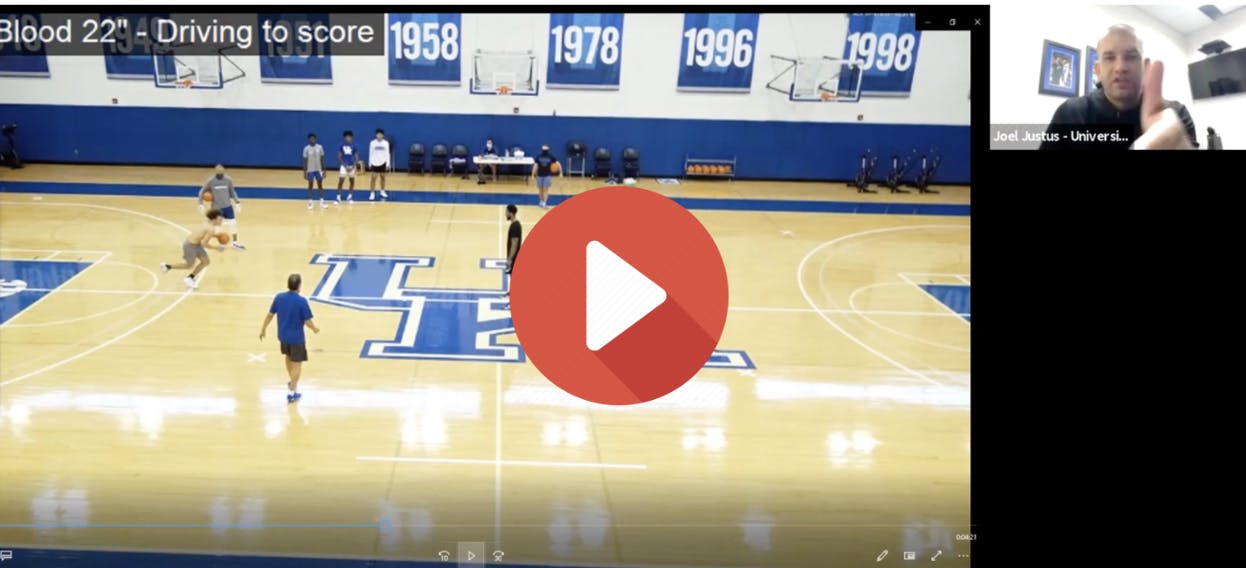
A great addition to the initial ‘22’ drill is what Coach Justus calls ‘Blood 22’. 

This drill starts with a defender at half court with an offensive player getting the ball at the top of the key, simulating a fastbreak in the defender’s direction. As soon as the dribbler passes this defender, the defender begins trailing. The dribbler then attacks downhill, where a defender is waiting in the paint and another offensive player of waiting on one of the blocks. 

Coach Justus claims that this drill serves as the building blocks for dribble drive motion offense because the dribbler’s first read in this drill is to drive to the basket and score. 

A driving guard should always stay on the side of the floor that they enter the frontcourt at because this will tell their big to remain on the other side in case a kick-out is needed during the drive. 

The only read the attacker must have is whether the big defender steps out and tries to stop them. In this case, the pass should be made to the big on the post. But if that big doesn’t step out then the attacker should always be going for a layup.

Blood 44

As the name suggests, the ‘Blood 44’ drill includes four players on offense and four on defense.

It starts in the same way as the previous drills, with a defender at half-court who will begin trailing as the dribbler with the ball passes them in transition. The other three offensive players will be positioned in either corner and on the opposite block from whichever side the dribbling guard enters from. 

As with the previous drills, the goal for the guard is to get into the paint and ideally drive aggressively to the basket, either making a layup or drawing a foul. But they also have the opportunity to lop or ball to their big on the block or kick it out to one of the players on the corner, depending on what the defense is giving. 

This drill is great because it simulates the actual decision that a driving guard will need to make in a game. 

NYSS Stay In The Game

Monday, June 23, 2025

US Sports Football: 5 Core Offensive Priniciples for a Winning Football Formula and CFL 2025 Recap: Winnipeg @ BC – Week 3


  • By Keith Grabowski

When he was 26, Scotty Walden was the youngest head coach in college football.  Now at the ripe old age of 30, and the Head Coach of Austin Peay, he’s still one of the youngest D1 coaches in the country. 

We had the privilege of hosting Scotty Walden as a presenter at Lauren’s First and Goal. He discuss the evolution of his offensive principles, which have led them to three consecutive winning seasons and a conference championshiped them to three consecutive winning seasons and a conference championship. The energy and enthusiasm he has about the game is contagious!

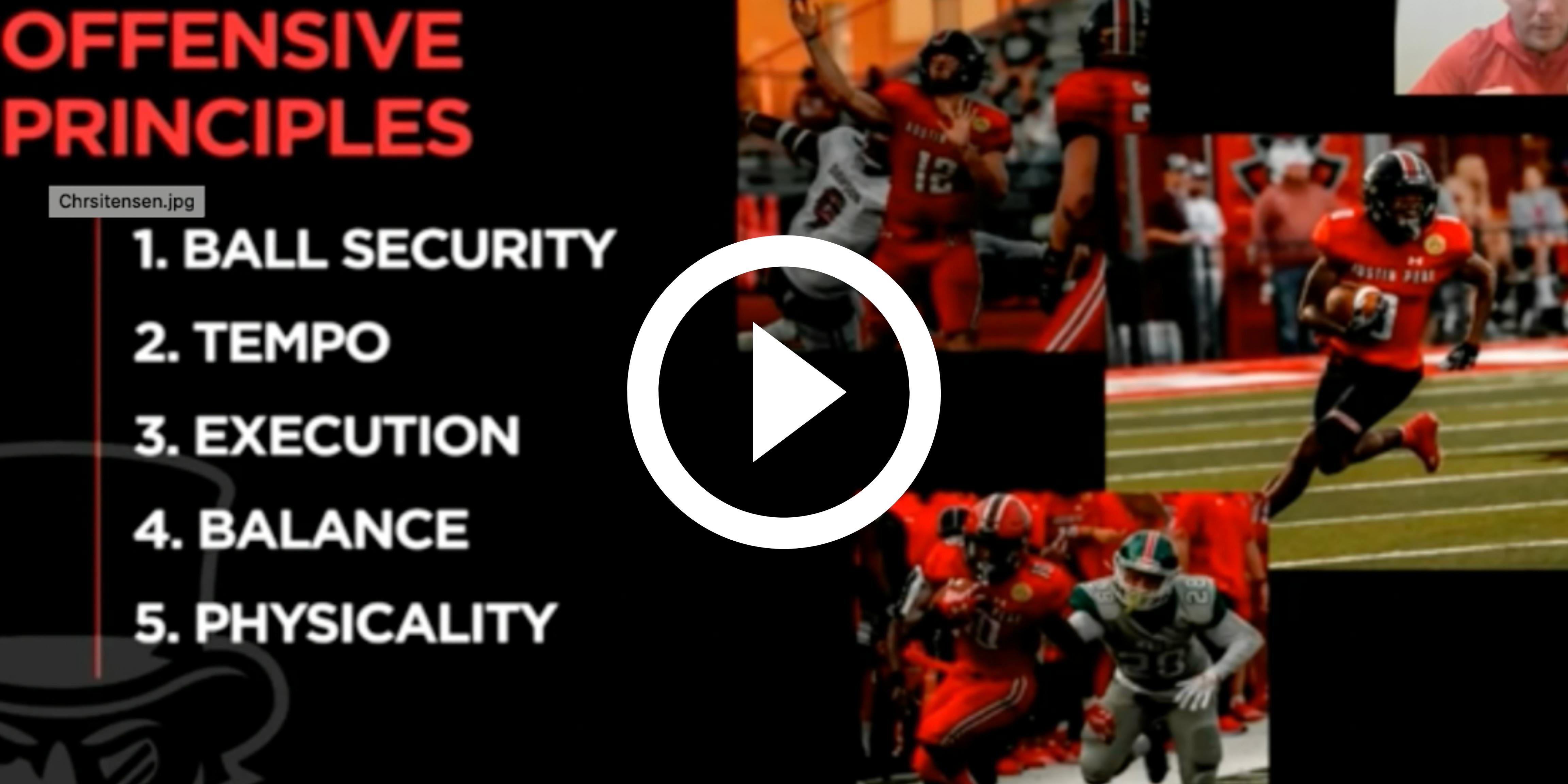
The Five Core Offensive Principles

#1) Ball Security

The first and most important principle is ball security. It's crucial for players to understand that they must protect the football at all costs. Turning the ball over to the opposing team greatly increases their chances of winning, so ball security is paramount.

#2) Tempo

Playing at a fast pace is essential for a successful offense. The team trains to snap the ball every 12 seconds, ensuring that they can wear down the defense and maintain a high level of execution throughout the game. This requires a strong commitment to conditioning and practice, as well as a well-coordinated strength and conditioning program.

#3) Execution

The third principle is all about executing plays at an extremely high level. This means that the playbook must be comprehensive and adaptable, allowing for a wide range of plays to be called quickly and efficiently. The key is to make the game plan as simple as possible for the players while still being complex enough to challenge the opposing defense.

#4) Balance 

A balanced offense is one that can effectively run and pass the ball, regardless of the weather conditions or the specific opponent. This adaptability ensures that the offense can take advantage of any defensive weaknesses and keep the opposition guessing.

#5) Coaching with a Defensive Mindset

Finally, the team believes in coaching offense with a defensive mentality. This means that practices are intense and physical, with a focus on blocking, hard hits, and relentless effort. This approach instills a sense of toughness and determination in the players, preparing them for the challenges of game day.

null

Developing the RPO Football Game

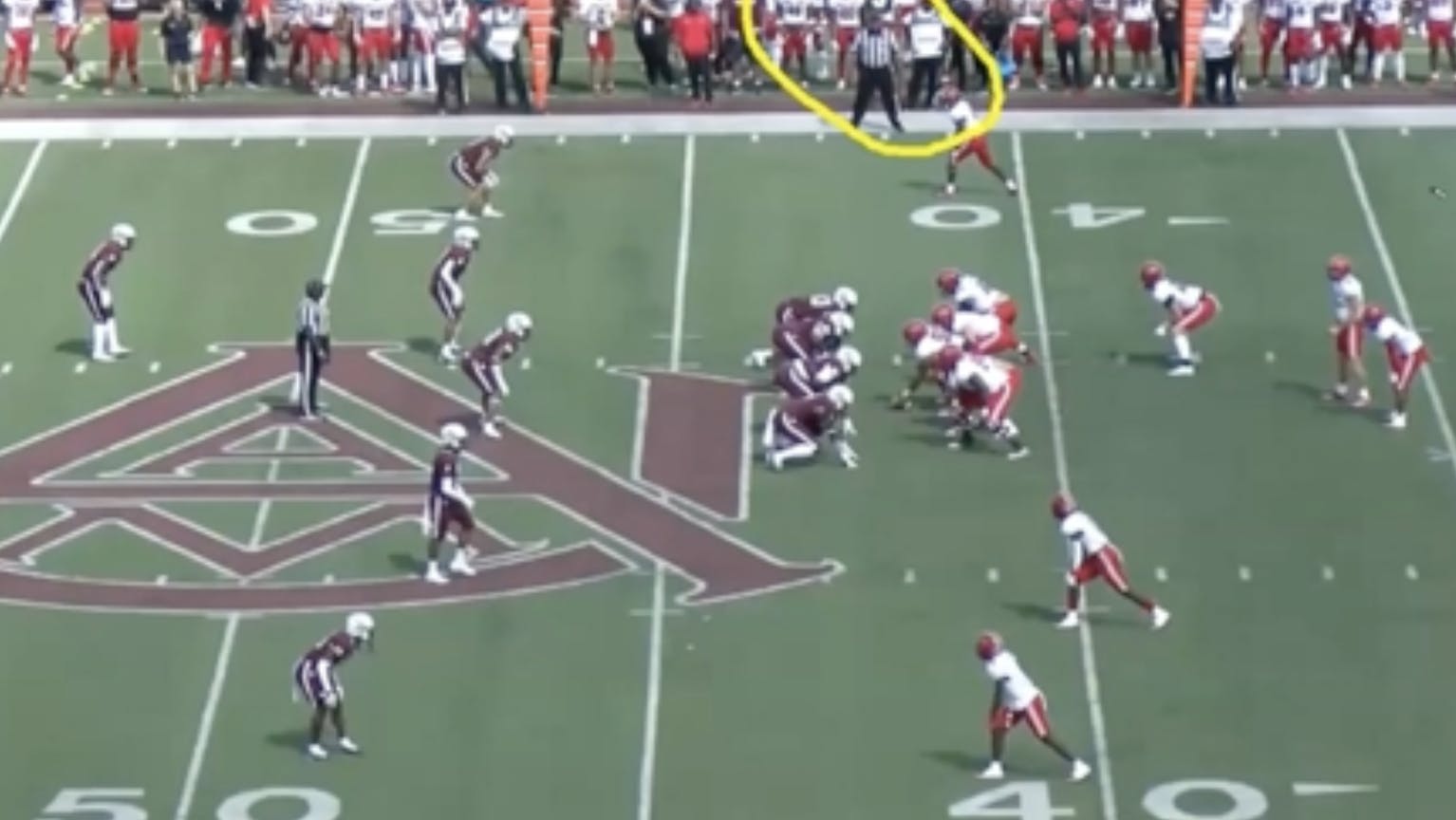
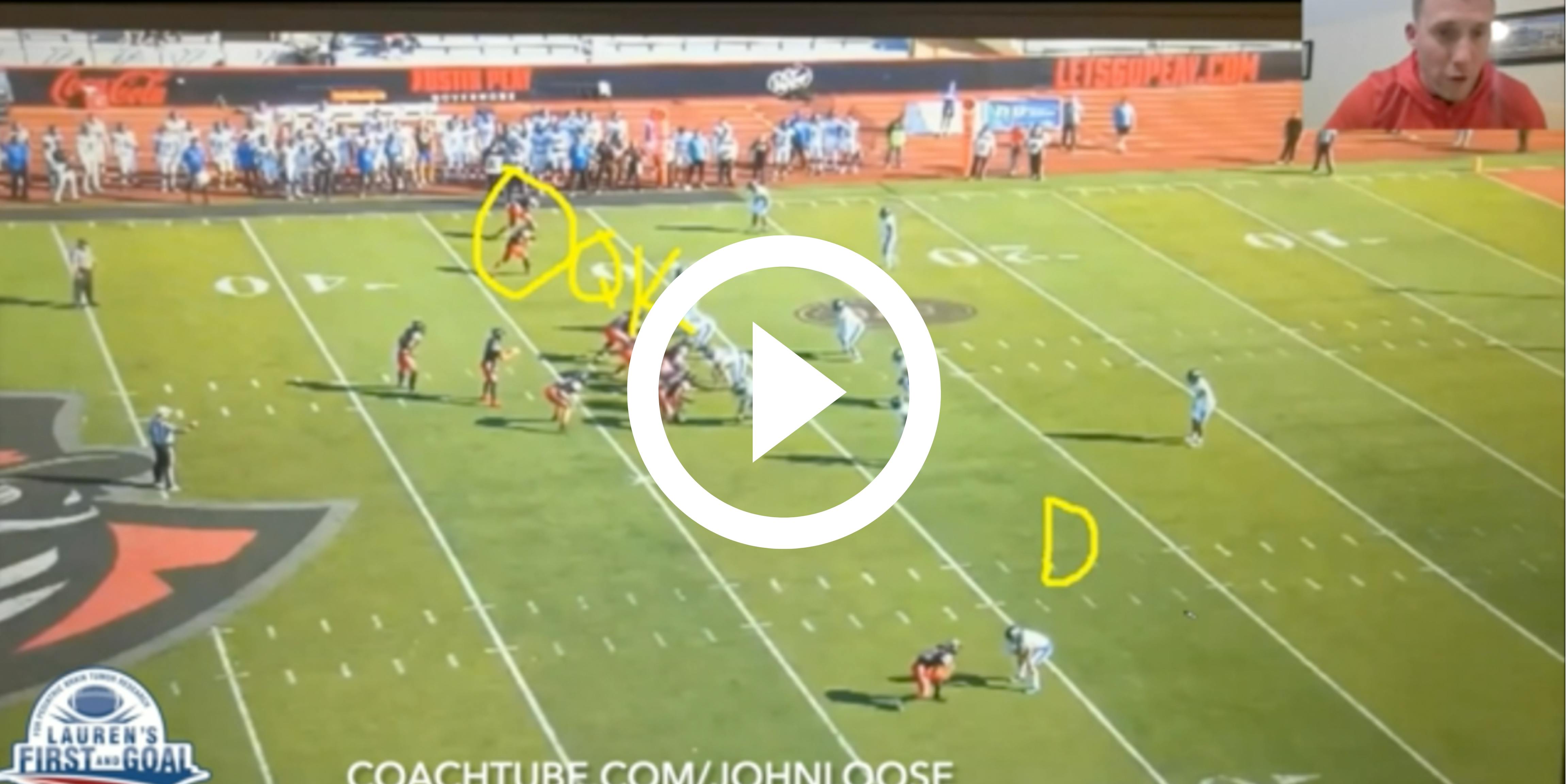
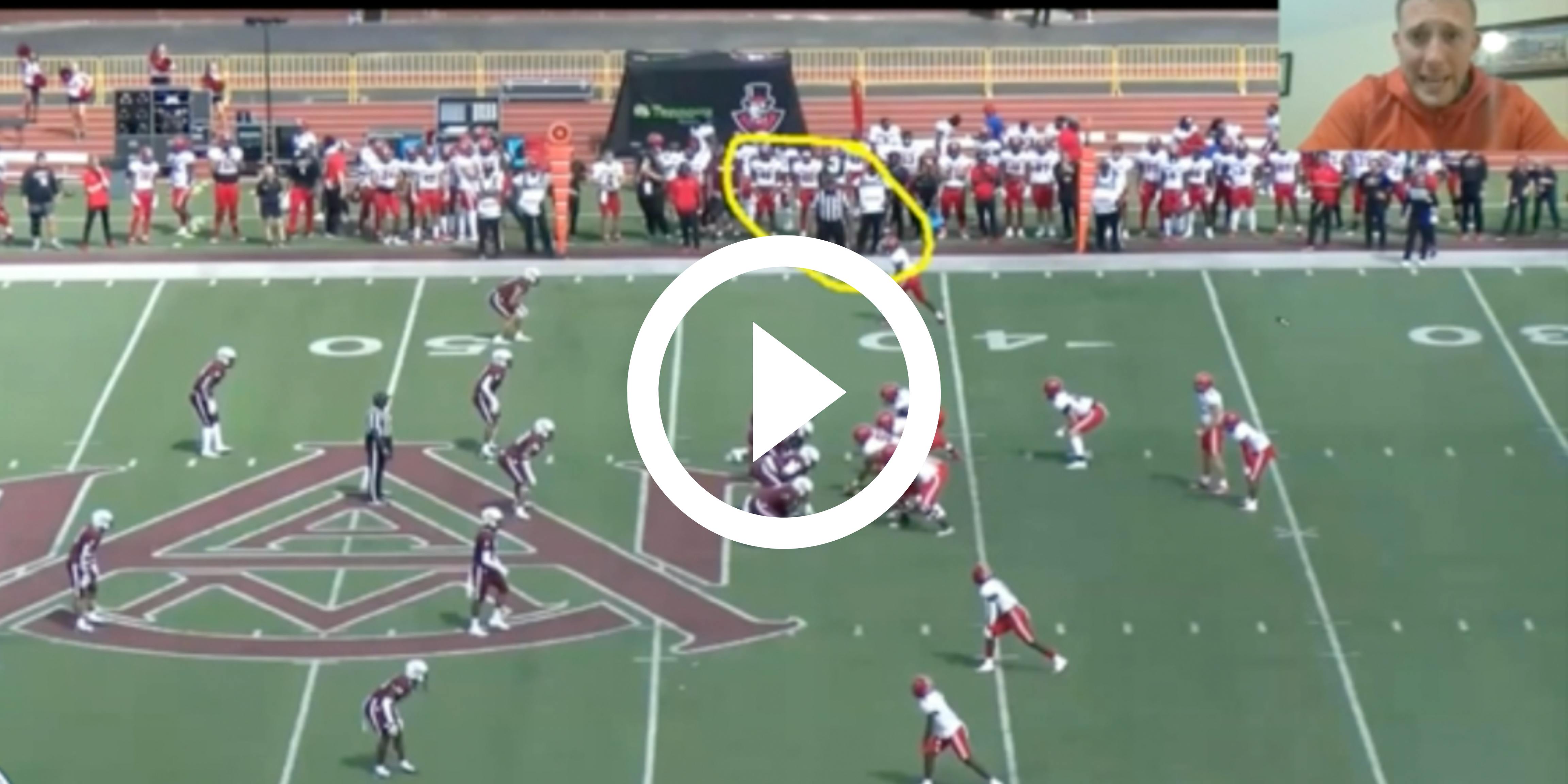
Coach Walden has also heavily invested in developing their RPO game. Here’s a sneak peek at how they work Quick Side & Decide Side in RPOs and execution in a critical situation:

null

Coach Walden also talks about the execution of the RPO game and how to make sure your team is firing on game day in the video below.

null

There’s definitely some takeaways to help create  a championship-winning offensive system. Mastering the five core principles of ball security, tempo, execution, balance, and coaching with a defensive mindset can make a difference in any type of offense. 

NYSS Every Kid In the Game