Now Streaming On US Sports Radio!

US Sports Net Today!


Live Play-by-Play, Updates, Highlights and More! on US Sports Network!
[Chrome Users-You may have to click on the play button twice to listen]
US Sports Network Powered By Gorilla Sports!


US Sports Radio
The Las Vegas Raiders Play Here
Fitness and Sports Performance Info You Can Use!
The Scoreboard Mall
The Rock Almighty Shaker Of Heaven And Earth!
The Coolest Links In The Universe!

Sunday, March 16, 2025

The Rock Almighty -WINNING THE BATTLES OF OPPOSITION A MUST FOR A VICTORIOUS LIFE and Sunday On The Rocks With Recon


  • Author Chibuike Okoroafor

For every opportunity in life there's always an opposition spiritually or physically to contend with (1Cor 16:9). Therefore, it's paramount for us to wage intense spiritual warfare using scriptural principles as recorded in Ephesians 6:12-18. Any battle you didn't defeat makes you a victim with generational imprints. Don't pass baton of unfinished battles to your children; whatever you don't defeat in your time waits for the next generation; battles (both spiritual and physical) aren't legacies nor inheritance, deal with it, unfinished battles cripples destiny, unfortunately many have been swallowed by battles they don't know how it started, many die foolishly because they fought people their sacrifice are heavier, don't fight who sacrifices more than you spiritually. Choose your battles wisely ! The most painful aspect of life is striving for survival and at the same time fighting unseen and seen forces, even the pride of lions are selective in their fight.

From biblical view points let's x-ray some people who firecely fought and subdued oppositions before their promotion.

1.Isaac couldn't enjoy his father's wells until he defeated the philistines. Gen 26: 18-26

2.Gideon couldn't excel until the altars of his father's house was brought down. Judges 6:25-27

3.Israelites couldn't enjoy liberty until Pharaoh and his cohorts where defeated: Ps 136:15

4.Joseph defeated a mess before his enthronement Gen 39: 7-11

5.Jesus couldn't enjoy his ministry untill Herod died Matt 2:19-20

6.Samson couldn't enjoy his ministry because Delilah took his strength judges 16:19

7.The government of heaven couldn't enjoy peace until Satan was defeated. Rev 12:7-11

Every great destiny will attract the attacks of the enemy and the warfare of destiny must be defeated before the welfare can be delivered. Unfortunately many who couldn't defeat these powers are cut off from the chronicles of life. If you sense greatness in your life; you must be intentionally conscious with associations and relationships( just like in the case of Paul & Barnabas, in Acts 15:37-40) & (Acts 9: 26-27). Relationships must serve a purpose that aid your growth and aligns you for more opportunities. Moreso, be strategic with your battles, David never fought every battle until he hears from God. Great destinies must be aligned to the leading of the holy spirit. Great destinies must understand time is the greatest asset of leverage. Give time to learn and unlearn but know when to thrust into progression because every retrogression in life can be traced on how the last second of your time is used. Oppositions manifest spiritually or physically and doesn't expire until firece contention are launched. If you notice something is fighting you or patterns are repeated continually don't keep quiet; launch a fierce spiritual warfare otherwise silence will become consent for the burial of destinies. There are many veritable ways opportunities could be lost in life and some of these factors are as follows:

  1. Greed & selfishness

  2. Wolverine spirits masquerading under the bloodline fraternities (family strongmen)

  3. Lack of spirituality

  4. Sexual orgies

  5. Dishonesty

  6. Frenemies

  7. Poor decisions

  8. Lack of discernment

  9. Pride and arrogance

  10. Uncontrollable temperament

  11. Disobedience

  12. Demonic radars

  13. Gossiping

God gave David rest from his enemies because he was always intentional in seeking God's face in prayers, whenever there's contention from the enemy, it's an indication as a believer to seek God's guidance. God will always direct us to his will but the enemy will fight to thwart the purpose of God in our lives, promotion and enjoying victorious life is dependent on how you handle your oppositions, so be strategic with your spirituality and do not grow weary because the adversary always prowl to seek whom to afflict with pain, depression etc.

Holds B.Eng in Chemical Engineering, holds diploma in Statistics, Word preacher, Creative writer, business addict, flexible with options

Saturday, March 15, 2025

The NBA on US Sports. KINGS at SUNS | FULL GAME HIGHLIGHTS


Never miss a moment with the latest news, trending stories and highlights to bring you closer to your favorite players and teams.
Download now
@ Apple - https://apple.co/4f5Og9g
@ Amazon - https://amzn.to/3DVUjjz
Swag Up @ Fanatics - https://tinyurl.com/NBASwag25

The Coolest Sports, The Hottest Talk, Music, and Fun.
US Sports Radio
https://bit.ly/USSportsRadioToday
http://www.USSportsRadio.net

US Sports Basketball: North Carolina vs. Duke Condensed Game 2025 ACC Men's Basketball Tournament


In what turned out to be another thriller at the 2025 T. Rowe Price ACC Men’s Basketball Tournament, the No. 1 seed Duke Blue Devils escaped with a 74-71 win over the No. 5 seed North Carolina Tar Heels. The Blue Devils led by as many as 24 points before the Tar Heels were able to battle back and make it a one possession game at the end. Carolina had a look from three-point land as time expired, but Van-Allen Lubin's shot was off the mark. Jon Scheyer's club advanced to the finals without Cooper Flagg and Maliq Brown who were out with injuries suffered in the quarterfinals. It was a balanced scoring attack that got the job done for Duke led by Kon Knueppel's 17 points. Khaman Maluach added 13 points on 6-8 shooting to go along with 9 rebounds and 2 blocks while Patrick Ngongba was a perfect 6-6 from the floor for 12 points with 3 rebounds and a block in the win.
Follow the ACC and NCAA BB with the app!
@ Apple - https://apple.co/41EAFjX
@ Amazon - https://amzn.to/4hfKOJV

The Coolest Sports, The Hottest Talk, Music, and Fun.
US Sports Radio
https://bit.ly/USSportsRadioToday
http://www.USSportsRadio.net

US Sports Track and Field. Four Essential Tips For Coaching Track Relays and Sprints and USC’s JC Stevenson runs second-fastest NCAA men's indoor 60m EVER...


Four Essential Tips For Coaching Track Relays and Sprints

  • By Grant Young

Coaching track relays can be quite challenging for several reasons. First of all, coordinating the handoffs between runners in a relay requires precise timing and technique. This means that as a coach, you need to ensure that each runner understands their role and the specific timing of the handoff to the next runner. 

Additionally, managing the different strengths and abilities of each runner in the relay team can be a complex task. Understanding each athlete's strengths and weaknesses and finding the right combination of runners to form a competitive relay team requires careful observation and assessment. 

Furthermore, motivating and inspiring the relay team to work together and perform at their best can be a demanding aspect of coaching track relays. As a coach, you must foster a sense of teamwork and unity among the relay runners, while also addressing individual concerns and maintaining a positive team dynamic. 

Lastly, the pressure of ensuring that the relay team performs well in high-stakes competitions adds another layer of difficulty to coaching track relays. The coach must prepare the team both physically and mentally for the challenges they will face during the race. 

Coaching track relays requires a combination of technical expertise, interpersonal skills, and strategic thinking, making it a difficult but rewarding endeavor. But with a few tips from an elite coach like Erik Jenkins, any relay coach can get their team winning races in no time. 

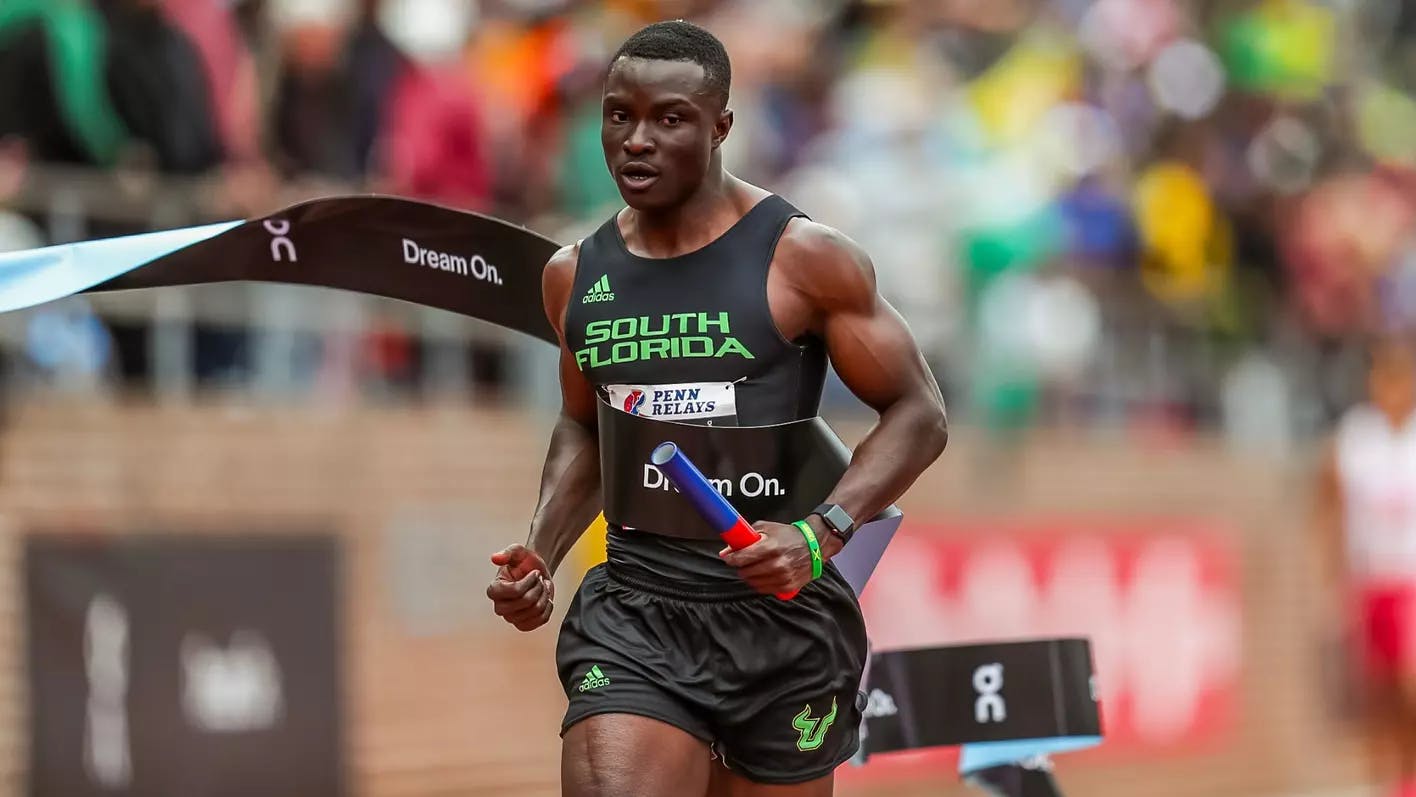
Erik Jenkins is entering his fifth season as the head coach of the USF track and field and cross country program. The Bulls have collected 23 individual and relay event conference championships, the program’s first men’s team conference championship, and two individual event national championships under Jenkins’ leadership.

Jenkins arrived in Tampa after serving 11 seasons as the head coach at Western Kentucky. During his time as head coach of the Hilltoppers, Jenkins led Western Kentucky to 30 Sun Belt and Conference USA championships, was tabbed conference coach of the year 21 times between outdoor and indoor nominations, and was selected as the USFTCCA Southeast Region Coach of the Year five times.

Coach Jenkins’ ‘Sprints and Relays Tips and Techniques featuring Coach Erik Jenkins’ course, shares several unique training tips, techniques, and race strategies that make it a must-have resource for coaches and sprinters at any competitive level. 

Sprinting Mechanics

While a great sprinter can come from any body type or background, Coach Jenkins noted that everyone must encompass three commonalities: the ability to push early, maintain, and decelerate efficiently. 

When instilling these crucial components of sprinting success in your athletes, coaches will want to start by ensuring the sprinter’s head is up, and they’re looking forward during the acceleration to the maintenance phase. In addition, the sprinter should understand that their hips need to be slightly behind where their shoulders should be while trying to push at the sprint's beginning. 

When it comes to moving the legs, the mechanics should make it so the runner’s knees are headed directly upwards with each motion before their foot goes to dorsiflexion. What sprinters don’t want to be doing is for their calf to bow out while running, which wastes energy and facilitates unnecessary movement which can be the difference between winning and losing a race. 

A great way to commit these techniques to memory is by standing in front of a runner and holding their shoulders in place while they’re slightly leaned over in the same way they’d be running during a race. From there, you can help train them to execute their leg revolutions correctly. And if there are multiple players on a relay team that you’re trying to teach at once, have them do this with their hands against a wall. 

Starting Blocks

Coach Jenkins explains that there’s no cookie-cutter approach to setting blocks and that each athlete is going to have their own preference. 

Coach Jenkins likes to have his athletes set their blocks in practice along the lane lines, so he has a clear visual to be able to evaluate and teach from as they practice their starts. 

When it comes to the actual start, the coach wants to make sure their athletes’ hands are completely behind the line, that their weight is shifted right on top of the hands around their shoulder blades, and that the head is in a neutral position with the spine. All of that should remain the same once the athlete’s bottom comes up right before the race begins, aside from where their weight is shifted (it will shift backward to the core/legs). 

The Finish

null

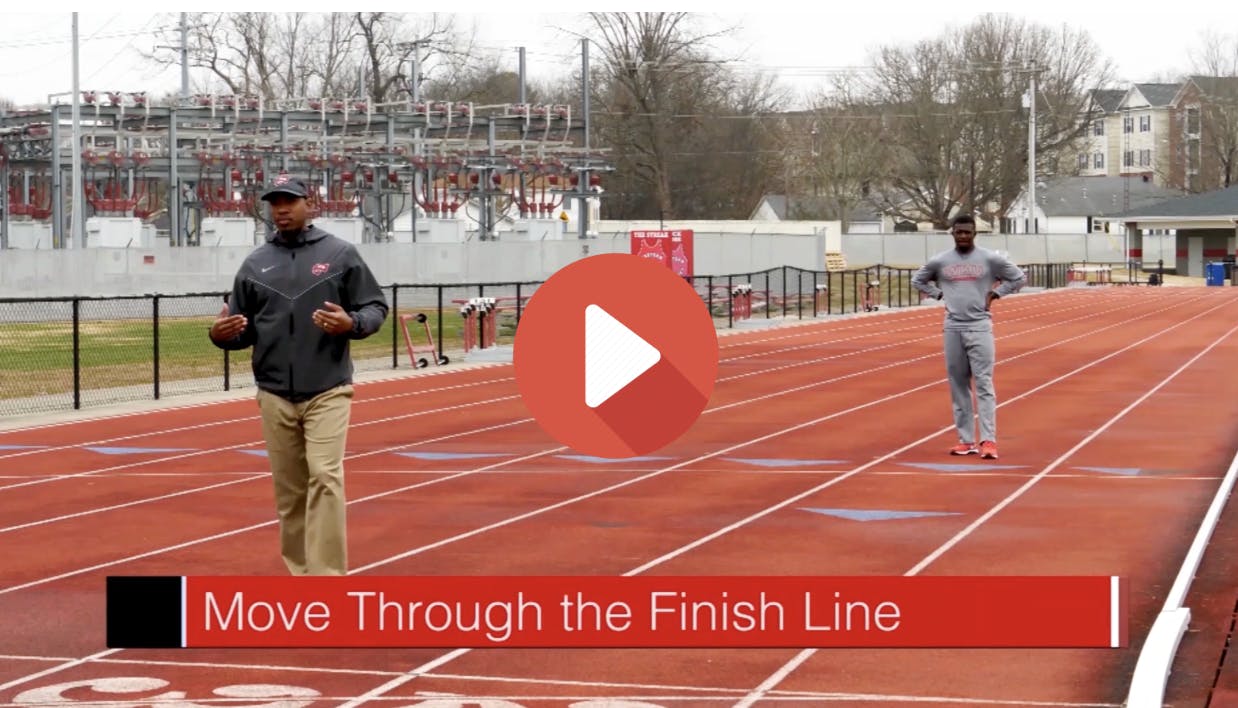
Coach Jenkins believes that the most important aspect of developing a sprinter is developing the way they finish races. And the first and foremost aspect of this is ensuring that the sprinter is moving through the finish line rather than moving or running to the finish line. 

In a fast race where the winner and loser can be decided between hundredths of a second, there can be no cruising through the finish line. Instead, the sprinter must be committed to the finish line and run through it. 

A great way to coach this is by having a focus point that is past the finish line. For example, a 100 m sprint or relay runner should be actually thinking they’re running a 105 m race because that extra 5 m should be completed with the same intensity to make sure the runner doesn’t let up on the gas.

Friday, March 14, 2025

US Sports Tennis: Three Elite Tennis Ball Machine Drills and Medvedev vs Fils Rollercoaster Final Set Highlights | Indian Wells 2025


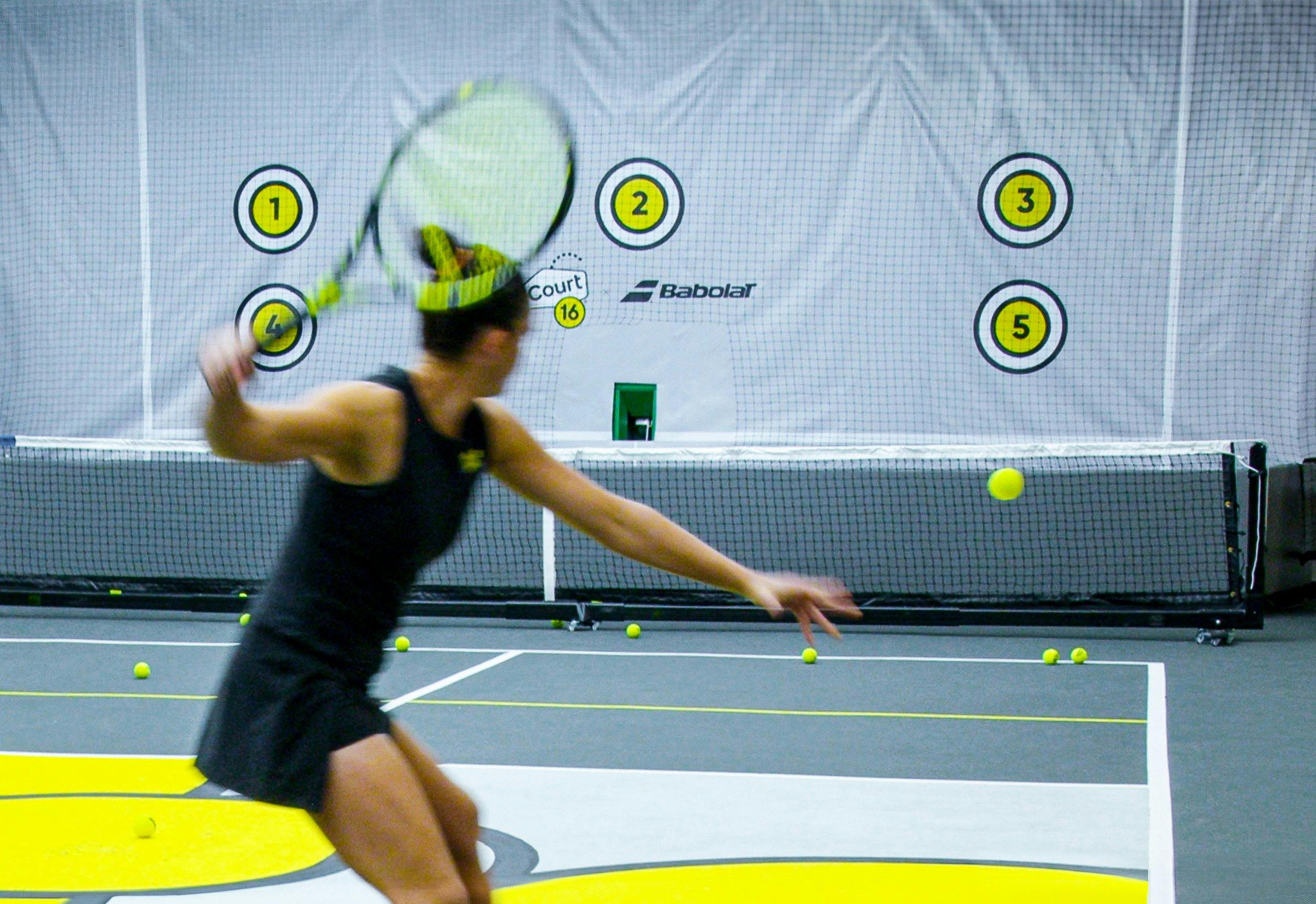
As all tennis coaches who’ve ever used one will know, there are numerous reasons why ball machine tennis drills are often considered one of the most effective tools for tennis players looking to improve their game.

Firstly, they provide a consistent and controlled environment for practicing various shots without the unpredictability that comes from hitting with a partner. This consistency allows players to focus on their technique, footwork, and shot placement without worrying about where the ball will be coming from. 

Another significant advantage is the ability to customize drills to target specific skills. For instance, players can adjust the speed, spin, and frequency of the balls being fed, enabling them to work on specific areas such as serves, volleys, or groundstrokes. 

There’s also the unavoidable fact that practicing with a ball machine removes the pressure that can come from playing with others. Players can take their time to focus on their form and make adjustments without the fear of judgment or the competitiveness that often arises in matches and practice sessions. 

Of course, ball machines are available for use almost any time, allowing players to practice at their own convenience. This accessibility means that players can take advantage of additional practice sessions without relying on a partner’s schedule. 

Ball machines (and the drills that can be done with them) offer a versatile, convenient, and effective way for tennis players to refine their skills.

But it can be hard to figure out just which drills are most effective when using a ball machine, as some drills are certainly more suited for an actual opponent. This is why we’ve compiled three ball machine-specific tennis drills from three respected tennis coaches that will expedite any tennis player’s development. 

Cosmin Miholca - Scramble Seven Drill

Cosmin Miholca is a certified tennis coach that has been playing tennis for over 30 years and teaching it for more than 20 years, both in Southern California and more recently in Europe.

Coach Miholca has developed many online tennis courses to share his knowledge with anyone who wants to enjoy tennis, regardless of whether they're a coach or player, or whether they want to play recreationally or competitively.

In his ‘Best BALL MACHINE Tennis DRILLS and GAMES’ clinic, Coach Miholca explains why ‘Scramble Seven’ is one of his favorite ball machine drills.  

For this drill, the ball machine is set to send the balls deep while rotating from side to side, therefore scrambling where each ball will end up and thus force the player to practice both the forehand and the backhand.

The goal is for the tennis player to hit seven balls in a row at the decided upon location (which can be deduced by cones or tape) in a row. Ideally the seven shots will follow this pattern:

1. - 2 balls from the baseline (groundstrokes) 2. - 1 approach shot (around service line) 3. - 4 volleys (at the net)

If any shots are missed, then the drill starts up again at zero. To make it more competitive, the player can alternate each shot to either side of the ball machine or at another specified location, and the exercise can go on until the player either hits seven shots in a row (or however many they’ve like to go for) or whenever the coach declares it’s done. 

Joe Dinoffer - Decision-Making Drilling

Joe Dinoffer has had an extensive "world class" career in the tennis industry, and has conducted clinics and exhibitions in over 50 countries, personally logging over 30,000 hours of instruction in English, Spanish, and German. He is a Master Professional in both the PTR and USPTA, a distinction awarded to only a select few in the tennis industry. He also received the prestigious 2006 USPTA Tennis Industry Excellence Award and was also selected as the 2012 USPTA Texas Pro of the Year. 

In his ‘Ball Machine Drills’ clinic, Coach Dinoffer explains one group drill that he loves using. 

This drill will initially set the ball machine to three different speeds: 

1. A short, high mid-court ball, where the tennis player will want to forehand winner down the line or cross-court. 

2. A high, deep backhand to the corner, where they hit a cross-court ball with topspin, either deep or back cross-court. 

3. Moderately deep to the left of the middle, where the player will run around their backhand and hit a forcing shot either reverse cross-court or down the line. 

Since the player won’t know which ball is being hit to them, this will perfectly replicate the quick decision making that’s required during an actual match. 

Randy Stewart - Windshield Wiper Drill

null

After passionately coaching the Bryan Vikings for 24 years, Randy Stewart was nominated into the prestigious TTCA Hall of Fame in 2019. This capped a highly successful career impacting high school athletes that extends far beyond the tennis court.

However, his complete understanding of the game, his ability to communicate, inspire, and teach his athletes made his induction an easy decision. He is still sharing his depth of knowledge with the world and to any aspiring coach.

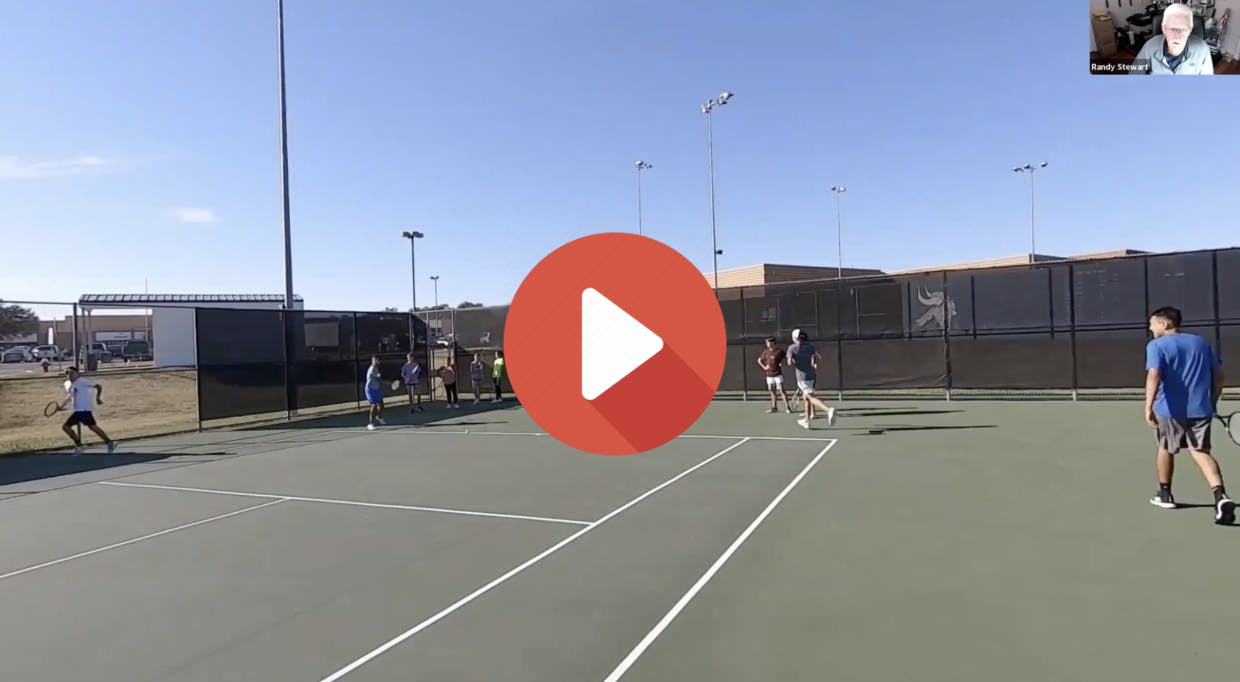
Coach Stewart’s ‘My Favorite Ball Machine Drills’ clinic discusses the highly valuable windshield wiper drill, which is named so because the lines and movement required resemble a car’s windshield wipers. 

One side of the court will be in a line working on their forehand while the other is working on their backhand. Each player gets three shots at different spots, depending on where the ball machine places it.

First will be forehand, then backhand, then the final will be the widest shot, which is to clear any congestion of the rapid movement on court and allow the next player to get into position.

Thursday, March 13, 2025

US Sports Women's Lacrosse: Catching, Shooting & Dodging for Girls Lacrosse and UVA Lacrosse - WOMEN'S LACROSSE: Richmond Highlights


Description

Make your girls a threat on the field! Every member of your girls lacrosse team will benefit from this extensive collection of drills that covers every aspect of the game. Coach Rachel Lenzo of Eastern University in Pennsylvania presents her entire collection of drills, techniques and advice that which has compiled from her successful career coaching and playing at the collegiate level.  

With 26 instructional course videos covering all aspects of the game, your team will have the skills needed to dominate the competition in no time

The Coach

RachelLenzo

Rachel Lenzo

Assistant Lacrosse Coach at Eastern University in Pennsylvania

Rachel Lenzo is an assistant coach at Eastern University in Pennsylvania.  As part of the coaching staff, she has helped guide the Eagles to multiple Pennsylvania Athletic Conference championship titles and NCAA Tournament appearances.

A two-time all-conference player during her playing career at Eastern, Lenzo captained the 2003 and ’04 teams to back-to-back PAC regular-season titles.


Wednesday, March 12, 2025

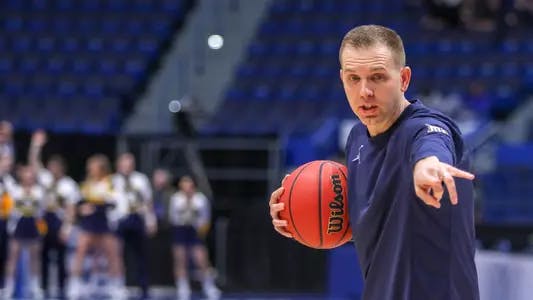
US Sports Basketball: NC State Basketball Coach Brett Nelson’s 4 Crucial Point Guard Qualities and Duke vs. North Carolina Game Highlights


  • By Grant Young

Basketball’s point guard position is often regarded as one of the most challenging roles on the court due to several demanding aspects:

- Playmaking Responsibility: The point guard is often referred to as the "floor general," responsible for orchestrating the offense. This requires a deep understanding of basketball strategies and the ability to make quick decisions under pressure. 

- Ball Handling Skills: Point guards need exceptional ball-handling abilities to navigate through defenses, create their own shots, and facilitate plays. They must protect the ball while also being aggressive. 

- Vision and Awareness: A successful point guard must have excellent court vision. They need to anticipate plays, read defenses, and recognize mismatches, which requires acute situational awareness. 

- Defensive Challenges: Point guards often face opposing players who are larger and stronger. This demands not only skill in on-ball defense but also the ability to anticipate opponents' moves and disrupt their rhythm. 

- Leadership Qualities: As the leader on the court, a point guard must inspire and manage their teammates. This includes motivating players, communicating effectively, and maintaining team morale.

This combination of responsibilities makes the point guard position not only pivotal for team success but also exceptionally challenging. This is why it’s imperative that when a coach finds someone who can succeed as a point guard, work hard to keep developing them and helping to improve with these aforementioned aspects. 

But what qualities does a good point guard convey? That’s what Brett Nelson is for. 

Coach Nelson is currently an assistant coach at NC State under head coach Kevin Keatts. Prior to that, Nelson was an assistant head coach at UMass before spending the previous four seasons as the head coach of Holy Cross University. He worked as an assistant coach at Marquette from 2014-2019. 

In his ‘Point Guard Play’ clinic, Coach Nelson shares what he looks for in a great point guard, on-court responsibilities, as well as developing the mindset for successful point guard play. We’ve pulled some of his most pertinent pieces of point guard development wisdom to share with you today.

4 Important Qualities For a Point Guard

At one point in his clinic, Coach Nelson reveals what he considers to be the 4 most important qualities for a point guard. They are:

1. Do your job with maximum effort

Coach Nelson discusses how he believes that in basketball (which is a game of mistakes), effort makes up for mistakes. In addition, the motto, “Strong and wrong is better than weak and right,” is something that Coach Nelson holds dear, and is meant to assert that doing something with maximum effort and conviction is always the most important thing, regardless of whether that’s technically the “right” thing to be doing. 

And this maximum effort applies to more than the basketball court. It’s in the weight room, in the classroom, at study hall, and in one’s social life. 

2. Always put the team first

Another one of Coach Nelson’s important qualities for a point guard is to always put the team first and have an unselfish attitude. 

For a point guard, body language is of the utmost importance because they’re often the one with the ball, and therefore have their teammates’ eyes on them. So if they’re showing bad body language, this will send a message to the entire team. 

Coach Nelson concedes that of course, in order to win games, a team has to do more than give maximum effort and have an unselfish attitude. But if you don’t do those two things, you have no shot at sustained success in any level of basketball. 

3. Practice is everything

Coach Nelson asserts that a team’s point guard has to be the most consistent practice player on the roster. He also says that there are two people on a basketball team who can’t have a bad day: the head coach and the point guard. 

Going off of that, Coach Nelson discusses how it’s his job as a head coach to create a competitive environment at practice, which will facilitate growth and development. And because the point guard has the ball in their hands, they can push the face and set this competitive tone with each possession, which is vital.

Be on time

null

The fourth and final quality a point guard must have is being on time to everything. On the court, this means being on time with their passing lanes and defensive help rotations. But being on time is even more important off of the court, whether that be with study hall, in the film room, to the classroom, getting to bed on time, and everything else. 

Because if a point guard is a perpetually late person in their individual life, how can they be expected to lead an entire team on the basketball court?

Another important part of this equation is that if a point guard is never late (and encompasses the other three aforementioned qualities), they’re able to hold their teammates accountable, as well. 

The point guard has no choice but to be a leader on the basketball court. But if they can embrace and embody this responsibility off of the court as well — especially by upholding these four qualities — their team will be much better off because of it.

Tuesday, March 11, 2025

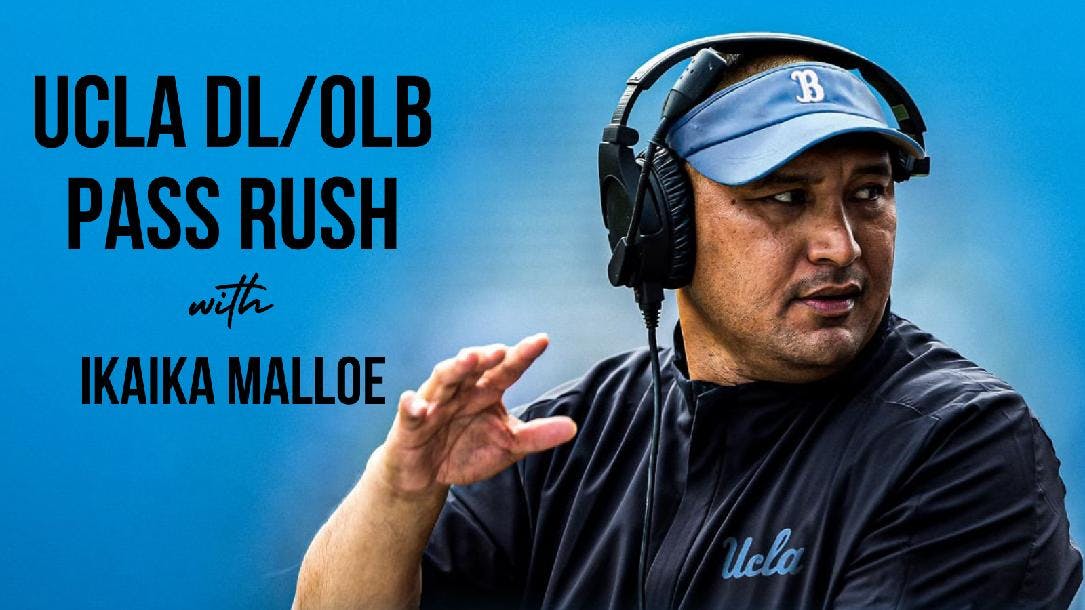
US Sports Football: Mastering the Pass Rush: Expert Drills and Progression Tips from UCLA’s Coach Ikaika Malloe and 🎥 🔥 Grind for the Throne | Day 2 | 7on 7 Tournament | Dallas


  • By Andrew Dohre

As coaches of all levels know, football is a game of strategy, intensity, and constant refinement. On the defensive side of the ball, one of the most critical aspects of controlling a game is the ability to disrupt the opposing quarterback. At UCLA, the defensive side of the ball has been a key area of focus after a season where the team finished 87th in total defense. Looking to bounce back, the Bruins know that improving their pass rush will play a central role in raising their overall defensive output.

The responsibility for turning around the Bruins’ pass rush falls to Outside Linebackers (OLB) Coach Ikaika Malloe. Coach Malloe, a respected figure in football coaching, is taking a step-by-step approach to building an elite pass rush for the team. Let's break down his philosophy, progression, and daily drills that make pass rushers successful, and how other coaches can apply these principles to their own teams.

The Core of Pass Rush Progression: The Get Off Off

The foundation of any good pass rush is the get off. A pass rusher’s ability to explode off the line of scrimmage and close the gap between themselves and the offensive lineman is crucial to putting pressure on the quarterback. Coach Ikaika Malloe is firm in his belief that a great pass rush starts with the get off. In his own words, “No defense can be great if their get off is slow.”

For Coach Malloe, the get off is the first and most important part of pass rush progression. Whether coaching a defensive end or a stand-up outside linebacker, having a fast, explosive get off is essential to success. The faster the pass rusher can close the distance between themselves and the offensive lineman, the less time the offensive lineman has to react and initiate their block. In essence, it’s a race to disrupt the quarterback, and it starts with the get off.

Drills to Perfect the Get Off

A great pass rush doesn’t just happen overnight; it’s the result of focused and consistent practice. Coach Malloe is a firm believer that pass rushing skills must be developed through diligent drill work. His emphasis on the get off is evident in the drills he conducts with his players every day. Let’s explore some of the key drills Coach Malloe uses to develop elite-level pass rushers.

1. Get Off Drill

The get off drill is a fundamental practice that Coach Malloe emphasizes to help players improve their explosiveness right at the snap of the ball. During this drill, the focus is on firing off the line of scrimmage with speed and power, as quickly as possible.

Objective: The primary goal of the get off drill is to explode out of the stance, minimizing the time between the snap and the first step.

Key Focus: Players need to keep their bodies low, use their legs to explode forward, and keep their movements sharp and quick.

Coaching Tip: Pay attention to the first step. The quicker and more explosive this initial movement is, the better the chances of closing the gap between the pass rusher and the offensive lineman.

This drill is done repeatedly so players build muscle memory, ensuring that their get off is consistent under game pressure. Coach Malloe stresses that the get off sets the tone for the rest of the pass rush, so it must be perfected before moving on to other techniques.

2. Explosive Start Drill

Another important drill that Coach Malloe uses to develop speed and burst is the explosive start drill. In this drill, players practice firing off the line at full speed from a standing or three-point stance.

Objective: The goal is to simulate the quickness and power required to get a head start before the offensive lineman can engage.

Key Focus: Emphasis is placed on the initial step’s explosiveness. Players should avoid any wasted motion or hesitation.

Coaching Tip: Train your players to avoid "rising" up too early. Players should maintain a low center of gravity to maximize their leverage and keep their acceleration going forward.

3. Reaction Time Drills

Since the get off is not just about raw speed but also about timing, Coach Malloe also focuses on improving the reaction time of his players. Reaction drills simulate the split-second decisions players must make once the ball is snapped. In real-game scenarios, a player must anticipate the snap and be in the correct position to attack the offensive lineman.

Objective: Develop quick reaction times and improve the player’s ability to anticipate the ball being snapped.

Key Focus: Start with a visual or auditory cue to signal the snap and have the player react explosively from the line.

Coaching Tip: Ensure that players react immediately without hesitation. The best pass rushers often get the jump on the offensive line because they have superior anticipation and reflexes.

Additional Drills for Effective Pass Rush

Once the players have mastered the get off, Coach Malloe works with them on refining their ability to engage offensive linemen and finish their rush. While speed and explosiveness off the ball are crucial, the technique used after the initial burst is equally important.

1. Hand Fighting Drills

Pass rushers often face the challenge of having an offensive lineman engage them quickly after the snap. Therefore, Coach Malloe places a strong emphasis on hand fighting—using a variety of hand techniques to disengage from blockers.

Objective: Teach players how to keep their hands active and use them to shed blockers quickly.

Key Focus: Players should learn how to “swim,” “rip,” and use other techniques to break free from blockers.

Coaching Tip: Focus on making hand movements sharp and intentional. Players should not allow blockers to latch onto them but instead use their hands effectively to disengage.

2. Pass Rush Moves Drills

In order to be effective against offensive linemen, pass rushers need a variety of pass rush moves to keep the offensive player guessing. Whether it’s a speed rush, a bull rush, or a combination of moves, Coach Malloe ensures his players have a well-rounded arsenal.

Objective: Build a versatile pass rusher capable of adapting to different blockers and situations.

Key Focus: Practice multiple moves in combination, working on counters and adjustments as needed.

Coaching Tip: Don’t let your pass rushers become predictable. Encourage them to use different moves in combination, keeping the offensive lineman on their heels.

3. Finishing the Rush

After getting through the offensive line, a pass rusher needs to know how to finish the play by getting to the quarterback. Coach Malloe ensures his players finish their rush by staying relentless even when the quarterback evades them or a blocker engages them.

Objective: Ensure players are finishing their rushes to get a sack or force a hurried throw.

Key Focus: Maintaining the motor and aggression needed to close out the play.

Coaching Tip: Encourage your players to never give up on the play, even if they’re initially blocked. Great pass rushers relentlessly pursue the quarterback until the whistle blows.

The Mental Aspect: Understanding the Role

While drills and physical conditioning are essential, Coach Malloe also emphasizes the mental aspect of pass rush progression. Pass rushers need to understand their importance within the defense and believe in their ability to change the game. Coach Malloe focuses on creating buy-in from his players, ensuring they understand how they fit into the defense as a whole.

Daily Practice and Development: Coach Malloe believes that continuous development through practice is the key to becoming an elite pass rusher. By emphasizing a consistent work ethic and attention to detail, players will develop the confidence and skills they need to contribute to the defense in a meaningful way.

Conclusion

For football coaches looking to build a dominant pass rush, the insights from Coach Ikaika Malloe and his progression-focused methodology are invaluable. By starting with the get off, drilling key pass rush techniques every day, and emphasizing mental buy-in, you can develop a powerful edge rush capable of disrupting the quarterback and soon you’ll have a defense that’s capable of dominating on the edge; changing the outcome of games.

Monday, March 10, 2025

US Sports Baseball: Two Tips For Developing an Elite Baseball Bullpen and North Alabama vs #1 LSU (G3) | 2025 College Baseball Highlights


  • By Grant Young

Developing a formidable pitcher’s bullpen is not just important; it is a cornerstone of a team’s success. 

A reliable group of relievers can protect fragile leads, turn the tide in tightly contested games, and be the difference between victory and defeat. However, cultivating this essential unit is fraught with challenges that demand astute management and keen insight. 

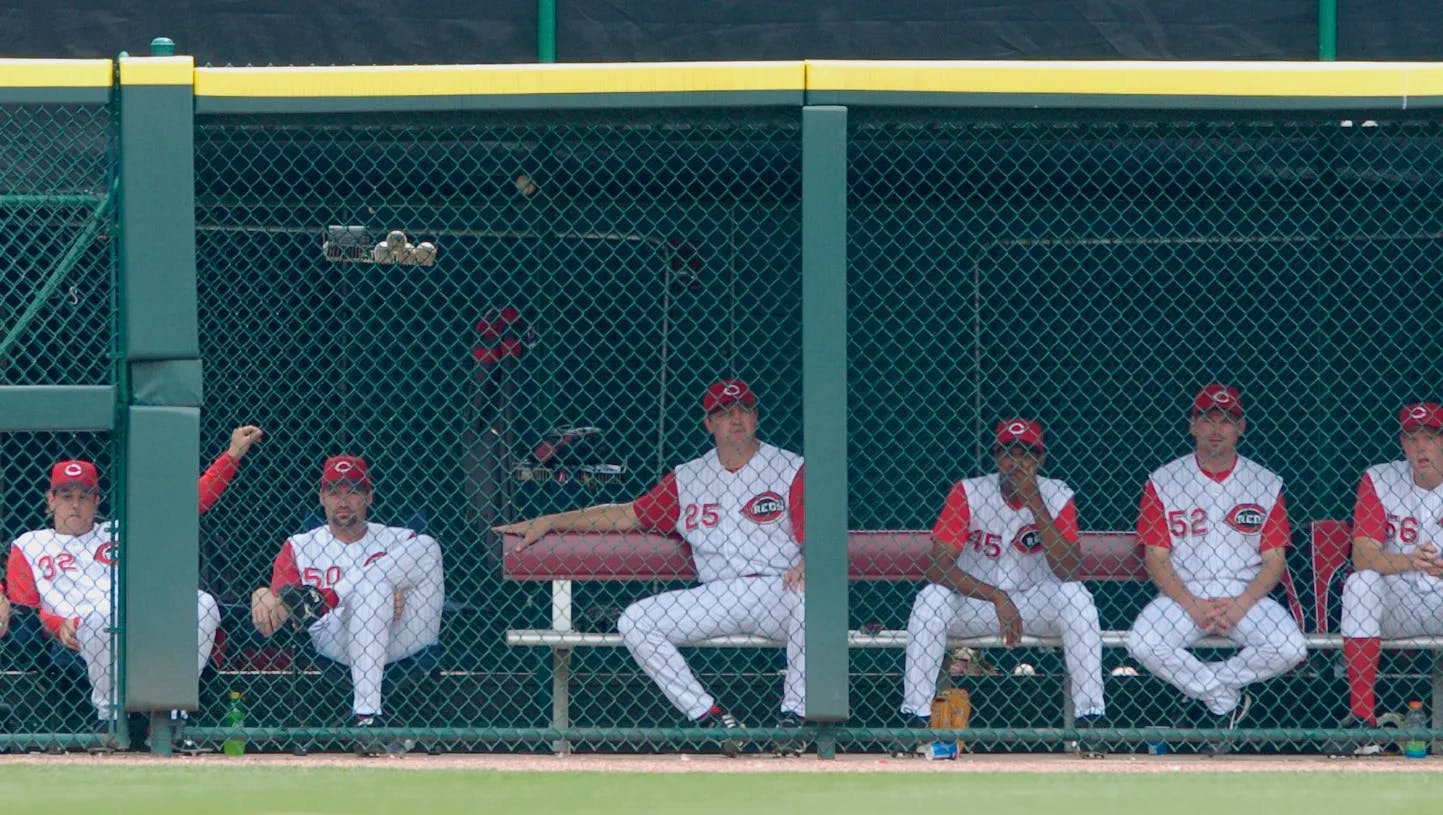
One of the most pressing issues in building a successful bullpen is the inherent unpredictability of relievers. Unlike starting pitchers, who benefit from a structured routine and the luxury of pacing themselves over several innings, relievers face a relentless, high-pressure environment. Their performance can fluctuate dramatically based on fatigue, psychological pressure, and the specific matchups they encounter. This inconsistency can make it exceedingly difficult to depend on any given reliever, especially in a high-stakes situation. 

Injuries also loom as a significant hurdle. Relievers often bear the brunt of overuse, with their high-intensity outings leading to a greater risk of injury. When a key arm goes down mid-season, it creates a ripple effect throughout the bullpen, forcing teams to either scramble for replacements or pull less experienced pitchers into the spotlight—decisions that can disrupt team cohesion and competitive edge. Moreover, assembling the right blend of talent is crucial. 

Effective bullpens also require a savvy combination of power pitchers, finesse throwers, left-handed specialists, and right-handed options to navigate the diverse lineups faced throughout a season. This intricate mix demands astute scouting and a deep understanding of each player's mental resilience and capacity to thrive under pressure. 

All of this is to say that while an effective bullpen is vital for achieving success in baseball, its development is an intricate challenge that necessitates meticulous planning, exceptional player evaluation, and a keen ability to adapt to ever-changing circumstances. Mastering this puzzle can set a team apart, paving the way for triumph in the quest for championship glory.

While constructing a great bullpen will ultimately depend on recruiting and roster development, some bits of wisdom can make the whole process easier. And Jeff Mielcarek has that wisdom in spades. 

Coach Mielcarek has excelled as the Head Varsity Baseball Coach at Central Catholic High School in Ohio since 1987. During that time, he has won three Toledo City Championships, three regular season titles, and three district titles. As a result of his success, Coach Mielcarek has been inducted into the Ohio High School Baseball Coaches Association (2011), Central Catholic Hall of Fame (2019), Toledo City League Hall of Fame (2022), and the NW Ohio Polish Hall of Fame (2022).

In his ‘Developing Effective Bullpens with Jeff Mielcarek’ clinic, Coach Mielcarek dives deep into how bullpen preparation directly impacts a team’s success, emphasizing the importance of mental and physical readiness before stepping onto the mound.

We have taken two of his best bullpen tips and explained them in detail for you below. 

The Birth of a Bullpen Strategy

null

Coach Mielcarek explains that it quickly became apparent to him that one of the most important aspects of a bullpen’s success is developing and then sticking to routines. 

Being a relief pitcher is spontaneous by nature, as most relievers (aside from the closer) rarely know when they’re going to enter the game until just a few minutes before their actual appearance. And this lack of structure combined with a potentially short time to get ready to pitch can often lend itself to winging it in terms of warming up.

But Coach Mielcarek asserts that not only should a bullpen have a set protocol on getting a pitcher warmed up and ready for the game, but each individual pitcher must have a set warm-up routine that they will use.

While the same warm-up can be used for every pitcher, reality is that different things work with different guys. And it’s fine if each pitcher’s warm-up routine is different, so long as it works for them and they stick to it. 

In addition, since sometimes relievers have longer or shorter time windows to warm-up than others, it’s a great idea for them to have two different warm-up routines, a condensed one that focuses on what’s absolutely necessary to be ready for the game in a couple minutes and a longer, more drawn out one that can be used when there’s more time. 

Time can be taken out of practices for coaches to help pitchers identify the warm-up activities that suit them and to develop their individual routines. 

Know Your Pitch: Strengths From the Bullpen

null

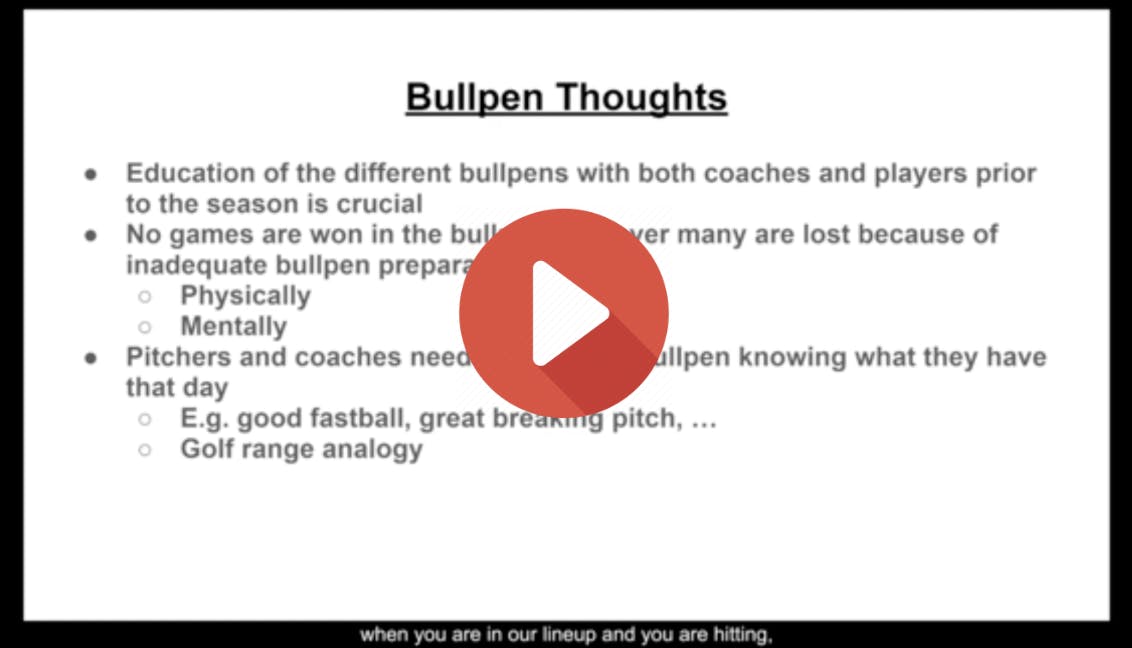
Any baseball coach knows that communication is crucial in the dugout. While this might seem to obviously translate to the bullpen, reality is that a lot can be lost in translation from the bullpen to the pitching coach or head coach, and that’s why things must be made clear as possible. 

Coach Mielcarek emphasizes that knowing your strengths in the bullpen is paramount. For one, this means in the sense of knowing which relievers are your best each season, along with who is available on any given day. 

But it also does much deeper than that. During each game, Coach Mielcarek says that there should be communication from the bullpen to the pitching coach about which pitches are working and not working for a reliever while they’re warming up. Just because a pitcher typically has a great curveball doesn’t guarantee that they’re going to have it every time they appear. So an initial scouting report should always be relayed.

However, a pitching coach should always test a reliever’s best strengths during each outing, regardless of how they looked in the bullpen. Because things can change in a game scenario.