Now Streaming On US Sports Radio!

US Sports Net Today!


Live Play-by-Play, Updates, Highlights and More! on US Sports Network!
[Chrome Users-You may have to click on the play button twice to listen]
US Sports Network Powered By Gorilla Sports!


US Sports Radio
The Las Vegas Raiders Play Here
Fitness and Sports Performance Info You Can Use!
The Scoreboard Mall
The Rock Almighty Shaker Of Heaven And Earth!
The Coolest Links In The Universe!

Friday, August 1, 2025

US Sports Martial Arts: Learning the Fundamentals of Mixed Martial Arts and Feat. Dramatic Comeback Victory 😤 Otis Waghorn vs. Kongklai | Muay Thai

 Author Ross Natonason

The popularity of Brazilian Jiu-Jitsu and shoot wrestling has led to the creation of American and Japanese mixed martial arts. This kind of full contact combat sports was originally held as a competition aiming to discover the most effective martial arts which will be very helpful in real unarmed combat situation. In 1995, the sport got its coined name by the President and CEO of Battlecade, Rick Blume, and now famously known as the "mixed martial arts". At first, the players are to follow minimal rules. As fighters executed multiple martial arts, organizers and promoters started to employ additional rules to intensify safety and secure mainstream acceptance as a sport.

With the warm acceptance from the audience and avid fans, mixed martial arts practice has spread around the globe. Adults, kids and teens have enrolled to various martial art schools that offered courses for different types of martial arts. With the purpose of learning the art of fighting, most of the students aim to become experts in this field and become professional competitors of this sport. Although this was primarily practiced almost exclusively by competitive fighters, it has become available to wide range of practitioners of any age and with varying levels of competitiveness. Martial arts courses include judo, muay Thai, taekwondo, karate, wrestling and others.

Usually, fighters train with different styles under multiple coaches or an organized fight team. Before going to complex styles and fighting techniques, players must learn the common disciplines in mixed martial arts which are gained from traditional martial arts. The following enumerates three common disciplines of mixed martial arts:

a. Stand-up fighting tactic

This discipline consists of effective stand-up striking while the fighter avoids ground fighting. This style is usually applied using sprawls to defend against takedowns. Footwork, kicking, elbowing and punching are enhanced in this style. Muay Thai kickboxing and Karate principles are usually applied in this discipline.

b. Clinch

Applied by wrestlers and Judokas, clinch fighting as well as dirty boxing are tactics used to prevent opponent from moving away into more distant striking range. This tactic is applied in attempting takedowns and striking competitor using knees, elbows, punches and stomp.

c. Ground

Another strategy to takedown or throw opponent to the ground is the ground-and-pound. An effective ground technique will let opponent obtain a top or dominant position then strike opponent with fists and elbow. This fighting tactic is aimed to attempt submission holds.

Although males dominate mixed martial arts, the sport also has female players commonly coming from Japan. Personalities such as Megumi Fujii, Gina Carano and Miesha Tate have represented women power and known as faces of women's MMA.

MMA equipment and clothing gear

To preclude the use of fighting kimono, MMA promotions have required male and female fighters to wear appropriate fighting attire. Male fighters play bare-chested and wear shorts as well as groin protectors underneath their trunks. Female fighters wear shorts and sports bras or other similarly fitting tops. Both fighters are required to wear mouth guards and rash guards. Choosing the best MMA equipment and gear must be based on functionality, style, and quality craftsmanship. Examples of quality clothing gear include Sprawl Fusion shorts, UFC fight and sparring gloves, brain pad mouth guards and grappling shin guard.

Ross is author of this article on Learning the Fundamentals of Mixed Martial Arts. Find more information about Mixed Martial Arts here.

NYSS Twitter Focus on Fun

Thursday, July 31, 2025

US Sports Partner Spotlight: Academy Sports & Outdoors

 Tactacam Reveal X 3.0 2-Pack Cellular Trail Camera now $199.99 was $229.99
Shop now @ https://brandcycle.shop/qssnk
Academy Sports has a wide range of quality hunting, fishing and camping equipment, patio sets, barbecue grills along with sports and recreation products. Making it easier for everyone to enjoy more sports and outdoors at everyday low prices.

US Sports Radio affiliate partner
http://www.USSportsRadio.net

High Intensity Health on US Sports Radio


High Intensity Health
Forget LDL Simple Blood Test Predicts Heart Disease Better
Now streaming (2pm EST) on US Sports Radio

US Sports Volleyball: How to Make Your Volleyball Practices More Game-Like and Italy 🇮🇹 vs. Brazil 🇧🇷 - Gold Match Women's VNL 2025 - Highlights


  • By Grant Young

Given volleyball’s nature, it can be difficult to construct a practice plan that doesn’t feel monotonous. 

But finding a way to do so is crucial when it comes to keeping your players feeling both engaged and excited about showing up and improving each day. 

Not to mention that if your players aren’t focused during their practices, it will be that much more difficult for them to flip a switch and become prepared for the pressure that comes when the lights are bright and the games begin to count in the season. 

Yet, what part of playing volleyball do players find the most fun? Playing in games, of course. And remembering this allows coaches to kill two birds with one stone (so to speak), by making their practices as game-like as possible. 

And Genny Volpe is the perfect person to teach you how to do so. 

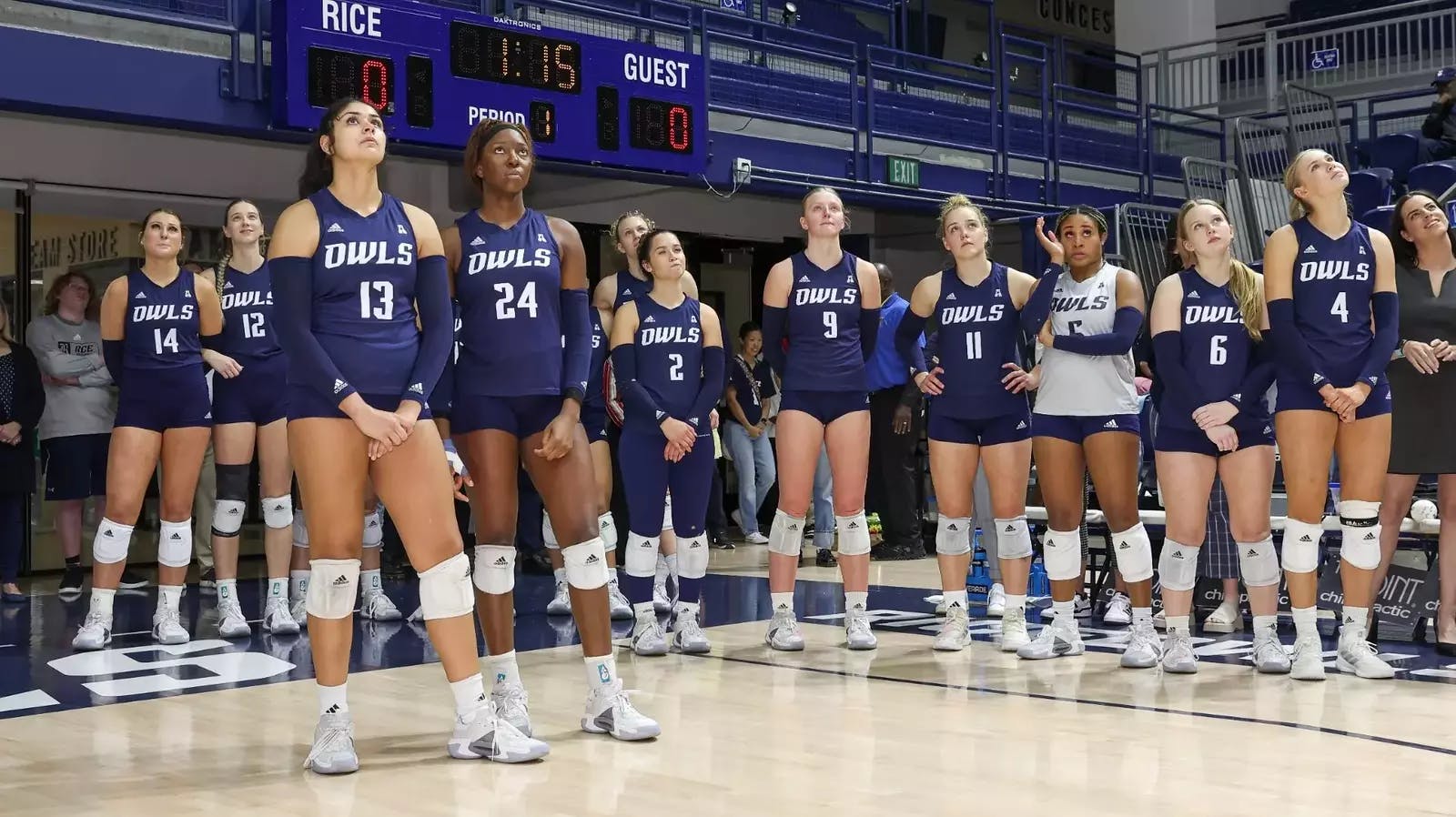
2024 was Coach Volpe’s 21st season as the head women’s volleyball coach at Rice University in Texas. Genny Volpe has established the Owl volleyball program as a power in the Southwest, having taken them to eight NCAA tournaments (2004, 2008, 2009, 2018, 2019, spring 2021, fall 2021, 2022), the only eight appearances in Rice's history.

Volpe was inducted into the Rice Athletics Hall of Fame on October 27, 2023. The sixth head coach in Rice volleyball history, Volpe holds the program record for both career wins (394-210 overall) and highest career winning percentage (.652). The 2020-21 AVCA Southwest Region Coach of the Year and also a two-time C-USA Coach of the Year (2008 and 2018), Volpe has led the Owls to five conference championships under her watch (Conference USA: 2009, 2018, 2020-21, 2021, 2022), and has coached 16 All-Americans and 64 all-conference selections. 

Coach Volpe’s ‘Game Ready! Implementing Game Situation in Daily Practice’ course is a masterclass when it comes to getting your players excited for each practice while preparing them for actual games. Her practice plans and drills are exactly what you need to not only set your team apart, but have them winning endless sets this season. 

General Principles for Planning Practice

One of the most important principles for Coach Volpe when it comes to planning for practice is understanding how much practice time you’ll be allotted. 

This is going to vary depending on what level of team you’re coaching at. Regardless of that, knowing how much practice time you have per week will allow you to prioritize the drills that you know your team needs most in order to improve. 

One somewhat unconventional aspect of Coach Volpe’s practices is what she calls “practicing ugly”. This is her way of acknowledging that much of what happens in a volleyball game can look ugly, and involves improvisation that occurs outside of whatever system the coach and team are trying to implement. Therefore, Coach Volpe believes it’s important to ensure players are getting these “ugly” reps (perhaps just by scrimmaging without any set plays, and just trying to keep a rally alive by any means necessary) during practice so that they’re prepared for them inevitably occurring in-game. 

In addition, Coach Volpe likes to drill game situations that might occur in a game, such as a team running out of rubs or pivoting to an offensive-focused formation. Therefore, if these scenarios occur in the game, a team won’t be hapless to deal with them.

Finally, Coach Volpe notes that she wants to ensure her practices are fun so that her players remain engaged and get what they started playing the sport for in the first place.

The 3 C’s

Coach Volpe’s practice philosophy centers around her “Three C’s: Collaborative, Competitive, and Challenging.

Collaborative: Coach Volpe wants to be asking a lot of questions to her players during practice. She wants to get their opinions on whether they feel like they’re optimizing their time, she asks them to set goals for each practice, and asks them to make sure they understand all of the different strategic aspects she discusses throughout a practice. 

Keeping players engaged and getting problems and confusion solved before they become something bigger is a major part of running an efficient, effective practice in Coach Volpe’s eyes. 

Competitive: Making practices competitive both enhances focus and the overall performance of practice. Regardless of what a team is doing in their practice, there’s almost certainly a way to make it competitive. 

Challenging: Coach Volpe is a big believer in what she calls setting stretch goals. What she means by this is that she wants to set goals for her team (and wants her players to set these goals for themselves) that might be too lofty for them to achieve. This will not only help players to improve and get closer to achieving these goals, but it will also get them acclimated to failing; which will come in handy when they inevitably fail at some point during a game. 

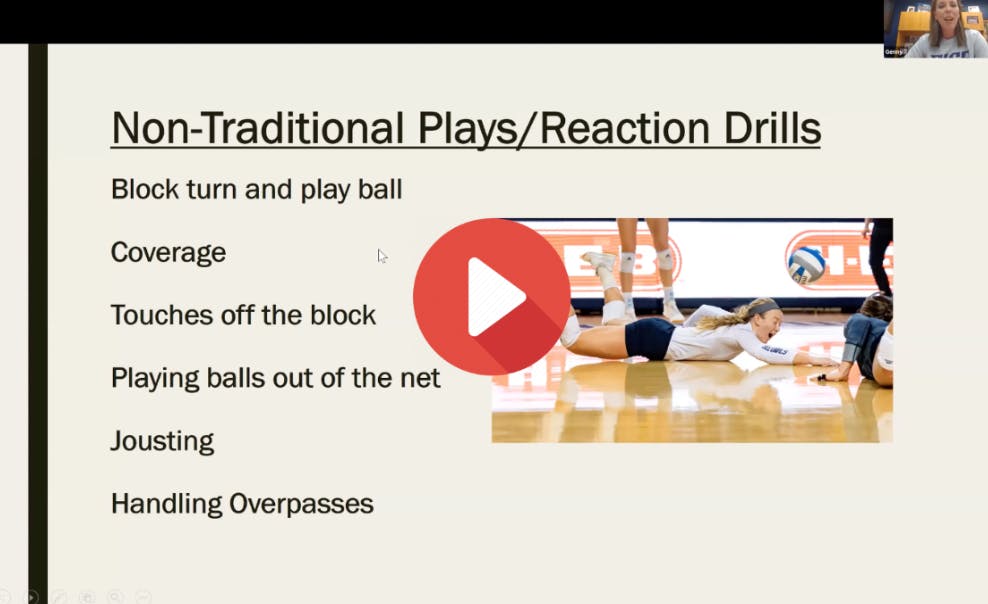
Non-Traditional Plays, Reaction Drills

null

Coach Volpe has several what she calls “non-traditional” plays that happen all the time in volleyball games but aren’t necessarily practiced, because they aren’t part of a set play or formation.

Among these are when the block has to turn and play a ball that’s coming right at their face. Others are creative coverages, getting touches off of the block, playing balls that come off the net in a strange way, jousting, and handling overpasses. 

Teams are bound to across multiple of these scenarios in games. And while it may seem difficult to simulate a scenario in practice where it occurs, all you need to do it make it as barebones as possible or mimic the brief reaction time a player will need in order to execute one of these split-second plays.

NYSS Twitter Be a Role Model

Wednesday, July 30, 2025

The Alex Jones Show on US Sports Radio


Athletes and Warriors. Do you really think anything will come of this?
The Alex Jones Show
POWERFUL MUST-LISTEN INTERVIEW Trump Lawyers Confirm Obama Biden Can Have Their Presidential Immunity Stripped By Congress Impeaching Them After They've Left
Now streaming on US Sports Radio

US Sports Softball: 3 Softball Drills To Do At Home and Coming Home featuring Oklahoma Softball Alumni


  • By Brandon Ogle

All while simply using regular household items to work on their game. It’ll not just get them more focused on the sport, but also at the same time, I’m sure you will see some rapid improvement with their on-field performance. Throughout this article, I’ll walk you through some at-home drills you can teach your players.

Drill #1: Posterboard Strike Zone

This drill you can do with a number of different things, but I’ll suggest using a posterboard. Grab some tape and create a strike zone on the board. Then, tape it about a foot off the ground. Once you have your strike zone built, head upstairs and grab a few pairs of socks rolled up (in other words, your softballs). The last item you’ll need is a camera. Anything will do here, you can even tell them to grab one of their parent’s phones. Set it behind where you’ll be pitching from and set it to record video.

Finally, now that you’re ready to practice, work on the motion of going through the windup and throwing the socks (i.e. softball) into the posterboard. With the video footage, you’ll be able to dissect the motion and overall throwing process. Some valuable insight that most youth players never evaluate.

Drill #2: Arm Strength and Hands Drills

A major part of being an effective softball player is having soft hands and a strong arm. An easy drill for this only requires a net or a wall. For the hands aspect of this category, all you have to do is throw the ball off the wall. This will allow you to practice various ground balls, short hops, and so on. Then, for arm strength, just use the wall as a way to practice throwing. Work on arm motion particularly here.

Don’t have a solid wall to use? No worries, just use a tennis ball and the garage. Trust me, it works just as well.

Drill #3: Take Some Cuts

This final drill might just be the simplest one for your players to practice. For this, they’ll just need a mirror and a bat. The player will get in front of the mirror and simply take full cuts while seeing in-person how their stance looks, as well as the swing. While it might sound like a nominal drill, it’s actually key to developing a consistent swing.

As for how often it would be recommended to do this drill, I’d suggest having them take 15-20 swings at a time on 3 different instances each day.

Practice, Practice, Practice!

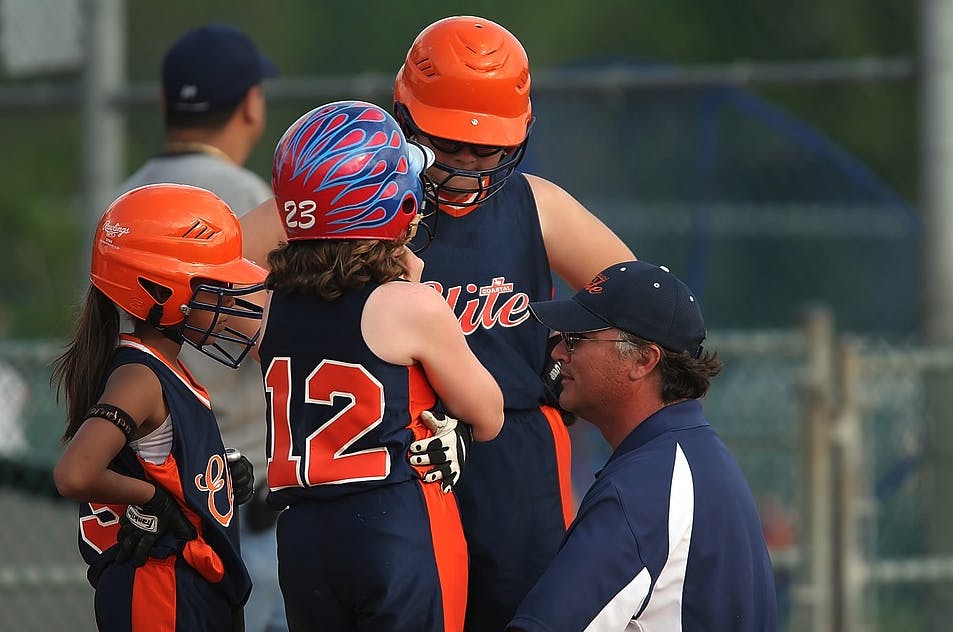
In the end, one of your primary jobs as a youth softball coach is to develop the work ethic necessary to grow as a player and a person. Even though you won’t be working first-hand on these drills with your players, you will be the one responsible for growing their love for the game!

NYSS Stay In The Game

Tuesday, July 29, 2025

Crain & Company Now Streaming On US Sports Radio


Crain & Company
Miami Football 2025 Season Preview w/Locked On Canes’ Alex Donno
Now streaming on US Sports Radio

US Sports Partner Spotlight: Real Life Self Defense


For ordinary men and women who just want to know how to handle
a situation if the worst ever happens to them… or their family
https://tinyurl.com/RLSD2025

US Sports Radio affiliate partner
http://www.USportsRadio.net

Video credit:
REAL LIFE Self Defense ft Mike Gillette PART 2 | Strong By Design Podcast Ep 174
@strongbydesignpodcast4492
https://www.youtube.com/@strongbydesignpodcast4492


US Sports Golf: Golf Bunker Shot Fundamentals: A Detailed Guide and Every Shot from Kurt Kitayama’s 65 Round 4 at 3M Open


  • Author Parker Parson

Players should make it a priority to master proven bunker shot fundamentals and techniques to improve their game. One of the most challenging parts of golf is when you land in the bunker. However, if you master the various bunker shots I’ll teach you in this article, you can turn this difficulty into an advantage. A well-positioned grip, ball position and swing path are essential fundamentals golfers must utilize to become skilled bunker players.

This article will focus on the fundamentals of bunker shot play, helping players of all levels to advance their game. I will break down several shots and demonstrate them alongside basic techniques for performing each shot.

Fundamentals: Grip, Ball Position and Swing Path

The fundamentals of grip, swing path and ball position in golf are essential to mastering the shot. Players must have these techniques down to a tee to ensure their performance is not compromised when under pressure in tough bunker situations.

Grip

A player’s grip determines the ball’s trajectory, often leading to poor performance in the bunker when a grip is not positioned properly. Players adopting a grip with the bottom hand underneath (strong) will result typically in a closed club face, which will cause the club to dig into the sand when executing the shot in the bunker.

Instead, players should adopt a grip with their bottom hand (right for right hand golfers) on the top of the grip (weaker position), while turning the club face open.

The right grip and open club face enable the club to glide through the sand on impact rather than digging.

The grip is critical in ensuring the club face remains open into impact. Adopting this grip will maintain an open square club face, leading to effective shots from the bunker.

Ball Position

When performing a bunker shot, the ball should be positioned forward of center in your stance.

This ball position allows you to accurately and effectively impact the sand properly a couple inches behind the ball for the best control.

Swing Path

Once the proper grip and ball position is established, a well-defined swing path is needed to execute a bunker shot. While a swing path with a club such as a driver differs in technique depending on the type of shot you play, bunker shots require a slightly outward swing path.

For the best swing path and ball control, adopt a slightly open stance and swing along that stance line, which will promote the advantageous outward path to create the perfect sole-sliding shallow impact.

An outward swing path is essential here – an inward, shallow swing could lead to inconsistent impact hitting too far behind the ball (chunked shots) and bladed low shots with no spin.

Note: If you want to better visualize any of these explanations, please check out my full video course on bunker shots in the ISNation app.

Short-Sided Bunker Shots

A short-sided bunker shot requires you to hit a short shot softly with precision. This challenging shot can best be performed by ensuring the clubface is laid very open on it’s back.

To perform this shot, open the club face on its back and place the ball in the proper position—forward in stance, inside your left heel.

Once the ball and club are in position, maintain the very open club face in the downswing and into the delivery. Swing through the shot with ample speed, ensuring a hard release upon shallow impact of the sand. The club face should be facing back at you after swinging to your finish.

Alternatively, another method players can adopt is a “stick-the-club-in-the-sand” approach focused on a softer, more controlled shot. The shot involves striking the sand firmly and abruptly with a more square club face at impact of the sand. This method adopts a slightly decelerated dead-hand finish creating less spin and more release. The visualized landing spot is shorter.

Long Bunker Shots

On the contrary to short shots, long bunker shots require you to hit the ball further when you are in the sand. This method requires a slightly open club face that is not fully open, unlike the short shot.

Begin by slightly opening your club face while keeping the same grip and ball position.

Blog post image

Club face slightly open.

Next, when in position take a wider, more neutral swing path, while carrying plenty of club head speed to a full finish. You should seek to establish a wide arc and shallower path, aiming for a shot that releases more toward your intended target-line rather than the fast-paced, abruptly re-hinged short shot creating lots of spin illustrated in the first short bunker shot method. Using a less lofted wedge also aides in creating more release and needed distance.

Wider Swing

The wider swing, slightly open club face and dead hands through impact allow the ball to release more after hitting the green, which is vital for gaining the distance needed for a long bunker shot.

Uphill Bunker Shot

A player’s body alignment and swing path determine the success of hitting the shot precisely and accurately on a slope or hill in a bunker.

To perform the uphill bunker shot, players must align their bodies with the slope they are hitting from. Set your shoulders parallel to the slope’s angle and spine tilts perpendicular. This will ensure you enter the sand at the most optimum delivery angle.

After establishing proper alignment, place the ball slightly forward in your stance compared to other shots.

As you swing, make sure your swing path follows the incline of the hill, swinging in-line with the slope and striking the sand at an optimum shallow delivery.

This shot can be adjusted to match the angle of the slope, your aim, and where the ball is positioned based on match-up scenarios. For example, if the ball is positioned above your feet and the target is left, you must adjust your aim more to the right as the ball will naturally fly more to the left and vice-versa for the ball below your feet as it will fly more to the right for a RH golfer.

Downhill Bunker Shots

The downhill bunker shot requires opposite of the uphill shot, but requires greater control in swing due to the likelihood of the ball rolling further upon hitting the green.

Align your body with the angle of the hill, place the ball slightly back further and ensure your clubface is open.

Now, adopt a proper swing path by swinging down the hill, following its angle setting the club slightly more vertically in the back swing while in the delivery impact the sand at the normal shallow position.

This shot should be planned out to land shorter and release more than the level or uphill bunker shots.

Buried Lie Bunker Shot

A buried ball plugged into the bunker is a challenging in-game situation that players must overcome. Due to the inability to get spin on the ball, players must adopt new approaches to get the ball out of the sand, such as the buried bunker shot.

Start by adopting a more square club face while keeping the same grip and ball position.

To perform the buried bunker shot, you must dig your club into the sand. Start by adopting a more square clubface while keeping the same grip and ball position.

Strike the sand with an aggressive, upright swing a couple of inches behind the ball, projecting the ball up and out of the bunker, allowing the leading edge to dig into the sand.

Aim to land the ball short of your target due to the ball releasing more after hitting the green.

Grasping The Basics For Proficiency

With a specific focus on the basics of ball position, swing path and grip, combined with a detailed breakdown of various shots golfers can perform in-game, players of all abilities can learn to turn various ball placement in a bunker into an advantage on the green.

Whether it be uphill, downhill, or buried shots, players can learn to master the bunker shot.

For a visual guide on how to perform these shots, check out my course on the ISNation App.

The app features free mental wellness tips for athletes, as well as physical wellness courses to help you stay healthy and injury-free.

NYSS Find Their Strengths

Monday, July 28, 2025

US Sports Partner Spotlight Concealed Carry


Glock Easy Trainer
Most gun owners practice firing their gun at home with the firearm unloaded. This practice, called dryfiring, helps to improve various shooting skills. Glock owners, unfortunately, have to “rack” or “cycle” the slide of the gun after each trigger squeeze when dryfiring the gun. This is tedious and can create bad habits. The Glock Easy Trainer tool installs onto the Glock gun in less than 1 minute and blocks the trigger from breaking thus allowing the shooter to press the trigger repeatedly without ever having to rack the slide. It also acts as a safety system in that it will prevent the firearm from firing a live round.
Learn more @ https://shorturl.at/8IH86

US Sports Radio affiliate partner
http://www.USSportsRadio.net