Now Streaming On US Sports Radio!

US Sports Net Today!


Live Play-by-Play, Updates, Highlights and More! on US Sports Network!
[Chrome Users-You may have to click on the play button twice to listen]
US Sports Network Powered By Gorilla Sports!


US Sports Radio
The Las Vegas Raiders Play Here
Fitness and Sports Performance Info You Can Use!
The Scoreboard Mall
The Rock Almighty Shaker Of Heaven And Earth!
The Coolest Links In The Universe!

Sunday, August 31, 2025

US Sports Partner Spotlight: Zenni Optical

Doesn’t everyone deserve to look good while wearing an affordable pair of glasses? Our mission is clear: Give people glasses they can actually afford but still make them look like a million bucks.
Shop Zenni Today @
https://brandcycle.shop/9btdx

US Sports Radio affiliate partner
http://www.USSportsRadio.net

The Rock Almighty: Love Is Not Love: Rediscovering True Love in a World of Confusion and The Sheep That Are Slaughtered

Michael Schenker Himself – Official website

  • Author Glen Kelly

Introduction: The Misunderstanding of Love in Modern Society

What is love? The dictionary defines it as a “strong affection for another arising out of kinship or personal ties, attraction based on sexual desire, or affection based on admiration, benevolence, or common interests.” But is that all love is? In today’s world, love has been reduced to a feeling—a fleeting emotion that often leads to self-gratification, greed, and selfishness. This shallow understanding has skewed our perception, leaving many to pursue what feels good rather than what is true. As society echoes the mantra “love is love,” it’s time to ask: what does love really mean?

  1. Society’s Shallow View of Love: A Path to Self-Destruction

The phrase “love is love” is commonly used to promote the idea that any form of love is valid, usually about the freedom to pursue personal desires without judgment. This modern take on love often glorifies lust, pride, and self-centeredness. But is this kind of love sustainable, or does it lead us further away from true fulfillment? This perspective encourages a love driven by self-interest rather than a genuine commitment to others, distorting the true meaning of love and leading to broken relationships and empty pursuits.

  1. Biblical Love: A Radical Contrast to Society’s Version

In stark contrast, the Bible presents a love that is selfless, enduring, and rooted in truth. 1 Corinthians 13:1-13 describes this kind of love in powerful terms:

“Love is patient, love is kind. It does not envy, it does not boast, it is not proud. It does not dishonor others, it is not self-seeking, it is not easily angered, it keeps no record of wrongs. Love does not delight in evil but rejoices with the truth. It always protects, always trusts, always hopes, always perseveres. Love never fails.”

This biblical description highlights a love that is not driven by emotions or desires but by a deep, unwavering commitment to others. It is a love that seeks the good of the other person, even at a cost to oneself—a far cry from the self-centered love celebrated in today’s culture.

  1. The Four Types of Love: Understanding the Differences

C.S. Lewis, a renowned Christian author, outlined four types of love: affection (storge), friendship (philia), romance (eros), and charity (agape). Every kind of love serves a unique purpose:

• Storge (Affection): A familiar love, often for things like personal belongings, pets, or cherished memories. It is a comforting but often shallow love.

• Philia (Friendship): The love of true friendship, marked by deep bonds, loyalty, and shared values. This is the love between close friends who support and challenge each other.

• Eros (Romance): The passionate, often physical love that fuels romantic relationships. While beautiful in its rightful place, it is frequently misunderstood and idolized in today’s society.

• Agape (Unconditional Love): The highest form of love, exemplified by God’s love for humanity. Agape is selfless, sacrificial, and unconditional—a love that seeks nothing in return and reflects God’s heart.

  1. Why Agape Love Is the Ultimate Standard

Of all the types of love, agape stands out as the most profound and transformative. This is the love that God offers to us through Jesus Christ—a love that remains steadfast despite our flaws and failures. 1 John 2:15-17 warns us:

“Do not love the world or the things in the world. If anyone loves the world, the love of the Father is not in him… the desires of the flesh and the desires of the eyes and pride of life are not from the Father but from the world.”

These verses challenge us to seek a love that transcends the shallow, prideful loves of the world. Agape love teaches us to look beyond ourselves, to serve others, and to live in a way that honors God.

  1. The Danger of Redefining Love

When love is redefined to suit personal desires, it loses its true meaning. The popular narrative of “love is love” can lead to moral confusion, the erosion of values, and a culture that prioritizes self above all else. The biblical perspective calls us back to a love that is selfless, purposeful, and aligned with God’s truth—a love that builds up rather than tears down.

Conclusion: Choosing Love That Lasts

Love is not just love; it’s a profound gift that, when understood through the lens of biblical truth, can transform lives. In a world that often misguides us about what it means to truly love, we are invited to embrace a love that reflects the heart of God—a love that is patient, kind, and enduring. Let us strive to embody this kind of love in our daily lives, rejecting the shallow imitations and seeking a love that truly satisfies.

Click HERE

I'm a single father who just got into writing. I attended three different colleges and wrote many essays, so, I decided to give it a go. I also design Christian T-Shirts.

National Youth Sports Strategy

The Rock Almighty on US Sports Radio


Sunday-Funday-Praise And Worship Day!
It's the Rock Almighty Shaker Of Heaven and Earth!
Now streaming on US Sports Radio

The Matt Walsh Show on US Sports Radio


Trans Shooter Murders Catholic Kids As The Trans Terrorism Epidemic Continues

Now streaming on US Sports Radio

https://bit.ly/USSportsRadioToday

http://www.USSportsRadio.net 

Saturday, August 30, 2025

US Sports Partner Spotlight: YETI

Roy and Ryan Seiders founded YETI in 2006 based on a deep love for the outdoors and the belief that if something doesn’t work, fix it. And if it doesn’t exist, build it. Since then, we've been designing products that last for generations, get you out into the Wild, and keep you there longer. Here's our story.
Keep reading here: https://brandcycle.shop/t0vb6

US Sports Radio affiliate partner
http://www.USSportsRadio.net

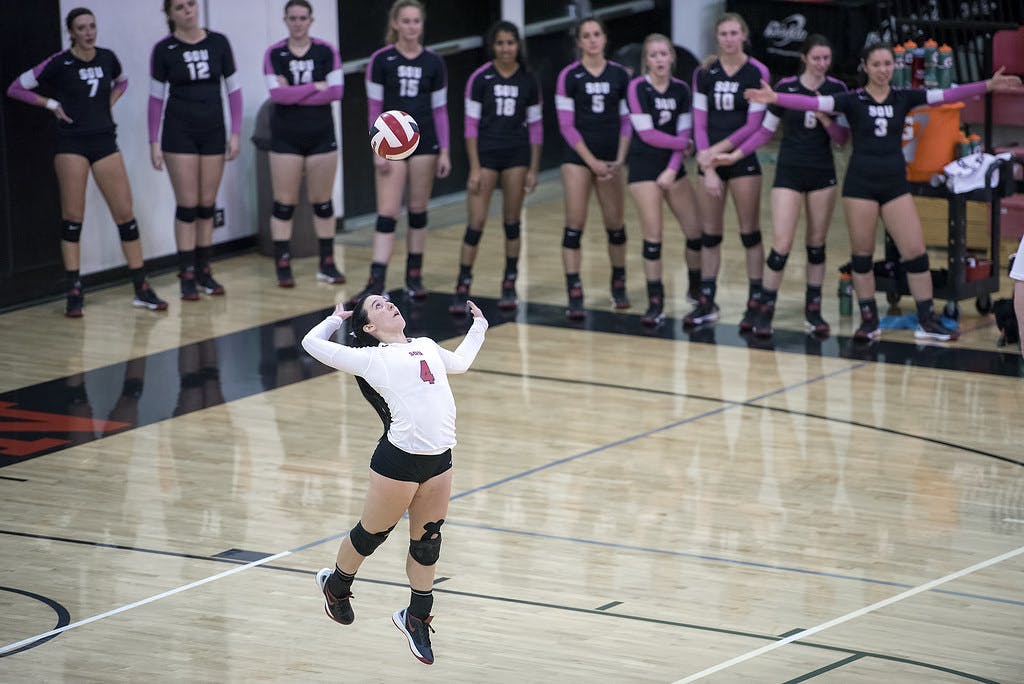
US Sports Volleyball: Volleyball Serving Made Simple: Drills for Coaches and Athletes and Kansas vs. Penn State Highlights


  • By Jackson Chlebowy

Serving is one of the most powerful weapons in volleyball. A great serve can shift momentum and start long scoring runs. Building up your own, or your young athletes', serving skills is essential for building a winning volleyball team and developing future volleyball stars.

This guide covers everything from basic technique to advanced serving drills. You’ll learn how to perform an overhand serve, how to progress into a jump serve, and how to build serving accuracy, power, and confidence.

________________________________________________________________________________________________________________

How to Serve a Volleyball: Fundamentals for Beginners

Before we get into the drills, let’s break down what makes a good volleyball serve according to Olympian Charlene Johnson-Tangaloa:

- Consistent toss in front of your hitting shoulder

- Elbow above the shoulder

- Step with your opposite foot

- Contact with the heel of the hand

- Finish with your palm facing the target

An aggressive mindset is the best to have when it is your turn to serve. “We don’t serve just to get the ball over the net. We serve to score a point." says Johnson-Tangaloa. Serving with a purpose is crucial to scoring more points and winning more matches.

Drill 1: Pre-Serve Routine

- Develop a personal routine (e.g., bounce, spin, breathe)

- Keep the toss consistent every time

- Breathe to relax and focus

- Be aggressive, pick your spot and attack it

Drill 2: Wall Contact Drill

- Stand one arm’s length from a wall

- Do full serve routine (toss, step, swing)

- Contact the wall with the heel of the hand

- Reinforces clean mechanics and follow-through

To learn more from former US Olympian Charlene Johnson-Tangaloa, check out her course ‘Indoor Volleyball Essentials’. 

________________________________________________________________________________________________________________

Volleyball Overhand Serve Drills

The following drills come from a live session with Santiago Restrepo, a Division I collegiate women’s volleyball coach. These are his go-to methods for teaching serving technique that scale from beginners to advanced players.

Drill 1: Toss–Step–Hit Fundamentals

Keys from Coach Restrepo:

- Start with the elbow higher than the shoulder

- Toss the ball slightly in front of your hitting shoulder

- Step with your left foot (if right-handed)

- Hit with the heel of the hand

- Finish with your palm facing the target

Progress from 10-foot line to the baseline, increasing power with arm speed as you move back.

Drill 2: Short vs. Deep Serve Control

Short serve: Contact slightly lower, lift higher

Deep serve: Contact higher with faster arm swing

Emphasizes control and adjustment

Drill 3: Zone Serving – Positions 1 to 6

- Maintain consistent mechanics

- Serve to all court positions, both short and deep

- Improves directional accuracy and mental focus

Drill 4: Jump Serve Progression

- Toss the ball high and slightly forward

- Use left–right–left approach

- Jump and strike with elbow high and fast arm swing

- Contact with heel of hand, finish with palm to target

These are D1 collegiate women’s volleyball coach Santiago Restrepo’s favorite serving drills. You can find more passing and serve drills in his course ‘Play Better Volleyball Passing and Serving’.

________________________________________________________________________________________________________________

Beginner Serving Drills for Accuracy

Drill 1: Partner Serve Progression

This warm-up drill builds form and control.

- Players face each other at the 10-foot line

- Serve to each other using full motion: toss, step, hit

- Move two steps back after every few successful serves

- Reinforces posture, contact, and follow-through

Drill 2: Serve and Sprint Conditioning (Coach Allison Lebar)

This drill adds cardio pressure to serving form.

- Player serves a ball with full technique

- Immediately sprints to the net, touches tape, then backpedals to baseline

- Grabs next ball and repeats

- Focuses on serving under fatigue and keeping consistent mechanics

You can find more drills and fundamental volleyball skills videos in Coach Allison Lebar's course ‘Volleyball Tips & Drills Video Library’

________________________________________________________________________________________________________________

Final Thoughts On Serving 

Learning how to serve a volleyball isn’t just about technique — it’s about mindset, repetition, and variety. Whether you’re focusing on overhand serve fundamentals or developing a powerful jump serve, these drills will help you build confidence and consistency.

Use these progressions to develop:

- A repeatable serve routine

- Clean mechanics (toss, step, hit)

- Directional control

- Power under pressure

Why stop at the serve? Check out CoachTubes' catalog of expert-led volleyball training videos today!

NYSS FB Be A Role Model

Friday, August 29, 2025

US Sports Softball: 3 Softball Drills To Do At Home and 2025 USA Softball All-Star Showcase: Game 1 Highlights


  • By Brandon Ogle

All while simply using regular household items to work on their game. It’ll not just get them more focused on the sport, but also at the same time, I’m sure you will see some rapid improvement with their on-field performance. Throughout this article, I’ll walk you through some at-home drills you can teach your players.

Drill #1: Posterboard Strike Zone

This drill you can do with a number of different things, but I’ll suggest using a posterboard. Grab some tape and create a strike zone on the board. Then, tape it about a foot off the ground. Once you have your strike zone built, head upstairs and grab a few pairs of socks rolled up (in other words, your softballs). The last item you’ll need is a camera. Anything will do here, you can even tell them to grab one of their parent’s phones. Set it behind where you’ll be pitching from and set it to record video.

Finally, now that you’re ready to practice, work on the motion of going through the windup and throwing the socks (i.e. softball) into the posterboard. With the video footage, you’ll be able to dissect the motion and overall throwing process. Some valuable insight that most youth players never evaluate.

Drill #2: Arm Strength and Hands Drills

A major part of being an effective softball player is having soft hands and a strong arm. An easy drill for this only requires a net or a wall. For the hands aspect of this category, all you have to do is throw the ball off the wall. This will allow you to practice various ground balls, short hops, and so on. Then, for arm strength, just use the wall as a way to practice throwing. Work on arm motion particularly here.

Don’t have a solid wall to use? No worries, just use a tennis ball and the garage. Trust me, it works just as well.

Drill #3: Take Some Cuts

This final drill might just be the simplest one for your players to practice. For this, they’ll just need a mirror and a bat. The player will get in front of the mirror and simply take full cuts while seeing in-person how their stance looks, as well as the swing. While it might sound like a nominal drill, it’s actually key to developing a consistent swing.

As for how often it would be recommended to do this drill, I’d suggest having them take 15-20 swings at a time on 3 different instances each day.

Practice, Practice, Practice!

In the end, one of your primary jobs as a youth softball coach is to develop the work ethic necessary to grow as a player and a person. Even though you won’t be working first-hand on these drills with your players, you will be the one responsible for growing their love for the game!

NYSS Twitter Focus on Fun

Thursday, August 28, 2025

US Sports Partner Spotlight: Xterra Fitness


XTERRA Fitness helps people realize their fitness goals through durable and expertly designed equipment. From training programs to advanced features, XTERRA Fitness products provide everything needed to bring adventure and achievement home.
Shop today @ https://tinyurl.com/XterraFitness2025

US Sports Radio affiliate partner
http://www.USSportsRadio.net

US Sports Golf: Master your game and Champion Highlights Haeran Ryu FM Championship


  • Author Adam Mitukiewic

These are the facts - most of us choose to play on the field instead of training. A quick warm-up and a walk to the round now that we've managed to go golfing. Therefore, it is worth using the winter to develop better hitting technique. Because if not now, then when?

Are you procrastinating on training during the golf season? No wonder, each round of golf is a new adventure, different challenges and a chance to make unforgettable memories. I guess none of us counts on the shot of a lifetime on the driving range. The other side of the coin is that without proper training, at some point our fitness will stop improving. That's why winter is the perfect time to improve your technique, strategy, and learn some new shots. Since even the best in the world train on simulators in winter, maybe it's worth taking the opportunity to prepare for the upcoming season now?

  1. Optimize your shots

You don't have to swing faster to hit farther. What's more, you don't have to hit further to play better. It is important that the way you strike is as efficient as possible. If the ball's trajectory is too high or low, it will affect the distance and rolling path. An off-center hit on the clubface will affect both direction and distance. TrackMan and the "Optimizer" function come to the rescue, which, based on millions of recorded shots, determines the optimal parameters for the selected club and for a given swing speed. Thanks to this, we know, among other things, at what angle the ball should take off, what speed should be expected, how much backspin will be just right and what its maximum height should be. We can also choose our height preference - whether we want to play low shots preferred on links courses, or hit high and spectacular shots like Rory McIlroy.

  1. Learn the low shot

There will probably be more than one occasion when you send the ball under a tree and have to play low. Use a few simple tips to launch the ball much lower and see how the "Launch Angle" parameter changes.

a. Stand narrowly, place the ball closer to your back foot, put more weight on your front foot and lean towards the target.

b. Try to keep your weight on your front foot throughout the swing, and end the swing with your hands stopping much quicker.

  1. Calibrate your wedge

If you are not a player who relies on feel for short games and you need an effective distance control system, the Pelz technique comes to the rescue. With TrackMan, you'll know exactly what distances you're hitting using the simple analogy of a clock. If your head is 12 o'clock and your feet are 6 o'clock, learn to swing the club to three different lengths and - very importantly - feel the right swing length so that you don't have to check in the mirror to see if you're wrong by a few minutes.

Hit a few balls with each swing and see the average distance the ball travels. Of course, discard the missed shots, because we're not interested in those. If you have 3 or 4 wedges in your bag, measure each club - you will know 9 or 12 constant distances. Pay attention to the "Carry" parameter, i.e. how far the ball flies in the air, and thanks to good judgment you will know where to land the ball so that it rolls as close to the hole as possible.

Adam Mitukiewicz, Fully Qualified PGA Golf Professional

Full article (polish version) at https://www.mitukiewicz.pl/golfandroll/2024/2/14/opanuj-swoj-gr

NYSS Twitter Be a Role Model