Now Streaming On US Sports Radio!

US Sports Net Today!


Live Play-by-Play, Updates, Highlights and More! on US Sports Network!
[Chrome Users-You may have to click on the play button twice to listen]
US Sports Network Powered By Gorilla Sports!


US Sports Radio
The Las Vegas Raiders Play Here
Fitness and Sports Performance Info You Can Use!
The Scoreboard Mall
The Rock Almighty Shaker Of Heaven And Earth!
The Coolest Links In The Universe!

Tuesday, August 12, 2025

US Sports Partner Spotlight: JBL by Harmon

 We are a leading global provider of premium audio and infotainment solutions, engaging customers around the home, in the car and on the go.
Introducing TUNE230NC True Wireless Noise Cancelling Earbuds
https://bit.ly/JBLbyHarman1223

US Sports Radio affiliate partner
http://www.USSportsRadio.net

US Sports Hockey: Zone Entry Hockey Drills: How to Teach Effective Entries and U17 Four Nations Championship Game - USA Highlights vs Czechia


  • By Jackson Chlebowy

Why Zone Entries Matter

According to skill coach Mike Pilon and video analysis of NHL entries:

- Sixty percent of successful entries are carry-ins (not dump-ins).

- Possession entries lead to more shots and more scoring chances.

- Deception, support, spacing, and puck movement are perhaps the keys.

Coaches will have to move beyond "dump and chase" and teach kids how to enter with control, with the timing and support of the puck as their foundations.

__________________________________________________________________________________________________________________

4 Teaching Points for Better Zone Entries

In Coach Pilons 'On-Ice Skill' course, he goes in-depth on the zone entry. Here are his 4 teaching points for better zone entries.

1. Support the Puck

Players must work in straight lines and provide back or lateral support—never ahead of the puck carrier without a purposeful reason. Support means having options to pass and stopping turnovers from happening at the blue line.

2. Enter with Speed and Width

Encourage wingers to stay wide, close to the boards or dots-rather than crowding the middle lane where defenders are able to close the gaps quickly.

3. Sell Deception

Head faking, body positioning, and look-offs might freeze the defenders and goalies momentarily. Even something as minor as fake shots or looking in the middle before passing wide can hugely impact entry successes.

4. Manipulate the Defense

Tell your players to look at the defender's stick and take what the defender gives them. The worst thing a player can do is turn the puck over at the blue line. Use body positioning, speed (or varying speed), stops and starts, or chips and drop passes to manipulate defensive positioning.

__________________________________________________________________________________________________________________

10 Great Zone Entry Hockey Drills

Use these drills to reinforce the teaching points above while helping players get repetitions within a structure:

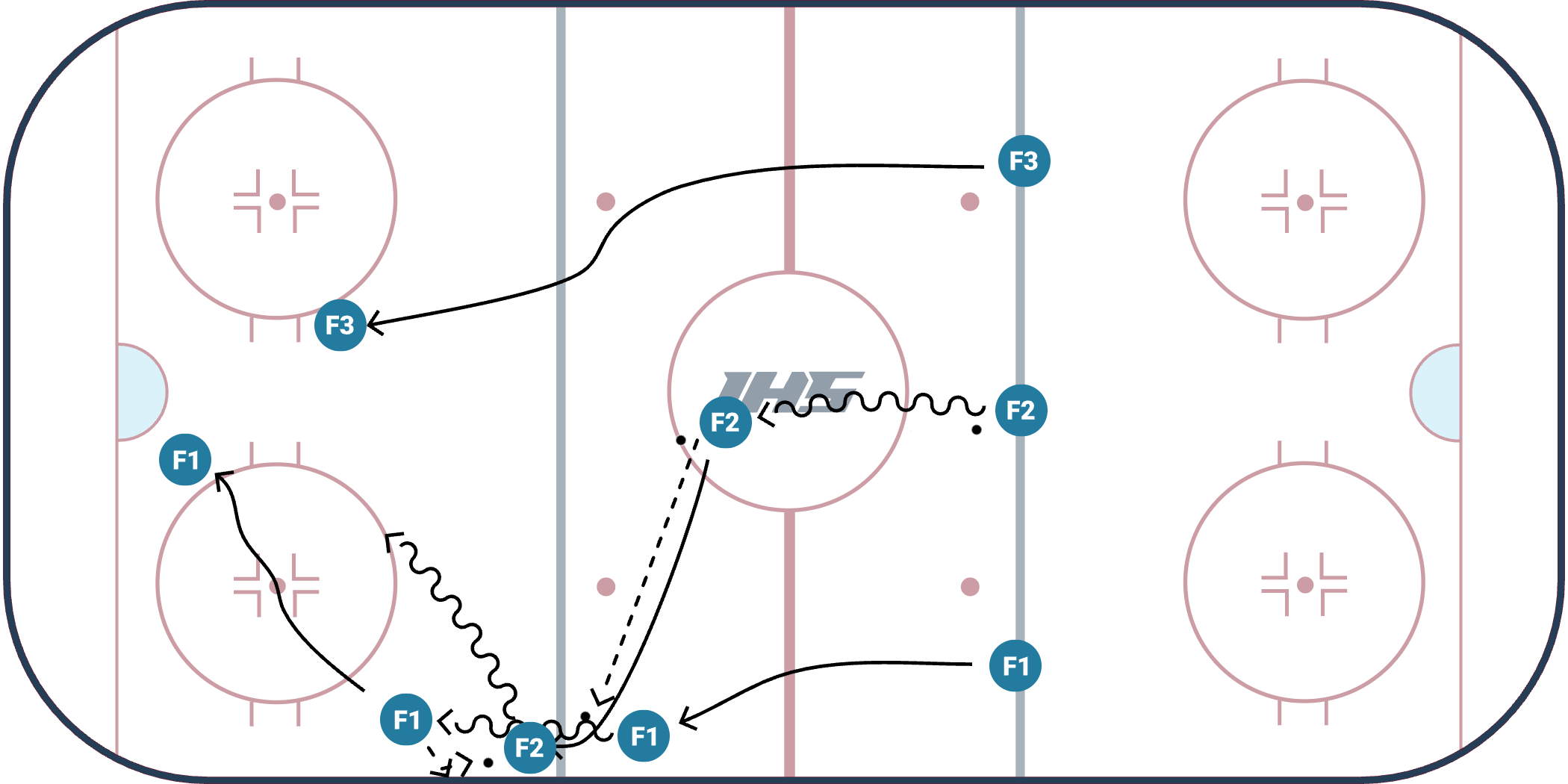
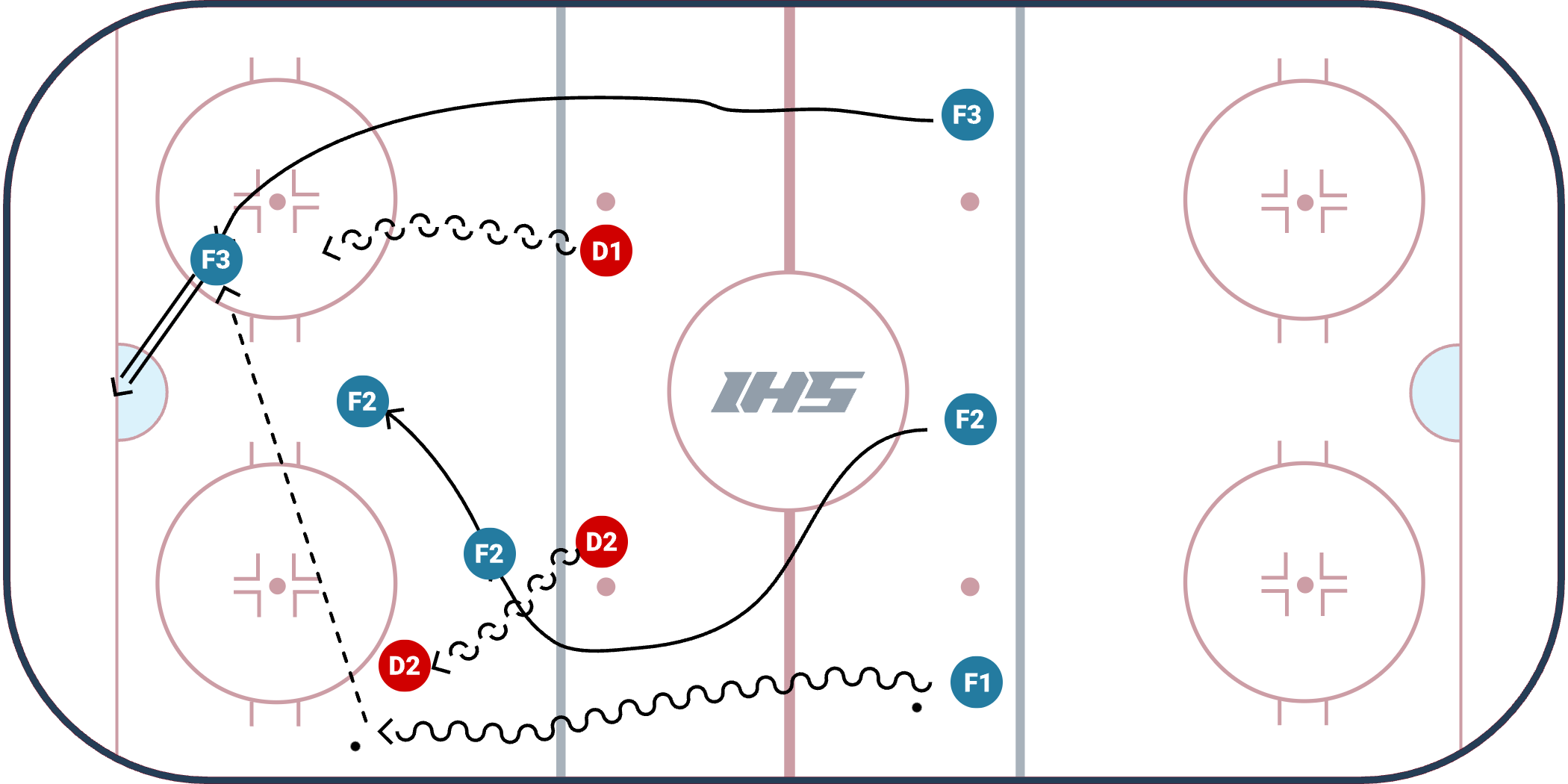
1. Middle Kick Wide Drill

null

- Puck in the middle to start

- Pass wide to the winger.

- Middle lane skater loops behind for puck support.

- Chip off the wall or direct pass depending on space.

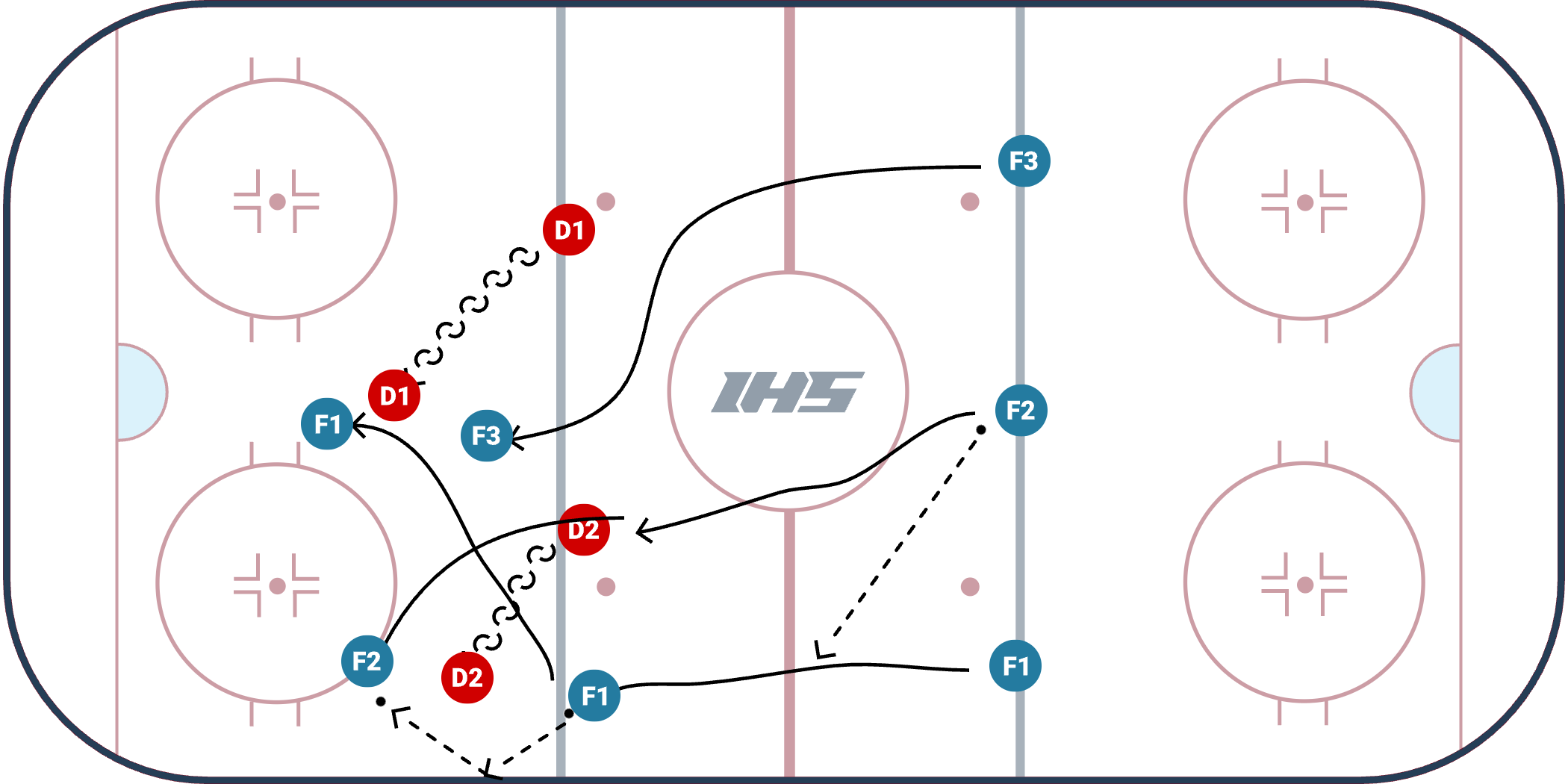
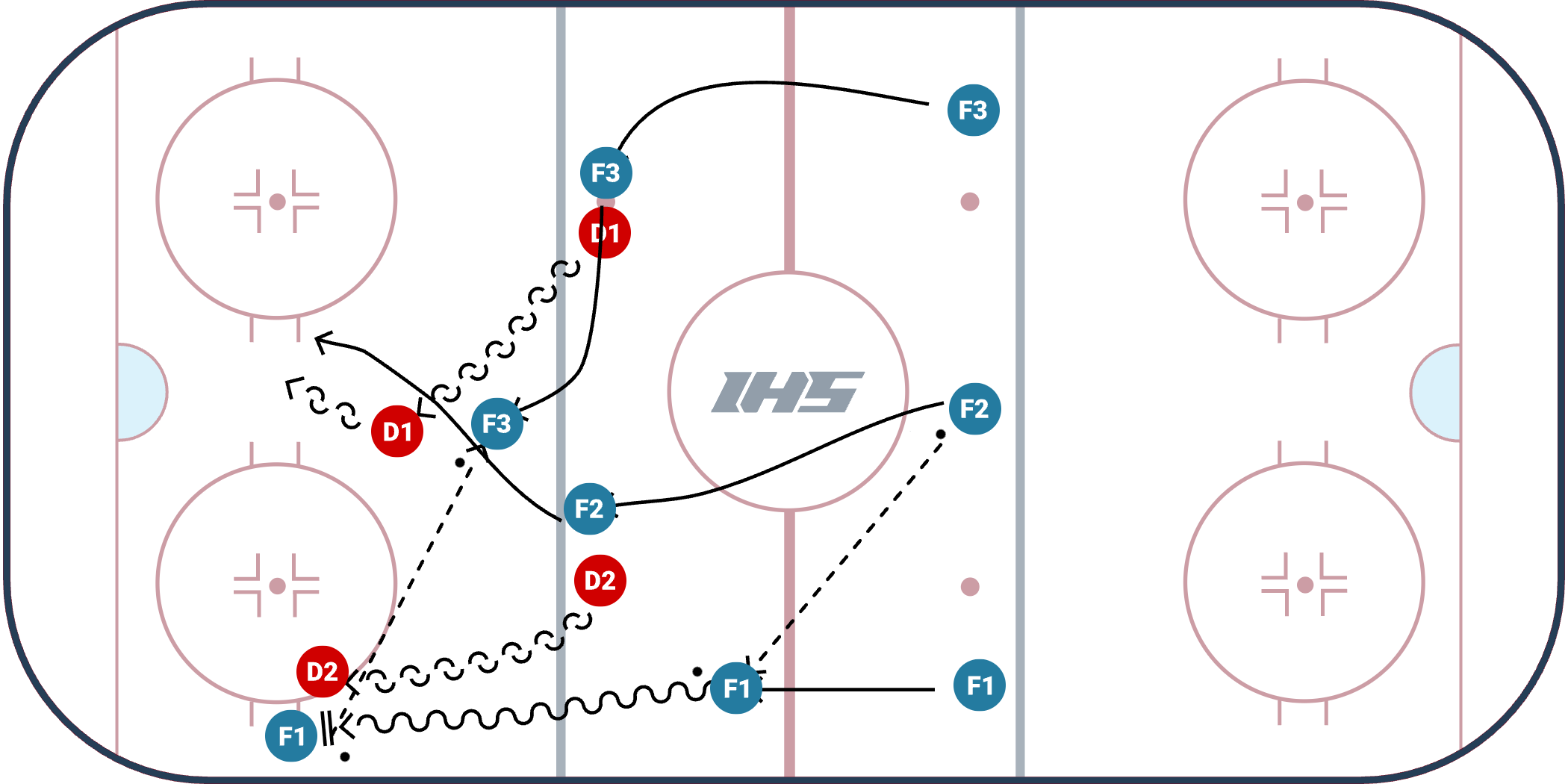
2. Wall Chip Entry

null

- Winger catches a pass near the boards.

- Chips puck along the boards past the defenseman.

- Center supports wide and picks up puck with speed.

3. Fake Shot Drop Pass

- Carrier skates down the wall.

- Looks at the net as if shooting.

- Drops puck behind to trailing player aligning with their stick blade.

- Quick shot on goal.

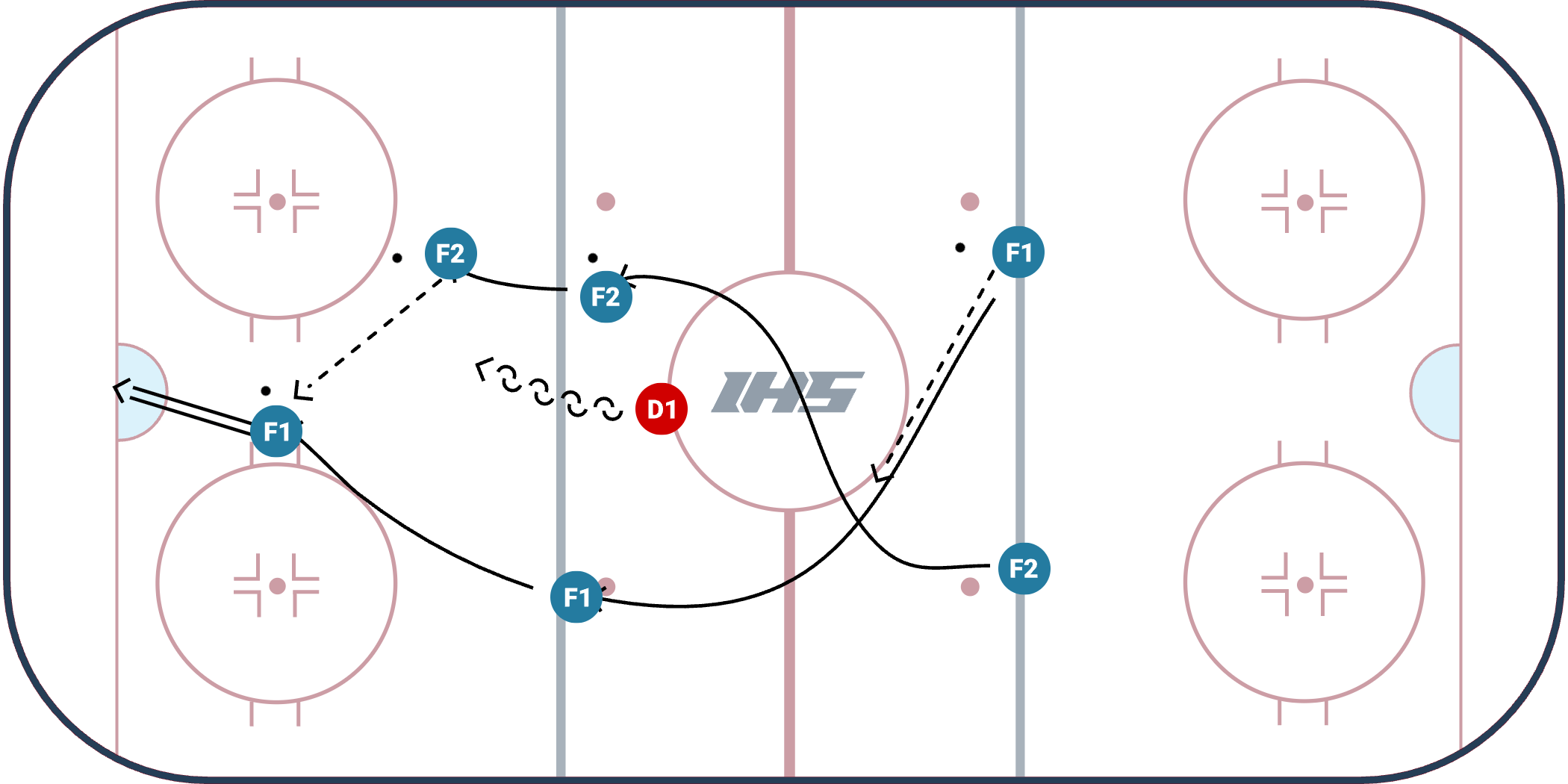
4. Two-on-One Carry and Dish

null

- Early passing emphasis.

- Teach the players to make the goalie and the defender respect the pass by looking middle.

- Finish off with a shot on the pass.

5. Delayed Entry Layer

null

- Puck carrier goes in alone.

- Second player delays above the line.

- A drop or lateral pass to the delayed trailer continues the entry.

6. Zone Entry with Cross-Ice Pass

null

- Use zone entry to simulate an attack down the wide lane.

- Execute the cross-slot pass.

- Finish with a one-timer to emphasize spacing and timing.

7. Triangle Entry Attack

- Three forwards create a triangle at entry: one wide, one centre, one trailer.

- Force defenders to read too many options.

- Emphasis on puck support and communication.

8. Gap Recognition Entry

- Defender sets the gap early.

- Puck carrier reads the gap and decides to either carry, pass, or chip.

- A wonderful tool to develop decision-making under pressure.

9. Manipulate The Stick Drill

- Offensive player waits for defender to move that stick before passing.

- Promotes patience and timing.

- Reinforces passing lanes, effective fakes, and playmaking

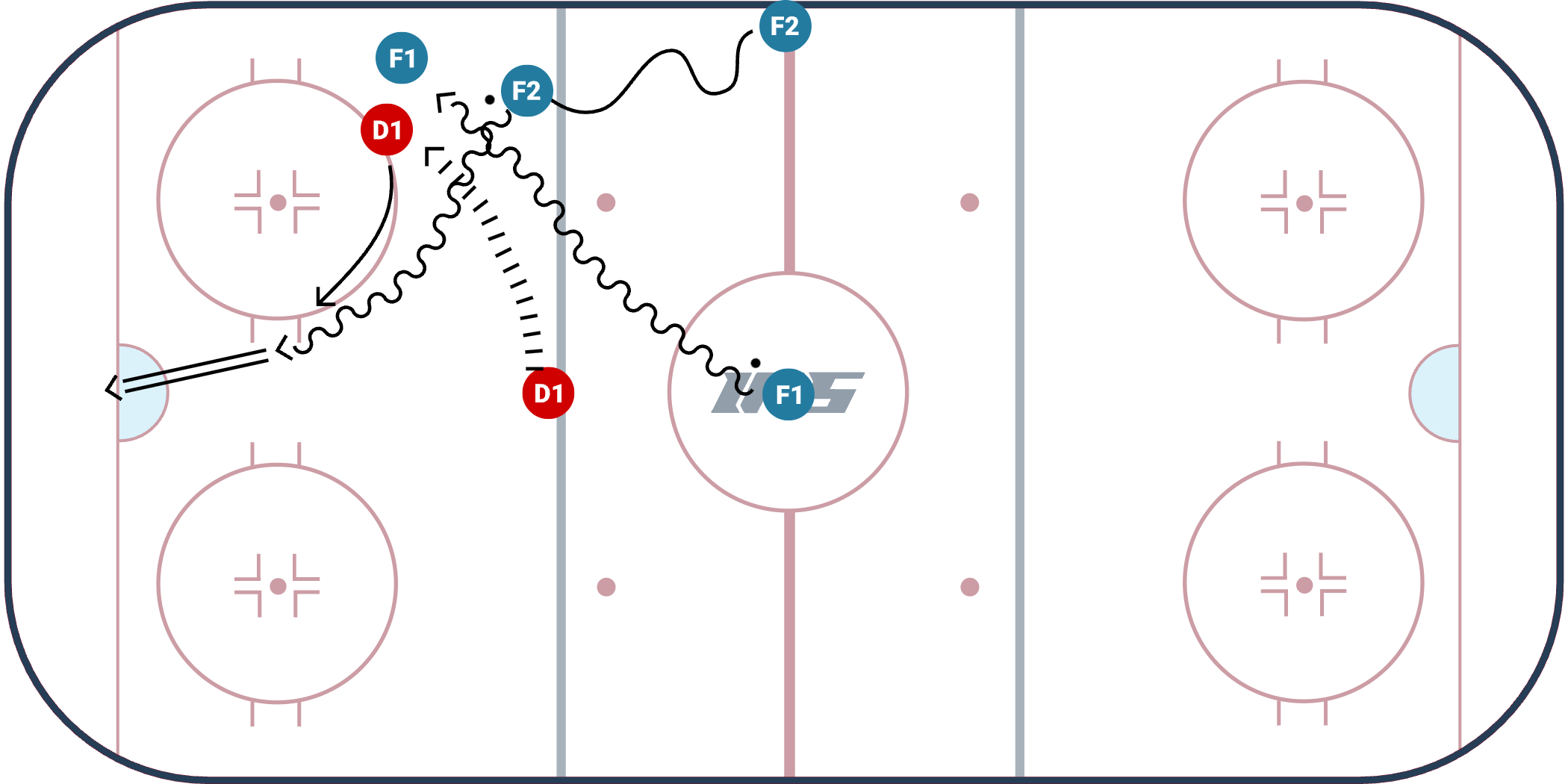
10. Wide Delay Cutback

null

- Entry along the boards with a sudden stop or cutback.

- The second forward enters late to accept the puck in stride.

-Works on spacing and timing. __________________________________________________________________________________________________________________

Final Thoughts

Effective zone entries are crucial for generating offense. If taught with intention, speed, support, deception, and puck movement, your team should maintain possession longer and create more scoring opportunities.

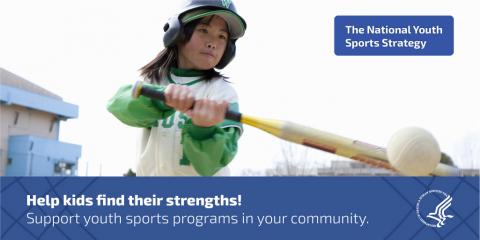
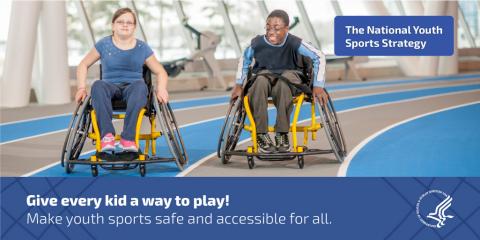
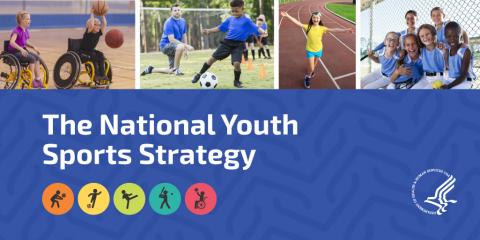
NYSS Find Their Strengths

The Rock Almighty Shaker Of Heaven And Earth. Now Streaming On US Sports Radio


Praying for the peace of DC and all cities affected by the crime epidemic griping these once great municipalities.
Post your prayers below if you dare.
Let's pray for a move of God that transforms nations!
Oh yeah let's Rock too!
The Rock Almighty Shaker of Heaven and Earth. Now streaming on US Sports Radio
https://bit.ly/USSportsRadioToday
http://www.USSportsRadio.net


Monday, August 11, 2025

US Sports Soccer: Understanding an ACL Tear and LA Galaxy vs. Seattle Sounders FC Match Highlights


  • Author Stacey Simpson

The Anterior Cruciate Ligament (ACL) is the most commonly torn of the four main ligaments of the knee. The other three being Posterior Cruciate Ligament (PCL), Lateral Collateral Ligament (LCL), and Medial Collateral Ligament (MCL). The word “cruciate” in these ligaments comes from the way that the ACL and PCL form a “cross” on the inside of the knee joint, working together to provide stability for the knee. These four ligaments are primarily responsible for providing stability and support to the joint during physical activities. The ACL primarily prevents excessive movement forward and rotation of the knee.

An ACL tear is a common, yet serious injury that can significantly impact an individual’s activity level, with a huge financial and time of recovery burden that can affect quality of life. This article delves into the intricacies of an ACL tear, its causes, symptoms, and the journey toward recovery.

Anatomy of the ACL

Positioned in the center of the knee, the ACL connects the femur (thigh bone) to the tibia (shin bone), preventing the tibia from sliding out in front of the femur (hyperextension) and providing rotational stability to the knee.

This ligament is pivotal to stabilize the knee during dynamic activities that require sudden changes in direction, jumping, or halting motions.

Therefore, ACL injuries can happen in virtually any sport, but are commonly associated with the following sports:

Basketball, Soccer, Lacrosse: Quick pivots, jumps, rapid directional changes, sudden stops, and collisions, make players more susceptible to ACL injuries

Football: The contact nature of football and similar lateral/cutting motion required, puts players at a high risk

Skiing: The fixed nature of ski boots can place a lot of strain on the knees during falls or sudden movements

How an ACL Tear Occurs

An ACL tear often occurs during activities that put stress on the knee. The primary mechanisms leading to a tear include:

Pivoting Movements: When the foot is firmly planted and the knee turns sharply, the ACL can tear if the movement is beyond the ligament’s tensile strength.

Sudden Stops: Abruptly halting motion can force the knee beyond its normal range, overstressing the ACL.

Direct Impact: A direct blow to the knee, often seen in contact sports, can result in an ACL rupture.

Improper Landings: Landing from a jump with the knee hyperextended or bending inward, can cause the ACL to give way.

You can also check this detailed explanation of the anatomy of a knee joint to better understand how the ACL functions:

Other Causes of ACL Tears

In addition to the sports-related causes of ACL tears, it’s crucial to recognize that these injuries can also occur in various other circumstances. It’s important to note that there are both contact and non-contact causes for these injuries. This distinction is significant because up to 70-80 percent of all ACL tears occur without direct contact with an opponent.

Approximately 50 percent of non-contact tears are potentially preventable, so the focus on injury prevention programs becomes paramount. These programs, when applied consistently, can not only help prevent ACL tears but also guard against other lower extremity injuries, such as ankle sprains. Their role in safeguarding athletes and individuals engaged in physical activities cannot be overstated, as they offer a proactive approach to maintaining knee health and overall physical well-being.

ACL Injury Rates and Gender Disparity: ACL injuries are most prevalent among individuals aged 15 to 45. While more ACL injuries occur in sports played by men because of shear numbers of athletes, women are at a higher risk of sustaining these injuries. Women are 2-7 times more likely to tear their ACL than their male counterparts at the same age. This difference is highlighted in high school sports, where the rate of ACL tears in basketball is about 5.5% for males and a striking 26.5% for females. In soccer, the disparity is even more pronounced, with 7.2% for males and a staggering 53.2% for females experiencing ACL injuries​​​​.

Sports with High ACL Injury Rates: Among various sports, girls’ soccer has the highestACL injury rate, followed by boys’ football. Basketball for boys also shows a significant rate of ACL injuries. Interestingly, the injury rates are higher during competition compared to practice, indicating the role of intense, competitive play in these injuries​​.

Factors Contributing to Higher Injury Risk in Females:

The higher percentage of ACL tears in female athletes can be attributed to several factors. For instance, females have a smaller ACL and narrower attachment, making it easier to tear. They also have a greater hip-to-knee angle, which affects the alignment and mechanics of the knee joint. Additionally, women generally have less optimal quadricep to hamstring ratio of strength which is crucial for knee stability. Also, hormonal differences between biological men and women play a role in making females more prone to an ACL injury.

Burden of ACL Tears:

The financial burden of ACL injuries is substantial, not only due to the immediate medical costs but also considering the long-term implications such as the potential need for surgery and rehabilitation. ACL injuries nationwide are estimated to cost 7.6 billion dollars per year. These injuries have far-reaching impacts, affecting the athlete’s performance, career longevity, and even their quality of life post-recovery. The management of ACL injuries, therefore, remains a crucial aspect of sports medicine, emphasizing prevention, early diagnosis, and effective treatment strategies.

The moment of injury is sometimes accompanied by a ‘popping’ sound, usually followed by immediate pain and swelling. Athletes may describe a sensation of the knee ‘giving out’ beneath them.

Symptoms of an ACL Tear

Symptoms vary with the degree of the tear. The ligament may be partially torn or fully ruptured. The severity of the symptoms also depends on other injuries connected with the ACL tear. For example, when the athlete tears the Medial Meniscus and Medial Collateral Ligament (MCL) along with a complete ACL rupture, it is called the “Unhappy Triad”.

Pain: The intensity can range from no pain to severe, often causing significant discomfort.

Swelling: Rapid onset of swelling is common, usually developing within the first 24 hours after the injury.

Instability: A feeling that the knee cannot support the body’s weight or may buckle under pressure. Sometimes, the athlete will hear and feel a “pop”.

Limited Movement: The knee’s range of motion may be reduced due to pain and swelling.

Altered Walking Pattern: The individual may be unable to bear weight on the affected leg, or have a feeling of instability in the affected leg, leading to limping.

Diagnosing an ACL Tear

An accurate diagnosis begins with a thorough medical history and physical examination, followed by imaging tests like MRI, which can provide detailed images of the knee’s internal structures. Do not attempt to self-diagnose ACL issues. Always seek professional medical advice.

The treatment of an ACL tear depends on several factors, including the severity of the injury, the patient’s age, activity level, and overall health.

Treatment strategies include:

Conservative Management: For less severe tears or patients with low physical demands, physical therapy focused on strengthening the muscles around the knee may suffice.

Surgery: Reconstructive surgery is often recommended for individuals who wish to return to an active lifestyle. This involves replacing the torn ligament with a graft taken from another tendon in the patient’s body or a donor.

Post-Treatment Rehabilitation

Recovery from an ACL injury, particularly after surgery, is a lengthy process that can take several months. A structured rehabilitation program is crucial for a successful return to previous levels of activity.

This program typically includes:

Pain and Swelling Management: Using ice, compression, and elevation to control swelling and pain.

Physical Therapy: Graduated exercises to restore the knee’s range of motion, strength, and stability. To help with swelling and pain management and facilitate brace management as well.

Bracing: In some cases, a knee brace may be used to provide extra support during the healing process.

Activity Modification: A gradual return to sports or physical activities, often under the guidance of a physical therapist or athletic trainer.

The best case to return to pre-injury level of activity or sport should be at least 9 months to one year post injury. Rushing this time frame often results in a retear or secondary injury. Return to sport testing should be comprehensive prior to the release to play the sport again. The athlete should be supervised with a very gradual return to sport schedule.

The Risk of ACL Reinjury is High for Those Under 25

The reinjury rates for ACL tears vary based on several factors, including age, activity level, and whether the individual has returned to sports post-reconstruction.

For individuals of all ages who underwent ACL reconstruction, about 7% experienced reinjury to the same ACL, and 8% injured the opposite side. However, younger individuals(under 25 years old) and those returning to sports face higher risks. In those under 25 years old, the rate of another ACL injury was 21%, with 11% involving the opposite knee. The reinjury rate for individuals returning to sports was 20%, with 12% affecting the opposite knee. The risk was even higher for individuals under 25 years old returning to high-risk sports, with a reinjury rate of 23% and 12% affecting the opposite knee​​.

Additionally, a study mentioned in Sports metrics reported that 30% of patients sustained non-contact re–injuries, tearing either their ACL graft or the ACL in the contralateral knee within 2 years of surgery. The rate of a contralateral ACL injury was significantly higher than the rate of ACL graft injury (20.5% vs. 9%)​​.

These statistics underscore the importance of careful rehabilitation and a cautious approach to returning to sports after ACL reconstruction, especially for younger athletes and those engaged in high-risk sports.

Prevention of Future Injuries

After an ACL tear, the risk of re-injury is a significant concern. Prevention strategies focus on:

Neuromuscular Training: These are exercises connecting the brain to the muscles in the lower body. Exercises to improve balance, proper landing techniques, and knee stability. Pre-season testing to measure baselines in mobility, strength, balance, and form. We can look for red flags and address deficiencies and in turn reduce the number of lower extremity injuries.

Strength Training: Building the muscles in the legs, hips, and core can provide better support to the knee.

Education: Understanding the mechanisms that lead to ACL injuries is vital for athletes, coaches, and fitness enthusiasts alike.

A gradual, calculated, and supervised return to sport is very important.

The Psychological Aspect

The journey to recovery is not solely physical. The psychological impact of an ACL tear can be profound, with individuals experiencing frustration, anxiety, or even depression due to the sudden change in their active lifestyle along with the longevity of return to sport. Mental health support, along with the physical rehabilitation process, is essential for a holistic recovery.

Final Thoughts

An ACL tear is a complex injury that requires a comprehensive approach to treatment and rehabilitation. Understanding the anatomy of the knee and the mechanism of the injury, recognizing the signs and symptoms of an ACL injury, and following a structured recovery program is paramount for a successful return to physical activities.

With proper management and preventive measures, individuals can not only recover from an ACL tear but also minimize the risk of future injuries, ensuring long-term knee health and stability.

Sunday, August 10, 2025

The Rock Almighty Shaker Of Heaven And Earth on US Sports Radio


Your Midnight Godspell
The Rock Almighty Shaker Of Heaven and Earth.
Now streaming on US Sports Radio!

Black and White Sports On US Sports Radio


Tragic story Athletes and Warriors.
Let's pray for family and all close to this Warrior.
Black and White Sports
Japanese Boxer DEAD at 28 after SUFFERING BRUTAL HEAD INJURY during FIGHT!
Now streaming on US Sports Radio

The Matt Walsh Show on US Sports Radio


This true Warriors of Light?

The Matt Walsh Show:
This One Shocking Stat Proves That The American Dream Is Dying
Now streaming on US Sports Radio

US Sports Partner Spotlight: Instacart


Instacart is the go to service for quick and effective grocery delivery. Customers select groceries from our various retailers, we then send out a personal shopper who will do the shopping and deliver to the customer when they are finished.
-Summer like it's 1999 with prices from 1999. Get your favorite flavors delivered via Instacart in as fast as 30 minutes.
https://tinyurl.com/InstacartSummer25

US Sports Radio affiliate partner
http://www.USSportsRadio.net

The Rock Almighty: Understanding Men's Mental Health and Maybe It's Time For Some Toxic Masculinity...


  • Author Sarah Korba / Kyan Health

When was the last time you heard or actively joined in a conversation about men’s mental health? It’s probably not something that happens often… This lack of open dialogue is alarming, as research consistently shows that men have different kinds of struggles compared to women, and that their reluctance to seek help, regardless of their age, nationality or background, is often due to gender barriers and stigma.

In a world where archaic sayings such as “Real men don’t express emotions, ” “Man up and deal with it”, or “Stop crying! You’re not a girl” are still heard, November appears as a guiding light, calling us to understand and prioritise men’s mental health. At Kyan, we take this opportunity to not only acknowledge but also actively combat the stigma around men’s mental health, envisioning a society where every man feels empowered to embrace and nurture his mental well-being.

~Statistics on men’s mental health~

Despite the prevalence of mental health issues among men, they often remain overlooked. The UK Mental Health Foundation reveals a stark reality: men are three times more likely to commit suicide than women. The 40-49 age group has the highest suicide rates among men in the UK. However, men are less likely to seek psychological therapy than women.

Men are also more prone to problems like going missing, sleeping rough, becoming dependent on alcohol, and frequently using drugs.

Although this paints a concerning picture, it is important to know that there is help and support available for those who are concerned about their own mental health or someone else’s well-being.

~Causes of poor mental health in men~

Men’s mental health is subject to standards of masculinity derived from societal expectations and traditional gender roles. This can lead both men and the rest of society to believe that men should rely on themselves and not seek help, that they should avoid expressing their feelings openly, and conform to stereotypical ‘masculine’ traits such as strength and control.

~Influences of education and role models~

The way men are raised and the role models they encounter contribute significantly to their mental health challenges. Social conditioning often teaches men to cope with problems on their own or to resort to unhealthy coping mechanisms such as substance abuse. The stigma attached to seeking help for mental health problems further complicates the challenges men face.

~Lack of awareness and recognition of symptoms~

An important factor contributing to men struggling with mental health problems is a lack of awareness of the specific signs and symptoms men experience. As men may experience mental health symptoms differently than women, they tend to downplay or minimise these symptoms. This makes it difficult for those around them to recognise warning signs and makes it even harder to effectively identify and address mental health concerns effectively.

~Impact on accessing support~

These deep-rooted beliefs and widespread lack of awareness collectively prevent men from seeking and accessing support when needed. The unwillingness to recognise and address mental health issues can lead to exacerbated problems and an increase in anxiety, depression and burnout.

Breaking down these barriers is crucial to fostering an environment where men feel empowered to prioritise their mental wellbeing and seek help.

~Signs of mental health issues in men~

Here are some of the warning signs that are crucial to be familiar with:

Changes in energy levels or work performance

Changes in mood, including anger, irritability, or aggressiveness

Difficulty concentrating

Difficulty sleeping or sleeping too much

Misuse of alcohol and/or drugs

Feeling anxious, hopeless, or stressed

Headaches, digestive problems, or other physical symptoms without a clear cause

Social isolation

Men’s mental health at work

The state of a person’s mental health carries significant implications, having a great impact not only on daily life, but also on the professional sphere. Factors such as productivity and performance are strongly influenced by mental well-being. An article published on Harvard Business Review confirms that while various personal factors contribute to a person’s mental state, the workplace can be a particularly triggering environment.

According to this article, industries characterised by a fast-paced nature or high work volumes, coupled with limited resources (time, budget, autonomy, flexibility and support), commonly contribute to poor mental health in both genders. However, precarious employment, defined by low job security and shorter part-time contracts, as well as career stagnation (lack of promotions or earning lower salaries compared to peers) emerge as pivotal indicators of poor mental health, particularly among men.

~Nurturing a supportive workplace~

Leadership initiatives

Creating a workplace where conversations about mental health, particularly for men, are not only tolerated but actively encouraged is of paramount importance. Managers play a central role in cultivating a mentally safe environment.

Here are some tips:

Create a safe space: managers, especially male managers, should initiate open and vulnerable conversations about mental well-being. By talking about personal challenges, they set an example and encourage a normalisation of discussions about emotions.

Mind your language: recognise the impact of language on masculine identity. Reframe discussions with positive terms such as “cultivating mental resilience” and steer away from potentially stigmatising terms such as “fear” and “struggle”.

Provide resources: equip your leaders with resources and training on mental health awareness. This will enable them to better support their team members and create a more informed and empathetic work environment.

Tips for employees

Whilst support from managers is crucial, employees also play a key role in promoting a mentally healthy workplace. Below you’ll find practical tips for employees to improve their own well-being and that of their colleagues:

Normalise seeking help: if you have personally sought professional help and experienced positive growth, share your journey with your colleagues. Personal stories help dismantle stigma and inspire others to seek assistance.

Cultivate empathy and active listening: when a colleague expresses concerns, actively listen without judging or interrupting. Show empathy by acknowledging their feelings and validating their experiences.

Promote a healthy work-life balance by acting as a role model yourself: demonstrate your commitment to a balanced lifestyle by taking regular breaks, using vacation days and prioritising self-care. Your commitment sets a powerful example that inspires others to prioritise their own well-being.

In conclusion, men’s mental health deserves attention and understanding. By breaking the silence, challenging stereotypes, and fostering a supportive environment, we can pave the way for a society where every man feels empowered to prioritise and nurture his mental well-being. Mental health is everyone’s concern, and together, we can create a culture that values and supports the mental health of men.

We partner with you to boost your workforce's satisfaction, retention, and productivity, and reduce sick days through comprehensive well-being support. Book a demo ( https://www.kyanhealth.com/book-a-demo/) today or connect with us on Linkedin (https://ch.linkedin.com/company/kyan-health) to learn more about how your workplace can support people’s mental health.

National Youth Sports Strategy

Saturday, August 9, 2025

US Sports Partner Spotlight: Harry's Razors

Harry's is the shaving company that's fixing shaving, built out of respect for quality craftsmanship, simple design, modern convenience and most importantly for guys who know they shouldn't have to overpay for a great shave.
Get a Harry's Razor Starter Set for just $5! Complete with a 5-blade razor, an ergonomic handle, and foaming shave gel.
Shop now @
https://tinyurl.com/HarrysRazorsStarter

US Sports Radio affiliate partner
http://www.USSportsRadio.net