Now Streaming On US Sports Radio!

US Sports Net Today!


Live Play-by-Play, Updates, Highlights and More! on US Sports Network!
[Chrome Users-You may have to click on the play button twice to listen]
US Sports Network Powered By Gorilla Sports!


US Sports Radio
The Las Vegas Raiders Play Here
Fitness and Sports Performance Info You Can Use!
The Scoreboard Mall
The Rock Almighty Shaker Of Heaven And Earth!
The Coolest Links In The Universe!

Wednesday, July 23, 2025

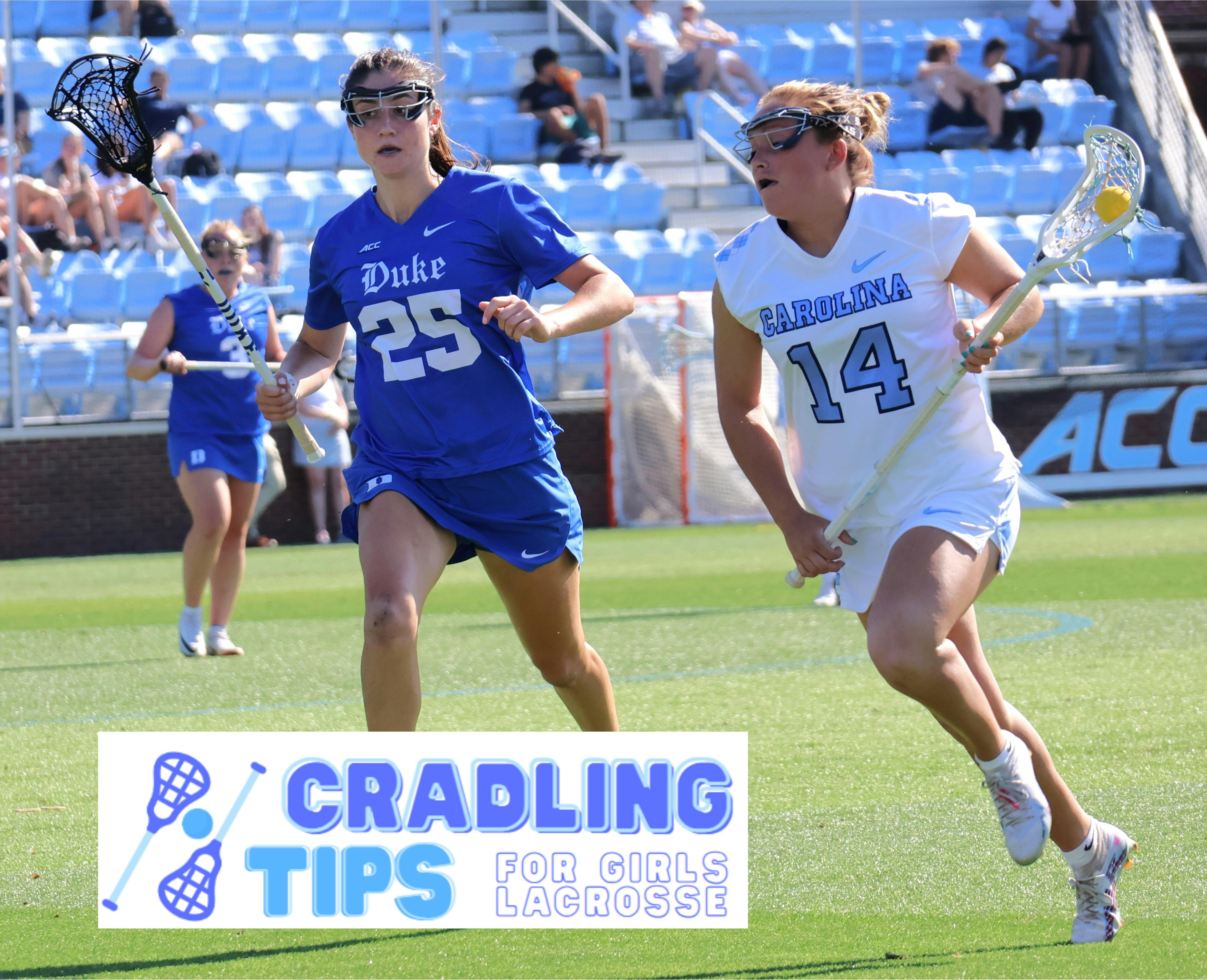
US Sports Lacrosse: From Beginner to Game-Changer: Cradling Tips for Girls’ Lacrosse and Top 20 Plays of the 2025 College Lacrosse Season


  • By Avery Hixson

When coaching girls lacrosse, it is crucial to understand that confidence on the lacrosse field starts with mastering the basics—and cradling is one of the most essential. It’s not just about keeping the ball in the stick; it’s about giving young players the control, rhythm, and poise they need to move with purpose. A strong cradle allows athletes to protect the ball under pressure, transition smoothly, and set up every play with confidence.

The right mix of instruction, repetition, and encouragement can turn hesitant hands into high-impact players. These practical tips and easy-to-teach strategies work for any kind of young player. Give your team the tools they need to develop, compete with confidence, and truly enjoy the game.

All lacrosse players know that solid stick skills set a great player apart from a decent player. Sheehan Stanwick Burch, a four-time All American women's lacrosse player and US Lacrosse Hall of Famer specializes in taking decent players and making them into great players. Burch has mastered teaching new players how to cradle with a few simple points and reminders that she covers in her course, Girls Lacrosse Drills & Tips Video Library, as well as many other key lacrosse concepts. Anybody can learn to cradle effectively, so let's dive in!

Tips to Know

Before picking up the stick and just going for it, it’s important to have some rules to reference. To cradle, you must know how to hold the stick, placement of the stick, and the motion of the cradle.

Hand Placement

Your dominant hand should be about two thirds up the stick, wherever it feels most comfortable to hold, with a strong grip. Your nondominant hand should be at the very bottom of the stick, also known as the butt of the stick, lightly holding the stick in place. Your bottom hand shouldn’t be doing much of the work, it is “just a guide.”

Position of the Stick

Coach Burch describes that the stick should be tilted enough to balance the ball upright, but not so tilted that it has the chance to roll out the back. The starting position of the cradle should be tilted on your dominant side shoulder. You should “always be a threat to score,” meaning your stick position should be comfortable and versatile enough to pass or shoot.

Motion of the Cradle

The motion of the cradling itself should be “very quick, and very tight.” Simplicity is key when it comes to an effective cradle, it is important to be able to make quick decisions while cradling, like passing, shooting, dodging, or even faking.

How and Where to Cradle

null

Once the process is understood, it’s time to cradle! The cradle should be between your shoulder and your ear. This means that the full range of motion that the cradle covers shouldn’t go any farther away from your body than your shoulder. The cradle should begin with the stick out at your shoulder, then quickly curls in towards your ear, then repeat. This ensures that the ball is protected from other players. This position also maintains the “threat to score” ability. This simple, short-range cradle saves time and energy compared to wider, more dramatic or advanced cradling methods.

Cradle with Either Hand

null

The next step after learning to cradle is to be able to do so with both hands. Coach Rachel Lenzo covers how to do this in her course, Catching, Shooting & Dodging for Girls Lacrosse. Here’s how she describes it.

To learn to switch hands, you should begin in the “triple threat position,” similar to what Coach Burch describes as being a “threat to score.” If you are switching from your right hand to your left hand, you first need to bring your bottom hand to your left side. Then, you lower your stick to your bottom hand, and switch hand positions to a left-dominant position. Coach Benzo clarifies that at no point in this switch should you only have one hand on the stick, it should be both at all times. She emphasizes the two most important steps: cross over your body, and switch your hands. Being able to cradle with both hands and protect the stick is a surefire way to become a better player.

NYSS Stay In The Game

Tuesday, July 22, 2025

US Sports Partner Spotlight: Fundrise

 Fundrise logo

We're on a mission to build a better financial system by empowering the individual.
Founded in 2012 and headquartered in Washington, DC, Fundrise is one of the leading real estate investment platforms.
Get started @ https://tinyurl.com/FundriseToday

US Sports Radio affiliate partner
http://www.USSportsRadio.net

US Sports Basketball: Assemble a Championship-Caliber Basketball Rotation and KINGS vs HORNETS NBA SUMMER LEAGUE CHAMPIONSHIP Highlights


  • By Brandon Ogle

No coach, at least in recent memory, has exemplified the set-up of rotations better than the San Antonio Spurs’ Gregg Popovich. The legendary coach once said, “It’s not about any one person. You’ve got to get over yourself and realize that it takes a group to get this thing done.” Having a star player definitely helps a lot in the campaign towards winning basketball games, but it doesn’t ensure victories. With this said, every player on the roster can provide positive dividends, whether that be at practice pushing the starters or contributing in the games!

Starting Five

Simply put, the starting five are the players that get the lion’s share of the attention. These five players need to constantly be on the same page. Likewise, it is urgent to possess the ability to be quick starters. When you can get ahead early, the rest of the players become more comfortable and you play better. However, I urge all players to not hold the starting five recognition to the utmost importance. Yes, it’s easy to see why all players want to be starters, but the starting five is not always the five most talented players on the roster. Normally, it is just the five players that complement each other the best. So, the best advice I can give is to not get discouraged if you don’t start. Rather, keep your mental fortitude up and play at maximum effort.

 Sixth Man

The title “Sixth Man” is typically given to the player that is first off the bench. He or she’s game can fall under a number of different categories, but the key is that the sixth man understands his or her role on the team. As I just mentioned, not all players serving as the sixth man have the same styles of play. Many teams opt to go with dynamite scorers as the sixth man. These players can come in right away and aren’t afraid to take action and put some shots up. Meanwhile, other teams use a three-point marksmen. Here, you’re looking for a player that is deadly from deep and not hesitant to come in with the purpose of cleaning up an early deficit. Conversely, there are coaches that look for a defensive stopper or rebounding specialist. All of these different types of players are above-average in at least one skillset. If you’re working to be a sixth man, take this philosophy to heart. I recommend checking out this video from CoachTube ttp://coachtube.com/course/basketball/dribble-pass-shooting-practice">CoachTube by high school coach, Bob Schurtz, as he breaks down the critical aspects of ball-handling, passing and shooting. Each of these are attributes capable of being perfected by sixth man players. While all of these are different skillsets, the core idea is personality. The sixth man needs a mindset where he understands his job and doesn’t need a couple minutes on the court to start making plays.

Second Unit

Just as every team has a starting five, they also have a second unit. This back-up group of players likely won’t be as talented as the starting five. However, they will have experience practicing as a unit, thus preparing them to play together. While the starting five will usually have specified roles, this will be exactly the case with the second unit. Any players on the second unit need to understand they have limited time to make an impact on the coach. If you’re not getting the job done, then an early hook is a definite possibility.

Stamina

When coaches are evaluating their rotations, they always take into mind the stamina of their team. This concept sort of goes hand-in-hand with the next section, but the key is to not ignore conditioning. Like any sport, you need to be in great shape to play basketball. Even though the coach is largely in charge of ensuring proper conditioning during the season, I urge you to not ignore offseason work. The offseason is where you start seeing the differences between players. Whether it be putting in work in the weight room, getting up shots in the gym or doing cardio, you need to prepare yourself for the season. This will help ensure stamina is an after-thought come regular season time.

8, 9 or 10 Players?

Depending on the roster size, you can see anywhere from 7-10 man rotations. Since 7 is not very wise, I’ll take a deeper look at 8, 9 and 10 player lineups. First off, a 10 player rotation is essentially a coach’s dream. It allows them to give everyone adequate rest and basically, implement a platoon system like the University of Kentucky did during the 2014-15 season. Stamina shouldn’t be a question here, thanks to the large number of quality players. Meanwhile, 9 still ensures stamina shouldn’t be a question. However, it also means there is probably going to be a player or two in the starting lineup that is capable of playing more minutes than the rest. Finally, an 8 player rotation is utilized when you’re a little thin on the bench. This doesn’t mean the team isn’t talented. Instead, it just proves that either the starting five is significantly better and can play longer stretches or there are one or two elite players on the roster.

Garbage Time

No matter what level you’re at, there are going to be games where either your team is up by a lot or you’re getting run out of the gym. In these cases, coaches need players capable of playing the late minutes. If you’re still at the youth level, chances are starters could still be in there late in blowouts. With this said, these situations provide the opportunity to showcase our skills to the coach and develop chemistry with your teammates to ensure you’re successful next time out. In the end, it is important to take advantage of every minute you get on the hardwood and never consider a moment meaningless!

Back-to-Backs

When I hear the term “back-to-backs,” I always think of the San Antonio Spurs and Gregg Popovich. While coaching aging veterans like Manu Ginobili and Tim Duncan, Coach Pop elected to rest these guys as often as possible to ensure they were ready for the postseason. Though this situation largely is in effect for older leagues, it is important to understand how to handle back-to-backs, which are when you have games on consecutive games. While some of this depends on maturity level, you need to develop an understanding of how you can pace yourself in these scenarios. Even if you might be in great shape, it is vital to have complete knowledge of your body and how to prepare yourself to handle these strenuous situations.

Examples of Solid Rotations

It isn’t difficult to find quality rotations. However, it is also important to remember that complete rotations don’t form overnight, as coaches are consistently tinkering with them. For an example, I’ll give the 2013-14 NBA Champion San Antonio Spurs:

-       PG: Tony Parker, Patty Mills – At the point guard spot, the Spurs had a quality veteran in Parker, who had loads of playoff experience. As a backup, Mills possessed the ability to come in and have an instant impact, even if that was only 10-15 minutes a game.

-       SG: Danny Green, Manu Ginobili, Cory Joseph – Shooting guard was similar to the point guard position, but switched. The veteran, Ginobili, came off the bench, but provided a calming influence on the second unit and even mixed in with the starting five later on in the games. Meanwhile, Danny Green was a deadly outside shooter that was a perfect fit in the starting unit.

-       SF: Kawhi Leonard, Marco Belinelli – At small forward, we see a rising star in Leonard and an immediate scoring threat in Belinelli. Leonard also served as the defensive stopper in the starting five. This is important as he was able to face up with the opponent’s top scorer and attempt to shut them down.

-       PF: Boris Diaw, Jeff Ayres, Matt Bonner – The starting power forward, Boris Diaw, is a unique player in his ability to space the floor. His versatility opens up the paint for penetration. For backups, Popovich had two options with a rebounding force in Ayres and scoring option in Bonner.

-       C: Tim Duncan, Tiago Splitter – Depth is once again witnessed at the center position. Although an aging superstar, Duncan was still able to be effective in his minutes. However, the presence of Splitter allowed Duncan to rest in garbage time and occasional back-to-backs.

Depth!

Every coach loves to have depth on their team. While I’ve mentioned the various aspects of a quality rotation, if you don’t have capable back-ups, it’s going to be hard to put together a great rotation. As witnessed with the Spurs’ championship team, you need quality back-ups that can give the starters a rest. However, these are not guys just in there to give players a breather, but rather players understanding the opportunity at hand of being on the court!

NYSS Find Their Strengths

Monday, July 21, 2025

US Sports Partner Spotlight: Zulay Kitchen

Save 15% with code ZULAY15
https://tinyurl.com/ZulayKitchen25
At Zulay Kitchen, we believe cooking should be simple, fun, and joyful. Born from a passion for home-cooked meals and family connection, we create affordable, thoughtfully-designed kitchen tools that make your time in the kitchen easier and more enjoyable.

US Sports Radio affiliate partner  http://www.USSportsRadio.net

US Sports Football: Attack Defenses with The Versatile Y-Cross Concept and CFL 2025 Recap: Hamilton @ Ottawa - Week 7


  • By Keith Grabowski

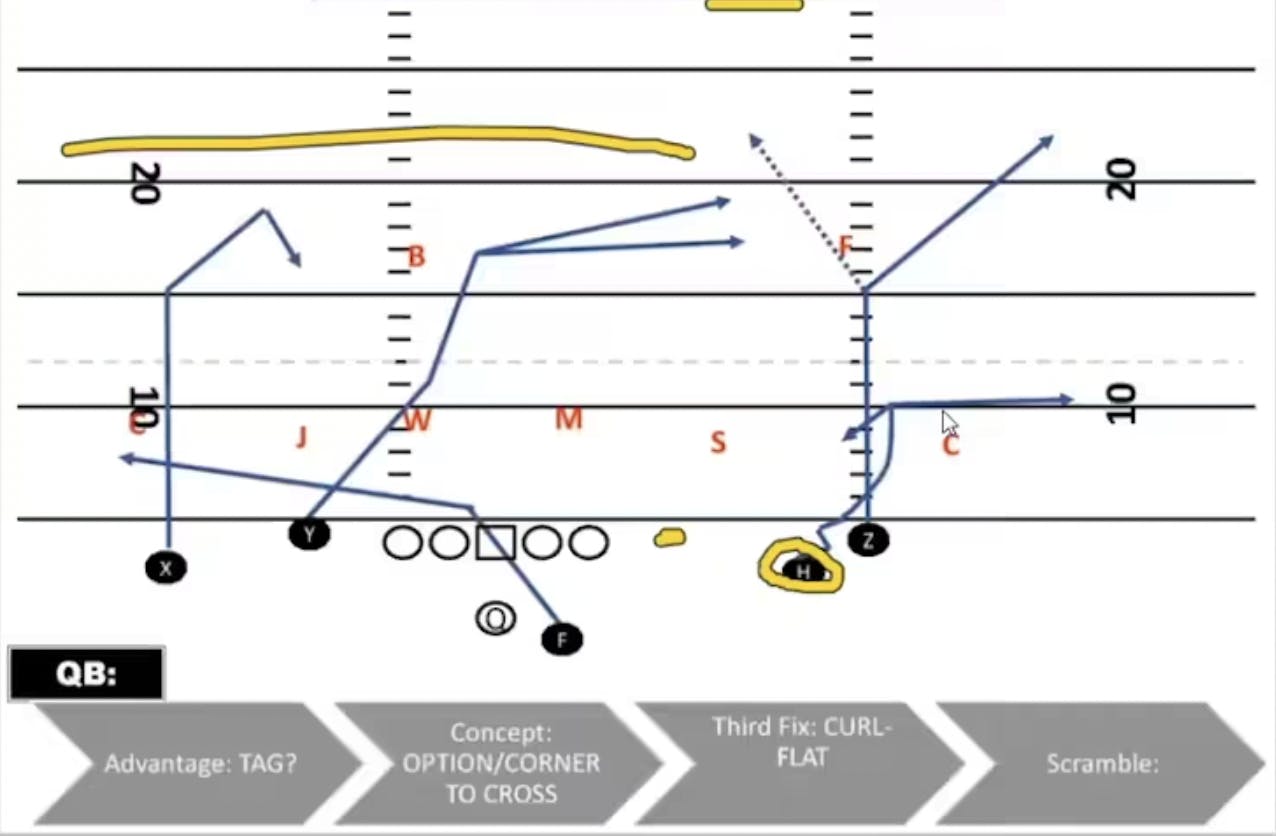
The Y-Cross concept is a staple of the Air Raid offenses, dating back to the days of LaVell Edwards at BYU and refined over the years by coaches such as Hal Mumme and Mike Leach.ed over the years by coaches such as Hal Mumme and Mike Leach. This concept involves a deep route or routes to occupy the safeties, and a crossing or over route from either a tight end or a slot receiver. The QB takes a quick look first at the deep route (or combination to the side the cross is being run to,  to find an easy throw or a rhythm shot, then works to the primary route, which is the crossing route. 

While it has its roots in the Air Raid offense, the Y-Cross can be found in all styles of offense playbooks.  

Its versatility in application from a variety of formations allows it to be dressed up in a number of different ways while also being an effective play-action concept.

What it does is create an oblique stretch of the defense with what becomes a three-level flood concept. 

While many early iterations had the tight end or “Y” running the cross, it has application for speedy receivers and has become a favorite of the Kansas City Chiefs-skills">receivers and has become a favorite of the Kansas City Chiefs with the different dynamic slot receivers who were or are a part of their offense.

In addition, the ability to utilize the personnel available makes this a multi-purpose concept that can attack a number of coverages. Packaged correctly with other route combinations, it can be designed and utilized to beat any coverage.

Let’s take a look at both the basics of the route as well as how coaches are utilizing the Y-Cross in different ways within their offenses.

History of the Y Cross

It’s always good to understand how a concept came into use as well as how it has evolved and adapted to attack the defense. Loren Endsley does a great job sharing the history of the play and how it has evolved in this video:

Benefits of the Y Cross

Three receivers attacking a weakside zone

A horizontal and vertical stretch of the defense

Can attack any coverage

Simple read for QB and allows for a scan across the defense which puts his eyes ahead of windows to see defenders and danger

Can be used with a variety of formations and personnel

Easily tagged to create multiple looks and issues for a defense

Basics 

This concept gets some of your best-skill players on the move looking to create big plays down the football field. The core of this concept is the post, crosser, and running back or receiver stretching the flat to the boundary. On the frontside, teams are able to tag a variety of routes/combinations that give the QB decision-making power within his progression, such as the smash concept

This is another great horizontal pass concept that gets skilled players on the move across the middle of the field and adds another layer to the passing attack, similar to the Shallow Cross concept.

Why it Does Well Against Various Coverages

Man Coverage- Man coverage is beaten primarily by routes running away from defenders. The post or mandatory outside release Go route to the weak side provide good man-beating options, and the crosser runs away from the defender as well. When that crosser is a receiver like Tyreek Hill, it’s even better!

Cover 4 - Against quarters with play action, the safety is usually responsible for a boundary run fit. The Post can be run from the boundary to attack that are over the safety who is reacting down toward the line of scrimmage

Defenses tend to include their boundary-free safety in the fun fit in cover 4. This creates the potential for the post-route runner to win over the top of the defense

Cover 3 - The three-level stretch makes this difficult for the flat defender. Essentially a high-low stretch is created on him. 

Applications and Ideas 

Lincoln Riley, Head Coach, USC

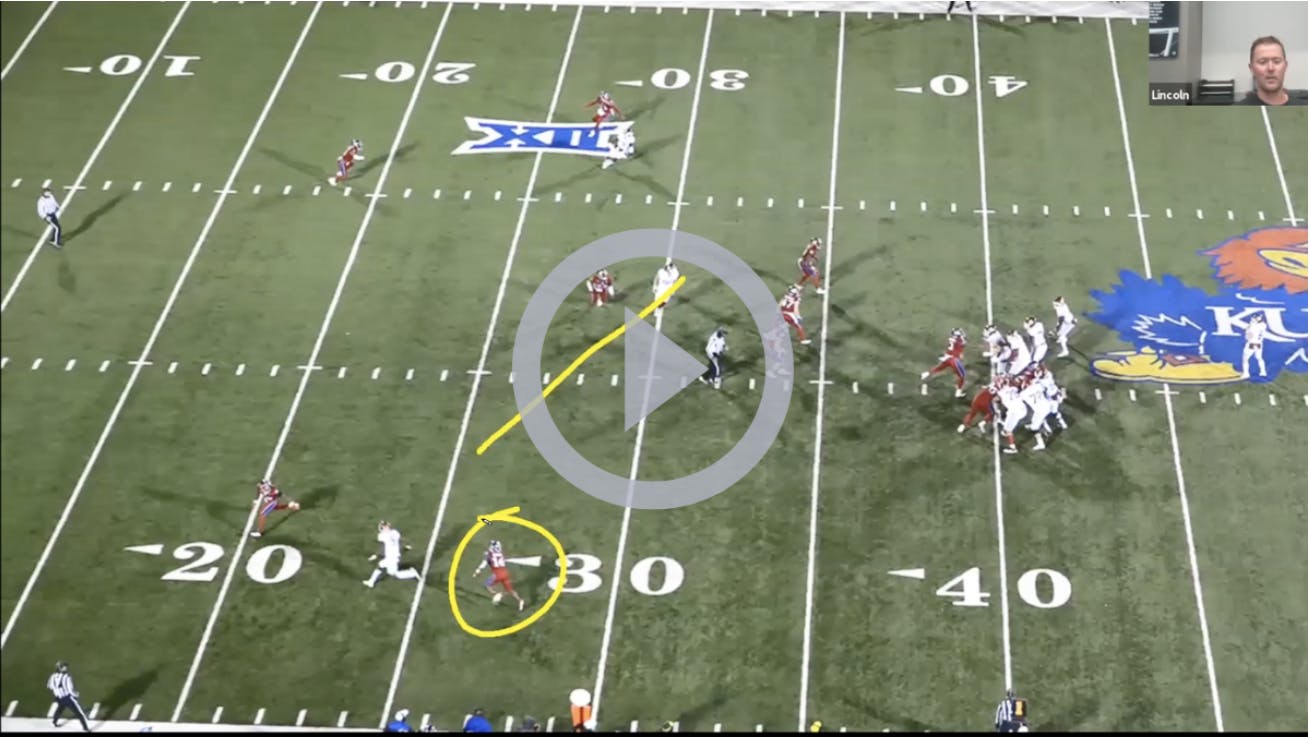
Y-Cross is versatile because of the numerous ways that the play can be designed. For instance, Riley illustrates a version in which the front side of the progression can be any quick game concept that clears out space for the Y-Cross. 

The base install for Oklahoma is vertical by #1 and a speed out by #2. In his clinic talk, Riley shows multiple examples of different quick game concepts that OU has used. Because the play is versatile by design, it lends itself to be effective in many formations and personnel groupings to fit the players that are on the field. Although its base install is from 10 personnel, Coach Riley has utilized 20 and 21 personnel groupings with this concept and loves play-action for an extra element of explosion.

Coaching Points

It is vital that the receivers, no matter the formation or personnel, understand their role within the progression. 

Read #1- The quick game concept with Y-Cross has to know that they cannot work their release for too long. They are the first read, and they must clear out for the Cross. If they take too long working a release, they will take themselves and the Cross out of the play. If the QB likes a matchup to the quick game concept, he can take the throw now.

Read #2- The Y must have the most “feel” of any receiver to run this route. He has to be able to feel the defense and find open grass. This could mean stair-stepping more vertically against underneath coverage, snapping flat across the field in front of deeper coverage, or sitting down the crossing route to avoid running into coverage. 

Read #3- The curl route on the backside of the play must also understand the progression. However, this time, it is because this route can be patient and work a release since it is the final option. Getting open too quickly can be just as bad as not getting open at all. 

Here is Coach Riley explaining the basics of the Y-Cross as he applies it.

The Y-Cross is a great all-purpose route for any offense. It allows for versatility in how it is utilized and in doing so can create the opportunity for both easy throws as well as built-in pressure or hot throws while still giving the offense the opportunity to hit an intermediate route and take a chunk out of the defense.  In this example, Lincoln Riley shows how the Y runs the route in order to protect the throw:

null

Jason Mohns - TE Coach, Arizona State

For Jason Mohns, 7x state champion at Saguaro HS(AZ) and now the TE Coach at Arizona State, the Y-Cross is a play-action concept installed out of 2x2, but they have 3x1 versions as well.  In his variation of Y-Cross he utilizes a “back out bubble” with a mandatory outside release go by the X receiver on the boundary. The play action draws the linebackers down allowing space for the crosser to be open.  The QB progresses from the Go and Bubble to the Cross as he explains in the video:

Josh Herring - Offensive Coordinator, Jones County HS (GA)

Josh Herring likes Y Cross as a backside tag. For example, it can be paired with a dropback like the Smash route.  In his concept which he calls “Goofy,” the smash is utilized from sa compressed set with the Crosser coming into a void if the corner and flat get covered.

Whether it’s Y-Cross or another route concept, finding those routes that can have multiple uses in personnel, formations, and play action as well as drop back give you an advantage in getting the concept better and better over the course of the install and the season because it gets a lot of reps for the quarterback and receivers.

NYSS Every Kid In the Game

Sunday, July 20, 2025

US Sports Partner Spotlight: Yosuda Fitness

 New Arrival YOSUDA YB001R Magnetic Exercise Bike now $279.99. Was 439.99.
https://tinyurl.com/YosudaMagnetic

US Sports Radio affiliate partner
http://www.USSportsRadio.net

The Rock Almighty: Did the Rich man Immediately go to Hell? And What Can We Learn From Chip and Joanna?


Listen on Apple Music

  • Author Garfield Gregoire

Most have heard the Bible story of the rich man and Lazarus and how the rich man died and went to hell. But do you really understand the true meaning of what Jesus taught?

Do you believe you would enjoy a life in heaven if you were able to look back down on earth and see friends and loved ones being eternally tormented in hell – having no rest but ever crying out in agony?

Yet, as terrifying as this picture is, millions believe this is what the account of Lazarus and the rich man depicts; they believe that upon death, the wicked or the unjust immediately goes to hell to eternally suffer. But is this what Jesus actually taught or said? Remember, God’s Word is truth (John 17:17); and if we are to know the truth, we must always rely upon what God’s Word says. And for our part here, let us primarily deal with the subject of the rich man being sent to hell; let us use the Bible to understand.

What Jesus said

Jesus said: “There was a certain rich man which was clothed in purple and fine linen and fared sumptuously every day” (Luke 16:19). So, here was this certain rich man – who was apparently living a life of luxury, ease, and who probably set his heart upon his riches – being disobedient to God and is here pictured as one of the unrighteous who has lost out on salvation. The account continues with the rich man having died. Luke 16:22, says, “… the rich man also died, and was buried.”

So, we see that the rich man eventually came to the end of his life; he died and was buried or placed in the grave. But notice what Jesus went on to say: “And in hell he lift up his eyes being in torment …” (verse23). Well, did this mean the rich man suddenly died and then found himself in the burning hell fire? This is what most professing Christians appear to believe.

But carefully notice what Jesus said: He said the rich man died and was buried. Jesus did not say the rich man died and immediately went to hell, but that he was buried in the grave. The Bible teaches that when a person dies, they are no longer conscious or aware of anything anymore. For example, Ecclesiastes 9:5: “For the living know that they shall die: but the dead know not anything …” Also, Psalm 146:4: “His breath goeth forth, he returneth to his earth; in that very day his thoughts perish. When God created Adam, God told him the same thing; God said, “… for dust thou art, unto dust shalt thou return” (Gen 3:19). So, we see death means the end of consciousness or awareness – meaning when the rich man died and was buried, he was no longer conscious or aware of anything anymore. This is what death is; it is the absence of life or consciousness; the Bible says, “For the wages of sin is death …” (Romans 6:23); wages are what a person earns for doing something, and in this case, a sinful God rejecting life earns death – as it is the wages a person earns for being disobedient to God.

But notice what Jesus went on to say about the rich man: “And in hell he lift up his eyes, being in torment …” (Luke 16:23).

The rich man had died but in hell he now lifted up his eyes and being in torment. But when did you suppose the rich man lifted up his eyes? And what kind of hell was he in? Remember again, Jesus did not say the rich man died and immediately went to hell; this is what millions appear to believe, but just because the majority believes a thing does not necessarily make it true; it is only God’s Word that reveals truth and speaks the truth that you can stake your very life on.

What is the Hell Where the Rich man was?

The hell that the rich man went to and eventually opened up his eyes was none other than the grave; the hell that Jesus spoke of comes from the Greek word hades; hades mean the grave and it was the same grave (or hell) that Jesus was buried. If you go to Acts 2:17, you will see it speaking of the death of Christ – saying: “Because thou wilt not leave my soul in hell, neither wilt thou suffer thine holy one to see corruption.” Jesus died and was buried – placed in hell – which is the grave; and since God would not allow his body to see corruption or to decompose, Christ was therefore raised from the dead on the third day – coming up out of his grave alive by a resurrection.

So, the rich man died and was in the grave, but there came a time when the rich man - who had lost all track of time – because he was dead – no longer conscious or aware of anything - now suddenly, lifted up his eyes in hell. This meant that the rich man has suddenly come back to life at a certain point after having been dead for some time. Jesus, who was also dead for three days and three nights, also lifted up his eyes in the grave (hell) by a resurrection from the dead. The point is that the rich man would have only been able to lift up his eyes in the grave (hell) at the time when the wicked or those who are lost - would be resurrected to be judged. If you read Daniel 12:2, it speaks of this time saying: “And many of them that sleep in the dust of the earth shall awake, some to everlasting life, and some to shame and everlasting contempt.” Jesus pictured the rich man as being one of the wicked or one that is lost; so, the rich man will be one of those to be awakened from death – by a resurrection to contempt. But when do you suppose the rich man will lift up his eyes from the grave in this resurrection and be sentenced?

Rich Man will Lift up his eyes after the Millennium

Notice John 5:28,29: “Marvel not at this: for the hour is coming, in which all that are in the grave shall hear his voice, and shall come forth; they have done good, unto the resurrection of life; and they that have done evil unto the resurrection of damnation.” Here Jesus speaks of more than one resurrection but of two different or separate resurrections. Quoted above are Scriptures showing that the “dead in Christ” are to be resurrected at his second coming. 1 Thessalonians 4:16,17 shows the righteous servants of Christ or true Christians are to be first resurrected from the dead at the second coming of Christ-where it says, “… the dead in Christ shall rise first …” The rich man will not be in this first resurrection but will be in the resurrection where the wicked will be judged and sentenced by God to the lake of fire. 1 Corinthians 15:23 makes known that there is a time order of resurrections to come; it says, “But every man in his own order.

Now notice when the rich man will come up in his order of resurrection: “But the rest of the dead lived not again until the thousand years were finished …” (Revelation 20:5). Jesus Christ will be ruling on earth during the millennium and it is after this 1000, years rule of Christ that the rich man will lift up his eyes in the grave (hell) and realize the fate that awaits him. If you notice Revelation 20, it pictures a time when all those that have lived and died will all live again and they are going to be judged by God, and those – like the rich man – who had their opportunity in this life, but through wickedness and evil forfeited the opportunity for eternal life - will be cast into the lake of fire; Revelation 20:14 says, “And death and hell were cast into the lake of fire. This is the second death.” The rich man had died the first death – being buried in his grave, but the second death is the loss of eternal life from which there shall be no resurrection. This is why Jesus warned the people of his day saying, “… except ye repent, ye shall all likewise perish” (Luke 13:3).

Will The Rich Man Eternally Suffer in the Lake of Fire?

Perhaps you reading this has possibly held the belief that the wicked are currently in hell -constantly suffering – never having any relief from the fires of hell. After all. Does the bible not say the rich man was in torment (Luke 16:23)? But what exactly is this torment? Was the rich man already suffering in the lake of fire? Is he in the fire now burning and burning but never finding relief?

Having died and coming back to life, the rich man, will now realize that he has been dead in his grave all this time or that he had been asleep in death for so long; to him, his consciousness (or resurrection) will almost seem like an instant from the time he was dead to the moment he wakes up or lifted up his eyes in the grave (hell). Now, in this state of coming back to life, the rich man will now learn his fate; he will come to understand that he has forfeited life in the kingdom of God or that he has been shut out; and now suddenly, he becomes troubled in mind – being mentally tormented at the prospect his dire future – knowing the lake of fire awaits – especially when he saw Abraham and Lazarus afar off; this greatly troubled and tormented him -as he was in the state of panic and fear. Remember Jesus warned the Pharisees that there would be weeping and wailing when they would see Abraham, Isaac, and Jacob and all the prophets in the kingdom of God but they themselves thrust out (Luke 13:28); this is a terrifying moment.

Now notice Luke 16:24: “And he cried and said, Father Abraham, have mercy on me, and send Lazarus, that he may dip the tip of his finger in water, and cool my tongue; for I am tormented in this flame.” Many take this to believe the rich man was now in the lake of fire burning and suffering. But do you not find it strange that the rich man only asked that Lazarus dip his finger in water to simply cool only the tongue of a man who was already burning and suffering in a great fire? How could just a tip of water on the tongue bring relief from all this flame? Have you ever asked yourself this question?

Notice again, the rich man said, “… I am tormented in this flame.” The word “In” this flame comes from a Greek word which can also be translated as “IN” or “BY,” or “AT.” This same Greek word is used in 1 Thessalonians 4:15 – which says, “For we say unto you by the word of the Lord …” In other words, the rich man knew he was going to be cast into the lake of fire and was mentally tormented by the flames that he saw; he was tormented by what he saw and feared it. Also notice that the word “tormented” means to grieve or to have sorrow; the rich man was in deep mental distress; and if you notice why, the scripture says it was in hell – the grave that the rich man was in torment – meaning he was in torment before he was cast into the lake of fire (Luke16:23); he was in mental anguish and torment when he came back from the dead or the grave to now face the lake of fire and to realize he lost out on salvation.

Notice again that the rich man asked that his tongue be cooled; he asked not for his whole body to be cooled but just his tongue; a person burning in a fire is not going to ask for water just to cool his or her tongue – as such makes no sense when your entire body is on fire. The reason why Jesus mentioned the tongue was because He wanted to show that people who are going to be shut out of the kingdom are going to experience tremendous mental pain and anguish - so as to warn them of this terrible time. It is common knowledge that when a person is in distress – facing something as death or other forms of anxieties - their tongue or mouth can become very dry; and this is what happened to the rich man – as he is in condition of weeping and gnashing of teeth – just before being cast into the lake of fire. This is why he asked for his tongue to be cooled by just the fingertip of Lazarus dipped in water.

But what of the rich man’s fate in the lake of fire? Will he eternally burn and burn for all of eternity – ever burning – but never coming to his end? Well, if such had happened then you could say the rich man was resurrected to immortal life – to live on forever in the lake of fire. But please remember again that God’s word says the wages of sin brings death and not eternal life -meaning man is mortal – subject to decay and death. – hence, we can only have immortal life as gift from God through Jesus Christ – who said, “… because I live, ye shall live also” (John 14:19). There is only one way a man can live forever is by the atoning sacrifice of Christ and Christ would never taint that perfect sacrifice by allowing humans to forever live and suffer in a never - ending fire; Christ did not give his life for that purpose; this also dismisses the belief that man has an immortal soul. You can read Ezekiel 18:4 and see that the soul is mortal and does die; it says, “… the soul that sinneth, it shall die.” The soul of the rich man will also perish in the lake of fire; he will die because he sinned. Please carefully think about that.

A man cannot forever exist in fire that will never consume his physical body - as such it not possible. Yes, all things are possible with God; it is possible God could create a fire that forever tortures someone while not consuming the body, but the Bible teaches no such thing. Furthermore, God is not of the character to let humans eternally suffer in this manner. What the bible teaches is that the wicked will be burned out of existence – becoming nothing but ashes; Malachi 4 speaks of their fate – saying, “… the day cometh shall burn as an oven; and all the proud (like the rich man) … all that do wickedly, shall be stubble; and the day that cometh shall burn them up … that is shall leave them neither root nor branch” (verse 1); verse 3 says the wicked will become ashes.

Christ spoke of unquenchable fire or the fire which shall not be quenched (Mark 9:44). This lake of fire is pictured by the Gehenna fire that existed on the southern side of Jerusalem – where waste - such as garbage and even dead bodies of both people and animals were thrown; this Gehenna fires continues to burn and burn as it devoured the things that were thrown into it; even so the lake of fire will burn and burn – not quenched till the time comes when all the wicked will be no more. The fire facing the wicked will be so hot and unquenchable that no amount of water will be able to put it out, but it does not mean he lake of fire will eternally exist to forever punish the wicked. Unquenchable fire only means it will burn and burn until it has done its job. For example, Jeremiah 17:27, God said He would send a fire in Jerusalem: “… I will kindle a fire in the gates thereof, and it shall devour the palace of Jerusalem, and it shall not be quenched.” So here God speak of a fire that would not be quenched. Well, is there a fire eternally burning in Jerusalem to this day? Of course, not; no fire is burning there - thus, proving that the unquenchable fire means the fire will never go out until all the wicked will be consumed or burnt out of existence and the earth will be free from wickedness and evil forever. And when all evil and wicked is done what will happen? Notice the answer: “The cometh the end], when he shall have delivered up the kingdom to God, even the Father, when he shall have put down all rule and all authority and power. For he (Christ) must reign, till he shall have put all enemies under his feet” (1 Corinthians 15:24,25).

So, we see that Christ will subdue and bring all wickedness to an end on earth - so when the Father comes down to earth to dwell with us there will be no longer any evil doers. If you notice Revelation 21:1, it shows God the Father will come down to earth with a new heaven and a new earth because the first earth that had the lake of fire – burning up the wicked or burning them out of existence will be no more. If you read 2 Peter 3:12,13 it says, “… wherein the heavens being on fire shall be dissolved, and the elements shall melt with fervent heat? Nevertheless we, according to his promise look for new heavens and a new earth …” Just prior to God the Father coming down to earth with the new earth, this whole planet is going to become one gigantic ball of fire with possible enormous earth-wide explosion being heard that would by far – eclipse all the nuclear power the nations of the world could possibly unleash. This mean that even the lake of fire will no longer exist; it will be gone -as all the wicked will have been burnt to ashes – now making place for this new heaven and earth.

The fact that there is going to be new earth proves that the lake of fire will come to an end and that people are not to forever suffer in an ever - burning hell fire. The fate of all the wicked – including the rich man is eternal death and not eternal suffering or torment in the lake of fire.

So, in conclusion here let me say again, the account of rich man is a picture of the future of all those unrepentant wicked who have lived and died and will come up in a resurrection to face their ultimate fate; and that fate is the lake of fire which will end their lives; Christ spoke of this fate – saying, “… but he will burn up the chaff with unquenchable fire” (Matt. 3:12). Notice Jesus said the chaff - meaning the wicked, “will burn up.” Burn up means to destroy or bring to an end; it does not mean eternal punishing in the lake of fire.

(Just adding an unrelated point here to the reader that the world continues to be an ever- growing dangerous place and the signs of the times indicate the world is going to erupt in global and national troubles for the people of the United States; we are living in frightening times, and our people and nations are going to be greatly distressed by national troubles of epic proportion - just as Jesus Christ is about to return. I have written in the past stating we are a nation already in trouble; and indeed, we are in trouble; just look at the state of divisiveness in the nation; we are being set on the course of a great fall as national troubles and turmoil is going to persist. Drought, famine, disease epidemic - along with great changes in the weather pattern is going to be brought to bear upon our people because of our national sins; our people are modern day descendants of the ancient people of Israel, and they do not know it, and neither does it seem they are willing to understand; they will only begin to understand when it is too late)

If anyone is interested knowing where the United States is spoken of in prophecy, please go to https://www.amazon.com/America-Prophecy-Israel-people-consider-ebook/dp/B0C4M8R77J

I am an old man who has, long ago, came to the realization that this professing Christian world – with all its Mega Churches and various denominations do not proclaim the true teaching of the Bible - as they fail to correctly teach many vitally important doctrinal truths of the Bible.

National Youth Sports Strategy

Saturday, July 19, 2025

US Sports Baseball: How to Teach Hitting to the Next Generation and Highlights from ALL games on 7/18!


  • By Grant Young

Many aspects of hitting will always remain timeless. 

Hitters will always want to shorten up and defend the zone with two strikes. They’ll be looking for a fastball or sitting on something else specific during a hitter’s count. And they’re sure to assert that they’ve checked their swing even if it’s clear they didn’t. 

Yet, many components of youth baseball hitting (especially about how it’s taught) have evolved in the modern era. For example, most hitting coaches have come around to having their hitters try to launch fly balls instead of trying to smack ground balls. 

But there are still some coaches who are struggling to adapt their lessons to the new generation of hitters. And that’s where Jerry Weinstein comes in.

Coach Weinstein is a legendary baseball coach who most recently served as the Catching Coordinator for the Colorado Rockies. Coach Weinstein also managed Team Israel at the 2017 World Baseball Classic qualifier, and returned as the head coach in the main tournament, managing Team Israel at the 2017 World Baseball Classic in South Korea and Japan in March 2017, where the team was 4-2 overall in the tournament. He has also served as the Rockies Offensive Coordinator and the manager of the Rockies Class A affiliate. 

Before joining the Rockies, Weinstein, who has over 40 years of coaching experience, was the pitching coach for the Cal Poly (San Luis Obispo) baseball team from 2001-05. Prior to his coaching stint with the Mustangs, Weinstein was the Los Angeles Dodgers Director of Player Development in 2000 and 2001 and also served as the Dodgers' catching coordinator in 1999. 

Coach Weinstein’s ‘New Age Hitting With Jerry Weinstein’ course is a masterclass on instilling modern offensive concepts into any team. We’ve pulled a few of the course’s most pertinent lessons to give you an understanding of how Coach Weinstein’s wisdom can propel your offense to a new stratosphere of success. 

Hitting is Balance, Rhythm and Timing

Coach Weinstein is convinced that success as a baseball hitter comes down to three components: balance, rhythm, and timing. 

According to Coach Weinstein, balance in hitting is, “being in your best athletic position throughout your swing.” He goes on to add that understanding the length-tension relationship (where muscles are being stretched during a swing) is an X-factor for hitters. 

This is essentially another way of phrasing the Physics law, “every action has an equal and opposite reaction”. And Coach Weinstein mentions it to make it clear how important the load and backswing are when it comes to hitting.

Coach Weinstein also discusses the importance of rhythm. In order to facilitate this he deems players should work to, “control movement to create timing as a result of small moves.” 

These small moves will depend on each hitter. It can be a swaying of the hips, jerking of the bat, or movement of the hands. But any means of creating rhythm (and, more importantly, aligning oneself with the pitcher’s rhythm) is a huge asset for the modern hitter. 

Coach Weinstein then combines balance and rhythm to discuss timing, which is his major key to a successful hitting swing. 

Coach Weinstein makes sure to note that every hitter’s swing is going to be (and should be) different. All that matters is that the swing is repeatable, accurate, and keeps the hitter healthy.

The goal for these three crucial components to a hitter’s swing is to consistently produce the best version of each hitter. 

Bullpen Stander (Drill)

null

When it comes to drills Coach Weinstein believes hitters should be taking part in, one underutilized one is what he calls the bullpen stander drill. 

This drill is simple in practice: have your hitters stand in during your pitchers’ bullpen sessions. But Coach Weinstein suggests that hitters should not just be standing in and tracking the pitches they see. They should also be making actual decisions on whether to swing or take. 

This is an extremely effective drill for the hitter because it forces them to replicate the decision that they must make at the plate during each at-bat. Not to mention that it will afford them extra opportunities to see different pitches out of a pitcher’s hand, which should benefit them as well. 

Pitchers will also benefit from having a hitter standing in and tracking their pitches. In addition to this helping them simulate a real appearance, the hitter can also give the hitter feedback on what they’re seeing out of the hand, and whether a certain pitch looks like a ball or strike depending on their swing decision.

Therefore, this bullpen stander drill benefits pitchers and hitters alike. 

Off Center Oppo-Pull

Another great drill that Coach Weinstein recommends is the Off-Center Oppo-Pull drill. 

This drill takes place on the field during a typical batting practice session. Yet, rather than the BP thrower/L-screen being positioned in front of the mound, it will be moved off to in between the mound and third base line. 

The goal here is for left-handed hitters to hit the ball in between the L-screen and the third base line without having any tail or topspin. You’ll also want to put a bat or piece of wood in front of the hitter’s feet so they don’t dive over the plate. 

For right-handed hitters, their goal will be to pull the ball in between the L-screen and foul line (without spin or hook). 

It can also be moved to in between the first base line and mound, which produces opposite effects for the hitter depending on whether they’re a righty or a lefty.

This drill will force the hitter to get a great feel for their barrel and see what their natural inclination is when it comes to driving the ball.

NYSS FB Be A Role Model