Now Streaming On US Sports Radio!

US Sports Net Today!


Live Play-by-Play, Updates, Highlights and More! on US Sports Network!
[Chrome Users-You may have to click on the play button twice to listen]
US Sports Network Powered By Gorilla Sports!


US Sports Radio
The Las Vegas Raiders Play Here
Fitness and Sports Performance Info You Can Use!
The Scoreboard Mall
The Rock Almighty Shaker Of Heaven And Earth!
The Coolest Links In The Universe!

Tuesday, June 3, 2025

US Sports Martial Arts: Muay Thai Fundamentals: Your First Steps into the Art of Eight Limbs and Wildest First-Round Finishes In ONE History 🔥🤯


Muay Thai Fundamentals: Your First Steps into the Art of Eight Limbs

Step into the world of Muay Thai and build a strong foundation in the "Art of Eight Limbs." This beginner-friendly course is designed to introduce you to the fundamental techniques, movements, and mindset needed to start your Muay Thai journey with confidence. Whether you're looking to train for fitness, self-defense, or competition, this course will equip you with the essential skills to get started. What You'll Learn:

✅ Fighting Stance & Footwork – Learn how to position yourself for balance, mobility, and power.

✅ Striking Fundamentals – Master the mechanics of punches, kicks, knees, and elbows with proper form.

✅ Basic Defensive Techniques – Discover how to block, check kicks, and evade strikes effectively.

✅ Essential Training Gear – Understand what equipment you need and how to use it properly.

Led by the experienced Washington Dos Santos, this course combines step-by-step instruction, practical drills, and insights into Muay Thai culture and training etiquette. By the end of this course, you'll have the skills and knowledge to step into any gym with confidence and begin your Muay Thai journey. Start training today and experience the power, discipline, and excitement of Muay Thai!

The Coach

Washingthai

Washington Dos Santos

World Champion Coach

I'm Washington dos Santos –

  • a six-time Brazilian Kickboxing National Champion
  • three-time U.S. Muaythai National Champion
  • the top-ranked WCB Muaythai fighter at 175 lbs.

 NYSS Find Their Strengths

Monday, June 2, 2025

US Sports Volleyball: Dominate the Net – 5 Must-Try Drills for Pin Hitters and Mol, A./Sørum, C. vs. Ã…hman/Hellvig - Gold Match Highlights


  • By Sam DeJoseph

Swing to Deep Corners 

What You’ll Need: 

A regulation volleyball court, net, volleyballs, and a partner to toss or set for you. Get ready to bring the heat! 

Let’s Get Into It: 

Mark off each deep corner of the court using tape, cones, hula-hoops—whatever you’ve got!  These are your target zones, your bullseye. 

Start at one pin and crush the ball into the opposite deep corner. Then move to the other pin and do it again—back and forth, like a machine. As you get comfortable, ramp up the power with every swing. Your goal? Precision and power, from both sides of the court. 

Want to spice it up? 

Set a personal challenge—maybe 10 perfect hits in a row. Or better yet, go head-to-head with a teammate and race to see who can nail the most hits into the corners first. Winner gets bragging rights (and maybe the loser does pushups). 

This drill will sharpen your control, boost your accuracy, and build your confidence on both pins—so you can become a more balanced, dangerous, and unstoppable player. 

Game on.  

________________________________________________________________________________________________________________

High Ball Out of System Hitting 

One of the main things that pin hitters are tasked with is getting kills in bad situations and ending long rallies! This drill caters to that need by giving players a chance to gain the ability to hit high out-of-system sets to gain ball control and power to be a terminal player. 

What You’ll Need: 

A regulation volleyball court, net, volleyballs, and a partner to toss or set for you. Let’s Get Into It: 

Time to turn tough situations into point-scoring opportunities! Your setter starts in the middle back, launching a high ball out to the pin. As the hitter, your job is to wait it out, close to the set with control, and then bring the heat with a high, powerful swing—even when it’s not the perfect setup. 

This drill is all about making something out of nothing. Master your timing, adjust your footwork, and become the kind of hitter who scores when it really counts. DON’T HIT TO  ZONE 6!!! 

 Level Up the Challenge: 

Dial in your accuracy—pick a zone before you swing and hit it with purpose! Want even more of a test? Throw a blocker in your face and learn to tool the block, hit around it, or go high hands to make your shot count.

Being great isn’t about perfect sets—it’s about what you do when things get tough. This drill builds your confidence, your vision, and your ability to deliver under pressure. Become your team’s go-to in the chaos.

________________________________________________________________________________________________________________

Transition Hitting 

Every hitter will need to be able to be effective in transition to be great, This fast-paced drill will prepare you for in-game action! 

What You’ll Need: 

A regulation volleyball court, net, volleyballs, and a partner to toss or set for you.  

Let’s Get Into It: 

Start up at the net like you're about to shut down a hitter—hands up, eyes locked in. The moment you hear the smack of the ball on the other side, explode off the net with three quick,  powerful steps backward—this is your backwards approach into attack mode. 

Your setter is waiting. As you plant, they’ll toss or set the ball—then it’s go time. Swing hard,  swing smart, and keep moving. The drill is fast-paced—reps come one after another, so stay light on your feet and ready to fly!

This drill sharpens your transition footwork and builds your ability to hit effectively off the net, just like in a real game. 

Level Up the Challenge: 

Aim to hit every zone on the court—line, cross, deep corner, and short tip. Make it a game: 

- 3 clean kills in a row 

- Hit all 6 zones before you stop 

- Race a teammate to complete the challenge first 

Push your speed, precision, and power. Become the transition hitter no defense wants to face.

________________________________________________________________________________________________________________

3 Shot Sequence 

All hitters need to have a deep bag of tricks that they can go into throughout a game. Whether this is crushing a ball, tipping it short over the block, or having a super good roll shot, there are many ways that great pin hitters will score. The aim of this drill is to develop your ability to score in many ways. 

What You’ll Need:

A regulation volleyball court, net, volleyballs, and a partner to toss or set for you. 

Let’s Get Into It: 

Start in your normal attacking position, locked in and ready to strike. Your setter will toss or set you a ball—go off! Choose any attack you want: a full-power swing, a sneaky tip, a crafty roll shot, or even a bold opposite-hand smack. Once you land, don’t stop—the next two balls are coming fast! 

You’ll get three attacks in a row, and each one should be a different shot. Mix it up, keep it unpredictable, and work on being the kind of hitter defenders hate to read.

 Level Up the Challenge:

Make it tougher (and more fun!) by setting up target zones on the court—cones, hoops, tape,  whatever works. Try to land each of your three attacks in a different target. This pushes your accuracy, creativity, and court awareness to the next level. 

This drill trains you to get your feet to the ball and build a killer arsenal of shots, so you can score from anywhere, at any time. Get versatile, get dangerous, and get ready to dominate the net! 

________________________________________________________________________________________________________________

Pass/Dig to Swing 

One of the BIGGEST keys to being an elite all-around pin attacker is mastering the art of transitioning from passer to powerful hitter — and this drill is your ticket to leveling up!


What You’ll Need: 

A regulation volleyball court, net, a few volleyballs, court tape, and a partner to toss or set to you. Bonus points if you’ve got a block or full defense to test your skills! 

Drill Breakdown: Let’s Get Moving! 

Start by taping out your transition pathway on the court:


- Straight line for your shuffle after the pass. 

- Slanted line for your explosive approach into the hit. 

Think of it like a runway for your attack!

After each pass, explode off the line, plant, and attack with INTENT — whether it’s a high-powered swing, a deceptive tip, or a cheeky roll shot. Gradually increase the tempo of both your approach and the set to simulate real game speed! 

 Crank Up the Challenge: 

- Pick your target zones and try to nail them consistently — don’t just hit, place with purpose

- Add a blocker and practice hitting around or tooling the block like a boss. • Have extra players?

Run it live with a defense and test your decision-making under pressure! 

Why It Matters: 

This drill is your game-changer. It trains your body to react quickly and efficiently, helping you become a lethal threat on the pin. With clean footwork and killer shot selection, you’ll be unstoppable from both serve, receive, and defense. 

Now go own that court and turn every pass into a point!


If you want to level up your game as a hitter or want more volleyball drills, check out Play Better Volleyball Hitting featuring Coach Santiago Restrepo! This is a great clinic that will allow any player or coach to up their game to the next level!

NYSS Find Their Strengths 

Sunday, June 1, 2025

The Rock Almighty: America Has A Choice To Make And Train Your Children, The Rewards Are Heavenly


Listen on Apple Music

  • Author Edward Mrkvicka

The First Amendment of the Constitution states: "Congress shall make no law respecting an establishment of religion, or prohibiting the free exercise thereof; or abridging the freedom of speech, or of the press; or the right of the people peaceably to assemble, and to petition the Government for a redress of grievances."

The genesis and purpose of the First Amendment, as it pertains to religion, was to protect people and churches from the State, not the other way around. But the Christian underpinnings of America can not be allowed to stand if the Left is going to reach its objective of making America a godless nation that places man’s baser instincts above the holy Word of God.

The end result? No-fault-divorce, abortion, gay marriage, all manner of financial support for those who can but will not work, schools that no longer teach but rather indoctrinate, and another generation of statists who believe free higher education, a high paying job, and a luxury home are "rights." And the list goes on.

Through an evolution pursued by liberal Progressives and sanctified by a Supreme Court that all too often plays politics, the clear intentions of our Founding Fathers has morphed into "the separation of church and state," a phrase not found in the Constitution.

The hypocrisy of the Left is mind-numbing. They demanded the State neuter Christians, and then turned the Constitution on its head to do so. Hence we have the invention of subjective "hate speech" that discourages pastors from speaking the Word of God from the pulpit on subjects like homosexuality. This denies our right to free speech and exercise of our religious beliefs.

Worse yet, while they are demanding to be "shielded" from our country’s Christian foundation, they, in contradiction to the First Amendment, have imposed a religion on the rest of us. It’s called secular humanism. They are as devoted to their "religion" as we are to ours. We worship at the altar of Almighty God. They worship at the altar of the State.

There is a dynamic confrontation taking place and in the balance is the future of our country. We are at a critical juncture, in every sense. For instance, even most of those on the Left have to admit now that we can no longer sustain the financial irresponsibility we have wallowed in all these many years. What they have trouble admitting is that our tenuous position is in large part because of their quasi-socialist beliefs, one of which is to remove God from every fiber of the tapestry that spells A-m-e-r-i-c-a.

Whatever direction we choose, we must choose. As the Bible correctly notes, "No one can serve two masters; for either he will hate the one and love the other, or else he will be loyal to the one and despise the other. You cannot serve God and mammon." (Matthew 6:24 NKJV)

When I was a child back in the fifties we were taught right from wrong. Now children are taught that the world is made up of gray areas. Such muddling allows secular humanism to trump the Word of God, which then allows all manner of perversions as well as the death of common sense. Making the point, government strongly encouraged, and ultimately demanded that banks make housing loans to virtually everyone, some of who had no job. Even worse, in some cases the mortgages were in excess of the home’s value.

Common sense says you can’t make immediately underwater loans to people without the ability to repay without substantial negative repercussions - but our government said not to worry, they would insure any loss. Citizens bought the lie, forgetting that we are the government, so the government’s loss is our loss. This is a classic example of robbing Peter to pay Paul.

So with bailout after bailout we’ve mortgaged our future with nothing to show for it, except a debt that cannot be paid -- and never will be. Yet the Bible says, "Owe no one anything except to love one another, for he who loves another has fulfilled the law." (Romans 13:8) If only we had listened to God!

This, of course, is only one example of what happens to a nation that turns its back on the teaching of the one true God. It is ultimately destroyed.

How sad that we have stood by and let God be banished from what was once our proud Christian nation. How hypocritical that we call on Him when disaster strikes, as we did in the aftermath of 9/11.

Some may say that we have not turned our back on God. But that false claim can be made only by a secular humanist with an agenda. For the rest of us, the standard is simple and direct and disposes of the "gray-area" theory that we’ve come to embrace. Jesus said, "He who is not with Me is against Me, and he who does not gather with Me scatters abroad." (Matthew 12:30) America is either with the Lord or we are against Him. We cannot be lukewarm on this. America cannot set God aside, to be used only in an emergency, for if we do we become His enemy by not standing with Him 24/7.

America, as the Bible suggests, is being "scattered abroad," and it’s because we have made the wrong choices. Thankfully God is lovingly longsuffering -- "The Lord is not slack concerning His promise, as some count slackness, but is longsuffering toward us, not willing that any should perish but that all should come to repentance." (2 Peter 3:9) But while the Bible says no one knows when the end will come, we are, in the meantime, playing Russian-Roulette with this country that we love so dearly.

Ask yourself this: Is it better for America to be with God or against Him?

Edward Mrkvicka is an award winning Christian author, lay minister/counselor, and lifelong Bible student.

His newest book, "The Prayer Promise of Christ," has been named Christian Book of the Year by Books & Authors.net.

His web site is located at: www.EdwardFMrkvickaJr.com

 National Youth Sports Strategy

Saturday, May 31, 2025

US Sports Softball: How to Find and Develop Elite Softball Pitchers, Minnesota being sued for Boy dominating Girls Softball, and Oklahoma vs. Tennessee: '25 Women's College World Series Game 2 Highlights


  • By Grant Young

Countless youth and high school softball pitchers have impressive talent. But there’s a major difference between a pitcher who can perform at the game’s lower levels compared to one who is prepared to excel in college. 

And it can often be difficult to discern between a sure-fire college prospect and a pitcher who isn’t likely to succeed past high school. In fact, many of the tell-tale signs don’t be seen while the pitcher is performing on the field.

This is why it’s crucial to understand what to look for in a pitcher when it comes to recruiting them to the next level. 

And Texas high school softball coaching legend Amanda Wolf-Schramm is the perfect person to help coaches figure that aspect of their job out. 

Coach Wolf-Schramm is currently the head varsity coach at Smithson Valley High School in Texas. This past year, she earned the 400th win of her high school softball coaching career. Prior to her becoming Smithson Valley’s head coach in 2019, Coach Wolf-Schramm created successful programs at Texas’ Bastrop and Elgin high schools.

While Coach Wolf-Schramm is a high school coach, her ‘Pitching’ softball course from the Texas High School Coaches Association & Coaches Education Foundation contains a masterclass of wisdom for softball coaches of all levels. 

But Coach Wolf-Schramm’s lessons aren’t just for college softball coaches. Those coaches looking to develop pitchers at every level can gain wisdom on how to develop and hone their own pitching staff to make them more appealing to collegiate coaches and increase their chances of fulfilling their dreams of playing at the next level. 

We have taken some of the best nuggets from Coach Wolf-Schramm’s course and distilled them into bite-sized lessons that you can benefit from today. 

What to Look For in a Pitcher

Before a softball coach even begins to assess a pitcher’s ability on the field, Coach Wolf-Schramm believes the first thing they should be looking at is the pitcher’s positive work ethic. 

What exactly does this mean? It means that a pitcher should have the same work ethic regardless of whether there are eyes on them.

Coaches should want to recruit pitchers who are working just as hard in the bullpen by themselves or taking notes for their teammates in the dugout during the game as they are when their coach is standing right beside them. 

While this can be difficult to discern (most players have a good idea when they’re being watched, even if it’s subtly so), taking a bit of extra time to watch a player’s work ethic out of the corner of your eye can tell you a lot about whether they’re the type of person you can build a positive culture around. 

You also want to keep a keen eye on whether a pitcher is showing negative emotion when on the mound. Because pitching is such a rollercoaster ride, the most successful pitchers will remain even keel in the good moments and in the bad. And if a pitcher is reacting negatively to an umpire’s call, a teammate’s error, or any of the other negative things that can occur during a softball game, this should come off as a red flag. 

And another thing Coach Wolf-Schramm believes coaches should consider is whether a pitcher is a good athlete. She loves to see a pitcher playing another position when they’re not pitching. And at the very least, she wants to see that her pitchers at the high school level are also hitting, as well. If they are then they’re likely a good athlete, which is one of the best factors in assessing a player’s ability to perform at the collegiate level.

The Pitching Coach’s Role

Coach Wolf-Schramm believes that there are a few non-negotiable components that go into making a good pitching coach. 

The first one is communication. Coach Wolf-Schramm believes that every pitching coach should be calling constant, daily meetings with their pitching staff in order to assess what is going well, what must be worked on, and any challenges or hurdles that the pitching staff wants to address.

In addition, the pitching coach must act as a liaison for their pitchers and the team’s catchers. A ton of important information must be relayed between pitchers and catchers to maximize the chances of success in a game. And it’s the pitching coach’s responsibility to make sure that information is being discussed. 

In addition, pitching coaches have to be able to communicate and build relationships with their pitchers on an individual level. Why would a pitcher listen to their coach’s suggestions if they don’t trust them as a person, or feel like the coach doesn’t care about their best interest? 

All of these reasons show why communication is paramount to being a good pitching coach at any level of the game. 

Pre Season Workouts For Pitchers

Coach Wolf-Schramm has a few great pieces of advice when it comes to a pitcher’s workouts during the pre-season.

One is that, whenever they’re playing catch, they should do so with a home plate at the feet of who/whatever they’re throwing to. 

Because pitchers are inherently competitive, having a (likely rubber and transportable) home plate at their target’s feet is guaranteed to make them want to execute strikes. 

However, this doesn’t mean their target or catch partner should remain in a squat. Rather, just by having the home plate there, the pitcher will remember the purpose behind their play catch. They will pay more attention to detail about what they’re feeling while throwing and will be more keen to correct their mistakes. 

This leads to a more intentional, focused play catch that isn’t merely going through the motions. 

NYSS FB Be A Role Model

Friday, May 30, 2025

US Sports Golf: Secrets of Successful Golf How to Break Par featuring AJ Bonar and NCAA Golf Highlights: 2025 Men's Individual National Championship


Secrets of Successful Golf How to Break Par featuring AJ Bonar

Join AJ Bonar as he covers the essential shots that you will need to improve your golf game and finally break par. He shares many important swing concepts and tips that will help golfers of all skill levels. Among the topics covered are: how to master the driver and put the ball in the fairway, a variety of short pitch shots near the green that will enable you to consistently save par, longer pitch shot techniques that will help you to hit the ball closer to the pin and putt for more birdies. This video is a must have resource for any serious golfer.


The Coach

sportvideos

AJ Bonar has revolutionized the way to a better golf game through his years of experience as: Head Teaching Professional, AJ Golf School; Teaching professional for players on the PGA, LPGA, and Buy.com tours; Contributing editor to numerous Golf Magazines; 12 years as Golf Director of the San Diego Golf Academy; and eight years as a Division I NCAA Golf Coach at the Bowling Green University.

Book this course..... 

NYSS Twitter Focus on Fun

Thursday, May 29, 2025

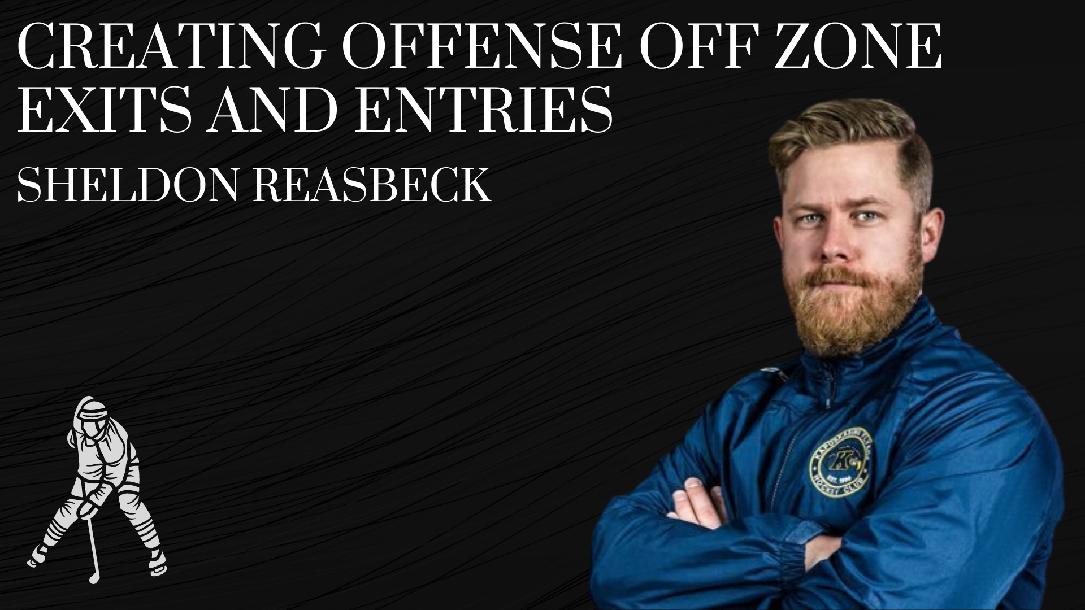
US Sports Hockey: Creating offense off zone exits and entries and NHL Playoff Highlights Panthers vs. Hurricanes Gm 5


Creating offense off zone exits and entries

Creating offense requires creativity and a speedy transition. Zone exits are meant to move the puck out of the defensive zone and into the offensive zone. While entries have units entering the offensive zone. Taking advantage of exits and entries can help you win the game. 

In this course, Coach Sheldon Reasbeck discusses how to create offense off zone exits and entries as well as the skills necessary to be successful. He goes into detail about the mid-lane drive and shot mentality. 

Simply click here ‘Book This Course’, place your order, and you’ll immediately be logged into the training with full access. Take Sheldon Reasbeck's tips and tactics to improve your offense off zone exits and entries today!

The Coach

Sheldon Reasbeck is a dedicated hockey professional with over 15 years of experience developing athletes both on and off the ice. His career combines high-level playing experience, international coaching success, and elite-level performance training credentials.

Playing Career:

  • 2 seasons with the Kapuskasing AAA Midget Flyers

  • 3 seasons at the Junior A level with the:

    • Thunder Bay K&A Goldenhawks (SIJHL)

    • Thunder Bay Bearcats (SIJHL)

Coaching Experience:

  • Head Coach of the Kapuskasing Flyers U18 AAA hockey club

  • Head Coach of the Serbian U18 Men’s National Team, capturing a Gold Medal at the IIHF Division 2B World Championship

  • Over 15 years of on-ice and off-ice player development experience

Certifications & Credentials:

  • Hockey Canada High Performance 1 trained coach

  • Certified Hockey Canada Skills Coach (Trained Status)

  • Certified Strength and Conditioning Specialist (CSCS)National Strength and Conditioning Association

  • Certified Speed & Agility Coach

Education:

  • Studied Biology at Lakehead University

  • Completed Teacher’s College in Australia

Sheldon’s well-rounded background and commitment to both skill development and athletic performance continue to positively impact players at every level he coaches.

 NYSS Twitter Be a Role Model


Wednesday, May 28, 2025

US Sports Soccer: How to Kick a Soccer Ball and LAFC Legend Carlos Vela Retires......


  • By Kieran Furse

Kicking a soccer ball is a generalized term that is an extensive topic. Unlike kicking in other sports such as football or rugby, where a 'punt' accounts for most of the kicks, in soccer, there are hundreds of different kicks depending on the situation.

Despite this fact, kicking a soccer ball is a factor of soccer that is not taught as in-depth as it should be. In this article, we will cover how to perform a perfect soccer kick in all situations on the field. This includes:

➢ First touch

➢ Short and long passing

➢ Putting curl and spin on the ball

➢ Power shooting 

➢ Chipping the ball

➢ Knuckle Ball

Without a strong foundation in kicking a soccer ball, the rest of the skills that you will learn later in your career will be more challenging to pick up. Luckily, you have come to the right place. After reading this article, you will have all the pieces to kick a soccer ball like the pros correctly.

1. First Touchouch

Undoubtedly the most overlooked skill in the game of soccer. Without a great first touch, it does not matter how good your second touch is. You would not be able to play as quickly or with as high quality if you had a good first touch. 

What does a good first touch look like?

A good first touch ultimately must set you up for success in whatever your pre-planned play is. This means it must be:

➢ Directed the way you want to pass or dribble

➢ Out of reach of defenders

➢ Out from under your feet to allow you to move and play at pace

Now the tricky part… How do you kick the ball in this situation to set you up to play how you want?

The key is to be as delicate as possible. Imagine you are playing soccer on the second story of an apartment, and you don't want to wake the person below you. You can use the outside, inside, laces, or sole of your foot depending on the way the ball is coming to you, but the idea of a good first touch is to take the pace off the ball and direct it 1-2 feet in front of your intentional stride.

How to Improve your First Touch?

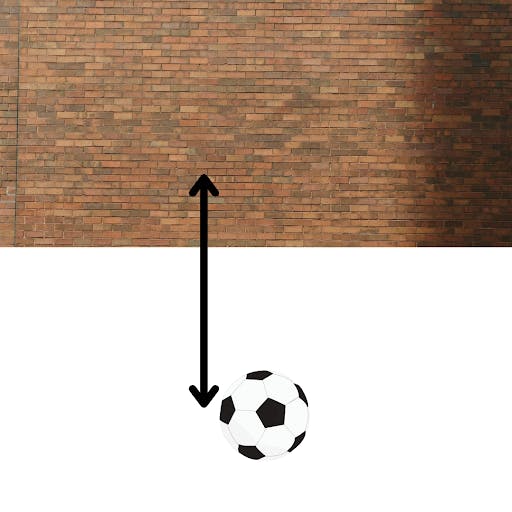
Most of your soccer heroes learned the beautiful game on the street with little to no equipment. Improving your first touch can be done as simply as kicking it against a wall. Each time the ball comes back to you, you can touch it in a different direction to work both feet. As you improve, you can start to add more power to challenge your touch. From the image below, you can see the simplicity of the day and how repetition is essential.

null

If you have more players to work with, you can begin to pass the ball to each other to make the drills more three-dimensional. For example, here is Coach Michler explaining a drill that works on the technical aspects of a first touch and pass.

2. Short and Long Passing

Short passing is the most common kick in the game of soccer. It allows teams to move the ball to a more favorable area of the field. Long passing is less frequent as it serves a more specific purpose, such as relieving pressure or counterattacking. 

These forms of passing require the same focus and foundation of kicking. However, they do differ in some forms. 

1st Difference

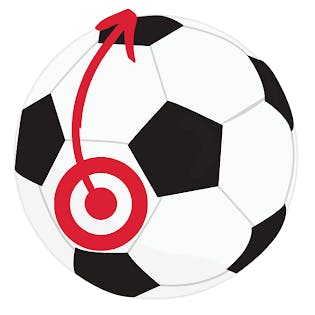
When kicking the soccer ball for a short pass, you want to get over the ball. This means my body is tilted over the ball, and I am kicking towards the top of the ball. We want to do this, so the ball stays firm to the ground to make it easier for our teammate to control it. An ideal zone to kick the ball would be here.

null

For a long pass, you will most likely want to put height on the pass to place the ball over the head of defenders and reach your target. This means you need to aim more to the bottom of the ball. You will also need to kick the ball with much more force to allow the ball to travel further.

null

2nd Differenceence

The second difference between these two types of passes is where you connect with the ball on your cleat. To allow your body to get over the ball, with short passing, you will connect with the side of the inside of your foot. 

Since you are trying to get more power and height with a long pass, you should allow your chest to be more open. The connection on the ball should also be with the joint that connects your big toe to your foot. This will allow you to follow through with a motion that propels the ball upwards at about 30 degrees.

Similaritiesties 

As with any contact with the ball, you want to plant your standing foot just to the side of the ball to allow for stability and accuracy when you pass. If you are right-footed, this will be left and the opposite if you are left-footed.

To ensure that your pass is accurate and smooth, you need to make sure that you follow through with your kick. Many people kick and stop the movement rather than following through. This harms your kick in many ways and can cause injury. 

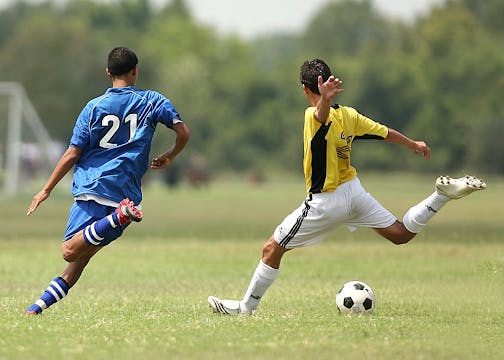
A significant factor that many players forget is the importance of the upper body in kicking the soccer ball. As you can see with this player in the image below, his opposite arm is stretched wide while kicking the ball. This allows your body to rotate into the kick, more balance, and power when connecting with the ball.

null

Locking your ankle is probably the number one term you have heard when people talk about kicking a soccer ball. This is for a good reason. When your foot is loose and wild, there is a lower chance that the ball will go where you want it. Take control of your foot by locking your ankle to make your foot stiff like a golf club.

3. How to Curl and Spin a Soccer Ball?all?

Although this may sound a bit technical, it is much simpler when you know the basics. The concept of curling a ball is due to the air pressure hitting the ball as it moves at different forces. You need to hit the ball with spin and power to create this motion. This 

superb skill will allow you to avoid obstacles and impress your friends.

Inside of the Foot CurlCurl

To create the whip of the curl, you need to stand between 90 and 45 degrees toward the ball. This will allow you to strike the ball across your body to create the curl. You also want your body to be tilted slightly to shift your weight to the side you want to curl the ball.

We want to strike the ball with the big toe joint like the long pass. However, the motion will be different, as depicted in this image.

null

For a right-footed player (opposite for left.) You want to be connecting with the ball in this area and whipping the ball back towards you to create the spin on the ball.  

To see some of the best players in the world complete this skill, be sure to check out Lionel Messi, David Beckham, or Ronaldinho.

Outside of the Foot Spin/ Curl

This skill in soccer kicking is mainly called spinning the ball because you cannot produce the whip and curl that you would in an inside foot kick. Since we are kicking with the outside of the foot, we cannot wrap our body and leg around the ball to create this curling motion.

The spin comes from the ankle joint and the foot in this kicking technique. As you connect with the ball, you want to flick your foot (right-footed players) to the right to allow the ball to spin and slightly curl that way.

null

The outside of the foot can be performed when your weight is balanced on your left foot, and you need to spin the ball around an obstacle.

4. How to Kick a Soccer Ball with Power?wer?

A power shot is often called 'shooting with your laces.' The reason for this is to perform a shot with power; you need to connect with the ball on the laces of your cleats. This is because you can get the full force of the momentum generated by your run and backswing through the ball when you kick. Unlike the curling shot, you want everything to be linear to generate as much power. This includes your run-up and body position, which you want to be straight and lean over the ball.

As with all soccer kicks, you want to follow through with your opposite arm stretched outwards for maximum balance. When connecting with the ball, you want to connect directly in the center of the ball to ensure no power is lost by missing parts of the ball. Whether you wish to produce height on the ball or keep it flat, you can adjust your contact on the ball slightly above or below the center.

Funnily enough, the best way to learn how to kick the soccer ball with power is by trying not to kick it with power. Here is a clip that explains this concept.

5. How to Chip a Soccer Ball?all?

Chipping the ball is one of, if not the most challenging skill on this list, but indeed a spectacular skill to have in your arsenal. A chip is best used to avoid an obstacle in tight spaces. Whether you need to chip it over a defender's foot in a dribble, chip the ball over a defender's head to play a pass, or chip the goalkeeper to score a goal. These examples are based around the same motion but require different levels of force to cover the height.

The motion which we are talking about is scooping the ball from underneath. To execute this type of soccer kick, we want to place our foot under the ball, quickly lift our toes to the sky, and raise our legs. This will get the ball off the ground at the desired height.

6. How to Knuckle a Soccer Ball?

How to knuckle a soccer ball is one of life's biggest questions. Taking a shot like Ronaldo or Bale is a thing of beauty. As a bonus, we would like to share this clip on how to shoot a knuckleball.

Final Thoughts on How to Kick a Soccer Ball

When learning how to kick a soccer ball, the most crucial element is focusing on the basics mentioned in this article. Do not rush the process, as, without a strong foundation, there will always be mistakes when attempting more expert skills.

Check out more about fundamentals in soccer here.

NYSS Stay In The Game