Now Streaming On US Sports Radio!

US Sports Net Today!


Live Play-by-Play, Updates, Highlights and More! on US Sports Network!
[Chrome Users-You may have to click on the play button twice to listen]
US Sports Network Powered By Gorilla Sports!


US Sports Radio
The Las Vegas Raiders Play Here
Fitness and Sports Performance Info You Can Use!
The Scoreboard Mall
The Rock Almighty Shaker Of Heaven And Earth!
The Coolest Links In The Universe!

Monday, May 19, 2025

US Sports Martial Arts: Grappling v.s. Striking: Which is Better? And Muay Thai Chaos 😤 Aliff vs. Walter Goncalves | Full Fight


  • By Owen Reilly

The UFC was originally created to determine the most effective martial art in combat. Since then, the sport of Mixed Martial Arts (MMA) has evolved with nearly every fighter involved in the sport incorporating techniques of multiple fighting disciplines and styles. However, most fighters specialize in a specific martial art or prefer the techniques of one discipline to the other. For example, Khabib Nurmagomedov specializes in sambo and wrestling while someone such as Alex Pereira prefers to keep the fight standing and strike with his opponent. These two differing styles represent an age-old debate of whether striking or grappling is more effective both in the cage and in real life. In this blog, we will review the arguments for each style and determine which is more important when starting your MMA journey.

The Case for Grappling

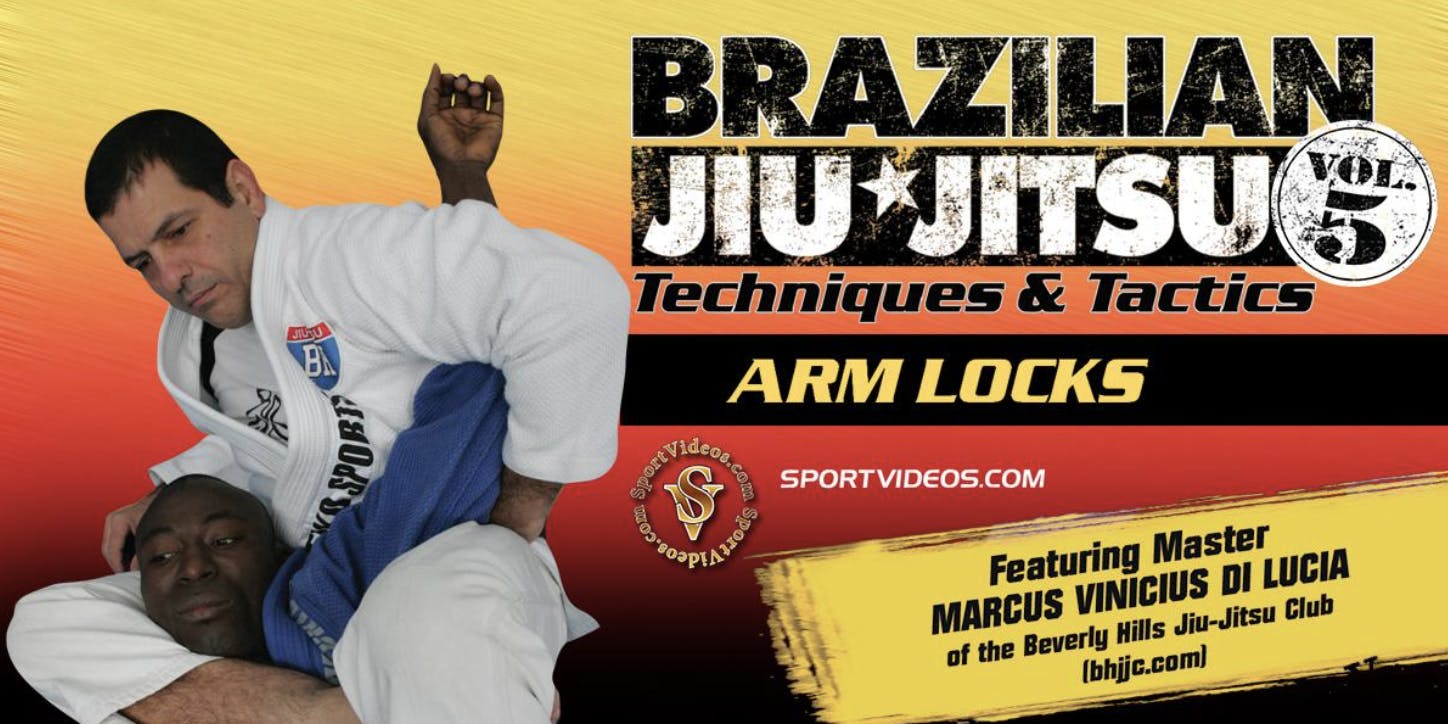
The term grappling encompasses multiple martial arts, including Jiu-jitsu, Judo, Wrestling, and Sambo, with each art focusing on taking down, controlling, and submitting or pinning your opponent. In MMA, a strong proficiency in one of these arts allows you to dictate the pace of the fight and choose where the fight takes place. Furthermore, the level of control, submission threats, and cardio that the grappling arts offer allow you to wear down your opponent through consistent pressure. Understanding how to properly close the distance, however, is a crucial skill that all grapplers must learn. Without it, grapplers will run the risk of getting knocked out when initiating takedowns or scrambles. Fighters utilizing a grappling-heavy style include Khabib Nurmagomedov, Islam Makhachev, Merab Dvalishvili, Colby Covington, and Kamaru Usman. For grappling classes taught by top coaches and fighters, check out the link below. 
null

The Case for Striking

The term striking also refers to numerous fighting styles including boxing, muay thai, kickboxing, karate, tae-kwon-doe, and karate with each discipline incorporating some form of punches, kicks, or knee and elbow strikes. The striking arts have a distinct advantage over the grappling arts in one major respect; the ability to end a fight decisively at nearly any moment. A singular well-placed strike can stop any opponent dead in their tracks. The unpredictability and the ability for a worse fighter to land a single strike and win the fights is an alluring thought that makes the striking arts incredibly appealing. The control of range that striking also teaches coupled with the fact that numerous strikes over time can wear down your opponent also make the striking arts effective. Learning takedown defense, however, is crucial to being an effective striker as you are unable to use the vast majority of striking techniques while on your back. Examples of strikers in MMA include Israel Adesanya, Alex Pereira, Anderson Silva, Sean O’Malley, and Connor McGregor. To look at online striking courses taught by some of the best in the world, click the link below.

null

Historically speaking, grapplers have tended to dominate the MMA landscape with the original UFC events featuring winners such as Royce Gracie and Ken Shamrock. Grappling has continued to dominate the MMA scene with the above-mentioned fighters reaching the pinnacle of the sport through their grappling abilities. Recently, however, fighters including Leon Edwards, Israel Adesanya, and Alex Pereira have proved that elite striking coupled with strong takedown defense can win fights against elite grapplers. Truthfully, to be successful at the professional level, being well-rounded is absolutely necessary. Relying on one specific style too much can expose holes in your game that opponents can exploit. But which is better? Especially at the amateur level, grappling still proves to be the most effective path to victory. When fighting a ‘pure’ striker, grappling offers a relatively easy path to victory assuming one can properly close the distance to clinch with or takedown the opponent. The unpredictability of striking makes grappling a safer and more secure route to neutralize your opponent. Strikers have more opportunities to end the fight faster but become vulnerable when put on their backs. As a grappler, you can negate a striker's game plan completely with a single takedown. Despite this, a striker with very strong takedown defense can be an absolute nightmare for a ‘pure’ grappler.

Sunday, May 18, 2025

The Rock Almighty: Modern Day Faith-based Parenting Style for Unruly Children and Faith In Action!


Listen on Apple Music
  • Author Taibat Fasina

Creating a modern, faith-based parenting approach for unruly children focuses on combining principles of love, discipline, grace, and responsibility. This approach acknowledges the unique challenges of raising children while incorporating faith values to guide and shape behavior. Here’s a holistic approach:

  1. Emphasize Love and Connection-

a. Unconditional Love: Reflect God’s love by showing unconditional affection and acceptance, regardless of behavior. Children need to know that their worth isn't based on their actions, but that their actions have consequences.

b. Bonding and Time: Spend quality time with your children. When children feel loved and understood, they are more likely to respond positively to guidance.

c. Active Listening: Engage in open conversations with your child, listening to their concerns, frustrations, and emotions. This fosters mutual respect and trust.

  1. Discipline Rooted in Grace-

a. Firm Yet Loving: In line with Scripture, discipline should always be firm yet full of grace. In Proverbs 3:11-12, it says, “Do not despise the Lord’s discipline, and do not resent his rebuke, because the Lord disciplines those he loves.” Children need structure, but it should come from a place of care.

b. Natural Consequences: Let children experience natural consequences where appropriate. If they don’t do their homework, they may face academic consequences; if they disrespect others, they may face social consequences. This helps them connect their actions to real-life outcomes.

c. Consistency: Be consistent in your expectations and discipline. If a boundary is set, it should be upheld with love, but without wavering.

  1. Teach Responsibility and Accountability-

a. Self-Control: Encourage children to take ownership of their behavior and decisions. Galatians 6:5 reminds us, "For each will have to bear his own load." Help your child understand the importance of managing their actions, emotions, and choices.

b. Apologize When Necessary: Model humility by apologizing when you’ve made a mistake. This demonstrates to your child that making amends is part of living out faith.

c. Empathy and Compassion: Teach children to consider how their actions affect others. Teach them that the foundation of faith is love and kindness (Matthew 7:12 – "So in everything, do to others what you would have them do to you.").

  1. Set Clear Boundaries with Flexibility-

a. Firm Boundaries: Set clear, loving boundaries that reflect your values and faith. For example, if a child is being disrespectful, calmly set the expectation that disrespect will not be tolerated.

b. Flexible Problem Solving: While the boundaries should be firm, allow for dialogue. Maybe a child is acting out due to a deeper issue. In those moments, be open to listening to why they feel or act a certain way, and work together to solve problems creatively.

c. Redirect Unruly Behavior: If a child is misbehaving, offer positive redirection. Instead of focusing solely on the punishment, guide them toward alternative actions, such as taking a break to calm down, or helping with a task.

  1. Incorporate Faith into Daily Life-

a. Scripture and Prayer: Use scripture to teach values and principles. Ephesians 6:4 encourages fathers to “bring them up in the training and instruction of the Lord.” Regular family prayers and scripture reading can become a way of teaching moral values while also strengthening the family bond.

b. Faith-Based Teaching Moments: Use everyday moments as opportunities to teach faith. For example, if your child is frustrated, talk about patience and how God helps us be patient. If they’re angry, teach about forgiveness.

c. Modeling the Fruit of the Spirit: Live out the values of love, joy, peace, patience, kindness, goodness, faithfulness, gentleness, and self-control (Galatians 5:22-23). Your actions will speak louder than words.

  1. Develop a Routine and Encourage Structure-

a. Routines Provide Stability: Having a consistent daily routine helps children feel secure and understand what is expected of them. For example, setting times for meals, homework, chores, and rest can bring order to a potentially chaotic situation.

b. Balance Freedom with Structure: Allow space for children to express themselves, but always within the framework of respect and responsibility. Too much unstructured time can lead to disobedience or boredom, which can lead to unruliness.

  1. Be Patient and Prayerful-

a. Patience with Growth: Remember that growth takes time. Children are learning and developing. Be patient, remembering that mistakes are part of the learning process.

b. Pray for Wisdom: James 1:5 says, "If any of you lacks wisdom, let him ask of God." Parenting can be incredibly challenging, but prayer for guidance and wisdom can help you make better decisions.

c. Pray with Your Child: Include your child in prayer, especially when they are facing challenges. This can help them feel supported and reminded of God’s presence in their lives.

  1. Use Positive Reinforcement-

a. Praise Good Behavior: Focus on encouraging positive behavior. Recognize and celebrate when your child makes good choices, listens, or helps others. Positive reinforcement encourages them to continue those behaviors.

b. Offer Opportunities for Growth: Give your children chances to take on age-appropriate responsibilities. Let them help with chores, contribute to decisions, or even serve in the community. This helps them develop a sense of responsibility and accomplishment.

  1. Create a Safe and Nurturing Environment-

a. Safe Space for Expression: Children need to know they have a safe space to express their feelings and struggles. Be open to hearing about their challenges without judgment, while offering guidance rooted in faith.

b. Foster Respectful Relationships: Encourage your children to respect you, each other, and authority figures. Emphasize that respect for others is a reflection of their respect for God.

c. Incorporating these elements into your parenting style can help you raise children who are not only well-behaved but also grow spiritually, emotionally, and socially. Remember, the goal is to be both a loving guide and a faithful example for your children to follow. Let them experience God’s love through your actions, and be patient as they learn to apply faith-based principles in their own lives.

Taibat Fasina is a dynamic content writer with a passion for storytelling that spans across multiple mediums. With a keen eye for detail and a knack for crafting compelling narratives, she excels in writing, translation, and transcription.

Saturday, May 17, 2025

US Sports Volleyball: Master the Perfect Volleyball Approach – Jump Higher & Hit Harder and Savvy/Van Winkle vs. Toni/DeBerg Semi Final Highlights Xiamen


  • By Sam DeJoseph

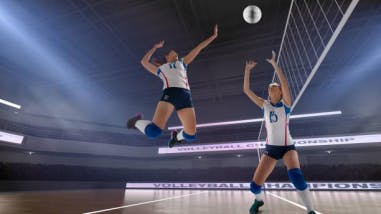
The Three-Step Approach: 

The three-step approach is perfect for any volleyball player to increase their hitting ability. It not only allows players to jump higher but also hit harder,  more accurately, and consistently. It is the framework for any good hitter's skillset! 

First Step: 

Purpose: This step generates forward momentum and sets up your approach direction. 

Execution: 

• To start, make sure you’re in a good athletic stance, your knees should be slightly bent, and your weight is on the balls of your feet, ready to move forward.

• Take a strong, controlled step forward with your dominant foot (right foot for right-handed hitters, left for lefties); this step should allow you to get going in the direction of the ball. 

• Ensure that your eyes stay locked on the ball and your arms are relaxed out in front of your body to prepare for the next explosive movement in the second step. 

Key Tip: This step is not based on speed. The main goal is to gather yourself and prepare for the following two steps, which will need to be very explosive!


Second Step: 

Purpose: This step is where you will gain speed and power to explode into the jump. 

Execution: 

• Your non-dominant foot (left foot for right-handers, right foot for lefties)  moves forward and slightly out. This should be a big, loaded step with your knees staying bent. 

• Increase the speed and momentum of your step, leaning slightly forward to prepare for your takeoff. 

• Swing your arms back; this will help you load energy for a powerful arm swing into the jump. Your arms swinging back and up is one of the most important parts of any approach! 

Key Tip: This step should feel explosive and dynamic—like you're building up for an unstoppable launch! 

Third Step: 

Purpose: This is the final step; it should be a strong step that shifts your momentum forward, but also upward. 

Execution: 

• Anchor your final step in front of yourself  

• Bend your knees and push through the ground with maximum force. • Swing your arms forcefully, helping with lift-off. 

• Keep your core tight, eyes on the ball, and prepare to attack with full power!

Key Tip: Think of yourself as a rocket—you’ve built the speed; now explode upward with everything you've got! 

The Jump: 

The jump is the culmination of your approach, using all the momentum you have built up, swing your arms up, and use your explosive approach to jump to your maximum height! 

If you want to learn more about how to master your approach and use it to up your game to new heights, click the link above and learn from Coach Santiago  Restrepo! 

By following these tips, we guarantee that it will make you a much more explosive jumper, but they will also allow you to hit the ball much harder.

NYSS FB Be A Role Model
Want to help kids find sports they love? Sign up to be a
 coach or volunteer in a local youth sports program. Learn more ways to 
support youth sports in the National Youth Sports Strategy: https://bit.ly/2lIHPUc

Friday, May 16, 2025

US Sports Softball: How to Perfect Pitch-Calling For Your Softball Team and WCWS predictions from the 2025 college softball bracket


  • By Grant Young

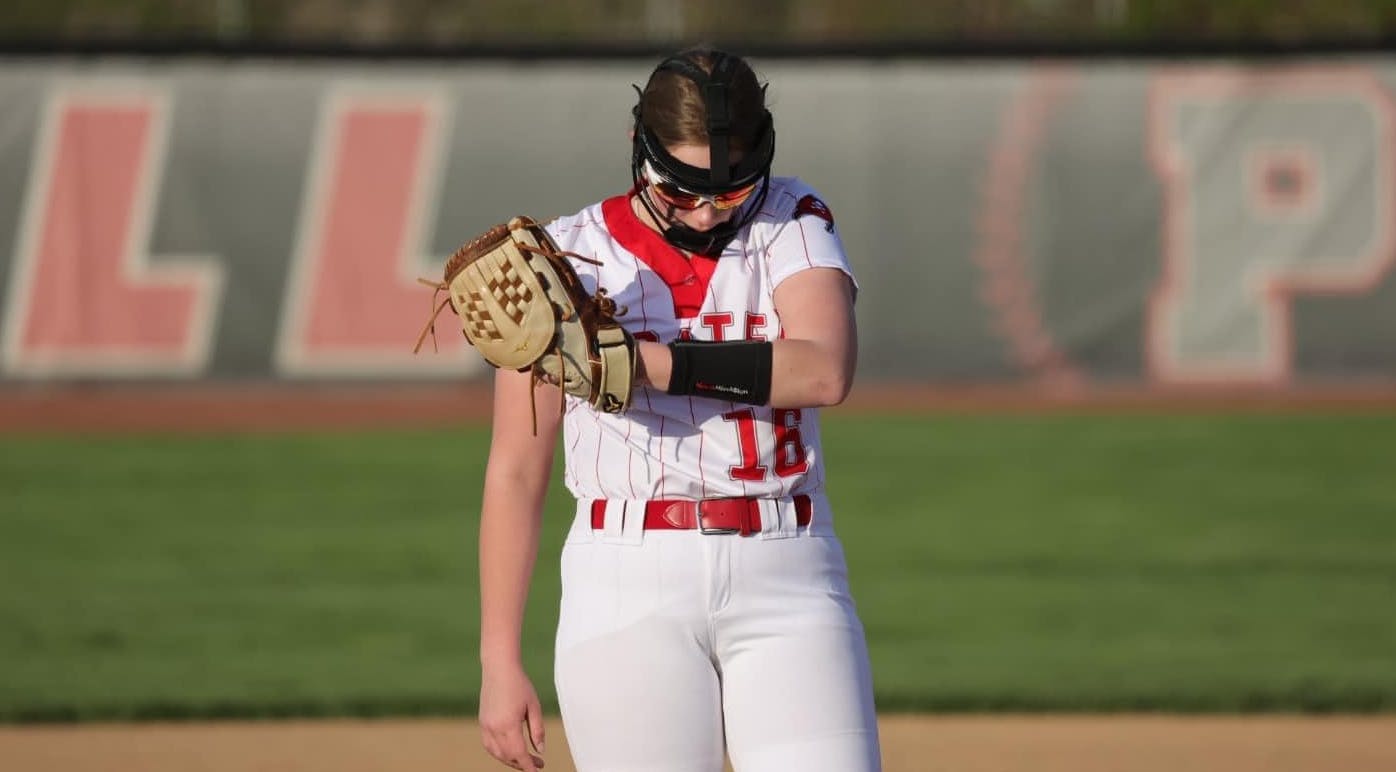
Calling pitches in softball can be one of the most challenging parts of being a softball pitching coach, regardless of which level you’re coaching at. 

There are various factors as to why pitch-calling presents a unique challenge. The pitching coach must take into account the batter's strengths and weaknesses, the game situation, and the team's overall strategy—all of which must be communicated to the pitcher and the catcher, who are often the ones who are making the final decisions on which pitch to throw.

Furthermore, the pitcher and catcher need to be in sync, which can be difficult in noisy or hectic game environments. Lastly, maintaining control and accuracy while keeping the batters guessing is crucial, and achieving this balance can be quite demanding.

There are some obvious times when calling a fastball makes the most sense, especially when you want to surprise the batter or when you need to bring the heat to challenge a strong hitter. It can also be useful in situations where you are ahead in the count and want to maintain control. Additionally, using a fastball early in the game can help establish dominance and set the tone for the rest of the match.

Yet, if you as a pitching coach believe calling a fastball in a situation is a no-brainer, the opposing hitter is likely thinking the same thing. This is why it’s crucial to understand when to break your typical pitch-calling patterns. And Amy Hunt can help you learn when and how to do so effectively. 

Coach Hunt has spent recent years working as a part-time Assistant Coach for Messiah College softball.

She was formerly an assistant coach with the team in 1998, where Messiah went to their first NCAA Final 6. Amy then continued her education, as she was a graduate assistant for the Marietta College softball team in Ohio.  She moved on to coach at Catoctin High School where she was the assistant coach for 1 year and head Varsity Coach for 6 years.

Coach Hunt has made a career out of trying to perfect pitch-calling. Her ‘Championship Pitch Calling System for Pitching, Catching and Coaching’ course is a great resource for any prospective pitch-callers at any level of softball. 

Why do STATS matter? 

Coach Hunt explains that being able to read and understand certain statistics makes a world of difference when trying to call pitches. 

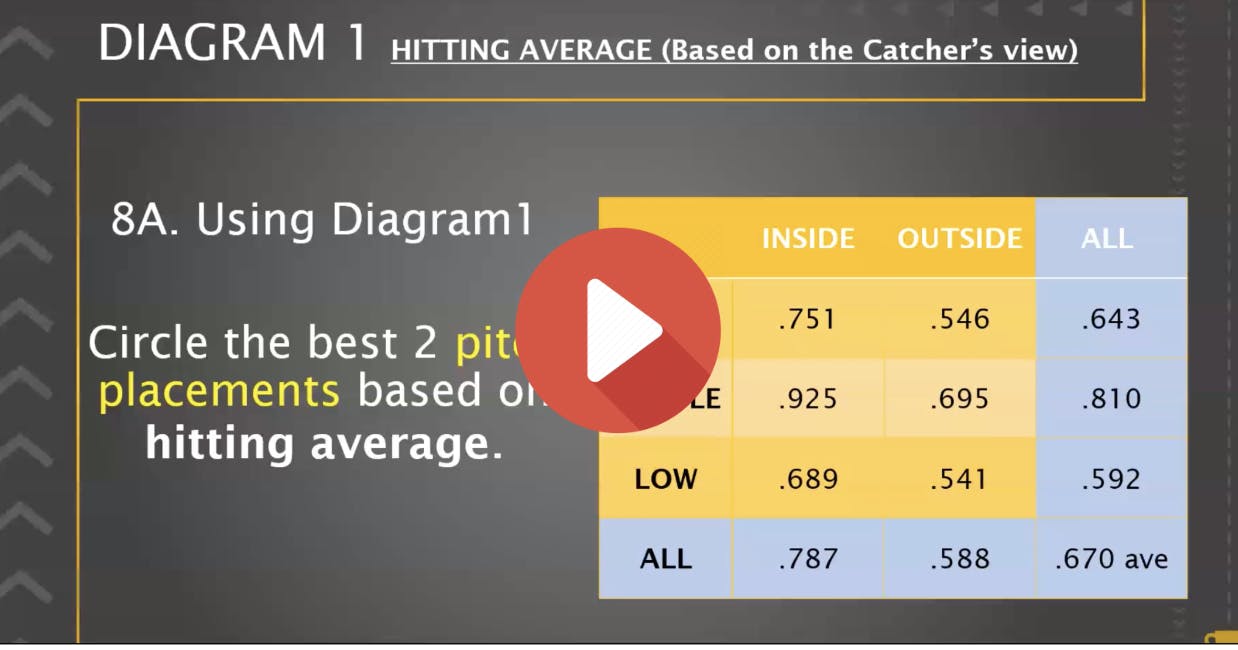
One of the most important statistics to know is what a hitter’s hitting average is within the nine segments of the strike zone. Because every hitter is going to have a slightly different stance, goals at the plate, and preferred areas, having (and then using) information about how which pitch locations they hit will at and which they don’t can make a major difference in success on the mound. 

Coach Hunt makes it clear that a hitting average isn’t the same thing as a batting average, which is the more commonly used statistic. The difference between these is that, while a batting average measures a batter's performance by dividing the number of hits by the number of at-bats, a hitting average is simply the number of times they make contact with a ball in a certain area. 

This is crucial because it doesn’t take uncontrollable factors into account (like if a player hits the ball weakly but still gets a hit) like the batting average does. It will give an accurate indication of a player’s ability to make contact at the various segments of the strike zone. While collecting hitting average stats might sound difficult, it’s actually simpler to calculate than the batting average. A coach can just watch a recent hitter’s at-bats and chart what pitches they’re making contact with. 

Pitch Location - Pitch placement is CRITICAL!

null

Of course, any pitching coach or pitcher knows that the worst place to position a pitch would be in the middle of the strike zone. And it’s typical knowledge that throwing the ball on the outside corner is usually a great option.

But not enough thought is put into whether a pitch should be thrown at the top or bottom of the strike zone. Typically, a pitcher will always try to aim for low in the strike zone. And while that’s a good base strategy to have, the ability to throw a pitch for a strike at the top of the strike zone can spell the difference between a good and great pitcher. 

Even if a pitcher is just able to throw an occasional fastball at the top of the strike zone (or even above the strike zone, in a two-strike scenario with less than three balls), hitters love swinging (and missing) at pitches in this location. It will also adjust their eye level so they don’t get too comfortable with/can sit on a pitch that’s lower in the strike zone. 

Learning about Batter Weaknesses

As we mentioned previously, charting each batter’s hitting average will give you a good indication of where they like to hit the ball. But another integral part of this charting strategy is that it will likely give you an insight into what an opposing team’s coach is teaching their hitters, as it pertains to their hitting approach. 

If you notice that a team very rarely swings at non-fastballs low in the strike zone or on the outside corner, that is likely because their coach is instructing them to take those pitches. You will then be able to exploit that by focusing on throwing off-speed pitches either low or away, which will force the hitters to make adjustments.

NYSS Twitter Be a Role Model
Want to help kids #GetActive through youth sports? 
Learn how parents, coaches, and volunteers can get involved in 
@HealthGov’s National #YouthSports Strategy: https://bit.ly/2lIHPUc

Thursday, May 15, 2025

US Sports Golf Feat. Three Priceless Tips From a Golf Legend and Final Round Highlights 2025 Mizuho Americas Open


  • By Grant Young

Getting into golf can be quite daunting for several reasons. First, mastering the sport demands unwavering dedication and a willingness to invest time and effort in honing your skills. Secondly, navigating the multitude of equipment options can be overwhelming for beginners.

Plus, the cost of golfing (particularly when factoring in green fees and equipment expenses) can be a deterrent for many. Understanding the intricate rules and etiquette of the game (and getting into a proper golf mindset) might also be difficult for newcomers to comprehend. 

Despite these obstacles, the gratification and enjoyment that golf offers make overcoming these challenges well worth the effort, proven by golf becoming the preferred hobby for countless people worldwide. It's a sport that can be enjoyed at any age, making it a lifelong pursuit that offers opportunities for continued growth and improvement. And the beauty of golf courses and the sense of accomplishment that comes with mastering a difficult shot all make the experience incredibly fulfilling.

All of this is to say that overcoming the initial struggles of getting into golf is incredibly worthwhile if you decide to stick with it. And with a few fundamental golfing tips, you can get over your rookie woes and fall in love with this magical sport even sooner. 

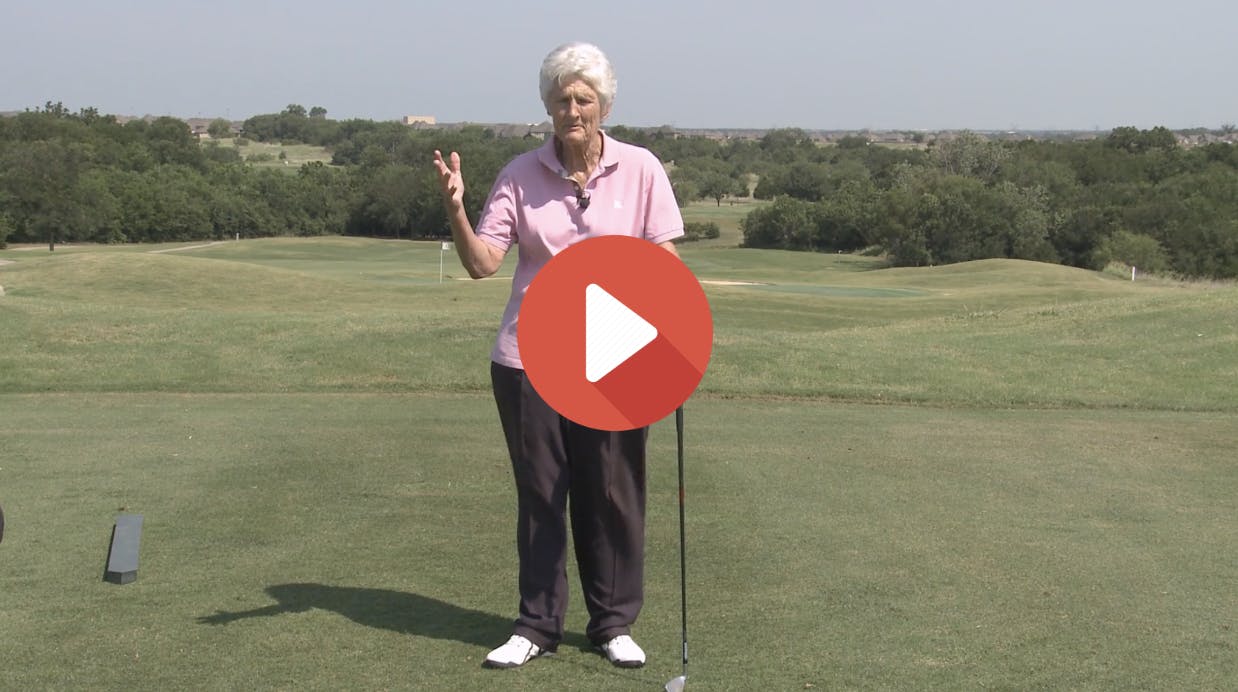
And Kathy Whitworth has a few tips that will speed up your path to golfing expertise. 

With 88 career wins, Kathy Whitworth holds the all-time record for both men's and women's U.S. Golf Tours. She also finished in second place in 95 tournaments. Kathy's professional golfing career spanned 32 years, from 1959 to 1991. She is the first woman to earn a million dollars in LPGA tournament play. Kathy Whitworth is a seven-time LPGA Player of the Year and has won six Major Championships. She was the Associated Press Athlete of the Year in 1965 and 1967 and was inducted into the LPGA's Hall of Fame in 1975.

With her professional career now behind her, Coach Whitworth now spends her time passing her decades of elite gold knowledge on to future generations of players. And her ‘Golf Tips and Techniques Featuring Kathy Whitworth’ course is a gold mine of information about how you can boost your golf skills.

How to Aim

Coach Whitworth has a few great tips on how to improve your aiming so that your golf shot is more accurate. 

She notes that a common mistake many beginner golfers make is that, while they’re looking at a target before shooting, they’re not actually aiming at that target. 

Once you do decide on a target to aim for, Coach Whitworth notes that you should then line your club’s blade up with the ball then square your body off to an imaginary straight line to where you are aiming. 

Another important lesson Coach Whitworth imparts is that the habit of aiming must begin on the driving range. Often golfers will just be focused on their swing while at the driving range and won’t care about where the ball goes. While it’s important to be feeling attuned to your swing, you should also be aiming for specific targets while shooting. If you don’t do this, you are going to get on to the golf course and not be used to aiming for a specific target, which will make your accuracy suffer. 

When trying to decide where to aim, it’s best to stand behind the ball (like you’ll often see professional golfers doing on TV) to get a clear, straight-on view of the course in front of you, and how you should approach it. 

Pre Shot Routine

null

Having a pre-shot routine is integral to any golfer’s success. As Coach Whitworth mentioned previously, the first part of any golfer’s pre-shot routine is standing behind the ball and taking a look at the course before them, which will help forecast where the golfers should aim their next shot. 

On approaching the ball, the golfer will want to square themselves up to the target they are aiming at. 

From there, the golfer should have enough of a basic pre-shot routine to get themselves ready to shoot. But golf is also a superstitious game, and many golfers have habits or other things they will want to do before lining up for a shot. This could be establishing a steady breathing pattern, stepping up to the shot a certain way, adjusting their hat, or anything else. 

These types of rituals are going to be different for any golfer and certainly aren’t necessary for succeeding. But because golf is such a mental game, anything that a golfer can do to make themselves confident in themselves and their next shot is worth doing — even if it may look like a silly habit from the outside looking in. 

Long Putts

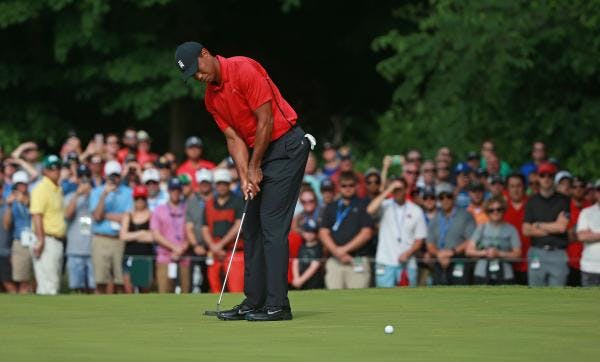
For higher-level and professional golfers, being able to make a long putt can often be the difference between winning and losing a tournament. And for beginners, all it takes is one made long putt for a whole afternoon at the golf course to feel worthwhile. 

One of Coach Whitworth’s tips when approaching longer putts is to trust her eyes when it comes to what the shot’s distance is and how hard she should hit the shot.

In addition, Coach Whitworth explains that a major key is to have one’s eyes over the ball while they’re putting to have a perpendicular stroke. 

At that point, the golfer will want to take a good look at their club to ensure that the blade is square, and is going to connect with the ball straight on. 

Reading the green is also important because it will help you figure out how to adjust your putt. Just like when gauging distance, your best bet in doing this is by trusting your eyes.

NYSS Stay In The Game
Want to help kids stick with sports? Prioritize fun and
 #PhysicalActivity over competition in #YouthSports programs. Learn more
 in @HealthGov’s National Youth Sports Strategy: https://bit.ly/2lQ85f6

Wednesday, May 14, 2025

US Sports Hockey: 3 Hockey Battle Drills to Improve Compete Level and Team Chemistry and NHL Playoff Highlights Jets vs. Stars Gm 4


  • By Jackson Chlebowy

In hockey, competition is at the heart of success. Players need to have a competitive mindset not just for individual success but for the teams' overall performance. Players who embrace the competitive mindset push themselves to work harder than their teammates and opponents. They get to the dirty areas of the ice and win more puck battles. These players are fearless and relentless, willing to do whatever it takes to make a play. Developing and nurturing this mindset in practice with drills will translate to better performance in games when it matters most. Not only does it teach players critical skills, it can be a fun way to build team chemistry. 

Hard work outperforms skill. Foster a culture of hard work and effort, and your team will reap the benefits. The players' ability to compete will ultimately dictate the collective team's success on the ice, making it essential for coaches to integrate competitive drills and real-game scenarios into their practice plans. 

Coach Chris Laperle, an accomplished former collegiate hockey coach, offers up his insight on the small area game in his free course of the same title.

Small Area Battle Drill – Coach Chris Laperle

Coach Laperle is a decorated collegiate hockey coach, being behind the bench of 7 total championships across three different North American universities. Most recently, winning the national title with McGill University. In more recent years, he has turned his attention to youth hockey coaching and managing the Cleveland Barrons AAA hockey organization. 

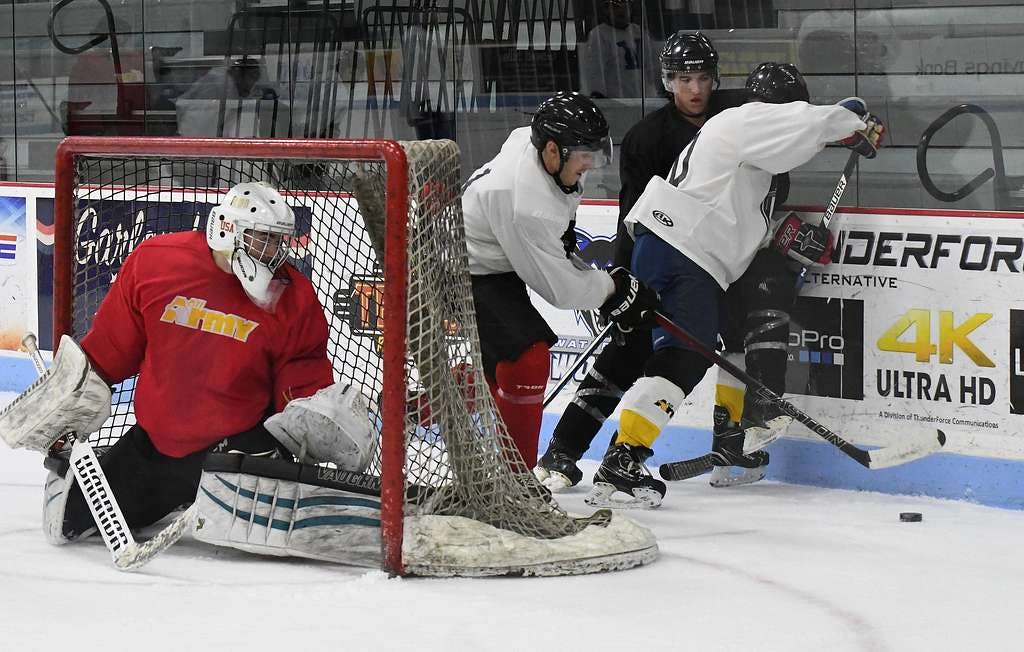
Chris’s small space battle drill is simple yet extremely effective at simulating the physicality and required precision for game scenarios. Place a net in the corner a couple of stick lengths from the boards. A puck will be dumped in for two players battling for a shot on the net. Line up all of the extra players around the outside of the playing area. Allow them to pass and slap the puck if it is loose or is wrapped around the boards. 

If the puck is scored, throw in a new puck. You want the players to be tired; you want them to have to work hard, so make them earn the end of the drill. You can do this by keeping score, first to score or first to get three shots on goal wins the matchup. 

This is a fun yet intense game that forces players out of their comfort zone. For young players still developing their physical game, this drill is a great way to introduce body contact in a competitive environment. As the saying goes, practice how you want to play. If you want your team to play with more intensity, with an edge, and with urgency to win in high-pressure situations, you have to practice like it. 

Coverage/Uncoverage Drill – Coach Marc André Dumont

null

Coach Marc André Dumont is a seasoned and successful coach with more than 20 years of experience in the QMJHL. Coach Dumont has served as the head coach of the Val-d'Or Foreurs and Cape Breton Screaming Eagles with more than 700 games of experience. He has also served as the assistant coach for Team Canada at the 2019 World Junior Championships and the 2020 Youth Olympics. His focuses have shifted in recent years, focusing on youth player and coach development. He currently serves as a hockey development director in Quebec for a top-tier 18U AAA team. 

Coach Dumont lays out his four basic skills (Physical, technical, mental, and systematic) for hockey development in his course ‘4 Basic Skills to Enjoy the Game and to Develop as a Player with Marc André’. 

Dumont’s Uncoverage drill is a great example of drills that foster a competitive environment in practice. The drill itself is simple and can be simplified further depending on the skill level you are coaching at. The drill requires at least 4 players but can be done with up to 8 players. 

Run the drill for three rounds of this uncoverage battle between the offenseman and the defenseman. There will be three passes coming from alternating defensemen throughout the drill. If the offensive player receives the pass, their goal is to shoot or beat the defender to the net for a scoring chance. If the pass is not received, or the defenseman breaks up the pass the next round immediately begins. The drill can be made more challenging by making it 2on2 or even 3on3.

In addition to body positioning, net front battling, tight space passing, and quick shooting, this drill emphasizes the importance of effort and competition in hockey. Breaking down real game scenarios into high-intensity drills like this one helps make players aware of “the game within the game”.  It will be impossible to get open or to cover the opponent without putting forth a strong effort. 

Players need to understand that even without the puck on their sticks, hard work, grit, and determination will help make themselves more available to their teammates and more dangerous for their opponents to deal with.

Battle Royale

The Battle Royale drill is a great way to end practice to reinforce all the skills and drills you worked on throughout practice. The drill starts with every player in the center circle, along with several pucks (a few more than the number of players). On the coach's whistle, the players will battle for pucks. Let the players battle for 60-90 seconds before blowing the whistle again. The players without a puck are out of the drill. Repeat this until you are down to 2-4 players. 

Battle Royale allows players to play to their strengths in puck protection, evading pressure with the puck, and overall defensive skills. Some more physical players may choose to use their bodies to protect their puck, while the smaller, more skilled players can attempt to dangle and outmaneuver their opponents. However they choose to do it, they have to work hard.

NYSS Find Their Strengths
Sports help kids build confidence and grow into 
healthy, active adults. Learn how organizations, communities, and 
policymakers can use @HealthGov’s National #YouthSports Strategy to 
support youth sports: https://bit.ly/2lQ85f6

Tuesday, May 13, 2025

US Sports Soccer: Best Soccer Defense Drills and Vancouver Whitecaps FC vs. LAFC Full Match Highlights


Best Soccer Defense Drills

  • By Damilare Ilyiade

A team’s defense that is too susceptible to the opposition’s attack is most likely to concede lots of goals and lose matches even if they have got the best forwards in the league. This is why teams need to make use of efficient soccer defense drills if they want to stand the chance of having one of the strongest backlines in the beautiful game.


Aside from that mentioned above, soccer teams that are highly knowledgeable in soccer defense drill tactics and techniques of playing defense during a match are more likely to have the ball and be able to create chances.

 What are the Fundamentals of Coaching Defense?

 Apart from the fact that pressure, cover, and balance make a defense keep good shape, those attributes are the foundations when creating soccer defensive drills. 

 How do these Three Factors Differ from Each other? 

 The closest defender to the ball in a soccer match have always been taught to apply pressure to the ball. This could force the attacker into a mistake or the dispossession of the ball from the attacking player’s end. Both the pace of the press and the direction are factors that can influence whether the defender wins the ball or not.


Balance is the ability of a team to position itself in an excellent defensive posture to prevent the switching of the ball to off-balance the defense.

Cover as a defensive positioning gives instant support to the pressuring players by positioning themselves near the pressure.

 In this section, you will learn top-notch defensive soccer drills that will help you make your players work as a unit at the back without leaving out interesting ways they can help their defenders react in different defensive situations. 


Teaching 1st Defender without Opposition

null

Objective

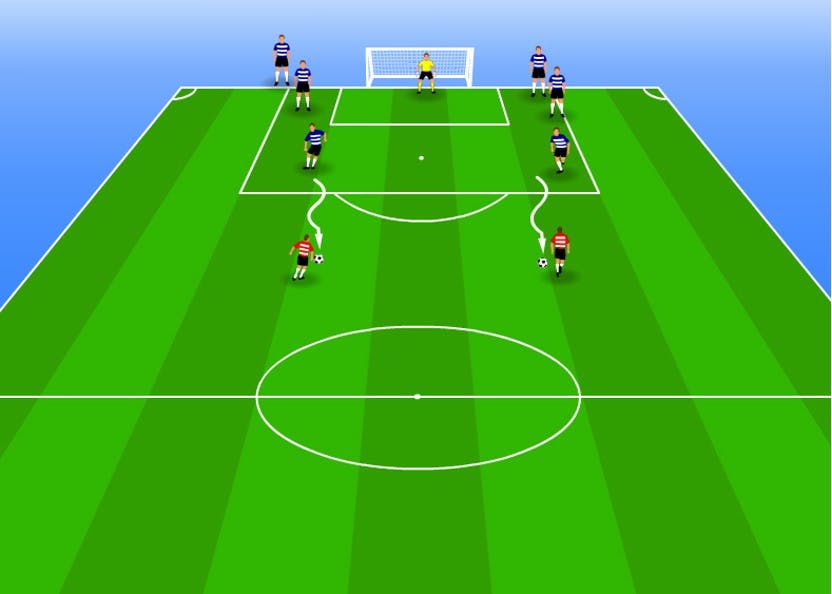
The objective of this drill is to let young defenders understand the necessary things they need to do when they are the closest to an opponent with the ball. 

 Set-Up

A fully-sized goal is needed for this drill. The next thing you need do is to separate the team into two groups of defenders to start on both sides of the goal and also make sure that two attacking players with the ball are positioned outside the penalty area on both sides of the attacking final-third of the field. 


Execution

The first defender on both sides of the goal progress forward to close down their respective attacker once the coach gives a command. 

Their focus should be on a fast-controlled approach.

The defenders should also be instructed to position their bodies between the ball and the middle of the goal.

All of this is needed to help the players work on the speed of the approach, body posture, and positioning. 

4-5 times of this drill should be enough for each of the players or you can also make them continue trying it out until they are comfortable with approaching the attacker.

Coaching Tips

Ensure that the body positioning of the defenders is between the goal and the ball. This drill is aimed at helping close down space quickly at a fast-controlled approach. 


Defensive Speed Course

null

Objective

This fitness training-related drill is centered around improving defensive speed and quickness in front of the goal. 


Set-Up

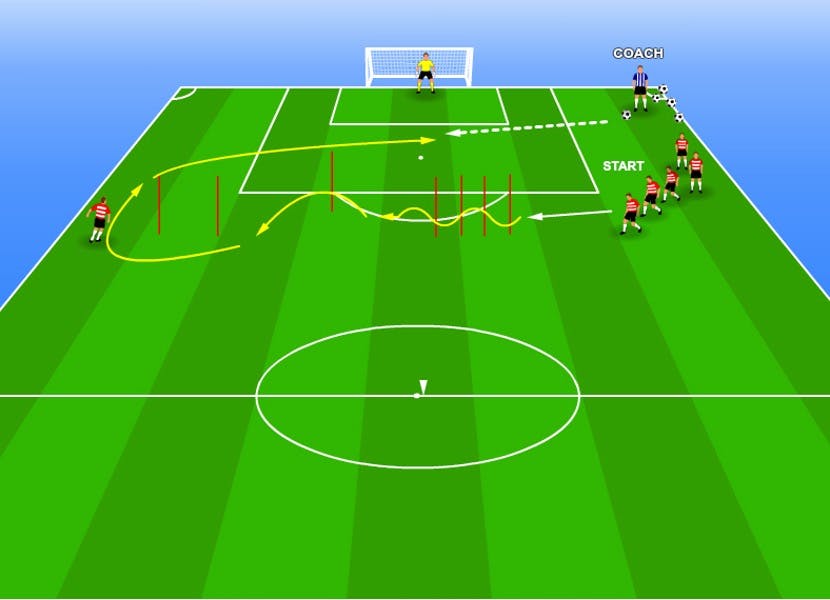
Make sure the defensive players are lined up at the right corner of the 18-yard box and set up six to eight 6ft training hurdles with 2-yards equidistant apart from each other. The next thing to do is to mark off 5-yards and place a training stick there. Having done that, mark off another 5 yards from the last training stick and set a second training stick at a 45-degree angle away from the goal. Finally, put the last training stick about 5 yards directly towards the sideline from the last.


Execution

The responsibility of the coach is to tell the players to quickly double step over each training hurdle and ensure that each of their feet is placed in between each hurdle.

The players are to sprint to the first training stick as soon as they have exited the last training hurdle. 

Around the first training stick, every player must follow a quick 45-degree cut and move towards the second training stick. Note that this should also be repeated when heading towards the last training stick too.

Upon reaching the third (last training stick), the players are to make a 

90 degree cut and sprint towards the top of the 6-yard box.


Coaching Tips

This drill enhances fast feet, sharp turns, and also tests defensive players’ speed and quickness. 


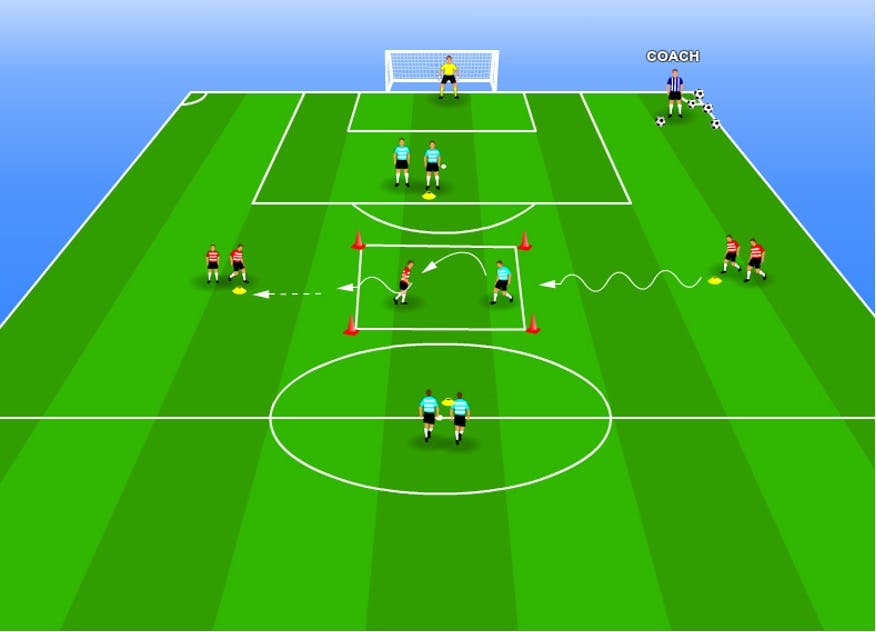
1v1 Defending the Dribble

null

Objective

1v1 defending the dribble is designed to help isolate the defender to concentrate on the first defender and defending the dribble


Set-Up

You are to create a 10X10 grid with a cone put at each side of the grid 10yards apart and use pinnies (yellow/red) to separate the two teams equally into two groups (two players in each group). Facing the middle square, ensure each of the teams is line-up on the cones opposite one another. In addition, put a defender inside the middle grid. A player starts as the defender and another team is made the attacking team depending on how you choose your pinnies. 


Execution

The attacking team aimed at dribbling at the defender and also dribbling through the other side of the grid by beating the middle defender.

The player plays to the first player in the line he’s facing he has successfully made it through the grid and out the other side by dribbling. 

If the defender wins the ball from the next player, or the ball is knocked out of the grid, the player that loses the ball turns to be the new defender.

On the other hand, the player that won the ball or made the ball to be kicked out of the grid passes the ball to a teammate in line who now becomes the new attacker against the new defender in the middle in an attempt to get through to the other side and pass to the next player in line.


Coaching Tips

It is highly recommended that defenders should always concentrate more on important things such as bent knees with weight on the balls of the feet, chest leaning over the toes, staggered stance with toes at a 45-degree angle, ability to shuffle quickly, and other related key elements when defending 1v1's in soccer. 

As the saying goes... attack is the best form of defense. This is completely true, when you win the ball, if you can keep it away from your opponent then there is nothing for you to defend. Of course, when you have the ball you want to attack and create chances. In this clip, coach Leonard Griffin explains ways to build out from the back.

NYSS FB Focus on Fun
Youth sports are a great way for kids to get physical 
activity – and have fun with friends and family. Whether you’re playing a
 game with your kids or coaching a youth sports team, make fun the #1 
priority. Learn about the National Youth Sports Strategy and how you can
 get involved: https://bit.ly/2lIHPUc