Now Streaming On US Sports Radio!

US Sports Net Today!


Live Play-by-Play, Updates, Highlights and More! on US Sports Network!
[Chrome Users-You may have to click on the play button twice to listen]
US Sports Network Powered By Gorilla Sports!


US Sports Radio
The Las Vegas Raiders Play Here
Fitness and Sports Performance Info You Can Use!
The Scoreboard Mall
The Rock Almighty Shaker Of Heaven And Earth!
The Coolest Links In The Universe!

Sunday, April 20, 2025

The Rock Almighty: Happy Easter - How does God come into someone’s life? And Skillet - Awake & Live (2013) Full Concert


Listen on Apple Music

  • Author James Rondinone

Introduction

What inspired me to write about this topic was a conversation I had with a friend who was a Spanish teacher at the same high school where I taught mathematics. Being devout to a particular faith, he occasionally asked me about my relationship with God, which differed significantly from his.

I told him that in my youthful years, I would attend a local church with my parents, having participated in the various aspects of it. Initially, I was baptized (sprinkled) in water as a baby, which according to their doctrine causes an infant to become a child of God or a son of light. First comes repentance that the parent(s) of the child provide. And afterward, at the time of the sprinkling, the congregation would be praying for the Holy Spirit to show up. This, they argue, would bring about the forgiveness of sins.

John 3:5 Jesus answered, Verily, verily, I say unto thee, Except a man be born of water and of the Spirit, he cannot enter into the kingdom of God.

Literal water, along with the reality of the Holy Spirit, would allow an infant to enter God’s kingdom. This, they’d say, is the baptism that now saves us as supported by Scripture. The sacrament of water baptism is the sacrament of regeneration. The result of this rite is that the new child of God becomes freed from the power of darkness, liberated from sin, and is brought into the realm of the freedom of the children of God.

Years later, when I reached the age of seven, I began attending catechism, which was the mechanism used to teach the fundamental truths of the faith. This instruction prepared me to receive certain of the seven sacraments, which are ceremonies that point to what is sacred, significant, and essential. I eventually received my first communion (the elements of the bread and wine are that which nourish the disciple with Christ’s literal body and blood for his or her transformation into Him). A short time later, between the ages of eight and twelve, I was confirmed. According to this sacrament, the Holy Spirit was given at this time to those already baptized in order to make them strong and perfect Christians and soldiers of Jesus Christ.

Attending church weekly, occasionally participating in the confession of sins to a priest, observing the six days of obligation throughout the year, as well as the two church fasts of Ash Wednesday and Good Friday, became my routine. At some point, a neighborhood friend who was an altar boy in a local Catholic church I attended, asked me if I, too, wanted to become an altar boy. I said yes and proceeded to enroll in special classes at the church for this purpose.

Hanes.com

I told my colleague at the school where we taught that as I grew older, in my teens and early twenties, I stopped attending church altogether. I felt that something or someone was missing. Church became boring. It seemed as if I’d never met the God I was trying to obey and follow.

In my mid-twenties, not being thrilled with how my life was turning out (e.g., job difficulties, girlfriend relationship issues, family conflicts, alcohol abuse, etc.), I decided to go on a quest to determine if God existed. I reasoned that if He did, He’d help me address these problem areas of my life.

So, how was I to begin? Where might I find this higher power? I’d assume in church. There are so many faiths; it would be hard not to figure that He would be operating in at least one of them. Which one? I had no idea. So, I decided to attend just about every church assembly in my home city. As I’d enter and leave the church setting of each faith, there was nothing I heard in any of their teachings that I heard that stood out. What I mean is I recognized that there were evident differences in theology, but for the most part, the way to heaven was similar. Obey the church’s teachings, and hopefully, when you die, you might make it there.

This approach didn’t sit too well with me. I needed some kind of evidence that substantiated a God reality and an assurance of eternal life. Eventually, something happened to me that changed my life forever. I heard about this through what I now believe were providential circumstances. A certain church Bible study was being conducted near where I was living at this time. I attended the study and after the pastor gave the message, he asked if anyone wanted to have a personal relationship with God. He said God’s desire was to come into a person’s life and indwell, thus providing them with a new nature, a new life, a divine purpose for living, and a secured afterlife. This got my full attention. I wondered what I’d have to do in order for these spiritual possibilities to take place in my life.


Christ-centered Rock 'n' Roll for your soul. It's the Rock Almighty Shaker of Heaven and Earth. Now streaming on US Sports Radio!


He went on to say that in order for God to come into a person’s life, they must respond to what is called the gospel. The gospel? This gospel is otherwise known as good news. The good news is that if an unbeliever repents (acknowledges and expresses a desire to turn from their sins) to God the Father and believes in His Son Jesus Christ, then their life will forever change at that moment.

I decided that I wanted this new life. So, I repented (God, I acknowledge my sins and no longer want to continue committing them) and repeated the following words about Jesus out loud after the pastor verbally expressed them. I believe in Jesus, who:

●Pre-existed time as one of the members of the Trinity (one God in three persons), the other two being God the Father and God the Holy Spirit.

●Came to the earth (God come in the flesh), deity (having divine nature), and took upon Him the form of a man, being born of a virgin.

●Lived a sinless life.

●Listened to and obeyed the directives of His Father.

●Went to the cross and paid for the penalty of and forgave (wiped away the debt) the sins of the whole world.

●Rose from the dead after three days, never to die again.

●Walked the earth for forty days in His glorified body, witnessing His resurrection.

●Ascended into heaven.

After which, he mentioned to me that according to Scripture, whosoever repents and believes in Christ will receive another member of the Trinity, this being the Holy Spirit, who’ll come inside their body and reside. I followed his lead, but unfortunately, nothing happened. I thought, shouldn’t I somehow be aware that God had come into my life?

Then, after a few moments, the pastor made a comment that surprised me. He said that I was currently involved in an illicit relationship with a married woman and needed to confess this sin to God the Father and not continue with this involvement any longer. I admit that I was taken aback by this declaration. How did he know about this? I confessed this interaction as a sin and stated that this wouldn’t continue. Immediately, I was filled with divine peace and joy that permeated my whole being. God the Holy Spirit had come into my life.

When I told my fellow colleague about this God encounter, he responded that, likewise, God had come into his life, albeit in a different manner. He said that when he partakes of the elements of communion at church, the bread becomes the literal body of Christ and the wine becomes the literal blood of Christ. And the more frequently he chose to receive communion, the more he’d experience an increase in Christlikeness (i.e., a lessening of racial and national prejudices or neighborhood resentments, and an increase in neighborliness, compassion, patience, and forbearance [toward] others1). He was essentially saying that partaking in the elements of communion resulted in him being spiritually nourished by Christ’s literal body and blood. And this is what would change his character into evidencing divine qualities toward others.

He asked me what my thought about this particular teaching was. Well, having been a member of this church, I was aware of this church doctrine as being otherwise known as the doctrine of Transubstantiation. This view states that when any member of this faith partakes in the elements of communion, the bread turns into the literal body of Christ, and the wine turns into the literal blood of Christ.

My response to him was that I believed there could be an alternative interpretation concerning the purpose of partaking in communion. According to this perspective, the bread symbolizes Christ’s body, and the wine symbolizes His blood. For what purpose? We’ll find out as this study progresses. I then proceeded to ask him the million-dollar question.

Why does this church believe in the literal perspective of the elements of communion?

He said that their belief was based on a view held by most of the early church fathers (these are Christian writers who lived during and following the lifetime of the original apostles of Christ) whose writings reflected the history, doctrines, and traditions of the early church. I wondered if what he’d just told me had merit (basis, in fact). I told him that I’d write a paper on this subject and when it was done, I’d bring it to him so that he could read it over and provide comments.

With that said, some of the questions that this study will attempt to answer are the following.

Do the elements of the bread and wine actually become the literal body and blood of Christ at communion?

Did most of the early church fathers believe this to be the case?

Does the partaking of communion frequently cause the participant to increase in godliness, thus exhibiting Christlike compassion, patience, and forbearance toward others?

By the way, I’m not writing this study to give offense to what this church might consider a cardinal doctrine of their faith. Like any biblical topic, shouldn’t Scripture be the basis for such if it’s to be substantiated? So, let’s see if this is indeed the case.

Did you know that this doctrinal belief isn’t just ascribed to this faith? There are a few other religions that also believe in this literal view.

Some of the names of these faiths are as follows.

The Catholic Churches are located throughout the world and have 1.345 billion members.

The Oriental Orthodox Churches are comprised of over sixty million followers that are part of the World Council of Churches. Most live in Egypt, Ethiopia, Eritrea, India, and Armenia.

The Eastern Orthodox Churches purportedly has over two hundred twenty million members. Most live in the former Soviet Union, parts of Europe, the Mediterranean, and the Middle East.

The Church of the East is comprised today of two separate, distinct churches totaling about one million adherents. Many live in India.

The Anglican Church, known as the Church of England, has over eighty-five million members worldwide. Their view on the elements of communion differs from the Catholic position of Transubstantiation. According to their theology, the literal body and blood of Christ are received at the intake of the bread and wine for spiritual nourishment and growth, but the bread and wine don’t literally become His body and blood.

Many of my studies and books that I’ve written on various biblical topics provide in-depth analyses and contrast from opposing views so that a reader will understand why their church believes what they espouse and why other churches believe differently. Hopefully, this kind of teaching will incorporate accurate scriptural interpretation called hermeneutics, which is based on an analysis of grammatical features and historical background that will reinforce one’s belief system or provide an alternative perspective.

Are you ready to join me in the search for truth in this crucial doctrinal subject?

I ask you, Lord, to help me in this endeavor. Provide me with your insight utilizing the Word of God and the ministry of the Holy Spirit. Amen.

We’ll begin by taking a look at what verses are used to substantiate that the elements of communion become the literal body and blood of Christ and, likewise, which ones are used to support the narrative that the components of the Lord’s supper are figurative or symbolic of the body and blood of Christ.

But before we do, you might be thinking, why should I study this at all? What’s the fuss about whether the bread and wine turn into Christ’s literal body and blood? I’ve left an article for you to read on this sentiment.

PROTESTANT FRAY OVER [THE] MEANING OF BREAD, WINE

Lutherans vote this month for or against ‘full communion’ with four [faiths.]

Since the early days of Christendom, the meaning of the Lord’s Supper - the ritual sharing in churches of bread and wine - has been a battleground for the faithful. Martin Luther, disbelieving in a literal transformation of bread and wine into the body of Jesus Christ, broke with Rome partly over the Lord’s Supper. Protestants waged bloody wars in Europe over whether Jesus was actually - or figuratively - present in the Eucharist. In the theologically calmer 20th century, most mainstream American Protestants have tended to view the Lord’s Supper, one of the most sacred of the church rites, as a figurative or symbolic act commemorating Jesus.

Yet [today,] a shift in that view of the Eucharist is under way. A core group of liberal Protestants, many trying to reclaim 16th-century reformer John Calvin’s ideas, are moving their denominations closer to the position that Jesus is physically or “actively” present in the bread and wine of communion. They want to find common sacred ground and, through this rite, offer “meaning, mystery, and majesty.”The shift is still limited to a scattering of theologians and pastors. But a push to recognize the “real presence” of Christ in the eating and drinking of the Eucharist is manifesting itself in more communion services, new hymnals and prayer books, ecumenical dialogues, and workshops across the Protestant spectrum. Though now small, the change could reopen one of the deepest debates of the Reformation, having to do with the character and nature of Christ Jesus. But it also represents a potential shift in theology and worship that may echo into the 21st [century] and in time move many Protestants closer to an evolving Roman Catholic view.

Later this month, for example, the largest Lutheran church in the US will vote on whether to accept “full communion” with three other Protestant churches. If accepted, ministers would be interchangeable among the four faiths. But differing views of the Eucharist remain a sticking point. Lutherans believe that Jesus is present in the bread and wine. In order to join with the Lutherans, the other three, the Presbyterians, the United Church of Christ (UCC), and the Reformed Church of America, have been reexamining their [roots] and finding new ground to share with Lutherans.“There’s a recovery of tradition,” says Gabriel Fackre, a UCC theologian. “We can all affirm the real presence of [Christ;] we just differ in the mode. We agree the Lord’s Supper is not just a visual [aid] but represents the real presence in a sacrament that ought to be celebrated every Sunday.”

Rediscovering sacraments

“[It’s fair to say there’s] a stronger push among mainstream Protestants to find the presence of Christ in the Eucharist,” says Geoffrey Wainwright of Duke University Divinity School. “The Catholics are rediscovering the word, and the Protestants are rediscovering the sacraments.” The new UCC hymnal includes a classic Catholic hymn by Thomas Aquinas, stating that “underneath these forms lies your reality,” a notion of Christ “in” the bread and wine. A new Methodist prayer reads, “Pour out your Holy Spirit ... on these gifts of bread and wine. Make them be for us, the body and blood of Christ.” The most recent Presbyterian “book of worship” urges more liturgical services for the Eucharist.

Other Protestants, from evangelicals to the mainstream, say the evolving emphasis is misguided and smacks of betraying church history. Much of the Protestant reformed tradition has held that Christ is purely spiritual, can’t be evoked by a rite, and is not “containable” in a finite ceremony. “As a conservative evangelical, I don’t believe in the physical presence of Christ,” says Wayne Gruden of Trinity Evangelical Divinity School in Deerfield, Ill. “I think this is a willingness to sacrifice historical distinctiveness in our views in order to preserve church structures in the face of declining membership.”

The Lord’s Supper is a form of ritual worship that dates back roughly to AD 1000. The rite usually takes place after the sermon, involves a sharing of bread and wine or juice, and derives from Jesus’ command to his disciples before his crucifixion to “take” the bread and wine as his body and blood. The ceremony can be modest or elaborate, depending [on] the church tradition followed. Evangelical churches, and, until recently, many mainline Protestant churches, [haven’t] stressed a formal Eucharist rite. Protestant denominations traditionally require about four communion services a year. Yet that number increased dramatically in the 1980s and continues to rise today. [It’s] especially popular among younger people as a ceremony that adds color and evokes mystery. Advocates say it restores a sense of the sacred in churches that are criticized for emphasizing a [social justice agenda] or that are “too secular.”

A Presbyterian study shows 40 percent of its churches have monthly communion. “When I was growing [up,] there was a sense that the more frequently you celebrated communion, the less it meant,” says the Rev. Gregg Mast of First Church, Albany, N.Y., a Dutch Reformed church. “That’s changed. Now you see a number of churches moving to a weekly ceremony.” For some critics, the Eucharist - as an answer to [the] lack of spirituality in church - is a chimera. “T.S. Eliot used to say that when the church stops hearing serious biblical [preaching,] it compensates by elevating the mystical,” says one leading East Coast theologian. “I think that’s what we are seeing.”

The taproot of today’s debate dates to a historic 16th-century showdown between Martin Luther and Swiss reformer Huldrich Zwingli. Luther, who earlier revolted against the Catholic idea of “transubstantiation” in which Jesus Christ becomes bread and wine when the right words are said, still felt that Christ was present in the Lord ’s Supper. To Zwingli, the spiritual nature of Christ was absolute and above the possibility of entering material elements. Zwingli felt communion was a symbolic act made meaningful by the subjective prayers of the worshiper. The two reformers fought unstintingly at a meeting called the Marburg Colloquy in 1529 - creating a gulf between Protestants that helped spawn a war that itself took Zwingli’s life in 1531. (A typical exchange. Zwingli: “This is the [Bible] passage that will break your neck.” Luther: “I don’t know what it is like in Switzerland, but in [Germany] necks don’t break so easily.”)

In many ways, the Protestant world has since remained divided along the Luther-Zwingli lines. Lutherans hold [to] the idea that the infinite Christ can enter into the finite elements of the Eucharist. Many in the reform wing feel that Jesus’ famous act of sharing the cup [isn’t] to be taken literally. “Jesus didn’t mean the cup he was holding was itself the new covenant,” says Dr. Gruden, “he meant it as a symbol.”

View from the pews

Studies show that in the pews, most believers, even many Catholics, lean toward [the] notion that the bread and wine isn’t the real body of Jesus Christ.[Yet, for some Protestants,] the views of Zwingli seem too transcendent for the building of bridges with liturgical [advocates] like Lutherans. “Pastors and theologians have a higher view of the Lord’s Supper and are less Zwinglian now,” says Theodore [Gill,] a spokesman for the Presbyterian Church. “[They’re] looking for ecumenical answers that could link Presbyterians with Lutherans and even with the Roman Catholic church eventually.”For that task, the upper Protestant echelon is rediscovering John Calvin, who split the difference between Luther and Zwingli on the question of the presence of Christ.

Whether Lutherans will later this month join a pact agreed to by the three reform churches is unclear. “Is the finite capable of holding the infinite? We say it is,” says John [Reumann] at the Lutheran Theological Seminary in Philadelphia, speaking of the view that Christ is objectively present in the bread and wine. “The other side disagrees. And we say finally that theology matters.”2

Endnotes

1Jeff Vehige. “The Doctrine of Transubstantiation,” 2008, 10 April 2009

˂http://catholic-teaching.org/>.

2Robert Marquand. “Protestant Fray over Meaning of Bread, Wine,” THE CHRISTIAN SCIENCE MONITOR 11 January 2023

.

Amazon: https://amzn.to/2ITJ1wj

Website: http://bit.ly/1RQnYJ8

New Covenant Ministries - Ministerios NuevoPacto - Harbor Church, Block Island

Sunday & Thursday Worship - Domingo & Jueves 7:00PM

My name is James Rondinone. I am a husband, father, and spiritual leader.

I grew up in Massachusetts and began my own spiritual journey early on in life.

I attended Bible college, having completed a two-year Christian Leadership Course of Study and graduated as valedictorian (Summa Cum Laude).

Studying and teaching the Word of God has been a passion of mine for over 20 years.

Saturday, April 19, 2025

US Sports Martial Arts: What Are Some Solo Muay Thai Drills? and ONE Friday Fights (Replay) 105: Kongsuk vs. Lamnamoonlek


ONE Championship  


  • By Owen Reilly

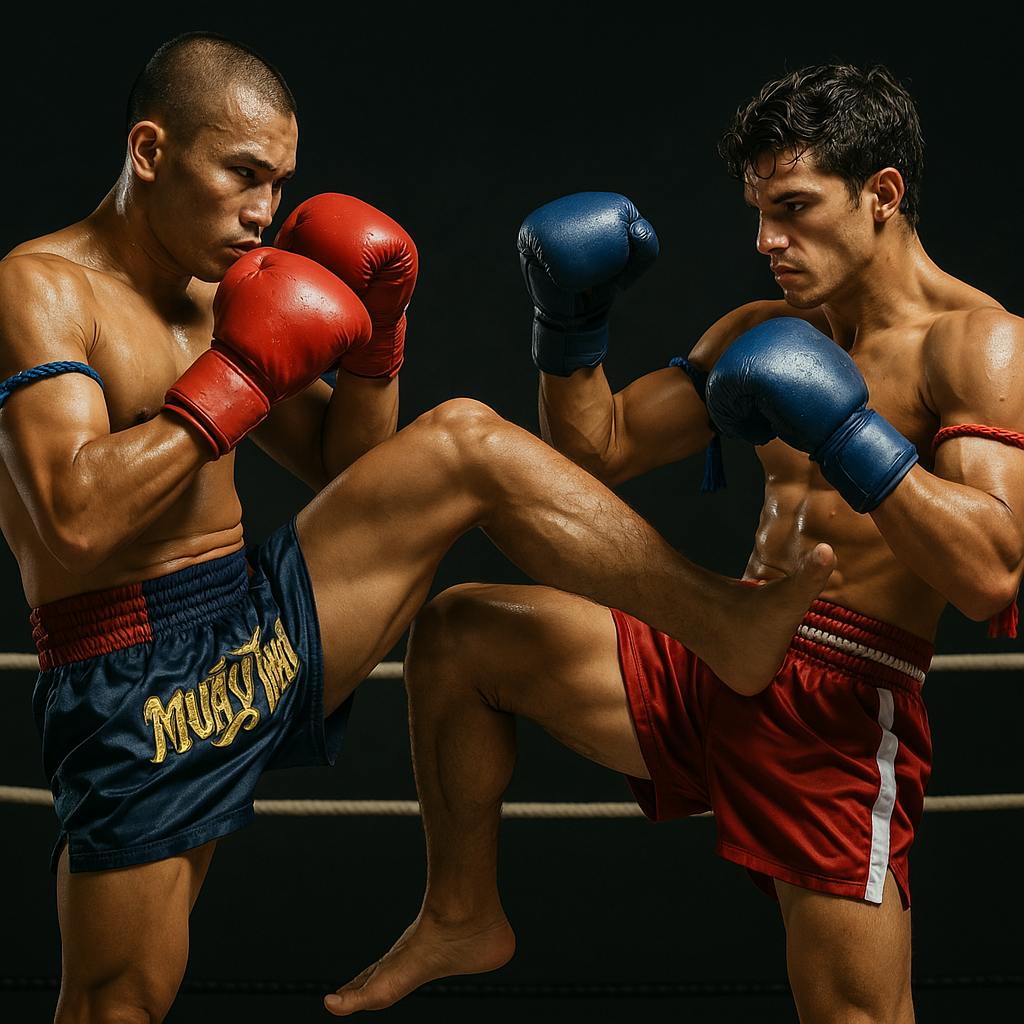
Muay Thai is a striking art that emphasizes elbows, knees, clinches, and sweeps. Although regular training sessions with a coach are necessary to hone your fighting ability, individual conditioning and technical drills at home can be the difference between winning and losing a fight. In this blog, we review five drills that can be done at home with minimal or no equipment.

Shadowboxing

Shadowboxing is an incredibly effective drill that can be utilized in some form for nearly every martial art. When utilizing this drill for Muay Thai, be sure to throw elbow and knee strikes along with practicing avoiding clinches as well as sweeps. Shadowboxing can also allow you to work on your head movement, parries, and other defensive movements. Completing three to five rounds with each round lasting three to five minutes provides you with ample time to work your endurance and technique. 

Heavy Bag Work

Although requiring a heavy bag, heavy bag work is a great way to improve power as well as endurance. To work on power, repeatedly throw combinations as hard as possible such as a jab-cross-hook-kick. For speed, attempt to throw combinations as fast as possible while keeping your technique. The heavy bag also allows you to work on accuracy. When throwing strikes such as a teep kick or a high kick, attempt to throw your strikes at the correlating point on someone's body. Lastly, the heavy bag is a great tool that can be used to work on endurance. Similar to shadowboxing, three to five rounds of three to five minutes of repeatedly striking the heavy bag without stopping can greatly increase one's endurance when fighting.

Footwork Drills

Footwork drills help to increase one's offensive and defensive capabilities. Understanding how to fight moving backward, forwards, or when angling off. Some at-home drills to work on footwork include the cone and tape drill, lateral movement drills, and the circle drills. The cone and tape drill includes setting up a T-shape on the ground with tape and placing cones at the ends of the T to mark the border of the drill. You should get in your stance standing in the T and throw various strikes using the tape to correct your footwork. Lateral movement drills are simple drills that see the athlete moving side to side in their stance while angling off. This drill is often utilized in tandem with shadowboxing. The circle drill includes moving circularly around an object. Doing so while throwing strikes allows you to learn how to effectively strike when moving circularly. Each of these drills, although simple and somewhat similar, improves footwork and your ability to fight while moving in various directions.

National Youth Sports Strategy

Everyone has a role to play in the National 
#YouthSports Strategy! Learn more about the strategy and ways to get 
involved from @HealthGov: https://bit.ly/2lQ85f6

Teep and Knee drills 

Knee and Teep drills help to improve not just the techniques, but also your balance and control. To perform this drill, continue to throw teep kicks or knees toward a wall without falling backward. Doing so also allows you to improve your understanding of range. When throwing, be sure to focus on keeping proper posture and hip extension. When completing this drill, throw fifty teep kicks and fifty knees with each leg to refine your technique and improve your endurance.

Strength and Conditioning Drills

Simple strength and conditioning drills can work wonders for your endurance. Simple bodyweight exercises including jump squats, push-ups, sit-ups with an elbow twist, and planks to explosive jumps can give you the strength and stamina necessary for competitions. Further exercises include burpees or interval sprints. Long runs also greatly increase one's cardio.

Each of these drills are able to improve some aspect of your muay thai skillset. All of these drills can be done with minimal or no equipment. For more drills and techniques, check out the course below.

null

Dr. Berg Electrolyte Powder Raspberry Lemon


Friday, April 18, 2025

US Sports Volleyball:The Evolution and Importance of Volleyball Nets in the Game and Lube vs. Perugia | SuperLega 2025 - Playoffs

 Victory News/Flashpoint. News You Can Use Now Streaming On US Sports Radio!


  • Author Elson Volley

Volleyball, a dynamic sport celebrated worldwide, owes much of its essence to the humble yet essential component: the volleyball net. Serving as the symbolic division between two competing teams, the volleyball net has undergone significant evolution since the sport's inception, becoming an integral part of its identity.

Historical Roots and Evolution

The origins of the volleyball net can be traced back to the late 19th century when William G. Morgan invented volleyball as an indoor alternative to basketball. Early iterations of the net were simplistic, consisting of basic materials such as rope or woven fabric. The need for standardised equipment, including the net, became apparent as the sport gained popularity and formalized rules emerged.

Over the decades, advancements in materials and technology have transformed volleyball nets into sophisticated apparatuses. Modern nets are typically constructed from high-strength materials like nylon, which offer durability and resistance to wear and tear. The introduction of adjustable net systems has also enhanced versatility, allowing for quick setup and precise adjustments to meet regulatory height standards.

Technical Specifications and Design

The dimensions and specifications of volleyball nets are meticulously defined to ensure uniformity and fairness across competitions. According to official regulations, the net must measure 32 feet (9.75 meters) in length and 39 inches (1 meter) in width, with a mesh size not exceeding 3.94 inches (10 cm). Additionally, the net's height is 7 feet 11 5/8 inches (2.43 meters) for men's competitions and 7 feet 4 1/8 inches (2.24 meters) for women's competitions.

Beyond these standard measurements, volleyball nets feature design elements to optimise performance and safety. Reinforced top and bottom bands provide structural integrity and prevent sagging. At the same time, side tapes enhance visibility and define the boundaries of the court. Some nets incorporate tensioning devices and centre markings to facilitate proper installation and alignment during setup.

Crucial Role in Gameplay

The volleyball net plays a multifaceted role in the game's dynamics, influencing strategy, tactics, and player interactions. As the primary obstacle between opposing teams, the net acts as a barrier players must navigate to execute offensive and defensive maneuvers effectively.

From a defensive standpoint, players strive to block and deflect incoming attacks at the net, disrupting the opponent's rhythm and thwarting scoring opportunities. Conversely, on offence, skilled setters utilise the net as a reference point to position the ball for powerful spikes and precise placements, exploiting gaps in the opposing team's defence.

Moreover, the net fosters a sense of anticipation and excitement, heightening the intensity of rallies as players strive to outmaneuver their opponents. The dramatic spectacle of players diving and leaping over the net in pursuit of the ball exemplifies the athleticism and competitiveness inherent in volleyball.

Conclusion

In essence, the volleyball net embodies the spirit of competition and camaraderie that defines the sport of volleyball. From its humble origins to its modern incarnation, the net has remained a steadfast symbol of unity and division on the court. As volleyball continues to captivate audiences worldwide, the significance of the net as a fundamental element of the game remains unwavering, transcending generations and cultures alike.

Elson Volley is the best place to buy volleyball sets and equipment

Website: https://www.elson.com.au/volleynets/

Thursday, April 17, 2025

US Sports Softball: Three Competition-Based Hitting Drills For Your Softball Team and #12 South Carolina vs #19 Clemson (Great Game!) | 2025 College Softball Highlights

 Play Ball! Now Streaming On US Sports Radio

  • By Grant Young

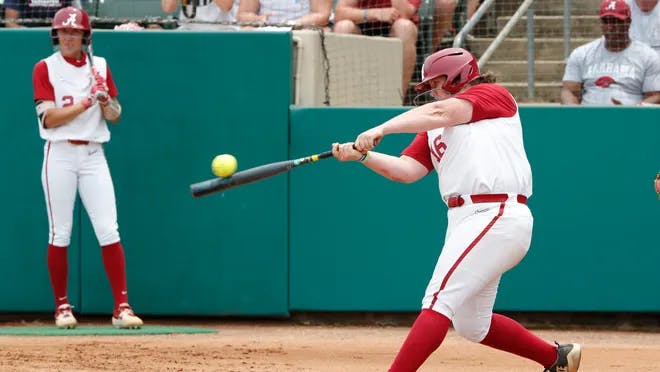
Finding ways to simulate a competitive environment during a softball practice can be a tricky matter. 

All coaches know that hitters (and any other athlete) perform better under pressure if they’re used to doing so. And giving players this experience is a great way to boost their confidence when game day arrives and they find themselves squaring off against the opposing team’s top pitcher.

But with daily practices being such a low-stakes, low-intensity endeavor, coaches often need to get creative if they’re to get their hitters to engage and prepare to compete once their at-bats begin to matter. 

While this can be a daunting task for coaches, considering how hectic their schedules and practice routines surely already are, letting a softball coaching legend like Brittany Scarafiotti lay out the blueprint for making practice drills competitive is the perfect solution. 

Coach Scarafiotti (who used to go by Coach Lee) has been a head softball coach at various high schools in Texas since 2018. In 2023, Coach Scarafiotti’s Keller ISD high school softball team was 6A Regional Quarterfinalists and produced the first Playoff wins in school history. Prior to the beginning of her successful coaching career, Coach Scarafiotti was a former DI collegiate softball student-athlete for Stephen F. Austin State University, graduating with a bachelor’s degree in 2014. 

Coach Scarafiotti knows that running competitive hitting drills helps build her players’ confidence at the plate, and has been a major catalyst for their success. And this has not only helped her high school teams win games, but getting her players used to competing at practice has given those who’ve ascended to the collegiate level a leg up on their peers, as well. Her ‘Competitive Drills and Pressure Practice’ course will provide you with all the info you need to turn your practices into a space for cultivating competitive excellence. 

Target Practice

One unconventional method that Coach Scarafiotti utilizes with her high school softball hitters is hitting Fungos often. 

“Any time an athlete can hit Fungo, I’m a big component of it,” Coach Scarafiotti said. “It’s teaching them to see where they toss the ball, good barrel control, still working good hitting mechanics. It’s just on a smaller scale.” 

One fungo-based drill that Coach Scarafiotti utilizes is what she calls the target practice drill. It starts with a player who’s holding a Fungo and three softballs standing along the first base line a few feet away from home plate while the fielder is standing near third base. 

After you successfully complete the Certification, you can have various opportunities in your professional growth. You can be:  Blockchain Developer Blockchain Architect Blockchain Consultant Smart Contract Developer

The player with the Fungo will then hit a ground ball to the fielder, who will attempt to field it cleanly and throw it back to a net that the hitter is standing in front of. That process will then repeat with the rest of the softballs before the two players switch places. 

This target drill can become competitive if there are multiple different teams (i.e., partners) taking part in the drill. In this case, the entire thing can be timed, and the team that gets the quickest time while fielding every ball and hitting every fungo cleanly is the winner. 

Another important part of making practice drills competitive and engaging is having a reward for the team that wins. Often it can be the team that wins gets to skip conditioning or doesn’t have to shag balls at the end of practice, but coaches can get creative with whatever reward best suits them.

Beat the Runner

Another one of Coach Scarafiotti’s favorite drills with her team is what she calls the “Beat the Runner” drill. 

For this drill, you will need to have players at every single position in the field and another team ready to hit. From there, you’ll have one hitter on a tee at home plate hit the ball. Regardless of where they hit it or whether it’s fielded, that player is going to run around all the bases. 

The fielders will field the ball; and if it’s hit in the infield they’ll throw it to first base, home, third base, second base, first base, and home in hopes of doing so before the runner reaches home. And if the ball is hit in the outfield then the initial throw will go to home, then third base, second base, first base, then back to home. 

In other words, the goal is to throw the ball around the horn before the hitter gets back to home plate. 

Ideally, you’ll have enough players to field two full teams and bat around the lineup, then tally which team has the most points (the fielding team gets a point if they get it around the horn in time, hitting team gets a point if they make it to home). 

But if you don’t have enough players then come up with some other creative way to tally and determine a winner and loser. 

Your Count or Way Ahead

null

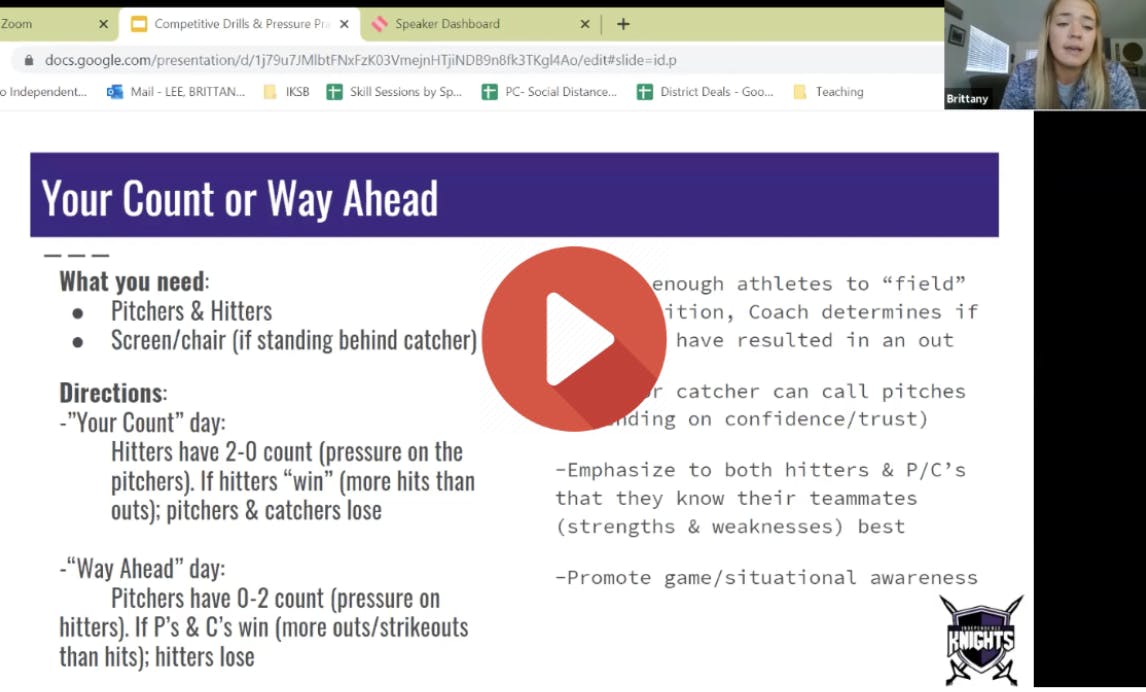
A third drill that Coach Scarafiotti uses to simulate high-pressure situations is the ‘Your Count or Way Ahead’ drill. 

This is a practice with live at-bats between pitchers and hitters. When it’s a ‘Your Count’ day, that means every at-bat begins as if the count is 2-0. Therefore, pitchers need to throw a strike and batters are looking for something to hit.

And if it’s a ‘Way Ahead’ day, that means every at-bat begins as if the count is 0-2. That means the hitters must stay alive while the pitchers are trying to get a strikeout. 

The point of both versions of this drill is that either the pitcher or hitter will be confronted with what’s likely a losing situation. This will get them more comfortable when facing these situations in the actual game.


NYSS Find Their Strengths 
Sports help kids build confidence and grow into 
healthy, active adults. Learn how organizations, communities, and 
policymakers can use @HealthGov’s National #YouthSports Strategy to 
support youth sports: https://bit.ly/2lQ85f6

Wednesday, April 16, 2025

US Sports Golf: Three Ways to Make More Difficult Putts and Random Club Challenge Alexa Pano vs. Nataliya Guseva

 Bombs Away In The Bronx! Now Streaming On US Sports Radio!


Putting in golf can be incredibly frustrating. The delicate nature of judging the green, coupled with the pressure to execute a flawless stroke, often leads to intense frustration when putts don't go as planned. Even the smallest mishaps in alignment or speed can result in a missed putt, making it a source of frustration for golfers at all levels.

Putting is difficult for several reasons. Firstly, reading the greens accurately to determine the break and speed of the putt is a highly challenging task. Additionally, maintaining a smooth and consistent putting stroke, especially under pressure, is crucial for success. The smallest error in alignment or pace can result in the ball missing the hole, making it a mentally and physically demanding aspect of the game. And because putting can seem so hopeless for even the most seasoned golfers, the failure to perform on the putting green can ruin an otherwise great day at the course. 

There are plenty of putting lessons online where you can glean some solid tips on how to improve various aspects of your game. But there is only one Geoff Mangum. 

Coach Geoff Mangum has spent over 25 years researching and studying everything there is to know about putting. He is recognized as the world's top expert in how the brain and vision work when targeting and making movements in putting. His unique approach combines traditional knowledge with modern science. 

Mangum is one of the top putting coaches in the world and has a very successful website called puttingzone.com, where Mangum has been investigating the science of how the brain and body operate to perform the “skills” of putting for the first (and still the only time) in golf history, revolutionizing the game that has long only taught ad hoc tips and drills mostly for stroke alone, but without teaching how perceptions form and guide movements and how “brains do ‘physics’  predicting and executing reading, aiming, stroke, and touch”.

Coach Mangum’s ‘Reading Greens and Making Putts’ course discloses many tips that only someone who has dedicated their life to putting can glean. Regardless of where on your golf journey you are right now, the following bits of advice from Coach Mangum are guaranteed to improve your game on the green. 

Lag Putting

Knowing how to execute a proper lag putt on the green can make a major difference on a scorecard. For anyone who doesn’t know, A lag putt in golf is a long putt that a golfer attempts to get close to the cup but doesn't expect to make. The goal is to get the ball within a 3-foot circle around the cup when making the putt. 

Coach Mangum has a rule of thumb to improve a golfer’s lag putts. He recommends that the distance should always be to the fall line on the high side of the hole, which should make for a relatively accurate target to aim for when making the lag putt. 


Beyond Retro

For the rule of thumb, Coach Mangum first wants golfers to imagine the general average slope grade of the section of the green you’re putting on, which will get you some general percentage (for a rather steep green, it would be about 4%). 

Then you will want to count the number of military paces there is between where you ball in and the hole. Finally, you will want to multiply that number by the percentage you took earlier and will use that answer to find out how many inches you want to aim up the fall line from the center of the hole. 

While this is going to involve a lot of guesswork if you’re able to estimate nearly enough of all of these figures and execute the putt to that new target, Coach Mangum is convinced you’ll produce a putt you’re proud of. 

Difficult Putts

When it comes to having to make a difficult put on a steep surface, the first read you will want to make as it pertains to making the putt is the surface flatness of where the actual hole is located. Once you have a good idea of that, that will provide a solid baseline of where to angle a putt. 

After doing so, you will want to figure out where the green’s contour lines are. Contour lines show the green's topography and slope, which can help golfers determine their putting line because of how they indicate the slope’s severity. 

Essentially, you’ll be looking for a line where the steepness of the green changes. Once you do so, you’ll figure out that the fall line (an imaginary line that runs through the center of the cup and indicates the direction of a straight downhill putt) is going to be exactly perpendicular to that contour line. This will help you line up where you should be aiming your difficult putt.

Closing Comments

null

While there are numerous calculations and reads that Coach Mangum referenced that can be beneficial to improving your putting, his bottom line is that putting well is always going to come down to touch. 

What he means by this is that having a consistent delivery speed (the firmness with which you’re connecting your putter to the ball) when putting is what truly differentiates between good and great golfers. 

While some of this is natural, any golfer can hone their touch by consciously thinking about it while playing and spending a put of time on the putting greens. In other words, the best way to become a better putter is to actually go out and practice your putting. 

Tuesday, April 15, 2025

US Sports Ice Hockey: 4 Hockey Passing Drills to Improve Team Performance: Mites to Peewees and Kings vs. Oilers Highlights

 NBA, NHL Playoffs Are Here. Now Streaming On US Sports Radio!

  • By Jackson Chlebowy

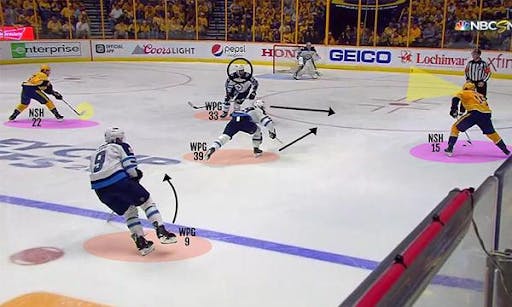
Ice Hockey is a fast-paced game that requires precision, teamwork, and quick decision-making. Plays can occur in a matter of seconds, requiring players to think strategically while successfully executing their skills. The dynamic and fast nature of the game makes mastering passing essential for both individual and team performance.  Hockey passing drills are integral for developing accuracy, timing, and communication on the ice. Whether you're a beginner or an experienced player, incorporating these drills into your practice routine will elevate your game and strengthen team dynamics.

Why are Passing Drills Important? 

Passing is more than moving the puck from player to player. It’s about creating scoring opportunities, controlling and maintaining puck possession, and keeping your opponents on their toes. Effective passing can be the difference between a good team, and a great one. At the beginner level, passing drills allow players to develop their accuracy and puck-handling skills. At the more experienced levels, Passing drills allow players to simulate in-game situations where they can learn, adapt, and react to different game scenarios. Hockey passing drills can  improve:

- Puck Control: Learning to pass, and receive passes under pressure will enhance players' ability to control play and keep the puck moving. It will also train players to make smart decisions with the puck to maintain team possession and control play.

- Team Chemistry and Communication: Practicing passes, and passing scenarios will improve team communication and understanding on the ice. Through consistent practice and repetitions teammates will become better communicators on the ice, and learn each other's tendencies or preferences. This can help teams get on the same page, reducing the potential for costly turnovers and broken plays.

- Quick and Intelligent Decision-Making: Hockey is a game of time and space. Quick and accurate passes help your team play faster and more efficiently. Minimizing time spent in possession of the puck will allow your team to rapidly move the puck down the ice or away from danger, exploiting holes in the defense before they are able to adjust or react. This faster tempo can create dangerous scoring opportunities and odd-man-rush situations. 


4 Hockey Passing Drills to Improve Team Performance: Mites to Peewees 

Here are four passing drills, starting with the basics, that will help your team dominate this upcoming hockey season.

Partner Passing

Partner passing is a simple and easy passing drill for building up the basics of giving and receiving a pass. Coach Patrick Burke, a former college hockey player and successful coach explains the fundamentals of passing in his ‘Coaching Youth Hockey: From Mites to PeeWees’ course. Coach Burke has a strong focus on player and skill development and has led championship-winning teams at the high school varsity level. He has years of coaching experience at nearly every level of the game, from mites to college. 

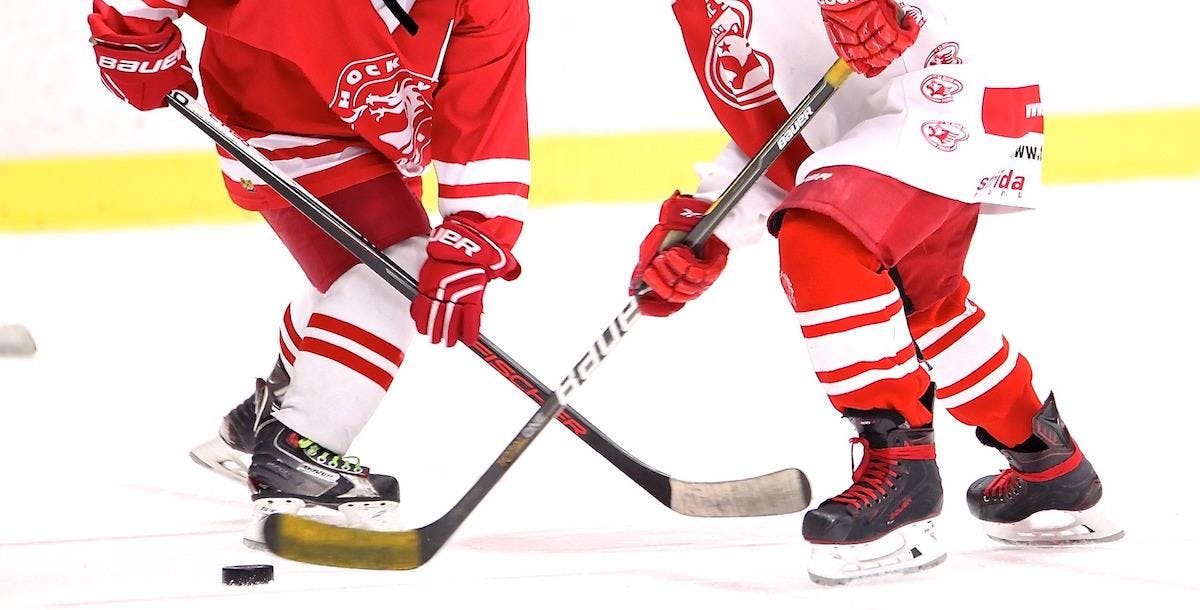
Have each player choose a partner, and line them up 5ft-10ft from one another. Each pair will have 1 puck between them and will practice passing back in forth to one another, focusing on making crisp tape-to-tape passes with their forehand and backhand. Emphasize the importance of “soft hands”, in this drill when receiving and passing the puck.

Passes should be made with a sweeping motion, not a slap. When receiving the pass players should cradle the puck, catching it like a slingshot. This will give the player more control, and allow them to load up for a quick pass back. Make sure players have their heads up when passing and receiving; Looking at their target, not the puck. Once players are comfortable at 5ft-10ft, have them move further and further away.

The Box Drill

null

This is another important drill from Coach Patrick Burke (Click above). In Coach Burkes ‘Coaching Youth Hockey: From Mites to PeeWees’, he explains the importance of following, not watching your passes. 

The Drill is simple. Place 4-6 players in a box or along a faceoff circle. The players will pass the puck to one another, following their pass each time and remaining ready for an incoming pass. This gets players out of the habit of watching their passes and taking themselves out of the play. Young players must understand the importance of moving their feet after passing. Rarely in hockey are plays made while stationary. Getting in the habit of moving their feet, and being ready to receive a pass at any time will allow them to support their teammates and beat their opponents to open space.

2 Player Slot Passing Drill

This is a more intermediate drill that can be used for most skill levels and age groups. The 2-player slot drill emphasizes the importance of timing (from both the passer and receiver) communication and, the ability to cleanly catch and release the puck on the net. Being able to find your teammates quickly, and release the puck effectively in dangerous areas of the ice will help create and convert on more scoring chances.

null

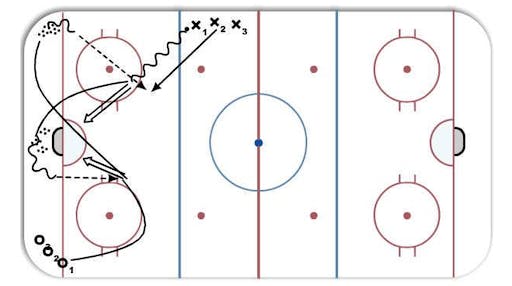
Start by splitting the team into 2 groups (they should alternate groups as the drill goes on), one group at the blue line on either side of the ice and the other group in the corner diagonally across. Set up 2 piles of pucks, one behind the net and the other in the empty corner. The drill will begin at the point with one puck (after this, the drill can continuously run without stopping and starting). Have this player skate into the slot and take a shot on net. After the shot, skate behind the net to pick up a puck. The player in the corner should begin skating around the top of the circle, timing it so that he reaches the apex of the circle as the player with the puck is ready to pass. He/she then receives the pass in the slot for a shot on the net. After the shot, he/she then skates to the far side corner with the 2nd pile of pucks to make a pass to the next player in line at the point. Restarting the drill over again with new players. 

Players throughout the drill should communicate with each other, calling for passes and presenting themselves for scoring opportunities. Never during this drill should a pass be made to a stationary target, players should time their portion of the drill to receive the pass in, or around the slot area.

Breakout/Regroup Drill

The Breakout/Regroup drill is a more advanced drill used to simulate real game scenarios. This drill simulates the breakout/regroup and gives players the opportunity to practice quick decision-making and communication with their teammates. A swift and effective breakout is essential for starting the transition from defense to offense. A well-conducted breakout can alleviate pressure in the defensive zone and create odd-man opportunities going the other way. The regroup and transition game is all about finding open teammates and attacking the weak areas of the ice. Players should keep their heads up at all times, looking to exploit open ice with a pass, or with their feet. Being in the position to make a play is just as important as the pass.

Begin the drill with 2 defensemen on both blue lines (4 total), and a line of forwards at center ice. The coach should dump the puck into a corner for the defenseman to retrieve, beginning the breakout with a D-to-D pass. While this is occurring, the line of forwards enters the zone and swings for a breakout pass. It is important that the forwards time their swing, that way they don't leave the zone too early or force the defenseman to make a dangerous stretch pass that could be intercepted in game situations. They will exit the zone, and pass to the 2nd set of defensemen at the opposite blueline.

 Forwards should cross, and swing presenting themselves for a regroup pass from their defenseman. They will then play 3 on 2 against the original defenseman. Forwards should use this opportunity to get creative and take advantage of the odd-man opportunity.


National Youth Sports Strategy

Everyone has a role to play in the National 
#YouthSports Strategy! Learn more about the strategy and ways to get 
involved from @HealthGov: https://bit.ly/2lQ85f6