Now Streaming On US Sports Radio!

US Sports Net Today!


Live Play-by-Play, Updates, Highlights and More! on US Sports Network!
[Chrome Users-You may have to click on the play button twice to listen]
US Sports Network Powered By Gorilla Sports!


US Sports Radio
The Las Vegas Raiders Play Here
Fitness and Sports Performance Info You Can Use!
The Scoreboard Mall
The Rock Almighty Shaker Of Heaven And Earth!
The Coolest Links In The Universe!
Showing posts with label Softball recruiting video softball prospect 2024 softball recruiting video softball player softball team softball workout 1B 2b SS 3B Pitcher softball softball pitcher. Show all posts

Thursday, April 17, 2025

US Sports Softball: Three Competition-Based Hitting Drills For Your Softball Team and #12 South Carolina vs #19 Clemson (Great Game!) | 2025 College Softball Highlights

 Play Ball! Now Streaming On US Sports Radio

  • By Grant Young

Finding ways to simulate a competitive environment during a softball practice can be a tricky matter. 

All coaches know that hitters (and any other athlete) perform better under pressure if they’re used to doing so. And giving players this experience is a great way to boost their confidence when game day arrives and they find themselves squaring off against the opposing team’s top pitcher.

But with daily practices being such a low-stakes, low-intensity endeavor, coaches often need to get creative if they’re to get their hitters to engage and prepare to compete once their at-bats begin to matter. 

While this can be a daunting task for coaches, considering how hectic their schedules and practice routines surely already are, letting a softball coaching legend like Brittany Scarafiotti lay out the blueprint for making practice drills competitive is the perfect solution. 

Coach Scarafiotti (who used to go by Coach Lee) has been a head softball coach at various high schools in Texas since 2018. In 2023, Coach Scarafiotti’s Keller ISD high school softball team was 6A Regional Quarterfinalists and produced the first Playoff wins in school history. Prior to the beginning of her successful coaching career, Coach Scarafiotti was a former DI collegiate softball student-athlete for Stephen F. Austin State University, graduating with a bachelor’s degree in 2014. 

Coach Scarafiotti knows that running competitive hitting drills helps build her players’ confidence at the plate, and has been a major catalyst for their success. And this has not only helped her high school teams win games, but getting her players used to competing at practice has given those who’ve ascended to the collegiate level a leg up on their peers, as well. Her ‘Competitive Drills and Pressure Practice’ course will provide you with all the info you need to turn your practices into a space for cultivating competitive excellence. 

Target Practice

One unconventional method that Coach Scarafiotti utilizes with her high school softball hitters is hitting Fungos often. 

“Any time an athlete can hit Fungo, I’m a big component of it,” Coach Scarafiotti said. “It’s teaching them to see where they toss the ball, good barrel control, still working good hitting mechanics. It’s just on a smaller scale.” 

One fungo-based drill that Coach Scarafiotti utilizes is what she calls the target practice drill. It starts with a player who’s holding a Fungo and three softballs standing along the first base line a few feet away from home plate while the fielder is standing near third base. 

After you successfully complete the Certification, you can have various opportunities in your professional growth. You can be:  Blockchain Developer Blockchain Architect Blockchain Consultant Smart Contract Developer

The player with the Fungo will then hit a ground ball to the fielder, who will attempt to field it cleanly and throw it back to a net that the hitter is standing in front of. That process will then repeat with the rest of the softballs before the two players switch places. 

This target drill can become competitive if there are multiple different teams (i.e., partners) taking part in the drill. In this case, the entire thing can be timed, and the team that gets the quickest time while fielding every ball and hitting every fungo cleanly is the winner. 

Another important part of making practice drills competitive and engaging is having a reward for the team that wins. Often it can be the team that wins gets to skip conditioning or doesn’t have to shag balls at the end of practice, but coaches can get creative with whatever reward best suits them.

Beat the Runner

Another one of Coach Scarafiotti’s favorite drills with her team is what she calls the “Beat the Runner” drill. 

For this drill, you will need to have players at every single position in the field and another team ready to hit. From there, you’ll have one hitter on a tee at home plate hit the ball. Regardless of where they hit it or whether it’s fielded, that player is going to run around all the bases. 

The fielders will field the ball; and if it’s hit in the infield they’ll throw it to first base, home, third base, second base, first base, and home in hopes of doing so before the runner reaches home. And if the ball is hit in the outfield then the initial throw will go to home, then third base, second base, first base, then back to home. 

In other words, the goal is to throw the ball around the horn before the hitter gets back to home plate. 

Ideally, you’ll have enough players to field two full teams and bat around the lineup, then tally which team has the most points (the fielding team gets a point if they get it around the horn in time, hitting team gets a point if they make it to home). 

But if you don’t have enough players then come up with some other creative way to tally and determine a winner and loser. 

Your Count or Way Ahead
null

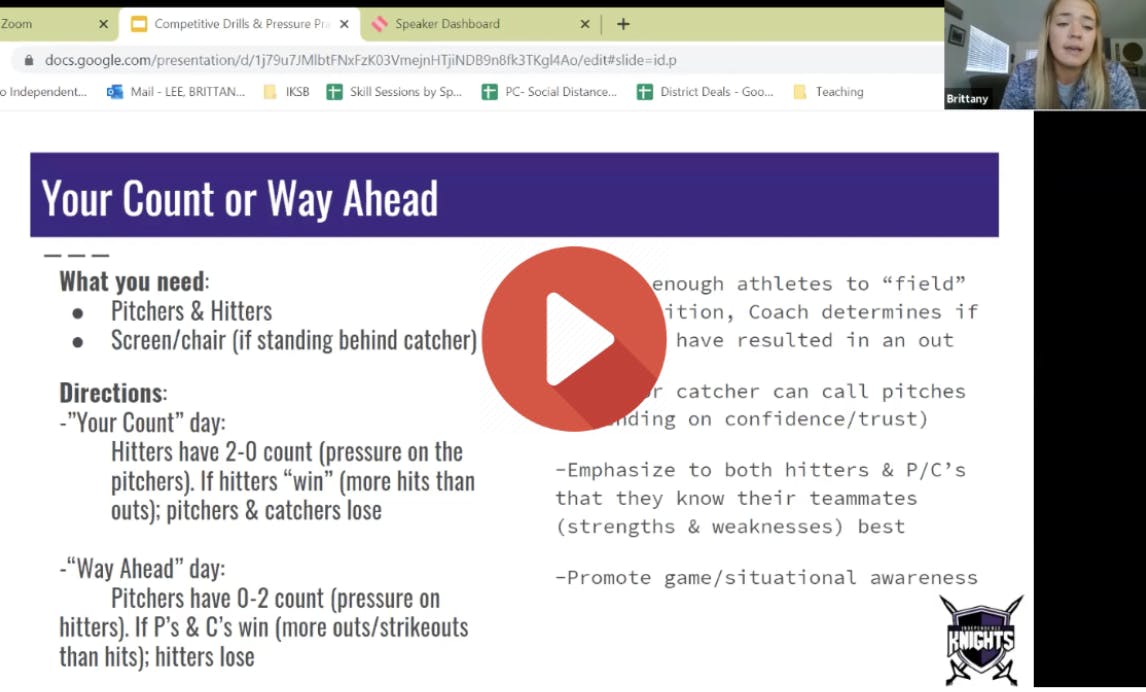
A third drill that Coach Scarafiotti uses to simulate high-pressure situations is the ‘Your Count or Way Ahead’ drill. 

This is a practice with live at-bats between pitchers and hitters. When it’s a ‘Your Count’ day, that means every at-bat begins as if the count is 2-0. Therefore, pitchers need to throw a strike and batters are looking for something to hit.

And if it’s a ‘Way Ahead’ day, that means every at-bat begins as if the count is 0-2. That means the hitters must stay alive while the pitchers are trying to get a strikeout. 

The point of both versions of this drill is that either the pitcher or hitter will be confronted with what’s likely a losing situation. This will get them more comfortable when facing these situations in the actual game.

NYSS Find Their Strengths 
Sports help kids build confidence and grow into 
healthy, active adults. Learn how organizations, communities, and 
policymakers can use @HealthGov’s National #YouthSports Strategy to 
support youth sports: https://bit.ly/2lQ85f6
Thursday, March 20, 2025

US Sports Softball: How to Create Runs on the Softball Basepaths and #2 Texas vs #3 Florida 2025 Highlights


  • By Grant Young

Because the bases in softball are 60 feet away from each other, there’s a common misconception that softball baserunning isn’t as important a part of the game as hitting, fielding, or pitching. 

Yet, any coach who believes that’s true is doing themselves a disservice when it comes to maximizing their own team’s potential. 

A softball team’s ability to run the bases well can spell the difference between winning and losing. And because softball is a game of inches, learning how to teach and practice the fine details of baserunning (such as being able to slide effectively, crafting ways to score from third base, and communication between coaches and baserunners (and between baserunners and other baserunners)) could steal your team some wins throughout the course of a season; especially in the postseason, when the margin between teams is often minuscule.

And Wade Womack knows this better than just about anyone else. 

Coach Womack has been a head coach of various high school women’s softball programs for over two decades and has been running the Dripping Springs High School’s softball program in Dripping Springs, Texas, for over 10 years alone. Coach Womack has guided two teams to the State Tournament at Medina Valley and won the State Championship in 2007. 

This past 2024 softball season, Coach Womack’s Dripping Springs team won the 6A District 26 Championship. Head coach Wade Womack was named the district’s Coach of the Year. 

Coach Womack believes that the secret to his sustained success has been the advantage his teams have over opponents on the basepaths. He imparted a few of his best baserunning lessons and insights in his ‘Creating Havoc on the Basebaths & Other Philosophies’ course from the Texas High School Coaches Association. This course is a gold mine for any softball coach who wants to turn their team’s baserunning into a lethal winning weapon.

15 Ways a Runner Can Score From Third

While Coach Womack noted that there are probably some ways a runner can score on third that he missed, the fact that there are 15 is pretty astounding. In fact, we’ll note that Coach Womack missed a balk, so there are at least 16 ways a runner can score from third.

But Coach Womack’s 15 ways are: base hit (including single, double, and a triple), sacrifice fly, passed ball, wild pitch, obstruction, suicide squeeze, safety squeeze, fielder’s choice, straight steal of home, delayed steal of home, error off a batted ball, catcher overthrows pitcher after the pitch, catcher throws ball away on attempted pickoff, 1st and 3rd base strategies/set plays, and bases loaded walk/hit by pitch. 

And the reason Coach Womack brings these up are to highlight the importance of getting runners over to third base. Especially for a team that is more focused on creating contact and playing small ball as opposed to driving the ball out of the yard, a main focus of yours should be getting runners over to third base at all costs. 

Especially in the game’s lower levels, where mistakes among fielders and pitchers are more common, getting a runner to third base is nearly as good as scoring them outright. 

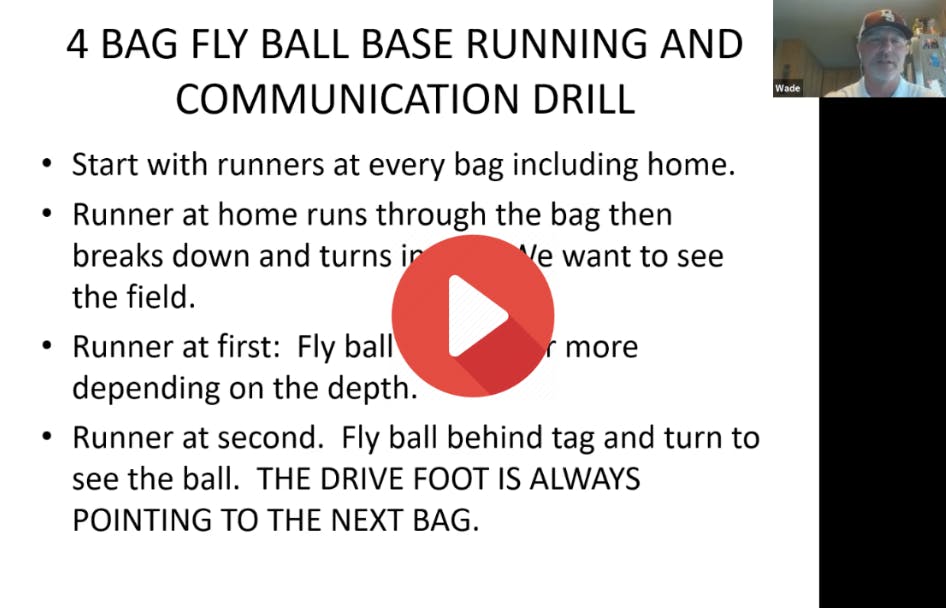
4 Bag Fly Ball Base Running and Communication Drill

null

In his course, Coach Womack details a drill that he likes to use to instill proper base running techniques and outfield communication among his players. He calls it the 4 bag fly ball base running and communication drill.

It begins with players starting at all four bases. From there, the drill starts with the runner at home running out a ground ball to first then turning inside after hitting the bag, in order to assess whether one of the middle infielders is being lazy and allowing an opportunity to steal second. 

After that, the runner who started on first will simulate a fly ball getting hit, where they get halfway to second base and watch to see whether or not the ball is caught. 

After that rep, the runners at second will practice tagging up and heading to third. When the ball is hit or thrown into the outfield, the runner will watch the ball with their drive foot always pointing to the next bag. As soon as the ball is caught, the runner should tag up and go for third. 

And the runner at third base will tag up and advance in the same way when it’s their turn. 

In addition, Coach Womack notes that while doing this drill, he’s hitting the fly balls between outfielders in two positions (ideally center and right field), and having them practice communication with one another.

Sliding

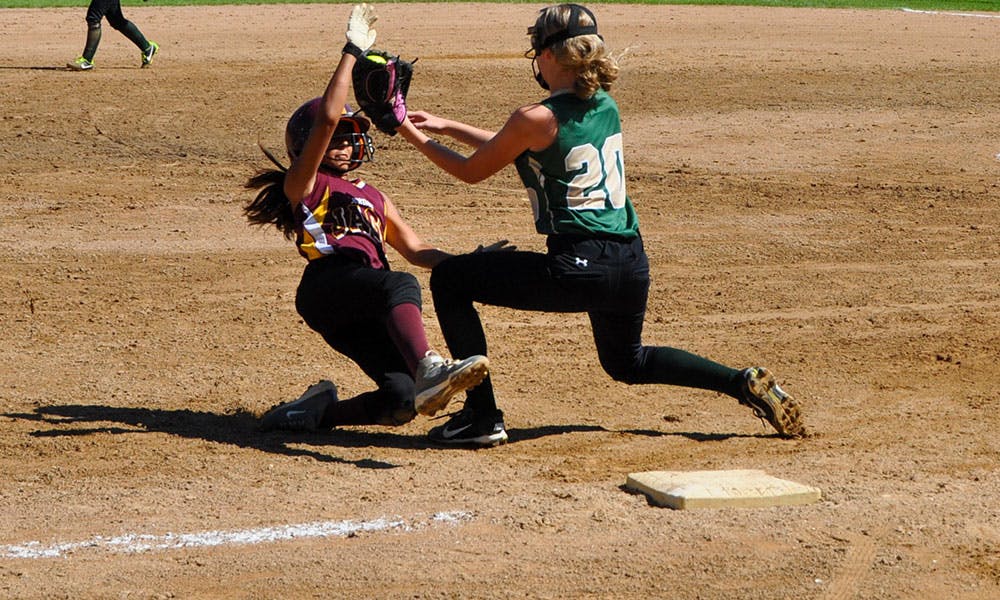
Coach Womack notes that learning how to slide properly is not only a crucial part of being a good team on the base paths, but it’s also integral to keeping your players safe.

One of Coach Womack’s rules is that players are not to slide head first into home plate under any circumstance. He also notes that coaches should be instructing players to slide to the outside of every bag, in order to best avoid the tag during a throw.

The one exception to this is if the runner is sliding into second base and the second baseman is coming toward the bag to cover. In this situation, the runner will likely want to slide toward the inside of second base in order to be as far away from that tag as possible. 

Another reason to slide to the outside of home plate is because, even if the catcher is obstructing the bag, that call rarely gets made (especially at the high school level). 

Incorporating these tools from Coach Womack is a great way to improve your team’s baserunning and begun running your way to wins.

Friday, March 7, 2025

US Sports CoachLab Softball: Hitting, Teaching & Preparing - Tony Baldwin


The outcome that you want in the batter's box comes from the intentional preparation and teaching from a coach to every student-athlete. Hear from Tony Baldwin on how Georgia has created its offensive success by implementing these principles daily. Learn more @
https://tinyurl.com/HittingTeachingPrep

The Coolest Sports, The Hottest Talk, Music, and Fun.
US Sports Radio
https://bit.ly/USSportsRadioToday
http://www.USSportsRadio.net

Saturday, February 1, 2025

US Sports Softball Feat. How to Maximize Your Softball Pitcher's Abilities and College softball's top 12 transfers for the 2025 season


How to Maximize Your Softball Pitcher's Abilities

  • By Grant Young


There are many components that go into developing a softball pitcher. Not only must the player remain durable and prepared to pitch a team’s every game, but they also must have the mental makeup to endure the rollercoaster ride that playing an entire season provides. 

And even if a pitcher has all of the physical skill sets in the world, if they haven’t developed just as sturdy of a mental framework to consistently compete at a high level, they won’t be able to lead your team in the way that softball pitchers must. 

Thankfully, developing pitchers isn’t as difficult as it may sound; at least, as long as you have good coaches to learn the correct development techniques from. 

Esteemed softball coaches Lisa Fernandez, Paige Cassady, and Courtney Hudson have all constructed courses that impart their wisdom on how to develop physically skilled and mentally sturdy softball pitchers and are willing to share those insights with you. 

Lisa Fernandez - The Journey of a Pitcher’s Developmentsoftball/the-journey-of-a-pitchers-development-with-lisa-fernandez/14023335">The Journey of a Pitcher’s Development

null

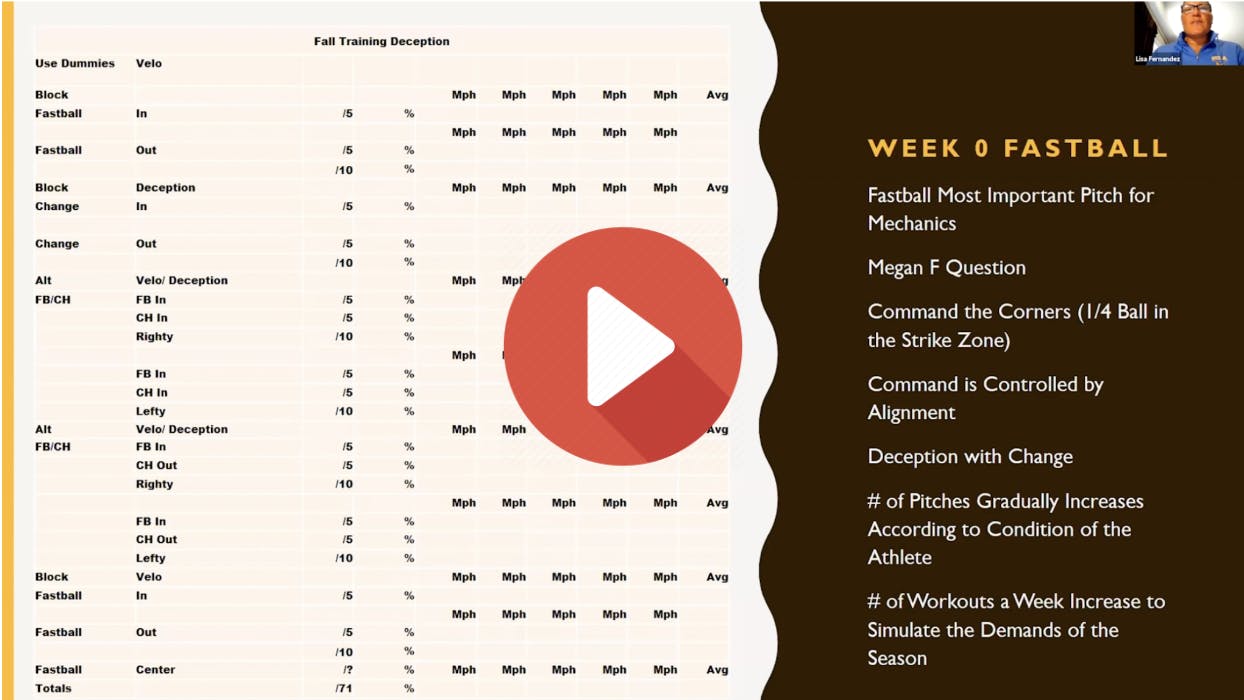
Lisa Fernandez is arguably the greatest pitcher in softball history. Fernandez is a three-time Olympic Gold Medalist, having helped Team USA to victories in the 1996, 2000 and 2004 Olympic Games. In 1996, she went 1-1 with a 0.33 ERA in softball's inaugural appearance in the Olympics in Atlanta. Her ERA ranks second in NCAA history and her 74 shutouts are ninth-most in the NCAA’s record books. She is entering her 26th season on the UCLA Bruins coaching staff in 2024.

In her ‘The Journey of a Pitcher’s Development’ course, Coach Fernandez says, “A lot of times, pitchers will have consequences that affect their mindsets. ‘Oh, this batter could do this. She could hit this pitch out. You can’t have that mentality. You have to have the mentality that you are going to be successful.”

Coach Fernandez notes how it’s natural for not just pitchers, but all people, to have negative thoughts swirling around their heads during high-pressure situations. That’s why softball coaches must utilize positive reinforcement in order to bolster their players’ confidence on the mound. 

Succeeding as a pitcher is more about conquering the mental game than anything else. And if a coach can create a habit of having confidence in their pitcher when they’re on the mound, that isn’t just going to help with the wins and losses. It’s also going to help that young pitcher in all other facets of life. 

Paige Cassady - ‘A Holistic Approach to Developing Pitchers Throughout the Year’ach-to-developing-pitchers-throughout-the-year/17969322">A Holistic Approach to Developing Pitchers Throughout the Year’

null

Paige Cassady joined NC State University’s softball team in 2023, as an assistant coach with a focus on pitching. Prior to that, Coach Cassady worked as a pitching coach at Texas Tech University. Before that, she spent nine seasons as the pitching coach at Liberty, where she helped the pitching staff lower its ERA every season. She received national recognition after the 2018 campaign when she was tabbed Assistant Coach of the Year by the NFCA. 

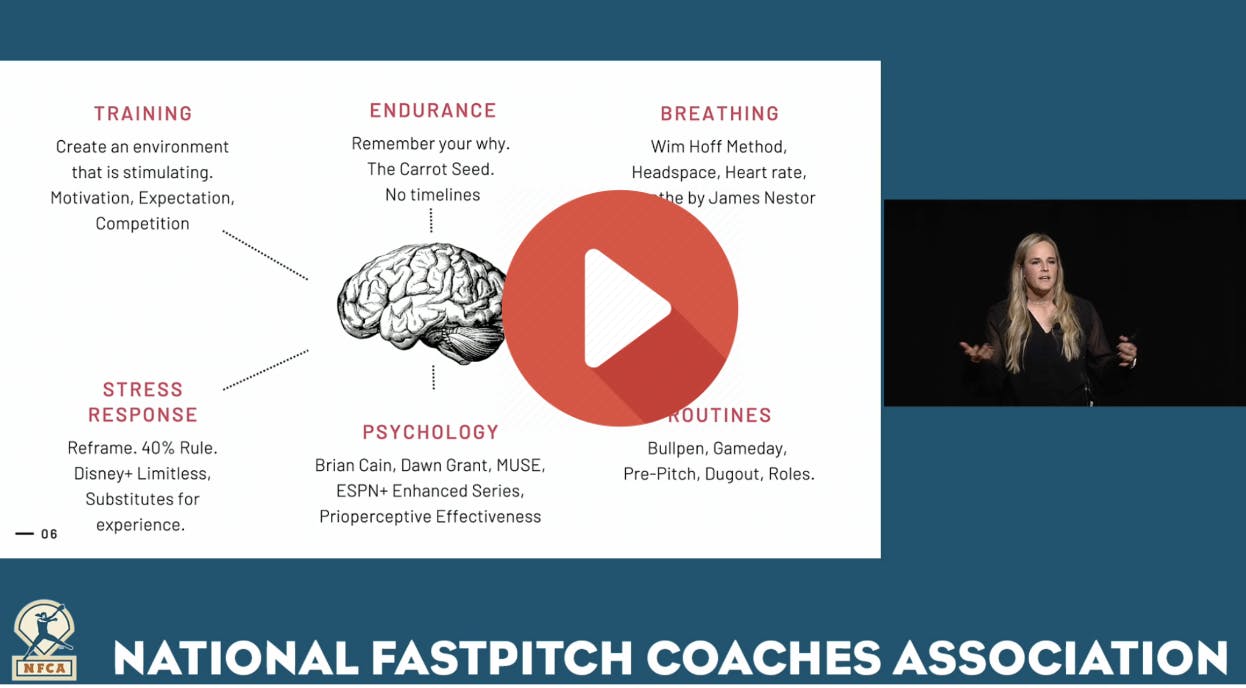
Coach Cassady believes there are six components to developing a softball pitcher. Within each component, she provides specific guides, hallmarks, and mantras that can lead coaches to develop those skills within their pitchers:

Training - Create an environment that is stimulating. Motivation, Expectation, Competition. 

Endurance - Remember your why. The Carrot Seed. No timelines.

Breathing - Wim Hoff Method, Headspace, Heart rate, Breathe by James Nestor.

Stress Response - Reframe. 40% rule. Disney+ Limitless, Substitutes for experience.

Psychology - Brian Cain, Dawn Grant, MUSE, ESPN+ Enhanced Series, Prioperceptive Effectiveness.

Routines - Bullpen, Gameday, Pre-Pitch, Dugout, Roles.

One way that Coach Cassady tries to tap into all of these six components is during bullpen sessions, where she has her pitching staff compete against one another. Yet, she also makes clear that she doesn’t compete solely for competition’s sake. Rather, she likes these bullpen battles because she, “wants to set the standard.”

Coach Cassady explains that her pitchers are competing against who they want to be in these bullpens. They’re trying to get the most out of themselves. And in that way, they’re really only competing against themselves. And what better way to develop one’s physical and mental capabilities than for them to push themselves in a low-stress environment, surrounded by support?

Courtney Hudson - ‘Pitcher Development Program’om/course/softball/pitcher-development-program/8413051">Pitcher Development Program’

Courtney Hudson is a former Division II softball player and coach. She made two trips to the Division II College Softball World Series, in 2009 and 2011. In her three seasons serving as a pitching coach, Coach Hudson’s staff compiled a record of 143-24. She has over 16 years of experience coaching fastpitch softball pitchers. Coach Hudson is the owner of Engineered Performance Lab in Huntsville, AL where she programs data-driven exercise and training for baseball and softball athletes. 

In the ‘How to Complete Your Game Day Performance Plan’ section of her course, Coach Hudson notes that 40% of practice time for softball pitchers should be dedicated to ‘How to Get Batters Out’.

Coach Hudson notes that there are three goals when it comes to getting batters out: 

1. Change bat speed

2. Change eye level

3. Move feet

We aren’t going to detail what all three of these mean, because we can assume that you understand what this means for a softball pitcher. But the most important aspect of these three goals we want to shed light on is how Coach Hudson is speaking about and working on these during practice so that her pitchers understand how to do so in games themselves.


A crucial part of developing a pitcher is getting them to understand the art of pitching. While pitch grips play a part in this, there is so much more nuance to effectively and efficiently getting a hitter out; which is what Coach Hudson’s three goals all allude to. If a pitcher is thinking about how to get a hitter out, they’re not thinking about all that could go wrong. That’s what development is all about. 

As you can see, there is a lot that goes into developing a softball pitcher that has nothing to do with physical components. But if your pitchers can master pitching’s mental side, they’ve already won before the first pitch is thrown

Sunday, December 15, 2024

US Sports Softball Feat. Highlights Japan vs USA| 2024 WBSC Finals & How to Perfect Pitch-Calling For Your Softball Team


USSSA

Presented on US Sports by CoachTube
Featured course:
The Softball Strength Book: High School Edition
by Austin Wasserman
The SOFTBALL Strength Training Guide is a foundational strength book geared towards Strength Coaches, Softball Teams and Individual High School or College Softball Players wanting to see how we program and train our softball athletes!
https://tinyurl.com/SoftballStrength1224


How to Perfect Pitch-Calling For Your Softball Team

  • By Grant Young

Calling pitches in softball can be one of the most challenging parts of being a softball pitching coach, regardless of which level you’re coaching at. 

There are various factors as to why pitch-calling presents a unique challenge. The pitching coach must take into account the batter's strengths and weaknesses, the game situation, and the team's overall strategy—all of which must be communicated to the pitcher and the catcher, who are often the ones who are making the final decisions on which pitch to throw.

Furthermore, the pitcher and catcher need to be in sync, which can be difficult in noisy or hectic game environments. Lastly, maintaining control and accuracy while keeping the batters guessing is crucial, and achieving this balance can be quite demanding.

There are some obvious times when calling a fastball makes the most sense, especially when you want to surprise the batter or when you need to bring the heat to challenge a strong hitter. It can also be useful in situations where you are ahead in the count and want to maintain control. Additionally, using a fastball early in the game can help establish dominance and set the tone for the rest of the match.

Yet, if you as a pitching coach believe calling a fastball in a situation is a no-brainer, the opposing hitter is likely thinking the same thing. This is why it’s crucial to understand when to break your typical pitch-calling patterns. And Amy Hunt can help you learn when and how to do so effectively. 

Coach Hunt has spent recent years working as a part-time Assistant Coach for Messiah College softball.

She was formerly an assistant coach with the team in 1998, where Messiah went to their first NCAA Final 6. Amy then continued her education, as she was a graduate assistant for the Marietta College softball team in Ohio.  She moved on to coach at Catoctin High School where she was the assistant coach for 1 year and head Varsity Coach for 6 years.

Coach Hunt has made a career out of trying to perfect pitch-calling. Her ‘Championship Pitch Calling System for Pitching, Catching and Coaching’ course is a great resource for any prospective pitch-callers at any level of softball. 

Why do STATS matter? 

Coach Hunt explains that being able to read and understand certain statistics makes a world of difference when trying to call pitches. 

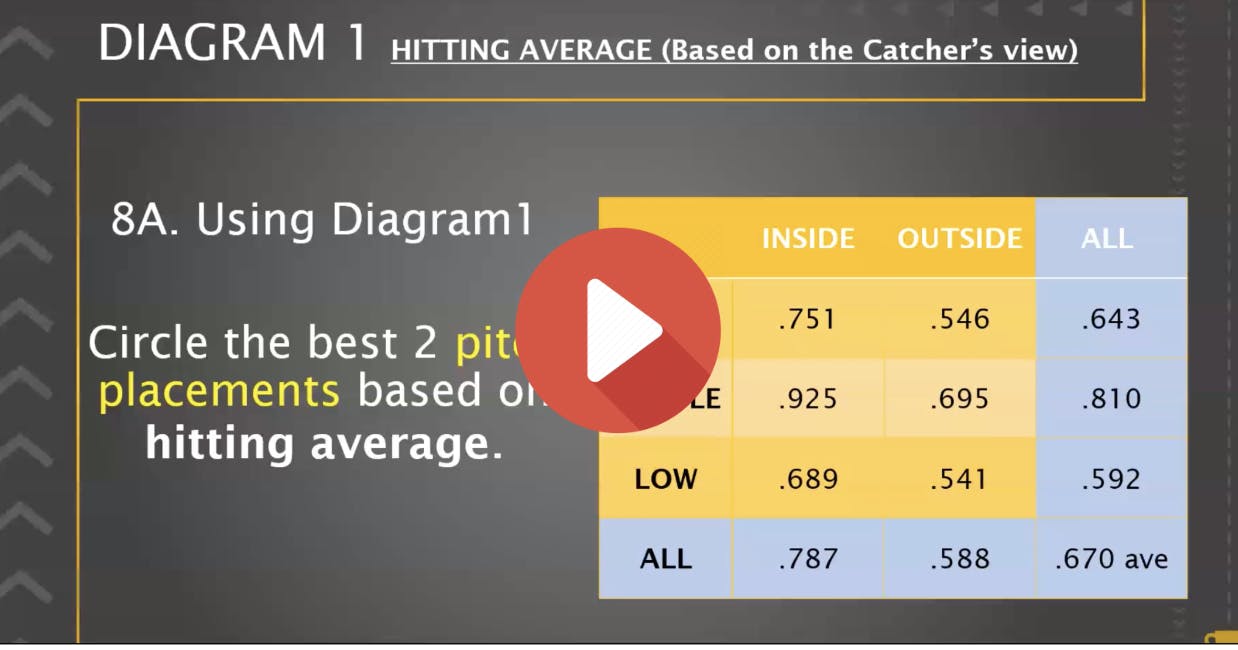
One of the most important statistics to know is what a hitter’s hitting average is within the nine segments of the strike zone. Because every hitter is going to have a slightly different stance, goals at the plate, and preferred areas, having (and then using) information about how which pitch locations they hit will at and which they don’t can make a major difference in success on the mound. 

Coach Hunt makes it clear that a hitting average isn’t the same thing as a batting average, which is the more commonly used statistic. The difference between these is that, while a batting average measures a batter's performance by dividing the number of hits by the number of at-bats, a hitting average is simply the number of times they make contact with a ball in a certain area. 

This is crucial because it doesn’t take uncontrollable factors into account (like if a player hits the ball weakly but still gets a hit) like the batting average does. It will give an accurate indication of a player’s ability to make contact at the various segments of the strike zone. While collecting hitting average stats might sound difficult, it’s actually simpler to calculate than the batting average. A coach can just watch a recent hitter’s at-bats and chart what pitches they’re making contact with. 

Pitch Location - Pitch placement is CRITICAL!

null

Of course, any pitching coach or pitcher knows that the worst place to position a pitch would be in the middle of the strike zone. And it’s typical knowledge that throwing the ball on the outside corner is usually a great option.

But not enough thought is put into whether a pitch should be thrown at the top or bottom of the strike zone. Typically, a pitcher will always try to aim for low in the strike zone. And while that’s a good base strategy to have, the ability to throw a pitch for a strike at the top of the strike zone can spell the difference between a good and great pitcher. 

Even if a pitcher is just able to throw an occasional fastball at the top of the strike zone (or even above the strike zone, in a two-strike scenario with less than three balls), hitters love swinging (and missing) at pitches in this location. It will also adjust their eye level so they don’t get too comfortable with/can sit on a pitch that’s lower in the strike zone. 

Learning about Batter Weaknesses

As we mentioned previously, charting each batter’s hitting average will give you a good indication of where they like to hit the ball. But another integral part of this charting strategy is that it will likely give you an insight into what an opposing team’s coach is teaching their hitters, as it pertains to their hitting approach. 

If you notice that a team very rarely swings at non-fastballs low in the strike zone or on the outside corner, that is likely because their coach is instructing them to take those pitches. You will then be able to exploit that by focusing on throwing offspeed pitches either low or away, which will force the hitters to make adjustments.

Wednesday, November 6, 2024

US Sports Softball Feat. Top WCWS softball defensive plays since 2015


Presented on US Sports by CoachTube
Featured course:
Youth Softball Strength: A Guide to Foundational Training
by Austin Wasserman
https://bit.ly/48C0KmY

Video credit:
Top WCWS softball defensive plays since 2015
NCAA Championships
@NCAAChampionships
D1 Softball:
This subscription enables use of the D1 Softball app which provides up-to-date scores, standings, and schedules for Division I College Softball. Once subscribed, you will be able to view information about your favorite Division I College Softball teams. While viewing team standings, by conference, you can select teams as favorites. Games for your favorite teams will show up first in the scores view. You can also receive alerts, in the form of push notifications, for selected teams.
@ Apple - https://apple.co/3UBuL0r
Softball gear @ Amazon - https://amzn.to/3YTUkMD
NCAA Championships on Youtube
https://www.youtube.com/@NCAAChampionships

The Coolest Sports, The Hottest Talk, Music, & Fun
US Sports Radio
http://www.USSportsRadio.net

Tuesday, September 5, 2023

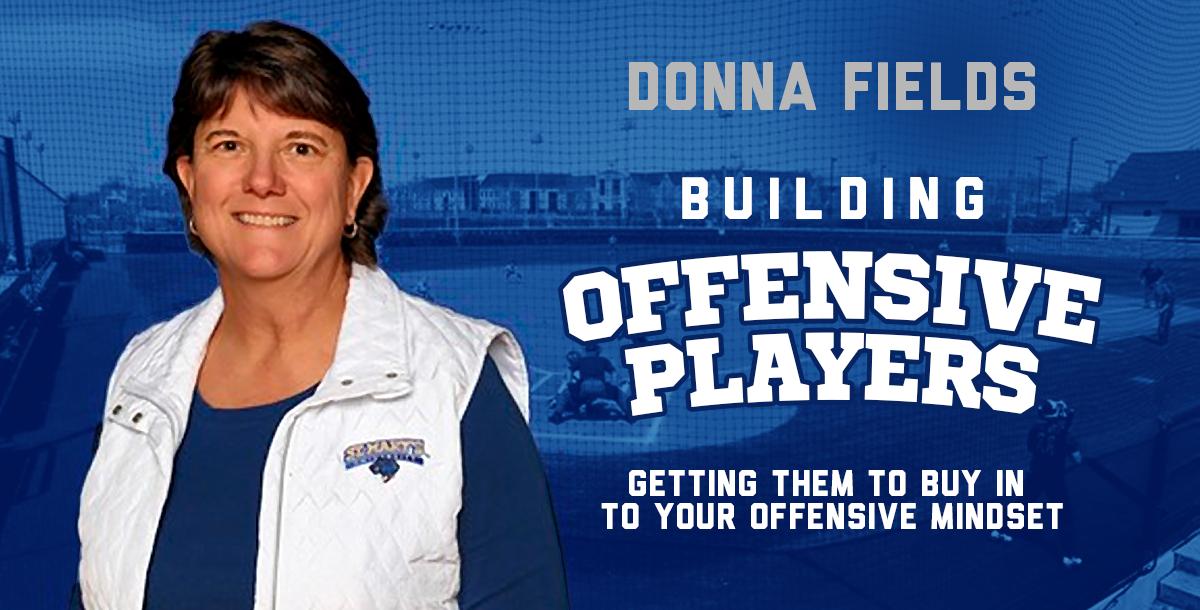
US Sports Softball: Building Offensive Players: Getting Them to Buy into Your Offensive Mindset

by Texas High School Coaches Association
Building Offensive Players: Getting Them to Buy into Your Offensive Mindset

Description

In this course, Coach Donna Fields delivers a series of drills and hitting routines that you need to know to get your softball players on the bases and scoring points. She emphasizes the importance of constant pressure on the defense to be able to win games. If you are a coach who wants to learn more drills and create power hitters, then this is the course for you! Book this course...


Get in The Game With Coachtube