Now Streaming On US Sports Radio!

US Sports Net Today!


Live Play-by-Play, Updates, Highlights and More! on US Sports Network!
[Chrome Users-You may have to click on the play button twice to listen]
US Sports Network Powered By Gorilla Sports!


US Sports Radio
The Las Vegas Raiders Play Here
Fitness and Sports Performance Info You Can Use!
The Scoreboard Mall
The Rock Almighty Shaker Of Heaven And Earth!
The Coolest Links In The Universe!

Thursday, February 20, 2025

US Sports Baseball: Four Drills to Sharpen a Baseball Hitter’s Vision at the Plate and Every team's TOP PROJECTED PLAYER for '25 🔥


Now Streaming On US Sports Radio!


Four Drills to Sharpen a Baseball Hitter’s Vision at the Plate

  • By Grant Young

Baseball season is approaching fast, and improving a baseball hitter's vision and tracking skills is one of the most effective ways to prepare for the upcoming season. 

Here are some reasons why focusing on vision and tracking can provide significant benefits: 

1. Enhanced Pitch Recognition: One of the key elements of hitting is the ability to recognize different pitch types and their trajectories. By practicing drills that enhance pitch recognition, hitters can improve their ability to anticipate fastballs, curveballs, sliders, and changeups. This leads to better decision-making when it comes to swinging or taking a pitch. 

2. Improved Hand-Eye Coordination: Drills that focus on tracking pitches help develop a hitter's hand-eye coordination. This skill is essential for making contact with the ball consistently. By practicing with moving objects—like balls thrown at different speeds and angles—hitters can train their eyes and hands to work in unison, which is vital for successful hitting. 

3. Depth Perception Training: Visual depth perception is crucial in determining how far the ball is traveling and its speed. Drills that simulate various game situations, such as tracking pitches from different distances or angles, can help players develop a better sense of depth, allowing them to judge pitch speed and distance more accurately. 

4. Focus and Concentration: Maintaining focus during at-bats is essential for success. Vision and tracking drills often require intense concentration and mental engagement. By consistently engaging in these drills during practice, players can enhance their ability to focus during games, minimizing distractions and helping them stay composed under pressure. 

5. Game Situational Awareness: Building vision and tracking skills also improves a player’s overall awareness of the game. Hitters who are in tune with the pitcher's mechanics and game scenarios can better assess their situations and make smarter decisions at the plate. 

A hitter's success at the plate begins with how well they see the ball and react, making these skills vital to their development. This is why baseball coaches must have several drills and techniques they can use to sharpen their hitters’ vision. 

And Brian Harrison could have your perfect solution. 

Brian Harrison enters his 15th season as the Head Baseball Coach at Baldwin Wallace University in 2025.  The 2019, 2023, and 2024 Ohio Athletic Conference (OAC) Coach of the Year has won 519 career games, including 378 at BW. Harrison has led the Yellow Jackets to the National Collegiate Athletic Association (NCAA) Division III National Tournament on seven occasions, including the school's first-ever trip to the College World Series in 2014 and consecutive appearances in 2022 and 2023.

In his ‘The Complete Hitter’ clinic, Coach Harrison details several drills he has used to improve his hitters’ vision at the plate, which we’ve included for your use below.  

Thumbs Drill

One hitting vision drill that Coach Harrison swears by is what he calls the Thumbs Drill. This drill requires no bat, balls, or batting cage, and instead requires a hitter’s complete focus, because this drill is difficult despite seeming somewhat simple.

The hitter will put their two hands together with each hand’s knuckles touching and their thumbs up, all about four inches away from their face. From there, the hitter is supposed to cross their eyes (which Coach Harrison suggests doing by looking at one’s nose) to the point where they can see a third thumb in their vision, which should be positioned in front of the other two thumbs. 

Once the hitter can see that third thumb, they’re going to work their hands back and forth in front of their face while still crossing their eyes (and still being able to see that third thumb). 

This drill focuses on the two eyes working together, which is crucial for improving vision as a hitter. 

Tracking Drills

null

Coach Harrison goes on to detail three specific drills that he recommends using when it comes to improving a hitter’s ability to track pitches. 

The first one involves making dime-sized markings of different colors (ideally red, green, and black) on different points of each baseball they’re going to use for batting practice. 

From there, the hitters will step up to the plate against a pitching machine that’s throwing around 95 mph fastballs. They won’t be swinging at these balls, but rather saying out loud which color on the ball they see as it heads toward the plate. 

The idea behind this drill is that it will force the player to focus intensely on the color, which will ultimately help them pick up on a ball’s spin once they develop that tracking skill. 

Coach Harrison’s next drill is similar, although it’s a bit more difficult than the first drill and requires swinging the bat. The coach who’s throwing batting practice (or a pitching machine can be used) is going to tell the hitter to divide the ball into quadrants (top-left, bottom-left, top-right and bottom-right), and that they should focus on hitting the ball at that specific quadrant with each swing. 

This will help the hitter to be more situational in their approach when the game rolls around.

Coach Harrison’s third and final drill in this section is similar to the previous but will start with front toss. Therefore, this is a great drill to start with during a hitting session that’s focused on vision tracking. 

With each front toss, the player should be trying to hit the ball on either the outside, middle, or inside part of the ball. This will allow a player to work on their swing and teach their eyes to lead the dance in terms of placing the ball at a certain place on the field while hitting in a game. 

Wednesday, February 19, 2025

US Sports Martial Arts: Grappling v.s. Striking: Which is Better? And Real-Life Ninja?! 😳 Kade Ruotolo’s Wild Debut Against Shinya Aoki


  • By Owen Reilly

The UFC was originally created to determine the most effective martial art in combat. Since then, the sport of Mixed Martial Arts (MMA) has evolved with nearly every fighter involved in the sport incorporating techniques of multiple fighting disciplines and styles. However, most fighters specialize in a specific martial art or prefer the techniques of one discipline to the other. For example, Khabib Nurmagomedov specializes in sambo and wrestling while someone such as Alex Pereira prefers to keep the fight standing and strike with his opponent. These two differing styles represent an age-old debate of whether striking or grappling is more effective both in the cage and in real life. In this blog, we will review the arguments for each style and determine which is more important when starting your MMA journey.

The Case for Grappling

The term grappling encompasses multiple martial arts, including Jiu-jitsu, Judo, Wrestling, and Sambo, with each art focusing on taking down, controlling, and submitting or pinning your opponent. In MMA, a strong proficiency in one of these arts allows you to dictate the pace of the fight and choose where the fight takes place. Furthermore, the level of control, submission threats, and cardio that the grappling arts offer allow you to wear down your opponent through consistent pressure. Understanding how to properly close the distance, however, is a crucial skill that all grapplers must learn. Without it, grapplers will run the risk of getting knocked out when initiating takedowns or scrambles. Fighters utilizing a grappling-heavy style include Khabib Nurmagomedov, Islam Makhachev, Merab Dvalishvili, Colby Covington, and Kamaru Usman. For grappling classes taught by top coaches and fighters, check out the link below. 

null

The Case for Striking

The term striking also refers to numerous fighting styles including boxing, muay thai, kickboxing, karate, tae-kwon-doe, and karate with each discipline incorporating some form of punches, kicks, or knee and elbow strikes. The striking arts have a distinct advantage over the grappling arts in one major respect; the ability to end a fight decisively at nearly any moment. A singular well-placed strike can stop any opponent dead in their tracks. The unpredictability and the ability for a worse fighter to land a single strike and win the fights is an alluring thought that makes the striking arts incredibly appealing. The control of range that striking also teaches coupled with the fact that numerous strikes over time can wear down your opponent also make the striking arts effective. Learning takedown defense, however, is crucial to being an effective striker as you are unable to use the vast majority of striking techniques while on your back. Examples of strikers in MMA include Israel Adesanya, Alex Pereira, Anderson Silva, Sean O’Malley, and Connor McGregor. To look at online striking courses taught by some of the best in the world, click the link below.

null

Historically speaking, grapplers have tended to dominate the MMA landscape with the original UFC events featuring winners such as Royce Gracie and Ken Shamrock. Grappling has continued to dominate the MMA scene with the above-mentioned fighters reaching the pinnacle of the sport through their grappling abilities. Recently, however, fighters including Leon Edwards, Israel Adesanya, and Alex Pereira have proved that elite striking coupled with strong takedown defense can win fights against elite grapplers. Truthfully, to be successful at the professional level, being well-rounded is absolutely necessary. Relying on one specific style too much can expose holes in your game that opponents can exploit. But which is better? Especially at the amateur level, grappling still proves to be the most effective path to victory. When fighting a ‘pure’ striker, grappling offers a relatively easy path to victory assuming one can properly close the distance to clinch with or takedown the opponent. The unpredictability of striking makes grappling a safer and more secure route to neutralize your opponent. Strikers have more opportunities to end the fight faster but become vulnerable when put on their backs. As a grappler, you can negate a striker's game plan completely with a single takedown. Despite this, a striker with very strong takedown defense can be an absolute nightmare for a ‘pure’ grappler.

Tuesday, February 18, 2025

US Sports Volleyball: Three Volleyball Drills to Round Out Your Team’s Skills and TOP 20 Craziest Volleyball Attacks by Simeon Nikolov


Three Volleyball Drills to Round Out Your Team’s Skills

  • By Grant Young

There isn’t enough time in the day for volleyball coaches to perfect every aspect of every one of their players’ respective games. 

Each player needs something different in order to improve their specific skillset, and every team will be comprised of different players that will require different coaching methods and techniques. 

And even if a coach has the exact same roster of players for two consecutive seasons (which is all but impossible), those players are going to be different from who they were one season ago, and will therefore also require different coaching.

While this can seem daunting, the reality is that no coach (or player or team) is going to be perfect, and there will always be more for teams to work on. This is why having a few fundamental volleyball drills that are proven to improve and help round out a team’s skillset is all a coach needs to rely on. 

And there are few coaches better to rely on than Michael Kane. 

Coach Kane has been the Dripping Springs High School women’s volleyball head coach for over 26 years. During this time, he has acquired many accolades; most recently winning the 6A state championship (being just the first season Dripping Springs competed in the higher division), which takes his total state titles to six. Coach Kane also holds the title of the winningest coach in DSHS history. With more than 800 high school career wins, this makes Kane one of the winningest coaches in Texas volleyball history. 

Setting Coach Kane apart is the culture he creates with the student-athletes. They feed off Kane’s investment and love of the game; which is proven by the Dripping Springs volleyball program averaging 35% of its players going on to play at the collegiate level.

While Coach Kane surely has access to elite athletes, the way he runs his practices — specifically, the drills he decides to utilize on a daily, weekly, and yearly basis — has contributed to this staggering success. 

This is why his ‘Volleyball Skills and Drills’ course is vital for any volleyball coach who wants to extract the most success out of their players as possible. 

Pass to Yourself, Jumpset to Your Partner

One simple warm-up drill that Coach Kane swears by is what he calls the ‘Pass to Yourself, Jumpset to Your Partner’ drill. 

This drill begins with players getting into groups of two and three. Once they’re in their groups, the player who has the ball will toss it into the air and jumpset it to their partner. The partner receiving the ball will then pass it to themselves by jumping it into the air above them then jumpset it back to the person who started with the ball. 

If there are two people in the group, it can continue this way for some time. And if there are three players in a group, each time a person jumpsuits they will walk to the other side of the line so they’re available when the turn comes back around to them. 

When having players do this drill, Coach Kane suggests adding variations after a few rounds in order to make it more difficult and get players more experience. For example, a coach can instruct their players to face backwards and have to react to the ball as it’s coming at them, or have them face both the left and right side so that they have to execute passes with a left and right shoulder drop. 

As a coach, be sure your players are hitting the ball in the correct position with the proper footwork. While this drill is simple enough, players need to essentially be able to jumpset and pass to perfection if they’re to ascend to the college level.

Dig 10 in Transition

Another great partner drill that Coach Kane swears by is what he calls the ‘Dig 10 in Transition’ drill. 

Just like the last one, the Dig 10 in Transition drill begins with two partners. The partner with the ball will start by tossing the ball nice and high before slapping it down around their partner’s knees or ankles. From there, the partner will dig it back to their initial partner, who will catch the ball. 

The goal here is for the partner to dig the ball from different points and angles so that they’re comfortable doing so in the game. 

The drill’s Transition aspect comes with the player who’s doing the digging beginning the drill by backpedaling, which is their way of simulating getting into position. Because executing a dig in transition is more difficult than doing so while standing stationary, this prepares players to execute their dig when it matters most. 

Double Dig Lateral Movement

null

A third drill that Coach Kane highly recommends is what he calls the Double Dig Lateral Movement drill. 

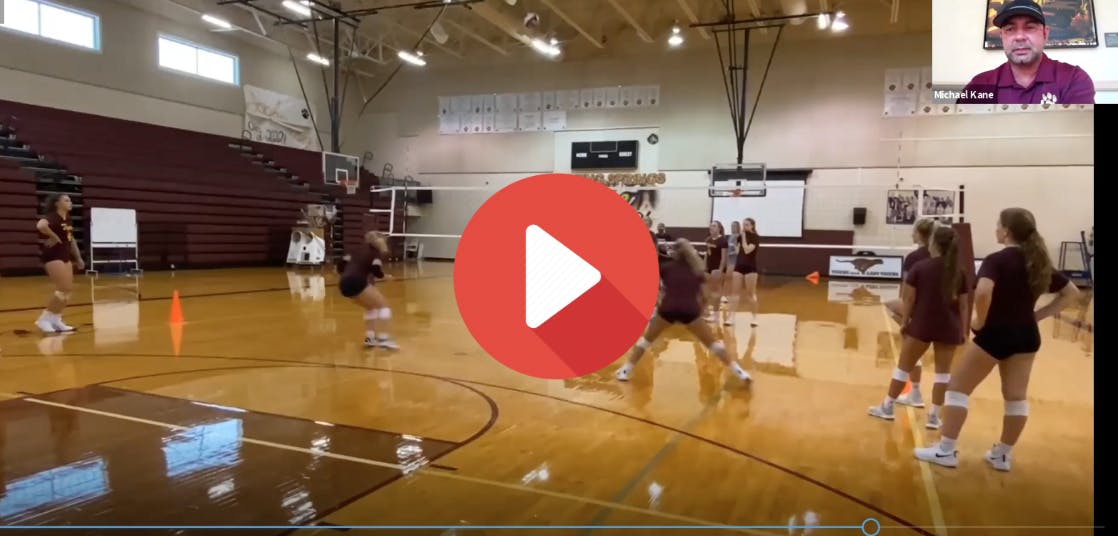
This drill is about getting players to shuffle their feet and having their hands at the ready. It will start with two lines on either side of the court, facing the net. The coach will then be tossing balls to the middle constantly, which causes one player to shuffle in, dig, pass, and then shuffle to the baseline while the person in the other line shuffles in. 

After a player does this two or three times, they go to the back of the line so the person behind them can get their reps. 

This drill helps coach players to keep their hands out in front of them at all times, which is going to benefit them in all aspects of the game, and at every level. And if players can get comfortable moving four to five feet laterally while executing a dig, that could make the difference between winning and losing.

Monday, February 17, 2025

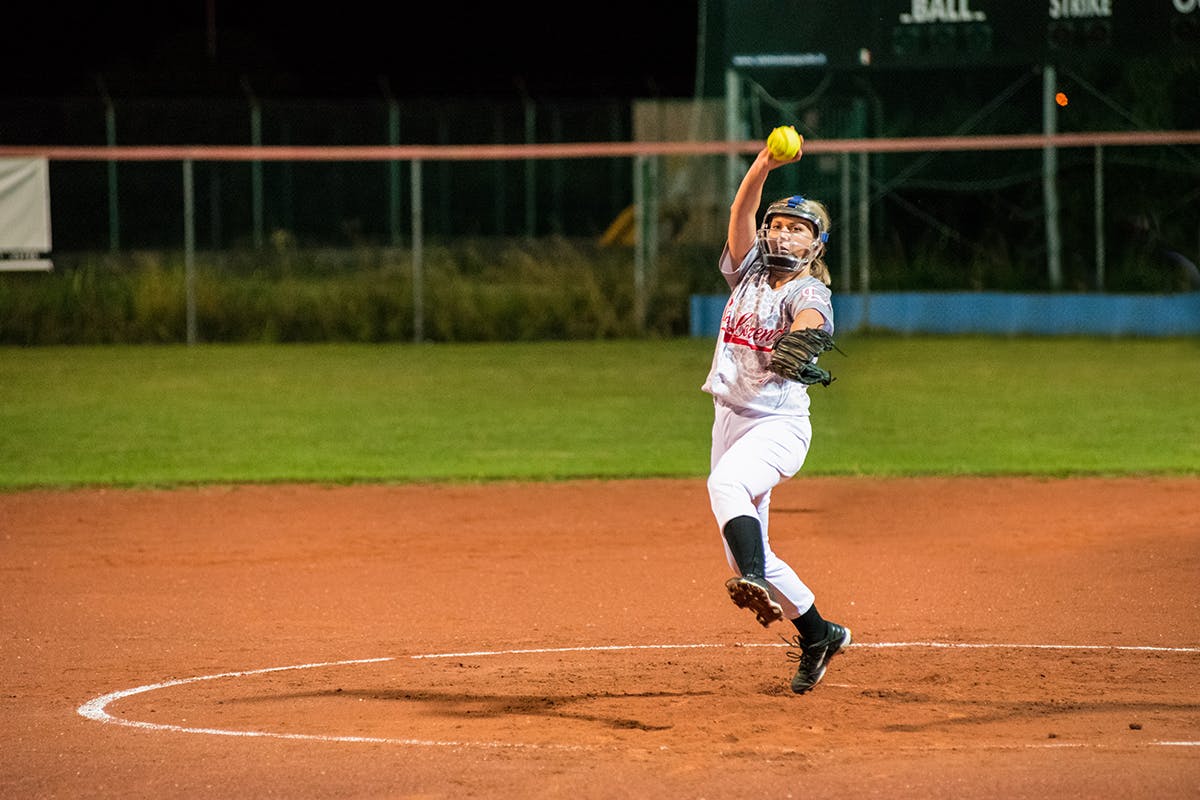
US Sports Softball: How to Find and Develop Elite Softball Pitchers and #3 Oklahoma vs Long Beach State Highlights


  • By Grant Young

Countless youth and high school softball pitchers have impressive talent. But there’s a major difference between a pitcher who can perform at the game’s lower levels compared to one who is prepared to excel in college. 

And it can often be difficult to discern between a sure-fire college prospect and a pitcher who isn’t likely to succeed past high school. In fact, many of the tell-tale signs don’t be seen while the pitcher is performing on the field.

This is why it’s crucial to understand what to look for in a pitcher when it comes to recruiting them to the next level. 

And Texas high school softball coaching legend Amanda Wolf-Schramm is the perfect person to help coaches figure that aspect of their job out. 

Coach Wolf-Schramm is currently the head varsity coach at Smithson Valley High School in Texas. This past year, she earned the 400th win of her high school softball coaching career. Prior to her becoming Smithson Valley’s head coach in 2019, Coach Wolf-Schramm created successful programs at Texas’ Bastrop and Elgin high schools.

While Coach Wolf-Schramm is a high school coach, her ‘Pitching’ softball course from the Texas High School Coaches Association & Coaches Education Foundation contains a masterclass of wisdom for softball coaches of all levels. 

But Coach Wolf-Schramm’s lessons aren’t just for college softball coaches. Those coaches looking to develop pitchers at every level can gain wisdom on how to develop and hone their own pitching staff to make them more appealing to collegiate coaches and increase their chances of fulfilling their dreams of playing at the next level. 

We have taken some of the best nuggets from Coach Wolf-Schramm’s course and distilled them into bite-sized lessons that you can benefit from today. 

What to Look For in Pitcher

Before a softball coach even begins to assess a pitcher’s ability on the field, Coach Wolf-Schramm believes the first thing they should be looking at is the pitcher’s positive work ethic. 

What exactly does this mean? It means that a pitcher should have the same work ethic regardless of whether there are eyes on them.

Coaches should want to recruit pitchers who are working just as hard in the bullpen by themselves or taking notes for their teammates in the dugout during the game as they are when their coach is standing right beside them. 

While this can be difficult to discern (most players have a good idea when they’re being watched, even if it’s subtly so), taking a bit of extra time to watch a player’s work ethic out of the corner of your eye can tell you a lot about whether they’re the type of person you can build a positive culture around. 

You also want to keep a keen eye on whether a pitcher is showing negative emotion when on the mound. Because pitching is such a rollercoaster ride, the most successful pitchers will remain even keel in the good moments and in the bad. And if a pitcher is reacting negatively to an umpire’s call, a teammate’s error, or any of the other negative things that can occur during a softball game, this should come off as a red flag. 

And another thing Coach Wolf-Schramm believes coaches should consider is whether a pitcher is a good athlete. She loves to see a pitcher playing another position when they’re not pitching. And at the very least, she wants to see that her pitchers at the high school level are also hitting, as well. If they are then they’re likely a good athlete, which is one of the best factors in assessing a player’s ability to perform at the collegiate level.

The Pitching Coach’s Role

Coach Wolf-Schramm believes that there are a few non-negotiable components that go into making a good pitching coach. 

The first one is communication. Coach Wolf-Schramm believes that every pitching coach should be calling constant, daily meetings with their pitching staff in order to assess what is going well, what must be worked on, and any challenges or hurdles that the pitching staff wants to address.

In addition, the pitching coach must act as a liaison for their pitchers and the team’s catchers. A ton of important information must be relayed between pitchers and catchers to maximize the chances of success in a game. And it’s the pitching coach’s responsibility to make sure that information is being discussed. 

In addition, pitching coaches have to be able to communicate and build relationships with their pitchers on an individual level. Why would a pitcher listen to their coach’s suggestions if they don’t trust them as a person, or feel like the coach doesn’t care about their best interest? 

All of these reasons show why communication is paramount to being a good pitching coach at any level of the game. 

Pre Season Workouts For Pitchers

Coach Wolf-Schramm has a few great pieces of advice when it comes to a pitcher’s workouts during the pre-season.

One is that, whenever they’re playing catch, they should do so with a home plate at the feet of who/whatever they’re throwing to. 

Because pitchers are inherently competitive, having a (likely rubber and transportable) home plate at their target’s feet is guaranteed to make them want to execute strikes. 

However, this doesn’t mean their target or catch partner should remain in a squat. Rather, just by having the home plate there, the pitcher will remember the purpose behind their play catch. They will pay more attention to detail about what they’re feeling while throwing and will be more keen to correct their mistakes. 

This leads to a more intentional, focused play catch that isn’t merely going through the motions.

Sunday, February 16, 2025

The Rock Almighty. Should a Christian Follow Societal Norms Concerning Sexual Behavior? And GALACTIC COWBOYS Interview! (Monty, Ben & Dane!)

The Rock Almighty Shaker Of Heaven and Earth. Now Streaming On US Sports Radio!


  • Author James Rondinone

PART 6 TESTIMONY

Should a Christian Follow Societal Norms Concerning Sexual Behavior?

There are probably many examples of societal norms pertaining to sexual behavior that we could present. Instead of overkill on this subject, let’s just mention a couple of them.

Let’s begin by taking a look at some articles that I found online pertaining to sexuality. This one has to do with the Romans during the time of Christ.

3 AWFUL FEATURES OF ROMAN SEXUAL MORALITY

Roman Sexuality Was [about] Dominance

Sexuality was tied to ideas of masculinity, male domination, and the adoption of the Greek pursuit of beauty.                                                                                                                                

Romans did not think in terms of sexual orientation. Rather, sexuality was tied to ideas of masculinity, male domination, and the adoption of the Greek pursuit of beauty. “In the Roman mind, the strong took what they wanted to take. It was socially acceptable for a strong Roman male to have intercourse with men or women alike, provided he was the aggressor. It was looked down upon to play the female ‘receptive’ role in homosexual liaisons.”                                                     

A real man dominated in the bedroom as he did on the battlefield. He would have sex with his slaves whether they were male or female; he would visit prostitutes; he would have homosexual encounters even while married; he would engage in pederasty (see below); even rape was generally acceptable as long as he only raped people of a lower status. “He was strong, muscular, and hard in both body and spirit. Society looked down on him only when he appeared weak or soft.” So, Romans did not think of people as being oriented toward homosexuality or heterosexuality. Instead, they understood that a respectable man would express his dominance by having sex—consensual or forced—with men, women, and even children.                                  

Roman Sexuality Accepted Pedophilia                                                                                                

The pursuit of beauty and the obsession with the masculine ideal led to the widespread practice of pederasty—a sexual relationship between an adult man and an adolescent boy. This had been a common feature of the Greek world and was [adopted] by the Romans, who saw it as a natural expression of male privilege and domination. A Roman man would direct his sexual attention toward a slave boy or, at times, even a freeborn [child] and would continue to do so until the boy reached puberty. These relationships were seen as an acceptable and even idealized form of love, the kind of love that expressed itself in [poems, stories, and songs].                                                                                                                             

In the Roman [world,] a man’s wife was often seen as beneath him and less than he was, but a sexual relationship with another male, boy or man, represented a higher form of intellectual love and engagement. It was a man joining with that which was his equal and who could, therefore, share experiences and ideas with him in a way he could not with a [woman.] Pederasty—pedophilia—was understood to be good and acceptable.

Roman Sexuality Had a Low View of Womanhood

Women were not generally held in high regard in Roman culture. “Women were often seen as weak physically and mentally. They were inferior to men and existed to serve the men as little more than slaves at times.” A woman’s value was largely in her ability to bear [children,] and if she could not do so, she was quickly cast off. Because lifespans were short and infant mortality [was] high, women were often married off in their young teens to maximize the number of children they could bear.

When it came to sexual mores, women were held to a very different standard than men. Where men were free to carry on homosexual affairs and to commit adultery with slaves, prostitutes, and concubines, a woman caught in adultery could be charged with a crime. “The legal penalty for adultery allowed the husband to rape the male offender and then, if he desired, to kill his wife.” Under [Augustus,] it even became illegal for a man to forgive his wife—he was forced to divorce her. “It is not enough to suggest that women were under-appreciated in Roman culture. There are many instances where they were treated as second-class human beings, slightly more honored than slaves.” 76

I think we would agree that in America [today,] most of society would not approve of pedophilia. What about homosexuality or lesbianism? Again, I think we would agree that in the ‘50s and  ’60s, homosexuality or lesbianism was considered by society as being perverse, unnatural sexual acts between two people of the same sex. That was until the 1970s, which was called the ‘Me Decade.’ This was a time when many marginal groups continued their fight for equality. Over time, some forty plus years later, on June 26, 2015, in the case of ObergefellHYPERLINK "https://en.wikipedia.org/wiki/Obergefell_v._Hodges" v. Hodges, the Supreme Court struck down all state bans on same-sex marriage.

With these thoughts in mind, there is confusion in many churches as to whether to sanction marriages between two people of the same sex or not. Here are two articles that pertain to such. The first has to do with a mainstream church in the USA. The second has to do with the Church in Wales.


WHY A VOTE ON GAY CLERGY AND SAME-SEX MARRIAGE COULD SPLIT THE UNITED METHODIST CHURCH                                                                                                                                             

The church is considering a proposal to end its prohibitions on same-sex marriage and ordaining gays and lesbians, but a rival plan to keep those policies in place appears to have more support.

The United Methodist Church is meeting in St. Louis this week to vote on whether to strengthen or end its prohibitions on same-sex marriage and ordaining gays and lesbians — a decision that could splinter the church.

The denomination has been grappling for years with how to respond to social changes that have buffeted other mainline Protestant congregations, with individual United Methodist churches adopting contradictory — and sometimes competing — practices. At some churches, clergy members have come out as gay or lesbian from the pulpit, while other pastors have preached that homosexuality is a sin.

With [twelve] million adherents worldwide, including seven million in the United States, the church gathered 864 members in St. Louis to vote on the way forward.

But the meeting has laid bare the denomination’s fissures. “The church,” said Gideon Salatan, a member from the Philippines, “[Is] grievously wounded.”

Here’s a look at the two leading proposals, known [as] the Traditional Plan and the One Church Plan. No matter which garners the most votes, there are fears that significant numbers of people will be dissatisfied with the [outcome,] and many will ultimately leave.                                                         

What is the Traditional Plan?

This proposal essentially maintains the church’s practice of denying gays and lesbians equality and appears to have the most support. The church’s policy, which dates from 1972, states that “[The] practice of homosexuality is incompatible with Christian teaching.”

The plan prohibits gays and lesbians from becoming clergy and forbids same-sex marriage. It defines homosexuals as people in same-sex marriages or civil [unions] and those who “publicly state that they are practicing homosexuals.”

Clergy who officiate at same-sex weddings would receive a [one-year] unpaid suspension. A second offense would result in removal from the clergy.

The policy would also require groups within the denomination to “certify adherence” to the rule. Those who refuse would be “urged” to leave the United Methodist Church, which would prohibit them from using the denomination’s name or logo.

The primary supporters of the proposal are church members from African nations and the Philippines, as well as evangelical Europeans and Americans, who expressed a desire to retain the church’s longstanding rules.

“I was born into a traditional church, so I am learning [what God’s will is],” Julia Stukalova, a church member from Russia, said Monday. “God loves everyone, but he wants everyone to live according to his word.”                                                                                                                           

And what’s the alternative?

The One Church Plan would allow individual churches or regions to decide for themselves whether to hire gay clergy or to perform same-sex weddings.

It would also eliminate the church policy that homosexuality is incompatible with Christianity.

Churches that choose not to hire gay and lesbian pastors or to conduct same-sex weddings would not be punished. Bishops and clergy who choose not to officiate at ordinations or same-sex weddings would be protected from being sanctioned.

The majority of support for the proposal comes from self-identified progressives, many of whom are from the United States.

“I will be very sad not to be able to claim the cross and the flame because I am being kicked out,” said Cheryl Johnson Bell, a clergy member who said her family had been part of the church for five generations.                                                                                                                             

What’s next for the church?

The church is scheduled to vote Tuesday about which plan to pursue.

If the Traditional Plan is successful, some places, particularly in California, would probably begin preparing to leave the United Methodist Church, according to church members.

If the One Church Plan prevails, congregations in Africa and Asia might start preparing to form an independent Methodist church.

Any exit, however, involves a fairly cumbersome process and would most likely not occur for several [months] or even years.

“It is true that some persons and some local churches have an interest in withdrawal and separation,” said Kenneth Carter, president of the church’s Council of Bishops. “Unfortunately, the losers will be the most vulnerable, who won’t have the protection of a united church.”77


EVANGELICALS PUSH FOR NEW BISHOP AFTER CHURCH IN WALES ALLOWS PASTORS TO BLESS GAY MARRIAGES

By Nicole Alcindor, CP Reporter

Evangelicals who hold to traditional Christian teaching on sexuality and marriage are pushing for a new bishop to be appointed in the Church in Wales following the results of an early September vote to allow pastors to bless same-sex marriages.

The Church in Wales, composed of six Anglican dioceses in the United Kingdom, does not allow clergy to conduct legally binding same-sex marriage ceremonies. However, in a Sept. 6 vote of 28 to 12 in favor with two abstentions, clergy were approved to host blessing ceremonies for same-sex unions in their churches.

On Monday, members of the Evangelical Fellowship within the Church in Wales expressed formal disagreement with the vote. 

In a statement, EFCW addressed the Church in Wales Governing Body, asking for more "clarity and consistency" in the plan to protect and care for dissenting churches and leaders.

EFCW is calling for a new bishop, whom it said, can represent those who "hold to an understanding of the doctrine of marriage as only being between a man and a woman."

The fellowship further expressed that it finds that the Governing Body of the Church in Wales "no longer properly represents the convictions of the wider membership of the Church in Wales."

"[EFCW] deeply regrets the recent decision of the Governing Body to [authorize] a liturgy to bless same-sex civil marriages and partnerships [and] we [recognize] the difficulties faced by the bishops and others within the Church in Wales as they have wrestled to bring better pastoral provision for those who are LGBT," the statement reads. 

The statement acknowledges that the [Church] has "not always engaged well" with the LGBT community by being "deeply insensitive" and "hurtful." 

"This is something of which we repent unreservedly," the statement expressed. "The Good News of Jesus Christ is for all people, regardless of sexual orientation. However, the decision to introduce a rite allowing for the blessing of same-sex unions, while well-intentioned, is the wrong step for the Church to take."

The EFCW finds that the Church in Wales has "departed from" the apostolic faith as revealed in Scripture. 

"The only biblical context for sexual activity is heterosexual marriage," the statement argued. "The new rite for the blessing of same-sex unions, which introduces liturgy permitting the blessing of same-sex civil marriages, has, de facto, changed the Church's doctrine on marriage."

EFCW also said they find that the approved vote has caused damage to the Church in Wales' relationship with "the majority of the provinces in the global Anglican Communion" — which has taken a stance "committed to an orthodox understanding of human sexuality."

Relationships with bishops and clerics who choose to perform such blessings are now "impaired," the statement stated. 

"This decision has brought disunity to God's Church," EFCW added. "Such disunity is a grave and serious matter which grieves the heart of God. The decision [dishonors] those [who] persuaded that Scripture teaches that sexual activity is restricted to heterosexual marriage, have chosen to remain celibate, often at tremendous personal cost."

As a result of the vote, ECFW claims there are a "significant number of Welsh Anglicans" who are faced with the "tough decisions as to where their future spiritual home lies." There "have been and will be resignations from Clergy, Lay Readers, Worship Leaders, Church Wardens, Sunday School Teachers, and parishioners."

"A number have withdrawn their regular giving to their churches. Others are determined to remain in the Church in Wales structure. A significant number are seeking help and guidance on deciding their future in the Church in Wales," the statement adds.

"EFCW is committed to helping in this discernment process, including conversations with those offering alternative Anglican structures, and will continue to offer fellowship for all Evangelical Anglicans regardless of whether they stay in the Church in Wales or leave it."

While some clergy have been told that dissenting ministers will not have to surrender their church buildings for blessing services, the statement warns that other bishops "believe they can exercise their prerogative to insist that a same-sex blessing service take place in any building in their Diocese, regardless of the conscience of the local cleric."

"This needs clarity and consistency across the [province] with details on how dissenting PCCs, Lay Officers, congregations (as well as ministers) may be protected and cared for if they do not wish their church buildings to be available for such services," the statement asserts. 

Even with the current "difficulties, [pain,] and grief," the fellowship assures that it will continue to place its "hope and trust in God."

"God has not abandoned Wales or His people," the statement concludes. "We pray for all those engaged in proclaiming Christ boldly and faithfully to this nation, for it is in Him that help and salvation are found."78

The principle in which I wanted us to gain perspective is the fact that society determines what is considered acceptable sexual moral behavior. And this consideration can change from generation to generation, from centuries to centuries. However, this question remains.

Should a Christian follow societal norms with respect to approving certain sexual behaviors, or is there another avenue that he/she should pursue?

Endnotes

76 Tim Challies. “Roman Sexuality Was About Dominance,” .

 77Timothy Williams. “Why a Vote on Gay Clergy and Same-Sex Marriage Could Split the United Methodist Church,” 2019. .

78Nicole Alcindor. “EVANGELICALS PUSH FOR NEW BISHOP AFTER CHURCH IN WALES ALLOWS PASTORS TO BLESS GAY MARRIAGES,” THE CHRISTIAN POST. 30 September 2021 .

Amazon: https://amzn.to/2ITJ1wj

Website: http://bit.ly/1RQnYJ8           

New Covenant Ministries - Ministerios NuevoPacto - Harbor Church, Block Island                                                                                                                                                                                                          

Sunday & Thursday Worship - Domingo & Jueves 7:00PM                  

My name is James Rondinone. I am a husband, father, and spiritual leader.

I grew up in Massachusetts and began my own spiritual journey early on in life.

I attended Bible college, having completed a two-year Christian Leadership Course of Study and graduated as valedictorian (Summa Cum Laude).

Studying and teaching the Word of God has been a passion of mine for over 20 years.

Saturday, February 15, 2025

US Sports Golf. Short Game 101 and Rory McIlroy shoots 5-under 67 Round 2 The Genesis Invitational


  • By Charlie Anderson

Golf is a game that requires a combination of a few different skills. The first is the ability to put the ball in play with a tee shot. The next is the approach shot to the green. The last step, and most important, is the short game. The short game is a combination of pitching, chipping, bunker shots, and putting.

Why is short game so important?

A golfer’s short game is a part of golf that is often overlooked. Many golfers neglect their short game because they want to be able to hit long drives. Golfers think they will play well because they hit the ball further than others. This is a common misconception. The majority of shots are played on or around the green. This is why it is instrumental to have a sharp short game.

Types of short game shots

Pitching: Mastering the pitching technique is essential for achieving accurate and controlled shots around the green. Focus on maintaining a consistent tempo, using the proper club selection, and executing a smooth, controlled swing. Develop a reliable short backswing and follow through with a downward strike to generate optimal height and spin.

Chipping: Chipping requires precision and touch. Use a variety of clubs, such as a pitching wedge, sand wedge, or even a hybrid, to execute a range of chip shots depending on the lie and desired trajectory. Practice distance control by varying the length of your backswing and focusing on the rhythm of your swing. Experiment with different landing spots to develop versatility in approaching the green.

Bunker Shots: Bunker shots can be intimidating but with proper technique, they can be mastered. Start by opening the clubface and aiming slightly left of your target. Position the ball slightly forward in your stance and focus on making a shallow, controlled swing. Use the sand to your advantage by entering the sand a couple of inches before striking the ball, allowing the club to slide underneath it.

Putting: Arguably the most crucial aspect of the short game, putting demands precision and consistency. Develop a consistent putting routine, focusing on alignment, grip, and a smooth pendulum-like stroke. Practice lag putting to improve distance control, and dedicate time to mastering short putts to ensure confidence under pressure.

Ways to Improve

Focus on Distance Control: One of the keys to success in the short game is distance control. Practice hitting shots to specific targets at various distances to develop a feel for different clubs and swing lengths. This will enhance your ability to gauge the necessary force and touch required for different shots around the green.

Mental Game: The short game heavily relies on mental fortitude and decision-making. Stay focused and visualize your shots before execution. Develop a pre-shot routine that helps you get into the right mindset and approach each shot with confidence.

Practice Variety: Vary your practice sessions to simulate real-life playing conditions. Include uphill, downhill, and sidehill lies in your training routine. Experiment with different slopes and bunker conditions to become comfortable with a wide range of scenarios you might encounter on the course.

Short Game Challenges: Set up specific challenges or games during practice sessions to enhance competitiveness and simulate on-course pressure. For example, create a putting course with different distances and obstacles or challenge yourself to get out of a bunker in the fewest strokes possible.

null

Conclusion

The short game is arguably the most difficult part of golf. There is no doubt that it is the most important. It is something that every player must master if they want to be great.

Friday, February 14, 2025

US Sports Ice Hockey - 7 Effective Puck Protection Drills for Defenseman and United States vs. Finland | 4 Nations Face-Off Highlights


  • By Jacob Crabtree

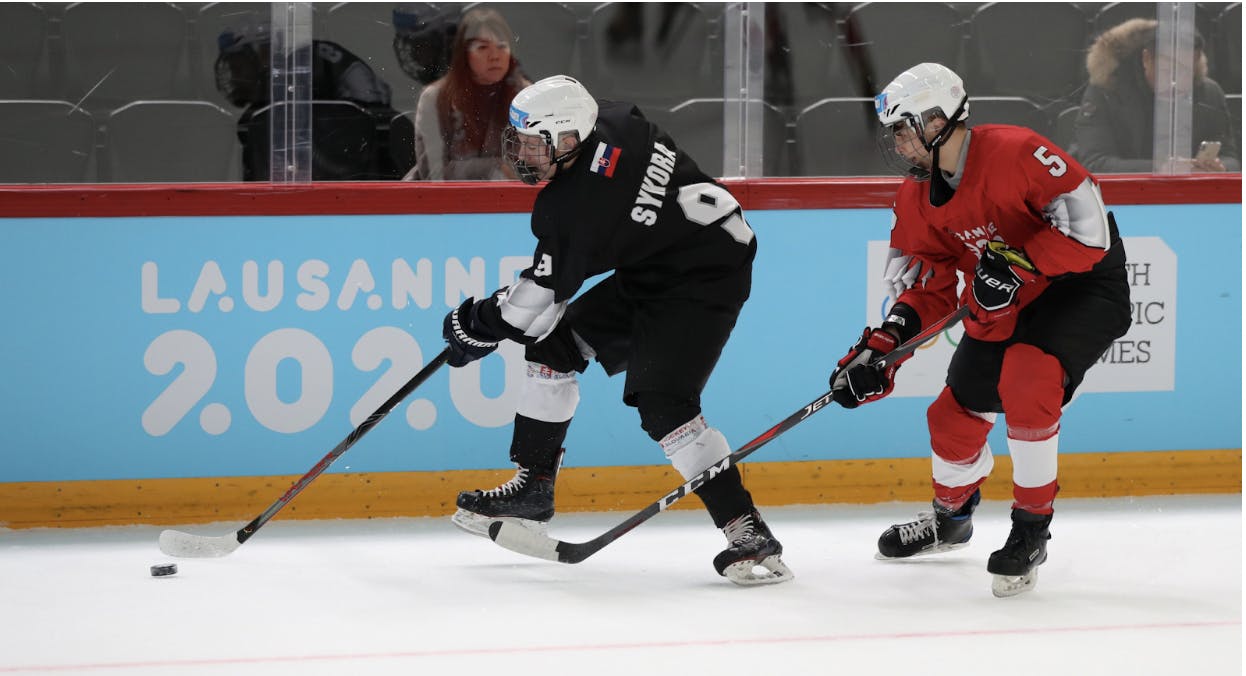
In order to shine as a hockey defenseman, mastering puck protection is crucial for both defensive and offensive success. This course details various drills and skills necessary for a defenseman to thrive when protecting the puck in both zones, generating scoring chances for their teams. 

Here are some essential drills for defensemen to become puck-protecting beasts.

Small Area Games:

2 v 2 or 3 v 3 Picket Fences:

Picket fences are great small-area games for defensive players enforcing puck protection in a limited amount of space. 

Offensive players get two points for scoring a goal and defensemen receive one point for skating the puck out or through the two cones set up at the blue line. 

How the drill is set up is defenseman and offense are lined up on a preferred side of the zone (the picket fence) and two cones are positioned on the opposite side next to each other at the blue line. 

The offensive players try to create chances and passing lanes by being diligent with the puck and try to score some goals. While defenseman try to cover offensive players and protect the puck in fashions that don’t result in turnovers or chances for the other team.

 Picket fences enforce quick decisions in tight spaces preparing players for game-like circumstances.

FCG:

Four Corners teaches players how to effectively make decisions with the puck with limited time and space.

The drill can be either 2 v 2 or 3 v 3 in the middle of the four corners. 

Cones are set up in four separate corners on a preferred side of the ice with one player staying in each corner, and four players in the center. 

With two distinct teams, two from each are in the middle of the zone, and teammates for either team are in the corners diagonal from each other. A puck is dumped into the middle of the zone where players from either team gain possession and protect the puck from the other two players. 

The players in the middle then try to achieve passing to one of their players in the corner to gain points. 

Where one point is gained for each pass made to a teammate in a corner.

2 v 1 Puck Protection Help:

This drill employs defensemen with abilities to escape forecheckers and learn how to move without the puck. 

Two extra players are standing at the tops of the circles, the coach dumps a puck into the corner where the defenseman gets a head start and two forwards forecheck the defensemen. 

The defenseman tries to protect the puck from the forwards and can use the two extras as outlets for passes to create space and time. 

The two forwards try to take the puck from the defenseman and score on the net. 

If the offensive players score they get one point, but if the defenseman is able to protect the puck and escape the forecheckers he gets two points.

 Two-on-One Battle:

While one-on-one drills are very common for developing defenseman skills, this drill enables hockey defensemen to make decisions under pressure. 

A puck is dumped into the corner where the defenseman goes first, and the two offensive players chase but do not actually take the puck. 

The forecheckers flip their sticks around and chase the puck handler building comfortably for the defenseman with forecheckers. 

For the defenseman to win the drill, they must skate the puck out or the coach blows the whistle. 

Simple yet effective in establishing puck protection skills in the most vital part of the ice for a defenseman.

Basic Puck Protection Around the Net:

Variation #1:

These two variations are very basic drills, but without a doubt essential to master for a defenseman building comfortably with pressure. 

Coach dumps a puck into the corner from a preferred side of the blue line.

Defensemen are lined up behind the blue line, where one player starts the drill from the hash marks on the same side of the zone as the coach.

The player begins skating backward portraying an actual dump-in, transitions to forwards, picks up the puck, but observes and surrounds the puck. 

Takes the puck around the net protecting the biscuit from an imaginary or actual forechecker and proceeds to make a crisp pass to the line of defenseman at the blue line. 

Enabling the next player in line to go.

Variation #2:

The coach and defenseman are in same spot as Variation #1, the puck is dumped into the corner, the defenseman starts skating backward, transitions to forward, and observes where to take space. 

Protects the puck from the forechecker and takes the puck to the back of the net, stops, wheels out the same side he/she started from, and makes a firm pass to the line of players at the blue line. 

To make the drill more game-like and possibly more enticing, the coach could throw an actual forechecker in there and tell the defenseman to make a decision around the net in any matter the player wishes. 

Hopefully getting around the forechecker and making a pass to the line of players in one fashion or another. 

Building very essential game-like skills to protect the puck from forecheckers.

Longtail Puck Protection Drill

Longtail is a drill that promotes offensive skills but teaches players how to protect the puck and keep moving to create a scoring chance in the offensive zone. 

Two lines of players are positioned on opposite sides of the blueline facing the net, two players on both sides are positioned stationary at the top and bottom of the circles. 

Where two cones on both sides of the ice are set up about three to four feet from the tops of the circle.

The first player in line starts the drill on one side, does a figure eight around both stationary players while protecting the puck from their stick checks. 

Finishes the figure eight at the top of the circle, comes around the cone, and takes a quick shot on net following their rebound. 

The next player in line can go once the player finishes his/her figure eight. 

After the player takes their shot, they take the place of the stationary player at the bottom of the circle. 

Rotating from taking their shot, moving to the lower stationary player, advancing to the higher stationary player, and back into line, forming an effective drill system. 

An excellent drill when stations are set up in different areas of the ice.