Now Streaming On US Sports Radio!

US Sports Net Today!


Live Play-by-Play, Updates, Highlights and More! on US Sports Network!
[Chrome Users-You may have to click on the play button twice to listen]
US Sports Network Powered By Gorilla Sports!


US Sports Radio
The Las Vegas Raiders Play Here
Fitness and Sports Performance Info You Can Use!
The Scoreboard Mall
The Rock Almighty Shaker Of Heaven And Earth!
The Coolest Links In The Universe!

Sunday, December 29, 2024

US Sports Basketball: Three Effective Early-Season Defensive Basketball Drills and MTSU Blue Raiders vs. Tennessee Volunteers Full Game Highlights


Three Effective Early-Season Defensive Basketball Drills

  • By Grant Young

The start of the season is a crucial time for players at all levels to establish good habits through effective basketball drills. As teams begin to come together, it's the perfect opportunity to lay a solid foundation that can influence performance throughout the entire season. 

Starting with structured drills also fosters a sense of discipline and teamwork. During this phase, players can learn how to communicate effectively on the court, understand their roles, and build chemistry with one another. Drills that emphasize teamwork not only improve individual skills but also cultivate a cohesive unit that works well together, which is vital for success in competitive environments. 

The start of the season is when players are most open to feedback and learning. They are often eager for guidance as they want to make an impression. By introducing good habits through drills now, players are more likely to internalize the lessons and apply them consistently during games.

All of these reasons indicate why there’s no better time than right now, as the basketball season is about to begin, to find a few drills that could become staples for your team, especially early in the year. This is why we’ve pulled three perfect early-season defensive drills from three elite head coaches that can provide you with a blueprint for how to get your team to mid-season form before your opponents on defense. 

Mark Downey - No Man’s Land Drill

Mark Downey enters into the fifth season of his second stint as head coach at Arkansas Tech and will be in his ninth season overall at Tech in 2024-25. Downey’s first stint saw him lead the Wonder Boys from 2006-07 to 2009-10.

After guiding the Wonder Boys to their first winning season in five years with a 16-15 record and an appearance in the GAC Tournament Championship game in 2022-23, Downey guided the team to a 25-7 overall record and an 18-4 mark in the Great American Conference in 2024.

Coach Downey’s ‘No Man’s Land’ Drill from his ‘Practice Drills & Guard Individual Development’ course is a fantastic way to instill basic but vital fundamental techniques when establishing your team’s identity on the defensive end of the floor. 

This drill begins with five players on defense in a circle in the paint while a coach is under the hoop with a ball. There will be one offensive player on the block while the other four offensive players are spread out along the wing. The defensive players need to hold hands and spin while the coach with the ball rolls it out to one of the players on the wing. 

Whichever player in the spinning circle that’s closest to the player who receives the rolled ball must immediately go and close out. The next closest player needs to get in the nearest passing lane. Two other players need to close out the help side, and then the fifth defensive player must take care of the opposing post player. 

At this point, the drill becomes a live scrimmage scenario. There can be a ton of different variations to this drill (such as a different offensive alignment, emphasis on pick and roll defense, or defensive switching) but the key part to it is that the defenders must be communicating and making fast decisions about who to guard once the ball gets rolled. 

Dave Adkins - 3 Man Touch to Transition Defense Drill

David Adkins joined the Washington women's basketball program ahead of the 2024-25 season, bringing 15 years of collegiate and NBA experience to the Huskies' bench as an Associate Head Coach. Known for his incredible work ethic and skill in player development, Adkins' career reflects a deep commitment to excellence and mentorship.

Prior to his appointment at Washington, Adkins served as the Director of Player Development for the Denver Nuggets and their NBA G League affiliate, the Grand Rapids Gold, during the 2023-24 season. His NBA tenure also included pivotal roles with the Portland Trail Blazers (2022-23) and the Washington Wizards (2014-2021). 

Coach Adkins’ ‘Player Development: Offensive and Defensive Combination Drills’ course details a 3 Man Touch to Transition Defense Drill that should be on every coach’s practice plan in the early parts of a season. 

This drill begins with three players who each make a dunk or layup. Once they do, all three run back to transition defense while three other players push it down the court. The key for defenders at this point is shrinking the floor along the wings, understanding where each transition player is, and making quick closeouts if and when the ball handler spots up or passes to a shooter along the wing. 

This is a simple drill that emphasizes quick repetitions, conditioning, communication, and teamwork on the defensive end, and can be done daily at the start of a season to instill these transition defense principles. 

Joe Pasternack - Wildcat Drill
null

Joe Pasternack is in his eighth season at the helm of the UC Santa Barbara Men's Basketball team. Over his seven seasons with the program, he has accumulated a 148-68 record for a winning percentage of .685, the best in school history. His 148 wins are the most in the first seven years of any Gaucho head coach.

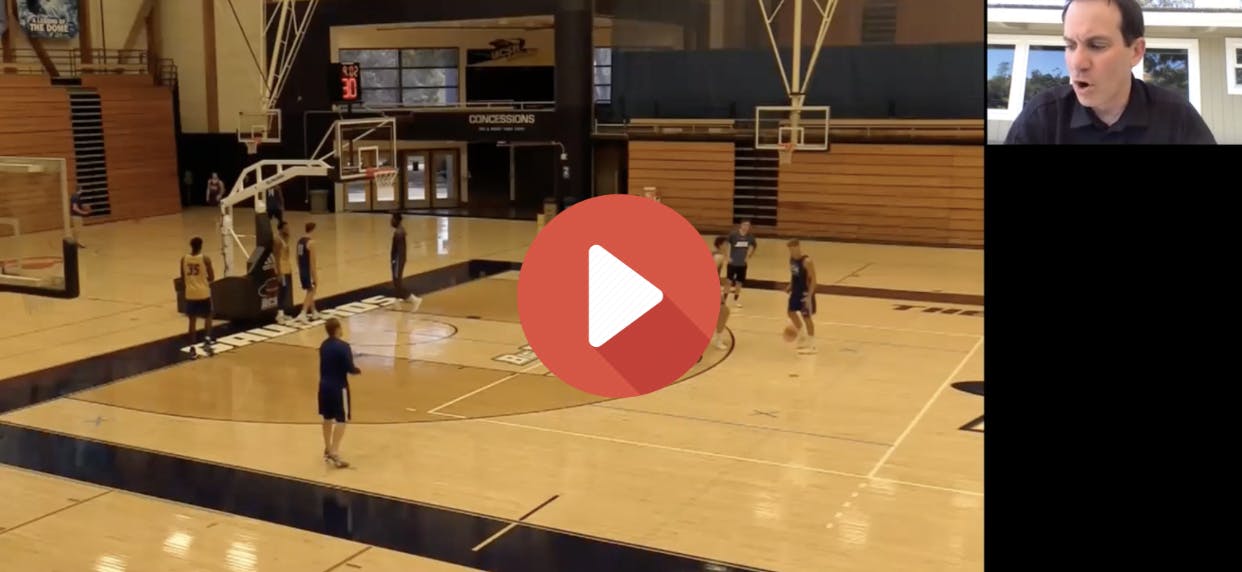
Coach Pasternack’s ‘Program-Defining Drills’ course’ discloses his ‘Wildcat Drill’, which is primarily focused on defending the ball screen. It begins with one post player on defense at the top of the post. The player he’s guarding makes a pass then cuts down into the paint, where a coach is waiting to set a screen with a protective pad.

The defender must get past that back screen, defend the ball in the post, defend a cross-screen, front the post player, then end with however the coach wants their players to defend the ball screen with their post player. 

Placing these players in all these scenarios in rapid succession will give them vital reps at the beginning of a season they’ll need down the stretch. 

Saturday, December 28, 2024

US Sports Partner Spotlight: Zola

Take 20% OFF remaining gifts on your registry post-wedding
https://tinyurl.com/Zola1224
30% off Invites & Paper with code PAPER30
https://tinyurl.com/ZolaPAPER30

The Zola store carries everything couples want and everything guests love to give, including 50,000 of the best gifts and honeymoon funds.

US Sports Radio affiliate partner:
http://www.USSportsRadio.net

Friday, December 27, 2024

The Rock Almighty. New Year’s Resolution and New Year's Revolution!


New Year’s Resolution

  • Author Arindam Dey

A New Year's resolution is a tradition in which a person resolves to continue good habits, change an undesirable trait or behavior, achieve a personal goal, or otherwise improve their life at the start of a new year. It is most common in the Western World, but it can also be found in the Eastern World Every January, thousands of people all around the world set a goal to help them start the new year off right. But how did this tradition begin? We look at the history of New Year’s resolutions.

Some 4,000 years ago, the ancient Babylonians are thought to have been the first to establish New Year's resolutions. They were the first to have recorded New Year's Eve celebrations. For them, the year began in mid-March, when the crops were planted, rather than in January. They promised the Gods that they would pay their debts and return any borrowed items. These commitments could be seen as a precursor to our New Year's resolutions. In ancient Rome, the tradition of making New Year's resolutions endured. In 46 B.C., Emperor Julius Caesar introduced a "calendar," declaring January 1st to be the start of the new year. Janus would be honored with sacrifices and pledges of good behavior for the coming year. In the Middle Ages, people set New Year's resolutions as well. By putting their hands on a live or roasted peacock, knights would renew their commitment to chivalry.

The first day of the new year became a traditional occasion for early Christians to reflect on their past mistakes and resolve to do and be better in the future. By the 17th century, New Year's resolutions appeared to be commonplace. In 1740, the English clergyman John Wesley, founder of Methodism, created the Covenant Renewal Service, most commonly held on New Year’s Eve. also known as "watch night services". Watch night services on New Year's Eve are now common among conservative churches, particularly African American denominations and communities, and are often spent praying and setting resolutions for the next year. Despite the religious origins of the tradition, New Year's resolutions are now primarily a secular ritual. Instead of making commitments to the gods, most individuals make goals for themselves, with the sole purpose of improving themselves.

Why do people make New Year’s resolutions? New Year’s Day is the most popular time of the year for people to hit the proverbial “reset button.” Eat healthier, exercise more, lose weight, save more money, learn a new skill, read more, watch less TV or mobile, travel more, quit smoking, get a new job, spend more time with family and friends, and so on are the most popular resolutions. Most people, I believe, want to have a second chance to improve their lives. The New Year presents a clean slate, an opportunity to start again. When we make New Year's goals, we're using a notion called self-efficacy, which says, "I have a sense of control over what's going on in my life by aspiring to a goal and following through on it."

The annual ritual of making resolutions does not have to be a failure. Sometimes the difference between success and failure comes down to picking the proper goal and following the correct approach to get there. Above all, remember to be kind and flexible with yourself, and to acknowledge and applaud any and all progress. It's not only about achieving the end objective; it's also about enjoying the adventure along the way.

Thank you.

[1] “New Year's resolution”, Wikipedia

[2] “Exploring the history behind New Year’s resolutions”, The Real World from Trafalgar

[3] “Why do people make New Year’s resolutions?”, Piedmont

[4] “How to keep your new year’s resolutions”, verywell mind

Article source: https://articlebiz.com

Thursday, December 26, 2024

US Sports Baseball - Three Injury-Prevention Tips For Your Offseason Pitching Program and Team USA is headed to Tokyo!


Three Injury-Prevention Tips For Your Offseason Pitching Program

  • By Grant Young

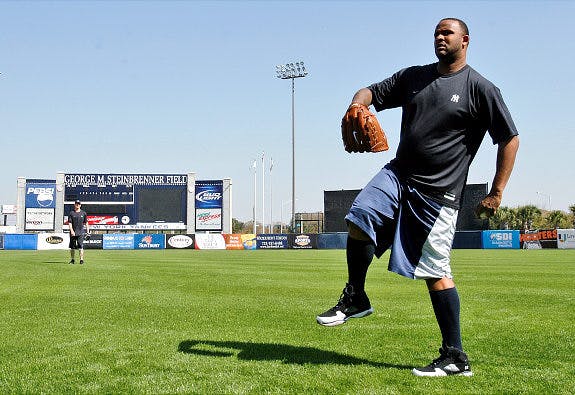
Having a baseball offseason pitching program is crucial for injury prevention. After a long season of pitching, the arm and shoulder muscles need time to rest and recover. Baseball pitching tips for an offseason program should focus on allowing pitchers to employ strengthening and conditioning exercises that can help prevent overuse injuries. By incorporating exercises to improve flexibility, strength, and overall arm health, pitchers can reduce the risk of injury and prepare their bodies for the next season. 

However, this doesn’t mean that a pitcher can’t improve during the offseason. It just means they should be throwing with less volume than they would during the year. In fact, proper mechanics and technique can be emphasized during the offseason, which can contribute to injury prevention during the regular season. 

Every pitcher and pitching coach should know the basics of a proper offseason program: 

A structured strength and conditioning program should be implemented to build overall strength, endurance, and power while also addressing any muscular imbalances. 

Arm care exercises, such as tubing and resistance band work, are essential for maintaining arm health and preventing injuries. 

A gradual return to throwing program should be followed to gradually build up arm strength and throwing volume in preparation for the upcoming season.

But players and coaches need the specifics of exactly what workouts, drills, and pitching volume to utilize in order to set themselves up for (healthy) success during the season. This is why Chans Chapman’s ‘Reagan Pitching, September to June’ course should be a must for everyone within the pitching community. 

Chapman is the head baseball coach of Reagan High School. Since coming to Reagan in 2004 as the Head Baseball Coach, Coach Chapman’s teams have won 9 District Championships, 11 Regional Finals trips, and State tournament appearances in 2014, 2017, and 2018. The 2008 team was ranked as high as #5 in the nation by Baseball America. 

Coach Chapman’s aforementioned course takes us through his goals and routine to ensure that his pitchers will become better in the offseason, all while keeping their arms as healthy as can be. 

Goals

What’s important to understand about high school and college pitchers is that when their regular (spring) season ends with their school team, they typically go straight into summer baseball. And since these innings thrown in the summer are just as intense as in the spring, this is essentially an extension of the season. 

Therefore, Coach Chapman asserts that the true recovery period comes in the Fall, when the pitchers come back to school. 

Depending on what level you’re at, Coach Chapman suggests that it’s advisable to give pitchers at least one month completely off of throwing at some point after their summer baseball ends. Ideally (especially for high school athletes who may be playing other sports) you want to aim for about two months without them picking up a baseball. 

While this may seem counterproductive to development as a pitcher, the arm requires rest if it’s to function and stay healthy in the ways we want it during the season. 

Another hot topic that Coach Chapman addresses is building up to throwing off the mound in a season. While every coach understands that ramping a player up too fast is dangerous for their arm health, some prefer to wait longer than others. A common strategy at the collegiate level is to get players throwing out to 180-200 feet before they even think about pitching at full intensity.

Before they step on a mound, pitchers should have thrown at least 3-5 flat-ground bullpens to get a feel for their pitches and ease back into their rhythm and mechanics. 

Lifting Program

null

As any baseball coach knows, having a regimented strength and conditioning program is integral for ensuring a pitching staff’s sustained success in a season. 

Coach Chapman has his pitchers lift five times per week in the offseason. While that may sound like a lot, not every day is at a high intensity, and the team dials it back to two to three times per week during the season in order to maintain the strength they gained during the offseason. 

While Coach Chapman’s staff does a good amount of heavier lifts like hand cleans and front squats, they’re also meticulous about including body weight and lighter weight exercises that are pitcher-specific and not just about building “weight room strength”. 

Exercises like medicine ball throws, cable raises, pushups, reverse flys, and anything that targets the lower back, abs, and core are extremely important for pitchers because the core is where balance comes from and balance is crucial when it comes to being a pitcher. 

Also worth noting is that, while pitchers may want to compete with one another in the weight room to see who can lift the heaviest, this is dangerous and can lead to injuries. Every pitcher has a different strength capacity, and the only person they should be competing with in the weight room is themselves. 

Pitching Drills

A great offseason (and really at any point in the season) drill to do is what’s called a towel drill. It involves pitchers partnering up with one of them holding a 10-inch towel in their throwing hand. That pitcher will then go through their pitching motion. Wherever their front foot lands, they’ll take three steps and that’s where their partner will place their glove.

The pitcher will then go through their motion at full intensity and try to whack their partner’s glove as hard as they can. Because this drill doesn’t involve throwing a ball, it’s much healthier on the arm. And giving the pitcher a target to hit will force them to stride far and follow through, which builds and reinforces great habits.

Tuesday, December 24, 2024

The Rock Almighty: Born To Die?

 Ultimate Christmas Countdown – Friday, December 8, 2017 | From the Capn's  Pen

Born To Die

  • Author Onyekachukwu Ukeje

You may want to give this a moment’s thought: everyone is born to live but only Jesus Christ was born to die. It was God’s will for Him. And that was because of you and me. ‘We all, like sheep, have gone astray, each of us has turned to his own way; and the Lord has laid on him the iniquity of us all….Yet it was the Lord’s will to crush him and cause him to suffer, and though the Lord makes his life a guilt offering, he will see his offspring and prolong his days, and the will of the Lord will prosper in his hand.’ - Isaiah 53:6 and 10(NIV). ‘For God so loved the world that he gave his one and only Son, that whoever believes in him shall not perish but have eternal life.’ - John 3:16(NIV).

I tell people that what made God leave his throne, become man to die on the cross, and channel the best of resources in heaven and earth, using every possible means available and creating more, to further the good news of salvation for mankind must be very serious and should never be taken lightly. That’s the reason we celebrate Christmas. Christ birth was not just another birth of another human being. It was the day God brought into the world His son through whose death He would put an end to sin and its consequences over mankind, ‘For the wages of sin is death, but the gift of God is eternal life in Christ Jesus our Lord.’ - Romans 6:23(NIV). Whatever can be called death in your life Christ has paid for that you may truly live a victorious life, having victory over sin, sickness, poverty, failure, destruction and any thing that stands contrary to eternal life which God purposed for you from the very beginning. He wants the best for you. That was why he gave His best (Jesus Christ) to die in your place so that you are not eternally lost. And assuming He paid the price of His life for the all mankind and it remained just you He is willing to go through the same ordeal again just for you. That’s the extent of His love for you.

Also the birth of Jesus is the day God brought into the world His Son through whose resurrection from the dead the rest of mankind could have eternal life if they would just truly believe and behave accordingly. Now is the time to believe because this is the hour of salvation. The time is coming when it will be too late and nobody can do anything about it, not even God Himself because it will be the hour of judgment. God has done all He can do for you and is doing what remains in this hour of salvation for you to be saved. Do not turn down this so great a salvation for you would be the one losing, for what shall it profit a man to lose his soul. Remember He is a righteous judge.

If you want to take advantage of this hour of salvation and be saved from sin and destruction pray this prayer of salvation: Lord Jesus I come to You this day. I thank You for bringing Your word my way this day. I acknowledge and confess my sins to You. I recognize that God raised You from the dead that I might have life. Have mercy on me. Lord Jesus I welcome you into my life today. I confess You as my Lord and Saviour. Thank You for having mercy on me. Thank You for saving me today from sin, from destruction and from all works of Satan. I am now a child of God. Thank You Lord.

LOVE NOTE

If you have prayed that prayer from the bottom of your heart, believing that God raised Jesus from the dead you are now a child of God. And now that you are saved there are few things you must do to grow in God.

  1. You must read your bible and pray to God every day in the name of Jesus. The book Joshua 1:8 says not to let the word of God depart out of our mouth but to meditate on it always so that we may carefully do all God requires of us to be successful and prosperous 2. You must worship with other believers in a bible believing church or assembly. Hebrews 10:25 says ‘Let us not give up meeting together, as some are in the habit of doing, but let us encourage one another—and all the more as you see the day approaching.’- (NIV), and 3. As the opportunity comes on share the good news of this new life with someone and as they are willing lead them to Christ.

Enjoy your life in Christ now that you are a new creation in Him - 2 Corinthians 5:17.

● Onyekachukwu Ukeje is an itinerant preacher based in Enugu, Nigeria and can be reached through e-mail: onyekachukwu_ukeje@yahoo.co.uk. For more articles and ebook(s) by this writer please visit http://www.faithwriters.com, and http://www.onyekachukwuukeje.com/ebook.htm.

Monday, December 23, 2024

US Sports Football - Win Downfield - Attacking Different Areas Deep with 3rd Level RPO and Jacksonville Jaguars vs. Las Vegas Raiders Week 16 Game Highlights


  • By Coach Grabowski

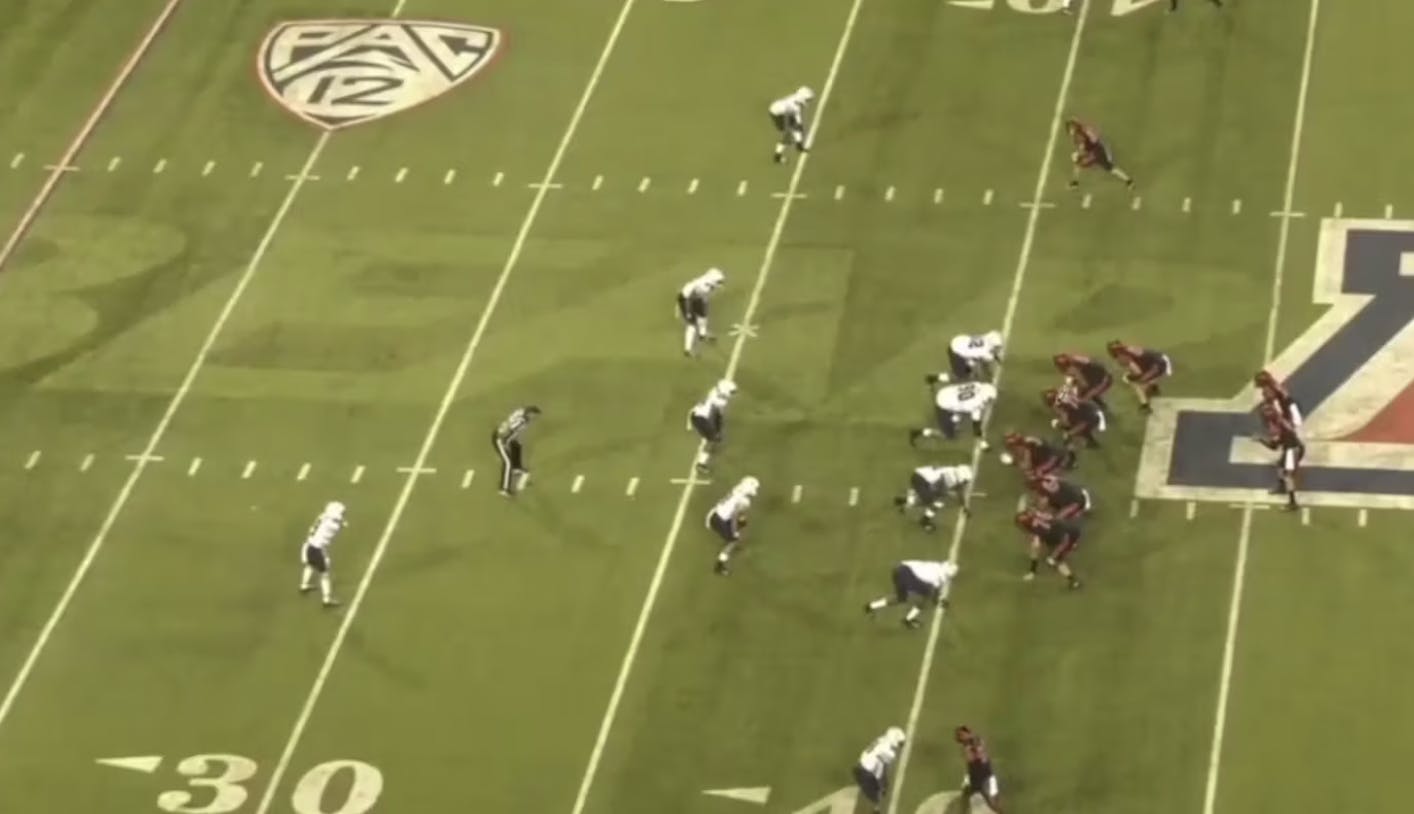
For teams that are RPO-heavy in their attack, the defense will start to take away conflict by bringing a safety down into the box safety down into the box either pre-snap by alignment or by rotation in buzzing a safety down into the box.

With this move, they effectively equate numbers in the run, and the underneath passing windows are typically left open by a 2nd level player whose run-fits are now taken away.

This creates the necessity of having vertical answers.  An offense can drop back and use seam reads or choice routes, but the objective of any RPO is to run the ball while having a protection answer.

Of course, the RPO can remain the call by simply shifting to a 3rd Level RPO. Most of these are designed with some sort of underneath throws still available with quick routes or key screens.  When the offense is successful with these, then the defense needs to decide if it really wants to bring that extra defender down.

Today, we will take a look at three 3rd Level RPO with the Glance, Bender, and Slot Fade and how each attacks a void in the defense.

Glance

If the backside safety comes down, then Glance is a favorite for many programs.  These typically are run as a 5-step break. 

Glance can be run to the field as well. At Alabama, they call it “pop.” The idea is to attack space as Alabama WR Coach Holmon Wiggins points out in this video:

null

Glance is fine to the field as well, but you have to be wary of the backside safety.  Noel Mazzone has his receivers flatten it out to what he calls a grass glance.  The purpose is to not bring the Glance into the safety. He explains it in this video:

Bender

Another option is to use a Bender route allowing the receiver to bend into the void rather than giving a distinct break.  This type of route comes into play versus different rotations but it allows the offense to attack a void in the middle of the defense with an easy throw.  Former Averett OC Kirkland Brown explains it off of a gap scheme in this video:

Slot Fade

Glance and Bender bring the receivers into the middle of the field, so safeties are always a danger, but the slot fade attacks a different void of the defense and can be protected with back shoulder throws as well.

Former SDSU OC Jeff Hecklinski explains the Slot Fade RPO here:

Defenses are getting better and better in how they defend RPO.  Having a mechanism to attack their aggressiveness can provide answers and explosive plays.

Planning for some 3rd Level RPO answers can be an effective way to get the chalk back for the offense.

Sunday, December 22, 2024

US Sports Partner Spotlight: XTERRA Fitness


XTERRA Fitness helps people realize their fitness goals through durable and expertly designed equipment. From training programs to advanced features, XTERRA Fitness products provide everything needed to bring adventure and achievement home.
https://tinyurl.com/XTerraFitness

US Sports Radio Affiliate partner
https://tinyurl.com/USSportsRadioLive1224
http://www.USSportsRadio.net

Saturday, December 21, 2024

The Rock Almighty. The Dysfunctional Family of Jesus? And The Rock Almighty Weekend On The Rocks Feat. Bloodgood


 HOME | Bloodgood Metal Music Ministry

The Dysfunctional Family of Jesus?

  • Author Rev. David B. Smith

Now his parents went to Jerusalem every year at the Feast of the Passover. And when he was twelve years old, they went up according to custom. And when the feast was ended, as they were returning, the boy Jesus stayed behind in Jerusalem. His parents did not know it, but supposing him to be in the group they went a day's journey, but then they began to search for him among their relatives and acquaintances, and when they did not find him, they returned to Jerusalem, searching for him. After three days they found him in the temple, sitting among the teachers, listening to them and asking them questions. And all who heard him were amazed at his understanding and his answers. And when his parents saw him, they were astonished. And his mother said to him, "Son, why have you treated us so? Behold, your father and I have been searching for you in great distress." And he said to them, "Why were you looking for me? Did you not know that I must be in my Father's house?"

‘For he was our childhood pattern

Day by day like us He grew;

He was little, weak, and helpless;

Tears and smiles like us he knew; …

Christian children all must be

Mild, obedient, good as He.

(Cecil Frances Alexander, 1848)

It's the first Sunday after Christmas - the ‘Feast of the Holy Family’. That’s how this Sunday is remembered in the Catholic church at any rate, and our Gospel reading this morning does also give us a depiction of the earthly family of Jesus during his childhood such that it seems appropriate for us too to remember the Holy Family today.

We are of course in the midst of a series of traditional feast days so far as Christians around the world are concerned. Two days ago we celebrated the birth of Jesus on Christmas Day. Yesterday was the day after Christmas, known commonly as ‘Boxing Day’, though as my father always used to remind me it was also ‘St Stephen’s Day’ - the feast that commemorates the brutal death of the first Christian martyr, St Stephen. And Tomorrow is the ‘Feast of the Holy Innocents’, where we remember Herod’s horrendous murder of the children of Bethlehem as he attempted to kill Jesus as a young child.

Tomorrow is also, interestingly, the Islamic feast of ‘Ashura’, which remembers the martyrdom of the prophet Mohammed’s grandson and his family and friends. It is curious, I think, that this Christmas season has become such a time of remembering so much brutality, and yet right here in the middle of all the bloodshed is the Feast of the Holy Family‘ where we focus on the joys of the family home - presumably the last place we would expect to find violence.

In truth, this does seem to me like an odd time to remember ‘The Family’ for a number of reasons, and not only because of the way this remembrance day is sandwiched in between the memories of so many martyrdoms. Indeed, what struck me as most peculiar about this particular family day is that it is the only day of the year devoted to a focus on the family, and even then only in the Catholic end of the church. For you get the impression from a lot of Protestant churches in particular that the family is basically what Christianity is all about!

Take a look at just about any Protestant church building in this country and you’ll find that their main Sunday service is promoted as the ‘Family Service’. The Church indeed is generally recognised as the key institution that elevates and upholds the significance of the family, and in Western society at large ‘Christian values’ and ‘family values’ are taken to be almost synonymous.

Go to the homepage of Fred Nile’s ‘Christian Democratic Party’ and what does it say right at the top of the page? "Promoting Family Values for over 28 Years"! This is fundamental to what it means to be Christian, is it not - to uphold the place of the family in society? And that’s why Fred urges us to resist all suggestions of the legalising of same-sex marriages. For the god-given institution of the family must be persevered!

In truth, ‘Christian Family Values’ are generally advocated particularly by those who are most voacl about sticking to what the Bible says though the irony is that the Bible actually has very little to say about the significance of the human family, and in terms of the childhood family of Jesus, this snippet from Luke chapter 2 is all that we get!

That itself is surely surprising! Why do the Gospels say so little about the childhood of Jesus? Why is there only one story in one Gospel giving us any idea of what Jesus was like when He was growing up?

Of course I’m not including the stories that proliferated in apocryphal literature, composed centuries after the earthly life of Jesus. Those who have read the Gospel of Thomas - a book attributed to the Apostle Thomas, but which is generally believed to have been written in the 3rd Century - will remember the highly entertaining stories from the boyhood of Jesus that are recorded there:.

At age 10 the boy Jesus supposedly saves his parents from an attack by a lion, and at age 8 there’s the famous clay pigeons episode where the model pigeons the boy Jesus was fashioning out of clay suddenly turned into real pigeons and flew away!

Then there’s the story of the boy Jesus who is playing by etching some channels in the mud and another boy comes along and mucks up the channels with his hand. Immediately the boy’s hand withers. Another boy plays a joke on the 6-year old Jesus by jumping on his back and he immediately drops dead. Of course the dead boy is raised and the withered hand is restored.

While these stories are no doubt the product of fanciful human imaginations, their very existence highlights the paucity of the genuine material that actually exists. Human imagination had to fill in the blanks!

This lack of historical material is surprising enough, but what is even more surprising is that the one genuine story that we get of the Holy Family hardly leaves us with a pattern that we would want Christian families to emulate!

We read it this morning in Luke chapter two. The 12-year-old Jesus and His family are in Jerusalem. Jesus’ parents head for home, presumably as part of a larger caravan where the boy Jesus had been left with the other children of His own age. A day’s journey from Jerusalem they eventually realise that Jesus, for some inexplicable reason, had decided to stay behind!

When Joseph and Mary get back to Jerusalem they search high and low, eventually finding the boy Jesus in the temple three days later, dialoguing with the academics. When Mary confronts Jesus with his behaviour and the amount of distress that he has caused to both her and Joseph, Jesus says to her, ‘What did you expect?’ "Did you not know that I must be in my Father’s house?"

"Christian children all must be mild, obedient, good as He", says the songwriter. Well .. It’s not for me to judge Jesus' behaviour, but if that incident is typical of His childhood, mild and obedient He apparently was not!

And we needn’t pretend that this ambiguous relationship between Jesus and His earthly parents somehow resolved itself happily as He got older, for indeed, the examples we see of Jesus with his mother and siblings in later life suggest that His relationship with His human family continued to be strained

According to the story recorded in Matthew 12 and elsewhere, where Jesus’ mother and brothers came looking for him, Jesus practically disowned them!

"Who is my mother, and who are my brothers?" Jesus says. "And stretching out his hand toward his disciples, he says, "Here are my mother and my brothers! For whoever does the will of my Father in heaven is my brother and sister and mother." (Matthew 12:48-50)

Further, Jesus’ statements about the importance of family and family unity hardly square with those who proclaim ‘family values’:

"For I have come to set a man against his father, and a daughter against her mother, and a daughter-in-law against her mother-in-law." (Matthew 10:35)

And then there’s Jesus’ notorious statement recorded in Luke chapter 12:

"If anyone comes to me and does not hate his own father and mother and wife and children and brothers and sisters, yes, and even his own life, he cannot be my disciple" (Luke 14:26).

Now I know these verses are all open to interpretation and I don’t believe Jesus ever really requires of us that we hate our human families YET it has to be said that dear old Fred and his mates who represent those Christian groups upholding ‘family values’ are going to have a tough time showing that those values can be in any way grounded in the teachings of Jesus.

So what do we learn from the ‘Holy Family’ on this surprising feast day? What we seem to learn from the Holy Family in our Gospel reading is that there’s nothing particularly holy about the nuclear family concept as such!

I don’t know whether modern-day analysts would label the Holy Family as ‘dysfunctional’ or not, but we do need to accept, I think, that the relationships there were complex, strained and regularly uncomfortable.

Jesus was indeed a part of a human family and we have no reason to believe that childhood for Him was not still a beautiful experience, filled with all the joys and wonders we might hope to find in a family home. Even so, Jesus, we know, was not constrained by His human family, and His ultimately loyalties were not to his earthly parents.

What sort of childhood pattern this leaves our children, and what sort of parental pattern this leaves for us who would raise children I do not know, but I do see in this depiction of the Holy Family a de-emphasising of the ultimate significance of the human family unit and a recognition of the fact that however powerful the relationship might be between parent and child, it is not the most important relationship in life for either parent or child!

In the end our children must learn to deal with God on their own terms just as we who are parents have to. In the end, no matter who we are and no matter how closely we are bonded to our earthly families, we each need to recognise first the Parenthood of God and the ultimate claim of God upon our lives.

This all sounds rather negative and family unfriendly and frankly un-Christian! Even so, while the de-emphasising of the nuclear family may be painful, the flip-side of this is an emphasis on the all-encompassing Parenthood of God that makes us a part of a far greater and more inclusive family - one that includes all sorts of persons to whom we are not related by blood but with whom we are nonetheless united through our spiritual bond through of our Heavenly Father.

This is the family of faith that ultimately transcends our earthly families as the place where we find our true identity and spiritual home - a family that includes peoples of all races, cultures and languages, a community where we can reach out to one another and embrace each other truly as sisters and brothers, whether we be black or white or male or female or rich or poor or young or old or gay or straight or righteous or unrighteous.

This is the new holy family that God is forming - a truly inclusive family where all are accepted, all are appreciated for their uniqueness, and all are loved, just as our Heavenly parent loves each one of us.

"For He was our childhood pattern", yet in truth, it is a difficult pattern for us to emulate either as children or as adults. For from the first, what Jesus models for us is a refusal to be constrained by conventional family concepts and values as He follows God. Dare we follow this pattern? Dare we expose our children to this pattern? It could mean the end of any quiet, happy family life, though of course it could also be the start of something far more exciting?

Rev. David B. Smith

(The 'Fighting Father')

Parish priest, community worker, martial arts master, pro boxer, author, father of three

www.fatherdave.org

Get a free preview copy of Dave's book, Sex, the Ring & the Eucharist when you sign up for his free newsletter at www.fatherdave.org.

Thursday, December 19, 2024

US Sports Martial Arts: How to Teach Basic MMA Striking and That DAMAGE 😳 Who Has The Most DANGEROUS Kicks In ONE?


How to Teach Basic MMA Striking

  • By Grant Young

Stepping into the gym for one’s first MMA (or any other martial arts) class can produce crippling anxiety. 

Not only is there the inherent fear that the practitioner will make a fool of themselves in front of more experienced peers, but the stakes of failure in a combat sport are much higher (meaning, more painful) than in just about any other sport. 

While all aspiring martial artists will need to enter the gym and test their skills eventually, learning a few basic techniques from a MMA course online is a fantastic way for them to develop their striking base without subjecting themselves to a strict martial arts coach or unforgiving classmates. 

Having a simple, straightforward way for coaches to teach these basic techniques is also a great idea to make the initial MMA endeavor for students more digestible.

And Constellation 52 Global (C52G) has the teaching of MMA striking’s most important techniques down pat. 

Constellation 52 Global (C52G) is a Martial science program based in Maryland that’s dedicated to genuine 52 Blocks Combat, Culture & Fitness, and focuses on the tri-star method of the 52 experience. The program’s “52 Combat” is a stellar Boxing and Self-defense program that is taught by genuine Instructors who have earned their community's respect.

52 Blocks is a simple system but inside its simplicity lays layers of complexity discovered by the practitioner. The number 52 represents the geometry that the hands take while defending/shielding the body from harm.

This is why Constellation 52 Global’s ‘52 Blocks MMA’ course is an excellent tool for new students and martial arts coaches alike. Not only will it teach them how to be an effective striker in MMA, but their course also emphasizes how to shield oneself from harm while delivering offense. And as any martial artist knows, having a solid defensive base is even more important than having a solid offense. 

Basic Strikes

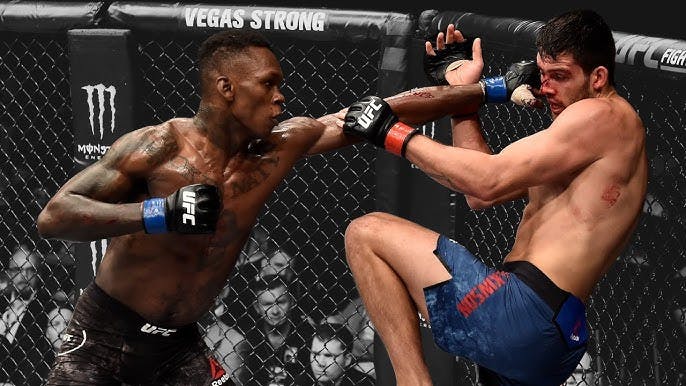
The jab is the most important strike in MMA (and in any other striking sport) because of how simple, quick, and effective it is. But just because the jab is simple doesn’t mean that it’s necessarily easy to throw, nor that it’s impossible to mess up.

This is why any basic striking course for MMA should always start with some basic information on how to best throw a jab. 

C52G notes that before the jab technique, fighters should be sure that they’re postured in an athletic position with their torso pointed slightly outwards, their face directed toward their opponent, and remaining light on their feet with their hands up near their cheeks/temples for defense. 

When the jab is thrown from this position, the first movement should be with your lead foot (left foot for righties, right foot for lefties). The foot should be stepping between 3-6 inches forward and slightly outward while the punch is thrown. As for the jab itself, it will be thrown with the lead hand and should be thrown in a slightly upward direction. 

The reason the jab should be practiced getting thrown slightly upward is because it will help prepare for facing a taller fighter, and will also train the puncher to keep their chin tucked under their shoulder while they’re throwing the jab. 

Just as important as throwing the jab is bringing that lead hand right back to its position beside your cheek/temple regardless of whether you land the punch or not, your lead side will be susceptible to a counter-punch if your hand doesn’t quickly return to its starting position. 

Basic Footwork

null

While the jab is the most important punch in combat sports, the second most important is the cross. 

The cross is thrown with the rear (strong) hand and generates more power than the jab. The footwork involved with throwing a cross is also imperative if the puncher wants to maximize their power output and generate as much damage as possible. 

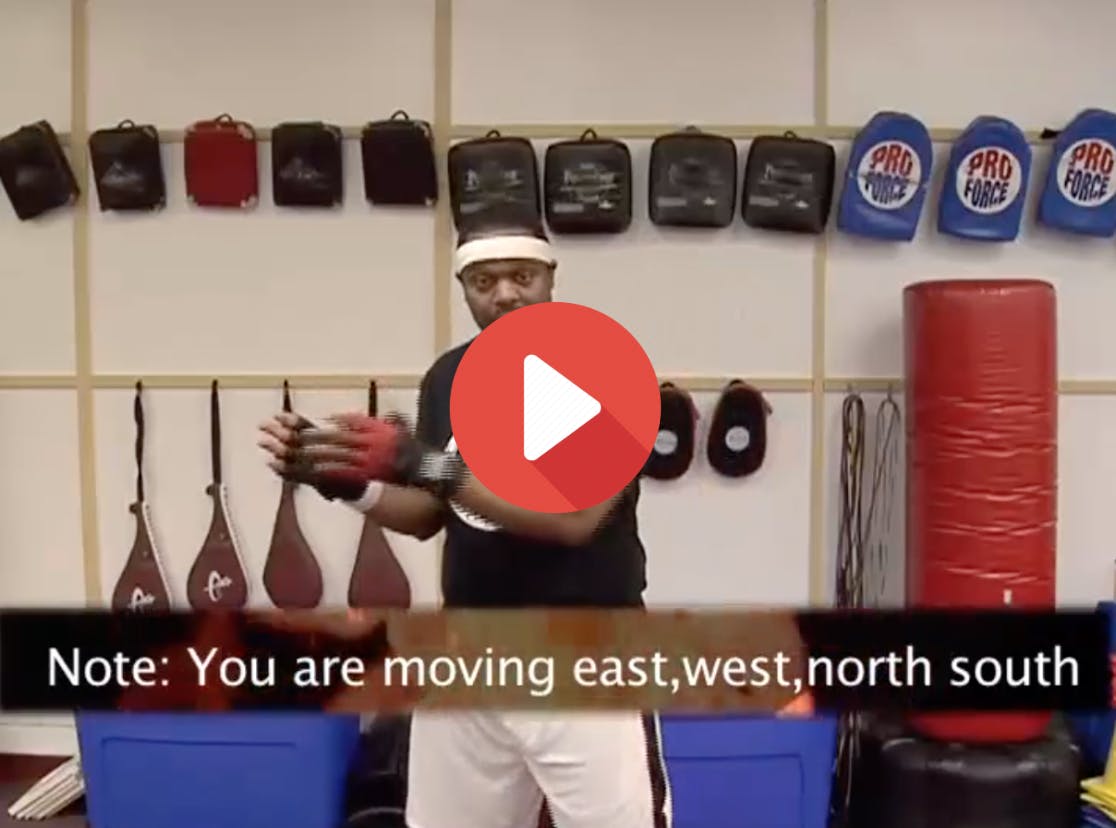
For this, C52G says that a great concept to consider for striking footwork is dividing the floor beneath you into quadrants, sort of like the points on a compass (North, South, East and West). When you’re trying to get within striking or grappling range with an opponent, it would be wise to not just move North on the compass in a completely straight line, because that will lend itself to receiving offense from your opponent. 

Instead, C52G suggests that one should be moving laterally to avoid incoming attacks while also moving forward to get within one’s range. A good way to think about it is moving either northwest or northeast in order to get within range and land offense against your opponent while staying off of the center line. 

Combos Off The Slip Inside

Another integral part of MMA striking defense (along with every other striking combat sport) is the slip. 

A slip is a defensive technique that involves moving the head to the side to avoid a punch. When performed correctly, slipping is a major tactic that allows the fighter to not only avoid an opponent’s offense quickly but also position them to offer a counterpunch while their opponent is still reeling from missing their shot. 

Because the right cross is generally thrown with a lot of power, this means the person throwing it can become off balance, and therefore susceptible to getting slipped and countered. 

To do this, an orthodox (right-handed) MMA fighter would want to have their opponent’s cross timed, see it coming, then step off and move their head to the left when the cross is getting thrown.

This will put them on the right side of their opponent’s body, which will be wide open for a counter punch or a knee to the liver (or to the head). In addition, a grappler would want to take advantage of this and shoot for a takedown while their opponent of off balance. 

US Sports Partner Spotlight: Wolverine


Get 15% Off All Wolverine Apparel with code CLOTHING5! Hurry, limited availability - get these styles before they're gone!
https://tinyurl.com/Wolverine1224

Wolverine creates work, sport, and rugged casual footwear and apparel that's engineered to perform without fail.

US Sports Radio affiliate partner
https://tinyurl.com/USSportsRadioToday1224
http://www.USSportsRadio.net