
Now Streaming On US Sports Radio!

US Sports Net Today!


Live Play-by-Play, Updates, Highlights and More! on US Sports Network!
[Chrome Users-You may have to click on the play button twice to listen]
US Sports Network Powered By Gorilla Sports!


US Sports Radio
The Las Vegas Raiders Play Here
Fitness and Sports Performance Info You Can Use!
The Scoreboard Mall
The Rock Almighty Shaker Of Heaven And Earth!
The Coolest Links In The Universe!
Showing posts with label Baseball player baseball coach NCAA Baseball 2024 Baseball recruiting High School Baseball MLB Baseball draft prospect. Show all posts

Thursday, January 9, 2025

US Sports Baseball: Three Tips to Make Your Baseball Team Mentally Tougher and Top 10 Relief Pitchers in MLB entering 2025! (Who's No. 1?!)


Three Tips to Make Your Baseball Team Mentally Tougher

  • By Grant Young

Baseball demands a lot of mental training because it is a game of failure and adversity. Unlike sports like basketball or soccer where a player might have multiple opportunities to score in a game, in baseball, even the best hitters fail to get a hit more often than not. The most common anecdote baseball players and coaches share to illustrate this is how a hitter who gets a hit around 30% of their at-bats as a professional will likely make it to the MLB Hall of Fame. 

This means that players have to deal with a lot of failure and learn to cope with it mentally. Additionally, the game can be slow-paced, with periods of inactivity followed by intense moments requiring split-second decisions. This requires players to stay focused and mentally sharp throughout the game, which can be mentally taxing. 

However, teaching mental toughness in baseball can be, well, tough for these reasons: 

1. Many players come from a background where physical skill and talent are often emphasized over mental resilience. 

2. Some players may have never been taught how to cope with failure, pressure, or adversity, so coaches and instructors face an uphill battle of not just imparting technical skills, but also reshaping players' attitudes and mental approaches to the game. 

3. Each player may respond differently to various mental training techniques, so it can be challenging to find the right approach for each individual. 

While there’s no one-size-fits-all solution to cultivating mental toughness within your baseball team, a good place to start is by heeding the wisdom that successful baseball coaches have utilized. This is why we’ve pulled three tried-and-true mental toughness tips from well-respected baseball coaches that they’ve used to win the mental war that every baseball player must battle. 

Winning Mindset - Daily Affirmation

Winning Mindset was developed by former nationally ranked, All-Ivy League wrestlers, Gene and Jeff Zannetti to help individuals and teams reach their full potential in sports, school, and life. Gene and Jeff have studied the best athletes, coaches, teams & experts in the world to learn the secrets of performance success. Winning Mindset coaches have worked with thousands of athletes, teams, professionals & coaches.

In their ‘Baseball Mindset: Confidence Crash Course’ course, Jeff Zannetti explains the power of baseball players using daily affirmations, which are short phrases they’re saying to themselves on a regular basis in order to talk themselves up and inspire confidence. 

Coach Zannetti goes on to say that boxing icon Muhammad Ali would say, “I’m the greatest of all time!” as his daily affirmation, which instilled the belief that he’d actually become the greatest. 

The important part of affirmations is that they are simple, easy to remember, personalized to whatever goals the player wants to have for themselves, and phrased as if they’re going to happen, rather than the player merely wanting them to happen. If they want to be all-conference, then their affirmations — which can be either thought or spoken aloud — should say that they’re going to be all-conference. If they want to pound the strike zone, the affirmation should be centered on them doing just that. 

Another good tip for this is to have players write their affirmations down and place them somewhere that they’ll be looking at often, such as a bathroom mirror or their locker, because actually seeing the affirmation written down will keep it top of mind. 

Because mental toughness relies on being confident, this tip should be a must for all baseball players, regardless of what their stats may read. 

Andy McKay - The Thought Process That Really Matters 

Andy McKay is currently the Assistant General Manager of the Seattle Mariners. Before that, Coach McKay is currently Director of Player Development for the Seattle Mariners. He began his coaching career in 1993 at the University of Tampa where he helped coach them to a NCAA Division II National Championship.

In his ‘Coaching the Mental Game’ course, Coach McKay discusses how baseball is played in 15-second intervals because that’s typically how much time there is between pitches. Because of this, a player should renew their mental focus and fortitude every 15 seconds when they’re on the field in order to remain on track with their goal. 

He then adds that mental toughness lives within those 15-second intervals. Similar to Winning Mindset’s aforementioned point, he discusses that there’s no difference between the mind and the body because the body is always going off of what the mind is telling it. 

Coach McKay noted how the phrase, “muscle memory,” is a fallacy because it implies that the body can do anything without the mind’s help. 

Therefore, the mental side of the game must be practiced and honed as much as the physical side, because the two can’t thrive without the other. 

Pete Meyer - Control The Controllables
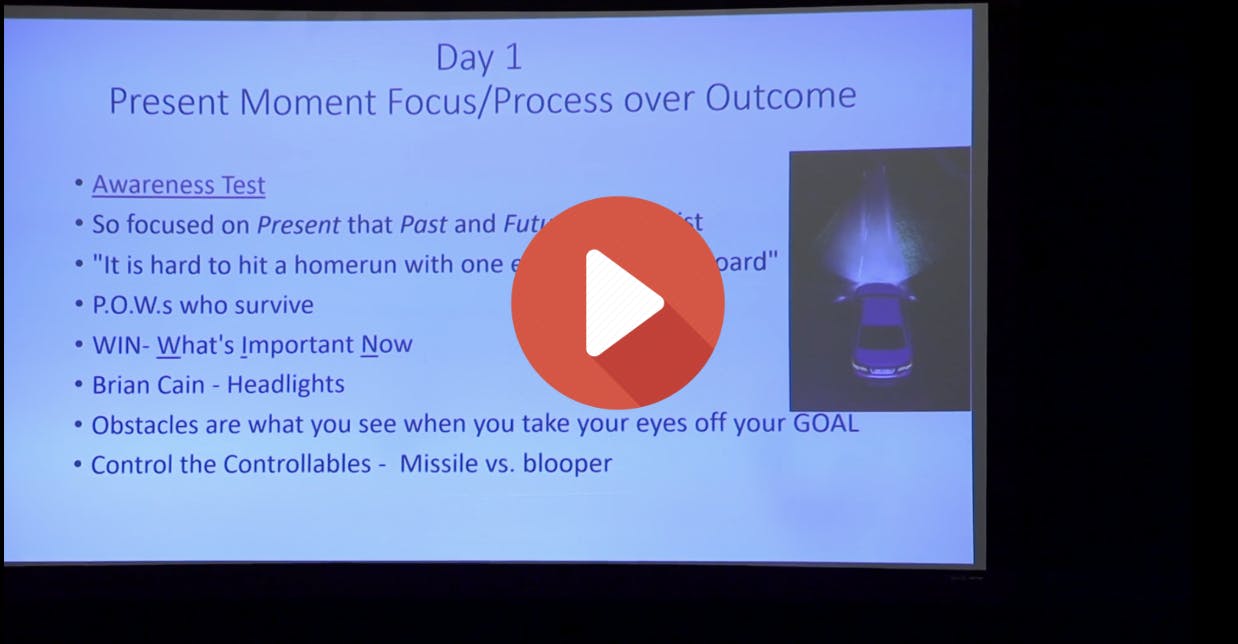
Pete Meyer is the Head Coach of the men's Baseball Team at Lisle High School in Illinois. In his ‘The Mental Game - Part 1 with Paul Babcock & Pete Meyer’, Coach Meyer and Coach Babcock discuss how they believe the three most important words in baseball are “control the uncontrollables”. 

There are so many aspects to a baseball game that are out of a player’s control. Whether it’s the weather, the opposing pitcher, the score, the umpire, the crowd, or innumerable other factors, none of them are something a player can control in the moment — and all can take the players’ focus away from the task at hand. 

Getting your team to understand this — and keeping them accountable to it by calling them out when complain about an uncontrollable — will build a resilient, focused, and mentally tough baseball team from the top down.

Thursday, December 26, 2024

US Sports Baseball - Three Injury-Prevention Tips For Your Offseason Pitching Program and Team USA is headed to Tokyo!


Three Injury-Prevention Tips For Your Offseason Pitching Program

  • By Grant Young

Having a baseball offseason pitching program is crucial for injury prevention. After a long season of pitching, the arm and shoulder muscles need time to rest and recover. Baseball pitching tips for an offseason program should focus on allowing pitchers to employ strengthening and conditioning exercises that can help prevent overuse injuries. By incorporating exercises to improve flexibility, strength, and overall arm health, pitchers can reduce the risk of injury and prepare their bodies for the next season. 

However, this doesn’t mean that a pitcher can’t improve during the offseason. It just means they should be throwing with less volume than they would during the year. In fact, proper mechanics and technique can be emphasized during the offseason, which can contribute to injury prevention during the regular season. 

Every pitcher and pitching coach should know the basics of a proper offseason program: 

A structured strength and conditioning program should be implemented to build overall strength, endurance, and power while also addressing any muscular imbalances. 

Arm care exercises, such as tubing and resistance band work, are essential for maintaining arm health and preventing injuries. 

A gradual return to throwing program should be followed to gradually build up arm strength and throwing volume in preparation for the upcoming season.

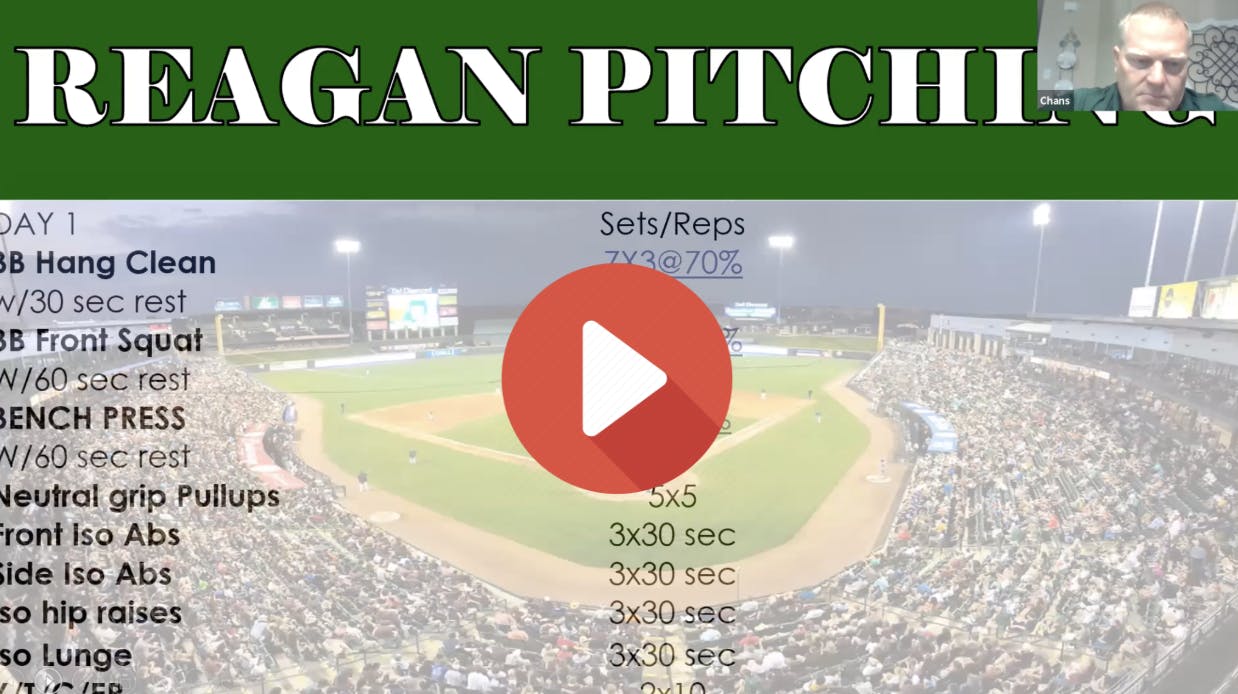
But players and coaches need the specifics of exactly what workouts, drills, and pitching volume to utilize in order to set themselves up for (healthy) success during the season. This is why Chans Chapman’s ‘Reagan Pitching, September to June’ course should be a must for everyone within the pitching community. 

Chapman is the head baseball coach of Reagan High School. Since coming to Reagan in 2004 as the Head Baseball Coach, Coach Chapman’s teams have won 9 District Championships, 11 Regional Finals trips, and State tournament appearances in 2014, 2017, and 2018. The 2008 team was ranked as high as #5 in the nation by Baseball America. 

Coach Chapman’s aforementioned course takes us through his goals and routine to ensure that his pitchers will become better in the offseason, all while keeping their arms as healthy as can be. 

Goals

What’s important to understand about high school and college pitchers is that when their regular (spring) season ends with their school team, they typically go straight into summer baseball. And since these innings thrown in the summer are just as intense as in the spring, this is essentially an extension of the season. 

Therefore, Coach Chapman asserts that the true recovery period comes in the Fall, when the pitchers come back to school. 

Depending on what level you’re at, Coach Chapman suggests that it’s advisable to give pitchers at least one month completely off of throwing at some point after their summer baseball ends. Ideally (especially for high school athletes who may be playing other sports) you want to aim for about two months without them picking up a baseball. 

While this may seem counterproductive to development as a pitcher, the arm requires rest if it’s to function and stay healthy in the ways we want it during the season. 

Another hot topic that Coach Chapman addresses is building up to throwing off the mound in a season. While every coach understands that ramping a player up too fast is dangerous for their arm health, some prefer to wait longer than others. A common strategy at the collegiate level is to get players throwing out to 180-200 feet before they even think about pitching at full intensity.

Before they step on a mound, pitchers should have thrown at least 3-5 flat-ground bullpens to get a feel for their pitches and ease back into their rhythm and mechanics. 

Lifting Program

null

As any baseball coach knows, having a regimented strength and conditioning program is integral for ensuring a pitching staff’s sustained success in a season. 

Coach Chapman has his pitchers lift five times per week in the offseason. While that may sound like a lot, not every day is at a high intensity, and the team dials it back to two to three times per week during the season in order to maintain the strength they gained during the offseason. 

While Coach Chapman’s staff does a good amount of heavier lifts like hand cleans and front squats, they’re also meticulous about including body weight and lighter weight exercises that are pitcher-specific and not just about building “weight room strength”. 

Exercises like medicine ball throws, cable raises, pushups, reverse flys, and anything that targets the lower back, abs, and core are extremely important for pitchers because the core is where balance comes from and balance is crucial when it comes to being a pitcher. 

Also worth noting is that, while pitchers may want to compete with one another in the weight room to see who can lift the heaviest, this is dangerous and can lead to injuries. Every pitcher has a different strength capacity, and the only person they should be competing with in the weight room is themselves. 

Pitching Drills

A great offseason (and really at any point in the season) drill to do is what’s called a towel drill. It involves pitchers partnering up with one of them holding a 10-inch towel in their throwing hand. That pitcher will then go through their pitching motion. Wherever their front foot lands, they’ll take three steps and that’s where their partner will place their glove.

The pitcher will then go through their motion at full intensity and try to whack their partner’s glove as hard as they can. Because this drill doesn’t involve throwing a ball, it’s much healthier on the arm. And giving the pitcher a target to hit will force them to stride far and follow through, which builds and reinforces great habits.

Wednesday, November 13, 2024

US Sports Baseball Feat. 2024 Silver Slugger Award winners! (Shohei Ohtani, Aaron Judge, and more!)


Presented on US Sports by CoachTube
Featured course:
The Three Phases of Hitting
by Jake Boss
https://tinyurl.com/ThreePhasesOfHitting
In this baseball coaching course, Jake Boss, Head Baseball Coach at Michigan State University and 2011 Big Ten Coach of the Year presents his philosophy and approach to hitting. Boss takes you through the three phases of his approach for coaching hitters who can make the pitcher uncomfortable on the mound and drive up the pitch count.
https://tinyurl.com/ThreePhasesOfHitting

Video credit:
MLB
2024 Silver Slugger Award winners! (Shohei Ohtani, Aaron Judge, and more!).
The MLB App is the #1 destination for live baseball video and audio, directly on your iOS device. Watch and listen live or on-demand!
https://apple.co/4gG5LyA
https://amzn.to/3Z34NFz
-- Jump directly into your favorite team's live game from your home tab
-- Customize and filter your News content for the headlines that interest you most
-- Get real-time highlights and on-deck alerts for your followed players
-- Follow the action of the game with real-time player positions and batted balls
-- Live Activities support for game updates right on your lock screen
https://apple.co/4gG5LyA
https://amzn.to/3Z34NFz

The Coolest Sports, The Hottest Talk, Music, and Fun
US Sports Radio
http://www.USSportsRadio.net
https://bit.ly/USSportsRadioToday

Thursday, October 10, 2024

US Sports Baseball Feat. Dodgers vs. Padres NLDS Game 4 Highlights

Power, Agility, and Speed Training for Baseball

Enjoyed this video? Join my Locals community for exclusive content at athletesandwarriors.locals.com

Presented on US Sports by CoachTube
Featured course:
Power, Agility, and Speed Training for Baseball
by John Graham
https://bit.ly/3Y40h8l
Power, Agility, and Speed Training for Baseball presents a detailed system of exercises and movements designed to develop motor abilities of athletes in order to be more skilled at faster speeds and with better precision in the sport of baseball.
https://bit.ly/3Y40h8l

Video credit:
Dodgers vs. Padres NLDS Game 4 Highlights (10/9/24) | MLB Highlights
Follow the 24 MLB Playoffs with the app
@ Apple - https://apple.co/4gG5LyA
@ Amazon - https://apple.co/4gG5LyA
MLB
@MLB - https://www.youtube.com/@MLB

The Coolest Sports, The Hottest Talk, Music, and Fun
US Sports Network.
http://www.USSportsRadio.net

Tuesday, September 17, 2024

US Sports Baseball Feat. Highlights from ALL games on 9/16! (Mets walk off to stay in race, Bobby Witt gets to 200 hits)


How To Build An Elite Baseball Infielder

  • By Grant Young

Every youth baseball infielder that’s right-handed wants to play shortstop. Heck, even the left-handed players want a chance at shortstop, too. And while every baseball coach should give each deserving player a fair opportunity at the position there can only be one shortstop on the field once the game begins.

But that doesn’t mean the rest of your infield players can’t have the ability to play shortstop. It’s any coach's dream to have multiple capable players in the infield, who are versatile enough to play multiple positions and willing to play any position to help their team win games.

Learn more. See Coach Hill's Infielder's course......

In addition to catchers, it always feels like many of the best baseball coaches are former infielders. This might be why there’s a plethora of excellent knowledge about how to develop elite infielders, both at the youth baseball level and up through the game’s amateur and professional ranks. 

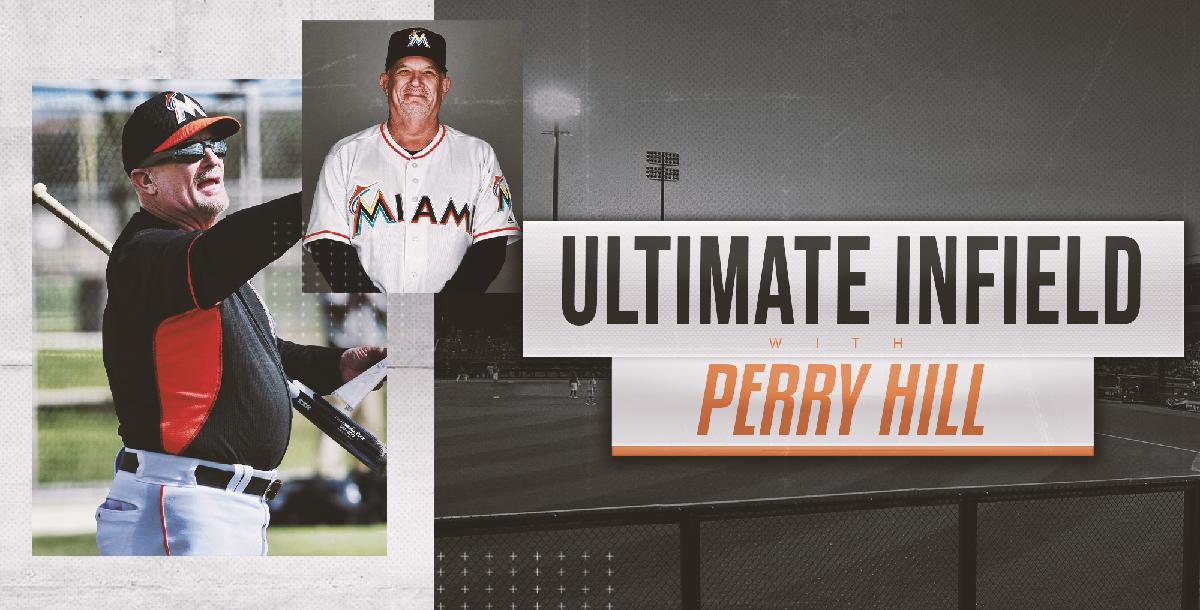
We have compiled a few of legendary infield coach Perry Hill’s courses on this subject, which will give you all the info you need to turn your current crop of infielders into above-average players.

Ultimate Infield with Perry Hill

 Perry Hill - The 6 F’s of Fielding

Perry Hill is currently the infield coach for the Seattle Mariners. He has spent 22 years as a Major League Coach with multiple teams, such as the Texas Rangers, Miami Marlins, Detroit Tigers & Pittsburg Pirates. Hill was MLB Network’s 2017 Infield Coach of the Year after the Miami Marlins had the fewest MLB Errors that season. One season before, the Marlins set an all-time MLB record with 28 Consecutive errorless games. 

Coach Hill has also coached seven players (Luis Castillo, Orlando Cabrera, Derrek Lee, Mike Lowell, and Dee Gordon) to Gold Glove Awards, and earned a 2014 Best Infield Coach award from the Boston Globe survey of MLB Executives and Coaches.

Coach Hill believes effective defense comes down to what he calls the “Six F’s”. Those are as follows:

1. Feet

2. Field

3. Funnel

4. Footwork

5. Fire

6. Follow

Coach Hill refers to these 6 “F’s” as his “foundation”, in the same way that a city needs a solid foundation to build anything on top of it. In other words, these 6 F’s are all crucial components of the fundamentals necessary to succeed as an infielder.

When it comes to the first “F”, Coach Hill has a few valuable notes. The first is that the infielder should be in a relaxed state while the pitcher has the ball. As the pitcher’s arm moves forward, the infielder will take a small step forward, while remaining on the balls of their feet, which will make him capable of moving in any direction at a moment’s notice once the ball is put in play.

The second “F” is Coach Hill’s way of explaining the wide base (legs shoulder width apart or further) that an infielder needs when fielding the ground ball. 

This wide base position enables the infielder to have the ball and glove in the same view, making a more sound and consistent infielder. In addition, having a wide base eliminates any potential blind spots and creates better balance. 

Ultimate Infield With Perry Hill

null

Coach Hill goes into greater detail about the “Six F’s” in another one of his courses, which is titled ‘Ultimate Infield With Perry Hill’.

Coach Hill says that the Third “F” (Funnel) is all about how the infielder brings the ball to their midsection after securing the ground ball. Once the ball gets to the middle of the body (to the belly button/chest area), the infielder should separate their hands with their thumbs down, which will automatically create a perfect angle for the throwing arm.

The Fourth “F” is Footwork. For this “F”, Coach Hill stresses that the formula to use when teaching footwork is “right to left, left to the target.” This means that a right-handed infielder's first step after securing the ball should be with their right foot, while their second step should be with their left foot, which is directed toward the target.

“F” number five is Fire. This just means throwing the baseball to the target, which all infielders should know how to do. 

And the final “F” is Follow. This one might be overlooked, but also may be the most important when preventing throwing errors. All Coach Hill means by this is that the infielder should follow their throw to the target after making it. He doesn’t mean literally chasing after the throw; rather, taking a step or two in that direction, to ensure that their arm and body are going in the correct direction when throwing.

While Coach Hill’s “Six F’s” might make infielding seem easy, anybody who has actually played any of these positions knows that it takes a lot of practice, determination, and discipline to become a good infielder that makes few errors. 

Yet, Coach Hill also notes that success in the infield all boils down to playing catch. For this reason, it’s paramount that players take their warm-up game of catch seriously before the practice begins. While this practice time is important for getting a player’s arm loose, it’s also a way for them to practice their repetitions and hone their throwing and footwork mechanics (the “Six F’s”) with each catch and throw made. 

If the player doesn’t take this catch time seriously, not only are they missing out on an opportunity to improve, but they could also be developing lazy, bad habits that will translate onto the field when the game begins. And that’s not how anybody will become a starting shortstop.

Taking all of Coach Hill’s lessons and teaching them to your infielders will improve their skills, and have them all be deserving to play shortstop for your future games. 

Get Coach Hill's Infield course today....

Monday, August 26, 2024

US Sports Baseball: Feat. Rays vs. Dodgers Game Highlights (8/24/24)


3 Baserunning Tips to Score More Runs in Baseball

  • By Grant Young

A phrase that we’ve all heard hundreds of times by now is that baseball is a game of inches. And while that may be true, there’s also an argument to be made that baseball is a game of 90 feet. 

A team’s ability to win the battle on the basepaths — especially as it pertains to baserunning, as well as giving and taking free bases — can often be the difference between winning and losing a close game.ases — can often be the difference between winning and losing a close game.

Not to mention the benefits that applying pressure to an opposing team’s pitcher might provide, in terms of a mis-executed pitch or other costly mistake. Which is why all teams should strive to be lethal on the bases. 

And although stealing bases might require fast runners, being a good baserunning team does not. A combination of solid coaching and disciplined players can turn a team into a threatening force that wins by makes the most out of all 90 feet. 

Below are three tips by three proven baserunning coaches that will allow your team to scamper to success. 

1. Tony Vitello - ‘Incorporating Base Running into Practice’

Tony Vitello is the head coach at the University of Tennessee. Since taking over at Tennessee in 2017, Vitello has led the Volunteers back to national prominence and has helped establish Tennessee baseball as an SEC and national power, leading the program to four NCAA regionals (2019, 2021, 2022, 2023), three NCAA super regionals (2021, 2022, 2023) and a pair of Men's College World Series appearances (2021 & 2023). Coach Vitello has also won National Coach of the Year awards twice during his time at Tennessee.

In his ‘Incorporating Base Running into Practice’ course, Coach Vitello details a few important aspects to keep in mind when coaching players about taking bases when balls are thrown in the dirt.

“Baserunners should follow the ball out of the hand and be able to see the angle,” Coach Vitello said. “A lot of guys just look at the pitcher release the ball and their eyes move toward home plate.”

This is a small detail that can often spell the difference between moving up to second (or third) base on a ball in the dirt, or remaining stationed. Watching the ball from its entire journey from the pitcher’s hand to the catcher’s mitt (or to the bat) enables the baserunner to make early reads about where the ball might be headed. 

Coach Vitello incorporates this into practice by saying that, in intrasquads, if his players are thrown out trying to move up on a passed ball and are thrown out, just have them sent back to whichever base they came from. Making it so there’s no consequence for being over-aggressive on the basepaths allows players to hone their baserunning instincts, which will serve them — and their team — during games. 

2. Adam Szabo - ‘Baserunning and Fielding Mechanics

Adam Szabo is the Founder and CEO of Excelerate Athletic Development, which partners with and supports teams, organizations, and individuals in reaching their goals through developing athleticism, sport-specific skills, and the ability for athletes to train themselves through a systematic and organized set of programs and workouts.

In his ‘Baserunning and Fielding Mechanics’ course, Coach Szabo discusses the proper technique behind rounding bases. 

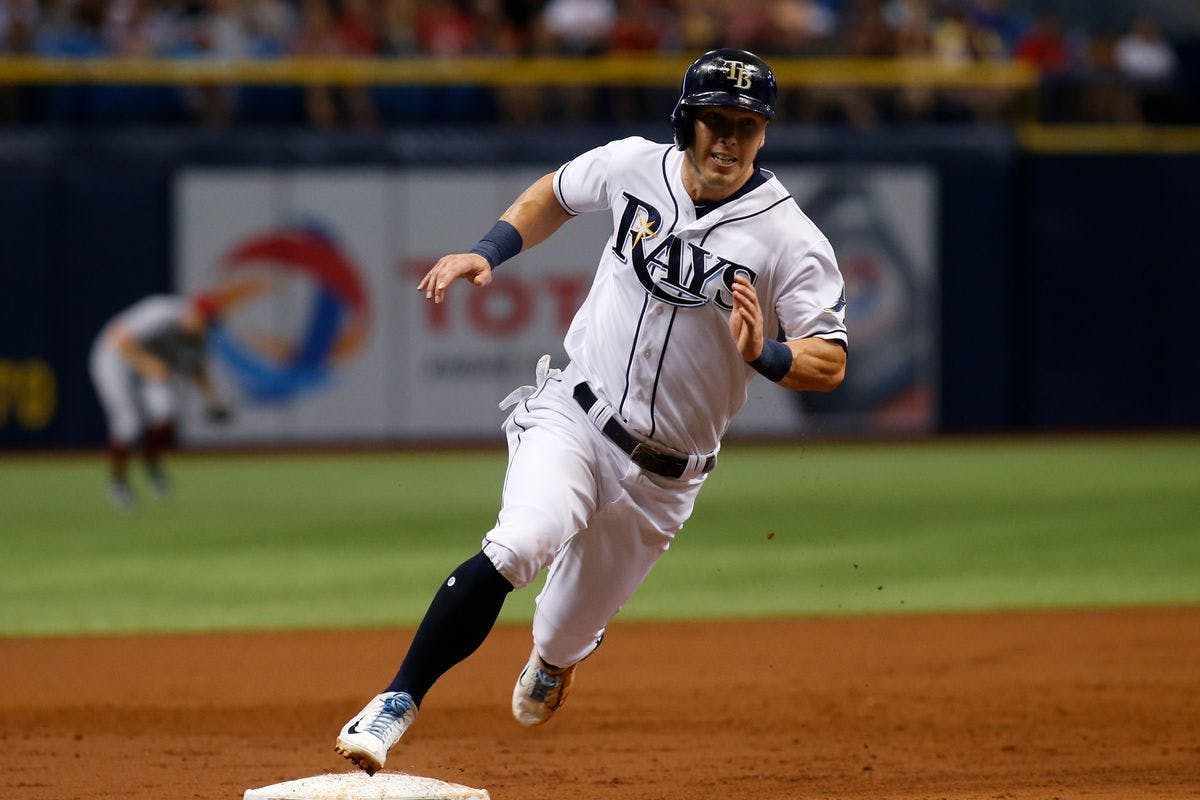
“If you’re rounding second base, and trying to go to third base, you’re actually going to lean toward third base as you’re rounding,” Coach Szabo said. 

Another invaluable tip he offers is that, when rounding a base, baserunners should be driving their right arm across their body, towards the base they’re running to. This will help the baserunner eliminate the bow out that comes from rounding bases, which will save them crucial time when making it to the next base. This little adjustment — which Coach Szabo says to explain as, “take your right arm and push it to your left pec” — could be the difference being safe and out. 

Another important tip that Coach Szabo has is to never have a player looking at the ball as they’re rounding third base. There’s a third base coach there for a reason, and it needs to be on that coach to be telling the player (nonverbally) whether they should be heading home or staying at third. The player’s only focus should be following their coaches que, and keeping their momentum geared toward home.


3. Steve Nicollerat - ‘The 10 Base Running Drills Every Coach Needs

null

Steve Nicollerat is the Founder of Coach Baseball Right! Which provides baseball organizations dozens of resources available to grow and elevate their current programs and deepen their kids' experiences. In addition, Coach Nicollerat has about 40 years of experience coaching varsity baseball at St. Louis University High School, as well as played collegiate ball at St. Louis University.

In his course, Coach Nicollerat discusses how to steal second base off of left-handed pitchers. The first part of this requires understanding whether the left-handed pitcher can read or not. If the lefty pitcher has proven that they can read effectively, it might be wise to not steal.

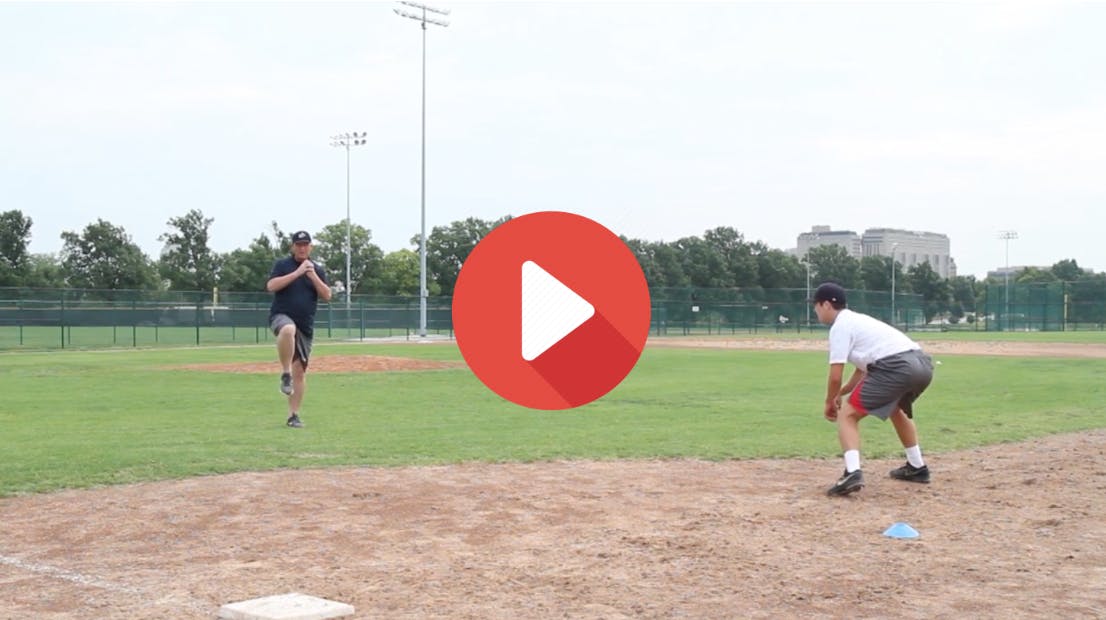
But if the lefty isn’t a reader, and instead uses a more deceptive pickoff move to try and negate the run game, Coach Nicollerat explains that one option is to have the baserunner take a big lead, then take off for second base as soon as the pitcher makes their first movement. The idea behind this is that, if the pitcher’s pickoff move is slow, then the baserunner will have enough time to make it to second base if they steal once the pitcher begins their long pickoff move. 

Although if you’re also looking to steal against a reading lefty, one way to do so would be to wait until the pitcher enters the apex of their delivery (the top of their leg lift). While this is a risk, the reading pitcher has most likely already made their decision to pitch rather than pick at this point, so the baserunner has a solid chance of stealing the base. 

Teaching your players these three coaches’ techniques should have them maximizing opportunities on the basepaths, which will allow your to manufacture more runs and start winning games that you might have otherwise lost.

Saturday, June 29, 2024

US Sports Baseball Feat. Rockies vs. White Sox Game Highlights and 5 Outfield Drills to Work on in Season


5 Outfield Drills to Work on in Season

  • By Alec Burris

Developing your outfield doesn't stop in the offseason.  Continuing to work on new drills with your team during the season is crucial as injuries and fatigue begins to set in. 

Implementing new drills in practice will keep your players on their toes and constantly improving as the wear and tear of a grueling multi game week starts to affect their performance. 

Let's take a look at 5 outfield drills you can put your players through when getting ready for a big game. 

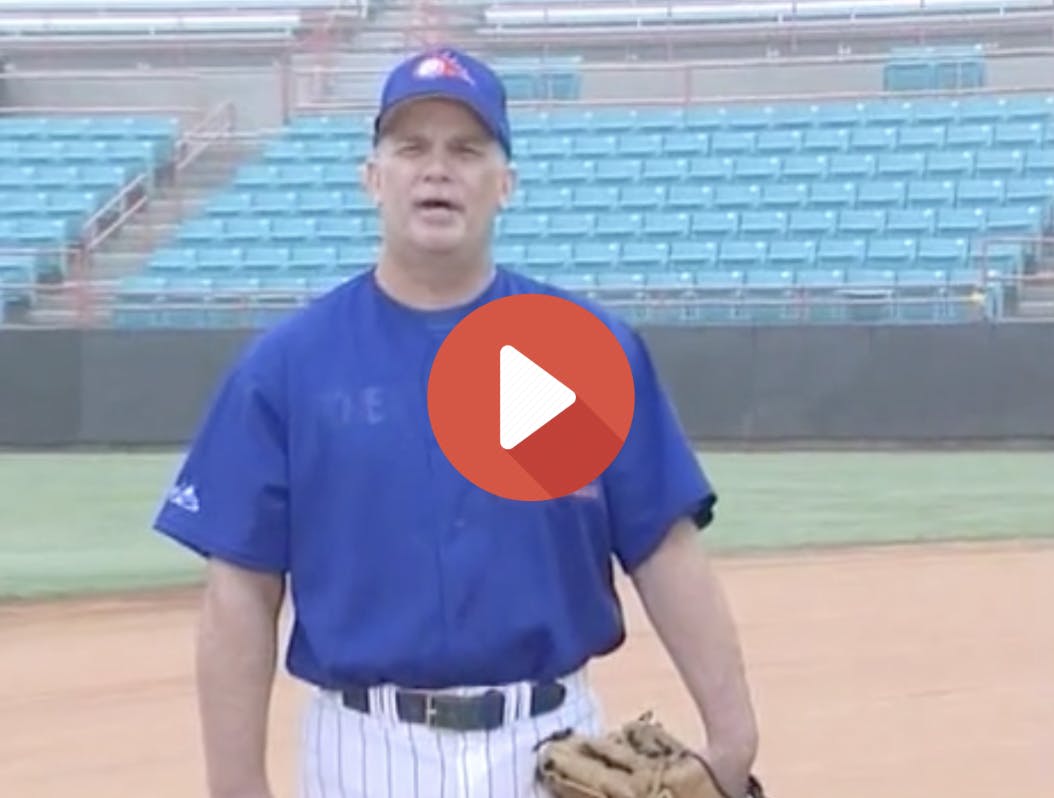
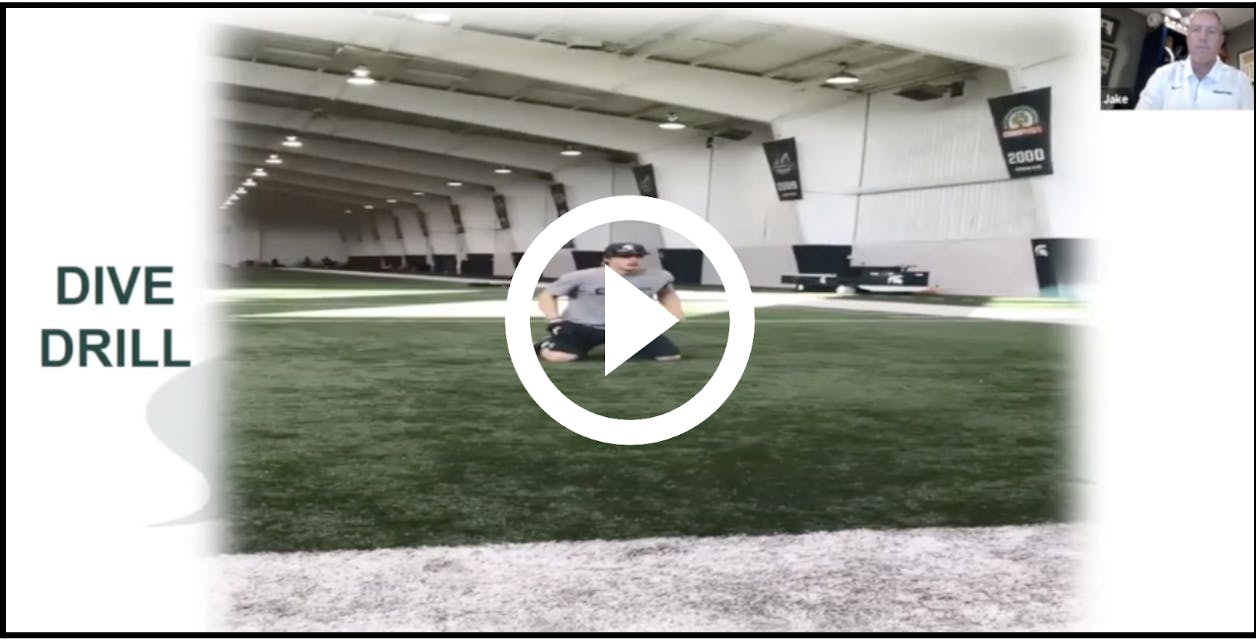
Jake Boss Jr. . was appointed the 16th head coach in Michigan State baseball history on July 1, 2008, and has quickly become one of the most successful coaches in the program’s 131-year history. Coach Boss is constantly coming up with new drills to keep his outfielders prepared for any type of ball that comes their way. In the clip below, check out his different drills including diving for fly balls and tracking angles. (click image for video).

null

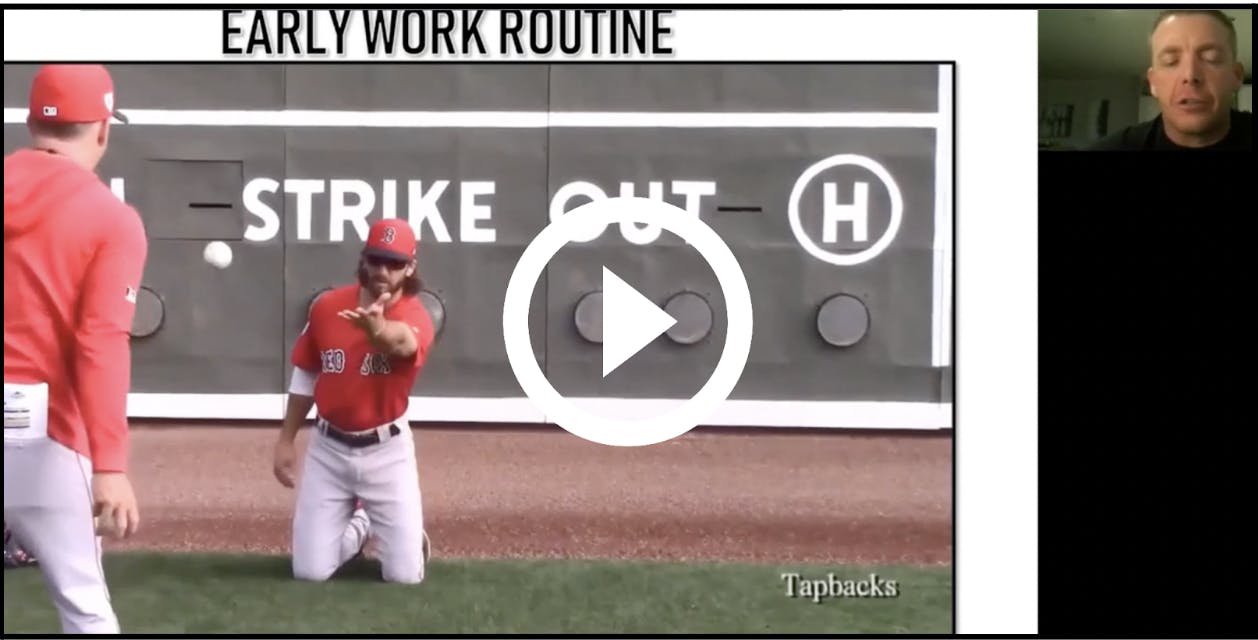
Darren Fenster became the Boston Red Sox's Minor League Outfield & Baserunning Coordinator in 2019. Coach has become known for his innovative drills and philosophies when training outfielders to get the most out of their athletic abilities on the field in game situations. One of his favorite daily drills in practice is “Tapbacks” which is done consistently right after stretches and warm ups. 

null

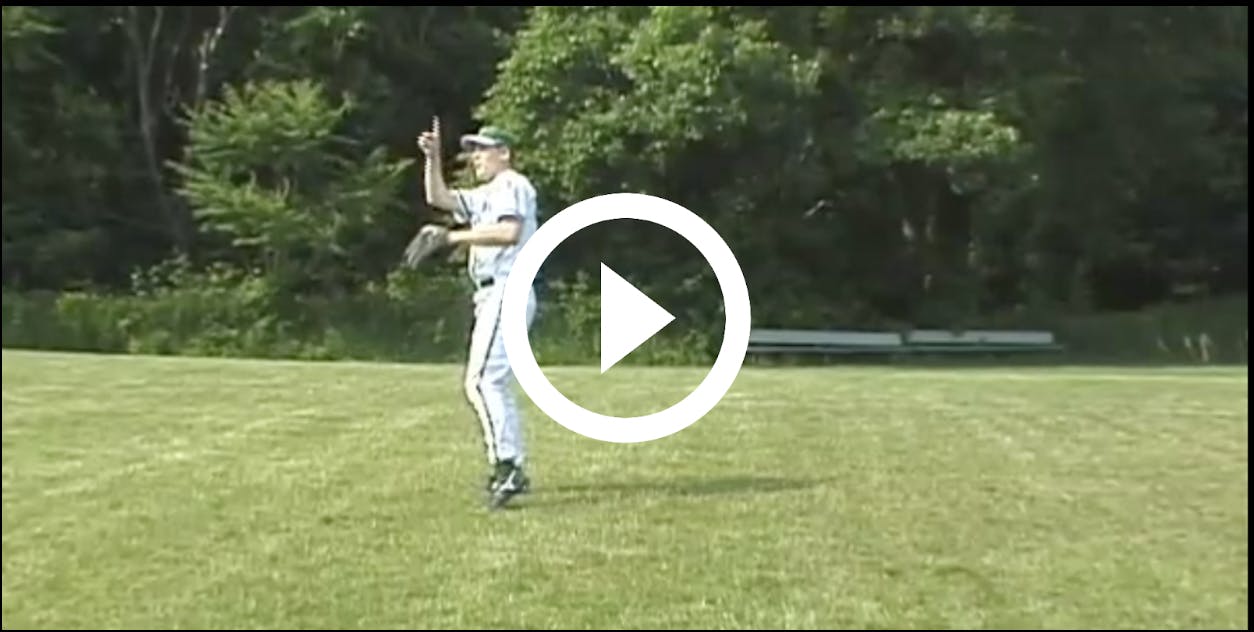
John Marshall is the former varsity baseball coach at Kinnelon High School in Kinnelon, N.J. and also played at Harvard University and then for the semi-pro Paramus Pitbulls of the North Jersey Amateur Baseball League.  He believes that footwork is the key to consistent outfield play, and is a simple but effective concept that you can work on with your players in the middle of the season. Here is a look at some of the drills he uses that can be replicated in your own training sessions. 

null

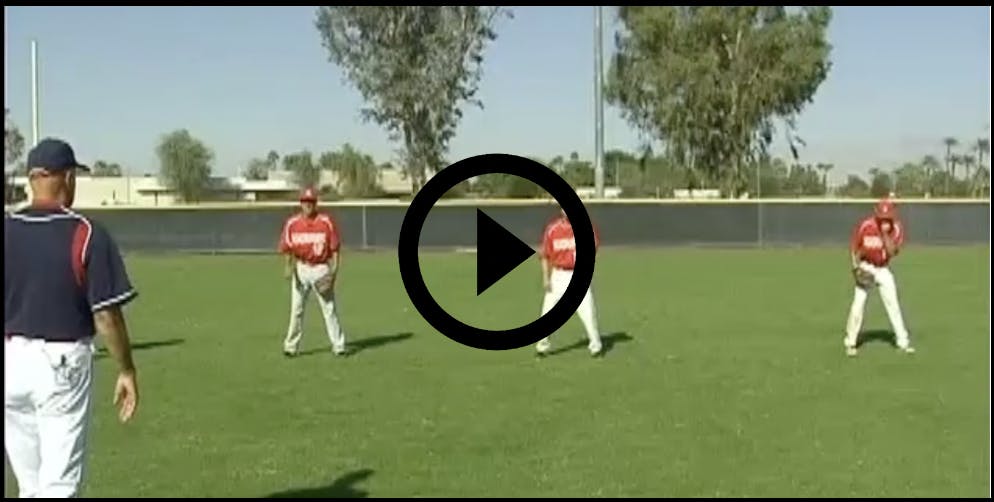
Former head baseball coach at Indiana University Bob Morgan knows all about turning your outfield into a well oiled machine. In his course "Outfield Play: The Defense's Secondary", Coach Morgan covers the  crucial components for the last line of defense including throwing grip, stance, creep steps, and proper techniques and footwork for catching the baseball. In the drill shown below, he talks about creep steps and stance techniques he worked on at the division 1 level.

null

Former Detroit Tiger Kevin Hooper has preached TEAM DEFENSE since he got into coaching. His course on team defense includes things like:

Pop Fly Priority

Cuts & Relays

PFP

Pickoffs and Rundowns

Scripted Plays

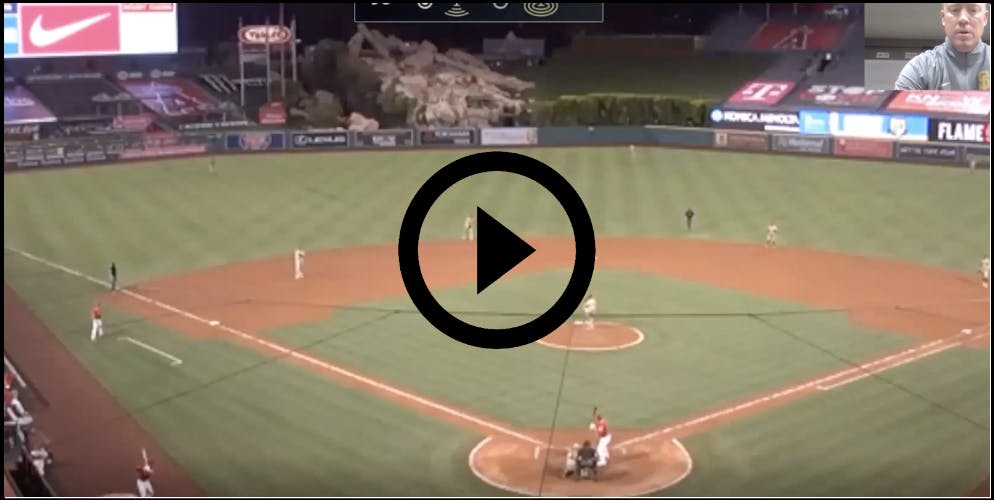
Having your defense act as a single unit is key to saving runs and getting the team off the field to go hit. This clip covers the proper cut and relay drills for empty bases and a ball down the left field line. 

null

Keep in mind that a lot of outfielders rely on instinct when it comes to in-game situations they find themselves in on the field. When you continue to pump in new drills each week before the game, you are adding to their muscle memory and increasing their chances of success when the game is on the line and you are in need of a big play.

Fundamentally sound players WIN!

Thursday, May 23, 2024

US Sports Baseball Feat. #2 Oregon State vs #8 Stanford | Pac 12 Tournament Pool Play

Presented on US Sports by CoachTube
Featured course:
Hitting Drills and Philosophies with Coach Mark Mckenzie
https://bit.ly/CoachTubeBaseball0923
As a coach, it's important to teach philosophy on all matters, pitching, fielding, catching and in this matter; hitting. Coaches want to provide direction, set goals and install a vision. As well as motivate, confront and communicate. The idea of a hitting philosophy is to have a grasp of how to approach each pitcher before each at bat. Although it may be an individual thing, hitting philosophies start from the beginning, like choosing a bat that you can handle. They should match your strength and ability, length and weight. Get started today! https://bit.ly/CoachTubeBaseball0923

On today's show we bring you an RBI machine prospect sure to help your program rack up the runs. Also check out playoff action from the PAC 12.
Enjoy!

Video credits:
Justin Garcia-Hernandez - Class 2025 OF, 3B - Junior Year
787 Baseball Training
@787baseballtraining5
https://www.youtube.com/@787baseballtraining5

#2 Oregon State vs #8 Stanford | Pac 12 Tournament Pool Play | 2024 College Baseball Highlights
Wheels
@WheelsYT
https://www.youtube.com/@WheelsYT

The Coolest Sports, Talk, Music, and Fun!
US Sports Radio
https://bit.ly/USSportsRadioToday

Get it on Apple TV MLB

Sunday, March 31, 2024

US Sports Baseball Feat. Rockies vs. D-backs Game Highlights (3/30/24)


MLB

Presented on US Sports by CoachTube.
Featured course:
Rounding the Bases: Baserunning for Beginners
by John Marshall
https://tinyurl.com/USSportsBaseball033124

Just getting started? Baserunning for Complete Beginners is your guide to becoming the key to bringing your team runs. The course is instructed by former varsity baseball coach at Kinnelon HS, John Marshall with a special guest appearance by Duke Baxter of Zoned Sports Academy.
Book this course - https://tinyurl.com/USSportsBaseball033124

Video credit:
Rockies vs. D-backs Game Highlights (3/30/24) | MLB Highlights
Get more MLB with the app and swag:

The MLB App is the #1 destination for live baseball video and audio, directly on your iOS device. Watch and listen live or on-demand!

-- Jump directly into your favorite team's live game from your home tab
-- Customize and filter your News content for the headlines that interest you most
-- Get real-time highlights and on-deck alerts for your followed players
-- Follow the action of the game with real-time player positions and batted balls
-- Live Activities support for game updates right on your lock screen
https://apple.co/3DF0wLd
https://amzn.to/3PFt8fC

Cool Sports, Talk, Music, and Fun
US Sports Radio
http://www.USSportsRadio.net

Sunday, March 24, 2024

US Sports Partner Spotlight: TicketNetwork


 MLB Opening Day Tickets
https://bit.ly/4a7T2Rn

Video credit:
Breaking down the BEST Spring Breakout prospects with Ryan Howard
Get more with the MLB app
@ Apple - https://apple.co/3DF0wLd
@ Amazon - https://amzn.to/4a68uxw

US Sports Radio affiliate partner
http://www.USSportsRadio.net