Now Streaming On US Sports Radio!

US Sports Net Today!


Live Play-by-Play, Updates, Highlights and More! on US Sports Network!
[Chrome Users-You may have to click on the play button twice to listen]
US Sports Network Powered By Gorilla Sports!


US Sports Radio
The Las Vegas Raiders Play Here
Fitness and Sports Performance Info You Can Use!
The Scoreboard Mall
The Rock Almighty Shaker Of Heaven And Earth!
The Coolest Links In The Universe!

Saturday, October 18, 2025

US Sports Soccer: How to WIN The Recruiting Process and Earn an Athletic Scholarship and Austin FC vs. LAFC Full Match Highlights


How to WIN The Recruiting Process and Earn an Athletic Scholarship

Description

Getting a college scholarship is hard! This course will give you the information you need to help navigate the complex waters of college recruiting. Over $3.6 Billion in scholarships are awared each year, but less than 2% of high school athletes will earn scholarship money. This course will give you the tools to maximize your opportunities to earn an athletic scholarship. This course contains resources and tools that you can download and use throughout your recruitment. Coach Vint also takes you through the entire process of building a recruiting plan, to help you earn that coveted athletic scholarship.  Book this course.

You will learn about the entire life cycle of the college recruiting process, as well as:

  • Paying For College
  • Academic Requirements
  • Physical Requirements
  • Gaining Exposure and Marketing Yourself
  • Social Media and Recruiting
  • Building Momentum With Social Media
  • Camps and Showcases
  • Choosing The Right College
  • How The Transfer Portal Has Affected Recruiting
  • Covid and Recruiting
  • 10 Keys To Becoming A Scholarship Athlete
  • Things That Sabotage the Process
  • Mistakes Parents Make, and The Parental Role
  • Building A Recruiting Plan
  • And much, much more
  • Downloadable Templates To Help You Maximize Your Opportunities

While this course focuses on football, the knowledge and tools you will get from this course are applicable to athletes wanting scholarships in other sports as well. If you were to attend this course in person as a weekend seminar, you would pay hundreds of dollars! Coach Vint wanted to make this course accessible to everyone who wanted to learn this valuable information. You will have lifetime access to this course, as well as the resources and downloads that are provided.  Book this course

The Coach

CoachVint

James Vint

Football Coach and Clinician

James Vint has been involved in recruiting for over 20 years. He has been a high school recruiting coordinator, college coach and recruiter, and is a trusted resource and recruiting consultant for parents, students, and coaches, helping them to increase their opportunities to earn athletic scholarships. He has given hundreds of recruiting seminars and programs across the country over the last 20 years. He is one of the most respected coaches in the country when it comes to educating prospects, coaches, and parents. 


Friday, October 17, 2025

US Sports Track & Field: How Distance Running Coaches Can Get the Most Out of Their Athletes and Habtom Samuel, New Mexico Cross Country Grind At Altitude


  • By Grant Young
  •  

When it comes to coaching distance runners, there’s one obvious training method: make the runners run; the farther, the better. 

But it shouldn’t be that simple if coaches truly want to maximize their athletes’ potential. Regardless of what level your athletes are at, you would be short-changing their progress if their daily training regimen only consisted of distance running. Not only would this contribute to these athletes feeling burnt out, but there are plenty of other training techniques that have been proven to help runners become the best version of themselves. 

And one of the key figures driving this movement toward improved distance runner training is Jay Johnson.

Jay Johnson has coached collegiate, professional, and adult runners for two decades. Coach Johnson started his career as the head track and cross country coach at Pratt Community College in Pratt, Kansas, before returning to CU to serve as an assistant cross country coach, middle-distance coach, and recruiting coordinator. After eight years as a collegiate coach, Johnson transitioned to coaching post-collegiate athletes, three of whom won USATF titles, the most notable being Brent Vaughn, who won the USATF 2011 Cross Country championship. 

Coach Johnson is deeply involved with high school running. His popular YouTube channel has close to 2,300,000 views, with runners of all ages using this resource to learn exercises and routines needed to gain the strength and mobility necessary to remain injury-free.  

Coach Johnson’s ‘Consistency Is Key: Training Principles for Distance Coaches’ course has proven to be an indispensable training device for many professional, collegiate, high school, and youth track and field coaches

We have pulled some of Coach Johnson’s best insights from his course and distilled them into easily digestible bits that will give you a taste of the training wisdom he can offer when it comes to making your distance runners the best they can be.

What To Train - Introduction

While there’s a lot that should go into long-distance running training, there’s no doubt that actually running long distances should be a central part of a team or individual’s regimen. 

But the important part here that Coach Johnson stresses is that it isn’t good enough just to tell your runners to go run a random set of miles each day for practice. Rather, there needs to be structure (and a purpose) to each training session, even if it’s just distance running. 

And the purpose should be to build up the runner’s anaerobic base (or, as Coach Johnson calls it, their engine). And there are lots of different ways to do this that aren’t just a typical long-distance run every day.

One example of this is what Coach Johnson calls a “critical velocity run”. While this might sound like a complex concept, what it essentially means is a timed run where the runner’s goal is to run at the same pace throughout.

In order to achieve this, the runner would need to be checking their pace at set intervals (say, every five minutes), and try to maintain a running pace there she wouldn’t lose any time every five minutes. 

This is going to take time for the runner to perfect. But if this becomes a weekly part of the long-distance training routine then it can become a huge asset in building up a runner’s anaerobic endurance. 

Run Race Pace (or faster)

“This is the second biggest mistake I see athletes and coaches make. Kids have to be ready to run race pace. Training a touch faster is important, but also, you need to have a progression of strides.” - Coach Johnson

The first mistake that Coach Johnson alluded to in that quote is when high school athletes are not running strides most days. And he notes that the second biggest mistake made is not practicing race pace enough. 

While an athlete building their engine and strengthening their aerobic endurance should be a crucial component to one’s distance training, the lungs aren’t the only part of the body that needs to build stamina. 

 A runner’s legs also must be trained up. And there’s no better way to get one’s legs acclimated to running at race pace than running at race pace. 

Of course, this will take time to build up, and runners should not try to be running at race pace at their race distance on day one of training. But Coach Johnson notes that doesn’t mean a 400 or 800m runner can’t run 50 meters at race pace in the first week of practice just to get that race-like feel, and increase the distance from there. 

Remember To Sleep

“Sleep is like a secret ingredient in the recipe of running success.”

We’ve all been told countless times how important sleep is for our health and overall well-being. And Coach Johnson asserts that this is even more paramount for a distance runner.

Coach Johnson suggests that a distance runner (or any athlete, for that matter) should be getting at least 8 hours of sleep every night. In order to ensure this happens, he believes the best course of action is to work backward. 

First, a runner should figure out what they must wake up in the morning. From there, the athlete should figure out what’s (at least) eight hours before that wake-up time and plan to be in bed, trying to sleep, at that point. 

It might sound like a long shot that a coach can convince their athletes to go to sleep at 9 PM on a weeknight. But Coach Johnson claims that if any of those kids are willing and receptive to doing so, then those are almost certainly going to be your future champions and record-breakers.


Thursday, October 16, 2025

Flashpoint On US Sports Radio


Cyrus the Great?

Now streaming on US Sports Radio

https://bit.ly/USSportsRadioNow

http://www.USSportsRadio.net


FlashPoint App

Black and White Sports on US Sports Radio


Presented on US Sports by The Chat Sports app
Caitlin Clark will RETURN to the LPGA Tour at the The Annika Sorenstam Event in Florida!

Now streaming on US Sports Radio!

https://bit.ly/USSportsRadioNow

http://www.USSportsRadio.net

Chat Sports

Chris Beat Cancer on US Sports Radio

 Tonight 7pm EST

Chris Beat Cancer

Bryan Paulhus on Rene Caisse and the history of Essiac tea for cancer
Streaming on US Sports Radio


The Rock Almighty Daily Devotional: Soldiers Under God's Command!

Reign Radio


Sunset, Maui, Hawaii. Photo by Charles F. Stanley.
Daily Devotion

Sifted for Service

God uses challenging circumstances to sift our heart, exposing sin so that we might grow in holiness.

October 16, 2025

From Intouch Ministries

In one way or another, we are all being sifted by the circumstances that God allows to come our way. Sifting is never comfortable, but it exposes the “chaff” in our life—in other words, anything worthless—and gives us the opportunity to deal with it.

King Hezekiah was given such a chance at the pinnacle of his astonishing rule. He had just witnessed the Lord bringing about a spectacular victory over Sennacherib and the Assyrian hosts. After that, God healed him from a mortal illness, and then Hezekiah was also offered a supernatural sign that actually drove the sun’s shadow 10 steps backward on the stairway (Isaiah 38:5Isaiah 38:8).

On the heels of these miracles, emissaries from Babylon approached Hezekiah with flattery. Would he give in to pride and be consumed with an inflated view of himself? Scripture tells us, “God left him alone only to test him, that He might know all that was in his heart” (2 Chron. 32:31). As a result of this test, the chaff of self-importance was revealed.

Think about your own life and ask the Father to reveal any chaff. Though the process can be uncomfortable, remember that the Lord is guiding and interceding for you. Furthermore, the winnowing tools are in His hand, so be assured they will be used only for your ultimate good (Luke 3:17Luke 21:18).

Bible in One Year: Mark 8-9

US Sports Tennis: Two of Legendary Tennis Coach Paul Annacone’s Crucial Player Development Tips and Mirra Andreeva vs. Lin Zhu 2025 Ningbo Round of 16


  • By Grant Young
  •  

In today's digital age, finding trustworthy online tennis coaching courses and instruction can be quite a challenge. 

The internet is flooded with a vast amount of resources, tutorials, and coaching advice, which can be overwhelming for both beginners and seasoned players looking to improve their game. With countless videos, articles, and social media posts from various coaches, it's often difficult to discern credible information from less reliable sources. 

One major issue is the diversity of teaching styles and philosophies. What works for one player might not work for another, leading to confusion about which technique to adopt. Not to mention how many online instructors may lack relevant qualifications or experience, making it hard to gauge their expertise. This can result in players following flawed advice that could hinder their progress instead of enhancing it. 

Ultimately, while the wealth of information online can be a resource, it requires careful discernment to find truly valuable tennis guidance. This is why when players and coaches find clinics from world-renowned coaches, they should hold them in high esteem. 

And who’s more world-renowned than Paul Annacone? 

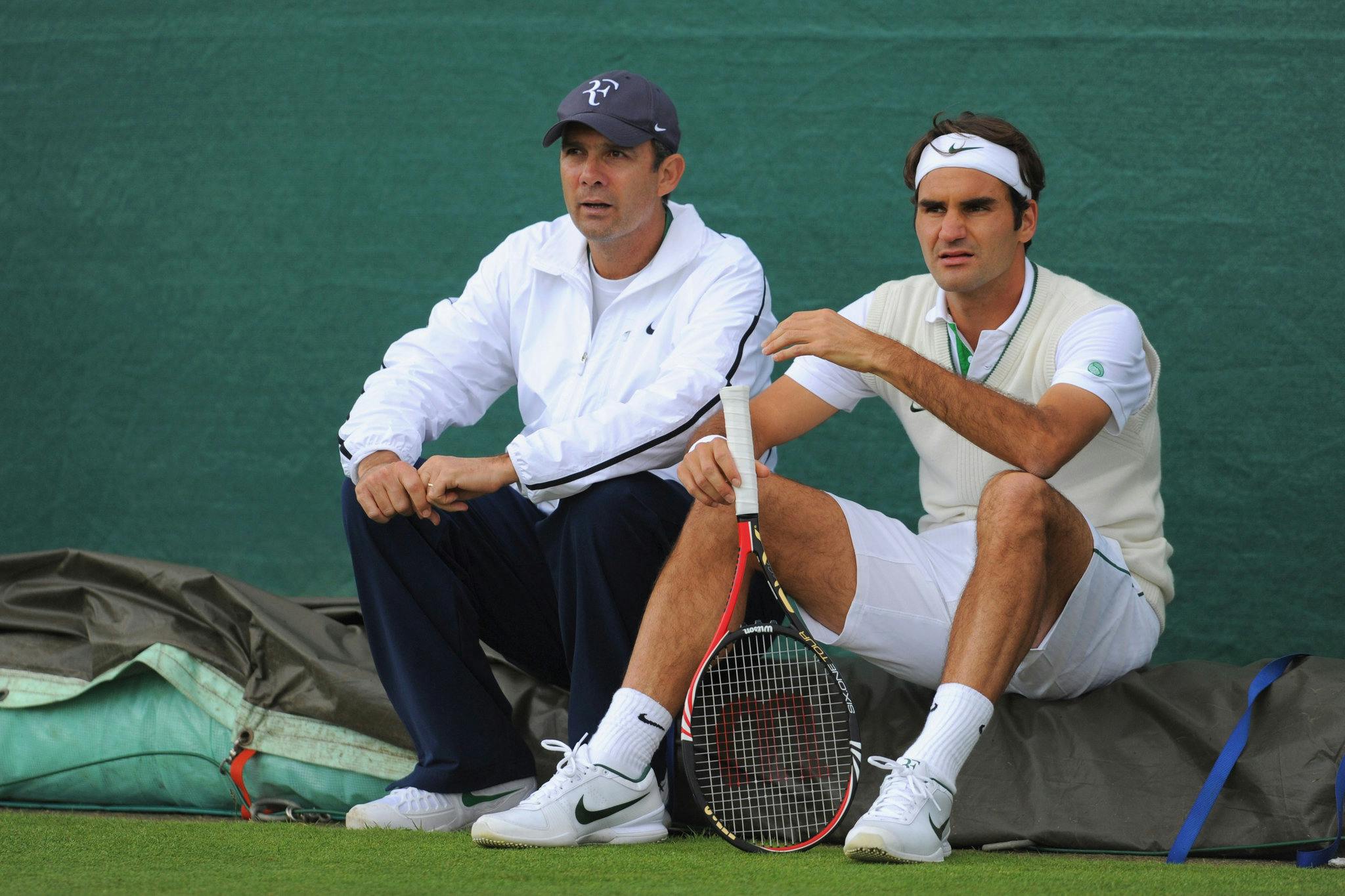
Paul Annacone has coached 2 of the greatest players of all time (Roger Federer and Pete Sampras), and he has also worked extensively with Taylor Fritz and Sloane Stephens.  This came after Paul reached #12 in the world as a player.

He is widely recognized as one of the brightest minds in the game of tennis and has become a celebrity of sorts as a TV personality on The Tennis Channel. Some consider Coach Annacone to be the greatest tennis coach of all time. 

Part of what makes Annacone so effective is his deep understanding of the game, and his ability to articulate complex ideas in an incredibly simple way, which is why it's no wonder his players seem to maximize their potential.

And these skill sets also translate when Coach Annacone conducts online clinics. This is why his ‘Paul Annacone - The Key Aspects to Development’ clinic is highly-regarded within the coaching world and should be a first stop for any coach looking to better develop their tennis players. We’ve pulled two of his insights below so you can get a glimpse at Coach Annacone’s excellent insights.  

Attributes in Tennis and Being Good on Your Bad Days


Coach Annacone asserts that for a tennis player, the questions about their mental state (what he calls the “head part”) can be limited to: How well do you think under pressure? How well can you problem-solve? How well can you figure things out, no matter what’s going on on the court? 

“The heart part is about the ability to be an unconditional competitor,” Coach Annacone added. He then listed how the last part of the equation in being successful in tennis is the physical attributes, which are all things tennis coaches know contribute to physical success on the court. 

Coach Annacone then relayed a story about how when he started coaching Pete Sampras, he was struggling to win practice sets while on tour. Yet, despite the outcomes, Sampras always exuded a composure and pragmatism that was hard for Coach Annacone to understand. 

When Coach Annacone asked Sampras about this one night, he responded, “The reason that I’m able to be successful is not because of a great serve, or I’m unbelievably talented. It’s because I know how to manage the other parts of my game.” 

“When things are good, and I’m playing well, I know I’m going to beat everybody,” Sampras continued. “That’s not my best attribute. My best attribute is if I keep my head in it, I keep my heart going, and regardless of my physical talent on the day, I’m probably going to beat 85% of the people on tour. And that’s when I’ll get to the semis or finals, and that’s when I’ll play well.” 

This ended up being the staple of how Coach Annacone built his coaching philosophy. He focuses not on how good a player is on their good days, but how they are on their average and bad days. 

Learning to be Malleable in Your Coaching

null

Coach Annacone discusses how in many player/coach relationships in the world of team sports, most of the athletes conform to their head coaches’ philosophy. 

But in an individual sport like tennis, coaches have to be a bit more malleable. For example, Coach Annacone noted how Pete Sampras wanted his messages delivered much differently than Roger Federer. 

Therefore, it’s the coach’s job to figure out how to get each athlete to buy in to what he’s teaching, because that is going to take something different from each athlete depending on various factors like their personality, playing style, and upbringing. 

“Because if you don’t have buy-in, the players aren’t going to maximize their potential,” Coach Annacone says. 

However, he also added that coaches can be more dictatorial in the early stages of a tennis player’s development. But as they become teenagers and have proven promise, the more one’s coaching philosophy should become, “a collaboration and a conversation.” 

Coach Annacone later adds, “A good coach in tennis is not someone that knows a lot of tennis. A good coach in tennis is someone that can deliver their message to many different kinds of personalities.” 

In understanding the sort of player a coach has, Coach Annacone employs what he calls the Mechanic vs. the Magician linear scale. The magician is someone who does things by feeling and instinct, whereas a mechanic relies more on fundamentals and is more by the book. Understanding where your players lie on this scale is crucial for maximizing a player’s potential.