Now Streaming On US Sports Radio!

US Sports Net Today!


Live Play-by-Play, Updates, Highlights and More! on US Sports Network!
[Chrome Users-You may have to click on the play button twice to listen]
US Sports Network Powered By Gorilla Sports!


US Sports Radio
The Las Vegas Raiders Play Here
Fitness and Sports Performance Info You Can Use!
The Scoreboard Mall
The Rock Almighty Shaker Of Heaven And Earth!
The Coolest Links In The Universe!

Wednesday, May 7, 2025

US Sports Football: Setting up your young Qb for success and The IFL Week 7 Plays Of The Week!

 The Indoor and Outdoor Wars (IFL, NAL, CFL) Now Streaming On US Sports Radio

  • By Keith Grabowski

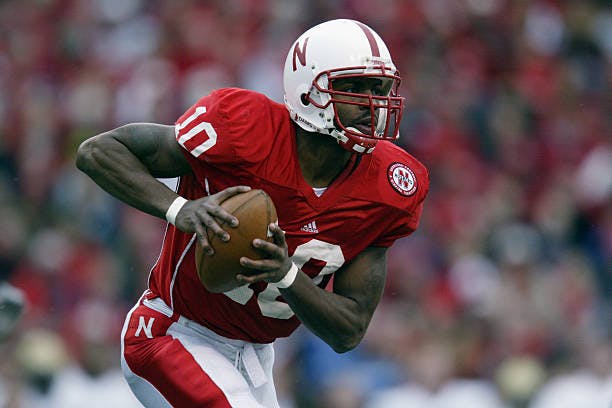
Regardless of the level - NFL, college, or high school, having a plan to set up your young quarterback for success needs to be at the forefront of your planning for the next season.

Two offensive coordinator/quarterback coaches recently shared their thoughts on this at the Lauren’s First and Goal Clinic.  Dave Patenaude is the OC/QB Coach at Georgia Tech, and Joe Davis is the OC/QB Coach at Albany.

Coach Dave Patenaude has a track record of developing quarterbacks over his 30+ year career.  None of these was a bigger task than when he was given the task of converting the Georgia Tech offense from an option-based scheme to a pro-style, spread attack. This included using a freshman quarterback in the first year of their tenure.

In a world of cool drills, complex plays, and numerous philosophies on developing a quarterback, Coach Patenaude has simplified his job down to one simple concept - alleviate stress and anxiety on the quarterback. He uses the analogy of taking a test and that preparation leads to confidence. He explains his philosophy here:

null

Patenaude develops all three phases of the quarterback - mental, physical, and emotional.  On the mental side, he starts with understanding the learning styles of his quarterback which he does with a V.A.K. test - visual, auditory, kinesthetic, so he can match his teaching to what his student quarterbacks need.

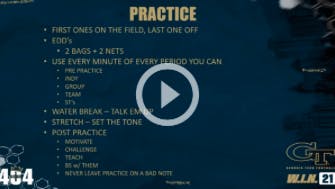
On the practice field, the physical component, Patenaude keeps it simple with using a bag and a net, and keeps them on edge throughout the practice by constantly talking to them, reminding them, and coaching them up throughout every second of practice. He explains more here:
null

Lastly, Patenaude develops the emotional side.  He invests personally in each of his players.  This ranges from talking to them about issues outside of football to having them around his own family.

Coach Patenaude’s entire clinic “Developing a Freshman QB” can be found here.

While he hasn’t accumulated the season of experience of Patenaude, Davis has coached quarterbacks continuously since 2003 at the Division III, II and FCS levels and he's left each place significantly better than he found it.

Joe Davis has become known for his ability to develop quarterbacks as well. In his clinic talk he focused on utilizing concepts that are easy for a quarterback to understand and execute.

“Today everyone is running versions of the same stuff.” To be great at advanced plays, you have to be great at the basics first.  It comes down to being so detailed that they run it better than anyone else.

Davis gives an overview of his thoughts on the landscape of today’s offenses and how to be better on offense here:

null

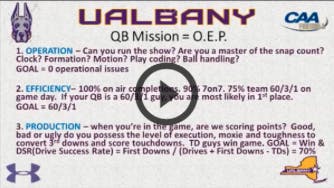
 For Davis, it starts with a mission statement so both he and his quarterbacks can evaluate where they are at:
null

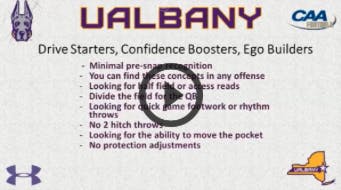
On the practical side, it all starts with utilizing concepts that can start drives, boost confidence, and build the quarterback’s ego.  He believes within all the concept that are available, you can create a menu that allows the quarterback, especially the young quarterback to be successful as he explains in this video:
null

Coach Davis illustrates all of the concepts that fit this profile in his clinic video from Lauren’s First and Goal “Easy Completion Concepts for Developing Young Quarterbacks.

Coach Patenaude and Coach Davis have had success with their approach at multiple levels.  They show the importance of developing the person and the quarterback as well as being intelligent in our choices as coaches and the situations we create for them in playbooks, game planning, and play calling.


NYSS Every Kid In the Game

Tuesday, May 6, 2025

US Sports Baseball: Understanding The Shift and Dodgers vs. Marlins Game Highlights (5/5/25)

 Trump administration the most 'sports friendly' in history? Now streaming on US Sports Radio.

  • By Brandon Ogle

Baseball is a constant game of adjustments. In the 1940’s, Ted Williams essentially forced opposing managers to enact a shift because it was the only way to slow him down. It worked for a little while until the Red Sox slugger made an adjustment to hit more to the opposite field. This is just one of many examples of how teams have implemented the shift to serve as an adjustment to get more hitters out.

Basic Positioningitioning

In terms of the actual positioning, we have seen more varieties arise in recent years. However, for the sake of this article, I’ll give the most general one that’s been used. Here is how it looks: The third baseman will move over to where the shortstop normally is. The shortstop will slide over to the right of second base. Meanwhile, the second baseman will move back into the grass and between second and first. The first baseman will slide over closer to the line. As for the outfield, the right fielder can get closer to the line, and the center fielder will move into right-center. This is the most commonly used shift, but it is still important to gauge the hitting abilities of the player at the plate and adjust appropriately.

Advantages of Using the Shift on Defense Defense

Before even starting this section, I want to make it clear that merely shifting a lot is not always an effective strategy. There is a substantial difference between shifting a lot and shifting effectively (recording outs). For younger levels, it might be hard to determine when to shift. If it’s a team you’ve played before or one that you can watch the opposing players take batting practice, then this might be a little easier. However, there are plenty of advantages that can arise from implementing a shift. The most prevalent one is limiting a hitter’s ability to pull the ball. Obviously, baseball players love to pull the ball to nab extra base hits. It is much more difficult to be a consistent opposite-field hitter. In fact, we’ve even seen some players dominate throughout the minors only to struggle in the majors once managers start shifting against them. The shift also benefits pitchers. When their defense is aligned appropriately, they can limit hits against them and basically have to throw fewer pitches, thus allowing them to go deeper into the game. In addition, they can focus solely on the inner half of the plate to force the hitter to pull it. These are two of the primary advantages that can be brought about by shifting effectively.

Players Must Learn Other Spotser Spots

In order to implement a shift, the infielders must be capable of sliding a little out of their comfort zone. For example, the third baseman is no longer covering the third baseline. Rather, now he is forced to basically act as a fill-in shortstop. The same goes for the rest of the infield, including the second baseman, who is now technically in the outfield. All of these may sound like minor adjustments, but when you get in an actual game situation, they seem a little more rigorous. With this being the case, I don’t think it’s a terrible idea for young infielders to work on their versatility. This would include taking grounders at different positions. Avoid being solely focused on one position. As for a Major Leaguer that’s portrayed this exact versatility, check out the increasingly valuable Ben Zobrist.

Since you have to practice other spots, it doesn’t hurt to study some more online about these other positions. This instructional video from CoachTube will walk you through some of these other spots. You don’t have to spend a ton of time on them, but it can be helpful to get a general idea!

How to Beat the Shifthe Shift

Despite the clear advantages a shift can bring, there are also plenty of ways for hitters to beat it. Jonathan Lucroy, who is the catcher for the Milwaukee Brewers, is one example of a player who was shifted against immensely. His response: just adjust! Lucroy referred to this adjustment, saying, “Personally, I love when teams shift on me. I try to hit ‘em where they ain’t, like Willie Keeler.” There are a few ways, including the ones Lucroy’s exhibited, that can beat the shift.

Buntong>Bunt

Typically, we see bigger players get shifts put on them, so it might sound a little crazy to ask these big power bats to bunt. But, why not? If the infield is basically entirely on the right side, all you have to do is firmly bunt it down the line and you’ll be safe every time. When you do this a couple of times to the defense, they’ll start to respect your abilities and they will no longer implement the shift.

Take Advantagedvantage

With a shift on, the pitcher is going to try to pound you inside to force a pull. However, even at the Major League level, pitchers make mistakes. They may intend to throw a cutter inside, but instead leave it hanging on the outside corner. If you try to pull this ball, it will be an easy pop out. The alternative is to go with it and hit a soft liner to left for a hit. Take your pick on which you’d rather have.

Increased Relevanceelevance

As I mentioned in the introductory sections, coaches love to shift nowadays. If a player is going to try to kill you by pulling the ball, then why not put extra guys over there because you know that’s where it’s going. The number of shifts in the MLB rose by over 10,000 from 2010 to 2014. That is certainly a staggering figure. You’d think of all players that Major League players wouldn’t hesitate to make the adjustment to continue to succeed. However, it isn’t difficult to see why they don’t adjust immediately. These are players that have probably dominated their entire lives and continuously been the best player on the field at any given time. Now, the opposition is attempting to limit their abilities by putting extra guys on the right side? This stubbornness and lack of adjusting is a perfect explanation why managers will continue to implement shifts!

Numbers Gameers Game

Baseball is a numbers game. Even at the youth level, players develop tendencies. When they see an inside pitch, they want to pull it. After multiple times of doing this, they’ll want to pull everything. With this said, it is the defense’s responsibility to read and react to these tendencies. A shift is one perfect example of it. If you think a younger age like 12 is too young to shift, think again because it just might make you a much better team!


National Youth Sports Strategy
Everyone has a role to play in the National 
#YouthSports Strategy! Learn more about the strategy and ways to get 
involved from @HealthGov: https://bit.ly/2lQ85f6


Monday, May 5, 2025

US Sports Wrestling: 5 Wrestling Drills That You Can Do at Home and 57kg Luke Lilledahl vs Liam Cronin 2025 US Open Final

 Politically incorrect? Guilty! Now Streaming On US Sports Radio.

  • By Owen Reilly

Without a partner or mat, improving your wrestling skills can seem almost impossible. However, because of the various skills needed to succeed in wrestling, many different drills can be done at home without the need for a practice partner or a mat.

These drills, although done alone, must be done with intent and intensity to achieve the greatest improvement in your skills. In this blog, we review 5 drills that can be done alone, at home, and with minimal equipment.

5. Stance and Motion Drill

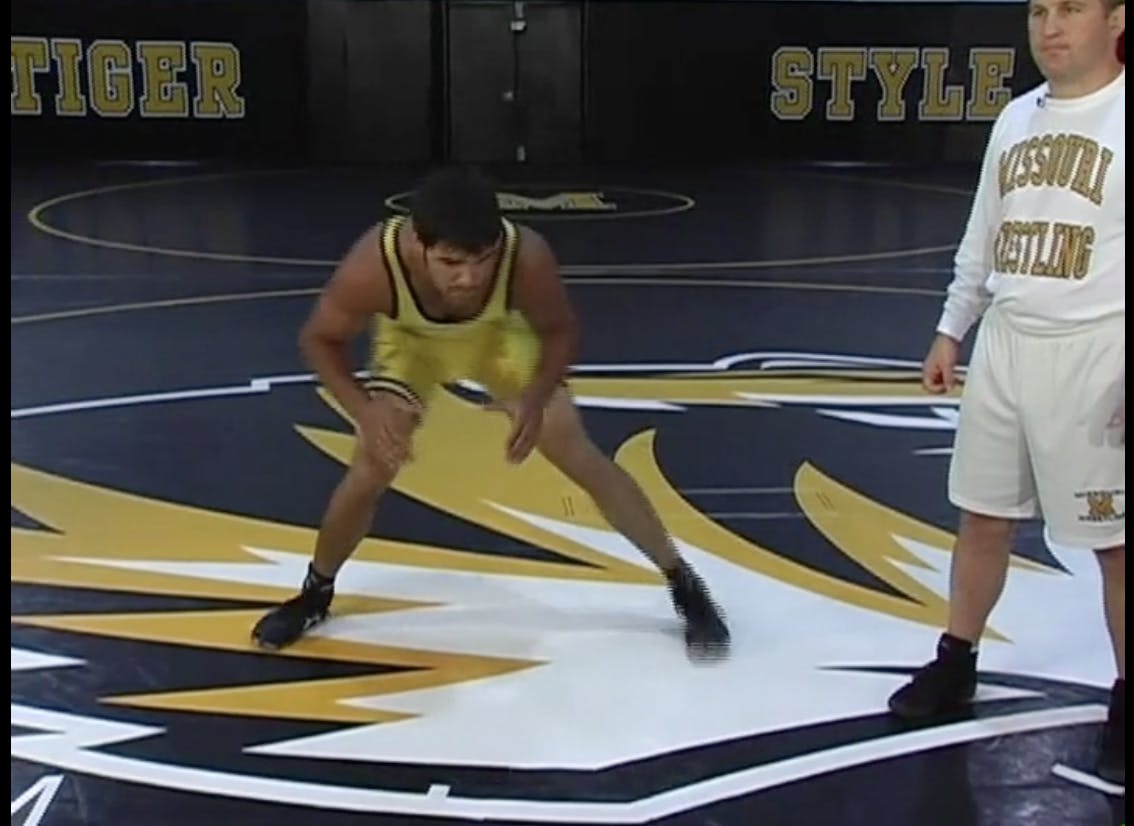
The Stance and Motion Drill can be done anywhere, any place, and anytime. The drill involves getting into a proper wrestling stance and mirroring movements you would perform in a match. While doing this, you can also incorporate shots and sprawls to increase endurance and develop more than just your stance. This drill also allows you to work on your level-changing ability and feints. Completing several rounds of moving in your stance for 2-5 minutes with roughly 20-30 seconds of rest in between each round is a great way to prepare for and simulate matches.

null

4. Spin-Drills

Spin drills emulate the movements necessary to score a go-behind after a strong sprawl or snap down. To complete the drill, sprawl on a yoga ball or something similar and use your legs to continuously spin yourself around the object in a circular motion. Continue to keep your weight on the ball or object when spinning to properly simulate the go-behind. Not only does this drill improve your ability to chase the back in a front head-lock or sprawl position, but it will also greatly develop your endurance and leg strength. 30 to 90-second rounds (depending on your endurance and experience level) with 10 to 15 seconds of rest in between provides both a good workout and allows you to optimize your ‘go-behind movement.’

3. Hip-Heist Drills

These drills work the move that it is named after; the ‘hip-heist.’ To complete this drill, a wall or stationary, flat surface is required. Ideally, this would also be done on grass or carpet, but it can be done on harder surfaces if you are willing to endure a few scrapes. To perform the drill, get into a knee slide position and press your back up against a flat, sturdy surface. This mimics the pressure that an opponent will give you in a match. Once you are in this position, kick your folded knee out and flip your hits so that you are facing the wall. This drill will greatly refine your ability to escape the opponent from the bottom position while also serving as endurance training.

2. Stand-Up Drills

Stand-up drills allow you to work on your stand-ups from the bottom at home and without a partner. This can be done using a wall to emulate the pressure that an opponent may give or you can do this completely unassisted to work through the movements of a stand-up. To complete the drill, start in a bottom wrestling position and work to a knee slide position. Once you are here stand up and simulate fighting grips that an opponent may use to mat-return you. Finish the stand-up through and turn to face your imaginary opponent. Repeat this move several times and your stand-up ability will greatly improve. This move also works to increase your endurance through repetition. 

null

1. Bridging Drills

Bridging, either with your neck or back, can be done from nearly any location with solid ground. Doing so imitates bridging out of a position where you are in danger of being pinned and subsequently losing the match. The drill is a simple one that consists of lying flat on your back and using your neck to lift your shoulders, back, and legs off of the ground. You should have three points of contact with the ground (your neck and two feet) with much of your weight resting on your neck. Doing so greatly increases your neck strength and flexibility. This drill is a great one to do at home and betters one of the most crucial aspects of someone's wrestling game; defense while on your back. 

As stated earlier, these drills should be done intensely as you do not have a practice partner to push you. If done correctly, these drills allow you to become a better wrestler with minimal equipment at home. Utilizing these drills will give you an edge in matches and allow you to outwork those who are only wrestlers in the wrestling room. Click the link below to check out more beginner, intermediate, and advanced wrestling drills that can exponentially increase your abilities. 

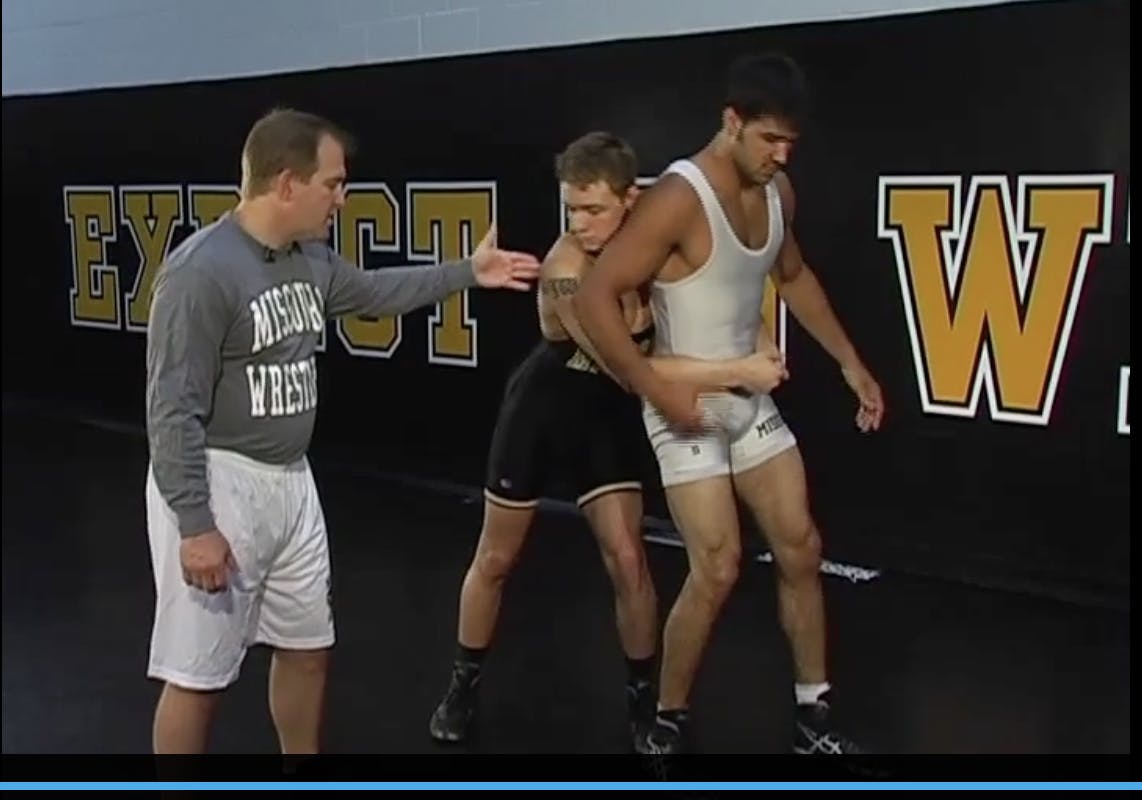
Tiger Style Wrestling Drills.


                         NYSS Find Their Strengths
Sports help kids build confidence and grow into 
healthy, active adults. Learn how organizations, communities, and 
policymakers can use @HealthGov’s National #YouthSports Strategy to 
support youth sports: https://bit.ly/2lQ85f6


Sunday, May 4, 2025

The Rock Almighty: The growing wrangle between humanity and ideology. And Thermonuclear Spiritual Warfare Is On!

 The Rock Almighty Shaker Of Heaven And Earth. Now Streaming On US Sports Radio


  • Author Ekua Botchwey

These two phenomena, humanity and ideology, clearly form our world, with one holding or being the matrix of the other. Truly, humanity is the origin of all ideologies. The ideas and systems that form the premise of every aspect of our lives as humans, our culture, beliefs, politics, society, economy, religion, and more. Where would therefore all our ideas and systems be without the human race?

In our 21st century, humanity is faced with challenging crises affecting every nation of the world, due to its own progeny, that is, the many ideologies we form from different regions of the globe. The human race, our qualities and characteristics as people (the state of being or showing compassion, love, kindness, or sympathy towards others, animals, or even the environment we live in), are being eroded every smallest unit of time by different ideas and systems that have been or are being developed by ourselves.

Ideology is the blueprint for making or unmaking a human race. Humanity, therefore, immured by various emerging ideologies that are crippling the freedom of human life and its existence, should be looked at and this such cancer removed before we lose ourselves and the generations to come. It manifests into shades, good and bad. Upon these two shades are what our basic existence as humans is run, the embodiment of our beliefs, principles, and attitudes that define or are attributed to persons or a particular group of persons seen to them as the right course to existence as far as we are humans. I am talking about ideologies like communism, environmentalism, black lives matter, artificial intelligence, islamophobia, feminism, liberalism, fascism, conservatism, white supremacy, anti-semitism, dictatorship, democracy, jihadism, racism, Zionism, nationalism, sexism, and more.

What makes an ideology good or bad?

The coups in the West African region, the Israel-Hamas war, the many assassination attempts on some presidents of some countries, and the mass immigration crisis that is swallowing Europe, the US, and the UK are some of the dilemmas the world is being faced with.

If an ideology lacks the moral capability and the essence to support the existence of human life, race, culture, and where it originates from, then we can clearly admit that it is a bad ideology. Interestingly, ideology in our recent times has found itself in many internal wrangles. For example, communism against democracy has deprived people's rights and resources to stand for the right course and even brought divisions amongst nations, who are supposed to have one vision of protecting our world and the human race.

Where is the wrangle between humanity and ideology?

The many ideologies formed all over the world, borne in conflicts, wars, racism, governance, gender inequality, religion, social justice, terrorism, genocide, international relations, criminology, and more, are prevailing evidence of how humanity is struggling to thrive in our time. The many different opinions held or practiced by some groups have eroded our common sense and responsibility to humanity. The need to come to an agreement to create policies, make investments, and unite the world against anything that has the potential to destroy humanity should be our focus. The wrangle now is that the supremacy of our ideas and principles we form to guide us as people and inhabitants of this planet has overridden our basic essence as humans. There is no love, empathy, or kindness for one another or the world. This is due to our individual selfishness and the hype given to the different ideologies we hold. For example, racism does not care about one's right to be treated equally, the fear of Jews and Arabs to live peacefully due to religious ideologies, the lack of concern for investing in climate change issues, and the need for global conflict resolution other than sponsoring wars. These are a few proofs of how humanity has been left struggling.

What do we do?

The United Nations’ summit of the future, September 2024, focused on the ways to sustain the human race and everything associated with it. The leaders of the world therefore need to come together to champion policies and systems that support the total safety of human life. Countermeasures should be established to systematically eradicate various ideologies that do not support our basic right to life and a safe future.

The world seems to be absentminded about how influential an ideology is, which has the possibility of gradually drowning humanity. Let's all wake up and stop this cancer before it leaves our world divided with conflicts.

I stand for the protection of the human race; love, peace, kindness, and empathy shown to all manner of persons, where humanity wins over ideology.

Ekua is a Public Servant and obtained her Master of Science in Business Consulting and Enterprise Risk Management from KNUST

NYSS Every Kid In the Game
All kids deserve a chance to play #YouthSports – 
regardless of their ability. Help expand inclusive programs as part of 
the National Youth Sports Strategy from @HealthGov: https://bit.ly/2lQ85f6

Saturday, May 3, 2025

US Sports Volleyball: Volleyball Passing Drills to Win More Matches and Finals Game 2 - Trentino vs. Lube | Superlega 2025

 Lebron Out? NBA Playoffs Worth Watching? Now Streaming On US Sports Radio!


  • By Jackson Chlebowy

Passing wins games. Whether you're a coach designing a volleyball practice plan, a player working on consistency, or a parent helping your child develop core volleyball skills, strong passing is the foundation for success on the volleyball court.

In this article, Coach Charlene Johnson Tungaloa from Drills and Kills shares foundational volleyball passing drills from her course ‘Indoor Volleyball Essentials’ for players of all levels. These expert-curated drills will help your athletes improve their form, footwork, and passing accuracy over time.

___________________________________________________________________________________________________________________

Why Passing Matters in Volleyball

In volleyball, the first contact after a serve sets the tone for the entire rally. An accurate pass allows your setter to control the offense, whether you're coaching club athletes in California or running volleyball drills for middle school students in Ohio. 

___________________________________________________________________________________________________________________

Key Volleyball Passing Fundamentals

1. Face the Server

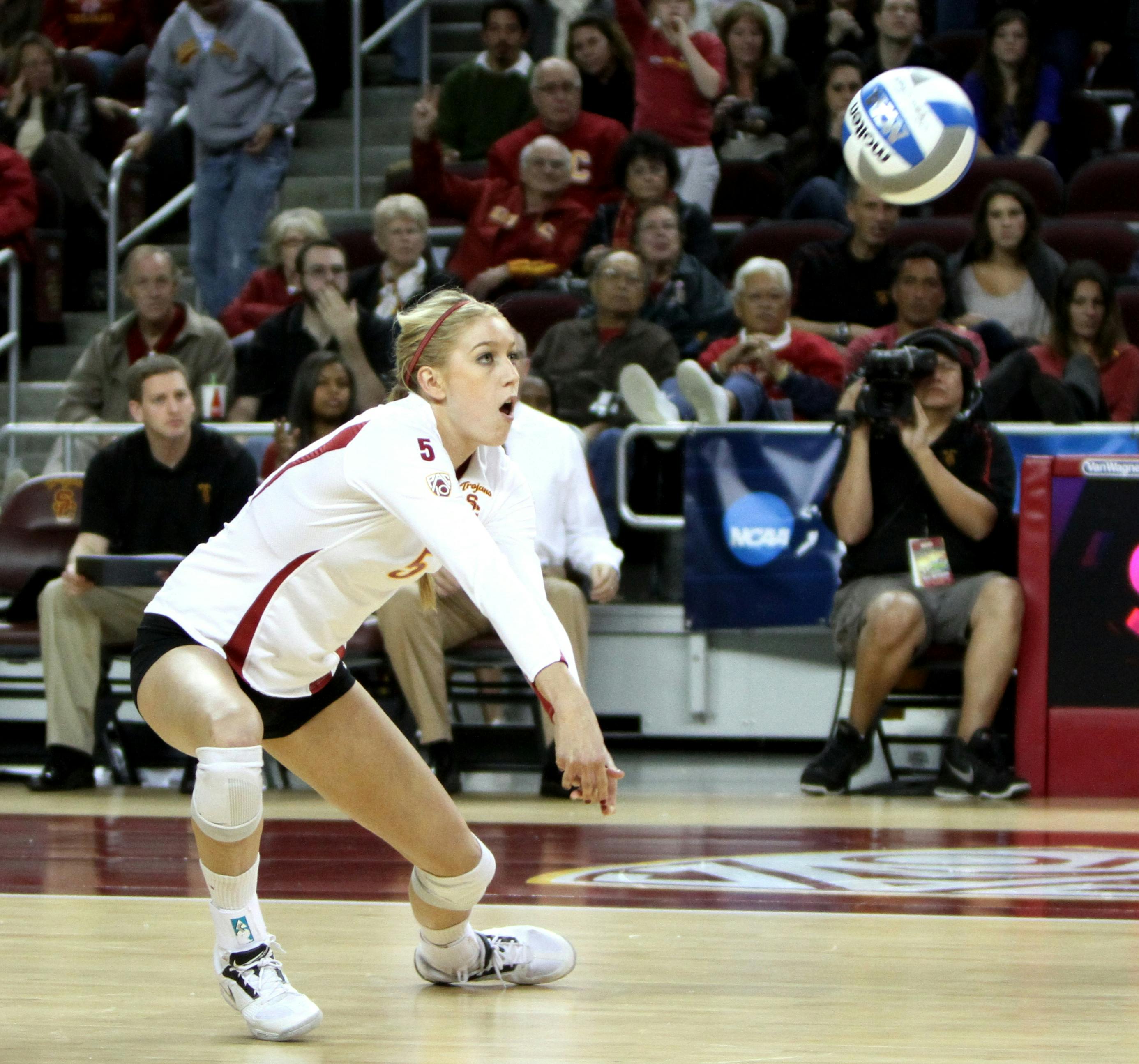
Every pass begins with body positioning. Make sure your shoulders and hips are square to the server. This puts you in the best position to read the ball and react quickly.

2. Platform to Target

Your platform, formed by your forearms, should control the direction of the ball. While your body faces the server, your arms must angle the pass toward your setter or center target.

3. Stay Low and Ready

Keep your hips low and feet shoulder-width apart. A stable lower body helps you absorb the ball’s momentum and control your pass. This stance is essential for all levels, from beginners to advanced players.

___________________________________________________________________________________________________________________

Volleyball Passing Drills

1. Basic Passing Drill: Straight-On Serve

This foundational drill is great for warm-ups and introductory training. It’s also frequently used in volleyball drills for middle school athletes learning proper positioning.

Start in a balanced, ready stance

- Keep your body low

- Receive a straight serve or toss

- Use your platform to direct the ball straight to the target

This drill reinforces the habit of minimal movement and clean platform angles—critical components of every solid volleyball pass.

2. Off-Center Passing Drill

Learning how to pass balls to your left or right is an important next step.

- For a ball to your left, get your right arm down first, then bring your hands together

- For a ball to your right, lead with your left arm

- Do not swing your arms—just angle and control

3. The Russian Passing Drill

The Russian Passing Drill is a high-tempo, movement-focused drill used to improve backcourt footwork, reaction speed, and platform control under pressure. It’s excellent for older players and can be adapted for advanced middle school and high school teams.

Here’s how it works:

- One player starts in a ready position

- A partner or coach tosses balls deep and to the sides of the passer

- The passer must shuffle back quickly, staying low, keeping shoulders forward, and passing the ball under control

- The tosser increases difficulty as the passer improves

- Focus is on quick feet, body control, and consistent platform angles

This drill builds intensity and grit while reinforcing the technical foundation taught in simpler passing drills. Include it later in practice sessions once players are warmed up and technically sharp. You can find more fundamental drills and skills from Coach Megan Brown in her course 'Drills for 7th Grade Through Varsity'.

4. Directional Passing Drill

To simulate game-like conditions, have players practice passing from different areas of the court.

- On the left-back side: body faces the server, platform angles right

- On the right-back side: body still faces the server, platform angles left

This drill helps players develop directional awareness and build consistency regardless of court position.

___________________________________________________________________________________________________________________

Strength and Stability for Passing

Strength is a key part of passing. Strong legs and a stable core help players stay low, resist fatigue, and maintain control throughout long matches.

Consider adding these exercises to your volleyball practice plan:

- Wall sits

- Bodyweight squats

- Lateral lunges

- Quick shuffle footwork drills

___________________________________________________________________________________________________________________

Coaching Tips for Teaching Passing

Whether you're working with beginners or elite players, keep your coaching cues simple and repeatable:

- Face the server

- Angle the platform to the setter

- Stay low and centered

- Avoid excess movement or arm swinging

These coaching points can be used across every level of your volleyball practice plan.

___________________________________________________________________________________________________________________

Where to Use These Drills

These volleyball passing drills are flexible and can be adapted to different training environments:

Indoors with a partner or coach

- At home, using a wall

- Outdoors on grass or a driveway

- In structured practices or clinics

Whether you're developing youth athletes or competitive club players, consistency is key—reps build results.

NYSS Stay In The Game

Want to help kids stick with sports? Prioritize fun and
 #PhysicalActivity over competition in #YouthSports programs. Learn more
 in @HealthGov’s National Youth Sports Strategy: https://bit.ly/2lQ85f6

Friday, May 2, 2025

US Sports Softball: How to Create Runs on the Softball Basepaths and #1 Oklahoma vs #7 Florida Highlights

Going, Going, Gone! And More Excitement From The College World Series And More! Now Streaming On US Sports Radio

  • By Grant Young

Because the bases in softball are 60 feet away from each other, there’s a common misconception that softball baserunning isn’t as important a part of the game as hitting, fielding, or pitching. 

Yet, any coach who believes that’s true is doing themselves a disservice when it comes to maximizing their own team’s potential. 

A softball team’s ability to run the bases well can spell the difference between winning and losing. And because softball is a game of inches, learning how to teach and practice the fine details of baserunning (such as being able to slide effectively, crafting ways to score from third base, and communication between coaches and baserunners (and between baserunners and other baserunners)) could steal your team some wins throughout the course of a season; especially in the postseason, when the margin between teams is often minuscule.

And Wade Womack knows this better than just about anyone else. 

Coach Womack has been a head coach of various high school women’s softball programs for over two decades and has been running the Dripping Springs High School’s softball program in Dripping Springs, Texas, for over 10 years alone. Coach Womack has guided two teams to the State Tournament at Medina Valley and won the State Championship in 2007. 

This past 2024 softball season, Coach Womack’s Dripping Springs team won the 6A District 26 Championship. Head coach Wade Womack was named the district’s Coach of the Year. 

Coach Womack believes that the secret to his sustained success has been the advantage his teams have over opponents on the basepaths. He imparted a few of his best baserunning lessons and insights in his ‘Creating Havoc on the Basebaths & Other Philosophies’ course from the Texas High School Coaches Association. This course is a gold mine for any softball coach who wants to turn their team’s baserunning into a lethal winning weapon.

15 Ways a Runner Can Score From Third

While Coach Womack noted that there are probably some ways a runner can score on third that he missed, the fact that there are 15 is pretty astounding. In fact, we’ll note that Coach Womack missed a balk, so there are at least 16 ways a runner can score from third.

But Coach Womack’s 15 ways are: base hit (including single, double, and a triple), sacrifice fly, passed ball, wild pitch, obstruction, suicide squeeze, safety squeeze, fielder’s choice, straight steal of home, delayed steal of home, error off a batted ball, catcher overthrows pitcher after the pitch, catcher throws ball away on attempted pickoff, 1st and 3rd base strategies/set plays, and bases loaded walk/hit by pitch. 

NYSS Every Kid In the Game

And the reason Coach Womack brings these up are to highlight the importance of getting runners over to third base. Especially for a team that is more focused on creating contact and playing small ball as opposed to driving the ball out of the yard, a main focus of yours should be getting runners over to third base at all costs. 

Especially in the game’s lower levels, where mistakes among fielders and pitchers are more common, getting a runner to third base is nearly as good as scoring them outright. 

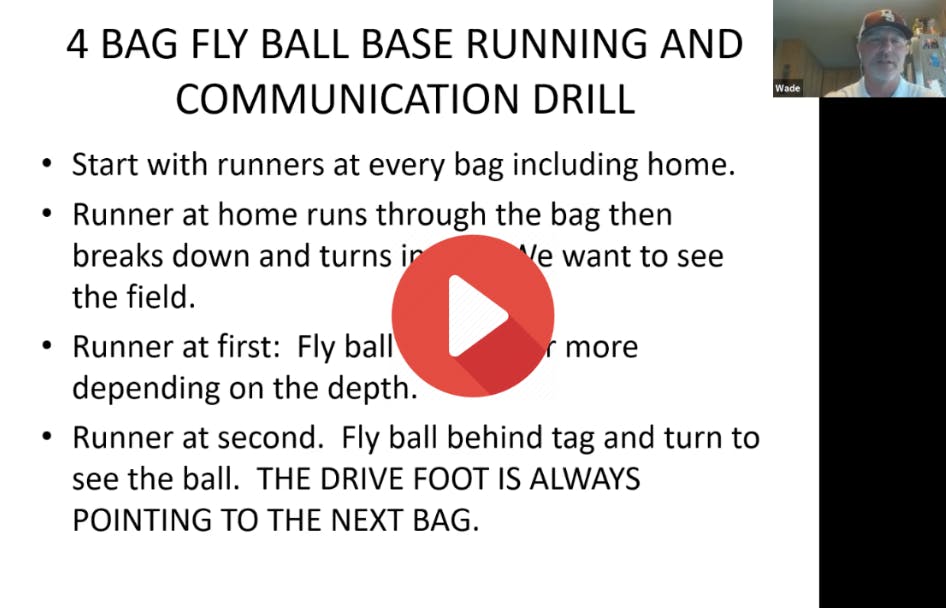
4 Bag Fly Ball Base Running and Communication Drill

null

In his course, Coach Womack details a drill that he likes to use to instill proper base running techniques and outfield communication among his players. He calls it the 4 bag fly ball base running and communication drill.

It begins with players starting at all four bases. From there, the drill starts with the runner at home running out a ground ball to first then turning inside after hitting the bag, in order to assess whether one of the middle infielders is being lazy and allowing an opportunity to steal second. 

After that, the runner who started on first will simulate a fly ball getting hit, where they get halfway to second base and watch to see whether or not the ball is caught. 

After that rep, the runners at second will practice tagging up and heading to third. When the ball is hit or thrown into the outfield, the runner will watch the ball with their drive foot always pointing to the next bag. As soon as the ball is caught, the runner should tag up and go for third. 

And the runner at third base will tag up and advance in the same way when it’s their turn. 

In addition, Coach Womack notes that while doing this drill, he’s hitting the fly balls between outfielders in two positions (ideally center and right field), and having them practice communication with one another.

Sliding

Coach Womack notes that learning how to slide properly is not only a crucial part of being a good team on the base paths, but it’s also integral to keeping your players safe.

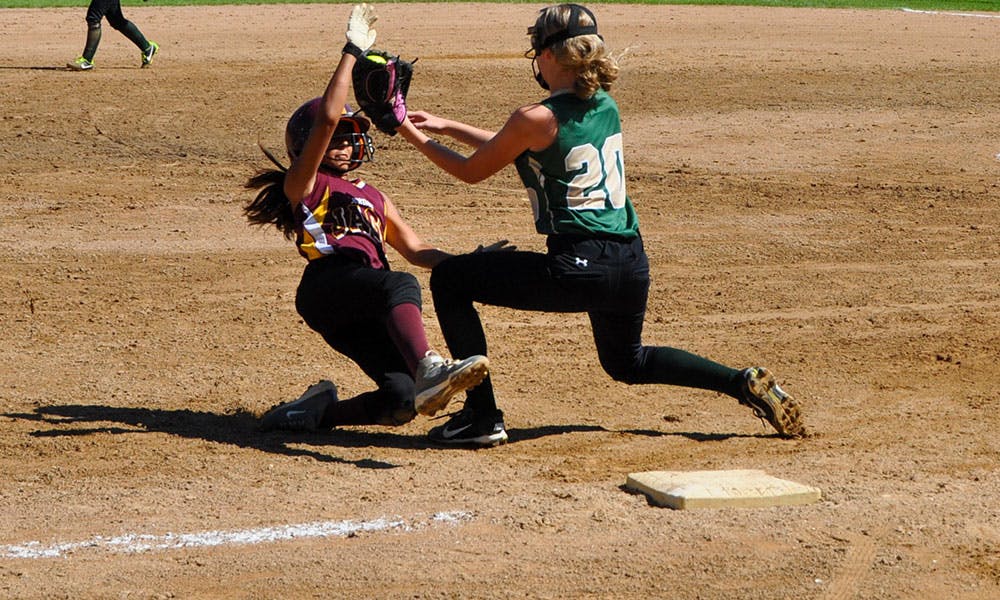
One of Coach Womack’s rules is that players are not to slide head first into home plate under any circumstance. He also notes that coaches should be instructing players to slide to the outside of every bag, in order to best avoid the tag during a throw.

The one exception to this is if the runner is sliding into second base and the second baseman is coming toward the bag to cover. In this situation, the runner will likely want to slide toward the inside of second base in order to be as far away from that tag as possible. 

Another reason to slide to the outside of home plate is because, even if the catcher is obstructing the bag, that call rarely gets made (especially at the high school level). 

Incorporating these tools from Coach Womack is a great way to improve your team’s baserunning and begun running your way to wins.

Thursday, May 1, 2025

US Sports Golf: Two Main Principles For Improving Your Golf Short Game and Analyzing 81-team field for 2025 NCAA Division I men’s golf regionals

The Coolest Sports, Talk, Music, and Fun. Nothing Like It. Now Streaming On US Sports Radio!


  • By Grant Young

The short game in golf can be the most challenging aspect of the sport for many players. While hitting long drives off the tee may seem impressive, it's the finesse and precision required for chipping and putting that can truly make or break a golfer's game. Mastering the short game demands a great deal of skill, touch, and concentration. 

Unlike the full swing, which allows for some margin of error, the short game requires a high level of consistency and control. Ultimately, success in golf often comes down to proficiency in the short game, and those who can excel in this area are likely to see significant improvements in their overall performance on the course.

And when done well, the short game can be golf’s most satisfying aspect. Successfully executing a delicate chip shot to get the ball close to the pin or sinking a long putt can bring about a sense of achievement that is hard to replicate in other aspects of the game. The short game also offers opportunities for creativity, as players can employ various techniques and strategies to navigate around hazards and onto the green. 

Additionally, the short game often plays a crucial role in determining a player's overall score, making every successful chip, pitch, or putt feel like a significant accomplishment.

All of which is to say that it’s worthwhile to try and improve your short game. And online golfing coach legend Gary Wiren is here to help you do so. 

Coach Wiren is a member of six Golf Halls of Fame, including the PGA Hall of Fame and the World Golf Teachers Hall of Fame, and has honorary memberships or distinguished service recognition from Sweden, Italy, New Zealand, and Japan. Wiren was a collegiate conference champion, won the South Florida Seniors PGA title, and the South Florida long-driving championship, played in the USGA Senior Open and the PGA Senior Championship and has won the World Hickory Championship. 

Coach Wiren’s ‘Great Golf Drills Vol. 2 - The Short Game featuring Dr. Gary Wiren’ course will teach you which shots to play in different situations, how to develop the touch necessary for a great short game, and will help you to learn the correct principles of practicing the short game and dramatically lower your scoring average.

Dialing For Distance

The first (and most crucial) point when deciding which clubs to use when attempting to land a shot on the green is knowing how far away you are from the hole. 

The best way to do this is with experience. The more you’re out on the golf course, the better you’ll be at gauging distance. But if you’re relatively new to golf, a great way to know is by using the yardage markers placed along the length of the hole. Better yet, if you have access to a yardage book for a template for the gold course you’re at, this can be an incredibly useful tool. 

Create Your Video Today at Vidday.com!

Once you calculate an estimated range from your ball to the hole, you’ll want to have a good understanding of how far back you want to take your swing. For example, if you’re ten yards away from the hole, you’ll want to swing so that your club head goes about parallel to your knee during your backswing. If you’re about 20 yards away, your backswing will be around parallel to your hip. A 35-yard chip shot will make your backswing go about to your bicep, and so on. 

Again, repetition is paramount when it comes to deciding which club to use. This is where getting reps in on the driving range is vital because you can test shots and distances with each club to see which best suits you at each distance. It would also be wise to keep a notebook, telling you which clubs you like at certain distances. 

The Right Direction in Chipping

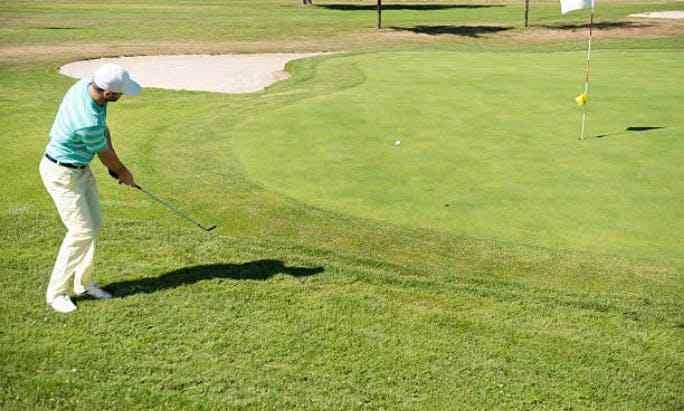
One drill that Coach Wiren loves to utilize when helping students with their chipping direction is placing a club on the ground next to their ball that can help them line their shot up, so they can see where the club of their swing goes through to the target. 

After doing this for enough repetitions, students should be able to envision that imaginary club on the ground while they’re playing, which will be useful in lining up a straight shot. 

Coach Wiren suggests that, when it comes to knowing where the ball should be positioned between your legs when taking a shot, what you can do is stick a tee in the tops of your club’s grip, place it in front of your sternum, and look downwards. The tee should be about ½ inch in front of where you see the ball on the ground beneath it. If that’s where it is, your ball is in the correct position. 

Principles For Putting

null

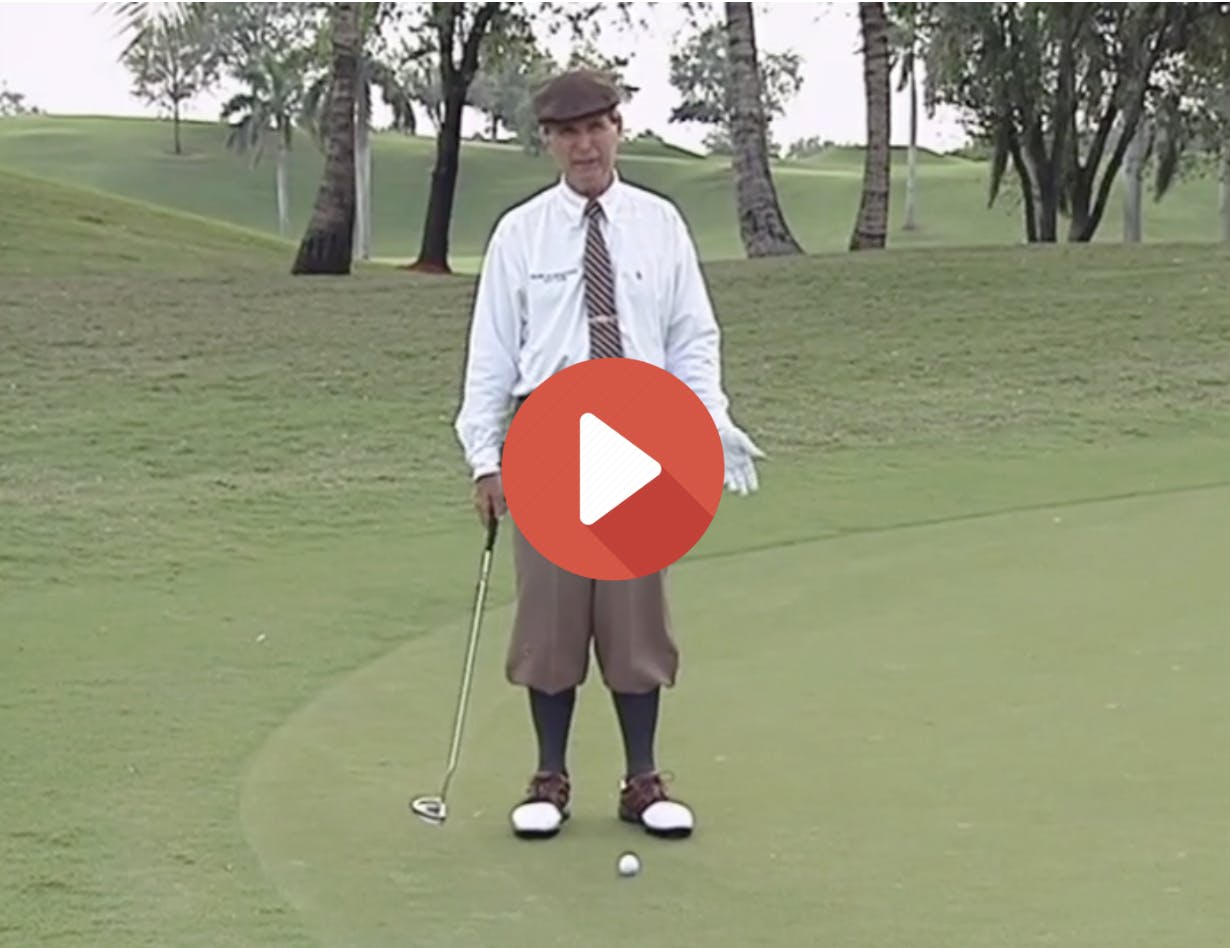
Coach Wiren explains how there are main principles for putting success:

1. Stroke Mechanics 

This is essentially learning to swing the putter smoothly, like a pendulum swing. This can be learned in a week.

2. Reading the green

Learning how to accurately read a green can take a lifetime, but some tips Coach Wiren is to imagine that every putt is a straight putt in your mind. In other words, if the green has a slope, you should be still executing a straight putt that accounts for the slope and any other factors that will affect how the ball travels. 

He also goes on to note that reading the green is also about pace, which means gauging how hard to hit the ball. While this will take time and experience, imagining a straight line in your head can improve how well you’re able to read the green.

National Youth Sports Strategy
Everyone has a role to play in the National 
#YouthSports Strategy! Learn more about the strategy and ways to get 
involved from @HealthGov: https://bit.ly/2lQ85f6


Wednesday, April 30, 2025

US Sports Ice Hockey: Strength and Conditioning for Ice Hockey: Building the Complete Athlete and NHL Playoff Highlights Oilers vs. Kings Gm 5

 Playoff Fever. Now Streaming On US Sports Radio!

  • By Jackson Chlebowy

Ice Hockey is one of the most demanding sports in the world. It requires players to be explosive yet controlled, powerful yet mobile, and intensely focused while under pressure. Not only do you need to have all of these skills to be a good player, but you need to know how to utilize them at high intensity shift after shift.

While developing skating, shooting, and game senses will ultimately elevate your game, it's the off-ice training that gives players that extra edge over their competitors and allows them to reach their full playing potential. This is why it is crucial to start putting serious thought into how you train your body for the hockey season.

A thoughtfully designed strength and conditioning program tailored toward hockey-specific skills and muscle movements can make the difference between playing top-line minutes and riding the pine. Not only will a hockey workout program improve your performance, but it will also better prepare your body for competition and reduce injury risk.

________________________________________________________________________________________________________________________

Why Off-Ice Training Is Essential for Hockey Players

All of the core hockey skills, like skating, shooting, and battling for pucks require a mix of strength, endurance, and balance. Because hockey is uniquely played on ice, it's not just about being athletic, it's about applying your physical skills in a way that transfers to the ice.

A strong off-ice hockey training program should cover all of the following core groups:

- Explosive lower-body power for acceleration and strong strides

- Core strength and stability for balance, body control, and shot power

- Upper-body and grip strength for puck battles and physical play

- Conditioning that mimics game demands—Short, high-intensity bursts to mimic a 30-60 second shift.

- Mobility and recovery strategies to prevent injuries and enhance longevity

________________________________________________________________________________________________________________________

Components of Hockey Strength Training

1. Lower Body Power and Skating Efficiency

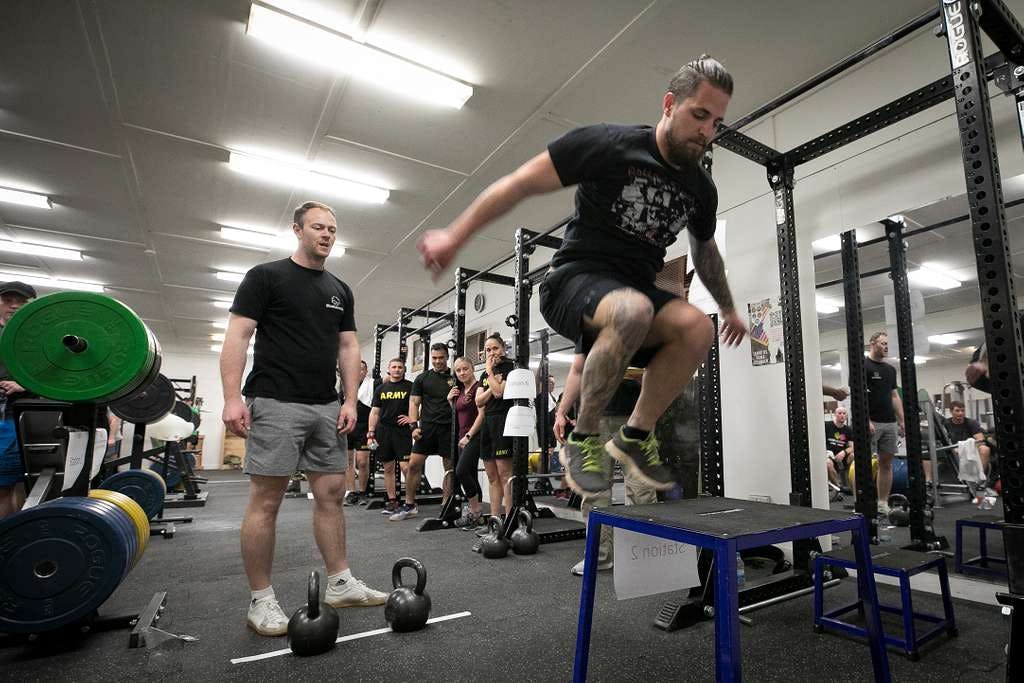
Strong glutes, quads, and hamstrings are essential to producing a long and powerful stride. Compound lifts like squats and deadlifts are great ways to improve muscle strength. Combine traditional lifts with explosive movements like box jumps, short sprints, and lateral bounds to help build up explosiveness that translates directly to skating.

Recommended Lower Body Exercises 

________________________________________________________________________________________________________________________

2. Core Training

No, we’re not training our core to look good for the ladies this offseason. Your core helps stabilize your spine during hits and battles to stay balanced and helps generate torque for your shot.  The best training programs utilize anti-rotational, anti-extension, and dynamic core exercises like single-leg deadlifts, pallof press, and planks (and plank variations).

Recommended Core Exercises

________________________________________________________________________________________________________________________

3. Upper Body Strength 

Strong shoulders and good grip strength are crucial for those high-contact moments when you’re battling for pucks or fighting off a defender. Being able to bench 300 lbs is impractical for hockey, but being able to effectively push, pull, and stabilize yourself under pressure is essential. If you put effort into getting functionally stronger in these areas, you're bound to win more puck battles and be impossible to dispossess. Use compound and rotational lifts to replicate game movements in your training. 

Recommended Upper Body Exercises 

________________________________________________________________________________________________________________________

4. Energy System Conditioning

Hockey is an anaerobic sport. A normal hockey shift is between 30-60 seconds, so being able to exert maximum effort with minimal rest over the course of a game is essential. The best conditioning exercises mimic a short hockey shift — short sprints, and explosive efforts followed by a short recovery period.

Recommended Conditioning Exercises

________________________________________________________________________________________________________________________

5. Mobility, Injury Prevention, and Longevity

Injury prevention used to be an afterthought in most training programs; now it's one of the most focused-on aspects of training. Your body takes a lot of wear and tear over the course of the season. Your hips, groin, shoulders, and spine/back are constantly at risk of injury. That is why a good training program must include specific mobility and flexibility work. Training in flexibility will not only make you a better athlete, but it will also reduce your risk of injury (especially after putting on all that muscle with your new training plan). Fewer injuries mean you’ll be able to play the game we all love that much longer.

Recommended Mobility Exercises

________________________________________________________________________________________________________________________

The Evolving Landscape of Hockey Performance

What’s exciting about hockey strength and conditioning today is how collaborative and science-driven it has become. College and pro-level performance coaches are spilling their industry secrets and strategies for player development and injury prevention. 

Events like the Strength on Ice Summit have become go-to resources for coaches, players, and trainers alike, offering insights into how the best of the best across the NCAA, NHL, and private sector are developing elite athletes. Topics range from contact preparation to goalie-specific durability work, and from gym-to-ice transfer methods to hip function in skating mechanics.

________________________________________________________________________________________________________________________

Final Thoughts

Building a strong hockey player is more than lifting heavy weights and running fast sprints, it's about intentionally training your hockey muscles for movement-specific functions that occur naturally on the ice. The best hockey players make themselves durable, explosive, and consistent through intentional training and thoughtful practice planning. 

Strength and conditioning best practices continue to evolve every day, so you must stay up to date on the latest from experts in the field. Whether you’re training in a pro facility, a high school weight room, or your at-home gym, your approach should reflect the demands of the game.

NYSS FB Be A Role Model
Want to help kids find sports they love? Sign up to be a
 coach or volunteer in a local youth sports program. Learn more ways to 
support youth sports in the National Youth Sports Strategy: https://bit.ly/2lIHPUc