View the content of this inline frame with your browser
Sports USA Radio

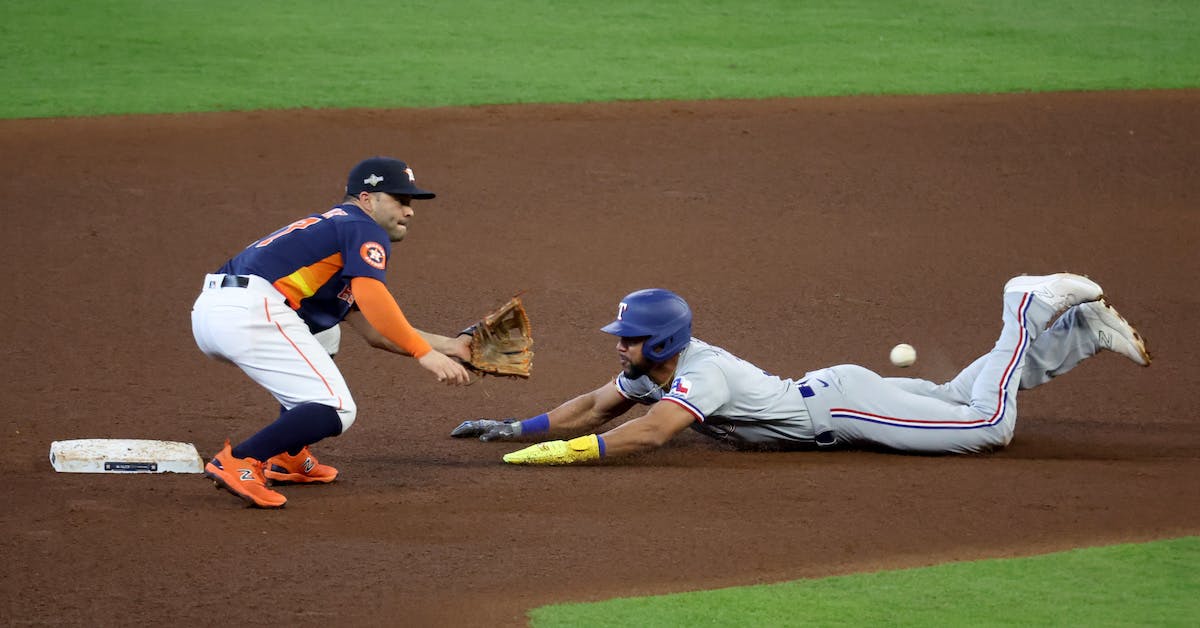
Good baserunning is crucial in baseball for various reasons. It enables players to advance bases and score more efficiently, thus enhancing the team's chances of success. Strategic baserunning can also exert pressure on the opposing team, which often leads to defensive errors. Furthermore, it showcases players' awareness of game situations and their ability to make quick, impactful decisions. In essence, proficient baserunning is a vital element of the game that can significantly influence the outcome of a game. And that’s why having baserunning drills that you can utilize to help improve your baseball team is of paramount importance.
Yet, coaching baserunning in baseball is challenging for several reasons. It requires teaching players to make split-second decisions while considering various factors such as the game situation, the speed and location of the ball, and the capabilities of the opposing team. Plus there’s the fact that baserunning involves a combination of speed, agility, and strategic thinking, making it a complex skill to coach effectively. Baserunning techniques can vary depending on the player's position, making it necessary for coaches to provide individualized instruction. Overall, coaching baserunning demands a deep understanding of the game and the ability to effectively communicate and demonstrate these intricate skills to players.
And Steve Nicollerat has the perfect techniques to help you increase your understanding of the game and improve your players’ baserunning prowess.
Coach Nicollerat is the Founder of Coach Baseball Right! Which provides baseball organizations with dozens of resources available to grow and elevate their current programs and deepen their kids' experiences. In addition, Coach Nicollerat has about 40 years of experience coaching varsity baseball at St. Louis University High School, as well as playing collegiate ball at St. Louis University.
Coach Nicollerat’s ‘The 10 Base Running Drills Every Coach Needs’ course gives coaches the foundational set of fundamental and progressive base running drills that they can build from to take their teams to a new level.
The Lead Off
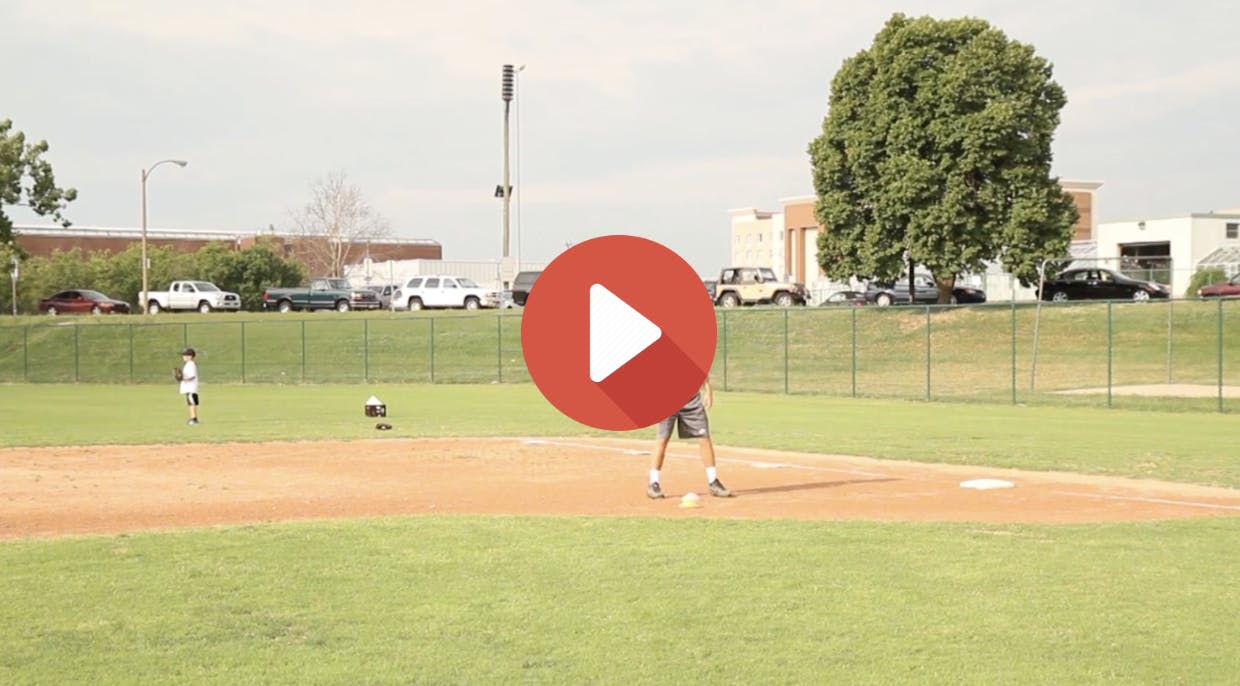
The first aspect of a baseball team improving on the base paths is knowing how to have a good lead off of first base.
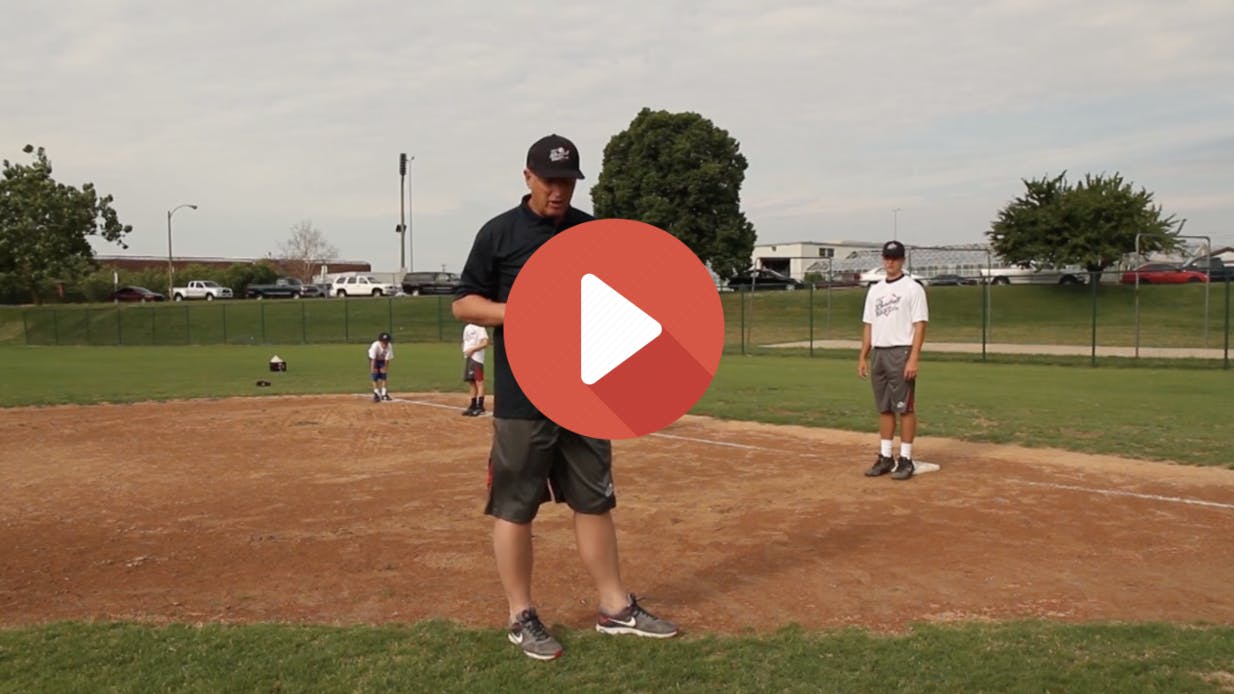
Coach Nicollerat notes that when taking a lead off of first base, the lead should be comprised of different distances if there’s an intention of the runner stealing the base. If the baserunner is a threat to steal bases or if it’s a situation where stealing a base makes sense, the baserunner should be taking a lead that’s a step farther away from first base than they would if they weren’t intending to steal a base.
While you may think that this will give away the baserunner’s intentions, the reality is that, from the pitcher's mound, a one-step difference isn’t discernible to the pitcher’s eye. They have so many other things to focus on that there’s really no chance they’re going to notice that one-step difference.
Another aspect of executing a good lead-off is that the runner should be positioned higher up in the baseline if they intend to steal, typically in line with where the front of the first base will be positioned.
Similar to the earlier point about the lead’s distance, nobody on the opposing team is going to recognize a few inches’ difference between where a player is taking their lead. But being just a little bit closer to the pitcher’s mound could help convince the pitcher that the baserunner is closer to the bag than they are. While this might only offer a slight advantage to the baserunner, baseball is a game of inches.
How to Steal
One of the most important aspects of stealing bases is understanding when the right time to run is. Even the fastest runner can get thrown out if they get a poor jump, and vice versa for someone who isn’t the fastest runner.
Coach Nicollerat says that the baserunner should be looking at the (right-handed) pitcher’s left foot when trying to gauge when to steal. As soon as that leg begins to lift off the ground, that’s what the runner should take off.
If the baserunner sees the right heel coming off the ground, they need to prepare to dive back to first base because that almost certainly means the pitcher is picking off.
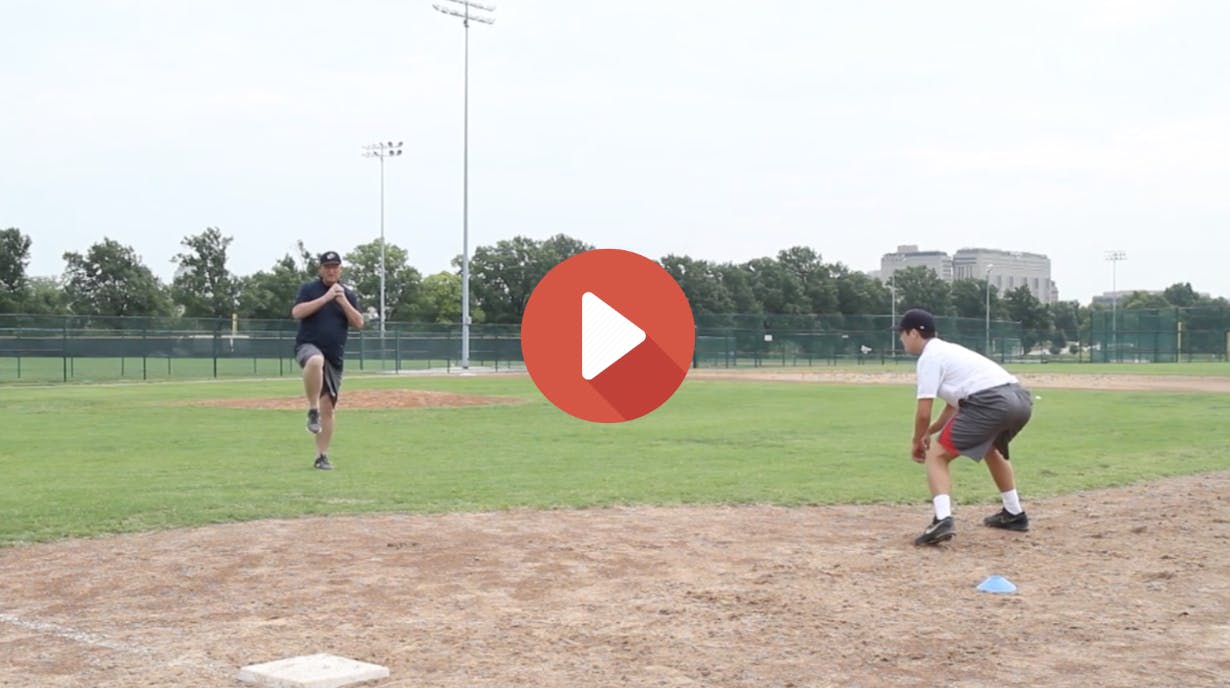
This is extremely easy to drill, as a coach can go out and pretend to be a pitcher while a line of baserunners is in position in the baseline. As soon as the coach’s left feel lifts, the baserunners should simulate taking off for second base. And if the coach’s right heel lifts then they simulate giving back to first.
Reading Lefties
Coach Nicollerat discusses how to steal second base off of left-handed pitchers. The first part of this requires understanding whether the left-handed pitcher can read or not. If the lefty pitcher has proven that they can read effectively, it might be wise to not steal.
But if the lefty isn’t a reader, and instead uses a more deceptive pickoff move to try and negate the run game, Coach Nicollerat explains that one option is to have the baserunner take a big lead, then take off for second base as soon as the pitcher makes their first movement.
The idea behind this is that, if the pitcher’s pickoff move is slow, then the baserunner will have enough time to make it to second base if they steal once the pitcher begins their long pickoff move.
However, if you’re also looking to steal against a reading lefty, one way to do so would be to wait until the pitcher enters the apex of their delivery (the top of their leg lift). While this is a risk, the reading pitcher has most likely already made their decision to pitch rather than pick at this point, so the baserunner has a solid chance of stealing the base.


Introduction
Struggling to keep track of your volleyball rotations? The 5-1 rotation is one of the most commonly used formations in volleyball, providing a structured yet dynamic approach to gameplay. This guide will break down the fundamentals of the 5-1 rotation, explaining how players should position themselves and transition throughout a match.
What is a Rotation in Volleyball?
In volleyball, a rotation refers to the movement of players in a clockwise direction each time their team gains the right to serve. To ensure proper positioning and avoid rotation violations, players must maintain their correct spots on the court until the ball is served.
The 5-1 Rotation: An Overview
The 5-1 rotation consists of one setter and five hitters, distributed as follows:
Front row: Outside hitter, middle hitter, and right-side hitter
Back row: Another outside hitter, libero, and the setter (when in the back row)
This system allows for consistency in setting, as the same player sets in all rotations. Players must adhere to rotation rules, ensuring they remain in their designated positions before the serve. Once the serve is executed, they can transition into their base positions.
Breakdown of the 5-1 Rotation
Rotation 1 - Service
This is the first serving rotation at the start of a set.
Players begin in their base positions after the referee checks the lineup.
Libero substitution:
The libero cannot be listed in the official lineup but may substitute in for any back-row player after the lineup is verified.
This substitution does not count toward the team’s total substitution limit.
Key transitions:
The setter is the first server. After serving, they move into their base position.
The outside hitter and right-side hitter switch positions once the ball is served.
The back-row outside hitter and libero move into their base positions.
Rotation 1 - Serve Receive
The first receiving formation in a match.
Objective: Hide the setter to ensure they do not pass the first ball and remain available to set the second ball.
Key transitions:
Since the setter is in the back row, the front-row outside hitter drops back to assist in passing.
Players remain in their designated spots for the first serve.
After the ball is returned over the net, all players transition to their base positions
Rotation 2 - Service
Players rotate clockwise before the serve.
Key transitions:
An outside hitter serves, becoming a back-row attacker.
The other outside hitter rotates to the front row.
After the serve, players shift to their base positions.
Rotation 2 - Serve Receive
The second receiving formation.
Key transitions:
The front-row outside hitter moves back to pass, ensuring the setter is hidden.
Once the ball is played over, all players move to their base positions.
Rotation 3 - Service
Key adjustments:
The libero subbed out in Rotation 2 is replaced by the second middle hitter.
The first middle hitter serves, then transitions into the libero’s base position, playing defense until the opposing team wins a point.
Other players adjust to their base positions after the serve.
Rotation 3 - Serve Receive
Key transitions:
The libero substitutes back in for the first middle hitter.
The front-row outside hitter moves back to pass, keeping the setter available.
Players maintain their correct positions before the ball is served.
After the ball is played over, players shift to their base positions.
Rotation 4 - Service
Key substitutions:
A defensive specialist may substitute in for the right-side hitter to serve and play in the back row.
The defensive specialist’s base position is in the back-right.
If needed, the right-side hitter may remain in the back row instead of being substituted.
When the defensive specialist rotates to the front row, the right-side hitter subs back in.
Setter’s new role:
The setter is now a front-row player, leaving only two hitters at the net: an outside hitter and a middle hitter.
The setter must act as the right-side blocker and has the option to dump the ball when setting.
Having the setter in the front row enhances back-row passing efficiency.
Rotation 4 - Serve Receive
The setter, now in the front row, is stacked behind the other front-row players on the left side to facilitate movement into base positions.
The defensive specialist functions as the third passer, allowing the front-row outside hitter to focus on attacking.
Once the ball is played over, players transition to their base positions.
Rotation 5 - Service
The outside hitter rotates to serve, while the other outside hitter moves to the front row.
After serving, all players transition into their base positions.
Rotation 5 - Serve Receive
The back row has three passers, reducing the need for the front-row hitter to pass.
Once the ball is returned over the net, all players shift to their base positions.
Rotation 6 - Service
The libero substitutes out for a middle hitter, while the other middle rotates to serve.
This rotation is identical to Rotation 3 - Service in terms of positioning and transitions.
Final Thoughts
The 5-1 rotation is a highly effective system that provides offensive consistency while maintaining defensive stability. By understanding each rotation’s transitions and responsibilities, players can improve their positioning, minimize errors, and enhance overall team performance.
By mastering this rotation, teams can optimize their strategy and maximize their chances of success on the court.

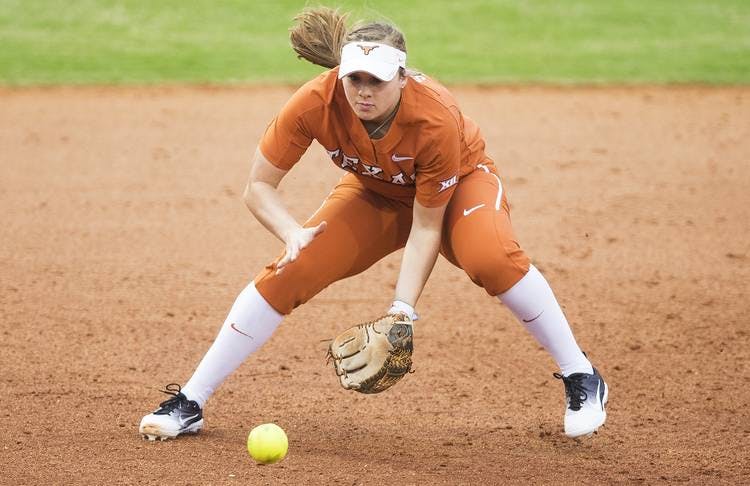
Having a plethora of good infielders in softball is crucial for any team’s success.
Being a good infielder requires both physical and mental components. Having quick reflexes, agility, and a strong arm are all essential for making defensive plays. In addition, good infielders also must be able to anticipate the next play, communicate effectively with their teammates, and have excellent decision-making skills. Their role in preventing runs and helping the team maintain control of the game is vital.

Playing infield in softball can be challenging for several reasons. First, the speed of the game requires quick reflexes and fast decision-making, because the close proximity to the batter also means that there is less time to react to hard-hit balls.
Additionally, fielding ground balls and catching line drives require precise hand-eye coordination and good timing. Furthermore, the pressure to make accurate throws to get the runners out adds to the difficulty of playing the infield. Overall, the combination of speed, precision, and split-second decision-making makes playing infield in softball a challenging and demanding position.
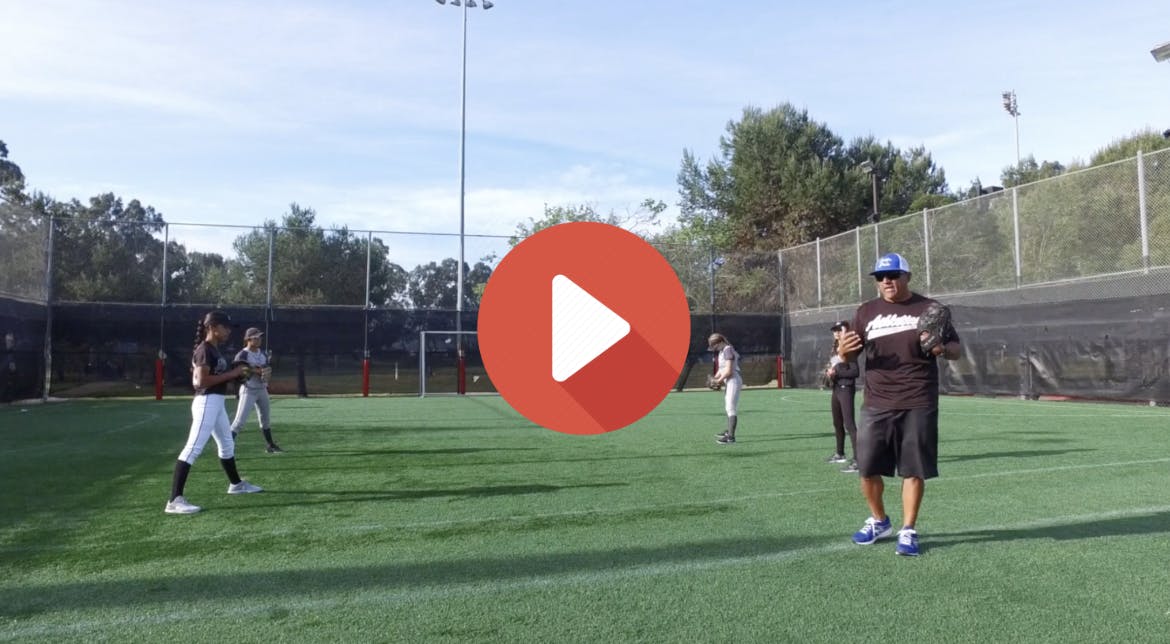
This is why having a series of softball infield drills that can sharpen and continue to finetune your infielder’s skills as a season progresses is crucial for the entire team. While there are a lot of infield drills you can use, Tony Medina has a few drills he swears by — and we highly suggest his expertise.
Coach Medina has been actively coaching Softball for more than 30 years and is the founder of Medina Softball Clinics, which offers weekly schedules of fielding skills clinics in the Los Angeles and Orange County, California area.
Known for offering a high-paced and fun environment, Coach Tony keeps his players challenged and moving, packing in the skills work into every session. Coach Tony has trained countless college, high school, and recreation level softball players in addition to coaching top Nationally ranked travel ball teams.
Coach Medina’s ‘Medina Softball Clinics - Fielding’ course is not only for players but also for teaching coaches about how to elevate their skills and conduct their practices so that their team wins more games when it matters most.
Reaction Drills
Reaction drills are crucial for any softball infield coach’s repertoire because having fast reactions and hand-eye coordination is a must for softball players who play any infield position.
One reaction drill Coach Medina swears by starts with the infielder positioned at one cone, another cone positioned 30 feet directly in front of them, and then a third cone 10 feet behind that, positioned 40 feet away from the player.
From there, the coach will stand at the 30-foot cone and just hit the ball at the infielder while they have a screen behind them.
This will test the infielder’s reactions as they only have a few split seconds to catch the ball headed their way. After enough repetitions of this, the coach will then move back to 40 feet and do the same thing.
30 feet is the correct starting distance because that’s the closest an infielder would ever be to the hitter (when a corner infielder is preparing to field a sacrifice bunt).
When doing this drill, the coach should be making sure that their players are getting into their ready stance with their feet pointed directly forward.
If you are dealing with younger softball players, you might want to use a tennis racket and tennis balls for this drill rather than a bat and softball to ensure that your players stay safe.
Quick Hands
Just like how having fast reactions is important when playing in the infield, having quick hands is crucial for the same seasons.
One drill Coach Medina loves is what he calls the ‘Inside Inside Drill’. This will require two players at first base with another two players (ideally shortstops or other middle infielders) at second base.
The drill starts with the coach rolling a ground ball to the first base player from about 10 feet away. The player will field the ball and then turn to make a throw to second base. From there, the player standing on second base will catch the ball, make a quick and clean transfer, and deliver a firm and accurate throw back to the first base player.
This simulates a double-play scenario where there’s a runner on first base and a ground ball is hit to the first baseman.
When inspecting this drill, the coach should make sure that their players are communicating to each other that the throws between them should go to the inside of the bag (hence the drill’s name). In addition, the coach will want to see the infielders at second base catch the ball smoothly and go straight into their transition without too much movement of their feet.
Double Plays
More often than not, it’s up to a middle infielder’s preference as to whether they want to step on a bag and then step off, or step over the second base bag when turning a double play.
However, there are some scenarios where the infielder must have a specific one of these two maneuvers to evade a sliding baserunner or turn the double play as quickly as possible. This is why Coach Medina runs a drill where he has infielders practicing both types of turns.
For this drill, a coach will stand out ten feet directly in front of the infielder, who is a couple of steps behind second base. The coach will then underhand toss the ball to the infielder, who will receive it while simultaneously stepping on second base with their left foot. From there, they’ll step back and deliver a throw to first base.
Next, the infielder will come across the bag with their left foot staying on the bag and their right field going to the ball while receiving the catch. After catching it, they’ll step in front of the bag and then deliver a throw to first base.

 " "
" "