Now Streaming On US Sports Radio!

US Sports Net Today!


Live Play-by-Play, Updates, Highlights and More! on US Sports Network!
[Chrome Users-You may have to click on the play button twice to listen]
US Sports Network Powered By Gorilla Sports!


US Sports Radio
The Las Vegas Raiders Play Here
Fitness and Sports Performance Info You Can Use!
The Scoreboard Mall
The Rock Almighty Shaker Of Heaven And Earth!
The Coolest Links In The Universe!

Tuesday, October 28, 2025

The Rock Almighty Daily Devotional: Generosity, A Classic Christian Trait.


Cypress-lined road, Tuscany, Italy. Photo by Charles F. Stanley.

Daily Devotion

Characteristics of a Generous Spirit

The choice to be generous has nothing to do with how much money we have.

October 29, 2025

From Intouch Ministries


2 Corinthians 8:1-15

When we hear of a need, it may be that our desire is to give but our bank account convinces us doing so is impossible. Though we know generosity should characterize believers, sometimes it seems the only way to be generous is to be wealthy.

Reign Radio

The Christians in Macedonia prove this isn’t the case. Using them as a model of openhandedness, Paul motivated the Corinthians to follow through on their original commitment to support the church in Jerusalem. The example of the Macedonians in today’s passage helps us identify the characteristics of generosity: 

  • A generous person is sensitive to the needs of others. The Macedonian believers’ own troubles didn’t prevent them from feeling compassion for the needs of others (v. 2).

  • A generous spirit sees needs as opportunities. The Macedonian Christians begged Paul to let them help support the saints in Jerusalem (v. 4).

  • Liberality flows from a life yielded to God. These believers first gave themselves to the Lord in obedience to His will (v. 5).

A generous spirit has nothing to do with how much money we have; rather, it has to do with how much the Lord has of us. When we are fully surrendered to Him, He provides the grace we need in order to share what we have—whether time, treasure, or talent.

Bible in One Year: Luke 20-22

The Rock Almighty Daily Devotional: He Is The Rock That Provides Generously!


Doge's Palace Arcade, St. Mark's Square, Venice, Italy. Photo by Charles F. Stanley.
Daily Devotion

Our Generous Provider

Because the Lord has richly provided for us, we should respond generously to the needs of others.

October 28, 2025

Psalms 65:1-13

Have you ever considered how generous the Lord is toward us? He created the earth and all it contains. He made the sun to both give light and help living things to thrive, and He sends rain to water the land and quench our thirst. 

God’s abundant provision for physical needs should cause us to stand in awe of His love and care for us, but His generosity doesn’t end there. He has also provided for all our spiritual needs through His Son. By means of Jesus’ death on the cross, we are reconciled to the Father and given a wealth of blessings: His Word supplies guidance, His Spirit empowers us and transforms us into Christ’s image, and His church offers encouragement and support. Yet His generosity goes even further than this.

Reign Radio

The Lord has also given us the promise of an inheritance in heaven (1 Peter 1:4). All that He’s prepared for us is beyond our human understanding, but Revelation 21:1-27 and Revelation 22:1-21 describe the new heaven and earth as a place of abundance and blessing.

Since the Lord has so richly provided for us, our first response should be gratitude, followed by generosity toward others. Based on His example, let’s tend to more than physical needs. We can also help spiritually by encouraging fellow believers and proclaiming the gospel to people who don’t yet know Jesus.

Bible in One Year: Luke 17-19


US Sports Football: How many different ways can you make the defense cover everyone? And MaxPreps Top 10 High School Football Plays of Week 10


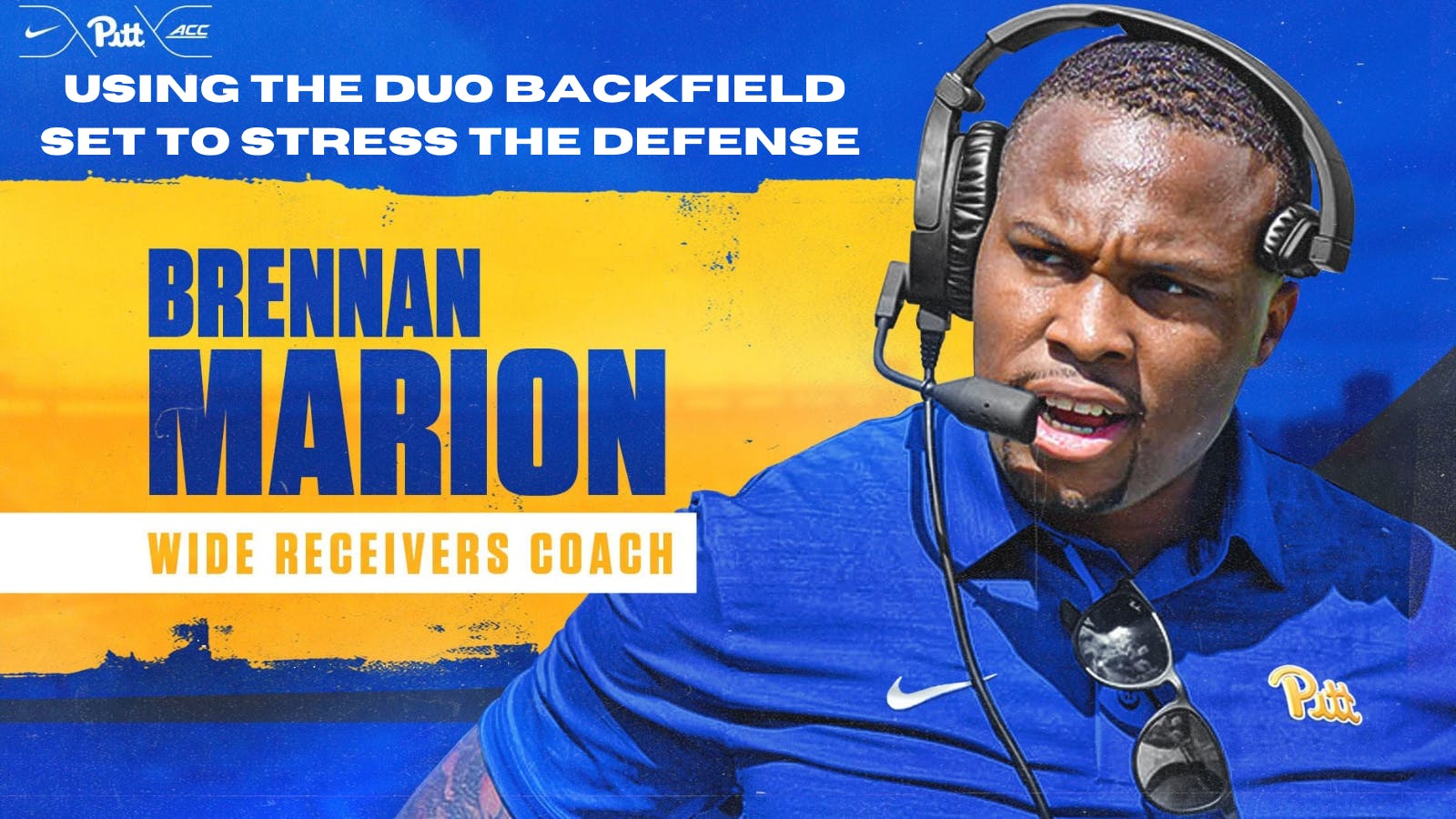
How many different ways can you make the defense cover everyone? This is a question posed by Brennan Marion, inventor of the aptly named Go-Go Offense, during his recent clinic talk for Lauren’t First and Goal. In a demonstration of stressing the defense, Marion employs a novel offset two back formation combined with base concepts to force defenders into difficult decisions on who to defend.

null

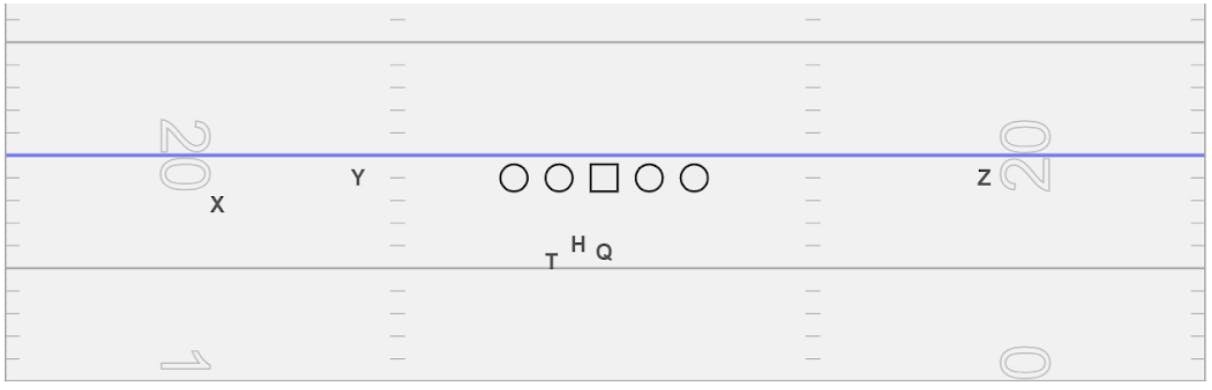
Marion maintain’s a spread mentality in this 20 personnel formation. Indeed, the principle of his offense is to run the ball downhill while not giving up any pass situations. Again, how many different ways can you make the defense cover everyone? Simple concepts found within spread offenses were used to answer this question. 

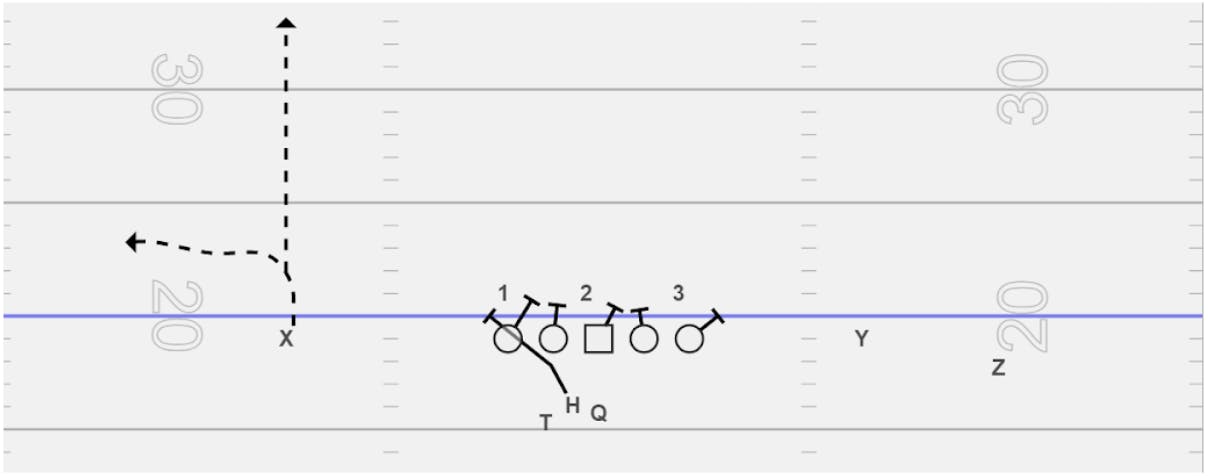
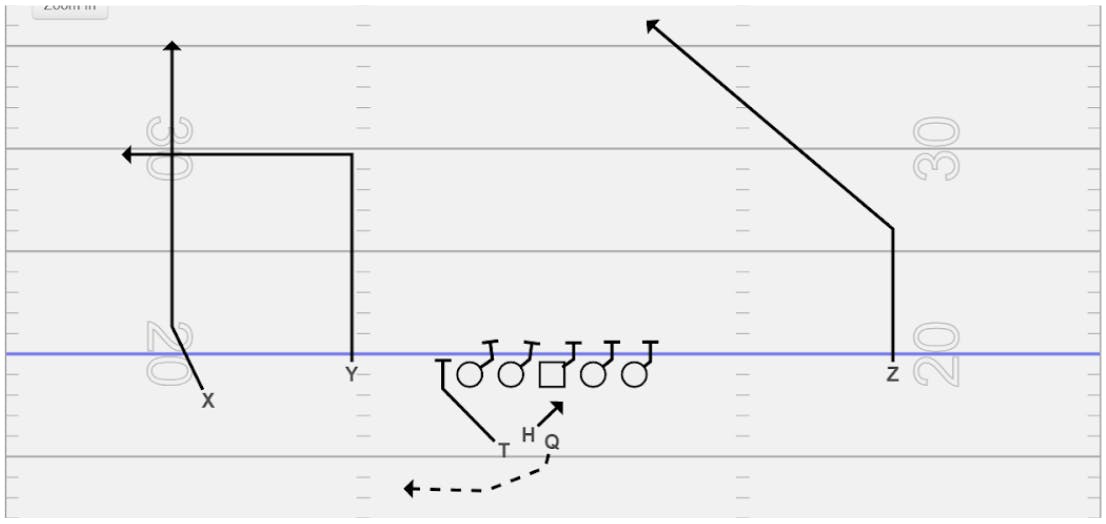
Marion begins with the Duo concept (Diagram 2). The basic premise is to create double teams and kick the last man out with the H-Back. 

null

Based on the alignment, the Running Back has three “doors” he can run through (numbered on the diagram), forcing the defense to be gap sound front to back. If the single WR is to the open side of the QB, an RPO can be attached having the WR and QB read the coverage for a “2 Way:" Speed out against soft coverage or a Fade against press. Similarly, if the two WR’s are to the open side of the QB, various RPO combinations can be attached. He discussed the simple but effective use of the Bubble.

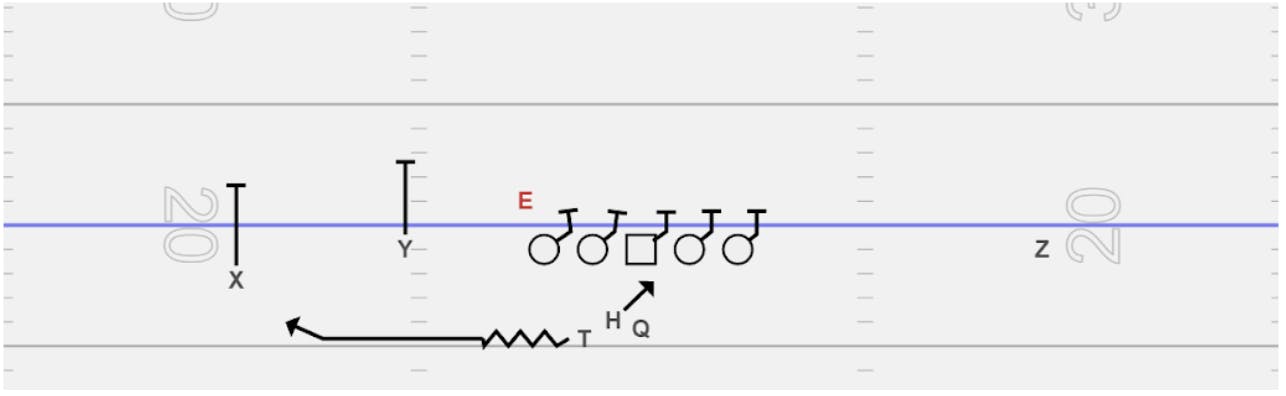
The Inside Zone, a spread staple, was discussed next. Marion’s version creates triple option looks for the defense to defend, as depicted in Diagram 3.

null

This play is designed for the H-Back instead of the T, requiring the defense to defend both backs. The QB has the option to give, keep, or throw. As with Duo, the RPO variations include a Bubble to the Y WR in Diagram 3 (or any other two receiver RPO combos) or aligning the two backs to the single WR side and running the same “2 Way” read. In these versions, the T could motion, fake a route of his own, or pick up the DE, as needed.

Next, Marion discussed the popular Wide Zone. The block scheme nuances or reads were not discussed but Marion provides great examples of his Wide Zone Waggle. These are found here:

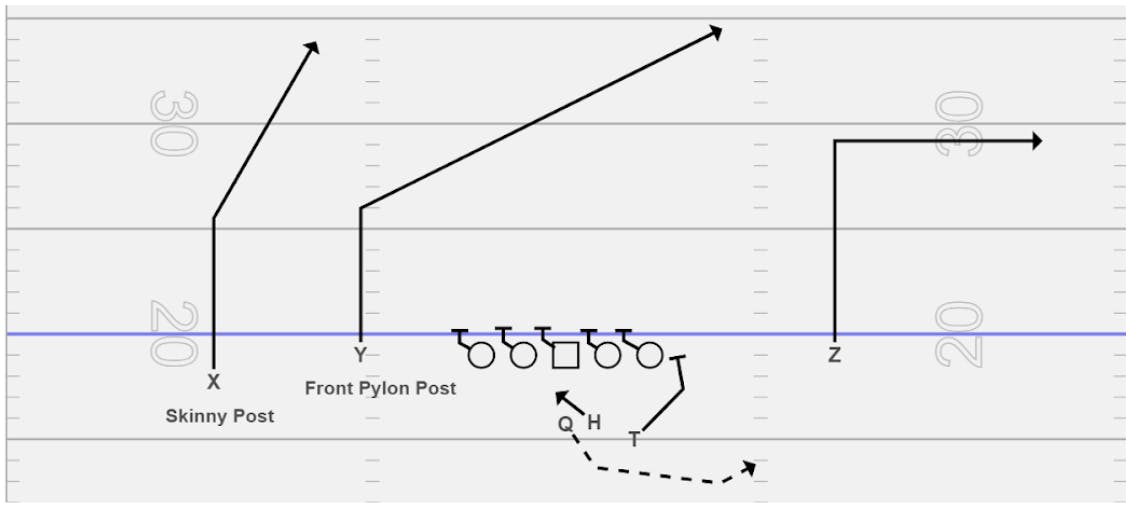
As with the RPO tags, the Waggle could be applied to any of the previous run concepts. It can also be run to the two WR (Diagram 4) or single WR sides (Diagram 5).

null
null

The Waggle proved an effective shot play for Marion. It again forces the defense to account for all offensive threats spread across the field. 

2 Back sets in spread offenses prove to be effective at all levels. The defense is forced to defend the extra man in the box while trying to account for the strength of spread teams: the perimeter. Marion offers a novel variation by offsetting both backs to the same side of the QB, creating decisions on who the defense will defend and how. Combine this with existing spread concepts and put freshness into your offense today!

Learn more here:   


Monday, October 27, 2025

US Sports Partner Spotlight: Zulay Kitchen

 Save up to $16 on bestselling Milk Frothers from Zulay

https://tinyurl.com/ZulayKitchenFrother

Zulay is your one-stop shop for High-Quality Kitchen Tools & Utensils! Cook delicious, nutritious food and treats while making the most out of your budget. We’re a small family-owned business and we’ve put together time-saving & money-saving coffee & kitchen gadgets that we use, and wanted to share!

US Sports Radio affiliate partner

http://www.USSportsRadio.net

US Sports Baseball: Three Priceless Philosophies to Motivate Your Baseball Team and Dodgers vs Blue Jays WS Highlights


Baseball is often described as a sport that is rooted in failure. Even the best hitters fail to get a hit more often than not, and pitchers inevitably give up hits and runs. In fact, a .300 batting average, which means a player gets a hit 30% of the time, is considered excellent. This emphasis on dealing with failure is unique to baseball and requires players to develop resilience, a short memory, and mental toughness. Learning to cope with failure is a fundamental aspect of excelling in baseball and is a valuable life lesson that the sport imparts to its participants.

And because this isn’t easy to do — especially for youth baseball players, who don’t even have fully developed brains — playing baseball requires a great deal of mental strength. In addition to it being rooted in failure, the game can be mentally challenging due to its slow pace and the need to stay focused for long periods. Players need to be able to handle the pressure of performing in high-stakes situations and bouncing back from failure. 

Additionally, they must be able to stay disciplined and maintain their focus throughout the entirety of the game, even when they are not directly involved in every play. Developing mental toughness is essential for success in baseball, and it can have a significant impact on a player's performance on the field.

And if there’s one person who knows how to develop mental toughness among youth and college baseball players, it’s Bob Morgan. 

Coach Morgan is the former head baseball coach at Indiana University, where he directed Indiana’s baseball program for 22 seasons. Morgan led his teams during his career to a 1,070-586-6 (.646) record, making him one of 30 NCAA Division I baseball coaches in history with 1,000 career victories. In addition to serving as IU’s head coach, Morgan also worked as a professional pitcher for the Detroit Tigers. 

Coach Morgan knows that getting athletes to consistently play to the best of their abilities is one of the fundamental goals of baseball coaches at all competitive levels. That’s why his ‘Motivate Your Team With These Philosophies’ course points out 3 different types of motivation, details how individuals can set and attain their goals, and also reviews the 7 principles that are essential to success in life. 

Don’t Let Fear Control You

The first lesson Coach Morgan wants to instill in each of his players is about motivation. He defines motivation as, “Things that make us do the things we do. Fuel that enhances people’s performance. Stimulation that puts people in action.”

He notes that people show up to the baseball field for endless different reasons. But the most important point is that they showed up to the field for some reason, regardless of what that is. That’s a person’s motivation. 

From there, Coach Morgan notes how fear is the biggest and most common motivation for all people, not just baseball players. He then claims that the word FEAR is actually an acronym: False Evidence Appears Real. His point with this is that because everybody deals with fear in one fashion or another in some facet of their lives, it’s up to people to harness that fear and turn it into a motivator rather than let it consume them and cause self-doubt.  

“Fear is like fire,” Coach Morgan says. “If you control it, you can heat a house with it, and you can cook with it. If you don’t control, you can burn a house down.” 

To control and learn to use that fear as motivation, a player must recognize it and see it for what it is. 

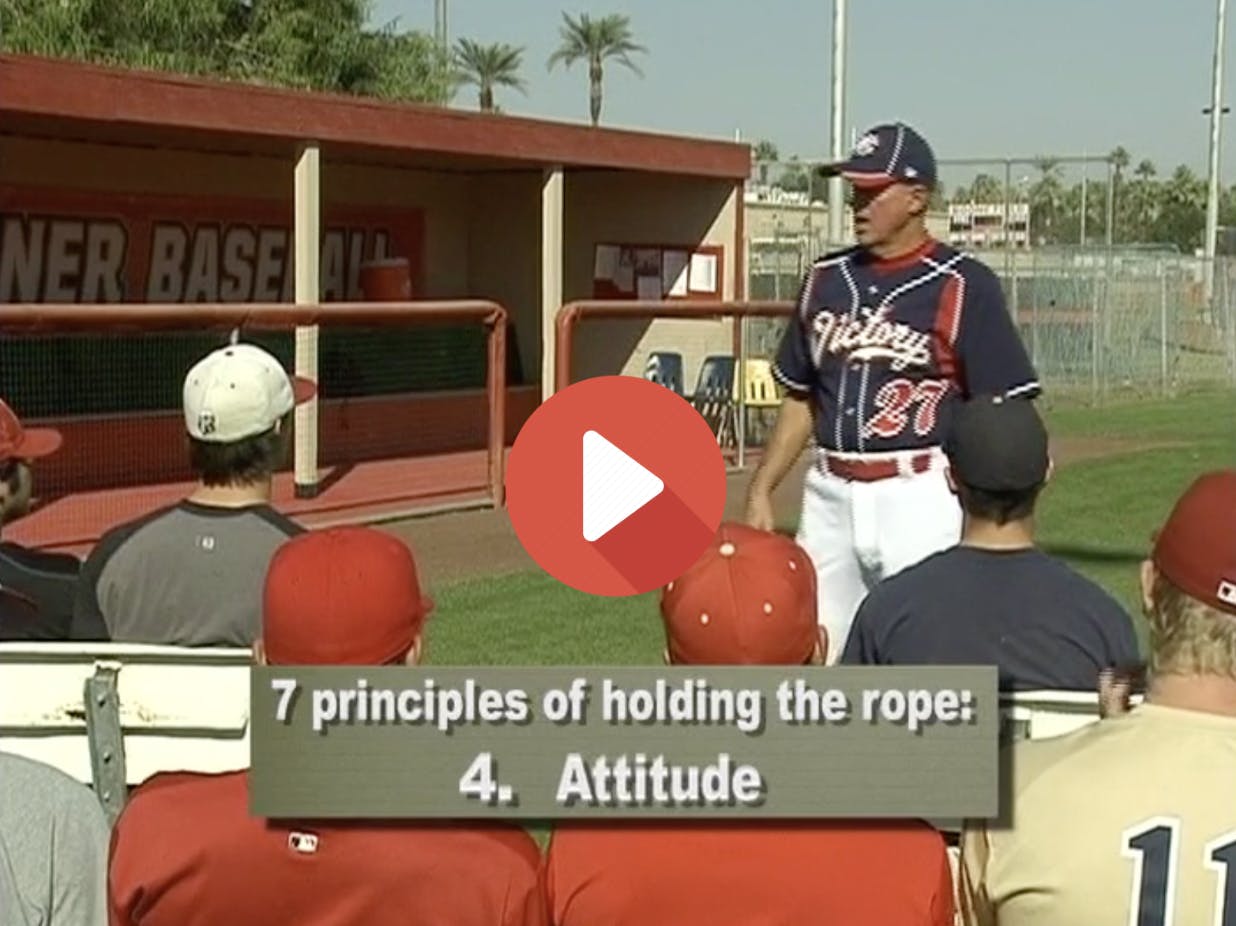
Attitude

null

Coach Morgan notes that the easiest thing in the world to do is be negative. But if someone has a good attitude and works hard, they are going to be successful in life, no matter what they pursue. 

This is an especially important approach in baseball because, as we’ve mentioned before, baseball is so rooted in failure that keeping a positive attitude can be exceedingly difficult a lot of the time. Especially when a player is in the midst of a slump or can’t seem to throw a strike to save their lives, employing a negative mindset can quickly become the default. 

In addition to this, improving and developing in baseball comes down to being okay with doing minute, seemingly trivial actions daily. Players who get bored of this begin to go through the motions, which is when their progress stagnates. But players who are optimistic about getting to do what they love, and eager to improve themselves are the ones who are going to put the best effort forth — and therefore get the most out of that effort when the game begins. 

Care About Winning

“It’s amazing what a group can accomplish when nobody cares about who gets the credit,” Coach Morgan says. 

When Coach Morgan talks about caring to win, that doesn’t mean the attitude should be winning at all costs, and every time there’s a loss it should be viewed as a complete failure. There are going to be losses in baseball, and there are important lessons and takeaways that can be gleaned from those losses. But his point is that all players should be striving to win first and foremost, regardless of their results or impact. 

And it isn’t enough to just show up to the field and want to win. There has to be attention to detail with the entire process of what it takes to win (communicating on the field, throwing strikes, putting the ball into play with two strikes, etc.) that winning is the outcome of all that hard work rather than something players and teams are just blindly striving for.